Back to London Attractions
How Far in Advance to Get Tickets for the London Eye
Updated August 2026
There are very few structures on earth that have become, in less than thirty years, so completely identified with the city they stand in. The London Eye, conceived by architects David Marks and Julia Barfield and opened on the last day of 1999 as a temporary Millennium landmark with a five-year lifespan, was so comprehensively adopted by Londoners and visitors alike that it was made permanent, has since been ridden by well over thirty million people, and now functions as the backdrop for the nation's New Year's Eve fireworks seen by hundreds of millions worldwide. Standing 135 metres above the South Bank of the Thames, with 32 glass capsules representing the 32 boroughs of London, each capable of carrying up to 28 passengers through a slow, smooth, thirty-minute rotation, the London Eye offers a 360-degree panorama of the city that extends up to 40 kilometres on a clear day, taking in the Houses of Parliament and Big Ben directly opposite, the Shard to the east, St Paul's Cathedral and the Tower of London beyond, Buckingham Palace and Hyde Park to the west, and on exceptionally clear days Windsor Castle in the far distance. This guide covers everything you need to know before you go.
At a Glance
How Early to Book:
Most time-slots will be available until about 1-2 days before the visit. However, booking earlier may be less expensive.
Tickets Released:
More than a year in advance.
Best Times to Visit:
Weekday mornings right after opening, and evenings right before close, will have the smallest crowds. However, sunset will offer best lighting for photos and have the best views.
Ticket price:
£29 to £39 for adults depending on time of day. There is an additional for fast-track entry which will reduce queuing time.
Where to Book:
Do You Need to Book London Eye Tickets in Advance?
Yes, you should absolutely book London Eye tickets in advance. Booking online in advance is always cheaper than buying at the door, the savings can be substantial, and walk-up queues during busy periods can extend to 20 to 30 minutes or more even before you board. The official London Eye website also makes rescheduling very flexible (up to five free date changes), which removes the main risk associated with booking ahead. There is no good reason to arrive without a pre-booked ticket.
The London Eye uses dynamic pricing: the earlier you book, the lower the price. Prices increase as the visit date approaches and as remaining capacity shrinks. Booking several days or weeks ahead locks in the cheapest available rate for your chosen date and time. Booking the morning of your visit will cost considerably more than booking the previous week.
Book through the official London Eye website. The official site always offers the cheapest prices, guarantees the most flexible change policy, and charges no additional booking commission. Third-party resellers may add fees on top.
Ticket upgrade options:
Fast Track: Skip the standard boarding queue and access priority boarding. Strongly recommended during school holidays, summer, weekends, and any peak period. Available as a standalone upgrade or included in several of the enhanced experience packages.
Flexi Fast Track: The most flexible option, allowing you to visit at any time during the day of your choice without selecting a specific slot. Ideal if your schedule might shift or if you want to choose your boarding time based on weather and light conditions on the day.
Champagne Experience: Adds a glass of Moët and Chandon Impérial Brut served by a dedicated host aboard the capsule, with fast-track boarding included. One of the most consistently well-reviewed experiences at the London Eye and worth considering for a special occasion, a birthday, or simply as a way to make a thirty-minute ride feel like more of an event. Children under 18 receive a non-alcoholic alternative. Fast-track boarding is included.
Eye Lounge Experience: Includes exclusive pre-ride access to the Eye Lounge bar with a glass of Moët and Chandon Impérial Brut, followed by a second glass during the rotation, with fast-track entry included. For visitors who want the full pre- and in-flight champagne treatment, this is the most complete version.
Private Pod: Exclusive hire of an entire capsule for between 2 and 25 guests, with no other visitors sharing the space. Includes fast-track boarding and a dedicated host. Pricing is substantially higher than the standard ticket and must be booked well in advance; availability is limited and weekends fill quickly. Options available include the standard private pod, the Cupid's Pod (exclusively for two adults aged 18 and over, with champagne, truffles, and a dedicated executive experience), and fully customisable corporate pod hire.
Afternoon Tea Experience: A classic British afternoon tea served in a riverside setting after your rotation, paired with your London Eye flight. A well-paced way to build a longer occasion around the visit.
Multi-attraction tickets: The London Eye is included in several combination passes that offer good value for visitors planning to see multiple London attractions. The five-attraction pass starts from £59 and includes the London Eye alongside options such as Madame Tussauds and SEA LIFE London. Various citywide multi-day passes, including the London Pass and similar all-inclusive options, also cover the London Eye and are worth comparing if you have a busy itinerary.
The Merlin Annual Pass covers unlimited visits to the London Eye and dozens of other UK Merlin attractions over a year. For London-based visitors or those planning return trips, it can represent excellent value.
Ticket rescheduling: Online pre-booked tickets can be rescheduled free of charge up to five times. This makes booking ahead very low-risk and removes any hesitation about committing to a specific date.
London Eye Opening Hours and Entry Information
The London Eye is open every day of the year, including bank holidays and Christmas, with one exception: it closes for maintenance on a small number of days each year, announced in advance on the official website.
Opening and closing times vary by season and by day. As a general guide:
Standard weekday hours (off-peak): 11:00am to 6:00pm
Peak season and weekends: Often open from 10:00am with closing times extending to 8:00pm or 8:30pm
Summer (July and August): Extended hours most days, with late closing common
Because hours vary day by day throughout the year, always check the current schedule on the website before your visit rather than relying on general guidance.
Last boarding is typically 30 minutes before the published closing time. Aim to arrive at least 45 minutes before closing to allow time for security and boarding.
Weather and visibility: The capsules are fully enclosed and climate-controlled, so rain, wind, and cold do not affect the ride itself. However, heavy fog significantly reduces visibility and can make the panoramic view the main point of the visit considerably less rewarding. Very severe weather can cause temporary closures for safety reasons. If visibility matters for your visit, particularly for photography, check the weather forecast before committing to a specific time slot. The London Eye does not offer refunds for weather-related poor visibility unless it causes an official closure.

What is the Best Time to Visit the London Eye?
Timing your visit wisely makes a material difference both to cost (through dynamic pricing) and to the experience itself.
For the view: The most spectacular views are at sunset and in the hour before, when the light is warm and directional, the Thames reflects the sky, and the Houses of Parliament and the city beyond are bathed in golden tones. In summer this means arriving in the late afternoon, from around 5:00pm to 7:00pm. The capsules facing east at this hour look directly into a sun-lit cityscape. Evening rotations after dark are also striking, with the illuminated skyline and the Shard and City towers lit in the darkness, though you will need patience if you want to photograph at these light levels.
For photography specifically: Your best compositions occur during the final quarter of the rotation when you are at mid-height and descending, giving perfect symmetry with the Parliament skyline. Pods facing east capture panoramic views of St Paul's Cathedral, the Shard, and the Tower Bridge area. Hold your lens flush against the glass to minimise reflections, turn off your flash, and shoot through the flatter central panels, avoiding the curved edges that cause distortion. Morning rides give even lighting for architectural detail; golden hour between 5:00pm and 6:00pm delivers warm, cinematic tones with Thames reflections.
For quieter boarding: Visiting early or late avoids the peak crowds between 11:00am and 3:00pm. The first slots of the day and the final two hours before closing tend to be the least busy and are strongly recommended for visitors who want a calmer boarding experience without Fast Track.
For clear skies: Late autumn and winter mornings after rain often produce the clearest visibility in London, with the air washed clean and the view extending to its maximum range. The cold does not affect the temperature inside the capsules, and the experience of looking out over a brilliantly clear winter London is excellent.
Weekdays from Tuesday to Thursday are consistently quieter than weekends and school holiday periods. If you have flexibility in your schedule, a midweek morning visit out of peak season will give you the most comfortable experience at the lowest advance price.
Weekends and school holidays are the busiest periods. Fast Track is particularly valuable during these windows; a 20 to 30-minute boarding queue for standard entry is realistic on a busy summer Saturday.
What is the Best Way to Get to the London Eye?
The London Eye is located on the South Bank at Jubilee Gardens, next to the County Hall building and opposite the Houses of Parliament. Its position in the heart of central London makes it extremely well connected by public transport.
By Tube (recommended):
Waterloo (Jubilee, Bakerloo, and Northern lines) is the closest station, around five to eight minutes on foot along the South Bank. This is the most convenient Tube station for the London Eye from the majority of central London directions.
Westminster (Jubilee, District, and Circle lines) is across the river, around a five-minute walk over Westminster Bridge. This approach gives you a direct view of the London Eye from the bridge as you cross, which is one of the best vantage points for photographs of the full wheel from a distance.
Embankment (District, Circle, Bakerloo, and Northern lines) is also across the river, connected to the South Bank via Hungerford Bridge and the Golden Jubilee Footbridges, a riverside walk of around eight to ten minutes. The approach via Hungerford Bridge gives excellent elevated views of the London Eye from the north bank.
By Rail: Waterloo Station (National Rail) is served by direct trains from a large number of destinations across southern England and is around five to eight minutes on foot from the London Eye. This is the most convenient option for visitors arriving from outside London.
By Bus: Several routes stop close to the London Eye on the South Bank, including buses along Waterloo Road, York Road, and the Embankment. The South Bank is well served, though bus journey times in central London are unpredictable and the Tube is generally faster.
By River Bus (Thames Clippers): Festival Pier, directly adjacent to the London Eye, is served by Thames Clipper river bus services. This is a scenic and underused way to arrive, connecting the South Bank with Greenwich, the City, Canary Wharf, and Battersea Power Station. It avoids road and Tube congestion and is particularly enjoyable in fine weather.
On foot: The London Eye is walkable from a wide range of central London locations. From the South Bank itself, it is around ten minutes from Tate Modern and Borough Market, around fifteen minutes from Bankside and Southwark Cathedral, and around twenty minutes from London Bridge. From the north bank, Westminster Bridge and Hungerford Bridge both provide direct walking routes from Westminster, Whitehall, Covent Garden, and the Strand.
By car: Driving is not recommended. There is no dedicated London Eye car park, and street parking on the South Bank is extremely limited and expensive. The Congestion Charge applies in central London Monday to Friday from 7:00am to 6:00pm and at weekends from 12:00pm to 6:00pm. Travelodge County Hall and some nearby hotels have parking, but these are limited and should be arranged in advance. Public transport is substantially more practical from anywhere in London.
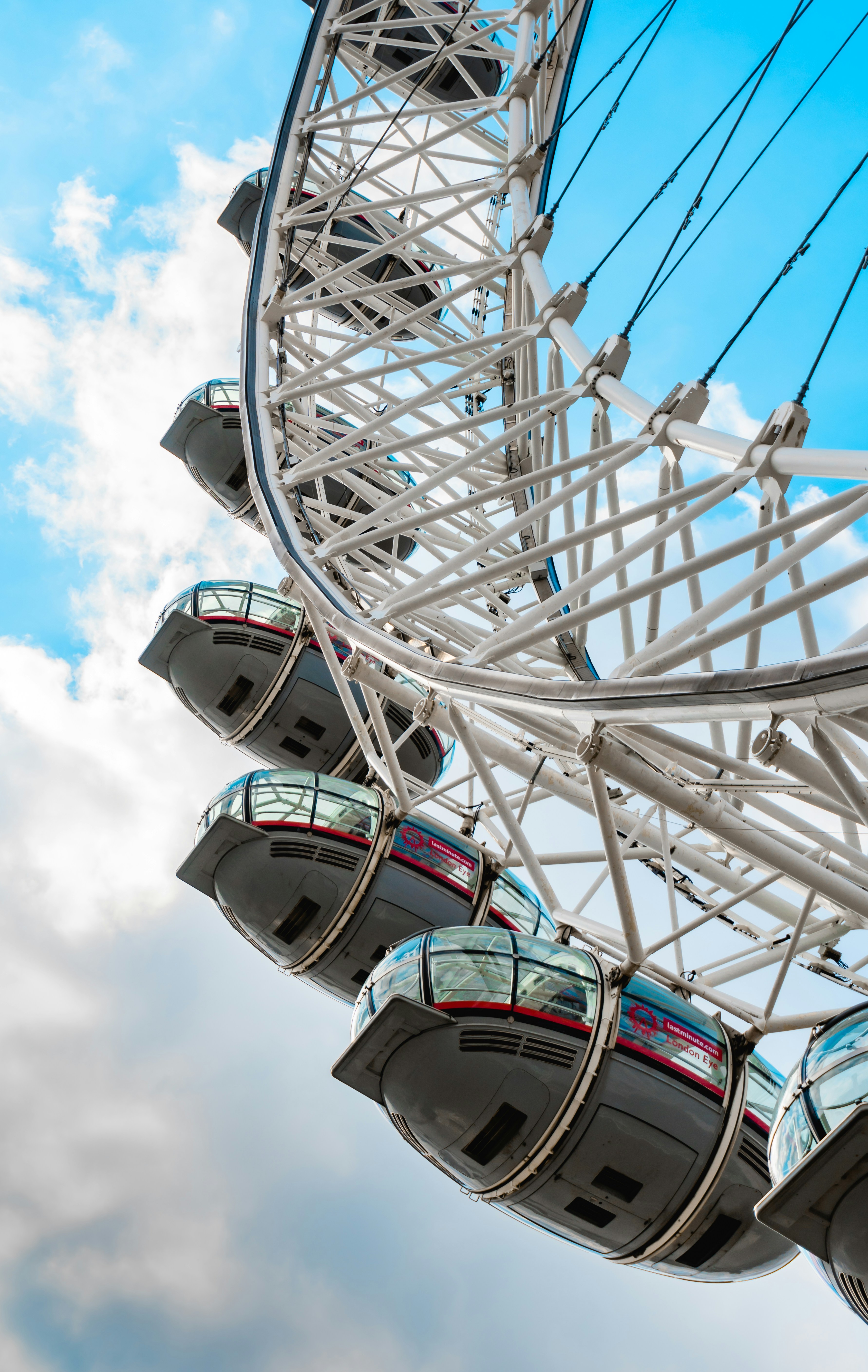
The London Eye moves at 26cm per second (roughly 0.6 mph), allowing guests to walk on and off without the wheel stopping. While it was the highest public viewing point upon opening, it was surpassed in 2013 by The Shard.
Is the London Eye Worth Visiting?
It.. well, sort of depends, because the London Eye divides opinion more than most London attractions, and the division tends to fall along predictable lines. First-time visitors to London who have not seen the city from above almost invariably find it worth every penny. Long-term London residents and repeat visitors often feel the price is hard to justify for something they could replicate, for free, from Primrose Hill or Greenwich Park. Both positions are fair, and knowing which camp you are in before you book will help you make the right decision.
For what the London Eye specifically offers: a full 360-degree panoramic view from 135 metres up, enclosed, climate-controlled, accessible to virtually every visitor regardless of mobility, in the geographical heart of the city, with Big Ben, the Palace of Westminster, and the Thames directly in front of you at the apex. The panorama on a clear day is a spectacular orientation tool for a city as large and complex as London, and it is particularly illuminating for visitors early in a multi-day trip, when being able to locate the major landmarks and understand the city's geography from above helps structure the days that follow.
The key things to understand before deciding:
The 32 capsules hold up to 28 passengers each, and on a busy day you will share your capsule with strangers. The experience is not private by default, which is why the Private Pod option exists. Standard rotation takes thirty minutes, which is long enough for a complete circuit and a thorough look at the view in all directions, but not so long that it outstays its welcome.
On a clear day, the view is extraordinary. On a foggy or overcast day, particularly in the low winter light, it can be significantly less impressive. The London Eye does not control the weather, and if visibility is poor the main purpose of the visit is largely frustrated. Checking the forecast before booking a specific slot is a sensible precaution.
At the upper end of the standard pricing range, particularly for a family, the London Eye is a significant outlay. The multi-attraction pass options and the family rates available online help here. At peak prices for a family of four, comparing the London Eye against a free view from Parliament Hill or Alexandra Palace is a fair and reasonable calculation. For solo visitors and couples, and for first-time visitors to London specifically, the cost is easier to absorb and the experience is reliably rewarding.
The verdict: for first-time visitors to London, yes. For repeat visitors with a specific purpose (photography, a special occasion, showing the city to visiting friends), yes. For London residents already comfortable with the city's geography who have seen it before, probably not, unless you upgrade to one of the VIP experiences that make the occasion more of an event in its own right.
How Much Time Should I Spend at the London Eye?
The rotation itself takes 30 minutes from boarding to disembarkation. There is no rushing or hurrying on a standard visit: the wheel moves at a continuous, slow pace (roughly the walking speed of a brisk human stride) and makes a single complete revolution.
Beyond the ride, allow time for:
Arrival, security check, and boarding: 15 to 30 minutes for standard tickets; 5 to 10 minutes with Fast Track
Queue at the door (if no Fast Track): 20 to 30 minutes during busy periods
Post-ride browsing of the gift shop or the South Bank riverside area: as long as you wish
Total visit time for a standard ticket: 45 minutes to 90 minutes depending on queues and your pace. For the Champagne Experience or Eye Lounge, add 15 to 30 minutes for the pre-ride or in-ride hosting element.
The London Eye is therefore a self-contained experience rather than a half-day attraction. It works well as part of a South Bank itinerary combining it with the South Bank riverside walk, Tate Modern, Borough Market, and the surrounding restaurants and bars before or after.
VIP Experiences and Special Occasions
The London Eye has developed one of the most varied menus of experiential add-ons of any London attraction, and for the right occasion several of them are very much worth considering.
The Champagne Experience is the most popular upgrade and the most consistently praised in visitor reviews. A dedicated host accompanies your capsule, serves a full glass of Moët and Chandon Impérial Brut during the rotation, provides commentary on the landmarks below, and takes photographs of the group. The combination of fast-track boarding, a smaller and more intimate pod-share, and the hosting element makes it feel significantly more polished than the standard visit. For a birthday, anniversary, or first London visit, it is one of the better-value special occasion options available at any London attraction.
The Eye Lounge Experience adds a pre-ride (or post-ride) drink in the riverside Eye Lounge bar, a dedicated private space with views of the Thames, followed by a second glass during the rotation. It is the right choice for visitors who want a longer, more relaxed occasion rather than simply an upgraded ride.
Private Pod hire gives exclusive use of an entire capsule for between 2 and 25 guests. This removes the one element of the standard experience that bothers some visitors most, namely sharing a capsule with strangers, and replaces it with a private 360-degree viewing platform above London for your group. Book as far in advance as possible; popular dates, particularly weekend evenings and summer slots, fill well ahead.
The London Eye River Cruise
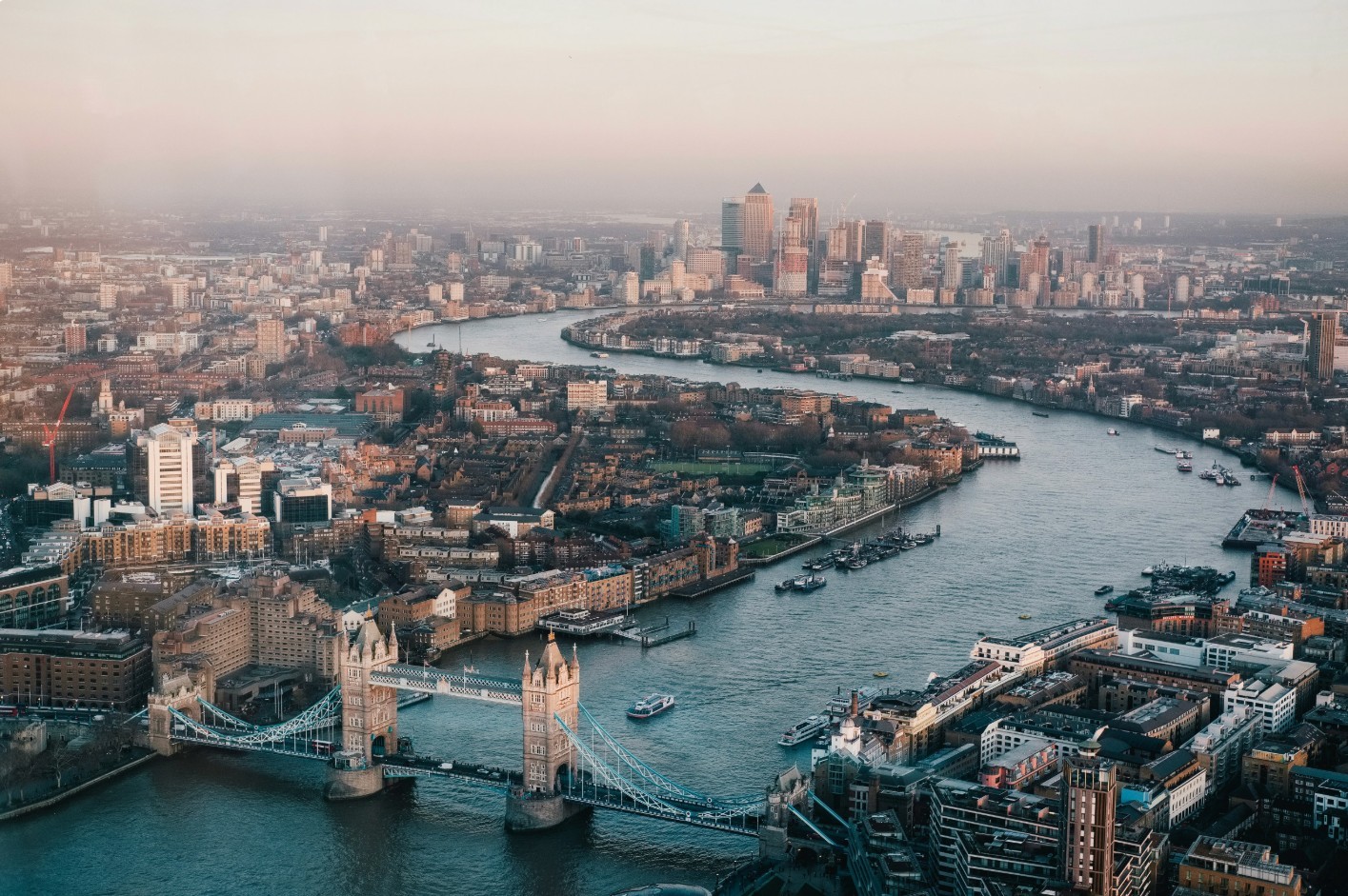
The London Eye River Cruise is a separate 40-minute cruise along the Thames, offered by City Cruises in partnership with the London Eye. Departing from the Waterloo Pier directly beside the London Eye, the cruise travels east as far as Tower Bridge and back, providing narrated views of the major riverside landmarks from the water level.
The cruise operates on its own separate timetable (first sailing 10:45am, last sailing in the early evening), with seasonal variation. It is available as a standalone ticket or in combination with a London Eye standard admission ticket at a combined price.
The perspective the cruise offers is a useful complement to the aerial view from the Eye: where the rotation gives you the city from above and at a distance, the cruise puts you at river level looking up at the Embankment, the Southwark waterfront, and the great bridges from between them. Together, the two experiences provide a more complete picture of London's relationship with the Thames than either does alone.
Book the River Cruise through the London Eye website. Note that the River Cruise has a separate booking time from the London Eye rotation, so ensure both slots work within your day before committing.
Where Should I Eat Near the London Eye?
The London Eye sits in the middle of the South Bank, one of London's most rewarding riverside areas for eating and drinking, with options at every price point within a short walk.
On the South Bank immediately adjacent:
The riverside promenade between the London Eye and Waterloo Bridge is lined with cafés, kiosks, and bar terraces. The quality varies considerably; the most visitor-facing spots closest to the Eye tend to offer less value than those a short walk further along the bank in either direction.
Heading east towards the Tate Modern and Borough Market (10 to 20 minutes on foot):
Borough Market, around fifteen to twenty minutes on foot along the South Bank through Bankside, is one of the great food markets in Europe, open Tuesday to Saturday (Thursday to Saturday for the full market). The combination of artisan food stalls, restaurants, and the railway arches surrounding the market make it one of the most consistently satisfying places to eat before or after a London Eye visit.
Benugo at BFI Southbank is a reliable and well-positioned café-bar at the British Film Institute, around eight minutes on foot east of the London Eye along the riverfront, with a riverside terrace and a menu covering coffee, lunch, and drinks.
Accessibility at the London Eye
The London Eye is one of the most accessible major attractions in London, and considerable effort has gone into ensuring that the experience is available to as wide a range of visitors as possible.
Wheelchair users can board the London Eye via a dedicated accessible boarding point. The capsules are level-boarding with a small step or ramp and can accommodate standard and powered wheelchairs. A maximum of two wheelchair users per capsule is the standard guideline; contact the London Eye access team in advance for specific requirements. Wheelchair hire is not available on site.
Visitors with walking difficulties will find the boarding process manageable; the capsules move slowly enough that boarding and disembarking requires only a short step across a level threshold at a walking pace.
Visual impairments: Audio descriptions of the landmarks visible from the capsule are available; enquire at the ticket desk on arrival.
Visitors with anxiety, claustrophobia, or a fear of heights: The capsules are large (roughly the size of a London bus, each carrying up to 28 people), fully enclosed, and air-conditioned. There is no open air and no sensation of wind at height. The motion is imperceptible once underway. For most visitors with mild height anxiety, the enclosed nature of the capsule is reassuring rather than alarming; it does not feel like a conventional open-sided Ferris wheel. That said, for visitors with severe height anxiety or claustrophobia, the combination of height and enclosure may be uncomfortable. The London Eye recommends that visitors who are concerned contact the accessibility team in advance.
Carers accompanying disabled visitors receive a complimentary ticket in most cases. Enquire at the ticket desk or contact the London Eye in advance to confirm the applicable policy for your situation.
Pushchairs and prams are permitted in the capsules. Folding them during the ride is not required.
Rules, Bags, and Security
Security: All visitors pass through a security check on arrival, including bag scanning. Allow extra time for this during busy periods, particularly at weekends and school holidays.
Bags: There are no published specific bag size restrictions for standard entry, but large items of luggage are strongly discouraged given the limited space inside the capsules. A cloakroom is not available on site. Visitors carrying large bags may be refused boarding at the operator's discretion.
Food and drink: Outside food and drinks are not permitted inside the capsules. Drinks purchased as part of the Champagne Experience and other VIP packages are managed by the host service and are permitted as part of those experiences.
Photography: Personal, non-commercial photography is permitted and actively encouraged throughout the experience. Flash photography is unlikely to produce useful results against the glass and is best avoided. Tripods are not permitted inside the capsules.
Under 3s: Children under 3 ride free but must have a free ticket reserved in advance. Without a pre-booked free ticket, under-3s will not be admitted.
What Else is There to Do Near the London Eye?
The London Eye's South Bank location puts it at the centre of one of the most culturally rich and walkable stretches of riverfront in the world. A full day built around the South Bank, using the London Eye as a centrepiece, is one of the most rewarding ways to structure a first or return visit to London.
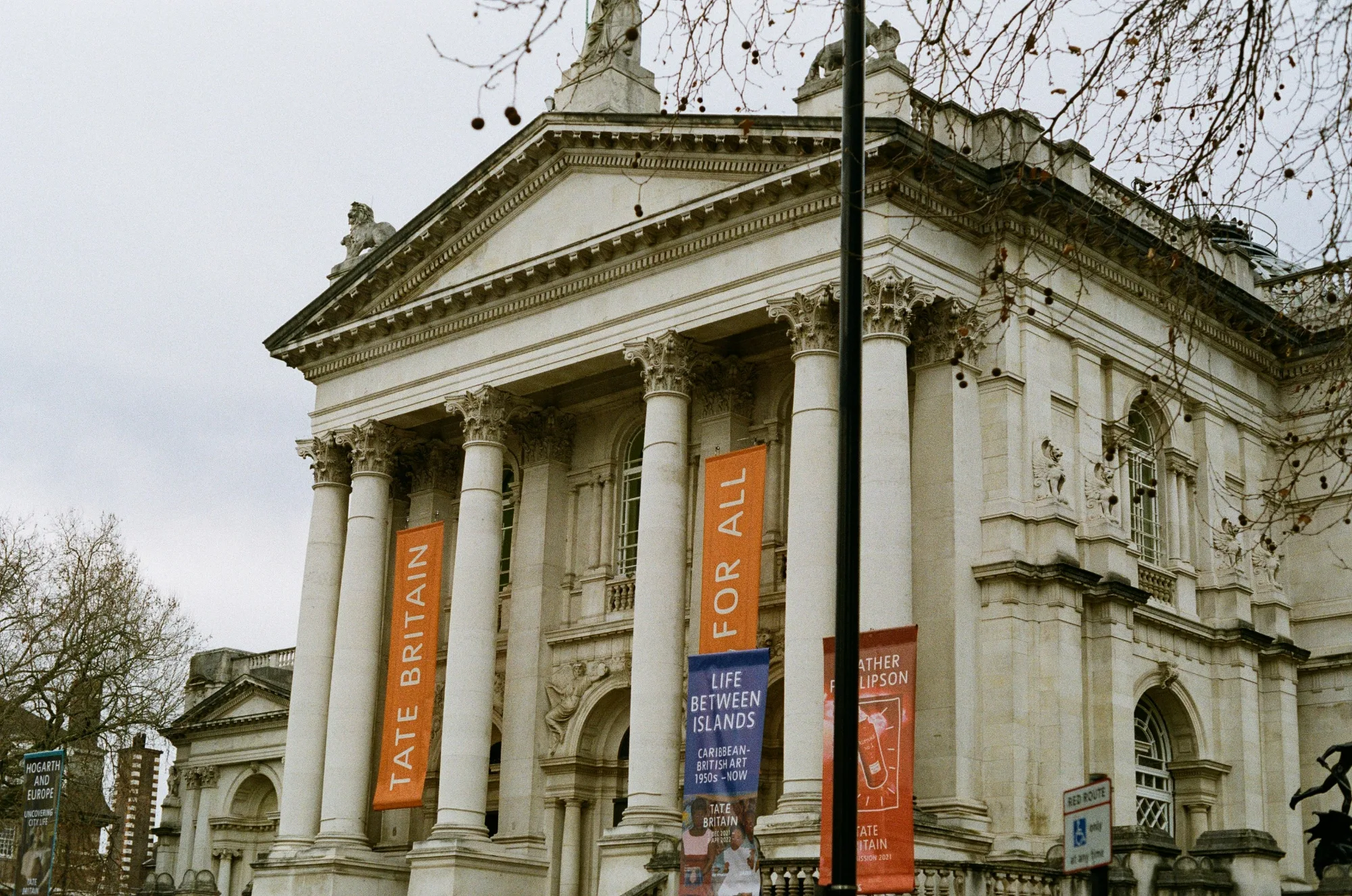
Tate Modern, around fifteen minutes on foot east along the South Bank through Bankside, is one of the great modern and contemporary art museums in the world. Housed in the former Bankside Power Station with the Blavatnik Building extension alongside, it holds free permanent collection galleries and major ticketed temporary exhibitions. The view of St Paul's Cathedral from the Blavatnik Building's public terrace on the upper floors is one of the finest rooftop views in London. Free permanent collection, no booking required.
Shakespeare's Globe, around seventeen minutes on foot east of the London Eye in Bankside, is a reconstruction of the original Globe Theatre on the South Bank. Tours of the theatre run daily; performances run from April to October, with indoor Jacobean performances at the Sam Wanamaker Playhouse year-round. Booking required for performances.
Borough Market, around twenty minutes on foot through Bankside, is one of London's most celebrated food markets, open Tuesday to Saturday. An outstanding place for breakfast, lunch, or an afternoon browse among artisan producers from across Britain and Europe.
The South Bank riverside walk itself, from Westminster Bridge all the way east to Tower Bridge through Bankside and Bermondsey, is one of the most pleasurable extended walks in London, passing the National Theatre, BFI Southbank, the Tate, the Globe, and numerous restaurants, cafés, and art installations along the way. The entire stretch is flat, fully paved, and entirely traffic-free, making it one of the most accessible urban walks in the city.
The Houses of Parliament and Westminster Abbey, directly opposite the London Eye on the north bank of the Thames and accessible via Westminster Bridge, are natural companions for a day anchored on the South Bank. Westminster Abbey requires advance booking for the standard visit; the Houses of Parliament offers a range of tour options.
The National Theatre on the South Bank, around eight minutes on foot east of the London Eye, is one of the great producing theatres in the world. Its Lyttelton, Olivier, and Dorfman stages run a programme covering the full range of dramatic repertoire, and same-day tickets are sometimes available at the box office for visitors with flexible plans.
The View from The Shard, across London Bridge on the eastern South Bank, offers an alternative and in some ways complementary elevated view of London from a higher vantage point (310 metres) looking west, where the London Eye's view looks east. The two together give a remarkably complete aerial account of central London from opposing ends. Advance booking required.
Final Tips for Visiting the London Eye
Book online before you get there. Dynamic pricing means the earlier you book, the less you pay. The official website also gives you up to five free date changes, removing the main risk of booking ahead. There is no benefit to waiting.
Get Fast Track if you are visiting on a weekend or during school holidays. A 20 to 30-minute queue for standard boarding is realistic at peak times, and Fast Track eliminates it. The price premium is modest relative to the time saved.
Check the weather forecast before selecting your time slot. The panoramic view is the primary point of the visit. Heavy fog or a thick overcast sky significantly reduces what you can see. A clear morning or a golden hour afternoon in any season is incomparably better than a grey midday in the middle of peak season.
Visit in the first or last two hours of the day if you're trying to avoid crowds. These windows are consistently the quietest for boarding and tend to offer the best light. The first and last rotations of the day are also when the pod-to-passenger ratio is most likely to give you more space in a shared capsule.
Use Westminster Bridge for the best photograph of the wheel. Standing on Westminster Bridge looking east gives you the London Eye in its full height, with the Thames below and the South Bank behind, in the context of the river and the city. This is a better photograph of the London Eye than most taken from inside it.
Combine with Borough Market. The South Bank walk east from the London Eye to Borough Market through Bankside takes around twenty minutes on foot along the river and passes some of the most rewarding sections of the waterfront. Borough Market is open Tuesday to Saturday, and planning lunch there before or after the Eye creates one of the most satisfying half-days London's South Bank offers.
The River Cruise is a worthwhile add-on. The 40-minute cruise along the Thames from Waterloo Pier to Tower Bridge and back gives you the city at water level rather than from above, and the combined aerial and river-level perspective on the same day is one of the best ways to understand how London is organised around its river. Book the cruise for a different time slot than your Eye rotation and make a full South Bank morning or afternoon of it.
Back to London Attractions
Explore other London attractions

" width="24px"><path d="M 0 0 L 24 0 L 24 21.231 L 0 21.231 Z" fill="transparent" height="21.230768474975793px" id="nL2EwDcS9" width="24px"/><path d="M 0 0.541 C 0 0.242 0.245 0 0.547 0 L 2.735 0 C 3.037 0 3.282 0.242 3.282 0.541 L 3.282 4.598 C 3.282 4.897 3.037 5.139 2.735 5.139 L 0.547 5.139 C 0.245 5.139 0 4.897 0 4.598 Z" fill="rgb(196, 217, 201)" height="5.138657337892187px" id="hZ_rlBe_S" transform="translate(0 16.092)" width="3.2820512820512358px"/><path d="M 0 0.541 C 0 0.242 0.245 0 0.547 0 L 2.735 0 C 3.037 0 3.282 0.242 3.282 0.541 L 3.282 7.843 C 3.282 8.142 3.037 8.384 2.735 8.384 L 0.547 8.384 C 0.245 8.384 0 8.142 0 7.843 Z" fill="rgb(230, 211, 160)" height="8.38412513024521px" id="HgVBxIz3e" transform="translate(5.128 12.847)" width="3.282051282051235px"/><path d="M 0 0.541 C 0 0.242 0.245 0 0.547 0 L 2.735 0 C 3.037 0 3.282 0.242 3.282 0.541 L 3.282 12.982 C 3.282 13.281 3.037 13.523 2.735 13.523 L 0.547 13.523 C 0.245 13.523 0 13.281 0 12.982 Z" fill="rgb(232, 207, 164)" height="13.522782468137464px" id="utgrDnoM9" transform="translate(10.325 7.708)" width="3.282051282051377px"/><path d="M 0 0.541 C 0 0.242 0.245 0 0.547 0 L 2.735 0 C 3.037 0 3.282 0.242 3.282 0.541 L 3.282 16.498 C 3.282 16.797 3.037 17.039 2.735 17.039 L 0.547 17.039 C 0.245 17.039 0 16.797 0 16.498 Z" fill="rgb(233, 196, 166)" height="17.038705909853153px" id="OLOhW6STz" transform="translate(15.521 4.192)" width="3.2820512820512384px"/><path d="M 0 0.541 C 0 0.242 0.245 0 0.547 0 L 2.735 0 C 3.037 0 3.282 0.242 3.282 0.541 L 3.282 20.69 C 3.282 20.989 3.037 21.231 2.735 21.231 L 0.547 21.231 C 0.245 21.231 0 20.989 0 20.69 Z" fill="rgb(217, 170, 153)" height="21.230768474975793px" id="H5Z8wcwkd" transform="translate(20.718 0)" width="3.2820512820512278px"/></g></svg>)