Back to London Attractions
The National Gallery London: Everything You Need to Know Before You Visit
Updated July 2026
The National Gallery dominates the north side of Trafalgar Square and holds one of the greatest collections of Western European painting in the world: more than 2,300 works spanning seven centuries, from Giotto and Van Eyck through Leonardo, Titian, Rembrandt, and Turner to Monet, Cézanne, and Van Gogh. Founded in 1824, the Gallery marked its bicentenary in 2024 and completed the largest transformation in its modern history in May 2025, when the renovated Sainsbury Wing reopened as the new main entrance alongside the first complete rehang of the collection since 1991.
Two key things shape every visit. First, entry to the permanent collection is completely free, which makes this the best-value world-class attraction in London. Second, free does not mean unplanned: booking a free timed ticket gets you fast-track entry past the walk-up queue, and on busy days that difference is measured in half-hours, not minutes. This guide covers how the free ticketing works, what to see, the 2026 exhibitions, and how to time your visit.
At a Glance
How Early to Book:
2-3 days ahead of visit for highest demand time-slots (mid-morning). 1 day ahead for off-peak time-slots in the late afternoon. Book 2+ weeks ahead for guided tours and special exhibits.
Between 2 and 4 months in advance.
Best Times to Visit:
Mid-week (Tues - Thurs) mornings are most quiet, as well as Friday evenings after 6pm.
Ticket price:
Like many museums in London, the National Gallery is free of charge.
Where to Book:
Museum Address:
Do You Need to Book National Gallery Tickets in Advance?
Entry is free, and booking is not required, but a free timed ticket is worth having. The permanent collection has no admission charge for anyone. You can simply walk up and join the entry queue. However, we recommend booking a free ticket online, which gives you fast-track entry and a chosen arrival slot. On weekday mornings the walk-up queue is often short, but on weekend and summer afternoons it can stretch to 20 to 40 minutes, and walk-in entry can pause entirely when the building reaches capacity. The free ticket costs nothing and removes all of that risk, so there is no reason not to book one.
Where to book: The official site is nationalgallery.org.uk. Free tickets are released well in advance and same-day slots are usually available except at the busiest times.
What costs money:
Special exhibitions: The major ticketed exhibitions typically start around £20 for adults, with concessions, and the headline shows sell out for popular dates. Book these in advance through the official site. Select exhibitions run a pay-what-you-wish scheme on Friday evenings.
Audio and multimedia guides: Around £5.
Cloakroom: A small per-item fee (around £3) applies.
Membership: If you plan to see more than one or two ticketed exhibitions in a year, Membership pays for itself quickly: unlimited exhibition entry, priority entry to the Gallery, complimentary cloakroom, and discounts in the cafés, restaurants, and shops. With the Renoir exhibition arriving in late 2026, this is worth weighing up.
Donation boxes sit near the entrances. Entry stays free because enough people give a few pounds; if the visit lands for you, it is a good habit.
National Gallery Opening Hours
Standard hours: Open daily, 10am to 6pm, with last entry at 5:45pm. On Fridays the Gallery stays open until 9pm, with the Friday Lates programme of talks, workshops, and live performances running through the evening.
Summer 2026 extended hours: From 3 July to 31 August, the Gallery is open until 7pm daily (Fridays still until 9pm), with the restaurants, bars, shops, and exhibitions keeping extended hours alongside.
Closed: 24 to 26 December and 1 January. A small number of rooms may close temporarily for building work at any time of year, so check the website if a specific painting is the reason for your trip.
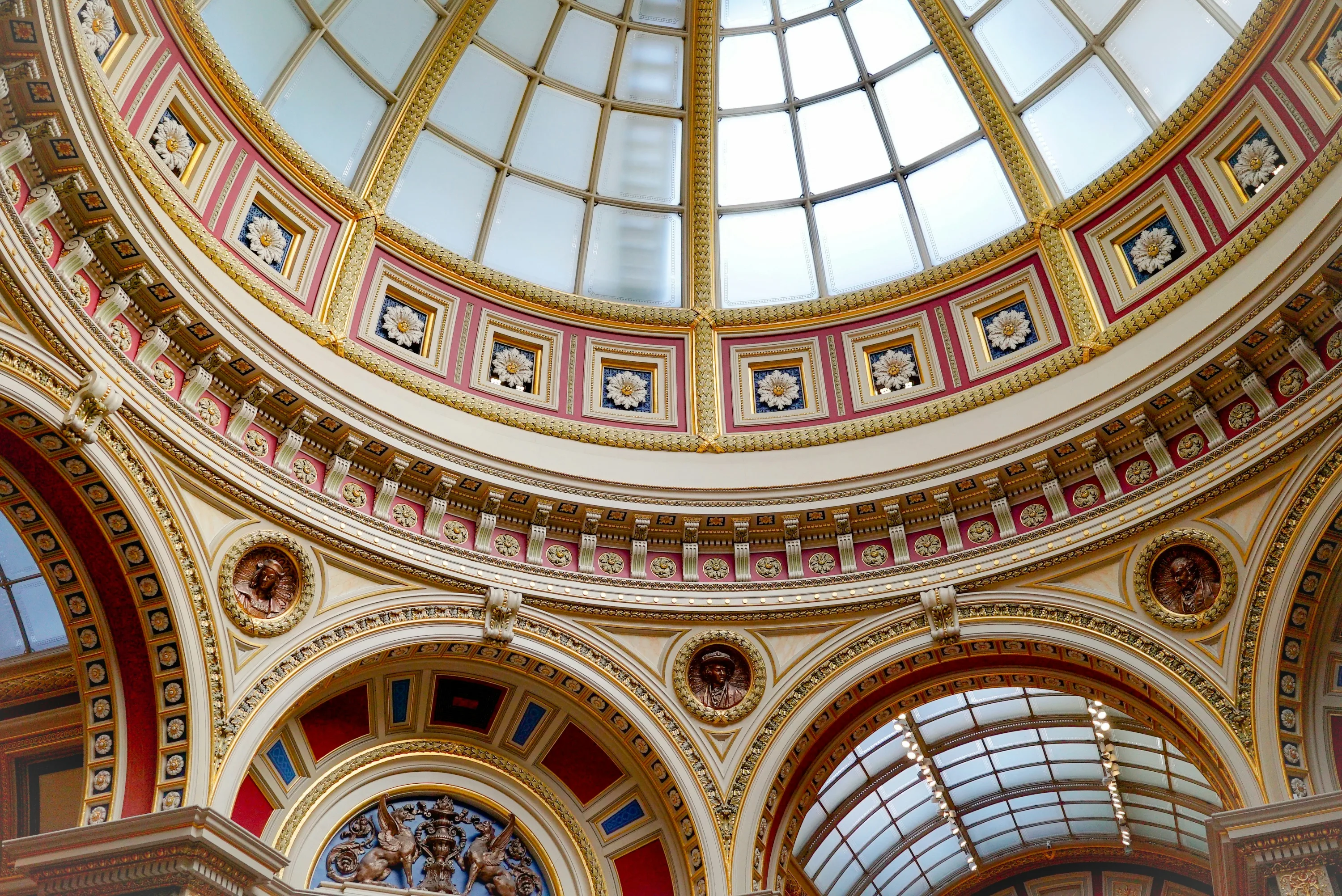
Address: Trafalgar Square, London WC2N 5DN. The main entrance is now the Sainsbury Wing, at the western end of the Trafalgar Square frontage, which is also the step-free route in.
What is the Best Way to Get to the National Gallery?
The Gallery could hardly be more central, sitting directly on Trafalgar Square at the meeting point of Westminster, Covent Garden, and Soho.
By tube: Charing Cross (Bakerloo and Northern lines) is a two-minute walk. Leicester Square (Piccadilly and Northern lines) is around five minutes, and Embankment (District, Circle, Bakerloo, and Northern lines) about seven. Piccadilly Circus is also within an easy walk.
By train: Charing Cross mainline station is two minutes away, making the Gallery one of the easiest London attractions to reach from the south east.
By bus: Dozens of routes stop in and around Trafalgar Square, including the 15, 24, 87, 91, and 139.
On foot: The Gallery sits at the natural crossroads of central London sightseeing: 10 minutes from Covent Garden, 15 minutes down Whitehall from Westminster Abbey and Big Ben, 15 minutes along The Mall from Buckingham Palace, and a lovely walk across Hungerford Bridge from the South Bank.
By car: Do not drive. The Gallery is inside the Congestion Charge zone with no visitor parking.
How Much Time Should I Spend at the National Gallery?
Two to three hours is good for most people: enough for the headline paintings, a proper walk through one or two favourite periods, and a coffee stop. Stretching towards four hours lets you take the collection chronologically from the Sainsbury Wing's medieval rooms through to the Impressionists without rushing.
If you have less time, an hour covers a highlights lap, and because entry is free, short visits carry no cost penalty: splitting the Gallery across two relaxed visits beats one exhausting one, and is a realistic option if you are staying in central London. Arriving within the final hour before closing effectively limits you to a highlights-only visit, since rooms begin closing shortly before the stated time.
What is the Best Time to Visit the National Gallery?
Tuesday to Thursday right at 10am opening is the quietest reliable window. The building fills from late morning as tour groups and Trafalgar Square foot traffic peak, and weekend afternoons are the busiest of all, especially around Sunflowers and the Impressionist rooms.
Friday evening after 6pm is the insider's slot. The Gallery is open until 9pm, the day crowds have drained away, the Friday Lates programme adds talks and performances, and select exhibitions switch to pay-what-you-wish pricing. During the summer opening until 7pm daily (3 July to 31 August), the final two hours of any evening are noticeably calmer than the afternoon.
If Sunflowers is your priority, go straight there at opening or save it for a Friday evening. By midday the picture draws a semi-permanent crowd of phones, and the experience is very different.
Rainy days concentrate crowds indoors here more than at almost any other London attraction, since the Gallery is free, central, and warm. A sunny weekday is, counterintuitively, the calmest time for art.
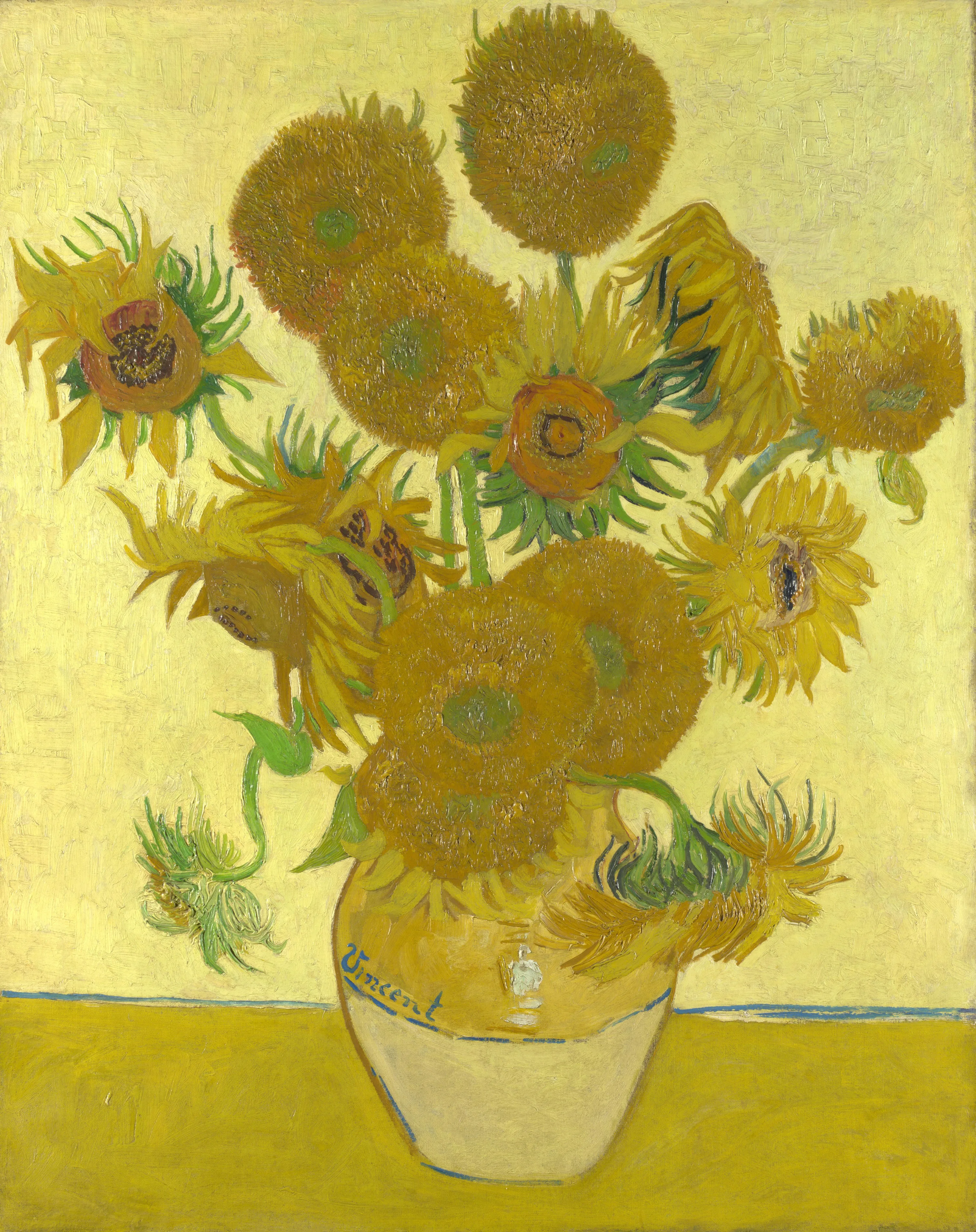
Vincent Van Gogh's Sunflowers is one of the National Gallery's most famous works on display.
Famous Paintings: What to See at the National Gallery
The collection is arranged chronologically across two buildings: the Sainsbury Wing holds painting from 1250 to 1500, and the main Wilkins Building carries everything from 1500 onward, with dedicated rooms for Rembrandt, Titian, and Monet introduced in the 2025 rehang. These are the works people cross the world for:
Vincent van Gogh, Sunflowers (1888): The most visited painting in the building and one of the most famous images on earth. The Gallery also holds Van Gogh's Chair and A Wheatfield, with Cypresses, making this the best free Van Gogh viewing anywhere in London.
J.M.W. Turner, The Fighting Temeraire (1839): Voted Britain's favourite painting, the old warship towed to her last berth against a blazing sunset. The Turner rooms around it reward slowing down.
Jan van Eyck, The Arnolfini Portrait (1434): The endlessly analysed double portrait, with its convex mirror reflecting the whole room in miniature. Get close: the detail repays it.
Leonardo da Vinci, The Virgin of the Rocks (about 1491 to 1508): One of the very few Leonardo paintings on permanent public view anywhere, alongside his Burlington House Cartoon drawing.
Hans Holbein the Younger, The Ambassadors (1533): Famous for the distorted skull stretched across its foreground, which snaps into shape when viewed from the right-hand side. Watching visitors discover the trick is half the fun.
Diego Velázquez, The Rokeby Venus (1647 to 1651): The Spanish master's only surviving nude, and the anchor of a strong Spanish collection that also includes El Greco, Goya, Murillo, and Zurbarán.
Titian, Bacchus and Ariadne (1520 to 1523): The flash of blue that stops people mid-room, centrepiece of the new dedicated Titian gallery.
Caravaggio, The Supper at Emmaus (1601): Theatrical light and outflung arms; the painting that teaches you what Baroque drama means.
Rembrandt, Self Portrait at the Age of 63 (1669): Painted in the final year of his life, in the new Rembrandt room alongside Belshazzar's Feast.
George Stubbs, Whistlejacket (about 1762): A life-size rearing horse on a bare canvas, and the painting children remember.
John Constable, The Hay Wain (1821): England's most beloved landscape.
Georges Seurat, Bathers at Asnières (1884), with Monet, Renoir, Cézanne, and Degas: The Impressionist and Post-Impressionist rooms are among the richest in the collection, including Monet's water lilies and The Water-Lily Pond, and they are consistently the busiest rooms in the building after Sunflowers.
Botticelli's Venus and Mars, Raphael's The Madonna of the Pinks, Vermeer's two quiet interiors, Van Dyck's grand portraits, and Piero della Francesca's The Baptism of Christ round out a highlights list that would anchor a national museum on its own in most countries.
The Sainsbury Wing: The New Main Entrance
The Sainsbury Wing reopened on 10 May 2025 after a two-year renovation by Selldorf Architects, and it changed how the whole Gallery works. It is now the main entrance, with a light-filled double-height foyer, and the step-free route into the building. The renovation triggered the first complete rehang of the collection since 1991, so guidebooks and room numbers from before 2025 are out of date.
The wing itself holds the medieval and early Renaissance collection, 1250 to 1500: the gold-ground altarpieces, Van Eyck, Botticelli, Piero della Francesca, and the Leonardo works. Its galleries were designed for exactly this art, with soft natural light and chapel-like proportions, and even visitors who come only for the Impressionists should walk through. Starting here and moving chronologically into the Wilkins Building is the best route through the collection, and it means you begin at the quieter end of the building while the crowds head straight for Sunflowers.
National Gallery Exhibitions in 2026
The permanent collection is free, but the major exhibitions are ticketed, typically from around £20, and they are the one part of the Gallery where advance booking matters in the traditional sense.
Zurbarán (until 23 August 2026): The first major UK exhibition of Francisco de Zurbarán, the Spanish Baroque master of monks, martyrs, and still lifes.
Ferdinand Georg Waldmüller (2 July to 20 September 2026): The first UK exhibition of the Austrian painter, a key figure of the Biedermeier period.
Renoir and Love (3 October 2026 to 31 January 2027): The largest Renoir exhibition in the UK for twenty years. Expect this one to sell out for weekends and holiday dates; book early, or use Membership for unlimited entry.
Exhibition tickets are bookable on the website, and select exhibitions offer pay-what-you-wish entry on Friday evenings.
Tours, Audio Guides, and Friday Lates
Free guided tours run daily, led by Gallery experts and covering a rotating selection of highlights. Places are limited and allocated on the day, so arrive 10 to 15 minutes before the scheduled start; times are posted on the website and at the information desks.
The audio and multimedia guides (around £5) cover hundreds of works and offer themed routes, including highlights circuits for visitors on a tight schedule. Given that entry is free, £5 for expert commentary is the best-value add-on in the building.
Friday Lates keep the Gallery open until 9pm every Friday with free talks, workshops, live music, and performances among the paintings, plus a bar. It is the most atmospheric time to visit and needs no ticket beyond the free entry booking.
Third-party guided tours of the Gallery are widely sold, and a good guide adds a ton of value, but be aware of what you are paying for: entry itself is free, so the fee is entirely for the guiding.
Is the National Gallery Worth Visiting?
Yes, it's got to be one of the best museums in all of Europe in my opinion. And plus, it costs literally nothing. Even visitors with no particular interest in art tend to be caught by something here, whether it is the trick skull in The Ambassadors, the scale of Whistlejacket, or simply standing in front of Sunflowers and realising it is the real one. The building itself, from the Wilkins portico overlooking Trafalgar Square to the renovated Sainsbury Wing foyer, is part of the experience.
That all being said, two things. The first is crowds: this is one of the most visited museums on earth, and the famous rooms at midday on a weekend are a shuffle rather than a stroll. Timing your visit (opening time midweek, or Friday evening) transforms the experience more here than at almost any other London attraction. The second is scale: 2,300 paintings produce art fatigue fast if you try to be complete. Pick a route, accept that you will miss entire centuries, and sit down in front of one painting for five minutes at some point; the benches exist for a reason, and the slow look is what the free entry makes possible. You can always come back, and the best visitors treat the Gallery as a place to return to rather than conquer.
Families do better than expected: entry is free for everyone, family trails and resources are available, and paintings like Whistlejacket, The Ambassadors, and the Van Goghs hold children's attention reliably. The one group who should manage expectations are modern art fans: the collection effectively ends in the early 20th century, and Picasso onwards lives at Tate Modern.
Where Should I Eat at and Near the National Gallery?
Inside the Gallery:
Ochre is the Gallery's flagship restaurant, on the ground floor of the Wilkins Building with views towards Nelson's Column, serving a British-European brasserie menu, set menus from £24.50, cocktails named after paintings in the collection, and an afternoon tea that ranks among the best-regarded in the West End. Open until 7pm most days and 9pm on Fridays, with its own entrance, so it works for dinner after closing. Book ahead for afternoon tea and Friday evenings.
Muriel's Kitchen and the Espresso Bar cover the casual end inside the Gallery: coffee, cakes, sandwiches, and quick lunches without leaving the building. Eat before noon or after 2pm; the lunch window is the least relaxing time.
Osteria Locatelli, Giorgio Locatelli's Italian dining room overlooking Trafalgar Square, operates within the Gallery for the summer season, an unusually serious dining option for a museum.
A short walk away:
Café in the Crypt, beneath St Martin-in-the-Fields church directly across from the Gallery's east end, serves reliable, affordable canteen-style British food under 18th-century brick vaults, one of central London's best-value lunches and a two-minute walk.
The Harp (Chandos Place, three minutes) is a tiny, much-garlanded traditional pub with an exceptional rotating beer selection, the natural post-Gallery pint.
Gordon's Wine Bar (Villiers Street, seven minutes towards Embankment) claims to be London's oldest wine bar, all candlelit cellar gloom, cheese boards, and sherry from the barrel. Arrive early for a table; it fills fast.
Dishoom Covent Garden (Upper St Martin's Lane, seven minutes) serves its famous Bombay café menu, with queues to match at peak times; mid-afternoon is the window for walking in.
What Else is There to Do Near the National Gallery?
Trafalgar Square is immediately outside: Nelson's Column, the lions, the Fourth Plinth's rotating contemporary commission, and the fountains. The view down Whitehall to Big Ben from the Gallery's portico is one of London's defining vistas and costs nothing.
The National Portrait Gallery is literally around the corner on St Martin's Place, a two-minute walk, with its collection of portraits of the people who made British history. It is also free and pairs naturally with a National Gallery morning; see our National Portrait Gallery guide for visit details.
St Martin-in-the-Fields, the 18th-century church on the square's north-east corner, runs free lunchtime concerts and celebrated candlelit evening concerts, with the Café in the Crypt below.
Covent Garden is a ten-minute walk: the market halls, street performers, the London Transport Museum, and the Royal Opera House.
Whitehall and Westminster stretch south from the square: Horse Guards, the Churchill War Rooms (advance booking needed), Westminster Abbey, and Big Ben are all within a 15-minute walk, making the Gallery the natural morning anchor of a Westminster sightseeing day.
Buckingham Palace is 15 minutes' walk along The Mall through Admiralty Arch.
Bags, Rules, and Security
Bags and luggage: All visitors pass through a bag check at entry. Large suitcases and wheeled luggage are not permitted in the building at all, and there is no storage for them, so plan around this if you are between hotels; use a luggage storage service near Charing Cross first. Smaller bags are allowed, with a cloakroom (small per-item fee) for coats, umbrellas, and backpacks. Bringing only a small bag is the single easiest way to speed up your entry.
Photography: Allowed for personal use throughout the permanent collection, without flash, tripods, or selfie sticks. Some ticketed exhibitions restrict photography, signposted at their entrance.
Food and drink: Not permitted in the galleries. Large drinks should be finished before security.
Children: Very welcome, with free family trails and resources; pushchairs are fine in the galleries.
Accessibility at the National Gallery
The Sainsbury Wing main entrance is step-free, and lifts connect all gallery levels, making the whole collection accessible to wheelchair and mobility-scooter users. Wheelchairs can be borrowed free of charge, and accessible toilets are available on multiple levels.
Large-print guides, a British Sign Language multimedia guide, and audio-descriptive resources are available for blind, partially sighted, and D/deaf visitors, and the Gallery runs a regular programme of described and BSL-interpreted tours and events. Assistance dogs are welcome throughout. Seating is generous by museum standards, with benches in most rooms, which matters in a building this size.
The Gallery publishes a visual story and detailed access information on its website, worth reviewing in advance for anyone planning around specific needs.
Final Tips for Visiting the National Gallery
Book the free timed ticket even though entry is free. It costs nothing and gets you fast-track entry past a walk-up queue that can reach 40 minutes on busy afternoons.
Go at 10am midweek or on Friday evening. These two windows will make your visit a lot nicer; midday weekends around Sunflowers and the Impressionists are the crowds at their worst.
Enter through the Sainsbury Wing and walk the collection chronologically. You start in the quietest, most beautiful rooms while the crowds sprint to Van Gogh, and the collection makes far more sense in order.
Do not attempt the whole building. Pick the highlights plus one or two periods you care about, sit in front of something for five minutes, and save the rest; free entry means return visits cost nothing.
Leave the suitcase behind. Wheeled luggage and large cases are barred from the building entirely, with no storage on site.
Book exhibition tickets early for the big shows, especially Renoir and Love from October 2026, and remember select exhibitions go pay-what-you-wish on Friday evenings.
Time a free guided tour or spend £5 on the audio guide. Expert context is the cheapest upgrade in the building.
Pair it with the National Portrait Gallery next door and Trafalgar Square itself, then walk Whitehall to Westminster or The Mall to Buckingham Palace; the Gallery anchors the best free morning in London.
Back to London Attractions
Explore other London attractions


" width="24px"><path d="M 0 0 L 24 0 L 24 21.231 L 0 21.231 Z" fill="transparent" height="21.230768474975793px" id="nL2EwDcS9" width="24px"/><path d="M 0 0.541 C 0 0.242 0.245 0 0.547 0 L 2.735 0 C 3.037 0 3.282 0.242 3.282 0.541 L 3.282 4.598 C 3.282 4.897 3.037 5.139 2.735 5.139 L 0.547 5.139 C 0.245 5.139 0 4.897 0 4.598 Z" fill="rgb(196, 217, 201)" height="5.138657337892187px" id="hZ_rlBe_S" transform="translate(0 16.092)" width="3.2820512820512358px"/><path d="M 0 0.541 C 0 0.242 0.245 0 0.547 0 L 2.735 0 C 3.037 0 3.282 0.242 3.282 0.541 L 3.282 7.843 C 3.282 8.142 3.037 8.384 2.735 8.384 L 0.547 8.384 C 0.245 8.384 0 8.142 0 7.843 Z" fill="rgb(230, 211, 160)" height="8.38412513024521px" id="HgVBxIz3e" transform="translate(5.128 12.847)" width="3.282051282051235px"/><path d="M 0 0.541 C 0 0.242 0.245 0 0.547 0 L 2.735 0 C 3.037 0 3.282 0.242 3.282 0.541 L 3.282 12.982 C 3.282 13.281 3.037 13.523 2.735 13.523 L 0.547 13.523 C 0.245 13.523 0 13.281 0 12.982 Z" fill="rgb(232, 207, 164)" height="13.522782468137464px" id="utgrDnoM9" transform="translate(10.325 7.708)" width="3.282051282051377px"/><path d="M 0 0.541 C 0 0.242 0.245 0 0.547 0 L 2.735 0 C 3.037 0 3.282 0.242 3.282 0.541 L 3.282 16.498 C 3.282 16.797 3.037 17.039 2.735 17.039 L 0.547 17.039 C 0.245 17.039 0 16.797 0 16.498 Z" fill="rgb(233, 196, 166)" height="17.038705909853153px" id="OLOhW6STz" transform="translate(15.521 4.192)" width="3.2820512820512384px"/><path d="M 0 0.541 C 0 0.242 0.245 0 0.547 0 L 2.735 0 C 3.037 0 3.282 0.242 3.282 0.541 L 3.282 20.69 C 3.282 20.989 3.037 21.231 2.735 21.231 L 0.547 21.231 C 0.245 21.231 0 20.989 0 20.69 Z" fill="rgb(217, 170, 153)" height="21.230768474975793px" id="H5Z8wcwkd" transform="translate(20.718 0)" width="3.2820512820512278px"/></g></svg>)