Back to London Attractions
How Far in Advance to Book Tickets to Westminster Abbey in London
Updated August 2026
There is a building in the centre of London that has stood at the heart of the nation's life for nearly a thousand years, and that continues, on any given week, to be simultaneously a working church, a royal mausoleum, a coronation theatre, a school, a tourist attraction, and a concert hall. Westminster Abbey, formally the Collegiate Church of Saint Peter at Westminster, has been the site of every English and British coronation since William the Conqueror in 1066, the burial place of at least 30 kings and queens, the resting place of Isaac Newton, Charles Darwin, Stephen Hawking, Geoffrey Chaucer, Charles Dickens, and over 3,300 other figures from British history, and the setting for royal weddings including that of the Prince and Princess of Wales in 2011 and the state funeral of Queen Elizabeth II in 2022. Its Gothic interior, begun by Henry III in 1245, is one of the finest in Britain, with the Henry VII Lady Chapel's intricate fan vaulting widely regarded as the most beautiful ceiling in England. At £31 for adult admission and no free entry to the permanent visitor experience, it is not the cheapest afternoon in London, but it is one of the most layered and most affecting, and this guide covers everything you need to know before you go.
At a Glance
How Early to Book:
1-2 weeks ahead of visit.
Tickets Released:
1-2 months in advance depending on time of year.
Best Times to Visit:
Weekday mornings from Monday to Thursday are the calmest times for a sightseeing visit.
Ticket price:
£31 for adults. Worshipping is free of charge.
Where to Book:
Landmark Address:
Do You Need to Book Westminster Abbey Tickets in Advance?
Yes. Booking online in advance is cheaper than walk-up and secures your timed entry slot. The Abbey is busy year-round, and during the peak summer months (June to August), Easter, Christmas, and New Year, popular morning slots fill up significantly ahead of time. Visitors who arrive without a booking may find early entry slots unavailable and face longer waits.
Book through the official Westminster Abbey ticketing site. This is the only authorised booking platform.
The Queen's Diamond Jubilee Galleries are a separate, ticketed add-on and are not included in the standard admission price. The Galleries carry a small supplementary charge on top of the Abbey ticket and must be reserved at the same time as your Abbey ticket. See the dedicated section below.
The annual pass upgrade: If you buy an online ticket through the official Westminster Abbey website, you can upgrade it to an annual pass free of charge. Simply ask a member of the Visitor Experience team to upgrade your ticket to an annual pass on your first visit. The pass allows you to visit the Abbey three times within one year for the price of a single ticket. Pre-booking is not required for subsequent visits, and the pass represents exceptional value for visitors who may return to London within 12 months or who want to attend Evensong and return for a full sightseeing visit at a later date.
Ticket rescheduling: Tickets are non-refundable, but if your plans are affected by transport strikes or illness, the Abbey is happy to reschedule your visit within six months of the original booking date.
The London Pass covers Westminster Abbey admission. Pass holders should note that during the busiest periods (Easter, June to August, and the Christmas and New Year period), entry with the London Pass is only available from 1:00pm, not at opening.
The Go City London Pass also covers Westminster Abbey admission, but the Queen's Diamond Jubilee Galleries are not included and must be purchased separately on arrival.
Westminster Abbey Opening Hours and Entry Information
Westminster Abbey is open for sightseeing Monday to Saturday. It is closed to sightseeing on Sundays, when the Abbey is open for worship only. Services on Sundays are free to attend but do not permit independent exploration.
Standard sightseeing hours:
Monday to Friday: 9:30am to 3:30pm (last admission 2:30pm)
Saturday: 9:00am to 3:00pm (last admission 2:00pm)
The Abbey closes one hour after last entry. Visitors who enter at the last admission time will have approximately one hour inside the building.
Closed for sightseeing on 25 December.
Closures at short notice: The Abbey closes to sightseeing visitors for major services, state events, royal occasions, and liturgical ceremonies, sometimes with very little advance warning. A full list of known closures is published on the Abbey's official website. Always check this list before your visit, particularly if visiting in December (when the pre-Christmas period brings a dense programme of services), in spring (Easter), or around significant royal or national anniversaries. Visitors who have booked tickets for a day that subsequently closes are eligible to reschedule.
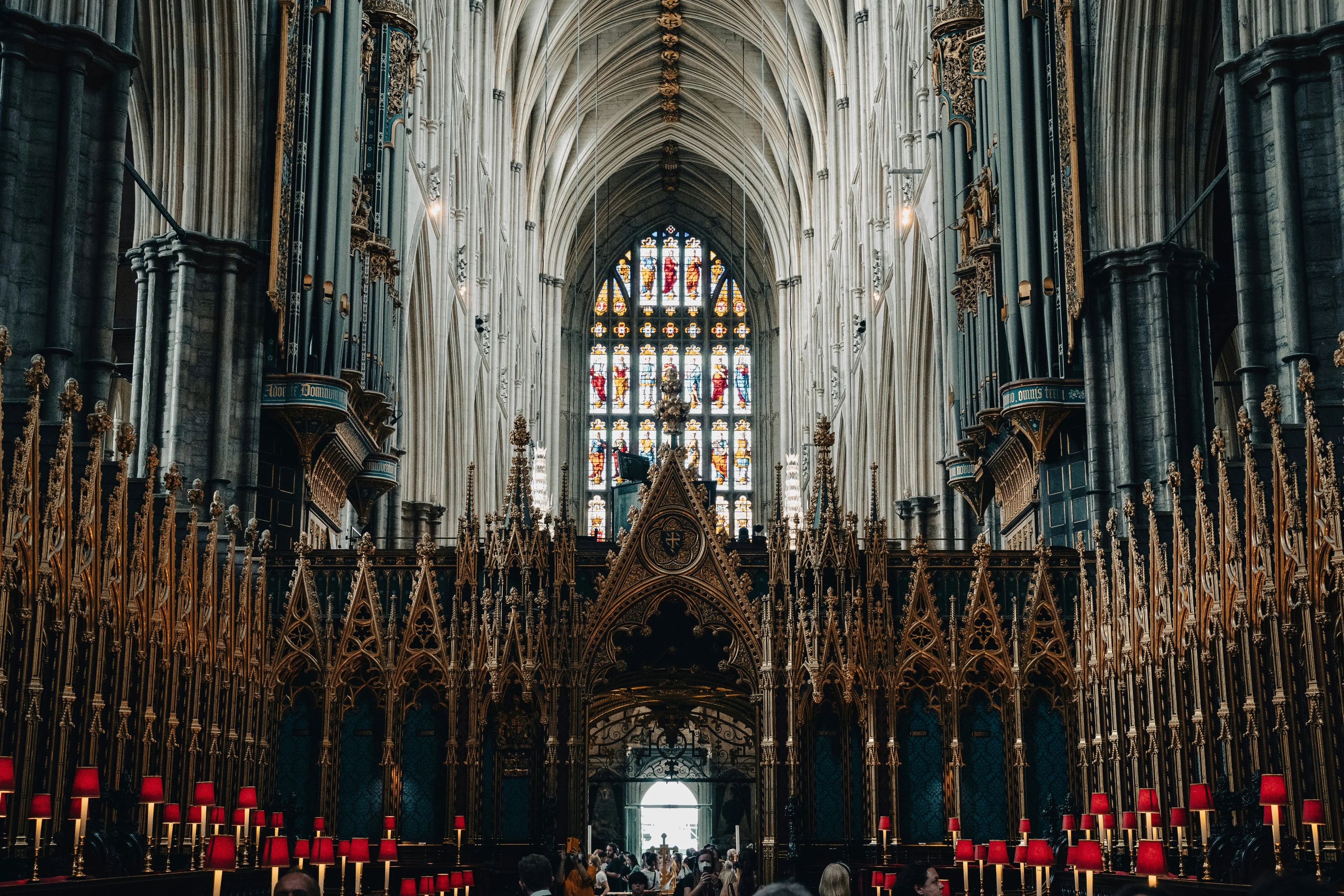
What is the Best Time to Visit Westminster Abbey?
Weekday mornings from Monday to Thursday are consistently the calmest time for a sightseeing visit. Arriving at 9:30am opening gives you the nave, the cloisters, Poets' Corner, and the Lady Chapel in the quietest conditions of the sightseeing day. The morning light through the Abbey's high windows is particularly beautiful in the early hours, and popular areas like Poets' Corner and the Coronation Chair area are less congested before the main body of visitors arrives after 11:00am.
Friday afternoons are a useful secondary quiet window. Many visitors front-load their Westminster visits in the morning, and the Abbey is noticeably calmer in the early afternoon on Fridays before the weekend.
The peak period is broadly 10:30am to 1:00pm on any weekday, and throughout the morning on Saturdays. During summer (June to August), Easter, and the Christmas and New Year period, these hours see the highest visitor concentrations throughout the sightseeing areas.
Saturday visits come with one practical consideration: the sightseeing window closes earlier than on weekdays, and Evensong on Saturdays is at 3:00pm, meaning the transition from sightseeing to worship happens earlier than visitors sometimes expect. Check the closing time for Saturdays on the official website before your visit.
Sundays are closed to sightseeing. The Abbey is open on Sundays for worship, and all services are free and open to anyone. But if your primary purpose is to see the monuments, the royal tombs, the Coronation Chair, and Poets' Corner at your own pace, you will need to visit on another day.
For Evensong: Weekday Evensong at 5:00pm is one of the finest free experiences in London (see the Evensong section below). It begins after the sightseeing day has closed, so attending Evensong and visiting separately on another day is the approach for visitors who want both experiences.
Seasonally: The Abbey is atmospheric in all seasons. A grey January weekday morning with few visitors and the candles flickering in the side chapels is one of the more quietly extraordinary urban experiences London offers. Summer visits offer better light and longer days but significantly higher crowd levels. The shoulder seasons of April to May and September to October offer the best balance.
What is the Best Way to Get to Westminster Abbey?
The Abbey is located at 20 Dean's Yard, Westminster, London SW1P 3PA, and is extraordinarily well connected.
By Tube (recommended): The nearest station is Westminster (Jubilee, District, and Circle lines), around three to four minutes on foot across Parliament Square. From the station exit on Parliament Square, turn left past the Houses of Parliament and the entrance to the Abbey is directly ahead on the left, facing the square. This is the most straightforward and direct approach from most of central London, and the walk across Parliament Square with Big Ben on the right and the Abbey ahead is one of the classic London arrivals.
St James's Park (District and Circle lines) is around eight to ten minutes on foot from the Abbey, through the streets south of the park or directly along Birdcage Walk. This is a pleasant walk in fine weather.
Victoria (District, Circle, Victoria lines, and National Rail) is around 12 to 15 minutes on foot, walking north along Victoria Street towards Parliament Square. It is the most practical option for visitors arriving on the National Rail network from south London, Surrey, and the south coast.
By Bus: Multiple routes serve the Westminster and Parliament Square area, including the 3, 11, 12, 24, 53, 77, 87, 88, 148, 159, 211, and 453. All stop within a short walk of the Abbey.
On foot: The Abbey is around 10 minutes from Trafalgar Square and the National Gallery, around 12 minutes from Buckingham Palace, and around 15 minutes from Tate Britain. The riverside walk from the South Bank via Westminster Bridge is a very pleasant approach from the east, passing the London Eye and arriving at Parliament Square from the river.
By car: There is no on-site parking. Westminster is within the London Congestion Charge zone (Monday to Friday 7:00am to 6:00pm, weekends 12:00pm to 6:00pm). Street parking in the immediate area is extremely limited. Public transport is far more practical from any starting point in central London.
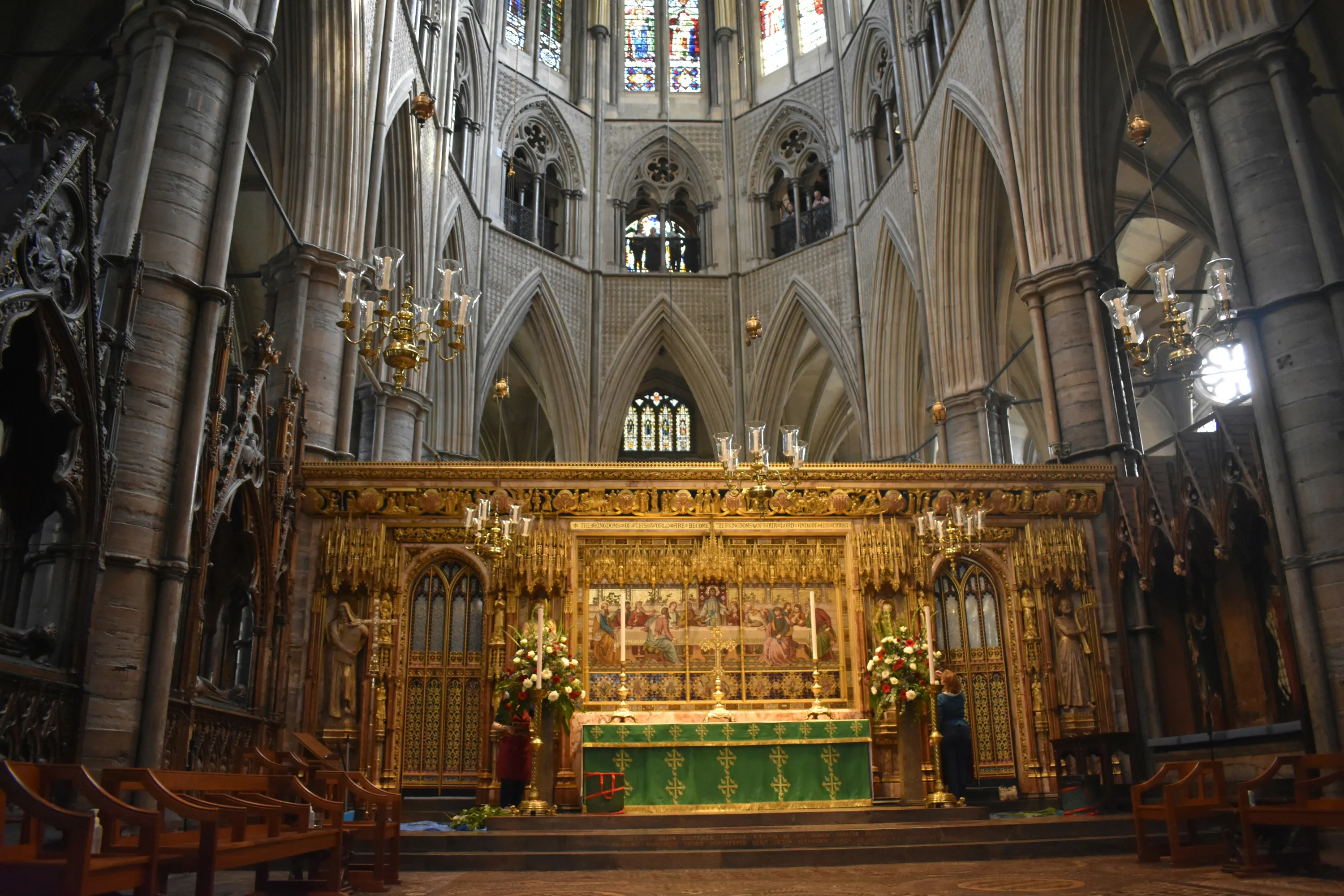
Westminster Abbey is not actually an abbey, which is defined as a monastery or convent ruled by an abbot or abbess. In 1560, Queen Elizabeth I re-established the church and bestowed a new title: The Collegiate Church of Saint Peter at Westminster.
Is Westminster Abbey Worth Visiting?
Westminster Abbey is absolutely worth a visit for a tourist in London. Westminster Abbey is not a museum in the conventional sense: there are no gallery rooms, no themed exhibitions, and no conventional visitor flow through a sequence of labelled displays. What it is, instead, is a working church that also happens to be the most historically dense building in Britain, in which nearly a thousand years of the nation's life are embedded in the stone under your feet, the monuments on the walls around you, and the stained glass above.
Walking through the Abbey requires a particular kind of attentiveness: the willingness to slow down and read what is in front of you, to understand that the slab you are standing on covers a person, and that the inscription on the wall to your left is not decorative but a record of someone who lived. For visitors who bring that attentiveness, the experience is extraordinary. For visitors who move through quickly as a box-ticking exercise, it is easy to feel that the price was high for a church. The Abbey rewards the approach you bring to it.
The Henry VII Lady Chapel is the single most spectacular architectural space and should be given more time than most visitors allocate to it. Built between 1503 and 1519 as Henry VII's personal chapel and mausoleum at the eastern end of the Abbey, its late-Gothic fan vault is the most elaborate example of that form anywhere in England: a ceiling of interlocking stone fans hanging from the vault in an impossible filigree that looks more like lace than architecture. The tomb of Henry VII and Elizabeth of York, by Pietro Torrigiano, is the finest Renaissance tomb in England. The blue and gold banners of the Order of the Bath hang above the stalls below. The chapel contains the tombs of Mary Queen of Scots and Elizabeth I on opposite sides of the aisle, two of the most significant women in British history, rivals in life and near-neighbours in death.
Poets' Corner occupies the South Transept and is the most emotionally varied part of the Abbey for a visitor with any engagement with British literature. Geoffrey Chaucer is the most ancient presence, buried here in 1400 simply because he was a resident of the precincts rather than for his poetry, and the accumulation of subsequent monuments and graves around him constitutes the most concentrated memorial to literary achievement in the world. Charles Dickens requested a private funeral and a modest grave; the Abbey gave him Poets' Corner anyway. Rudyard Kipling, Thomas Hardy, Alfred Lord Tennyson, Lord Byron (a memorial, not a grave), Edmund Spenser, and memorials to Shakespeare, Jane Austen, the Brontë sisters, T.S. Eliot, and W.H. Auden are all here. Some of the most visited spaces in Poets' Corner are not graves but floor slabs, and the experience of standing in a room this charged with literary memory is unlike anything else in London.
Scientists' Corner, in the nave, is less commonly known than Poets' Corner but equally affecting for visitors with an interest in the history of science. Isaac Newton's monumental tomb in the nave, with its depiction of him reclining on a pile of his own books, is one of the grandest funerary monuments in the building. Charles Darwin is buried a short distance away, in a floor slab marked simply with his name. Stephen Hawking's ashes were interred between Newton and Darwin in 2018, completing a grouping that represents something close to the apex of British scientific achievement.
The Coronation Chair, now housed in St George's Chapel adjacent to the nave, is the oldest piece of furniture in England still in use for its original purpose. Every monarch since Edward II in 1308 has been crowned seated in this oak chair, with the Stone of Destiny beneath its seat (the stone was returned to Scotland in 1996 but is brought back for coronations). Seeing it in person, in the building where it has played its role for more than 700 years, is one of those moments where the weight of actual history is physically present rather than narrated.
The Grave of the Unknown Warrior, just inside the West Door of the nave, is the most visited grave in the world. The soldier was brought from a battlefield in France and buried here on 11 November 1920 in a coffin filled with soil from the major battlefields of the First World War. Royal brides since that date have traditionally paused here to lay their bouquets: the Princess of Wales's bouquet from the 2011 wedding was laid here after the ceremony. The black marble slab is kept permanently clear; visitors are asked not to walk on it.
The Cloisters and College Garden are the quietest part of any Abbey visit and the most restorative. The East Cloister walkway connects the main Abbey to the Chapter House and the Pyx Chamber, and the medieval character of the stonework and the garden it encloses offers a calm that the main Abbey, with its crowds and its density of monuments, does not always provide. The College Garden, said to be one of the oldest cultivated gardens in England with continuous cultivation for over 900 years, is open on Tuesdays, Wednesdays, and Thursdays from 10:00am to 6:00pm (4:00pm in winter) and is free to enter. It is worth factoring into any visit.
David Hockney's Queen's Window, installed in the north aisle in 2018, is the Abbey's most recent major commission: a stained glass window in bold blues, greens, and yellows celebrating the reign of Queen Elizabeth II. It is a striking contrast with the medieval and Victorian glass around it and has been warmly received as a successful integration of contemporary art into one of the most traditional architectural settings in Britain.
How Much Time Should I Spend at Westminster Abbey?
Allow a minimum of two hours for a focused visit covering the main Abbey interior including the nave, the Lady Chapel, Poets' Corner, the cloisters, and the Coronation Chair. Adding the Queen's Diamond Jubilee Galleries requires approximately an extra 45 minutes to one hour. Visitors who want to explore the Chapter House, the Pyx Chamber, and the College Garden at a reflective pace should plan for up to three hours in total.
A rough guide to planning your time:
West entrance, nave, and Scientists' Corner: 15 to 20 minutes
Poets' Corner (South Transept): 15 to 25 minutes
Henry VII Lady Chapel and royal tombs: 20 to 30 minutes
Coronation Chair (St George's Chapel): 10 minutes
North Transept and crossing: 10 minutes
Cloisters, Chapter House, Pyx Chamber: 20 to 30 minutes
College Garden (Tuesday, Wednesday, Thursday only): 15 to 20 minutes
Queen's Diamond Jubilee Galleries (additional ticket): 45 to 60 minutes
The Abbey closes one hour after last admission. Visitors who book the last available entry slot and want to see the Galleries as well should be aware that time pressure in the final hour is real. An earlier slot gives the most comfortable experience.
Westminster Abbey Audio Guides and Guided Tours
The multimedia guide is included in the price of admission and is available in 14 languages. The English version is narrated by Jeremy Irons, whose measured delivery suits the gravity of the building. The guide covers the major monuments, chapels, and historical events associated with each area, and is the most practical tool for understanding what you are looking at as you move through the space. It is worth picking up even for visitors who would not normally use audio guides.
Verger-led guided tours offer access to areas not open to general visitors, most significantly the Shrine of Edward the Confessor, the 11th-century founder-king whose body has been in the Abbey for over 900 years and whose shrine sits at the liturgical heart of the building. The Shrine is not accessible on the standard self-guided visit. Verger tours also cover Poets' Corner, the royal tombs, the Lady Chapel, and the nave with expert commentary in English. Spaces are limited; enquire about availability at the ticket desk on arrival.
Early morning private tours run before the Abbey opens to the general public and offer a 90-minute experience in the empty building, limited to twelve participants per tour. The tour covers the Shrine of Edward the Confessor, the Queen's Diamond Jubilee Galleries, Scientists' Corner, Poets' Corner, the Lady Chapel, and the Coronation Chair. These tours are among the most atmospheric ways to experience any historic building in London, and the combination of the empty Abbey at dawn and the range of areas covered makes them worth the premium price for visitors with a serious interest in the building. Book through the official ticketing site.
Evensong at Westminster Abbey
Evensong at Westminster Abbey is one of the finest free experiences London offers and is consistently underestimated by visitors who assume that free means lesser. The Westminster Abbey Choir is one of the leading choral ensembles in the world, and hearing it perform the daily choral office in the acoustic of a great Gothic nave is a musical and spiritual experience that has no equivalent in the city.
Evensong times:
Monday to Friday: 5:00pm
Saturday: 3:00pm
Sunday: 3:00pm (the main choral service of the week)
The service is free and open to all, of any faith or none. No ticket or booking is required. Arrive at least 15 to 20 minutes before the service begins to ensure a seat; on popular days in summer the nave fills quickly.
During Evensong, independent sightseeing is not permitted. Visitors who attend Evensong are not allowed to tour the royal tombs, Poets' Corner, the Lady Chapel, or the Queen's Diamond Jubilee Galleries during the service. The experience is the service: the music, the architecture, the liturgy. If you want to see the monuments and also hear Evensong, plan two separate visits or use the annual pass upgrade.
Evensong does not take place on every weekday: the choir sings in term time only, and during school holidays and choir holidays the service may be spoken rather than sung or may not take place at all. The current schedule is published at on the website. Checking before your visit avoids disappointment if attending the choral service specifically is your motivation.
The Queen's Diamond Jubilee Galleries
The Queen's Diamond Jubilee Galleries opened in 2018 in the medieval triforium, the gallery level 70 feet above the Abbey floor that had been closed to the public for 700 years. They represent the first permanent public gallery space in the Abbey's history and are a separately ticketed add-on to the standard admission ticket.
The Galleries hold an extraordinary collection of objects relating to the Abbey's 1,000-year history: coronation regalia, funeral effigies of medieval monarchs and later figures (including the wooden effigy of Edward III, the oldest surviving royal effigy in Europe), tapestries, paintings, vestments, and documentary material connecting the Abbey to the great events of British history. The view from the triforium down into the Abbey nave, with the full Gothic interior spread out 70 feet below, is unlike any other perspective available in the building and is one of the finest elevated interior views in any London church.
Entry to the Galleries: Tickets for the Galleries must be purchased at the same time as your Abbey admission ticket. The Galleries operate on a separate timed entry system within the Abbey visit, sold in 30-minute slots. Plan your Galleries visit for approximately one hour into your overall Abbey visit, and book your Galleries slot approximately 45 to 60 minutes after your Abbey entry time. Alternatively, visiting the Galleries first before exploring the rest of the Abbey at ground level has worked well for many visitors and removes timing anxiety during the main visit.
The Galleries ticket carries a supplementary charge on top of the standard Abbey admission. Check the current supplementary price at the official ticketing site when booking.
Where Should I Eat Near Westminster Abbey?
The Abbey has a café accessible to ticket-holding visitors, serving coffee, cakes, sandwiches, and light refreshments. It is located in the Cloisters and is the most convenient option for a break during the visit. The setting is pleasant and somewhat calmer than the main Abbey visitor traffic.
For eating beyond the Abbey, the Westminster area offers a range of options within a short walk.
Café in the Crypt at St Martin-in-the-Fields, around 15 to 20 minutes on foot through Whitehall to Trafalgar Square, is one of the most characterful lunch venues in central London, serving a full café menu in the medieval crypt beneath an 18th-century church. It is consistently well-reviewed for both food and atmosphere and is an excellent post-museum lunch destination for a day combining Westminster Abbey with the National Gallery.
St James's Park itself, around 10 minutes from the Abbey, has café kiosks at the central bridge from which you can buy coffee, snacks, and cold drinks and eat on the grass overlooking the lake in good weather. This is the most pleasant al fresco option in the immediate vicinity in fine weather.
Victoria Street, running south from Parliament Square towards Victoria station, has a range of cafés, chain restaurants, and independent options. Quality is variable; the options improve further south towards Victoria, away from the most tourist-facing stretch near Parliament Square.
For a broader range of dining at better prices, Pimlico (around 15 minutes on foot south of the Abbey) and the streets around Victoria station offer considerably more variety than the immediate Westminster area.
Accessibility at Westminster Abbey
Westminster Abbey has invested significantly in accessibility, and most of the main visitor route is accessible to wheelchair users.
Wheelchair access to the main Abbey interior is via the North Door entrance, which is the designated accessible entry point and avoids the steps at the West Door. Staff at the entrance will direct wheelchair users to the correct access route. Most areas of the main floor visitor route, including the nave, Poets' Corner, the Lady Chapel, the Coronation Chair area, and the Cloisters, are accessible to wheelchair users.
Free wheelchairs are available on request at the Abbey; enquire at the visitor entrance.
The Queen's Diamond Jubilee Galleries in the triforium are accessible by lift.
The Chapter House and Pyx Chamber may present accessibility challenges due to the medieval building structure; staff can advise on accessible routes in advance.
Hearing loops are available for services and are installed in several areas of the Abbey interior. Large print guides are also available.
Registered disabled visitors and one essential companion receive free admission, bookable in advance through the ticketing website.
Rules and Practical Information
Photography: Photography is not permitted inside Westminster Abbey. This is one of the most important practical rules for visitors to know before arriving. Photographs taken at the entrance, from the exterior, and in the gift shop are permitted. No photographs, including on smartphones, are allowed inside the building during the sightseeing visit. Postcards and illustrated guidebooks covering the interior are available in the Abbey shop.
Bag search: All visitors pass through a bag check on entry. The Abbey asks that visitors do not bring large items including suitcases, large backpacks, or folding bicycles, as these will not be admitted and cannot be stored. There is no left-luggage facility at the Abbey.
Children: Children are welcome throughout the Abbey. Family tickets are available online. The Abbey offers family-specific programming on selected dates; check the What's On section of the official website.
Dress code: No formal dress code is stated, but appropriate attire for a place of active place of worship is expected.
Smoking and vaping are not permitted anywhere in the Abbey buildings or precincts.
What Else is There to Do Near Westminster Abbey?
The Abbey sits in one of the most historically and politically significant areas of London, and a full day can be built naturally around its immediate surroundings.
The Houses of Parliament and the Elizabeth Tower (Big Ben) are directly adjacent to the Abbey on the east side of Parliament Square. Guided tours of the Houses of Parliament are available on Saturdays year-round and on weekdays in parliamentary recess. Booking is required in advance. The Elizabeth Tower itself is not open for public visits; the exterior view from Parliament Square and Westminster Bridge is the primary experience. The proximity of both to the Abbey makes the combination the most natural single-day itinerary in Westminster.
The Churchill War Rooms, around eight to ten minutes on foot through St James's Park, are the underground Cabinet War Rooms from which Churchill and his War Cabinet directed Britain's involvement in the Second World War. This is consistently one of the most highly rated paid attractions in London, and it is operated by the Imperial War Museum, which means the quality of interpretation and display is exceptionally high. Advance booking is strongly recommended.
The National Gallery and National Portrait Gallery, around 15 to 20 minutes on foot through Whitehall to Trafalgar Square, are both free to enter for permanent collections and offer the most concentrated experience of great European and British painting available anywhere in the world.
Tate Britain, around 15 minutes on foot south along Millbank beside the Thames, is the national museum of British art from the 16th century to the present, free to enter for the permanent collection, and significantly less crowded than the Tate Modern. Its collection of Turner, Constable, Hogarth, and pre-Raphaelite works is outstanding.
Buckingham Palace, around 12 minutes on foot through St James's Park, is the official London residence of the monarch. The State Rooms are open to visitors in summer (early July to late September), when the Royal Family is not in residence. The changing of the Guard ceremony outside the Palace is free to watch. The approach along The Mall from Parliament Square is one of the great ceremonial walks in London.
St James's Park, between the Abbey and Buckingham Palace, is one of the most beautiful of London's central royal parks and is worth a walk through for the lake, the pelicans (a permanent resident colony since 1664), and the view back towards Westminster with the turrets of the Palace and the spires of the Abbey framing the skyline.
Final Tips for Visiting Westminster Abbey
Book online in advance. The ticket is cheaper than walk-up and secures your slot. Do not assume that because the Abbey has been open for 900 years it will be uncrowded when you arrive. Popular morning slots fill up.
Upgrade to the annual pass on arrival. It costs nothing and converts your single-visit ticket into three visits within a year. Even if you have no current plans to return, the pass makes it possible to attend Evensong on a separate occasion without paying a second admission, and to return if your first visit leaves you wanting more time.
Go to the Lady Chapel first. The standard visitor route does not always direct visitors to the Henry VII Chapel immediately, and many spend their freshest attention on the nave and Poets' Corner and arrive at the Lady Chapel tired. Reversing the order, or making the Lady Chapel your very first destination after entering, gives the most architecturally extraordinary space the attention it deserves.
Allow time in the Cloisters. The East Cloister and the Chapter House are significantly calmer than the main Abbey, and the medieval floor tiles and wall paintings of the Chapter House are among the finest examples of 13th-century decorative art in England. Most visitors pass through the Cloisters quickly; they repay slower exploration.
Book the Queen's Diamond Jubilee Galleries at the same time as your Abbey ticket. The Galleries are booked in 30-minute slots and the most convenient times sell out. Adding them when you book your Abbey ticket avoids the separate queue and the possibility of your preferred time being unavailable. Visit the Galleries first, then explore the main Abbey at ground level, for the most relaxed overall experience.
Attend Evensong if your schedule allows. It is free, it requires no booking, it is in the extraordinary acoustic of a great Gothic church, and it is one of the finest choral traditions in the world. Check the current schedule at the official website before your visit to confirm the choir is singing and not on holiday. Allow 15 to 20 minutes before the service begins to find a seat.
Check the closures page before your visit. The Abbey closes without much warning for national ceremonies, state events, and liturgical occasions. The official website maintains an up-to-date list of days when the building will be closed or access will be restricted. Five minutes of checking before your visit is far better than arriving to find the gates closed.
Combine with the Churchill War Rooms. The two are within 10 minutes of each other, they cover different millennia and different registers of national life, and together they make one of the most satisfying full-day itineraries in central London.
Back to London Attractions
Explore other London attractions
" width="24px"><path d="M 0 0 L 24 0 L 24 21.231 L 0 21.231 Z" fill="transparent" height="21.230768474975793px" id="nL2EwDcS9" width="24px"/><path d="M 0 0.541 C 0 0.242 0.245 0 0.547 0 L 2.735 0 C 3.037 0 3.282 0.242 3.282 0.541 L 3.282 4.598 C 3.282 4.897 3.037 5.139 2.735 5.139 L 0.547 5.139 C 0.245 5.139 0 4.897 0 4.598 Z" fill="rgb(196, 217, 201)" height="5.138657337892187px" id="hZ_rlBe_S" transform="translate(0 16.092)" width="3.2820512820512358px"/><path d="M 0 0.541 C 0 0.242 0.245 0 0.547 0 L 2.735 0 C 3.037 0 3.282 0.242 3.282 0.541 L 3.282 7.843 C 3.282 8.142 3.037 8.384 2.735 8.384 L 0.547 8.384 C 0.245 8.384 0 8.142 0 7.843 Z" fill="rgb(230, 211, 160)" height="8.38412513024521px" id="HgVBxIz3e" transform="translate(5.128 12.847)" width="3.282051282051235px"/><path d="M 0 0.541 C 0 0.242 0.245 0 0.547 0 L 2.735 0 C 3.037 0 3.282 0.242 3.282 0.541 L 3.282 12.982 C 3.282 13.281 3.037 13.523 2.735 13.523 L 0.547 13.523 C 0.245 13.523 0 13.281 0 12.982 Z" fill="rgb(232, 207, 164)" height="13.522782468137464px" id="utgrDnoM9" transform="translate(10.325 7.708)" width="3.282051282051377px"/><path d="M 0 0.541 C 0 0.242 0.245 0 0.547 0 L 2.735 0 C 3.037 0 3.282 0.242 3.282 0.541 L 3.282 16.498 C 3.282 16.797 3.037 17.039 2.735 17.039 L 0.547 17.039 C 0.245 17.039 0 16.797 0 16.498 Z" fill="rgb(233, 196, 166)" height="17.038705909853153px" id="OLOhW6STz" transform="translate(15.521 4.192)" width="3.2820512820512384px"/><path d="M 0 0.541 C 0 0.242 0.245 0 0.547 0 L 2.735 0 C 3.037 0 3.282 0.242 3.282 0.541 L 3.282 20.69 C 3.282 20.989 3.037 21.231 2.735 21.231 L 0.547 21.231 C 0.245 21.231 0 20.989 0 20.69 Z" fill="rgb(217, 170, 153)" height="21.230768474975793px" id="H5Z8wcwkd" transform="translate(20.718 0)" width="3.2820512820512278px"/></g></svg>)