Back to New York City Attractions
9/11 Memorial and Museum New York: Everything You Need to Know Before You Visit
Updated July 2026
The National September 11 Memorial and Museum occupies the site of the World Trade Center in Lower Manhattan, commemorating the nearly 3,000 people killed in the attacks of September 11, 2001 and February 26, 1993. It is really two separate places with two separate sets of rules: the outdoor Memorial plaza, with its twin reflecting pools set in the footprints of the towers, is free and open to everyone with no ticket required, while the Museum below ground is ticketed, timed, and needs booking in advance. Understanding the differences between the site is important because a lot of tourists arrive only for the Memorial, and that is a perfectly legitimate way to spend time here.
At a Glance
How Early to Book:
Book a couple days in advance for a museum ticket. Access to the outdoor memorial only does not require a ticket.
At least 6 months in advance.
Best Times to Visit:
Right at opening, or at close at the end of the day will have the thinnest crowds. Both the memorial and museum are best suited for visits at calmer points of the day.
Ticket price:
$36 for adults for access to the museum. Access to the outdoor memorial only is free of charge.
Where to Book:
Museum Address:
Do You Need to Book 9/11 Museum Tickets in Advance?
The Memorial requires no ticket at all. The outdoor plaza, the reflecting pools, the names parapets, the Survivor Tree, and the Memorial Glade are free and open to the public seven days a week. You can simply walk up.
The Museum requires timed tickets purchased in advance. Entry is by dated, timed reservation only, and a ticket becomes invalid if you arrive more than 30 minutes after your slot. Tickets can be booked up to six months ahead and include entry to all available exhibitions.
Where to book: The official platform is 911memorial.org. Buying direct supports the institution, which receives no ongoing federal funding for its operations.
Ticket prices:
Museum admission: $36 for adults, less for other age categories.
Family Pass (four): $106, covering two adults and two young adults
Family Pass (five): $125, covering two adults and three young adults, saving up to 20%
Children aged 6 and under: free, though a ticket is still required
Members: free
Guided tour options, all including Museum admission unless stated:
Museum Tour, 60 minutes: $48 to $60
Memorial and Museum Tour: $85
Early Access Museum Tour, before public opening: $75
Youth and Family Tour, 60 minutes: $33 to $66
Official 9/11 Memorial Guided Tour, 45 minutes: $24, Museum admission not included
City passes: The Museum is included in the New York CityPASS (five attractions, up to 42% off), New York C3 by CityPASS (three of ten attractions), and The New York Pass by Go City. Given the standalone price, a pass is worth considering if you are visiting several paid attractions.
Refunds and changes: Advance reservations can be refunded or exchanged up to 24 hours before your booked date and time, with one exchange permitted at no extra cost. Inside that window, tickets are non-refundable.
How far ahead to book: A few days is usually sufficient. Book a week ahead if visiting on a weekend during the summer season and want a specific timeslot, or if you're visiting during the 9/11 anniversary.
Is the 9/11 Memorial Free? Free Admission Mondays and Other Free Entry
The Memorial plaza is always free, every day of the year, with no reservation needed. Only the Museum charges admission.
Free Admission Mondays run from 5:30pm to 7:00pm. Tickets are released on the museum's website each Monday morning at 7:00am Eastern Time, are limited to four per person, and are allocated first come, first served. They go quickly. Note that older guides frequently quote a 3:30pm to 5:00pm window, which reflects an earlier schedule and is no longer correct.
New York First Sundays offer free admission on the first Sunday of each month to anyone who lives, works, or studies in the New York area.
Free admission also applies to:
9/11 family members, by reservation
9/11 community members, meaning anyone eligible for the World Trade Center Health Program, immediate family of those who have died from 9/11-related illnesses, and rescue and recovery workers, by reservation
Active FDNY, NYPD, and PAPD personnel with valid ID
Active and retired US military and veterans with valid ID
Museum members and corporate member employees
For the military and first responder categories, the free ticket covers the service member only; accompanying family and friends buy standard tickets.
Museums for All: Visitors receiving SNAP benefits can obtain free admission by presenting an EBT card at the box office, up to four tickets per person.
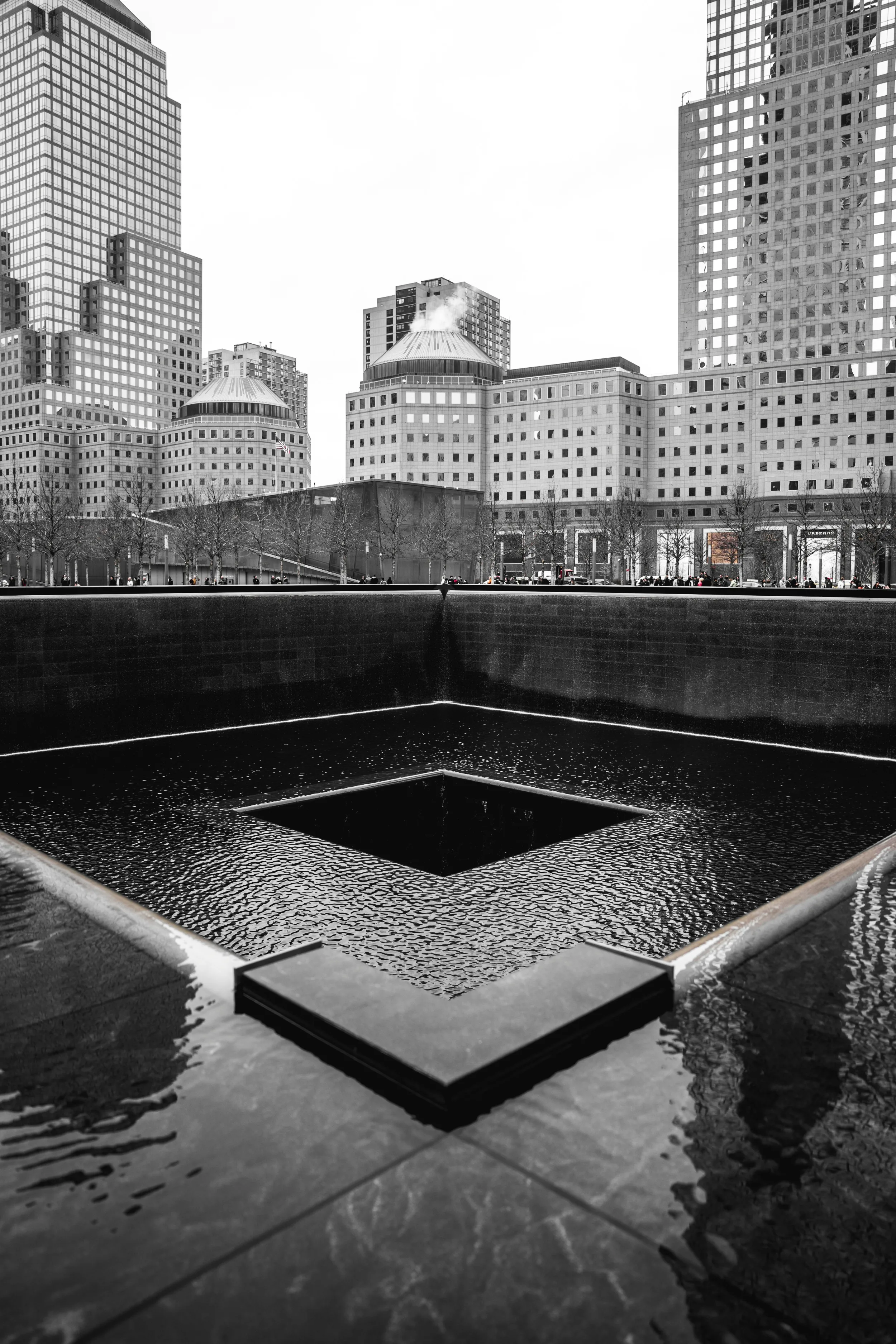
9/11 Memorial and Museum Opening Hours and Entry Information
The 9/11 Memorial: Open daily, 8:00am to 8:00pm, free of charge.
The 9/11 Museum: Open Wednesday through Monday, 9:00am to 7:00pm, plus many Tuesdays and extended holiday hours. The Tuesday schedule varies week to week, so check the museum's special hours page rather than assuming.
Last admission to the Museum is 60 minutes before closing.
Address: 180 Greenwich Street, New York, NY 10007.
Entrance: The Museum is entered through the Pavilion on the north side of the building, between Vesey and Liberty Streets. All visitors pass through security screening here.
There is no re-entry. Once you leave the Museum through the main exit on the south side of the Pavilion, you cannot go back in, including to revisit an exhibition or use the restrooms. Museum restrooms are for ticketed visitors only, so plan accordingly before you go down.
Around the September anniversary, access to the Memorial plaza is restricted for the commemoration ceremony and reserved for victims' families for part of the day, reopening to the public later. September 2026 marks the 25th anniversary, and both attendance and restrictions will be heavier than usual. Check the museum's calendar before planning a visit for that week.
What is the Best Way to Get to the 9/11 Memorial and Museum?
Lower Manhattan is the best-connected area of New York City, and almost every subway line reaches the area.
By subway: The E to World Trade Center and the 1 to WTC Cortlandt put you closest, both within five minutes. The R and W to Cortlandt Street, the 2 and 3 to Park Place, the 4 and 5 to Fulton Street, and the A, C, J, and Z to Fulton Street are all a short walk.
By PATH: Trains from New Jersey terminate at the World Trade Center station inside the Oculus, which connects directly to the site.
On foot: Battery Park and the Statue of Liberty ferry terminal are about a ten-minute walk south. Brookfield Place is five minutes west, and the Brooklyn Bridge pedestrian entrance is around fifteen minutes east.
By car: There is no visitor parking on site and garages in the Financial District are expensive. Public transport is by far the better option.
One practical tip: The Oculus, the white winged transit hall next to the Memorial, is worth walking through on your way in even if you are not taking a train. It is free, open to the public, and its main hall is one of the more striking interior spaces in the city.
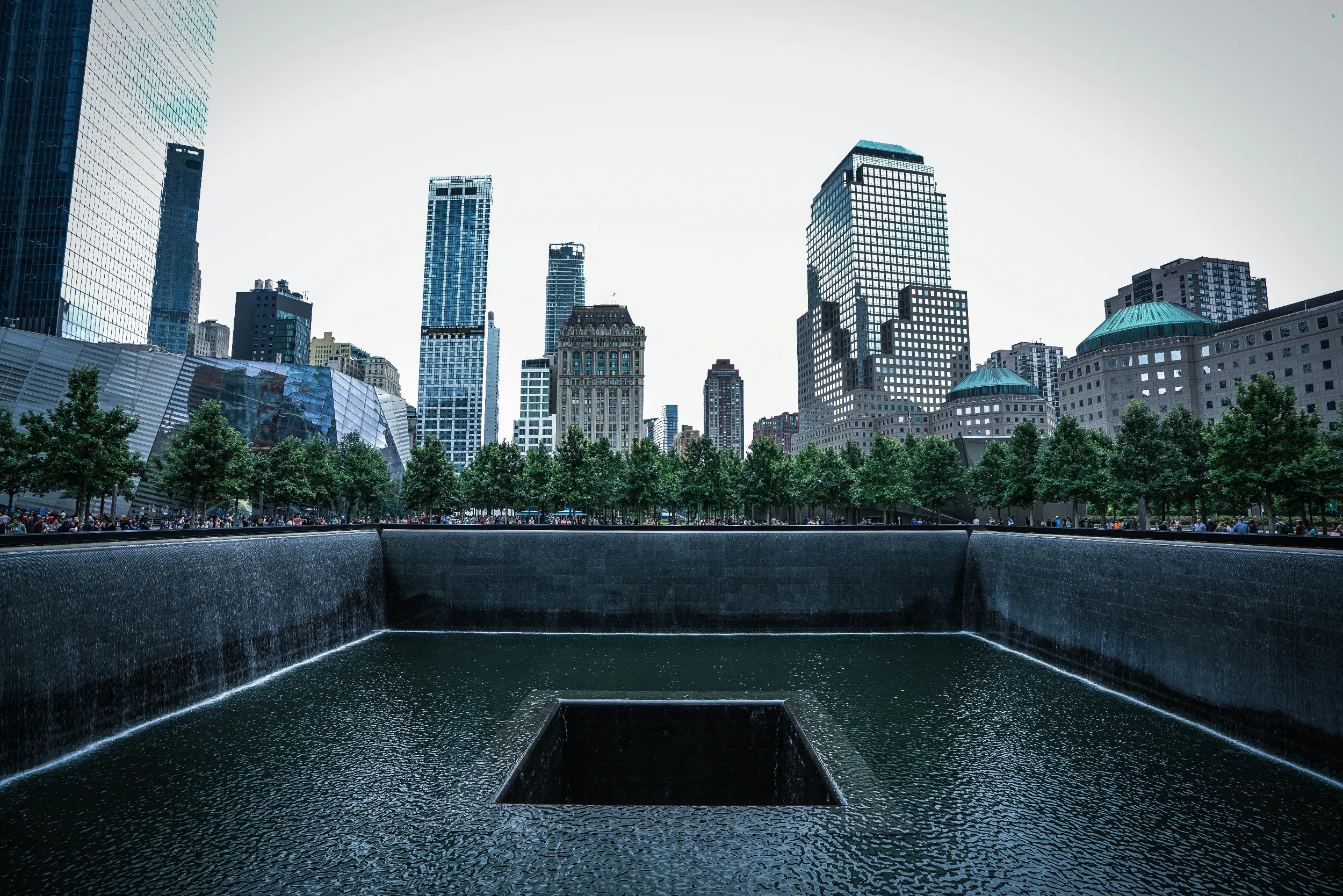
The September 11 Museum in New York City contains historical exhibitions, structural artifacts, and personal memorials detailing the 2001 and 1993 terror attacks. Key displays include the In Memoriam gallery, the Last Column, and some of the response vehicles.
How Much Time Should I Spend at the 9/11 Memorial and Museum?
The Memorial takes 20 to 30 minutes to walk at a reasonable pace: both pools, the names parapets, the Survivor Tree, and the Glade. Many visitors stay longer simply sitting among the trees.
The Museum's guidance is 45 to 90 minutes, though in practice a lot of people spend closer to two hours, and some spend three. The historical exhibition alone takes around 45 minutes to walk through.
Together, allow two to three hours for both, plus time for security screening.
Unlike other museums, just be aware that this one is of course emotionally demanding, and a lot of people find that they can absorb less than they anticipated. If you feel you have reached your limit after an hour, that is a normal response rather than a failure to see everything. The exhibition layout allows you to move through at your own pace and to step out of the more difficult sections.
What is the Best Time to Visit the 9/11 Memorial and Museum?
For the Memorial: Early morning, before around 9:30am, or the last hour before the 8:00pm close. The plaza is peaceful at those times and the crowds thin considerably. After dark, the pools are lit and the atmosphere is quite different from the daytime.
For the Museum: The 9:00am opening, or late afternoon after about 4:00pm. Midday, roughly 11:00am to 2:00pm, is consistently the busiest, and school groups concentrate in the mornings during term time.
Best days: Weekdays are quieter than weekends. Note that the Museum is closed most Tuesdays.
Best season: January and February are the quietest months. Summer is busiest, and the days around September 11 draw the largest crowds of the year by a wide margin.
Free Monday evenings are the busiest ninety minutes of the week, which is worth weighing against the saving. If you want space to take in the exhibitions, a paid weekday morning is a very different experience.
The 9/11 Memorial: The Reflecting Pools, the Names, and the Survivor Tree
Designed by Michael Arad and Peter Walker and opened on the tenth anniversary in 2011, the Memorial occupies eight acres of plaza planted with several hundred swamp white oaks.
The reflecting pools sit precisely within the footprints of the North and South Towers, each about an acre in size, with water falling around thirty feet down all four sides before disappearing into a second, smaller void at the centre. They are the largest manmade waterfalls in North America, and the sound of them does a remarkable job of muting the traffic and the city around you.
The names parapets: The bronze panels surrounding each pool carry the names of everyone killed in the 2001 attacks at the World Trade Center, the Pentagon, and aboard Flight 93, along with the six people killed in the 1993 World Trade Center bombing. The names are not arranged alphabetically. They follow a system the designers called meaningful adjacencies, placing people beside the colleagues they worked with, the crews they served with, the passengers they flew with, and the friends and family members whose relatives asked for them to be together. Standing at the parapet and reading a run of names in that light changes what you are looking at.
Finding a specific name: The museum maintains a searchable directory at names.911memorial.org, which gives the exact panel location. Staff at the information desks on the plaza will also help you find one. On a victim's birthday, a white rose is placed beside their name.
The Survivor Tree is a Callery pear found in the wreckage in October 2001, burned and snapped down to a stump. It was taken to a nursery in the Bronx, nursed back over nine years, and replanted on the Memorial in December 2010. It is now noticeably taller than the oaks around it and flowers every spring.
The Memorial Glade, dedicated in 2019, is a pathway lined with six stone monoliths honouring rescue and recovery workers and others who have become ill or died from exposure to toxins in the aftermath of the attacks. It is quieter than the pools and often missed.
Tribute items: Visitors are welcome to leave flowers or small items of tribute on the ground in front of the pools, on the bronze parapets, and on the Glade monoliths. Nothing should be placed or thrown into the pools themselves, including coins.
What is Inside the 9/11 Museum?
The Museum sits mostly seventy feet below ground, in the excavated remains of the original site, and descending into it how any visit begins.
The Pavilion and the Tridents: The glass entrance building holds two of the original eighty-foot steel columns from the North Tower facade, visible from the plaza outside.
The ramp and Memorial Hall: A long descent takes you down towards bedrock, past the point where the towers stood. In Memorial Hall you meet Spencer Finch's installation Trying to Remember the Color of the Sky on That September Morning, 2,983 individual squares of watercolour paper in different shades of blue, one for each person killed in the two attacks. Behind the wall it faces, a repository maintained by the New York City Office of Chief Medical Examiner holds the unidentified remains of victims. That space is not open to the public and is reserved for family members.
Foundation Hall holds two things that carry more weight than almost anything else on the site. The Last Column is a 36-foot steel beam, the final piece removed from Ground Zero at a ceremony in May 2002, covered in the messages, photographs, and mementoes left on it by recovery workers. Behind it stands a section of the slurry wall, the retaining wall built to hold back the Hudson River, which held when the towers came down.
The Survivors' Stairs: The Vesey Street stairs, down which hundreds of people escaped the plaza on the morning of the attacks, preserved and reinstalled where visitors pass beside them.
Other major artefacts: The crushed cab of Ladder Company 3's fire truck, from a company that lost eleven members that day. Recovered vehicles, aircraft fragments, and personal objects, drawn from a collection of more than ten thousand items.
In Memoriam, the memorial exhibition, is a room of portraits of everyone killed in the 2001 and 1993 attacks, with recorded remembrances from families and personal artefacts in inner chambers.
September 11, 2001, the historical exhibition, is the museum's core and its most demanding space. It runs in three parts: the events of the day itself, told through news footage, first-person accounts, and recordings; the background before 9/11, covering the World Trade Center and the development of the plot; and the aftermath, covering recovery, rebuilding, and the ongoing consequences including 9/11-related illness. It covers the attacks on the World Trade Center, the Pentagon, and Flight 93.
A note on the most difficult material: The historical exhibition contains graphic content, including the recordings people left for their families and images of those who fell from the towers. The museum handles this carefully. The most distressing material sits behind partitions with clear warning signage, so you can choose to walk past it. Knowing that in advance makes the exhibition easier to navigate.
Visiting With Children
The Memorial plaza is appropriate for all ages, and children are welcome there across all parts. The Museum requires more thought.
The museum's own guidance is that the historical exhibition may not be appropriate for visitors younger than 10, and that adults accompanying younger children should exercise discretion before entering. Warning signage marks the exhibition entrance.
In practice, the age at which a child can handle this varies enormously, and the format matters. The exhibition is immersive, using audio and video rather than text panels, which affects children very differently from reading about an event. Children who are anxious, or who worry about safety, may find it stays with them afterwards.
Practical options: The rest of the Museum, including Foundation Hall, the Last Column, and the recovered vehicles, can be seen without entering the historical exhibition or In Memoriam, and one adult can take younger children through those spaces while another goes on. The Youth and Family Tour is a 60-minute guided visit led by the museum's education staff, pitched at an age-appropriate level and including an art activity, priced at $33 to $66 including admission.
Preparation helps. The museum publishes a guide on talking to children about terrorism, along with lesson plans and activities, all free on its website. Reading it before you go is worthwhile whether or not you decide to bring children into the exhibitions.
Children aged 6 and under enter free, but still need a ticket.
Guided Tours and Audio Guides
Official Memorial tour: A 45-minute guided walk of the outdoor plaza with a museum guide, offered daily at 1:00pm and 2:00pm, at $24. Museum admission is not included, so this is the option if you only want the Memorial.
Museum tour: 60 minutes with a museum staff guide, examining key artefacts and spaces, at $48 to $60 including admission. Tours run in English and are oriented towards adult and teenage visitors.
Combined and specialist tours: The Memorial and Museum Tour covers both at $85, and the Early Access Museum Tour takes a small group in before the Museum opens to the public at $75.
Audio guide: Available to rent for $11 at the box office and the Audio Guide desk in the Concourse Lobby, with tours in nine languages including ASL.
One important warning about outside tours. The Museum does not permit guided tours or commentary from any third-party operator inside the building. Outside companies may sell you tickets and walk you to the door, but only museum staff may guide within the exhibition spaces. Street vendors around the plaza selling "9/11 tours" are not affiliated with the Memorial, and soliciting and commercial activity on the site itself is prohibited. If you want a guide inside, book directly with the museum.
Is the 9/11 Memorial and Museum Worth Visiting?
The free architecture tour runs Monday to Saturday at 2pm and lasts about 30 minutes. It is included with admission, needs no booking, and is the most efficient way to understand what Wright was attempting. Check the day's schedule at the information desk on arrival.
The digital guide is free through the Bloomberg Connects app, covering the permanent collection, each current exhibition, and the building itself. The building audio guide is available in eleven languages including Spanish, Chinese, Italian, and Arabic, and there are downloadable exhibition texts. Download it before you arrive and bring headphones.
Family resources: The museum publishes family activity materials for exploring the building, and a social narrative guide produced specifically for children on the autism spectrum.
Private and group tours can be arranged through the museum, and third-party operators offer Upper East Side museum tours that bundle the Guggenheim with the Met or the Neue Galerie.
Is the Guggenheim Worth Visiting?
The Memorial should be on any Lower Manhattan itinerary. It is free, it takes half an hour, and it is one of the most successful pieces of public memorial design anywhere. The pools do something that photographs cannot convey: they mark absence at full scale, and the sound of falling water separates the space from the city around it in a way that makes quiet feel natural rather than imposed. Visiting only the Memorial is a complete and appropriate experience, and a very large number of people do exactly that.
The Museum is a different proposition, and it asks a good deal more of you. It is exceptionally well made, and it succeeds at something difficult: telling an event that many visitors remember personally without either sanitising it or turning it into spectacle. The artefacts carry extraordinary weight, and Foundation Hall in particular is among the most affecting museum spaces in the world.
It is also, plainly, distressing. Visitors regularly describe it as the most emotionally demanding museum they have been to, and people leave in tears every day. That is not a criticism of the institution but a description of what it is. If you were personally affected by the attacks, or lost someone, the museum's own guidance to family members and survivors is worth reading before you decide.
Who should go: Anyone who wants to understand the day and its aftermath in depth, visitors old enough to engage seriously with it, and those with time to give it the space it requires afterwards.
Who might reasonably skip the Museum: Families with young children, for the reasons above. Anyone visiting on a packed schedule who would have to rush it. And anyone who feels, on the day, that they do not want to go down. Standing at the pools is enough for a lot of people and that is totally okay.
Where Should I Eat Near the 9/11 Memorial and Museum?
Inside the Museum, a café on the atrium terrace on the second floor of the Pavilion operates from 9:00am to 6:00pm. Eating and drinking are not permitted anywhere else inside, and outside food and drink cannot be brought in.
Brookfield Place, five minutes west across West Street, is the most practical option nearby. Hudson Eats upstairs is a bright food hall with harbour views and a wide range of counters, and Le District on the ground floor is a large French market hall with a bakery, charcuterie, and sit-down dining.
Eataly, in 4 World Trade Center directly across the plaza, has counters, a café, and restaurants across a large space, and handles groups easily.
The Oculus itself contains a Westfield shopping centre with numerous quick options, useful if you are short on time.
Stone Street, about ten minutes south, is a cobbled pedestrian lane lined with pubs and restaurants that puts tables outside in warm weather. It is the most characterful place to eat in the immediate area.
The Memorial also runs a Stay Local programme, under which Museum ticket holders receive discounts at a number of Lower Manhattan businesses. Details are listed on the museum's website.
What Else is There to Do Near the 9/11 Memorial and Museum?
One World Observatory sits at the top of One World Trade Center, immediately adjacent. It is a separate attraction with its own ticket and is not part of the Memorial or Museum, which is a common point of confusion. Combination tickets covering both are sold.
The Oculus and the World Trade Center Transportation Hub, designed by Santiago Calatrava, are free to walk through and worth ten minutes for the architecture alone.
St Paul's Chapel, two minutes north on Broadway, is free to enter and directly connected to the story. The eighteenth-century chapel stood undamaged across the street from the towers and served for months as a round-the-clock relief centre for recovery workers. Its small exhibition on that period is quietly moving and far less visited than the Museum.
Trinity Church, at Broadway and Wall Street, is five minutes further south, with its historic churchyard.
Battery Park and the Statue of Liberty ferry terminal are a ten-minute walk south.
Wall Street and the Financial District surround the site, with Federal Hall, the Charging Bull, and Fraunces Tavern all within a short walk.
A note on the 9/11 Tribute Museum: This was a separate, smaller institution a few blocks away, founded by the September 11th Families' Association and known for tours led by survivors and first responders. It closed permanently in August 2022, and most of its collection moved to the New York State Museum in Albany.
Rules, Bags, and Security
Security screening is mandatory for all Museum visitors, who pass through magnetometers with all bags and belongings screened. Hand-wanding is available as an alternative. Bringing as little as possible speeds this up considerably.
Bag size limit: No item larger than 19 by 17 by 8 inches is permitted. Coat rooms for storing bags and coats are available on the Concourse Lobby level and the second floor of the Pavilion. Oversized items may be refused entry and cannot be stored.
Strollers are permitted in the exhibition spaces, but oversized and jogging strollers are prohibited inside the Museum and cannot be checked.
Photography: Personal photography is permitted at the Memorial and in most of the Museum for private, non-commercial use. It is not permitted in the historical exhibition, In Memoriam, the auditorium, the Rebirth at Ground Zero film presentation, the South Tower Gallery, or the security screening area. Flash is prohibited throughout the Museum, as are tripods and professional equipment.
Phones: Must be silenced in the exhibition spaces, with no calls taken. If you are using an audio guide on your own device, headphones are required.
Prohibited on site: Outside food and drink, alcohol, glass bottles, animals other than service animals, smoking, soliciting or leafleting, third-party commercial activity, and demonstrations of any kind.
Accessibility at the 9/11 Memorial and Museum
Both the Memorial and the Museum are fully accessible. The plaza is level and step-free throughout, and lifts and ramps serve every level of the Museum, including the descent to bedrock.
Wheelchairs are available free of charge for use during your visit, and accessible restrooms are located within the Museum. Assistive listening devices are provided, and tours are available in American Sign Language alongside eight other languages.
Visitors with sensory sensitivities should be aware that the historical exhibition involves low lighting, enclosed spaces, and substantial audio, including recordings of the attacks and emergency calls. Quieter areas of the Museum, including Foundation Hall and the Concourse Lobby, are available if you need to step away, and the Memorial plaza above is open air.
Admission is discounted for visitors with disabilities, and a companion or care partner can be accommodated. The museum publishes detailed accessibility information on its website and can arrange specific accommodations if contacted in advance.
Final Tips for Visiting the 9/11 Memorial and Museum
The Memorial is free and needs no ticket. Only the Museum charges admission and requires a timed reservation, so you can visit the pools, the names, and the Survivor Tree at any point without booking anything.
Book Museum tickets in advance. Entry is by timed slot, tickets are invalid more than 30 minutes after your booked time, and reservations open up to six months ahead.
Free Admission Mondays run 5:30pm to 7:00pm, with tickets released at 7:00am Eastern each Monday, four per person, first come first served. Older guides quoting a 3:30pm window are out of date.
Read the guidance on children before you commit. The museum advises that the historical exhibition may not be suitable for under-10s, and the rest of the Museum can be seen without entering it.
Allow more time than the official estimate, and less stamina than you expect. Most people need longer than 45 to 90 minutes, and most also find they reach a limit sooner than they anticipated.
There is no re-entry. Once you exit the Museum you cannot return, so see everything you want to see, and use the restrooms, before you leave.
Book any guided tour directly with the museum. Outside operators are not permitted to guide inside the building, and street vendors selling tours around the plaza are not affiliated with the Memorial.
Pair it with St Paul's Chapel rather than another large museum. Two minutes away, free, and the small exhibition on its months as a relief centre is the right note to end on.
Back to New York City Attractions
Explore other New York City attractions


" width="24px"><path d="M 0 0 L 24 0 L 24 21.231 L 0 21.231 Z" fill="transparent" height="21.230768474975793px" id="nL2EwDcS9" width="24px"/><path d="M 0 0.541 C 0 0.242 0.245 0 0.547 0 L 2.735 0 C 3.037 0 3.282 0.242 3.282 0.541 L 3.282 4.598 C 3.282 4.897 3.037 5.139 2.735 5.139 L 0.547 5.139 C 0.245 5.139 0 4.897 0 4.598 Z" fill="rgb(196, 217, 201)" height="5.138657337892187px" id="hZ_rlBe_S" transform="translate(0 16.092)" width="3.2820512820512358px"/><path d="M 0 0.541 C 0 0.242 0.245 0 0.547 0 L 2.735 0 C 3.037 0 3.282 0.242 3.282 0.541 L 3.282 7.843 C 3.282 8.142 3.037 8.384 2.735 8.384 L 0.547 8.384 C 0.245 8.384 0 8.142 0 7.843 Z" fill="rgb(230, 211, 160)" height="8.38412513024521px" id="HgVBxIz3e" transform="translate(5.128 12.847)" width="3.282051282051235px"/><path d="M 0 0.541 C 0 0.242 0.245 0 0.547 0 L 2.735 0 C 3.037 0 3.282 0.242 3.282 0.541 L 3.282 12.982 C 3.282 13.281 3.037 13.523 2.735 13.523 L 0.547 13.523 C 0.245 13.523 0 13.281 0 12.982 Z" fill="rgb(232, 207, 164)" height="13.522782468137464px" id="utgrDnoM9" transform="translate(10.325 7.708)" width="3.282051282051377px"/><path d="M 0 0.541 C 0 0.242 0.245 0 0.547 0 L 2.735 0 C 3.037 0 3.282 0.242 3.282 0.541 L 3.282 16.498 C 3.282 16.797 3.037 17.039 2.735 17.039 L 0.547 17.039 C 0.245 17.039 0 16.797 0 16.498 Z" fill="rgb(233, 196, 166)" height="17.038705909853153px" id="OLOhW6STz" transform="translate(15.521 4.192)" width="3.2820512820512384px"/><path d="M 0 0.541 C 0 0.242 0.245 0 0.547 0 L 2.735 0 C 3.037 0 3.282 0.242 3.282 0.541 L 3.282 20.69 C 3.282 20.989 3.037 21.231 2.735 21.231 L 0.547 21.231 C 0.245 21.231 0 20.989 0 20.69 Z" fill="rgb(217, 170, 153)" height="21.230768474975793px" id="H5Z8wcwkd" transform="translate(20.718 0)" width="3.2820512820512278px"/></g></svg>)