
Paris • 7th arrondissement
Pre-booking a ticket in advance is required for all visitors until renovations are completed in mid-2028. Book at least one month out for a wide selection of time-slots. Morning slots sell out first year-round.
Book 1-3 Months Ahead
Peak Season
Book 2-4 Weeks Ahead
Off-Season
Back to Paris Attractions
NOTE: Timed-entrance tickets are currently required for the Musee D'Orsay until renovations to the reception areas are completed in mid-2028.
Musée d'Orsay Paris: Everything You Need to Know Before You Visit
Updated September 2026
Housed in a magnificent Beaux-Arts railway station built for the 1900 Paris Exposition on the left bank of the Seine, the Musée d'Orsay holds the world's largest and most celebrated collection of Impressionist and Post-Impressionist art, spanning the period from 1848 to 1914. Works by Monet, Van Gogh, Renoir, Degas, Cézanne, Manet, Seurat, Gauguin, and Toulouse-Lautrec cover five floors where trains once ran, displayed inside one of the most spectacular interiors of any museum in Europe. This is the year to visit: 2026 marks both the museum's 40th anniversary and the centenary of Claude Monet's death, with special programming running throughout the year in partnership with the Musée de l'Orangerie.
At a Glance
How Early to Book:
At least 2–3 weeks in advance for wide time slot availability, 1 week in advance for any/off-peak time slot availability.
About 3-4 months during peak-season, 1 month in advance in off-season.
Best Times to Visit:
At opening or late afternoon for quietest crowds. Thursday evenings, when the museum is open late, can also be less busy.
Ticket price:
€16 for adults booked online, €14 at the on-site ticket office.
Where to Book:
Museum Address:
Musée d'Orsay Tickets
Since March 10, 2026, timed-entry booking is mandatory for all visitors without exception. This is the single most important practical change affecting visits in 2026 and beyond. Walk-up entry is no longer available. Whether you are paying full price, using a Paris Museum Pass, or qualifying for free admission, you must book a timed slot before you arrive.
Standard ticket prices:
Adults: €16 (booked online with a timed slot)
On-site ticket price: €14 (no longer available as walk-up entry; on-site purchase via automated machines for same-day slots only, subject to availability)
Reduced rate: €11, sold at the museum rather than online
EU citizens and long-term EU residents aged 18 to 25: Free (timed slot still required)
Children under 18: Free (timed slot still required)
Visitors with disabilities and one accompanying person: Free (timed slot still required; see priority access)
Thursday late opening (from 18:00): €12
Free entry:
First Sunday of every month: free for all visitors (timed slot mandatory; book in advance)
EU citizens and long-term EU residents aged 18 to 25: free at all times (timed slot required)
Under-18s: free at all times (timed slot required)
Where to book: Book exclusively through the official Musée d'Orsay website. This is the cheapest source and the only route to a guaranteed timed slot. Third-party platforms add booking fees and do not provide any access advantage since timed entry is universal.
Paris Museum Pass: The Paris Museum Pass covers entry to the Musée d'Orsay, but from March 10, 2026, Pass holders are also required to book a timed slot in advance. Pass holders without a timed booking will be directed to a separate priority entrance. Check the current booking requirements on the official museum website before your visit.
The Carte Blanche: The museum's own annual membership (Carte Blanche) offers unlimited reserved access to the Musée d'Orsay and the Musée de l'Orangerie for one or two years, alongside discounts in the museum's shops and restaurant. Worth calculating if you are a regular Paris visitor or a Impressionist art enthusiast.
How far in advance to book: Book as early as possible during peak season (April through October) and on any weekend year-round. Popular time slots on Saturdays and Sundays can sell out days ahead. First-Sunday free slots disappear within hours of becoming available. During the current renovation period, capacity per slot is reduced, making early booking more important than ever.
2026 Renovation: What Has Changed and What Has Not
The Musée d'Orsay embarked on a major renovation of its entrance forecourt and reception areas on March 10, 2026, a project that will run through summer 2028. The budget is €30 million, with Louis Vuitton covering €20 million as exclusive patron and the museum funding the balance itself.
What has changed for visitors:
Timed-entry booking is now mandatory for all visitors (see above)
The main entrance via the Esplanade Valéry Giscard d'Estaing is modified. Visitors holding a timed ticket enter via the Quai side of the building ("Entrée Quai"). Check the official website for the current entrance map before you travel
The Forecourt entrance handles everyone else: Paris Museum Pass holders without a timed slot, priority visitors, groups, visitors with reduced mobility, and anyone arriving with luggage
Group visits are suspended from June 10 to October 5, 2026 due to the volume of construction in the reception area
What has not changed:
The permanent collection stays open throughout the renovation, though a handful of rooms are closed for separate gallery work; the museum's downloadable guide map marks which ones
All temporary exhibitions continue as scheduled
Opening hours are unchanged
The restaurant, Café Campana on the fifth floor, the terrace, and the bookshop remain open (the bookshop closes at 17:45, or 21:15 on Thursdays)
The visitor experience inside the galleries is largely unaffected
The practical upshot: arrive knowing which entrance to use (check musee-orsay.fr the day before), have your timed ticket ready on your phone, and be at the entrance 15 minutes before your slot while the works are running.
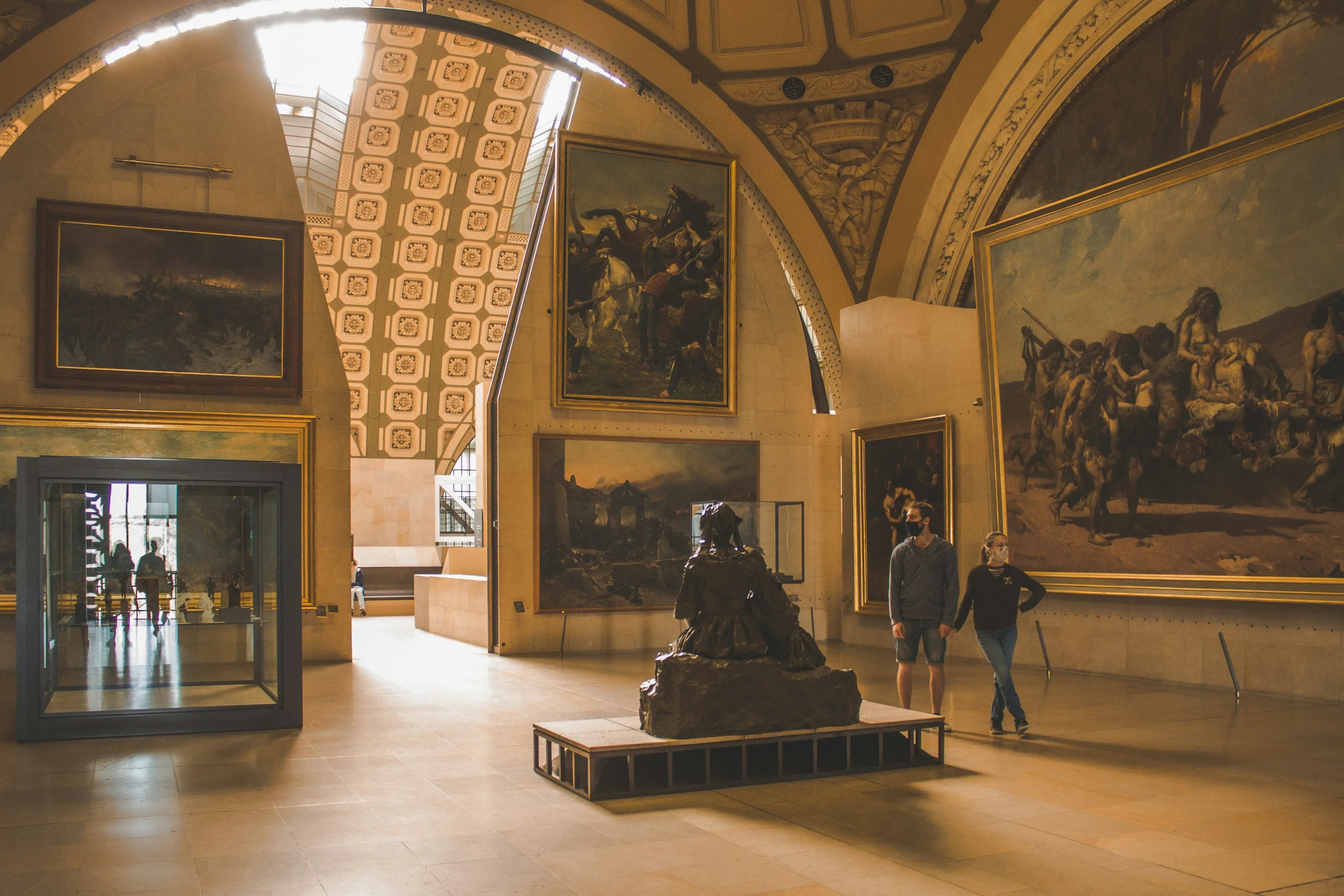
Musée d'Orsay Opening Hours and Entry Information
Open Tuesday to Sunday, 9:30am to 6:00pm
Last entry: 5:00pm (last entry to exhibitions: 5:15pm; galleries close at 5:30pm)
Thursday late opening: until 9:45pm (last entry 9:00pm; galleries close 9:15pm)
Closed: every Monday, 1 May, and 25 December
Thursday evenings are one of the best-kept secrets of the Musée d'Orsay. The museum stays open until 9:45pm, the ticket price drops to €12, and the Impressionist galleries on the fifth floor empty out dramatically after 6:00pm. Multiple recent visitors describe the Thursday evening experience as one of the most memorable ways to encounter these paintings in Paris. If you can visit on a Thursday, go in the evening.
Address: 1 Rue de la Légion d'Honneur (Esplanade Valéry Giscard d'Estaing), 75007 Paris
What is the Best Way to Get to Musée d'Orsay?
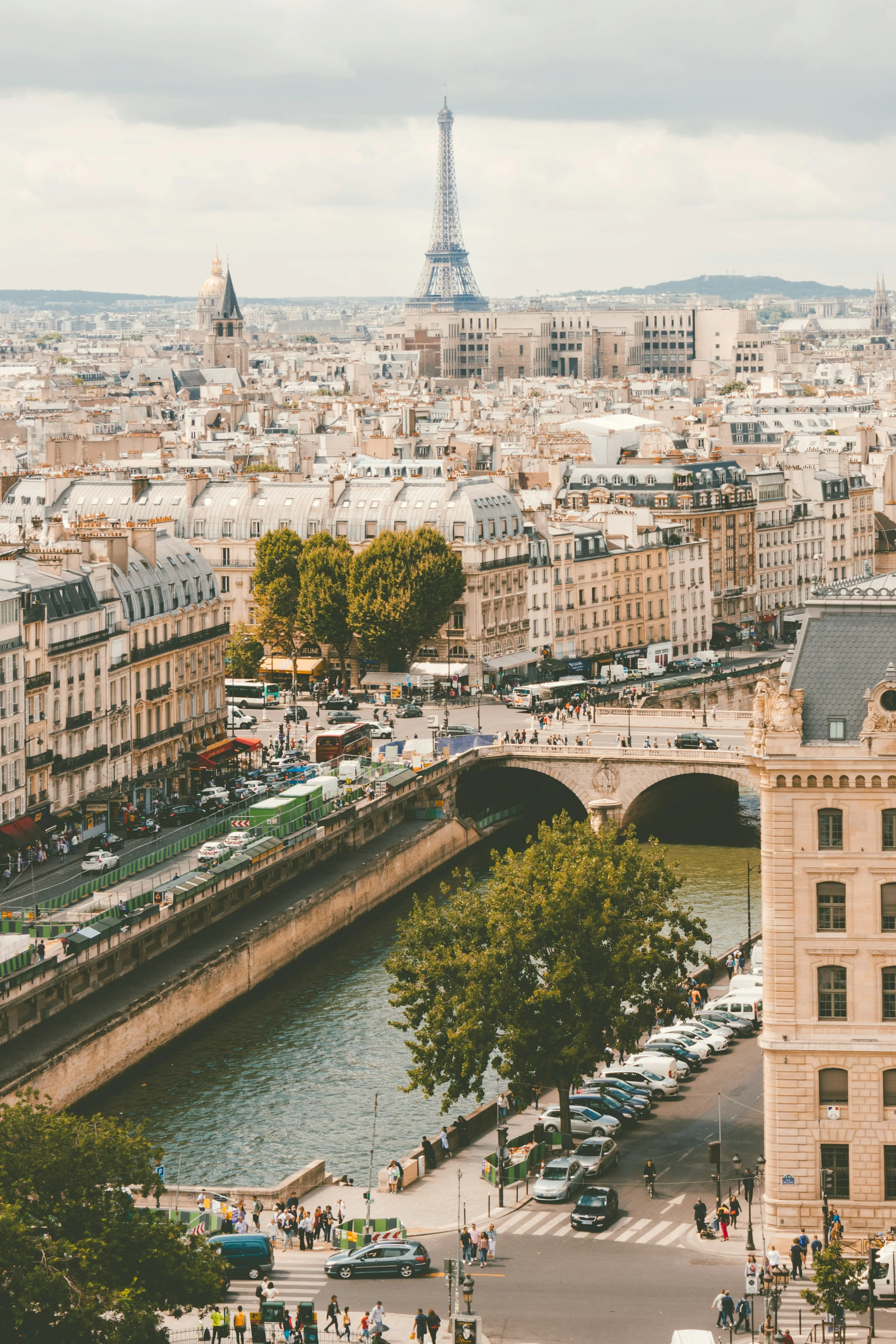
The museum sits on the left bank of the Seine in the 7th arrondissement, directly across the river from the Tuileries Gardens and the Louvre.
By RER: The most convenient option is RER C (yellow line), stopping at the Musée d'Orsay station, which has a direct exit onto the museum's riverside promenade. This is the fastest connection from central Paris and both airports via interchange.
By Metro: Solférino (Line 12, dark green) is around a five-minute walk south from the museum. Assemblée Nationale (Line 12) is similarly close on the other side. Invalides (Lines 8 and 13) is around a ten-minute walk west.
By bus: Routes 63, 68, 69, 73, 83, 84, 87, and 94 all stop within walking distance. The tourist bus also stops nearby.
On foot from key landmarks:
From the Louvre: cross the Seine via the Pont du Carrousel or the Passerelle Léopold-Sédar-Senghor (the pedestrian bridge), around 10 to 12 minutes
From Notre Dame: across the river and west along the quai, around 20 minutes
From the Eiffel Tower: east along the left bank, around 25 minutes
From Saint-Germain-des-Prés: north toward the Seine via Rue de Bellechasse, around 10 minutes
By Vélib': Several docking stations are within a few minutes of the museum entrance.
Driving is not recommended. The area is within central Paris's restricted traffic environment, and parking in the 7th arrondissement is very limited. Public transport is strongly preferable for virtually every visitor.
Practical tip on the entrance: Since the renovation began in March 2026, the entrance access has been modified. The ticketed visitor entrance is currently on the Quai (Seine) side of the building. Check the official museum website for the current entrance map on the day of your visit, as access points may shift as construction progresses.
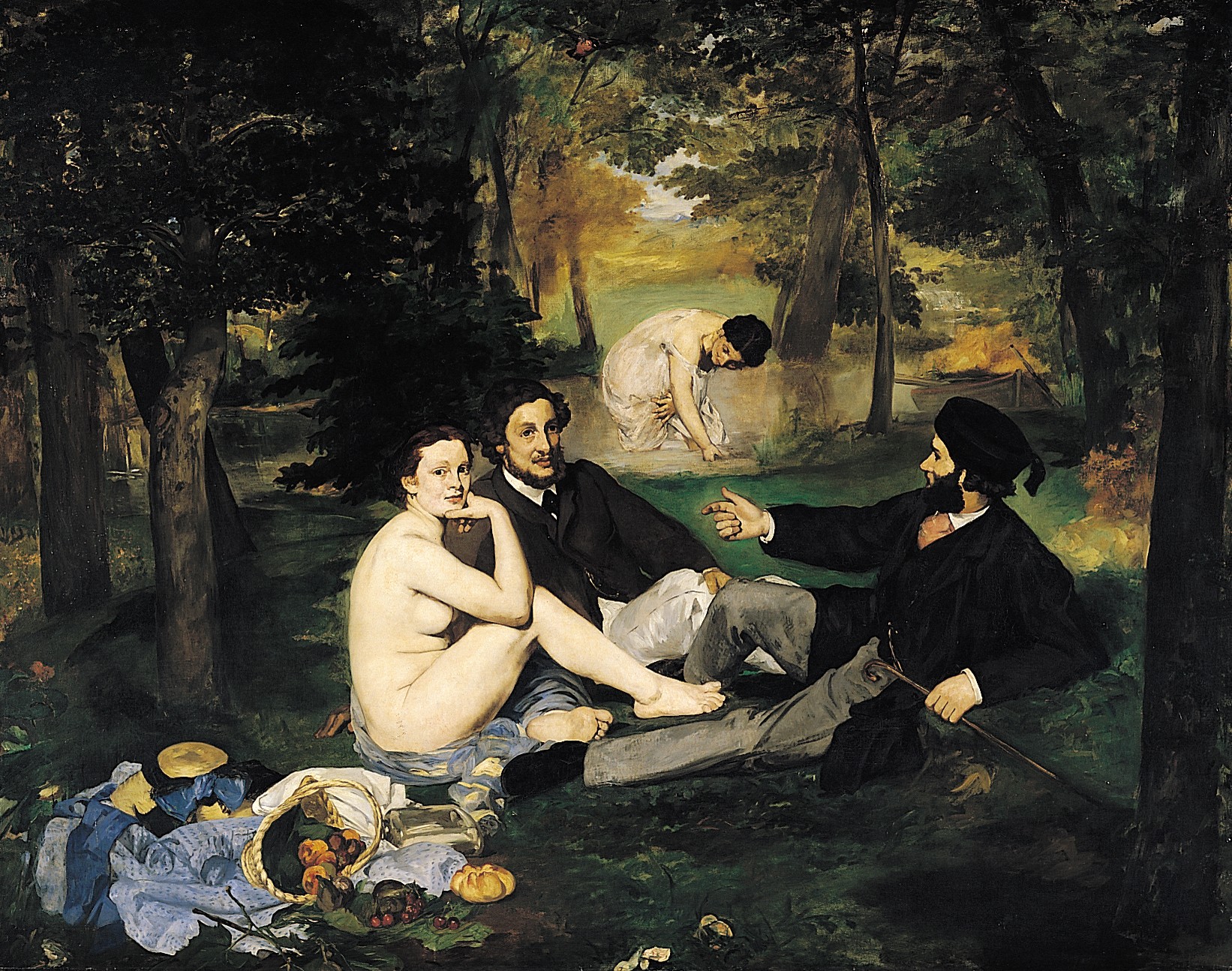
Édouard Manet's Le Déjeuner sur l'herbe (Luncheon on the Grass) is among the most famous paintings housed in the Musée d’Orsay.
How Much Time Should I Spend at Musée d'Orsay?
Two hours is the minimum for a purposeful visit covering the Impressionist fifth floor, the main hall sculptures, and a selection of other rooms. Most visitors who want to explore the collection with any depth spend three to four hours. The museum holds over 4,000 works across five floors, and the temptation to slow down is constant.
I would say three hours is the sweet spot for a first visit: enough time to reach the fifth-floor Impressionists without rushing, spend real time in front of the key works, take a break at the café, linger at the fifth-floor clock windows, and still have energy for a walk through the ground-floor sculpture hall on the way out.
If you are joining a guided highlights tour, allow approximately two hours for the tour itself. If you plan to visit a temporary exhibition on top of the permanent collection, add an hour.
One practical note: the museum's five floors do not follow a simple linear path. Navigation can feel slightly disorienting on a first visit. Picking up the free floor plan at the entrance, or downloading the museum's digital map before you go, makes the experience considerably more coherent.
What is the Best Time to Visit Musée d'Orsay?
Thursday evenings (after 6:00pm): This is the answer that I always give my friends when asked for the best time to visit. The crowd drops sharply after 6:00pm, the ticket price falls to €12, and the Impressionist gallery on the fifth floor can feel almost private by 7:00pm. The warm artificial lighting on the paintings in the evening is also different from the natural light earlier in the day.
Best time of day for daytime visits: Arriving at opening (9:30am) on a Tuesday or Wednesday is the best daytime option. Start on the fifth floor immediately, before the crowds build. By mid-morning, the Van Gogh and Monet rooms are noticeably busier.
Best days: Tuesday, Wednesday, and Thursday before 11:00am are the quietest. Saturday and Sunday from late morning onward are the most congested. A recurring observation in recent visitor reviews is that the queues at the security check can add 20 to 30 minutes even with a timed ticket, particularly at weekends, so arriving a few minutes ahead of your slot is worthwhile.
Best season: Spring (April to May) and autumn (September to October) are the most comfortable. Summer brings the highest visitor volumes, and the renovation is adding an additional layer of access complexity during this period.
Free Sundays: The first Sunday of every month is free for all visitors, but the demand is significantly higher than on a paid day. If you choose a free Sunday, book your timed slot the moment it becomes available (usually a few weeks in advance) and arrive as close to 9:30am as possible.
Tuesdays: Worth knowing that the Louvre is closed on Tuesdays, which drives some of its usual visitors toward the Musée d'Orsay. Weekday mornings other than Tuesday tend to be fractionally calmer.
Musée d'Orsay Famous Paintings
The Musée d'Orsay holds the most concentrated collection of Impressionist and Post-Impressionist masterworks anywhere in the world. What follows is a guide to the highlights, including a few important clarifications about what is and is not here.
The fifth floor: the Impressionist rooms
The fifth floor is where most visitors spend the most time, and it is where the museum's greatest concentration of famous works is displayed. Climb to the fifth floor first if you arrive at opening time.
Claude Monet is represented across several rooms, with multiple canvases from his series paintings including the Rouen Cathedral series, the Gare Saint-Lazare series, and the Haystacks. His Blue Water Lilies (Nymphéas bleus) is one of the most sought-after works in the building. Note: Monet's large Water Lilies panels are at the Musée de l'Orangerie, not here. The d'Orsay holds individual Monet canvases, while the Orangerie holds the monumental pond panoramas he donated to the French state.
Pierre-Auguste Renoir's Dance at Le Moulin de la Galette (Bal du moulin de la Galette) is considered one of the defining works of Impressionism: a dappled outdoor scene of Parisian working-class pleasure, painted entirely outdoors in Montmartre in 1876. The scale and the light in this painting are very hard to appreciate in reproduction.
Edgar Degas has the largest single-artist holding in the museum. The ballet dancer paintings and sculptures are here, including L'Étoile (The Star), showing a solitary dancer on stage in a cone of light. The Absinthe (Dans un café) is one of his most powerful works: two figures in a cafe, psychologically isolated from each other and from the viewer.
Vincent van Gogh: The museum holds a significant collection of Van Gogh's work, including his famous Self-Portrait (1889) painted in the weeks before he entered the asylum at Saint-Rémy, alongside The Church at Auvers-sur-Oise, Bedroom at Arles, and The Siesta (after Millet). A critical point for many visitors: the Van Gogh painting most commonly searched for in connection with the d'Orsay is Starry Night. Starry Night (the version with the swirling sky over the village) is at the Museum of Modern Art in New York, not Paris. The d'Orsay holds Starry Night Over the Rhone (La Nuit étoilée), painted in Arles in 1888, which shows the night sky reflected in the Rhone river from the riverbank. It is a different and extraordinary painting, but not the same work. Arriving knowing this avoids confusion.
Georges Seurat and Paul Signac are represented with key examples of Pointilism, including Seurat's The Circus (Le Cirque), one of his final large-scale works.
Paul Cézanne's The Card Players (Les joueurs de cartes) is one of several versions of this composition; the d'Orsay holds what many consider the finest. His card players look as though they were carved from stone, and the radical reduction of form anticipates everything that followed in 20th-century art.
Paul Gauguin and Toulouse-Lautrec are well represented on the upper floors, with Gauguin's Tahitian paintings and several of Toulouse-Lautrec's sharp, affectionate studies of Parisian nightlife.
The ground floor and first floor:
The main hall, the spectacular former train station nave, is filled with 19th-century sculpture. The contrast between the academic bronzes and marbles on the ground and the Impressionist paintings upstairs gives a vivid sense of how radical that movement was in its own time.
Édouard Manet occupies a critical position in the ground floor and first floor rooms. Le Déjeuner sur l'Herbe (Luncheon on the Grass) and Olympia are both here: two paintings that caused real scandal in 1860s Paris and forced the art world to reconsider its assumptions about the nude, the gaze, and the relationship between the painted figure and the viewer. These rooms are among the most intellectually charged in the building.
The famous clock windows: On the fifth floor, at the back of the Impressionist galleries, two enormous ornate clock faces from the original railway station are set into the museum's facade. Looking through them offers a framed view of the Seine, Sacré-Coeur on the hill behind, and the rooftops of the right bank. Many visitors find these a highlight in their own right. There is a café directly adjacent where you can sit with a coffee and look through the clock at Paris. I found this corner to be one of the best areas of the whole museum.
The rooftop terrace: Accessible from the fifth-floor café level during the summer season, the terrace overlooks the Seine and the right bank, offering a view that takes in Montmartre and the rooftops of central Paris. It is open to all visitors during the warm months without an additional ticket.
What is not at the Musée d'Orsay:
The Mona Lisa is at the Louvre
The large Water Lilies panels are at the Musée de l'Orangerie
Starry Night (the swirling sky version) is at MoMA in New York
Guernica is at the Museo Reina Sofía in Madrid
Musée d'Orsay Skip the Line Tickets
Since timed-entry booking became mandatory for all visitors in March 2026, the traditional concept of a "skip the line" ticket has changed significantly.
What the change means: Previously, visitors could walk up and buy a ticket on the day, but faced long queues. Those who booked online in advance had a priority entrance. That two-tier system has effectively ended: all visitors now need a pre-booked timed slot. In that sense, any timed ticket booked online is now a skip-the-line ticket by default.
What "skip the line" actually refers to in 2026: Tour operators and third-party platforms marketing "skip the line" Musée d'Orsay tickets are typically offering one of two things: a standard timed-entry ticket at a premium price, or a timed-entry ticket bundled with a licensed guided tour. Neither provides faster physical access than booking directly through the official site.
The security queue is still real: Even with a timed ticket, the security and bag check on entry takes time, particularly at weekends and on first Sundays. Arriving a few minutes before your slot and travelling light (smaller bags move through faster) is the most practical way to reduce time at the entrance.
Recommendation: Book through the official site. It is the cheapest option and gives you the same timed-slot access as any third-party ticket, without the added fee. Only consider a tour operator if you are also booking a licensed guided tour, in which case the combined package may add real value.
Musée d'Orsay and Orangerie Tickets
Two combination ticket options are worth knowing about if you plan to visit multiple Paris museums.
Musée d'Orsay plus Musée de l'Orangerie: These two museums make the most natural pairing in Paris for anyone interested in Impressionism. The Musée d'Orsay holds the individual Impressionist and Post-Impressionist canvases; the Musée de l'Orangerie holds the monumental Water Lilies panels Monet donated to the French state, displayed in two oval rooms he designed specifically for them. Combined ticket options are available through both the official Musée d'Orsay website and through the Orangerie's booking system. In 2026, this pairing is particularly significant: the year marks the centenary of Monet's death, and both museums are running coordinated programming around his legacy.
Musée d'Orsay and the Louvre: The two museums are complementary rather than overlapping. The Louvre's collection ends broadly at 1848; the Musée d'Orsay's collection begins at 1848. Combined ticket offers from third-party operators allow you to visit both in a single day or across consecutive days. Timed entry is mandatory at both, so plan your time slots carefully if combining them in one day. Most visitors find a full day at the d'Orsay alone is more rewarding than rushing it to fit the Louvre on the same day.
Musée d'Orsay and the Musée Rodin: The Rodin Museum is approximately a 15-minute walk southwest. Combined tickets are available from some operators. The pairing makes sense both geographically and historically: Rodin's sculptures represent the sculptural parallel to the Impressionist painters, and many of his works are displayed in the d'Orsay's main hall.
Guided Tours and Audio Guides
Official guided tours of the permanent collection run regularly and cover the key rooms with expert commentary. A highlights tour typically takes 90 minutes to two hours and is recommended for visitors who want to understand the artistic and historical context of the Impressionist movement rather than simply stand in front of famous canvases. The museum's official guided tours in English can be booked through the ticketing system.
Private and small-group tours with licensed art historians are available through various operators and are particularly worthwhile for visitors with a specific interest in one artist or period. A focused tour of the Van Gogh rooms, or a tour pairing the Manet and Degas holdings with their historical context, can transform the museum from an impressive but overwhelming collection into something more personally meaningful.
Audio guides are available from the museum for a separate fee, and are also bundled into some third-party ticket packages. The museum's own audio guide covers the collection in multiple languages and is useful for navigating the non-obvious connections between rooms. I would recommend it particularly for the ground-floor and first-floor rooms, where the academic and Realist works are less familiar to most visitors and benefit most from explanation.
A note on doing it without a guide: The Musée d'Orsay is navigable independently, and the fifth-floor Impressionist works are famous enough that they reward quiet looking without narration. But the museum is large and the non-Impressionist rooms, which contain some of the most interesting and contentious works in the building (Manet's Olympia, Courbet's The Origin of the World, Millet's The Gleaners), can feel confusing without some context about the artistic arguments they represented in their own time.
Is Musée d'Orsay Worth Visiting?
Five thousand percent yes, and I would go further than that: for many people, it is going to even be better than the Louvre.
The case for choosing the d'Orsay over the Louvre, or prioritising it when time is short, rests on a few things. First, the collection is more cohesive. The Louvre covers 5,000 years of civilisation across an enormous palace; the d'Orsay covers about 65 years of a specific and revolutionary moment in art history. You can feel the argument the collection is making as you move through it. Second, the building is extraordinary in a way that feels intimate rather than overwhelming. Walking out of the Impressionist galleries on the fifth floor and looking through the giant clock at the Seine is one of those Paris moments that stays with people.
The experience does vary significantly by crowd level. The major works, particularly the Van Gogh self-portrait and the Renoir Moulin de la Galette, become very crowded during peak hours, with visitors photographing rather than looking. On a Thursday evening, or at 9:30am on a Tuesday, these rooms feel completely different. The art is the same; the experience of being in front of it is not.
The museum is also worth visiting even for those who would not normally describe themselves as interested in Impressionism. The building itself tells a story, the sculptures in the main hall are extraordinary, and the Manet rooms on the lower floors are among the most dramatically staged and thought-provoking displays in any European museum. A lot of tourists that go primarily for Van Gogh or Monet come away most affected by something they saw unexpectedly: a Degas bronze, a Toulouse-Lautrec pastel, or the strange intimacy of a Cézanne still life in a quiet side room.
The main caveats are the crowds in peak season and the ongoing renovation, which means the entrance experience is currently less polished than the collection inside deserves. Neither of these should deter you from going.
Where Should I Eat Near Musée d'Orsay?
Inside the museum: The museum has four places to eat, all accessible with a museum entrance ticket, and none of them take reservations. The Restaurant du Musée d'Orsay is a formal and quite spectacular dining room in the museum's original 1900 ballroom, with painted ceilings, gilded mirrors, and elaborate Belle Époque decoration. It serves French cuisine from 11:45am to 2:35pm Tuesday to Sunday, with tea until 5:30pm and dinner on Thursday evenings from 7:00pm. Since you cannot book, go early or eat late. Café Campana on the fifth floor is a more casual option, well placed for a break during the Impressionist rooms. It sits directly adjacent to the famous clock windows, and the view from a table near those windows over Paris is worth the price of a coffee. I enjoyed it enormously as a halfway point in the visit. La Terrasse, just outside the Impressionist gallery, opens in the summer season for drinks and small plates over the rooftops. Café de la Gare, under the nave, is the self-service stop for a sandwich or a salad without leaving the building.
A short walk away on the Left Bank:
Le Relais de l'Entrecôte on Rue Saint-Benoît, around ten minutes on foot, is a Paris institution. There is no menu: the servers ask only how you would like your entrecôte cooked and what you would like to drink. The steak arrives in a pepper and herb butter sauce with unlimited pommes frites, with a second serving of both automatically brought. It does not take reservations, and the queue at peak lunch and dinner hours often runs 30 to 45 minutes. I found it worth the wait. Budget around €30 per person.
Au Petit Tonneau on Rue de Surcouf, in the heart of the 7th arrondissement, is a classic neighbourhood bistro that has been operating for nearly 80 years, with tiled walls, white tablecloths, and a short menu of traditional French cooking. The monkfish and veal chops are consistently mentioned as the dishes to order. Comfortable, affordable, and entirely unpretentious.
Le Comptoir du Relais on Carrefour de l'Odéon, around 15 minutes on foot via Saint-Germain-des-Prés, is a Saint-Germain fixture and still busy with locals. Yves Camdeborde, who opened it in 2004 and made its name, handed it to chef Bruno Doucet in 2022, and the kitchen has stayed close to the original template: onion soup, pig's trotters, île flottante. Service runs without a break from noon to 11:00pm and there are no reservations at any point in the day, so arrive early or expect to wait.
Le Mucha Café on Boulevard Saint-Germain, a short walk from the museum, is a café themed around Art Nouveau and the Czech poster artist Alphonse Mucha, whose works cover the walls. The setting is warm, and it works well for a coffee or a relaxed early dinner.
For something quick before the visit, the Rue Cler market street in the 7th arrondissement, around a 15-minute walk west, has excellent bakeries, cheese shops, and charcuteries for picnic supplies. It is one of the most enjoyable food streets in Paris and worth the detour.
What Else is There to Do Near Musée d'Orsay?
Musée de l'Orangerie is the most natural companion visit, around a 20-minute walk east across the Tuileries Garden. Monet's monumental Water Lilies panels, displayed in the two oval rooms he designed specifically for them, are the counterpart to the individual Monet canvases at the d'Orsay. The Orangerie also holds an outstanding collection of Cézanne, Renoir, Matisse, and Picasso on its lower level. Advance booking is recommended. This pairing is particularly significant in 2026, the centenary of Monet's death.
Musée Rodin is around a 15-minute walk southwest, housed in the Hôtel Biron where Rodin had his studio. The sculpture garden, with The Thinker and The Gates of Hell in the open air, is one of the most pleasant spaces in Paris. The interior holds plaster models, marble works, and drawings that show Rodin's process alongside the famous bronzes.
The Seine riverbanks: The stretch of the left bank directly outside the museum is one of the most beautiful riverside walks in the city. Walking east toward Notre Dame, or west toward the Eiffel Tower, along the water gives excellent views of the right bank, Pont Alexandre III, and the Grand Palais. The walk to Notre Dame takes around 20 to 25 minutes and passes several more bridges.
Sainte-Chapelle and the Palais de la Cité are around a 20-minute walk east on the Île de la Cité. Sainte-Chapelle's Gothic stained glass, covering the upper chapel walls almost entirely, is one of the most extraordinary interiors in Paris. Advance booking is strongly recommended.
Saint-Germain-des-Prés is the neighbourhood directly south of the museum, historically associated with Existentialism, literary cafes, and bohemian life. The Boulevard Saint-Germain, the Café de Flore, Les Deux Magots, and the church of Saint-Germain-des-Prés are all a short walk, and the neighbourhood remains one of the most pleasant in Paris for wandering without a specific destination.
The Tuileries Garden is across the river and easily reachable on foot via any of the bridges near the museum. The formal garden connecting the Louvre to the Place de la Concorde is free to enter at all times and a natural walking route between the d'Orsay and the right bank attractions.
Rules, Bags, and Security
Bag size: Bags up to 56 x 45 x 25 cm are permitted inside the museum. Larger bags must be stored in the cloakroom near the entrance. The cloakroom is free to use.
Security: All visitors pass through airport-style security on arrival. Since the renovation began in March 2026, security checks are conducted at the modified entrance on the Quai side. Allow extra time at weekends and on first Sundays.
Photography: Personal photography is permitted throughout the permanent collection without flash. Some temporary exhibitions may restrict photography; signs at the entrance to each exhibition will indicate where restrictions apply. Tripods and selfie sticks are not permitted.
Children: Children under 18 enter free. Pushchairs and prams are permitted throughout the museum. Baby changing facilities are on Level -1. Note that large-frame baby carriers and prams with metal frames are not allowed inside the galleries.
Re-entry: Not permitted. Once you leave, your ticket is no longer valid. Plan your visit accordingly, including meal breaks inside the museum if needed.
Sensory support: The museum provides a small blue bag containing noise-cancelling headphones, tinted glasses, and sensory comfort objects, available free of charge at the entrance. This cannot be reserved in advance.
Accessibility at Musée d'Orsay
The entire museum, including all temporary exhibitions and commercial areas, is accessible to visitors with reduced mobility via lifts and ramps. Accessible toilets are available on multiple levels. The museum provides wheelchairs, folding seats, and walking sticks on request in exchange for an ID document.
From March 10, 2026, access for visitors with reduced mobility is via Entrance 2 (Forecourt). Check the renovation access map on musee-orsay.fr before your visit, as access points may change as construction progresses.
Free entry and priority access are available for visitors with disabilities and one accompanying person. Documentation confirming disability status is required at the entrance.
Prams and large strollers with metal frames are not permitted inside the galleries, though standard pushchairs are allowed.
Final Tips for Visiting Musée d'Orsay
Timed-entry booking is now mandatory for all visitors. This includes Paris Museum Pass holders and free-admission categories. Walk-up entry is not available.
Thursday evenings are the best-kept secret in Paris. The ticket drops to €12, the crowds thin dramatically after 6:00pm, and the Impressionist galleries can feel nearly private by 7:00pm. If you can arrange your schedule around a Thursday visit, do it.
Check the entrance map before you go. Since March 2026, the renovation has modified access routes. The ticketed visitor entrance is currently on the Quai (Seine) side of the building.
Starry Night is in New York, not Paris. The d'Orsay holds Van Gogh's Starry Night Over the Rhone, painted in Arles, which is a different and extraordinary work. The Mona Lisa is at the Louvre, not here either. Managing these expectations avoids disappointment and allows you to focus on what is actually here.
Start on the fifth floor. If you arrive at opening time, go straight to the Impressionist galleries. They are the most visited rooms in the museum and the most crowded by mid-morning.
Sit at the fifth-floor café by the clock windows. Even if you do not stop for long, spend a few minutes looking through the giant ornate clock faces at the Seine and the city beyond. This is one of the moments visitors most frequently describe as unexpectedly memorable.
The ground-floor sculpture hall is often rushed. Give yourself time to slow down here on your way through. The scale and ambition of the 19th-century bronzes and marbles are easy to miss when the paintings upstairs are calling.
Combine with the Musée de l'Orangerie for a complete Monet experience. The d'Orsay holds the individual canvases; the Orangerie holds the monumental Water Lilies panels.
The Paris Museum Pass is useful here but now requires a timed slot. If you are using a Pass, book your timed entry in advance through the official site. Pass holders who arrive without a timed slot will be directed to a separate queue.
Book the restaurant in advance if you plan to eat inside. The Belle Époque dining room is one of the most spectacular restaurant spaces in Paris and fills quickly at lunch.
My biggest personal tip: if the Van Gogh and Monet rooms feel crowded when you arrive, skip them and come back at the end of your visit. The rooms rotate in busyness across the day, and a painting that was surrounded by twenty people at 11:00am may have three people in front of it at 3:00pm.
Back to Paris Attractions
Explore other Paris attractions

" width="24px"><path d="M 0 0 L 24 0 L 24 21.231 L 0 21.231 Z" fill="transparent" height="21.230768474975793px" id="nL2EwDcS9" width="24px"/><path d="M 0 0.541 C 0 0.242 0.245 0 0.547 0 L 2.735 0 C 3.037 0 3.282 0.242 3.282 0.541 L 3.282 4.598 C 3.282 4.897 3.037 5.139 2.735 5.139 L 0.547 5.139 C 0.245 5.139 0 4.897 0 4.598 Z" fill="rgb(196, 217, 201)" height="5.138657337892187px" id="hZ_rlBe_S" transform="translate(0 16.092)" width="3.2820512820512358px"/><path d="M 0 0.541 C 0 0.242 0.245 0 0.547 0 L 2.735 0 C 3.037 0 3.282 0.242 3.282 0.541 L 3.282 7.843 C 3.282 8.142 3.037 8.384 2.735 8.384 L 0.547 8.384 C 0.245 8.384 0 8.142 0 7.843 Z" fill="rgb(230, 211, 160)" height="8.38412513024521px" id="HgVBxIz3e" transform="translate(5.128 12.847)" width="3.282051282051235px"/><path d="M 0 0.541 C 0 0.242 0.245 0 0.547 0 L 2.735 0 C 3.037 0 3.282 0.242 3.282 0.541 L 3.282 12.982 C 3.282 13.281 3.037 13.523 2.735 13.523 L 0.547 13.523 C 0.245 13.523 0 13.281 0 12.982 Z" fill="rgb(232, 207, 164)" height="13.522782468137464px" id="utgrDnoM9" transform="translate(10.325 7.708)" width="3.282051282051377px"/><path d="M 0 0.541 C 0 0.242 0.245 0 0.547 0 L 2.735 0 C 3.037 0 3.282 0.242 3.282 0.541 L 3.282 16.498 C 3.282 16.797 3.037 17.039 2.735 17.039 L 0.547 17.039 C 0.245 17.039 0 16.797 0 16.498 Z" fill="rgb(233, 196, 166)" height="17.038705909853153px" id="OLOhW6STz" transform="translate(15.521 4.192)" width="3.2820512820512384px"/><path d="M 0 0.541 C 0 0.242 0.245 0 0.547 0 L 2.735 0 C 3.037 0 3.282 0.242 3.282 0.541 L 3.282 20.69 C 3.282 20.989 3.037 21.231 2.735 21.231 L 0.547 21.231 C 0.245 21.231 0 20.989 0 20.69 Z" fill="rgb(217, 170, 153)" height="21.230768474975793px" id="H5Z8wcwkd" transform="translate(20.718 0)" width="3.2820512820512278px"/></g></svg>)