
Paris • 7th arrondissement
The Eiffel Tower
Four types of tickets are available, which go to different levels of the tower. Advance booking very highly recommended. Same-day tickets occasionally sold at ticket office, but queues will be long.
Book 1-3 Months Ahead
Book 1 Week Ahead
Back to Paris Attractions
NOTE: Timed-entrance tickets are HIGHLY RECOMMENDED for all visits to the 2nd Floor and Summit of the Eiffel Tower.
Eiffel Tower Paris: Everything You Need to Know Before You Visit
Updated August 2026
Built in 1889 as a temporary structure for the World Fair and now the most visited paid monument on earth, the Eiffel Tower is the defining landmark of Paris and one of the most recognisable buildings ever constructed. Gustave Eiffel's iron lattice tower stands 330 metres tall and recently emerged from its 20th repainting campaign, restored to its original 1907 yellow-brown shade in time for the 2024 Olympics. Knowing how far in advance to book, which floor to aim for, and when to show up can transform your visit from a queuing ordeal into one of the great travel experiences.
At a Glance
How Early to Book:
As soon as tickets are released for elevator and summit tickets (see below). Steps to 2nd Floor should be booked at least 1 week in advance.
60 days in advance for 2nd Floor elevator and summit reservations, and 14 days in advance for stairs to the 2nd Floor.
Best Times to Visit:
Mornings before 10am are least busy. Sunsets are most spectacular, but will sell out first
Ticket price:
€14.80 to €36.70 depending on elevator, steps, or summit visit.
Where to Book:
The Official Eiffel Tower website
Landmark Address:
Do You Need to Book Eiffel Tower Tickets in Advance?
Yes, and for peak periods you need to book well in advance. The Eiffel Tower is the most-visited paid monument in the world, and tickets for popular time slots sell out weeks or months ahead. This is not a place where you can casually decide to go on the morning and assume you will get straight in.
The only place to buy official Eiffel Tower tickets is the official ticket portal. There is no other online ticket office. Tickets bought through any other website are either from an authorised reseller charging a markup (Tiqets, GetYourGuide, Viator) or, in some cases, outright fraudulent. SETE, the company that operates the Tower, has issued repeated warnings about fake ticket sites selling invalid QR codes at inflated prices. If you buy directly from the official site, you pay the lowest possible price.
How far in advance should you book?
Lift tickets (to the 2nd floor or summit) go on sale exactly 60 days before your visit date, at 1pm Paris time. Stair tickets go on sale 14 days out. Summit tickets for June, July and August, and for any weekend or French school holiday, routinely sell out within hours of release. If you are visiting in summer, set a reminder for exactly 60 days before your trip and log on at 1pm Paris time. Many experienced visitors adjust their device clock to Paris time to avoid losing even a few seconds at the critical moment.
If you find lift tickets sold out, walk-up stair tickets are sold at the on-site ticket offices all day at the official rate. There is also a small same-day inventory released on the official portal in the half-hour before each time slot, so refreshing the page when it appears fully booked is sometimes worth the effort.
There is no such thing as a skip-the-line ticket. The Tower operates a timed-entry system, and holding a time-stamped e-ticket simply means you bypass the on-site ticket office queue and head straight to the pillar security check. Anyone selling you a dedicated "skip the line" upgrade is selling you what a standard timed e-ticket already provides.
Is the Eiffel Tower covered by the Paris Museum Pass?
No, and this surprises a lot of visitors. The Paris Museum Pass does not cover the Eiffel Tower. The Tower is operated by SETE, a separate commercial company, and is explicitly excluded from the Pass. The Paris Passlib' includes an Eiffel Tower add-on option, but most independent travel writers find it poor value once you price out the components. The Go City Paris Pass bundles a guided Eiffel Tower climb within its attractions package, but again only as a specific bundled element, not as a blanket museum pass.
Tickets are nominative and non-refundable. At booking, you enter the first name and surname of every visitor. Bring photo ID for every member of your party on the day, including children. Tickets cannot be cancelled or refunded. If SETE closes the Tower due to a strike, weather event or technical closure, refunds or rebooking are offered automatically.
Eiffel Tower Prices
Current 2026 prices, as published on toureiffel.paris:
Lift to the 2nd floor only:
Adult (25+): €23.50
Youth (12-24): €11.80
Child (4-11): €6.00
Disabled (holder + one companion): €6.00 each
Under 4: free (a free ticket must still be reserved)
Lift to the summit (top floor):
Adult: €36.70
Youth: €18.40
Child: €9.20
Disabled (holder + one companion): €9.20 each
Under 4: free (ticket required)
Stairs to the 2nd floor:
Adult: €14.80
Youth: €7.40
Child: €3.80
Disabled (holder + one companion): €3.80 each
Under 4: free
Stairs to 2nd floor + lift to the summit:
Adult: €28.00
Youth: €14.00
Child: €7.00
Disabled (holder + one companion): €7.00 each
Under 4: free
A combined "summit + glass of Champagne" ticket is also available (approximately €60.70 per adult), bundling summit access with a flute at the summit Champagne bar. The "summit + brunch at Madame Brasserie" package is priced at €121.70 per adult, €103.40 for youth, and €59.20 for a child.
Reduced rates exist for holders of student cards and RSA benefit certificates under 6 months old. There is no resident discount and no EU under-26 free entry; unlike most French national museums, the Eiffel Tower is a commercial operation.
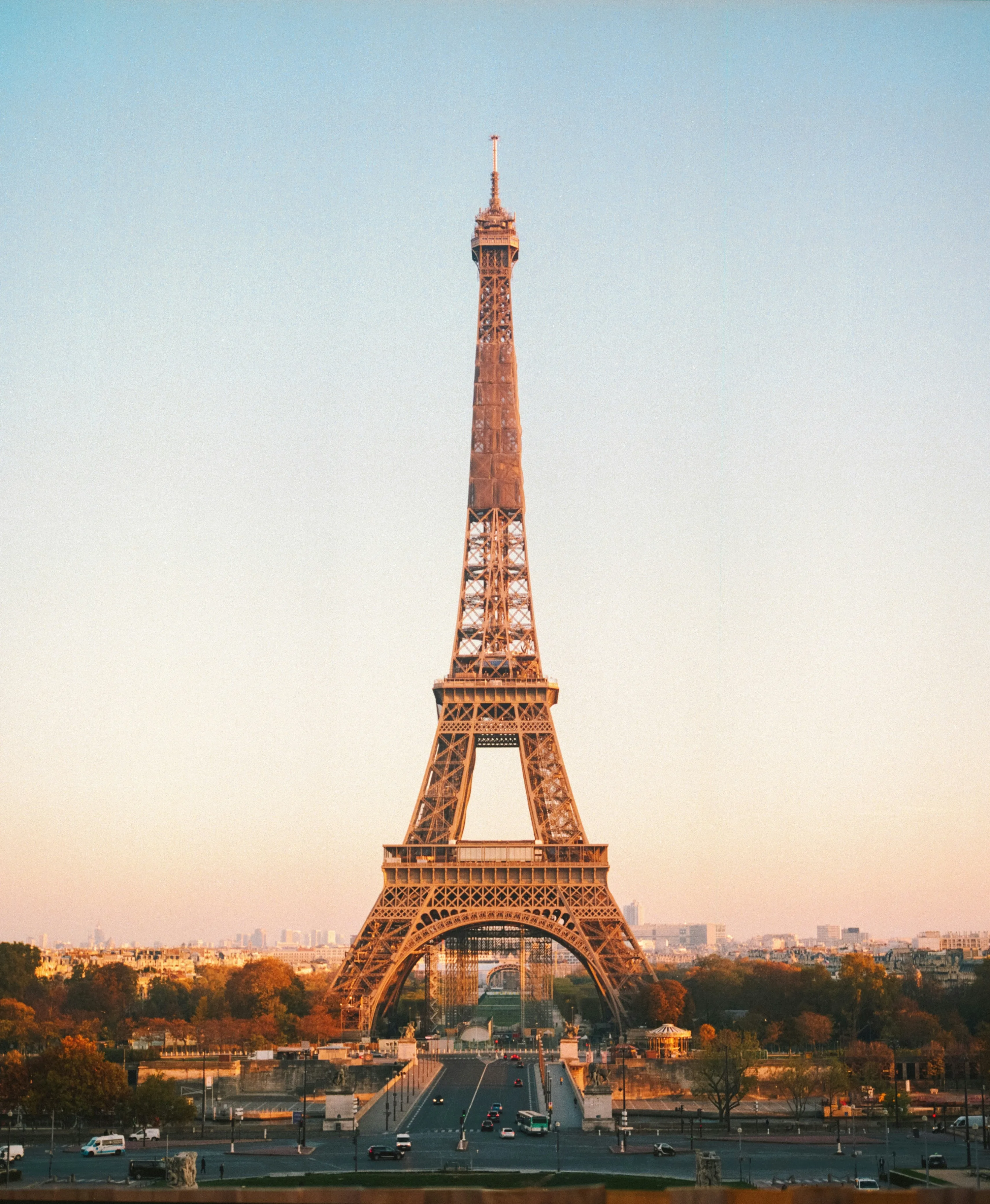
Eiffel Tower Opening Hours and Entry Information
Low season (Typically late August to mid-June):
Lift: 09:30 to 23:45
Stairs: 09:30 to 18:30
High season (Typically mid-June to Late August):
Lift: 09:00 to midnight
Stairs: 09:00 to 12:30am
The Tower is open every day of the year, including Christmas Day and New Year's Eve. Hours sometimes extend slightly over the Christmas period; on New Year's Eve itself, last admission is typically around 18:45 to manage crowds.
Summit closure: 5 January to 6 February 2026. The top floor closes each January for annual maintenance. The 1st and 2nd floors remain open during this window. Visitors who have pre-booked summit tickets for these dates are contacted by SETE and offered a refund or alternative slot.
The summit may also close at short notice in high winds or icy conditions. Check the weather forecast and the homepage at toureiffel.paris on the morning of your visit if conditions look marginal.
Address: Champ de Mars, 5 Avenue Anatole France, 75007 Paris.
What is the Best Way to Get to the Eiffel Tower?
The best metro station for most visitors is Bir-Hakeim (Line 6), which deposits you at the bridge of the same name about 5 minutes' walk from Entrance 2 (East). Line 6 is elevated at this point, and the view of the Tower from the carriage as you approach is one of the great small pleasures of arriving in Paris.
Trocadéro (Lines 6 and 9) is the better approach if you want the classic photograph, as walking out of the metro puts you at the top of the esplanade with the Tower directly ahead. The walk to the Tower entrance takes roughly 12 minutes across Pont d'Iéna. This is the route to take if you have never seen the Tower before.
École Militaire (Line 8) comes in from the south, about 10 minutes from the far end of the Champ de Mars. Less scenic, but sometimes the fastest route from the Left Bank.
RER C stops at Champ de Mars – Tour Eiffel, the closest station of all at around 5 minutes' walk to Entrance 1 (South). If you are staying near any RER C stop, including Gare d'Austerlitz or Gare du Quai d'Orsay, this is usually the most direct route.
By bus, lines 30, 42, 69, 72, 82 and 86 all stop within a 10-minute walk. Bus 82 from Luxembourg Gardens is useful for visitors combining the Tower with the Latin Quarter. Vélib' docking stations are located on Avenue Octave Gréard, Quai Branly, Avenue Rapp and Avenue de Suffren, all within 5 minutes of the entrances.
Driving is not recommended, but if necessary the Saemes underground car park at Quai Branly (approximately 5 minutes' walk to Entrance 1) is the closest. Pre-book via Saemes or Parclick.
One practical point specific to this site: there are two security entrances through the perimeter, Entrance 1 (South) and Entrance 2 (East). If you hold a stair ticket or have a restaurant reservation at Le Jules Verne or Madame Brasserie, use Entrance 1. For all other lift tickets, Entrance 2 is indicated on your e-ticket and is typically the faster option.
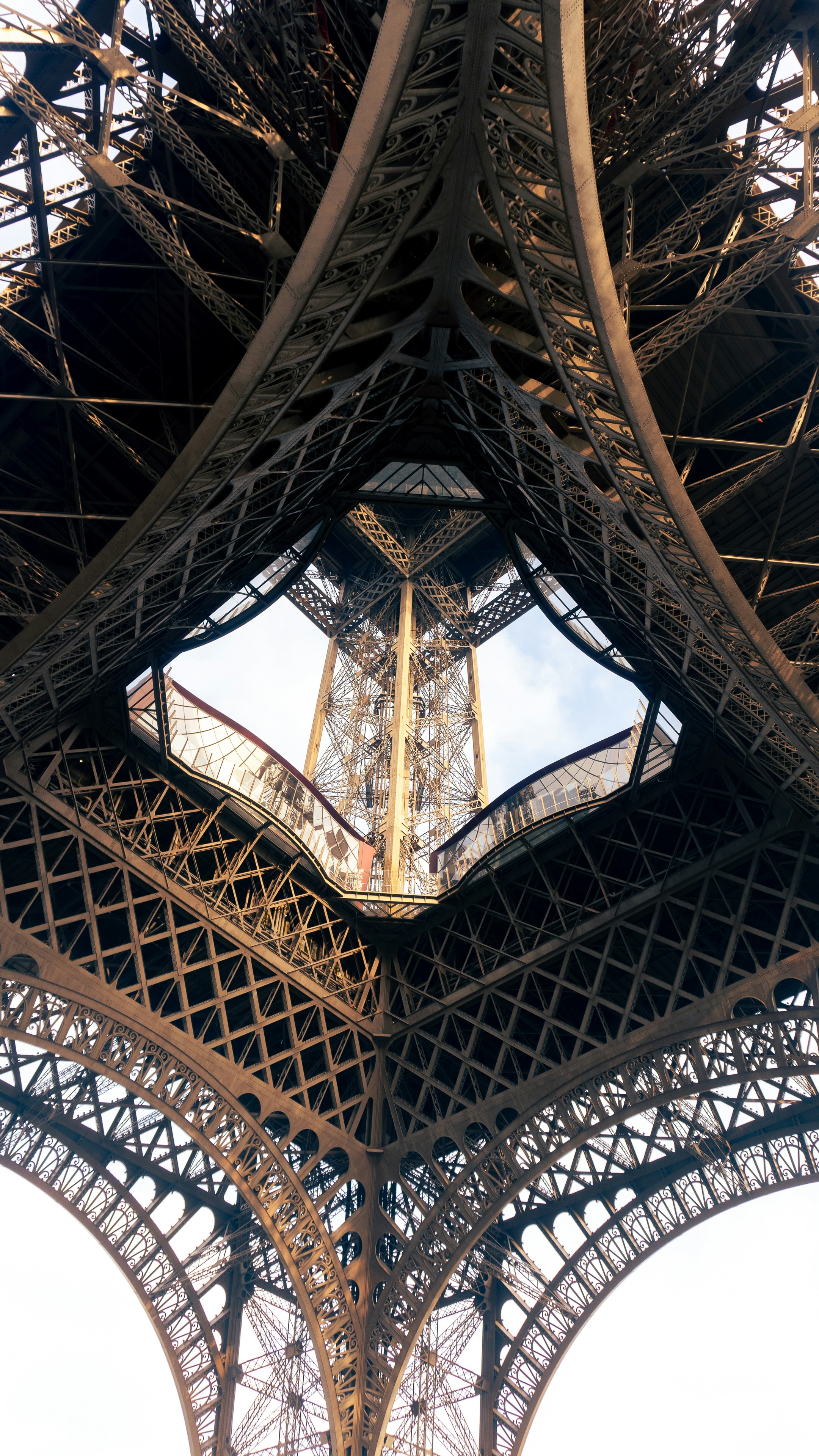
The Eiffel Tower is not made of steel, but rather puddled iron, a low-carbon, high-quality wrought iron refined by a process called puddling that made it more malleable, ductile, and suitable for large structures.
What is Inside the Eiffel Tower?
The Tower has three ticketed levels plus a free esplanade at ground level. Each floor has a distinct character, and they reward being treated as separate experiences rather than a race to the top and back.
Esplanade (ground level, free after security): Once you have cleared the security checkpoint, the esplanade under the Tower is free to explore. You will find the original lift machinery on display, a statue of Gustave Eiffel, gift shops and food kiosks, and a view straight up through the ironwork that is unlike anything you get from outside the perimeter. Many visitors rush past this on their way to the lifts, which is a mistake.
1st floor (57 metres): The first floor has more going on than most visitors expect. Its signature feature is the glass floor, a panel of reinforced glass set into the walkway that lets you look directly down to the esplanade 57 metres below. Some people find it unsettling; others make a specific journey for it. Beyond the glass floor are the immersive "Tour Eiffel Effect" VR experience, a cinema room screening a film about the Tower's construction, outdoor terraces with orientation plaques, Madame Brasserie, a gift shop, and a preserved fragment of the original spiral staircase designed by architect Stephen Sauvestre. The outdoor terrace here is often quieter than the 2nd floor and gives a close-up view of the Tower's lacework ironwork.
2nd floor (115 metres): This is where most visitors find the experience peaks. At 115 metres you are high enough to see Paris spread in every direction to the horizon, but close enough to still pick out individual landmarks: Notre Dame, the dome of Sacré-Cœur, the gilded roof of Les Invalides, the Arc de Triomphe, and on a clear day the towers of La Défense beyond it. The outdoor terraces are wide enough that even on busy days you can reach the railings. The 2nd floor also houses Le Jules Verne restaurant, the Pierre Hermé macaron bar (the best-value treat on the Tower), additional buffets, binoculars and a souvenir boutique. Many experienced visitors argue, with some force, that this floor provides a better overall experience than the summit.
Summit / 3rd floor (276 metres): The summit is a different kind of experience. From here Paris looks not bigger but flatter and more abstract, which is either breathtaking or slightly anticlimactic depending on what you came for. What makes it unique is Gustave Eiffel's restored private office, a glass-walled room with wax figures recreating an 1889 meeting between Eiffel, his daughter Claire and Thomas Edison during the World Fair. The summit also has an open-air sky walk around the circumference, a 1:50 scale model of the 1889 design, orientation panels showing distances to world cities, and the highest Champagne bar in Paris.
Eiffel Tower Summit Tickets
The summit (3rd floor, 276 metres) is reached by a dedicated internal lift from the 2nd floor, not directly from the ground. If you hold a summit ticket, the sequence is: ground-level security, lift or stairs to the 2nd floor, then the internal summit lift. Budget extra time for the 2nd-to-summit queue, particularly between June and August when waits of 20 to 40 minutes are common.
Is the Eiffel Tower summit worth it? This is the question that creates a large amount of debate, and the honest answer is that it depends on what you want. Summit access adds roughly €13 per adult over the 2nd-floor lift ticket. The 2nd floor, at 115 metres, lets you identify individual landmarks; the summit, at 276 metres, flattens that detail. Experienced visitors are split almost evenly. The pro-summit argument: you came to the Eiffel Tower, you should go to the top, and Gustave Eiffel's office is not available anywhere else. The counter-argument, made with real conviction by many repeat visitors, is that the 2nd-floor view is sharper, less crowded and better value. I would say: go to the summit on your first visit and form your own view. On a return trip, the 2nd floor is usually the wiser call.
The summit is not wheelchair accessible and is the floor most likely to close in bad weather. The open-air sky walk at 276 metres is exposed and typically 5 to 10 degrees colder than the ground. Bring a jacket regardless of conditions below.
Stairs or Lift: Which Should You Choose?
The stair option runs to the 2nd floor only; the summit is lift-only. Stair tickets are cheaper (€14.80 adult versus €23.50 for the lift to the 2nd floor), consistently less sold-out, and faster in practice during busy periods when the lift queue is long.
The staircase covers 674 steps to the 2nd floor. The steps are regularly spaced and more forgiving than most historic staircases in European monuments. Multiple landings let you pause and look out through the ironwork at changing views of the city as you climb. The ascent takes most visitors 20 to 30 minutes at a comfortable pace. The descent by stairs is faster and can feel quite exhilarating.
A third option worth knowing about is the stairs to the 2nd floor combined with the internal lift to the summit (adult €28.00). You get the physical experience of climbing through the ironwork and then the internal lift to the top from the 2nd floor. This is the most complete way to experience the Tower.
A third option worth knowing about is the stairs to the 2nd floor combined with the internal lift to the summit (adult €28.00). You get the physical experience of climbing through the ironwork and then the internal lift to the top from the 2nd floor. This is the most complete way to experience the Tower. From 29 September 2026, groups of more than nine people (including the guide) will no longer be able to buy tickets at the on-site ticket office and must book online instead. This does not affect individual visitors or small groups: walk-up stair tickets at the ticket office remain the most reliable last-minute fallback when lift tickets are sold out.
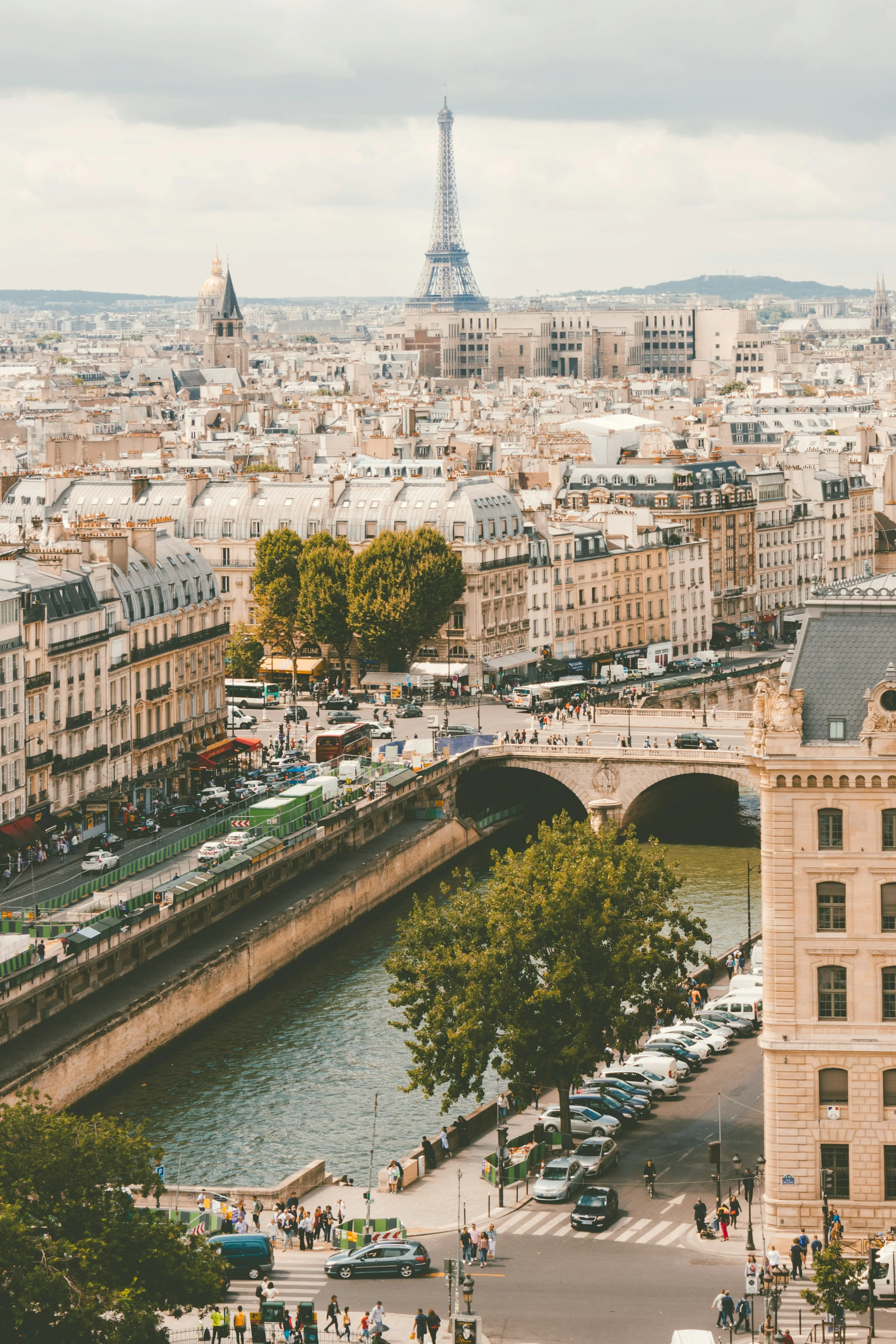
How Much Time Should I Spend at the Eiffel Tower?
Allow 2 to 2.5 hours for a self-guided visit covering the esplanade, 1st floor, 2nd floor and summit. This includes a 15 to 20 minute wait at the ground-level security checkpoint during peak hours, travel time between floors, and time on each level's viewing terraces.
A visit limited to the 2nd floor is comfortable in around 1.5 hours. If you are taking the stairs up, add 20 to 30 minutes for the climb.
Visitors dining at one of the Tower's restaurants should budget an additional 1.5 to 2.5 hours, pushing the total visit to 4 hours or more. If you are combining the Tower with a walk to Trocadéro and a Seine river cruise from the dock at Bateaux Parisiens (both within 10 minutes of the Tower), a full 4 to 5-hour half-day itinerary is very easy to fill.
What is the Best Time to Visit the Eiffel Tower?
Best time of day: Book a slot that puts you at the top roughly 60 to 75 minutes before sunset. This lets you see Paris in the late afternoon light, watch the daylight fade from the terraces, and catch the first hourly sparkle of the evening from the 1st floor or the esplanade on your way out. The transition from day to dusk from the 2nd-floor terrace is one of the best things you can do in Paris.
Best days of the week: Tuesday and Wednesday mornings are consistently the least crowded. Weekends in peak season should be avoided where possible; the queues at the security check and the competition for tickets are both at their worst on Saturday mornings.
Best season: Late April, May and early October offer mild weather, manageable crowds and strong visibility. June is beautiful but marks the beginning of the summer surge.
Summer evenings (June to August): With the Tower open past midnight, a 22:00 or 22:30 slot is a very different experience to a sunset visit. Paris is still warm, the city lights are at their most dramatic, and the later slots sell out far less quickly than sunset ones. Many visitors prefer this to the sunset rush.
The sparkle show: Every hour on the hour from sunset until 23:00 (midnight in midsummer), the Tower's 20,000 flash bulbs cascade over the permanent golden illumination for five minutes. The final sparkle of the night runs for ten minutes. Watching the sparkle from Trocadéro, Pont de Bir-Hakeim or the Champ de Mars lawn costs nothing and is, for many visitors, the most beautiful free experience in Paris. If your time slot overlaps with the hour, stay on the 2nd-floor or 1st-floor terrace to watch it from above; it looks very different from up there.
Guided Tours and Audio Guides
The Eiffel Tower does not currently offer an official audio guide device. The closest equivalent is the free mobile visitor guide at guide.toureiffel.paris, which works in any browser and offers a floor-by-floor interactive map, 360° panoramas and quizzes. On the 1st floor, "Tour Eiffel Effect" is a paid add-on virtual reality experience, a team game for 2 to 4 players (ages 11 and up) that involves flying around the Tower and solving time-based puzzles; tickets are bought separately alongside your Tower ticket. The 1st-floor cinema room also screens a short film about the building's history. For most self-guided visitors, these cover the essential context adequately.
Private and small-group guided tours from external operators are available through GetYourGuide, Viator and Paris-based tour companies. These typically pair an English-speaking guide with a pre-booked timed entry ticket and range from €50 to €120 per person depending on group size and included floors. The value of a guide here is less about navigating the space and more about narrative: the engineering controversy, the political opposition to Eiffel's design, the 1889 World Fair context. If history is your primary interest, a guided experience is worth the premium.
Holders of the Go City Paris Pass have a guided stairs-to-2nd-floor experience included in their pass. Check the voucher terms carefully, as the access level and the slot-booking process differ from the standard e-ticket.
Is the Eiffel Tower Worth Visiting?
For a first-time visitor to Paris, going up the Tower is close to essential. There is something about the scale of the structure that you simply cannot understand from ground level. Standing on the 2nd-floor terrace and looking out in every direction at Paris spreading to the horizon, picking out Notre Dame, the Arc de Triomphe and Sacré-Cœur simultaneously, is one of those rare travel moments that justifies the phrase once-in-a-lifetime. I have been up multiple times and the first ascent to 115 metres left an impression that has not faded.
The caveats are real and worth stating. The Tower is heavily crowded in summer, the security process is slow, the on-site food outside of the Tower's two restaurants is overpriced and unmemorable, and the lift queues in July can consume an hour if your timing is off. Aggressive scammers cluster on every approach. None of this is a reason not to go. It is a reason to plan carefully, book early, and arrive knowing what to expect.
For families with children, the Tower is excellent. The glass floor on the 1st floor is a hit with most children, the open spaces on each level are manageable, and the stair option turns the ascent into a physical adventure. Families rarely regret it.
For repeat visitors to Paris, the case is this: consider, at least once, skipping the ascent and spending that time at Trocadéro or Pont de Bir-Hakeim at the hour of the sparkle instead. The view of the Tower from outside, particularly in the five minutes of the light display, is arguably the more beautiful experience. Many long-term Paris visitors hold this view firmly. It is worth trying both over the course of multiple visits.
The summit: worth it once, for Eiffel's office and the bragging rights. After that, the 2nd floor is the better call.
Where Should I Eat Near the Eiffel Tower?
The area immediately around the Tower, particularly Avenue de la Bourdonnais and the cafés on the esplanade itself, is full of overpriced restaurants serving food that does not justify the location premium. The rule is simple: the closer to the Tower's entrance, the worse the value.
On the Tower:
Le Jules Verne (2nd floor) is now a 2-Michelin-starred restaurant under Chef Frédéric Anton, earning those stars at the March 2024 Michelin Guide France ceremony. Dinner is tasting menus only: a 5-course menu at €295 and a 7-course at €330. Weekday lunch has à-la-carte options from around €180. Reservations open 90 days in advance; sunset tables disappear within minutes of release. Cancellation is free up to 48 hours before your booking. Dress code is smart elegant: jacket required for men, trainers and shorts not permitted. Diners reach the restaurant via a private elevator from the South pillar, bypassing the Tower's regular ticket queue, and do not need a separate Eiffel Tower ticket. This is a serious destination restaurant, not simply a tourist attraction with a kitchen.
Madame Brasserie (1st floor), helmed by Chef Thierry Marx, is the more accessible option. Lunch menus start from €69 (centre seating) up to around €186 for window tables overlooking the city; dinner from around €130 to €261.60 for the best view seats. A children's menu is €46.60. The adjacent Lounge accepts walk-ins for breakfast (09:30 to 11:30), afternoon teas and cocktails without a separate Tower ticket. The consensus from recent diners: the setting is special, the food is competent rather than memorable. Go for the experience rather than the cooking.
Off the Tower:
Au Bon Accueil (14 Rue de Monttessuy, 75007) is a neighbourhood bistro with a small terrace at the end of a cobbled street that frames the Tower directly ahead. Classic French cooking at honest bistro prices, around €35 to €50 per head with wine.
Les Cocottes de Christian Constant (135 Rue Saint-Dominique, 75007) is casual, takes no reservations, and serves dishes in cast-iron cocottes at around €25 to €35 per head. Constant sold both Les Cocottes and Le Violon d'Ingres some years ago; both restaurants are still open and worth the visit under their current owners.
La Fontaine de Mars (129 Rue Saint-Dominique, 75007) is a classic Paris bistro in the best sense: duck confit, blanquette de veau and tarte tatin in a tiled dining room on one of the neighbourhood's most pleasant streets. Book ahead. Around €40 per head.
Les Ombres (rooftop, Musée du Quai Branly, 27 Quai Branly, 75007) is the smart compromise for a Tower-view meal at a fraction of Le Jules Verne's price. Lunch menus from €58, dinner from €88. The cooking is solid French contemporary; the rooftop view is the real reason to be here, and it earns its place.
For a quick and inexpensive lunch, Rue Cler (about 15 minutes' walk east) is a covered market street with excellent fromageries, charcuteries and boulangeries for assembling a Champ de Mars picnic.
What Else is There to Do Near the Eiffel Tower?
Trocadéro and Palais de Chaillot (10 to 12 minutes' walk across Pont d'Iéna) is the iconic facing viewpoint and one of the best free experiences in Paris. The Palais houses three museums: the Cité de l'Architecture et du Patrimoine (architectural models and casts from French monuments, covered by the Paris Museum Pass and seriously undervisited), the Musée de l'Homme (anthropology), and the Musée National de la Marine (maritime history, reopened in 2023 after a major renovation). The gardens and fountain terraces are free.
Musée du Quai Branly – Jacques Chirac (5 minutes' walk along the Seine) holds one of the world's most significant collections of art from Africa, Asia, Oceania and the Americas, housed in Jean Nouvel's striking building with Patrick Blanc's famous vertical garden facade. Adult entry around €14; covered by the Paris Museum Pass. Plan 1.5 to 2 hours.
Champ de Mars (immediately south of the Tower) is the long park that runs to the École Militaire. It is free, picnic-friendly, has a playground and carousel for children, and is the most relaxed way to spend time with the Tower in view. The Mur pour la Paix at the south end takes 5 minutes to visit.
Seine river cruises from Bateaux Parisiens (Port de la Bourdonnais, 5 minutes' walk from the Tower) run one-hour circuits past Notre Dame, the Musée d'Orsay and back. The view of the Tower from the water is one of the highlights of the circuit. Adult tickets around €18 to €20; advance booking is useful in July and August but rarely essential.
Musée Rodin (approximately 20 to 25 minutes' walk via Avenue de Suffren) has The Thinker in the garden, The Gates of Hell on the facade, and the most calmly arranged sculpture gardens in Paris. Covered by the Paris Museum Pass. Plan 1.5 hours.
Les Invalides and the Army Museum (20 to 25 minutes' walk) encompasses Napoleon's Tomb, the Army Museum and the Musée de l'Ordre de la Libération under the golden dome visible from the Tower. Covered by the Paris Museum Pass.
Pont de Bir-Hakeim (5 minutes from Bir-Hakeim metro, 10 minutes' walk from the Tower) is worth a detour purely for the view. The double-level iron bridge, familiar from Christopher Nolan's Inception, frames the Tower between its arches in a way that even Trocadéro cannot replicate. The upper level is a Metro viaduct; the lower is pedestrian. Go at the hour of the sparkle for an outstanding photograph.
Rules, Bags, and Security
Bag size limit: maximum 40 cm × 20 cm × 55 cm per bag. Gauges are positioned at the corners of the security perimeter. A standard daypack passes comfortably; a cabin-size wheeled suitcase does not. There is no cloakroom or left-luggage facility at the Tower, so anything you bring stays with you for the entire visit. If you are carrying large luggage, leave it at your hotel or use a luggage-storage service near Bir-Hakeim before arriving.
Forbidden items include weapons (including penknives), explosive or flammable substances, glass bottles, cans, alcohol purchased elsewhere, skateboards, scooters, climbing equipment and pets (guide dogs and registered assistance animals excepted).
Tripods and selfie sticks are not permitted inside the Tower or its immediate parvis. They are allowed in the surrounding public gardens and along the Champ de Mars.
Drones are prohibited over central Paris airspace, including above the Tower and Champ de Mars.
Re-entry: tickets are single-entry. Once you leave the security perimeter, you cannot re-enter on the same ticket.
Dress code: none for the Tower itself. Shorts, T-shirts and trainers are all fine. Pack a warm layer regardless of ground conditions; the summit is consistently 5 to 10 degrees cooler than the esplanade and significantly windier.
Strollers must be folded inside the lifts. A designated stroller-parking area is provided near the South pillar at ground level.
Accessibility at the Eiffel Tower
Wheelchair users and visitors with reduced mobility can access the 1st and 2nd floors via the dedicated West-pillar lift. The summit (3rd floor) and the stairs are not accessible to wheelchair users.
On arrival, wheelchair users should head to the West Pillar Information Desk, where staff direct visitors to the dedicated accessible lift. Ramps and accessible toilets are available on both the 1st and 2nd floors.
The disabled ticket rate (€3.80 to €9.20 depending on the ticket type) applies to the holder of a nominative disability card and one accompanying person; both pay the reduced rate. You may be asked to show proof of disability at the Information Desk on the day.
Final Tips for Visiting the Eiffel Tower
Book the moment your travel dates are confirmed on the official website. For summer and weekends, log on at exactly 1pm Paris time on the day that is 60 days before your visit.
If lift tickets are sold out, stair tickets are sold as walk-ups at the on-site office on the day and are often faster to process than timed lift slots during peak hours.
Use Entrance 2 (East) for lift tickets and Entrance 1 (South) for stair tickets or restaurant bookings. Your e-ticket will show the correct entrance.
Bring photo ID for every member of your party, including children. Tickets are nominative and ID is checked at security.
The Paris Museum Pass does not cover the Eiffel Tower. Do not arrive expecting it to work.
Book a time slot that arrives 60 to 75 minutes before sunset. You see Paris in the light, you watch it shift to dusk from the 2nd-floor terrace, and you can catch the first sparkle from the esplanade on your way out.
Pack a warm layer regardless of the ground temperature. The summit and upper terraces are exposed and measurably colder.
The scammers on the approaches to the Tower are among the most persistent in Paris. Watch for the petition clipboard, the gold-ring drop and the friendship-bracelet approach near Bir-Hakeim metro and the Champ de Mars. Keep your bag in front of you and do not make eye contact or engage.
The best free experience at the Tower is watching the five-minute sparkle display from Pont de Bir-Hakeim at the top of any hour after sunset. Walk to the middle of the bridge, face the Tower, and wait. This is my single strongest Eiffel Tower recommendation for any visitor, first-time or otherwise.
For an outstanding half-day, combine the Tower with a visit to the Musée du Quai Branly (5 minutes' walk) and a one-hour Seine cruise from Bateaux Parisiens (also 5 minutes). These three experiences sit within walking distance of each other and together represent some of the best 4 hours you can spend on the Left Bank.
Back to Paris Attractions
Explore other Paris attractions
" width="24px"><path d="M 0 0 L 24 0 L 24 21.231 L 0 21.231 Z" fill="transparent" height="21.230768474975793px" id="nL2EwDcS9" width="24px"/><path d="M 0 0.541 C 0 0.242 0.245 0 0.547 0 L 2.735 0 C 3.037 0 3.282 0.242 3.282 0.541 L 3.282 4.598 C 3.282 4.897 3.037 5.139 2.735 5.139 L 0.547 5.139 C 0.245 5.139 0 4.897 0 4.598 Z" fill="rgb(196, 217, 201)" height="5.138657337892187px" id="hZ_rlBe_S" transform="translate(0 16.092)" width="3.2820512820512358px"/><path d="M 0 0.541 C 0 0.242 0.245 0 0.547 0 L 2.735 0 C 3.037 0 3.282 0.242 3.282 0.541 L 3.282 7.843 C 3.282 8.142 3.037 8.384 2.735 8.384 L 0.547 8.384 C 0.245 8.384 0 8.142 0 7.843 Z" fill="rgb(230, 211, 160)" height="8.38412513024521px" id="HgVBxIz3e" transform="translate(5.128 12.847)" width="3.282051282051235px"/><path d="M 0 0.541 C 0 0.242 0.245 0 0.547 0 L 2.735 0 C 3.037 0 3.282 0.242 3.282 0.541 L 3.282 12.982 C 3.282 13.281 3.037 13.523 2.735 13.523 L 0.547 13.523 C 0.245 13.523 0 13.281 0 12.982 Z" fill="rgb(232, 207, 164)" height="13.522782468137464px" id="utgrDnoM9" transform="translate(10.325 7.708)" width="3.282051282051377px"/><path d="M 0 0.541 C 0 0.242 0.245 0 0.547 0 L 2.735 0 C 3.037 0 3.282 0.242 3.282 0.541 L 3.282 16.498 C 3.282 16.797 3.037 17.039 2.735 17.039 L 0.547 17.039 C 0.245 17.039 0 16.797 0 16.498 Z" fill="rgb(233, 196, 166)" height="17.038705909853153px" id="OLOhW6STz" transform="translate(15.521 4.192)" width="3.2820512820512384px"/><path d="M 0 0.541 C 0 0.242 0.245 0 0.547 0 L 2.735 0 C 3.037 0 3.282 0.242 3.282 0.541 L 3.282 20.69 C 3.282 20.989 3.037 21.231 2.735 21.231 L 0.547 21.231 C 0.245 21.231 0 20.989 0 20.69 Z" fill="rgb(217, 170, 153)" height="21.230768474975793px" id="H5Z8wcwkd" transform="translate(20.718 0)" width="3.2820512820512278px"/></g></svg>)