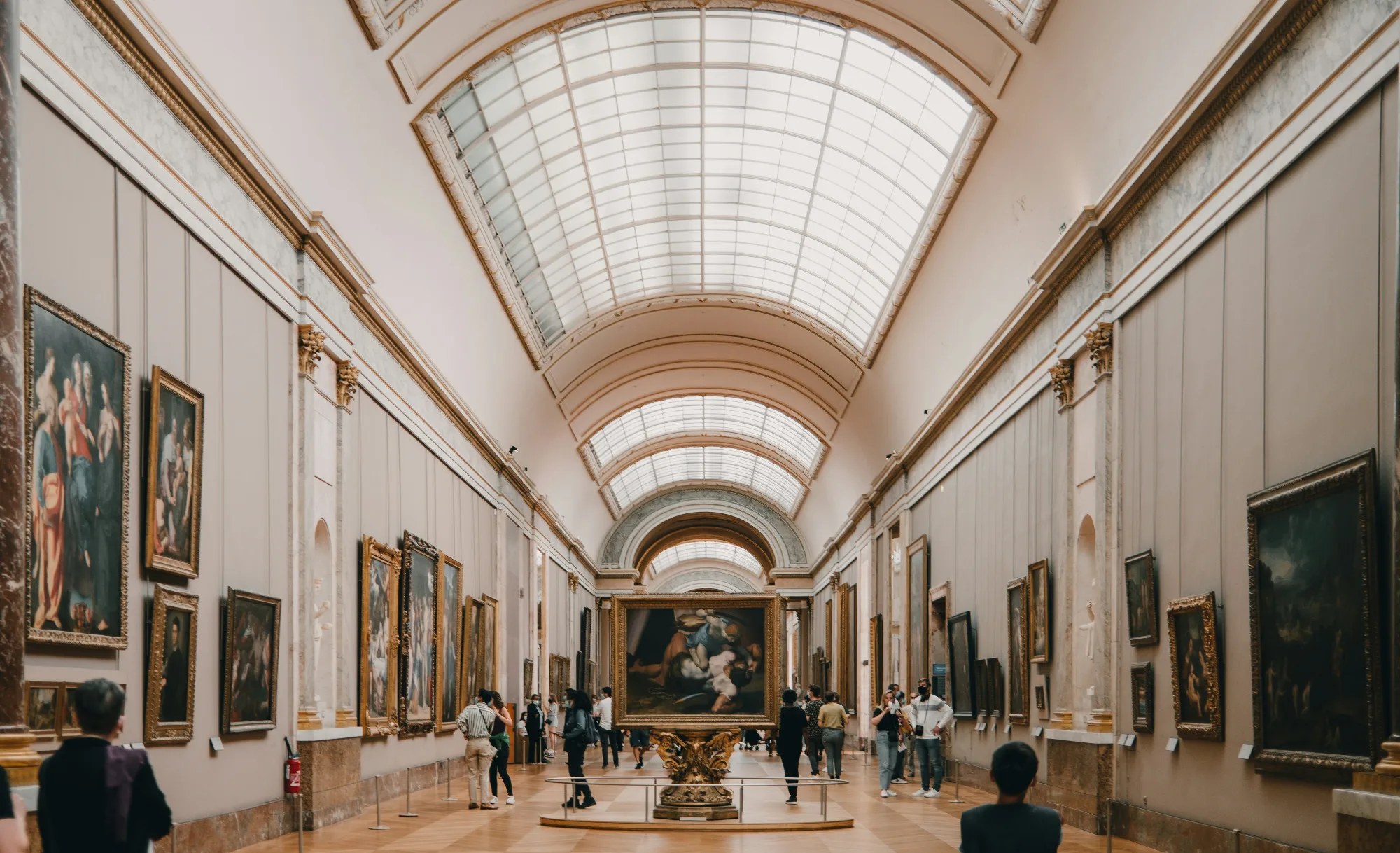
Paris • 1st arrondissement
Booking a timed-entry ticket in advance is strongly recommended year-round. Tickets are only sold on site when attendance is low, and on busy days, especially in summer, the on-site ticket office often has no tickets remaining.
Book 2-3 Weeks Ahead
Peak Season
Book 1 Week Ahead
Off Season
Back to Paris Attractions
NOTE: Timed-entrance tickets are currently highly recommended for The Louvre. The museum frequently reaches capacity, in which case the on-site ticket office closes.
Louvre Museum Paris: Everything You Need to Know Before You Visit
Updated September 2026
The Louvre is the largest museum in the world and the most visited, receiving over nine million people each year in a former royal palace that covers nearly 73,000 square metres of gallery space across three interconnected wings. More than 35,000 works are on permanent display, spanning antiquity to the mid-19th century, from the earliest civilisations of Mesopotamia and Egypt to the Italian Renaissance and some of the defining paintings of Western art history. Whether you are coming to see the Mona Lisa or to lose yourself in the Egyptian antiquities or the Dutch and Flemish masters on the upper floors of the Richelieu Wing, visiting the Louvre rewards advance planning more than almost any other cultural institution in Europe. The ticketing system, the hours, the entrances, and the sheer physical scale of the building all require thought before you arrive.
At a Glance
How Early to Book:
At least 2–3 weeks in advance for peak time slot, 1 week in advance for off-peak time slot.
At least through the end of the following month, sometimes up to 90 days in advance.
Best Times to Visit:
Wednesday and Friday evenings, when the museum is open until 9:00pm and crowds are thinner.
Ticket price:
€22-€32 for adults depending on European citizenship
Where to Book:
The Official Louvre Museum website
Museum Address:
Do You Need to Book Louvre Tickets in Advance?
Yes, and at the busiest times you have no choice. The Louvre makes a timed booking compulsory for every visitor in peak holiday periods: in 2026 that was 1 to 19 April and 1 July to 31 August (and 20 December 2025 to 4 January 2026). The rest of the year booking is strongly recommended rather than required, and the museum sells some tickets at its desks on the day when attendance is low, but only an advance booking guarantees entry. The good news is that you rarely need to book very far ahead. In What2Book's availability checks from March to September 2026, the soonest morning slot was usually about a week away and never more than 16 days, and an afternoon slot was usually free within three days. In July and August, allow one to two weeks for a morning slot.
Where to book: The official Louvre booking platform is ticket.louvre.fr. This is the cheapest authorised source and the correct place to reserve a timed slot. Many fake ticketing platforms operating with Louvre-like domain names are active, particularly around the major search queries.
Ticket prices (from January 14, 2026):
Adults from EEA countries (EU + Iceland, Liechtenstein, Norway): €22
Adults from non-EEA countries (USA, UK, Japan, China, etc.): €32
Children under 18: Free (timed reservation recommended; proof of age required)
EU/EEA citizens and long-term EU residents aged 18 to 25: Free (valid photo ID required)
Disabled visitors and one accompanying person: Free
ICOM members, accredited journalists, EEA art teachers: Free
Audio guide: €6 (available in 9 languages at the information desk inside the Hall Napoleon)
What is included: One standard ticket covers the entire permanent collection across all three wings (Denon, Sully, Richelieu), all four floors, and any temporary exhibitions included in general admission. Some special temporary exhibitions require a separate additional ticket not included in the standard price.
Free entry sessions:
First Friday evening of every month from 6:00pm to 9:00pm: free for all visitors. This free session does not apply in July and August.
Check louvre.fr for other free-entry dates including Bastille Day (July 14).
Ticket release window: Tickets are available approximately 90 days (around three months) in advance. There is no fixed midnight release. Summer weekend slots, particularly Saturday and Sunday mornings, sell out weeks ahead. If summer visit dates are important to you, check availability the moment your dates fall within the 90-day window.
Booking fee: A small booking fee applies per transaction at the official site.
Refunds and changes: Tickets purchased directly through the official platform can generally be cancelled up to 48 hours before your timed slot. Check current terms on your booking confirmation, as conditions vary by ticket type.
Bonus museum included: Your Louvre ticket also covers entry to the Musée National Eugène-Delacroix, in the painter's former apartment and studio in Saint-Germain-des-Prés, on the same day or the day after your visit.
Louvre Museum Pass
The Paris Museum Pass is one of the most searched Louvre topics and warrants a clear, dedicated answer: yes, the Louvre is included in the Paris Museum Pass, but there are important conditions that catch visitors out.
The Paris Museum Pass covers:
Standard entry to the Louvre permanent collection (the same access as a standard timed-entry ticket)
Entry to over 50 other Paris museums and monuments, including the Musée d'Orsay, Musée de l'Orangerie, Château de Versailles, Sainte-Chapelle, and Conciergerie.
The Paris Museum Pass does not cover:
Special temporary exhibitions with a separate ticket requirement
Audio guides
Critical caveat: Paris Museum Pass holders still need to book a timed entry slot at the Louvre in advance. Pass holders who arrive at the Louvre without a timed reservation face the same walk-up queue and the same risk of being turned away as non-pass visitors.
Is the Museum Pass worth it? The pass becomes good value when you plan to visit multiple included attractions over two to six days. At €22 to €32 for the Louvre alone, plus €16 for the d'Orsay, €12.50 for the Orangerie, and additional charges for Versailles and other monuments, the pass saves money quickly for visitors covering several major sites. A 2-day pass costs €85, a 4-day pass €105, and a 6-day pass €125. Calculate based on your specific itinerary. The pass also allows you to skip the ticket purchase queue at each included attraction (though not the security queue), which can save time.

Louvre Skip the Line Tickets
"Skip the line" at the Louvre is a concept that requires careful unpacking, because no ticket of any kind skips the mandatory airport-style security screening that all visitors must pass through on arrival. On busy days, this security queue can take 20 to 40 minutes regardless of what ticket you hold.
What advance booking actually skips: The ticket purchase queue and the uncertainty of not having a reserved slot. Walk-up visitors join one queue to buy a ticket (which may not be available) before then joining the security queue. Visitors with a timed-entry ticket proceed directly to the security queue, bypassing the ticket office entirely. In peak season this represents saving time.
What "skip the line" tour tickets provide: Many operators market guided Louvre tours as "skip the line" experiences. These tours typically include a reserved timed-entry ticket bundled into the tour price, ensuring your entry slot is confirmed. The guide also knows the most efficient routing through the museum and can steer you to the Mona Lisa in the quietest period of your tour. Small guided groups often enter through the Richelieu entrance, which is reserved for groups and is not open to individual ticket holders. If a tour's priority access claim depends on a particular entrance or time, it is worth verifying before booking.
Alternative entrances with shorter queues: The Pyramid is the main entrance but not always the fastest. Visitors with a pre-booked ticket can also use the Carrousel du Louvre entrance at 99 Rue de Rivoli, which leads in from the underground level and is particularly useful in bad weather. The Porte des Lions on Quai François Mitterrand, on the Seine side, only admits visitors who already hold a ticket and closes at 6:00pm, with last entry at 5:00pm, so it is not an option on Wednesday and Friday evenings. The Richelieu Passage entrance on Rue de Rivoli is reserved for groups, members, and other card holders, and does not admit individual visitors with a standard ticket.
Last-minute tickets: Available slots frequently appear on the official ticket platform on the day or a few days before a visit, as cancellations are released. Checking ticket.louvre.fr at different times of day increases your chances of finding a same-day slot. Very early morning check-ins (around 7:00 to 8:00am Paris time) are often the best window for released cancellations. However, in July and August booking is compulsory and same-day slots cannot be relied upon, so book one to two weeks ahead for a morning visit.
Louvre Opening Hours
Standard daily hours:
Monday, Thursday, Saturday, Sunday: 9:00am to 6:00pm
Wednesday and Friday: 9:00am to 9:00pm (late night opening)
Closed every Tuesday
Closed: 1 January, 1 May, and 25 December
Last entry: One hour before closing (5:00pm on standard days, 8:00pm on late nights)
Galleries begin clearing: 30 minutes before closing
The Louvre is closed on Tuesdays. This is the most common day that first-time visitors arrive expecting to find the museum open. It is closed every Tuesday without exception. Always check before you travel.
Late openings on Wednesday and Friday: The Louvre stays open until 9:00pm on these two evenings. After 7:00pm, crowd levels in the galleries drop significantly, and once the Mona Lisa room has thinned out, the experience changes entirely. Wednesday and Friday evenings are the single best time to visit the Louvre. See the Best Time section below for how to use this strategically.
Address: Rue de Rivoli, 75001 Paris. The main visitor entrance is under the glass Pyramid in the Cour Napoléon courtyard.
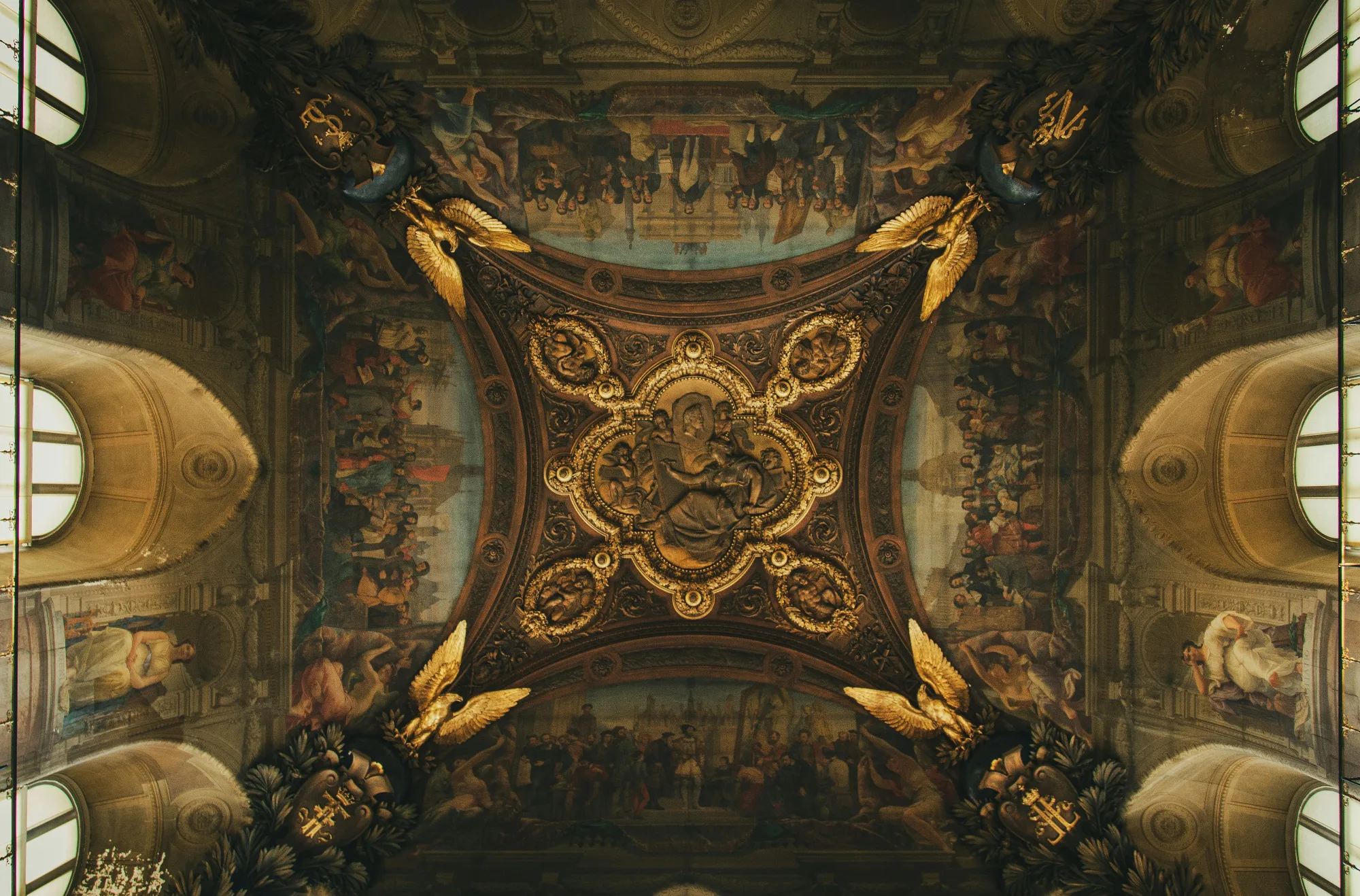
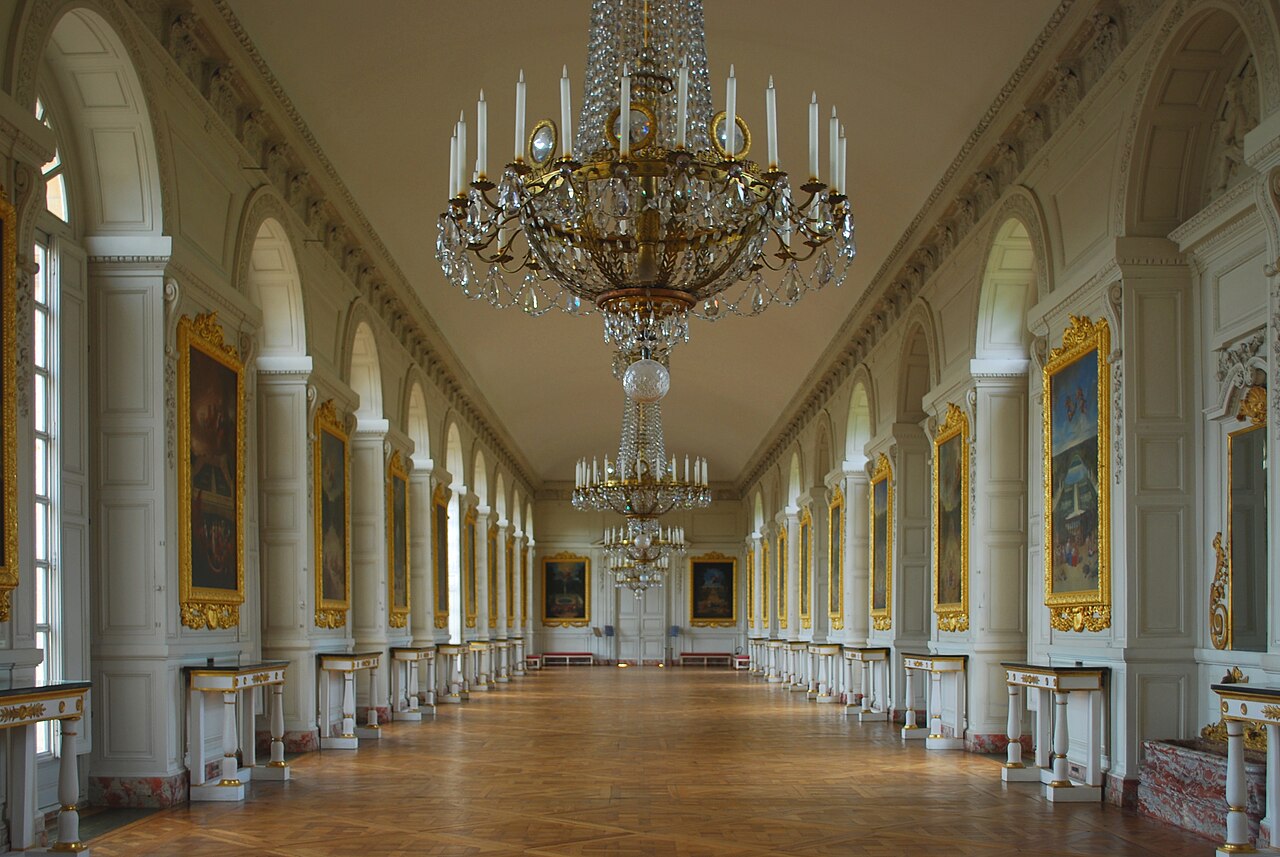
Don't forget to look up: the Louvre's Galerie d'Apollon is a work of art in its own right, from the painted ceiling to the gilded walls.
What is the Best Way to Get to the Louvre?
The Louvre is in the 1st arrondissement on the right bank of the Seine, between the Tuileries Garden and Les Halles, and is extremely well served by public transport.
By Metro: The most convenient station is Palais Royal–Musée du Louvre (Lines 1 and 7), with a direct exit into the underground Carrousel du Louvre shopping mall, from which a separate entrance leads into the museum. This is one of the easiest approaches in bad weather. Louvre–Rivoli (Line 1) and Pyramides (Line 14) are also very close.
By RER: RER A stops at Châtelet–Les Halles, around a 10-minute walk from the Pyramid. From Eurostar arrivals at Gare du Nord, take the RER B to Châtelet-Les Halles and walk.
On foot: From the Musée de l'Orangerie, walk east through the Tuileries Garden (around 15 minutes). From Notre Dame, cross the Seine via Pont Neuf (around 20 minutes). From the Palais Royal gardens, the Richelieu entrance is a two-minute walk.
By bus: Routes 21, 27, 39, 67, 68, 69, 72, 74, 85, and 95 all stop within a few minutes of the museum.
By Vélib': Docking stations are near Rue de Rivoli, Pyramides, and around Palais Royal.
Driving is not recommended. The 1st arrondissement is heavily pedestrianised around the museum and parking is severely limited.
Which entrance to use on arrival: Check before you go which entrance will be least congested. As a general rule:
The Pyramid: The default and most iconic entrance, but the longest security queues on busy days
Carrousel du Louvre (99 Rue de Rivoli): Open to all ticket holders, useful in wet weather, and entered via the underground level
Porte des Lions (Quai François Mitterrand): Ticket holders only and often quicker, but closes at 6:00pm (last entry 5:00pm)
Richelieu Passage (Rue de Rivoli): Reserved for groups and members, not for individual visitors with a standard ticket
How Much Time Should I Spend at the Louvre?
Honest answer: The Louvre has more than 35,000 works in 700+ rooms across 73,000 square metres. You cannot see it all in a day. You should not try.
For a first visit focused on the major highlights (Mona Lisa, Winged Victory of Samothrace, Venus de Milo, and a handful of other rooms), a focused visit of two hours is possible but will feel rushed. Most visitors with a real interest in more than the top three works spend three to four hours comfortably. Art enthusiasts who want to explore specific collections, such as the Egyptian antiquities, the Dutch masters, or the Napoleonic apartments, can fill a full day without trouble.
The building itself is physically demanding. The wings are large, the corridors are long, and there is no shortcut between the most famous works. Going from the Winged Victory in the Denon Wing to the Venus de Milo in the Sully Wing to the Napoleon III Apartments in Richelieu covers considerable distance on marble floors. Wear comfortable shoes that you have broken in. Bring water. Take breaks.
Practical time guide:
Just the Mona Lisa, Winged Victory, Venus de Milo (with minimal other stops): approximately 1.5 to 2 hours
Those three, plus a wing of particular interest: approximately 3 hours
A comprehensive highlights visit across all three wings: 4 to 5 hours
A deeper dive into one or two departments: a full day
What is the Best Time to Visit the Louvre?
The single best answer: Wednesday or Friday evening from 7:00pm onwards.
On these two evenings the Louvre stays open until 9:00pm. After 7:00pm, the bulk of the day's visitors have departed, tour groups have left, and crowd levels in most galleries, including the Mona Lisa room, are dramatically lower. The lighting on the paintings in the evening, with the Pyramid glowing outside and the gallery spotlights at full strength, is qualitatively different from daytime. It is one of the few ways to experience the Louvre's most famous works without the physical press of a crowd. Last entry is at 8:00pm and the galleries begin clearing at 8:30pm, so aim to be inside by 7:00pm.
Second best: 9:00am at opening on a Monday or Thursday.
Monday and Thursday mornings are the quietest standard-hours days of the week. Because the museum is closed on Tuesdays, some of that demand spills into Wednesday morning, making it busier. Arriving at 9:00am on Monday or Thursday means reaching the Mona Lisa room before the organised tour groups typically arrive (around 10:00am to 10:30am).
Avoid:
Wednesday afternoons (Tuesdays are closed, pushing crowds to Wednesday morning and building through the day)
Any day from 11:00am to 4:00pm in July and August
Saturdays and Sundays between 10:00am and 3:00pm year-round
The first Friday evening of the month (free entry draws large crowds, eliminating the evening calm that makes paid Wednesday and Friday evenings special)
Seasonal advice: Spring (April to May) and autumn (September to October) are the most comfortable. Summer (July and August) has the highest visitor volumes of the year, and mid-afternoon visits in July feel truly overwhelming even with a timed ticket. Winter visits are significantly calmer, with the added atmospheric bonus of the Pyramid illuminated against the dark Paris sky.
Mona Lisa at the Louvre
The most important thing to know about seeing the Mona Lisa at the Louvre is what to expect. This is the most viewed artwork in the world, seen by around 20,000 visitors on a typical day. The experience has been described, by the Louvre's own director, as something the museum is not currently managing well. An analysis of 18,000 online reviews has found it is the most frequently described "disappointing" attraction in the world, with 37% of reviewers using negative language.
Understanding exactly what you are walking into changes the experience fundamentally.
What the visit is actually like: The Mona Lisa is in Room 711 (Salle des États) in the Denon Wing, Level 1. It is displayed behind bulletproof glass on the far wall of a large rectangular room, at a height that places it at roughly eye level. A wooden barrier stands approximately four metres in front of the glass. Between you and that barrier, on a busy midday visit, there are several hundred people.
The painting itself is 77 cm tall and 53 cm wide. This is not small for a 16th-century portrait. It is, however, small relative to the room, and small relative to the expectations built by years of photographs. Behind glass, across a crowd, it can appear surprisingly modest. The average visitor spends approximately 50 seconds in front of it before being displaced by the press of new arrivals.
The case for going anyway: Despite all of this, and I am not going to pretend the experience is serene, there is still something that happens when you are finally looking at the actual canvas. The sfumato technique, the impossible depth behind the figure, the unsettled quality of the expression that shifts as you move: these are things that a screen cannot convey, and they are there in the original in a way that cuts through the circus around it. Go in with calibrated expectations and you will leave glad you came.
How to see the Mona Lisa with fewer people:
Arrive at 9:00am and go directly to the Denon Wing without stopping. Signage from the Pyramid is clear. Room 711 is the Salle des États on Level 1. Walk quickly through the Winged Victory staircase and follow the crowd to the Italian paintings. You will know you are close when the crowd thickens.
Alternatively, come at around 7:30pm on a Wednesday or Friday during late opening. The room is substantially quieter, and positioning yourself centrally behind the barrier without a crowd pressing from behind gives you a completely different experience. Galleries begin clearing at 8:30pm, so do not leave it much later.
Standing to one side rather than directly in front of the barrier often gives a cleaner line of sight, with less glass reflection.
The painting directly opposite the Mona Lisa, Veronese's enormous Wedding at Cana (almost seven metres tall and ten metres wide), is one of the largest paintings in the Louvre and is attended by a fraction of the people who came for the smaller painting on the other wall. Turn around and give it some time.
A 2031 update on the horizon: French President Emmanuel Macron announced the "Louvre Nouvelle Renaissance" renovation project in January 2025, which includes a dedicated underground room for the Mona Lisa with its own separate entrance and ticketing. This is not expected to open until approximately 2031. Until then, the current arrangement in the Salle des États is what visitors encounter.
The Louvre Pyramid
The glass and steel Pyramid in the Cour Napoléon is the main entrance to the museum and one of the most celebrated and contested pieces of architecture in Paris. Designed by the Chinese-American architect I.M. Pei and opened in 1989, it was initially met with fierce public opposition in France before becoming one of the most widely admired architectural interventions of the late 20th century. The Pyramid descends into the Hall Napoléon underground reception area, through which visitors access all three wings of the museum.
The Pyramid is 21.6 metres high with a base of 34 metres on each side, made of 673 glass panes and 18 rhombus-shaped glass segments. It is accompanied by three smaller pyramids in the courtyard that function as skylights for the underground level. The inverted pyramid (Pyramide Inversée), a downward-pointing glass structure visible through the floor at the Carrousel du Louvre underground shopping centre at 99 Rue de Rivoli, is a separate architectural element by the same architect and was also designed in 1989.
The Pyramid at night, illuminated from within while the surrounding neoclassical palace is lit externally, is one of the most photographed views in Paris. The best photographs of the Pyramid can be taken from the surrounding courtyard at ground level, particularly from the western and northern sides of the Cour Napoléon, or from the first-floor windows of the Richelieu Wing looking down.
Louvre Highlights: What to See
The Louvre has 35,000 works across three wings and four floors. The following is not a complete guide but a practical orientation around the major works, organised by wing, that most visitors want to see.
Denon Wing (south, facing the Seine): The most famous works
The Denon Wing is where most visitors spend most of their time, and where the queues are most intense. Enter from the Pyramid and follow signs toward the Italian paintings on Level 1.
Mona Lisa (Level 1, Room 711 / Salle des États): See the dedicated section above for full advice on visiting.
Winged Victory of Samothrace (Level 1, Daru Staircase): This Hellenistic marble masterpiece, dating from around 200 BC, stands at the top of the grand Daru Staircase and is considerably more impressive in person than the Mona Lisa for most visitors. Over two metres tall and carved with extraordinary precision to convey the figure in motion despite having no head and no arms, it is one of the supreme achievements of ancient Greek sculpture. The positioning at the top of the staircase means you approach it from below, gaining height with each step while the figure's scale and the upward rush of movement become increasingly apparent. Stand at the base of the staircase and look up before you climb.
The Raft of the Medusa and Liberty Leading the People (Level 1, French Painting rooms): Théodore Géricault's Raft of the Medusa (1818-19) and Eugène Delacroix's Liberty Leading the People (1830) hang in the Denon Wing's French painting galleries and are two of the greatest paintings in the museum. The Raft of the Medusa is enormous: nearly five metres tall and seven metres wide, depicting the aftermath of a real French naval disaster with unprecedented psychological brutality. Liberty, which you recognise immediately, has a physical presence that its ubiquitous reproduction on currency and posters does not prepare you for. Neither attracts anything close to the Mona Lisa crowds.
The Wedding at Cana (Level 1, Room 711): Hanging directly opposite the Mona Lisa in the same room, Veronese's 1562 canvas is almost seven metres tall and ten metres wide, showing 130 identifiable Renaissance figures at a New Testament feast. It is one of the most monumental paintings ever made, and it goes largely unexamined because everyone in the room is facing the other way.
Leonardo da Vinci gallery (Level 1, Salles 5-8): Beyond Room 711, a dedicated set of rooms holds additional Leonardo works including the Virgin of the Rocks, the Belle Ferronnière, and the John the Baptist, alongside other Italian Renaissance masterpieces by Raphael and Titian. These rooms are quieter than the Mona Lisa room and contain extraordinary work.
Michelangelo's Slaves (Level 0, Italian Sculpture): Two unfinished marble figures intended for the tomb of Pope Julius II: the Dying Slave and the Rebellious Slave. The physical struggle of human form against unfinished stone is visible in both, making the incompleteness part of the effect rather than a deficiency.
Sully Wing (centre and east): Ancient civilisations and the Venus de Milo
Venus de Milo (Ground Floor, Room 346): The iconic ancient Greek marble statue of Aphrodite, discovered in 1820 on the island of Milos, stands over two metres tall in a room that allows considerably more circulation than the Mona Lisa room. The missing arms have been a subject of scholarly debate since its discovery; the statue remains powerfully complete in their absence. Far more rewarding to spend time with than many visitors expect.
Egyptian Antiquities (Ground Floor and Level 1, Sully Wing): One of the finest Egyptian collections in the world outside Egypt itself, covering more than 4,000 years of civilisation from predynastic times through the Coptic period. The Crypt of the Sphinx, containing the Great Sphinx of Tanis (dating from around 2600 BC), is accessible from the Sully Wing ground floor and is one of the more spectacular rooms in the building.
Medieval Louvre (Ground Floor, Sully Wing): Walking through the excavated foundations of Philippe Auguste's original 12th-century fortress, preserved beneath the building, gives a vivid sense of the seven centuries of history that lie beneath the current museum. The moat and towers of the original castle are visible and well-lit.
Richelieu Wing (north, facing Rue de Rivoli): French decorative arts, Northern European paintings, and the Napoleon III Apartments
Napoleon III Apartments (Level 1, Richelieu Wing): One of the most visited and most frequently cited as the biggest surprise by first-time visitors who have only heard of the Mona Lisa. See the dedicated section below.
Dutch and Flemish Paintings (Level 2, Richelieu Wing): Some of the finest Rembrandts outside Amsterdam, alongside works by Van Eyck, Vermeer, Rubens, Bruegel, and Hals. Room 838 contains Rembrandt's Bathsheba and several self-portraits. These rooms are consistently among the quietest in the museum relative to the quality of what is on the walls.
Near Eastern Antiquities and the Code of Hammurabi (Ground Floor, Richelieu): The black stele inscribed with the Code of Hammurabi, dating to around 1754 BC, is one of the world's oldest known sets of written laws. The surrounding Near Eastern galleries contain the Lamassu, the enormous human-headed winged bull sculptures from ancient Assyria, which dwarf the average visitor and represent some of the most extraordinary objects in the Louvre.
A note on Van Gogh, Monet, and Impressionism at the Louvre:
Many visitors expect Van Gogh, Monet, and Impressionist paintings at the Louvre. These are not here. The Louvre's collection ends broadly at 1848. Van Gogh, Monet, Renoir, Degas, and the Impressionists are at the Musée d'Orsay, a 15-minute walk across the Seine. Picasso's major works are at the Musée Picasso or the Musée de l'Orangerie (Walter-Guillaume Collection). If your main interest is Impressionism, the Musée d'Orsay is your destination.
Napoleon III Apartments at the Louvre
The Napoleon III Apartments are among the most undervisited significant rooms in any major museum in the world, and they are a surprise highlight for the visitors who find them.
Located in the Richelieu Wing on the first floor, these eleven rooms covering approximately 900 square metres were created as the official reception apartments for the Minister of State under Napoleon III, between 1854 and 1861. They were never private living quarters: they were rooms designed for the display of imperial power during one of the most ostentatiously decorated periods in French history.
The Grand Dining Room holds forty-eight covers at a table so long it has its own perspective. The Grand Salon is crimson velvet, gilded mirrors floor to ceiling, crystal chandeliers of extraordinary scale, and painted ceilings. The anteroom boiseries are carved so finely they look like fabric. The effect, across room after room, is of a building that was designed with the specific intention of being more opulent than anything a visitor had previously seen.
A lot of visitors find these rooms the most arresting single space in the Louvre. They are quieter than the painting galleries, they involve no glass barriers or security restrictions on proximity, and they put you in direct contact with a level of decorative ambition that most French history textbooks understate. If you are visiting the Richelieu Wing for the Dutch masters or the Code of Hammurabi, the Napoleon III Apartments are on the same floor and require only a 10-minute detour.
Is the Louvre Worth Visiting?
This question is worth thinking carefully about before you go, because the Louvre is not a museum that rewards passive attendance.
For visitors who arrive without a plan, the scale and complexity of the building can produce what might be described as the "Louvre fog": an accumulation of corridors, rooms, and objects that numbs rather than stimulates. Visitors who felt the museum was not worth the time typically fell into two categories: those who came primarily to see the Mona Lisa and found the viewing conditions frustrating, and those who tried to see everything in a few hours and ended the visit exhausted rather than enriched.
Visitors who consistently rate the Louvre as one of the greatest experiences of their lives share a pattern: they came with a specific focus, they did not try to cover everything, and they visited at a quiet time, either early in the morning or on a Wednesday or Friday evening.
The honest answer is that the Louvre is worth visiting, without qualification, for anyone with even a passing interest in art history, ancient civilisations, or French history. The building itself, a royal palace constructed from the 12th century onward and expanded by virtually every French monarch until the Revolution, is extraordinary as architecture and as historical document. The collection is simply without equal in its depth and range. The Winged Victory of Samothrace alone, standing at the top of the Daru Staircase, is worth a journey to Paris.
The conditions in which you experience all of this depend almost entirely on the time you choose to visit. A Friday evening visit to the Louvre bears almost no resemblance to a Saturday midday visit to the same building. Treat choosing your time slot with the same seriousness as choosing your wing and your highlights, and the Louvre will be extraordinary.
Guided Tours and Audio Guides
Audio guide: Available at the museum information desk in the Hall Napoleon for €6. Covers the permanent collection highlights in 9 languages: French, English, Spanish, German, Italian, Portuguese, Japanese, Chinese, and Russian. The audio guide is particularly useful in the Egyptian, Near Eastern, and Greek antiquities sections where wall text alone does not convey the historical depth of what is on display. The official Louvre app (download before visiting) provides a digital floor plan and allows you to browse the collection in advance, which is the most useful navigation tool for a self-guided visit.
Guided tours: The Louvre runs its own guided tours, bookable on the official Louvre website. The "Welcome to the Louvre" tour of the must-see works runs several times a day and costs €12 on top of a standard admission ticket. Licensed third-party operators also offer tours. A standard group guided tour covering the highlights (Mona Lisa, Winged Victory, Venus de Milo, and the French painting galleries) typically runs about two hours and costs from around €60 to €100 per adult including entry. Small-group tours of up to 12 people start from around €149 per person. Private tours (your group only, one guide) start from approximately €300 to €400 for the full experience.
The case for a guided tour on a first visit: The Louvre is one of the museums where a guided tour adds the most value relative to its cost. The building is disorienting, particularly for first-time visitors. A good guide takes you to the works in a logical sequence, provides historical context that transforms otherwise overwhelming rooms into coherent arguments, and manages the crowd dynamics around the Mona Lisa in a way that a solo visitor cannot. If this is your first visit, the premium over a self-guided entry is well spent.
Always verify that your tour operator uses licensed guides (guides-conférenciers). French law requires licensed guides for tours inside paid cultural sites. Reputable operators will confirm this on their booking page.
Louvre at Night
The Louvre's late openings on Wednesday and Friday evenings until 9:00pm represent one of the most worthwhile experiences the museum offers, and one of the most underpublicised given the scale of the institution.
After approximately 7:00pm, the galleries empty significantly. The Mona Lisa room, which can hold hundreds of people at noon, may have thirty or forty by 8:00pm. The Winged Victory on its staircase, completely obscured by selfie-takers at midday, can be experienced in relative quiet from the base of the staircase. The Dutch and Flemish painting rooms on Level 2 of the Richelieu Wing, which are never overwhelmingly crowded during the day, are practically empty.
The Pyramid viewed from inside the building at night, lit from within while the courtyard darkens outside, is a specific and beautiful thing. The glow of the golden interior through the glass, visible from the spiral staircases and from the Hall Napoleon underground, is different from anything you see during a daytime visit.
The first Friday of the month (except July and August) offers free entry from 6:00pm, which produces significantly larger evening crowds than a standard Wednesday or Friday. A paid Wednesday or Friday evening is noticeably calmer than the free first Friday. If you have a choice, choose a regular Wednesday or Friday rather than the first Friday of the month.
Practical note: nearby restaurants in the 1st arrondissement stop seating around 10:00pm. If you plan to eat after a Wednesday or Friday evening visit, book your restaurant table in advance or head toward Saint-Germain-des-Prés or Les Halles, where late seatings are easier to find.
Where Should I Eat Near the Louvre?
The immediate vicinity of the Louvre Pyramid is not a notable dining destination. Rue de Rivoli has a predictable spread of tourist-facing restaurants, and the underground Carrousel du Louvre food court is convenient but unremarkable. Walking three to eight minutes in any direction improves the options substantially.
Inside the museum:
The Louvre has several dining options within the building, the most significant of which is Angelina at Café Richelieu, on the first floor of the Richelieu Wing next to the Napoleon III Apartments. It is one of Paris's most famous salons de thé and pastry houses, operating here under a partnership with the museum, and you need a museum ticket to get in. The hot chocolate and the Mont-Blanc pastry are the signature orders. I had a latte and a pastry at Angelina mid-visit and found it a great way to break up the morning. The quality is high, the prices are Angelina prices (premium), and the alternative of eating from the museum café kiosks in Hall Napoleon is more functional than enjoyable.
A short walk away:
Le Nemours on Place Colette, at the corner of the Palais Royal arcade, is a classic Parisian café with a covered terrace, a menu of classic brasserie dishes, and the type of all-day service that makes it useful before and after a museum visit. The onion soup and the steak frites are fantastic.
Le Grand Véfour on Rue de Beaujolais, inside the Palais Royal arcades, is one of Paris's oldest restaurants, with an interior from 1784 and a new kitchen led by chef Bruno Doucet since its 2026 reopening. This is the most expensive option in the immediate area and appropriate for a special occasion. Book well in advance.
Verjus on Rue de Richelieu, around a five-minute walk from the Richelieu passage, is a wine bar and restaurant with an exceptional wine list and inventive small plates. The upstairs dining room is intimate and excellent; the downstairs bar is more casual. One of the best value fine-dining options near the Louvre.
Le Fumoir on Rue de l'Amiral Coligny, facing the Louvre's east Colonnade, is a café-bar with a good wine selection, afternoon teas, and a menu of light meals. It is the most convenient quality option directly adjacent to the museum and particularly good for a coffee and something to eat before entering.
Willis Wine Bar on Rue des Petits Champs, near Palais Royal, is a Paris institution from 1980 with a serious wine list focused on independent French producers and a short menu of seasonal small plates. A warm and reliable option for a post-museum afternoon glass.
Frenchie on Rue du Nil in the 2nd arrondissement, around 12 minutes on foot east, is one of the most celebrated bistros in contemporary Paris, with an exceptional wine list and a menu of modern French cooking. Book weeks in advance for dinner.
For quick and inexpensive options, the streets around Les Halles (10 minutes east on foot) have numerous bakeries, crêpe stands, and informal lunch spots at significantly lower prices than anything in the immediate Louvre area.
What Else is There to Do Near the Louvre?
Palais Royal Gardens are immediately adjacent, two minutes from the Richelieu entrance. The formal garden within the arcaded former royal palace is one of the most peaceful public spaces in central Paris, and the striped black and white columns of Daniel Buren's Les Deux Plateaux installation (1986) make it one of the most distinctive. Free to enter at all times.
Musée de l'Orangerie is 15 minutes west on foot through the Tuileries Garden and is the most natural companion visit for anyone interested in Monet's Water Lilies. Where the Louvre covers art history from antiquity to 1848, the Orangerie covers the Impressionist and Post-Impressionist period that the Louvre does not address.
Jardin des Tuileries connects the Louvre to the Musée de l'Orangerie and Place de la Concorde in a 28-hectare formal garden with fountains, sculpture, and one of the great axial views in Europe. Free to walk through and rewarding in all seasons. The Jeu de Paume photography gallery (dedicated to photography and moving image) sits in the northwest corner.
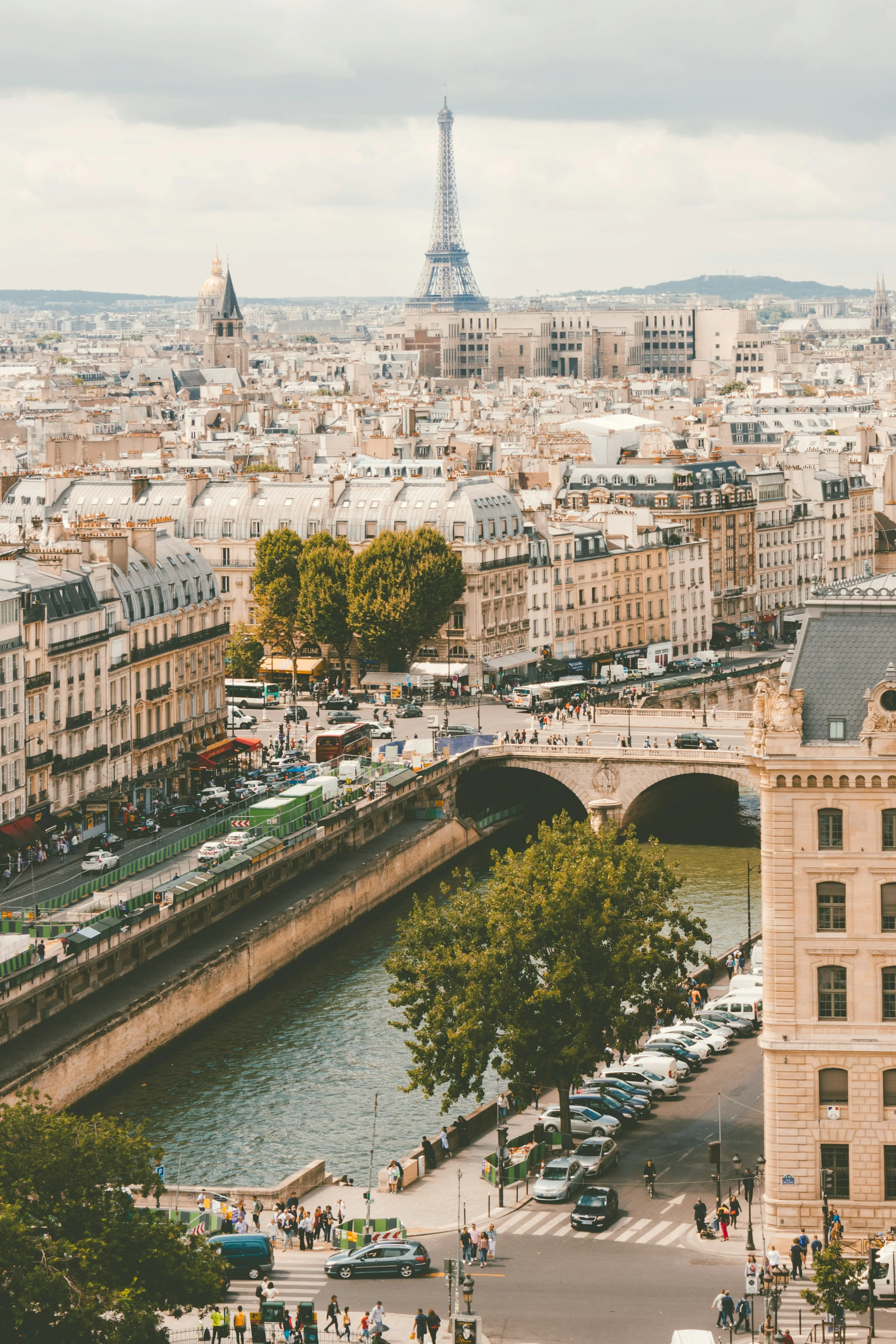
Sainte-Chapelle and the Conciergerie are around 20 minutes on foot across the Île de la Cité. Sainte-Chapelle's Gothic stained glass covers virtually the entire wall surface of the upper chapel. Advance booking required for both.
Centre Pompidou is around 15 minutes on foot east through Les Halles, but it is closed for a major renovation until 2030. When it reopens, it covers modern and contemporary art from 1905 onward: everything the Louvre's collection does not include.
Pinault Collection (Bourse de Commerce) is around 10 minutes east, a private contemporary art museum housed in a beautifully converted 19th-century commodity exchange, with one of the finest collections of contemporary art in Europe and rotating major exhibitions. Advance booking recommended.
Rules, Bags, and Security
Security: All visitors pass through airport-style metal detectors and bag scanning at every entrance. There is no way to bypass this. On busy days, the security queue at the Pyramid can take 20 to 40 minutes. If you already hold a ticket, the Carrousel du Louvre entrance or, before 5:00pm, the Porte des Lions are the most reliable ways to reduce security queue time.
Bags: Maximum permitted size is 55 x 35 x 20 cm. Larger bags must be stored in the free cloakroom on the Hall Napoleon level before you enter the galleries. The cloakroom is on the lower level accessible from any wing. Suitcases and oversized luggage are not permitted.
Photography: Personal photography without flash is permitted throughout the permanent collection. Tripods, monopods, and selfie sticks are not permitted. Professional photography requires prior authorisation.
No touching: No artwork or display case may be touched. Security staff are present throughout.
Dress code: There is no formal dress code. The museum is not a religious building.
Children: Children under 18 enter free. The Louvre is family-friendly and has dedicated children's guides and workshops available through the official website. The scale of the building can be tiring for very young children; a focused shorter visit is usually better than an ambitious long one.
Accessibility at the Louvre
The Louvre has made significant investment in accessibility. Lifts serve all levels and wings throughout the building. The Hall Napoleon underground level is fully accessible. Most gallery areas are wheelchair accessible.
The free cloakroom is accessible. Accessible toilets are on the Hall Napoleon level and within each wing.
Disabled visitors and one accompanying person receive free entry. Documentation confirming disability status may be requested.
Wheelchairs can be borrowed from the information desk in Hall Napoleon. Baby prams are permitted; there are lift access routes to all floors.
Audio guides in French and English are available for blind and partially-sighted visitors, with touchable reproductions of some key objects available in the touchable sculpture rooms.
Final Tips for Visiting the Louvre
Book at ticket.louvre.fr. This is the only official platform. Fraudulent mirror sites and third-party resellers are abundant. The €22 (EEA) or €32 (non-EEA) standard ticket at the official site is the correct price. If a site offers a significantly lower or higher price with Louvre-like branding, it is not official.
Book as soon as your dates are fixed. Tickets release about 90 days ahead. In summer, allow two to three weeks for a morning slot, and book earlier if you need a particular weekend morning.
Paris Museum Pass holders still need to book a timed slot. Do this on the website as soon as your Paris dates are confirmed.
Visit on a Wednesday or Friday evening, from 7:00pm. This is the single most effective action you can take for a better experience. The museum is open until 9:00pm (last entry 8:00pm) and crowd levels drop dramatically after 7:00pm.
The museum is closed every Tuesday. Check before you travel.
Use the Carrousel or Porte des Lions entrance if the Pyramid security queue is long. Both accept visitors with timed-entry tickets and often have shorter waits, although the Porte des Lions closes at 6:00pm.
Download the official Louvre app before you arrive. The map alone saves significant time and wrong turns.
Pick up a free paper floor map at the information kiosk in Hall Napoleon.
Do not try to see everything. Choose one or two departments that actually interest you and give them time, alongside the major highlights.
Go to the Mona Lisa first or last on any morning visit, when crowd levels are marginally lower. Do not miss the Veronese Wedding at Cana on the opposite wall.
The Winged Victory of Samothrace rewards a slower pace. Start at the bottom of the Daru Staircase, not at the top.
The Napoleon III Apartments in the Richelieu Wing are visited by a fraction of the people who see the Mona Lisa and are frequently described as the greatest surprise of the entire museum.
Van Gogh and Monet are not at the Louvre. They are at the Musée d'Orsay, 15 minutes south across the Seine.
Comfortable broken-in shoes are non-negotiable. You will walk several kilometres on marble and stone floors.
The Louvre Nouvelle Renaissance renovation will bring major changes, including a dedicated Mona Lisa room and a new main entrance at the Colonnade on the museum's east side, over roughly a decade of gradual disruption. Some rooms may be temporarily closed for renovation during your visit.
Back to Paris Attractions
Explore other Paris attractions

" width="24px"><path d="M 0 0 L 24 0 L 24 21.231 L 0 21.231 Z" fill="transparent" height="21.230768474975793px" id="nL2EwDcS9" width="24px"/><path d="M 0 0.541 C 0 0.242 0.245 0 0.547 0 L 2.735 0 C 3.037 0 3.282 0.242 3.282 0.541 L 3.282 4.598 C 3.282 4.897 3.037 5.139 2.735 5.139 L 0.547 5.139 C 0.245 5.139 0 4.897 0 4.598 Z" fill="rgb(196, 217, 201)" height="5.138657337892187px" id="hZ_rlBe_S" transform="translate(0 16.092)" width="3.2820512820512358px"/><path d="M 0 0.541 C 0 0.242 0.245 0 0.547 0 L 2.735 0 C 3.037 0 3.282 0.242 3.282 0.541 L 3.282 7.843 C 3.282 8.142 3.037 8.384 2.735 8.384 L 0.547 8.384 C 0.245 8.384 0 8.142 0 7.843 Z" fill="rgb(230, 211, 160)" height="8.38412513024521px" id="HgVBxIz3e" transform="translate(5.128 12.847)" width="3.282051282051235px"/><path d="M 0 0.541 C 0 0.242 0.245 0 0.547 0 L 2.735 0 C 3.037 0 3.282 0.242 3.282 0.541 L 3.282 12.982 C 3.282 13.281 3.037 13.523 2.735 13.523 L 0.547 13.523 C 0.245 13.523 0 13.281 0 12.982 Z" fill="rgb(232, 207, 164)" height="13.522782468137464px" id="utgrDnoM9" transform="translate(10.325 7.708)" width="3.282051282051377px"/><path d="M 0 0.541 C 0 0.242 0.245 0 0.547 0 L 2.735 0 C 3.037 0 3.282 0.242 3.282 0.541 L 3.282 16.498 C 3.282 16.797 3.037 17.039 2.735 17.039 L 0.547 17.039 C 0.245 17.039 0 16.797 0 16.498 Z" fill="rgb(233, 196, 166)" height="17.038705909853153px" id="OLOhW6STz" transform="translate(15.521 4.192)" width="3.2820512820512384px"/><path d="M 0 0.541 C 0 0.242 0.245 0 0.547 0 L 2.735 0 C 3.037 0 3.282 0.242 3.282 0.541 L 3.282 20.69 C 3.282 20.989 3.037 21.231 2.735 21.231 L 0.547 21.231 C 0.245 21.231 0 20.989 0 20.69 Z" fill="rgb(217, 170, 153)" height="21.230768474975793px" id="H5Z8wcwkd" transform="translate(20.718 0)" width="3.2820512820512278px"/></g></svg>)