
Paris • 1st arrondissement
Pre-booking a ticket is highly recommended to guarantee entry. Tickets released about 45 to 60 days in advance.
Book 2-4 Weeks Ahead
Peak Season
Book 2 Weeks Ahead
Off Season
Back to Paris Attractions
Musée de l'Orangerie Paris: Everything You Need to Know Before You Visit
Updated September 2026
Tucked into the western corner of the Tuileries Garden on the bank of the Seine, the Musée de l'Orangerie is home to one of the most extraordinary encounters with a single work of art available anywhere in the world. Claude Monet spent the final decade of his life creating eight monumental Water Lilies panels, specifically intending them to be installed in two oval rooms flooded with natural light from above, so that visitors would be enveloped in the paintings from every direction simultaneously. He supervised the architecture of those rooms himself, and they opened a few months after his death in 1927. They remain, nearly a century later, exactly as he intended. At a fraction of the size of the Louvre and the Musée d'Orsay, and with a permanent collection that extends well beyond Monet into the full arc of the School of Paris, the Orangerie is one of those museums that takes one hour and stays with you for years.
At a Glance
How Early to Book:
Book at least 2 weeks ahead during peak and shoulder seasons, 1 week ahead during Winter off-season.
Tickets Released:
At least 45 days in advance, sometimes up to 5 months.
Best Times to Visit:
Weekdays right at opening will be the calmest. Avoid the 10am-1pm window, as the museum gets many tour groups from hotels and visitors during this period.
Ticket price:
€12.50 for adults when booked online, €11 at the ticket office.
Where to Book:
Museum Address:
L'Orangerie Tickets
Booking a timed-entry ticket in advance is strongly recommended, and in peak season effectively essential. Online booking gives priority access within a 30-minute arrival window, and arriving without a timed booking during busy periods can result in queues of an hour or more, or being turned away entirely if capacity is reached.
A specific warning on untimed tickets from third-party platforms: Several ticket platforms sell "anytime" or "flexible entry" tickets for the Orangerie at a premium price. These untimed tickets can result in very long waits and, in some cases, non-entry. The official museum system is built around timed slots. If you cannot find a timed ticket for your preferred date on the official site, either try a different date or accept that you may face a significant queue on arrival. Do not pay a premium for an untimed ticket expecting it to make entry easier because there is a very good chance it will be a disaster.
Where to book: The official booking platform is billetterie.musee-orangerie.fr. This is the cheapest route and the only way to guarantee a specific time slot.
Ticket prices:
Adults (full price): €12.50
"Enfant et Cie" reduced rate: available for up to two EU-resident adults accompanying a child under 18
Children under 18: Free (timed reservation still required)
EU citizens and long-term EU residents aged 18 to 25: Free (valid ID and timed reservation required)
Disabled visitors and one accompanying person: Free
First Sunday of every month: Free for all visitors (timed reservation still mandatory)
Audio guide: €5 on site (available in French, English, German, Spanish, Italian, Portuguese, Russian, Japanese, Chinese, and Korean)
Friday late opening (during exhibition periods): While a temporary exhibition is running, the museum stays open until 9:00pm on Fridays, with a reduced admission rate from 6:00pm. Last entry is 8:15pm and visitors must leave the galleries by 8:45pm. This is one of the best-value and most atmospheric times to visit. Late openings pause between exhibitions, so check the official site for the Fridays that apply to your dates.
Paris Museum Pass: The Musée de l'Orangerie is included in the Paris Museum Pass (2-day, 4-day, and 6-day versions). Pass holders still need to book a timed slot in advance through the official museum website. The pass is worth calculating carefully against your Paris itinerary: given the Orangerie's relatively modest ticket price of €12.50, the pass needs to deliver value across other included attractions to justify its cost.
Carte Blanche: The museum's annual membership card (Carte Blanche) covers unlimited access to the Musée de l'Orangerie and the Musée d'Orsay, along with discounts in the shop and café and discounted audio guides. For frequent visitors to Paris or serious Impressionist enthusiasts, it pays for itself quickly.
Temporary exhibition access: The standard ticket covers both the permanent collection and any current temporary exhibition. There is no separate temporary exhibition surcharge.
Cancellation: Tickets bought on the official platform cannot be cancelled for a refund. A refund is only possible if the museum itself cancels or changes your visit, so settle on your date and time slot before paying.
Musée de l'Orangerie Opening Hours
Wednesday to Monday: 9:00am to 6:00pm
Last entry: 5:15pm; galleries close at 5:45pm
Closed every Tuesday
Closed: 1 May, the morning of 14 July (Bastille Day), and 25 December
Friday late opening (during exhibition periods): until 9:00pm; reduced admission from 6:00pm, last entry 8:15pm
The museum is permanently closed on Tuesdays. This is the most common day visitors arrive to find the doors shut. Check before you travel.
Address: Jardin des Tuileries, Place de la Concorde (Seine side), 75001 Paris
The entrance faces the Seine on the south side of the Tuileries Garden, not the rue de Rivoli side. The building sits in the south-west corner of the gardens, and the entrance is signed from within the garden.

What is the Best Way to Get to Musée de l'Orangerie?
The Orangerie is located in the 1st arrondissement, in the Tuileries Garden between the Louvre and Place de la Concorde, on the right bank of the Seine.
By Metro: The two most convenient stations are Concorde (Lines 1, 8, and 12) and Tuileries (Line 1). Both are within a five to eight-minute walk of the museum entrance through the garden.
By bus: Routes 42, 45, 72, 73, 84, and 94 all stop at Concorde, a short walk from the museum.
On foot from key landmarks:
From the Louvre: around 15 minutes west through the Tuileries Garden
From the Musée d'Orsay: cross the Seine via the Passerelle Léopold-Sédar-Senghor footbridge, around 10 to 12 minutes on foot
From Place de la Concorde: enter the Tuileries Garden from the western end and walk five minutes east to the museum
From the Grand Palais: walk east to Place de la Concorde and enter the Tuileries Garden at its western end, around 10 to 15 minutes on foot. Both sit on the right bank, so there is no bridge to cross.
By RER: RER C stops at Musée d'Orsay on the left bank, from which the Passerelle footbridge leads directly to the Orangerie in around 10 to 12 minutes.
By Vélib': Docking stations are on Quai des Tuileries and Rue de Rivoli within a few minutes of the museum.
Driving is not practical. Parking in this part of central Paris is very limited and expensive, and the museum is well served by public transport from any part of the city.
Practical tip: The Orangerie is the long stone and glass building in the south-west corner of the Tuileries, on the terrace above the Seine at the Place de la Concorde end. If you enter the garden from Place de la Concorde with the obelisk behind you, the museum is on your right. If you come in from the Rue de Rivoli side, cross the garden towards the river and head for the western end.
How Much Time Should I Spend at Musée de l'Orangerie?
I'd recommend 60 to 90 minutes in the museum. This is enough time to spend properly in the two oval Water Lilies rooms, move through the permanent collection on the lower level, and see any current temporary exhibition.
The museum is deliberately compact. Unlike the Louvre or the Musée d'Orsay, you will not feel rushed at 90 minutes, and you will not need to prioritise sections to fit your visit into a morning. This intimacy is part of what makes it distinctive, and a significant reason why tourists rate it so warmly relative to the larger Paris institutions.
I would say the ideal visit is one where you allow yourself to simply sit in the oval rooms for a while. The central benches in both rooms are there precisely for this. Some visitors I have read about have spent their entire visit, 90 minutes or more, in the two Nymphéas rooms alone, which is a completely valid way to experience these paintings. There is no rule that says you must rush through to the collection downstairs.
If you are combining the Orangerie with the Musée d'Orsay on the same day, which is an excellent pairing, plan for a full day with the Orangerie as either a morning warm-up or an afternoon finale.
Image Credit: Brady Brenot, CC BY-SA 4.0

Claude Monet was a major self-critic; throughout his life, he destroyed up to 500 of his own works. In 1908, frustrated with his progress, he famously took a knife to at least 15 of his water lily paintings, delaying a major Paris exhibition.
What is the Best Time to Visit Musée de l'Orangerie?
Morning, from opening at 9:00am: The first hour of the day is consistently the calmest. The Water Lilies rooms in natural morning light, before tour groups arrive, are the most powerful experience the museum offers. The quality of light in the oval rooms varies with weather and time of day, and clear morning light in spring and early summer is particularly beautiful.
Avoid 10:00am to noon: Tour groups from hotels and cruise ships tend to arrive in concentrated waves during this window. The Water Lilies rooms can feel crowded between 10:30am and 1:00pm, which significantly affects the meditative quality of the experience.
Friday evenings from 6:00pm (during exhibition periods): The late opening is one of Paris's most underused museum experiences. The crowd level drops sharply after 6:00pm, the ticket price falls, and the Water Lilies rooms in the evening take on a completely different character: darker, quieter, and with the panels lit differently than at any point during the day. If you can visit on a Friday evening, do so.
Best season: Spring (April to May) and early autumn (September to October) are the most comfortable. Summer is busy but the museum's small size means it rarely reaches the density of the Louvre or d'Orsay. Winter visits are notably quiet, particularly on weekday mornings.
First Sundays: The free first Sunday of every month draws larger numbers than usual, and the oval rooms can be congested. If you visit on a free Sunday, arrive at opening time and go directly to the Water Lilies rooms before the morning crowds peak.
Monet at the Musée de l'Orangerie
The reason most people come to the Orangerie is also its defining justification: the Water Lilies (Les Nymphéas) represent the most sustained, ambitious, and resolved work of Monet's final decade, and they are displayed here in the only setting in the world for which they were designed.
The story of the Water Lilies:
Monet had been painting his water garden at Giverny since the 1890s. By 1914, suffering from deteriorating eyesight but refusing to stop working, he began the project of his life: a series of large-scale panels that would capture the pond in all its variations of light and weather, to be installed in a dedicated space and experienced as an immersive environment rather than as individual paintings. He worked on the panels throughout the First World War, a period in which he described painting as his way of remaining sane.
In 1918, as the Armistice was signed, Monet announced his intention to donate the series to the French state as a gift to mark the end of the war. The condition was that they be displayed in purpose-built oval rooms flooded with natural light from above. He worked closely with the architect to specify every aspect of these rooms, including the skylights, the curved walls, the placement of the panels, and the absence of intrusive framing. He died in December 1926, at the age of 86, just months before the rooms opened in May 1927.
What you will see:
The two oval rooms on the ground floor of the museum each contain four panels arranged around the full perimeter of the room, so that wherever you stand, you are surrounded by water. The panels vary in length from approximately six to seventeen metres and are two metres high. Together they cover hundreds of square metres of surface and represent nearly twelve years of sustained work.
The first room, entered from the west end, holds Morning, Clouds, Green Reflections, and The Setting Sun: open water and reflected sky, with no willows at the edges and light that moves through the day from dawn to dusk. The second room holds Reflections of Trees, Morning with Willows, Clear Morning with Willows, and The Two Willows, where the trunks and trailing branches of Monet's willows frame the pond. Together the eight panels create what Monet described as the "illusion of an endless whole, of a wave with no horizon and no shore."
What photographs cannot communicate, and what almost every visitor notes on first entering the rooms, is the effect of scale. These are not paintings you look at: they are paintings you stand inside. The colours vary from the pale mauves and pinks of the dawn panels to the deep greens and blues of the midday reflections to the golds and purples of the evening compositions. The light from the skylights above shifts throughout the day, and the panels change with it.
I recommend sitting. The benches in the centre of each room exist precisely for this purpose. Give yourself at least fifteen minutes in each room without looking at your phone, and then decide whether you need more time.
A clarification on what is not here:
A clarification on what is not here: Some visitors expect to see Van Gogh paintings here. Van Gogh is not anywhere at the Musée de l'Orangerie. The Orangerie's collection focuses on Impressionism and the School of Paris, and Van Gogh's major works are at the Musée d'Orsay, a ten-minute walk away. Monet is a similar story: beyond the Water Lilies, the Orangerie holds a single Monet canvas, Argenteuil (1875), in the Walter-Guillaume Collection downstairs. His best-known individual canvases, including the Rouen Cathedral series, the Haystacks, and the Gare Saint-Lazare paintings, are at the d'Orsay. The two museums complement each other precisely because they hold different bodies of work.
Musée de l'Orangerie Paintings: The Permanent Collection
Beyond the Water Lilies, the lower level of the Orangerie holds the Walter-Guillaume Collection: a body of work assembled by the influential art dealer Paul Guillaume and later by his wife Domenica (who married Jean Walter after Guillaume's death) that covers the School of Paris from roughly 1880 to 1930 and constitutes one of the finest single-donor collections of this period anywhere in the world.
Cézanne: A suite of canvases including Bathers and several still lifes that trace the development of his late compositional thinking. These are works that directly influenced Picasso and Braque in their development of Cubism, and seeing them alongside the Picasso holdings on the same level illustrates that lineage with unusual clarity.
Renoir: A significant group of late Renoirs, including bathers, female figures, and portraits from his Cagnes-sur-Mer period, showing the sensuous warmth of his final decade of work. The Renoir and Cézanne rooms have been subject to periods of temporary closure when the works travel on loan; check the official site before your visit if specific artists are essential to your plan.
Picasso: Several early and mid-period canvases, with the emphasis on his figurative and Neoclassical work of the late 1910s and early 1920s rather than his most widely known Cubist output. The relationship between these paintings and the Cézannes visible from the same level is worth thinking about.
Matisse: A small but well-chosen group of works that demonstrate his use of pattern, flat colour, and decorative space in ways that reward comparison with both the Picasso and the Modigliani holdings.
Modigliani: Several of his characteristic elongated female figures and portraits, including some of the most recognisable of his oeuvre. The collection's Modiglianis are consistently praised in visitor accounts as highlights of the lower level.
André Derain: The largest single group of paintings in the collection, with more than twenty-five works including Harlequin and Pierrot (1924). Paul Guillaume was one of Derain's early champions, which explains the depth of the holding.
Henri Rousseau (Le Douanier): Nine canvases by the self-taught visionary whose naive, dreamlike imagery made him an unlikely touchstone for the Surrealists.
Utrillo and Soutine: The collection's holdings of Maurice Utrillo (Montmartre street scenes) and Chaim Soutine (distorted figures and turbulent landscapes) round out the lower level's survey of the School of Paris in its most expansive sense.
At the entrance to the collection, large polyptychs by Joan Mitchell, on loan from the Musée National d'Art Moderne, have been added in the recent rehang. Mitchell's gestural abstraction in deep blues, greens, and yellows creates an unexpected dialogue with the Monet panels on the floor above and is worth pausing at before descending.
Musée d'Orsay and Orangerie Combined Tickets
The Musée de l'Orangerie and the Musée d'Orsay have been administratively linked since 2010, and they are the two most natural pairings in Paris for anyone interested in Impressionism and the art of the late 19th and early 20th centuries. They are also physically close: the Orangerie is in the Tuileries Garden on the right bank, and the d'Orsay is directly across the Seine via the Passerelle Léopold-Sédar-Senghor footbridge, approximately ten minutes on foot.
Combination ticket: A combined ticket for both museums costs €20 at the museum ticket desks, a saving compared with buying the two standard tickets separately (€12.50 for the Orangerie plus €16 for the d'Orsay). The Orangerie's own booking site also links through to a joint Orsay and Orangerie option on the d'Orsay ticketing site, which is the one to check if you want to buy before you travel.
Is visiting both on the same day advisable? Both museums require their own time and energy. The Orangerie's intimacy means a focused 90-minute visit can be fully satisfying. The d'Orsay, with its five floors and vast collection, benefits from at least two to three hours. Combining both on the same day is physically possible but can feel rushed, particularly if you also intend to walk between them through the garden and across the bridge. Many visitors find two days a more generous allocation: Orangerie in the morning of day one, d'Orsay on day two. Others combine the Orangerie morning with a d'Orsay Thursday evening session (when it stays open until 9:45pm and crowd levels drop) and find this works well.
What the two museums hold: The collections are complementary, not duplicative. The d'Orsay holds individual Impressionist canvases: Monet's Rouen Cathedral, his Haystacks, his Gare Saint-Lazare series, along with the Renoir Moulin de la Galette, the Degas ballet paintings, the Manet Olympia, the Van Gogh self-portrait, and the vast French sculpture of the 19th century. The Orangerie holds the Water Lilies panels and the Walter-Guillaume Collection of the School of Paris. You need both museums to see the full picture. You need neither to see the other.
Louvre and Orangerie: The Louvre is 15 minutes east on foot through the Tuileries Garden. It is a separate institution with its own ticketing system. No combination ticket covers both the Louvre and the Orangerie.
Temporary Exhibitions at Musée de l'Orangerie
The Orangerie runs a programme of temporary exhibitions throughout the year, typically one or two major shows per season, displayed in the main gallery on the ground floor alongside the Water Lilies rooms. These exhibitions have ranged from major retrospectives of established modern masters to thematic group shows and artist-in-dialogue pairings.
Each exhibition runs for a few months, so check the official museum programme page for what is on during your dates.
Temporary exhibition access is included in the standard €12.50 ticket. There is no supplementary charge.
Guided Tours and Audio Guides
Audio guide: Available from the museum entrance desk for €5, in French, English, German, Spanish, Italian, Portuguese, Russian, Japanese, Chinese, and Korean. The permanent collection audio guide covers the Water Lilies rooms and the Walter-Guillaume Collection. A separate audio guide for temporary exhibitions is available in English and French. Downloading a third-party audio guide app before your visit is also possible and avoids the rental desk queue, though the quality of unofficial guides varies.
Official guided tours: Guided tours in English can be booked via the official website. The English tour of the permanent collection usually runs on Monday mornings at 11:00am and lasts around 1 hour 30 minutes. It costs €10 per person on top of museum admission (€6 at the reduced rate) and should be booked in advance.
Family Area: At weekends, on public holidays, and during French school holidays, the museum opens a free-access Family Area for children up to 12 and the adults with them, with play, drawing, reading, and listening corners themed on the Water Lilies. Entry comes with a museum ticket, subject to space.
Virtual reality experience: Until 15 February 2027, Claude Monet. In Real Time offers a 20-minute seated VR journey from the Seine to the water garden at Giverny, told from the perspectives of Monet's stepdaughter Blanche Hoschedé and his friend Georges Clemenceau. It costs €7 on top of admission (€19.50 with museum entry), is recommended for ages 13 and up with a minimum age of 8, and booking ahead is strongly advised.
Private tours with art historians: Several operators offer private guided tours of the Orangerie led by licensed art historians. The quality of these varies significantly, and the museum's compact size means a good guide can cover the full collection in 60 to 90 minutes with real depth. For visitors with a particular interest in Monet's technique, the theory of Impressionism, or the development of the School of Paris, a private art historian guide is one of the more worthwhile investments available in the Paris museum circuit.
Is Musée de l'Orangerie Worth Visiting?
Yes, the Orangerie sits in a category almost to itself: a museum that almost everyone who visits rates highly, including many visitors who expected less.
The principal reason is the Water Lilies themselves. The experience of being inside the oval rooms is unlike anything many visitors anticipate, even by those who had seen photographs and considered themselves prepared. The scale works on you physically. The light shifts. The panels surround you from every side. This is the experience Monet spent a decade engineering, and it works.
The secondary reason is the museum's intimacy. Paris's great museums tend to be large, overwhelming, and crowded. The Orangerie is small enough to feel complete in 90 minutes, human-scaled enough that the art does not disappear into institutional context, and calm enough that you can actually look at things. This last quality is surprisingly rare in Paris.
The main caveat is the crowd issue during the 10:00am to noon window. If you visit in this window on a weekend in July, the oval rooms will not feel like a serene sanctuary. The time of day you visit significantly affects the experience, and the gap between an early morning visit and a midday visit is larger here than at most Paris museums.
L'Orangerie Café
The in-house café is located at the heart of the museum and is accessible to ticketed visitors during opening hours. It can be a pleasant place to pause mid-visit, with a relaxed atmosphere that reflects the museum's overall tone.
The café serves coffees, pastries, and light meals. It is not a full restaurant, but the quality is good by museum café standards, and the setting is one of the more civilised in the Tuileries area. On warm days, there is a contemporary kiosk near the Orangerie in the Tuileries Garden itself, which is part of the museum's external presence and worth noting as an option before or after your visit.
For a proper sit-down meal, the surrounding area offers considerably more choice than the café alone can provide. See the food section below.
Where Should I Eat Near Musée de l'Orangerie?
The Orangerie is surrounded by some of Paris's most central and tourist-facing dining geography, which means choices require some care.
Inside the museum: The in-house café serves coffees, teas, pastries, and light plates. It is the most convenient option and noticeably less chaotic than the café at the Musée d'Orsay across the river. I found it a perfectly good choice for a coffee and a break mid-visit.
Immediately nearby:
The Tuileries Garden itself has seasonal food kiosks and vendors along its paths, which are a decent option for a coffee or a snack between visiting the garden and the museum, without requiring you to leave the garden area.
A short walk east:
Café Marly is on the Rue de Rivoli side of the Louvre, about 15 minutes on foot east through the Tuileries Garden, with a covered arcade terrace looking directly at the Louvre pyramid. The food is French brasserie in style and the price reflects the location, but the setting is theatrical and it is worth knowing about for a post-museum splurge.
On the left bank, via the Passerelle:
Walking across the Passerelle Léopold-Sédar-Senghor footbridge puts you on the left bank beside the Musée d'Orsay and the 7th arrondissement, which offers considerably better dining than the immediate right-bank area around Place de la Concorde.
Au Petit Tonneau on Rue Surcouf, near Les Invalides, is a classic neighbourhood bistro with traditional French cooking and fair prices, popular with left-bank locals. It is around 20 minutes on foot west of the bridge, so it suits a lunch where the walk is part of the plan.
Le Relais de l'Entrecôte on Rue Saint-Benoît in Saint-Germain-des-Prés, around 15 minutes on foot from the bridge, is a reliable institution with its single steak-and-frites menu and unlimited pommes frites policy. No reservations, arrive early.
For coffee: The streets around Saint-Germain-des-Prés, a 15-minute walk south-east of the bridge, have many independent cafés that are well-suited to a post-museum coffee. The Café de Flore and Les Deux Magots are famous and worth knowing about, though both are tourist-oriented and priced accordingly.
What Else is There to Do Near Musée de l'Orangerie?
The Orangerie sits in one of the densest cultural corridors in Paris, and virtually every direction offers significant attractions.
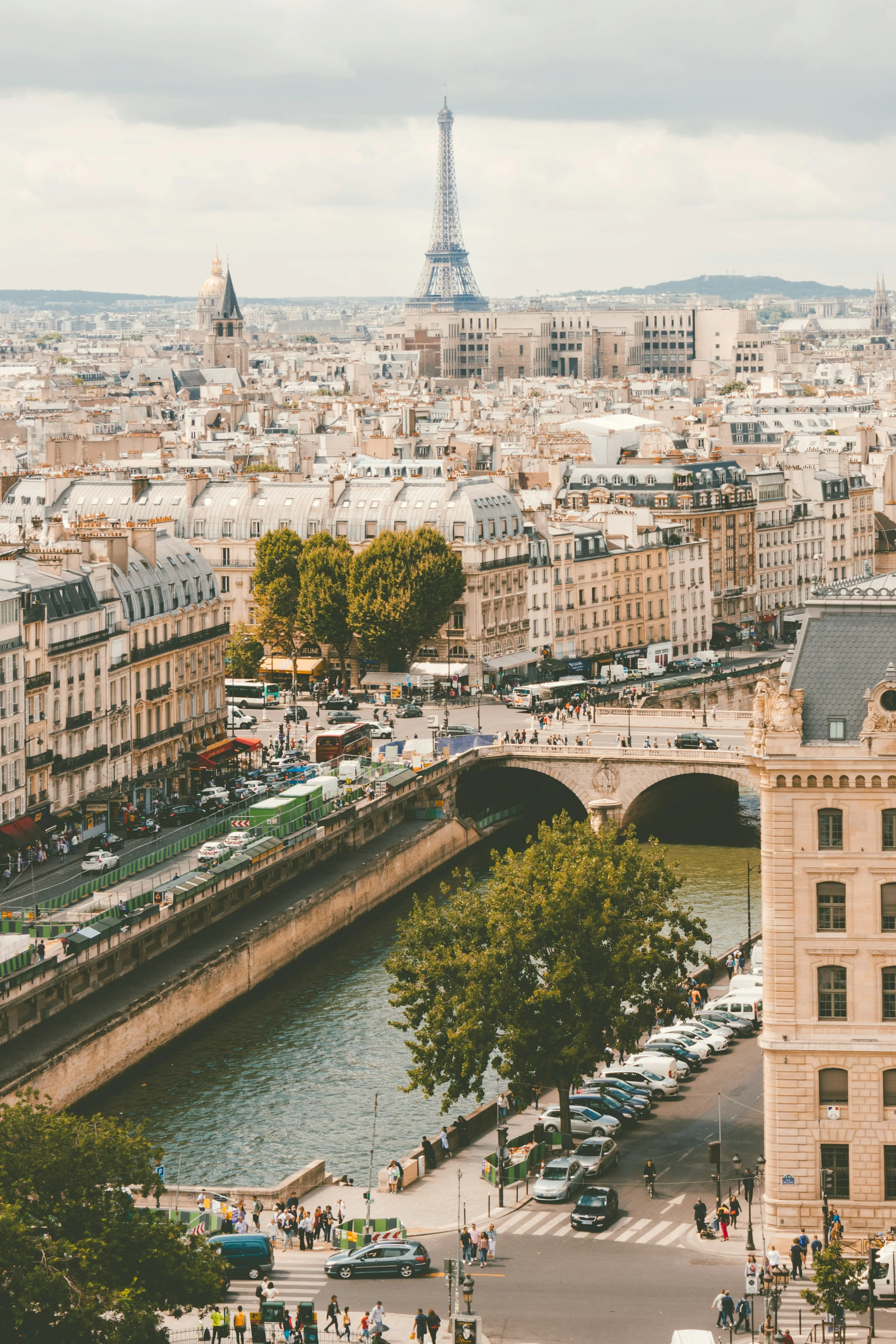
Jardin des Tuileries surrounds the museum and is itself one of the most beautiful formal gardens in Europe, with fountains, sculpture, seasonal plantings, and long axial views from the Arc de Triomphe du Carrousel at the Louvre end to the Place de la Concorde at the western end. Walking the garden before or after the museum is free and thoroughly worthwhile.
Musée d'Orsay is 10 minutes on foot via the Passerelle footbridge and is the most natural companion visit to the Orangerie. Between the two museums, the full arc of French Impressionism and the School of Paris is covered. See the combined ticket section above for full details.
The Louvre is 15 minutes east through the Tuileries Garden. No introduction needed. Entry to the permanent collection requires a separate ticket and is best booked well in advance.
Jeu de Paume is two minutes north of the Orangerie on the other side of the garden, housed in a former royal tennis court. The Jeu de Paume is now a dedicated photography and moving image gallery, running a programme of major photography exhibitions throughout the year. Entry is separate and requires its own ticket.
Place de la Concorde is immediately west of the Tuileries Garden and is Paris's largest square, with the 3,300-year-old Luxor obelisk at its centre, fountains, and views down the Champs-Élysées toward the Arc de Triomphe and back toward the Tuileries and the Louvre. Free to walk through and one of the great urban spaces of Europe.
Sainte-Chapelle is around 20 minutes on foot east across the Île de la Cité, accessible via Pont Neuf. Its Gothic stained glass windows, covering almost the entire wall surface of the upper chapel, are one of the most remarkable interiors in France. Advance booking is required.
Palais-Royal is around 20 minutes on foot east through the Tuileries, a 17th-century palace complex with arcaded galleries, a formal garden, and the contemporary striped columns of Daniel Buren's Les Deux Plateaux. Free to enter and worth exploring.
Rules, Bags, and Security
Security: All visitors pass through security on arrival, including bag scanning. Security checks have been enhanced as part of France's national Vigipirate security plan. Allow extra time on weekends and public holidays.
Bags and cloakroom: A free cloakroom is available for coats and personal belongings. Large backpacks, motorcycle helmets, large umbrellas, and cabin-size suitcases (up to 56 x 45 x 25 cm) must be left there, while small bags and handbags can go into the galleries. Wheelchairs, folding seats, and canes can be borrowed free of charge in exchange for an ID card.
Photography: Personal photography is permitted throughout the permanent collection, including in the Water Lilies rooms, without flash. Some temporary exhibitions may restrict photography; signs at the entrance to each exhibition will indicate where restrictions apply. Many visitors are tempted to photograph the Water Lilies immediately on entering the oval rooms. I'd say put the phone away first, spend several minutes simply looking, and take photographs on the way out rather than the way in.
Noise: The oval rooms have an atmosphere that visitors naturally adjust to. The museum asks visitors to keep noise to a minimum in the Water Lilies spaces, and in practice most people do. The quiet is part of the experience.
No re-entry: Once you exit, your timed ticket is no longer valid.
Accessibility at Musée de l'Orangerie
The Musée de l'Orangerie is fully accessible for visitors with reduced mobility. The museum is entirely step-free, with lifts connecting the ground floor to the lower level. Wheelchairs can be borrowed from the entrance desk. Accessible toilets are available.
Audio guides are available in multiple languages. Large-print materials are available on request. A specific sensory comfort bag, containing noise-cancelling headphones, tinted glasses, and other items, is available free of charge at the entrance desk and cannot be reserved in advance.
Disabled visitors and one accompanying person enter free of charge. Documentation confirming disability status is requested at the entrance.
Final Tips for Visiting Musée de l'Orangerie
Book a timed ticket online. Do not buy an "anytime" or "flexible entry" ticket from a third-party platform. These are likely to result in very long queues or even a denial of entry. A timed slot from the official site is the only reliable way to guarantee your place.
Visit at 9:00am on a weekday for the calmest experience of the Water Lilies rooms. The early morning natural light in the oval rooms is consistently described as the most beautiful of the day.
Avoid 10:00am to noon. Tour groups arrive in volume during this window and the oval rooms become crowded. The meditative quality the rooms are designed for is difficult to access when they are packed.
Friday evenings (6:00pm to 9:00pm during exhibition periods) are outstanding. Reduced admission, dramatically lower crowd levels, and a very different quality of light in the Water Lilies rooms. If your schedule allows a Friday evening, this is the recommended visit.
The museum is closed every Tuesday. Check before you travel.
Van Gogh is not at the Orangerie. Van Gogh's major works are at the Musée d'Orsay. Beyond the Water Lilies panels, the Orangerie's only Monet is Argenteuil in the collection downstairs, while the d'Orsay holds his best-known individual canvases, including the Haystacks and the Gare Saint-Lazare series.
Sit in the oval rooms. The central benches are there for exactly this. You do not need to keep moving. Spending 15 to 30 minutes seated in each room, looking without photographing, is the way most visitors describe having their best experience of these paintings.
The Walter-Guillaume Collection downstairs is not to be skipped. The Cézanne, Modigliani, Picasso, Matisse, and Renoir holdings on the lower level are exceptional. Many visitors go only to the Water Lilies and miss what is a world-class permanent collection in the rooms below.
The Paris Museum Pass covers entry but still requires a timed slot. Book your slot through the official museum booking system even if you hold a pass. Pass holders who arrive without a timed booking face the same queue as everyone else.
The combined ticket with the d'Orsay (€20) saves money compared to buying separately, and makes sense if you plan to visit both. You can select different time slots for each museum and spread the visits across separate days.
Audio guide in 10 languages for €5 at the entrance desk. Worth renting for the Walter-Guillaume Collection in particular, where printed information in the galleries is minimal.
Back to Paris Attractions
Explore other Paris attractions

" width="24px"><path d="M 0 0 L 24 0 L 24 21.231 L 0 21.231 Z" fill="transparent" height="21.230768474975793px" id="nL2EwDcS9" width="24px"/><path d="M 0 0.541 C 0 0.242 0.245 0 0.547 0 L 2.735 0 C 3.037 0 3.282 0.242 3.282 0.541 L 3.282 4.598 C 3.282 4.897 3.037 5.139 2.735 5.139 L 0.547 5.139 C 0.245 5.139 0 4.897 0 4.598 Z" fill="rgb(196, 217, 201)" height="5.138657337892187px" id="hZ_rlBe_S" transform="translate(0 16.092)" width="3.2820512820512358px"/><path d="M 0 0.541 C 0 0.242 0.245 0 0.547 0 L 2.735 0 C 3.037 0 3.282 0.242 3.282 0.541 L 3.282 7.843 C 3.282 8.142 3.037 8.384 2.735 8.384 L 0.547 8.384 C 0.245 8.384 0 8.142 0 7.843 Z" fill="rgb(230, 211, 160)" height="8.38412513024521px" id="HgVBxIz3e" transform="translate(5.128 12.847)" width="3.282051282051235px"/><path d="M 0 0.541 C 0 0.242 0.245 0 0.547 0 L 2.735 0 C 3.037 0 3.282 0.242 3.282 0.541 L 3.282 12.982 C 3.282 13.281 3.037 13.523 2.735 13.523 L 0.547 13.523 C 0.245 13.523 0 13.281 0 12.982 Z" fill="rgb(232, 207, 164)" height="13.522782468137464px" id="utgrDnoM9" transform="translate(10.325 7.708)" width="3.282051282051377px"/><path d="M 0 0.541 C 0 0.242 0.245 0 0.547 0 L 2.735 0 C 3.037 0 3.282 0.242 3.282 0.541 L 3.282 16.498 C 3.282 16.797 3.037 17.039 2.735 17.039 L 0.547 17.039 C 0.245 17.039 0 16.797 0 16.498 Z" fill="rgb(233, 196, 166)" height="17.038705909853153px" id="OLOhW6STz" transform="translate(15.521 4.192)" width="3.2820512820512384px"/><path d="M 0 0.541 C 0 0.242 0.245 0 0.547 0 L 2.735 0 C 3.037 0 3.282 0.242 3.282 0.541 L 3.282 20.69 C 3.282 20.989 3.037 21.231 2.735 21.231 L 0.547 21.231 C 0.245 21.231 0 20.989 0 20.69 Z" fill="rgb(217, 170, 153)" height="21.230768474975793px" id="H5Z8wcwkd" transform="translate(20.718 0)" width="3.2820512820512278px"/></g></svg>)