Back to Rome Attractions
How Far in Advance to Book Tickets to the Castel Sant' Angelo in Rome
Updated August 2026
Rising dramatically from the bank of the Tiber, Castel Sant'Angelo is one of Rome's most compelling and layered monuments. Built by Emperor Hadrian in 135 AD as a mausoleum for himself and his imperial successors, it was subsequently transformed into a fortress, a papal palace, a prison, and finally the national museum it is today. Few buildings in any city contain such a compressed density of history: the same circular structure has housed emperors' ashes, sheltered popes fleeing invasion, imprisoned artists and philosophers, and staged public executions. The views from its rooftop terrace, looking out over the Tiber to St Peter's Basilica and across the rooftops of Rome, are among the finest in the entire city. Booking in advance is strongly recommended.
At a Glance
How Early to Book:
Book 3-4 days in advance for wide timeslot availability, and only a day ahead of time for any timeslot availability.
Best Times to Visit:
First hour of opening will be the quietest in terms of crowds. As a secondary option, crowds thin out in the late afternoon, and sunsets are especially pleasant.
Ticket price:
About €18 for adults when booked online. In-person tickets may be marginally less expensive.
Where to Book:
Landmark Address:
Do You Need to Book Castel Sant'Angelo Tickets in Advance?
Castel Sant'Angelo is one of Rome's most visited monuments, and queues at the on-site ticket office without a pre-booked ticket can run to 30 to 60 minutes during peak season. Booking online in advance is the single most practical thing you can do to improve your visit.
Important: Tickets are nominative, meaning each ticket is linked to a specific visitor's name. You will be asked to provide the name of each visitor at the time of booking, and a valid photo ID matching the ticket must be presented at the entrance. Names can be changed up to 24 hours before the visit, but only once per ticket.
Where to book: Official tickets are sold through the official website. This is the safest and most direct way to book. Third-party platforms also carry tickets, often bundled with an audio guide or guided tour, and can offer a more straightforward booking experience if you prefer a single platform.
Roma Pass: Castel Sant'Angelo is included as one of the free museum entries in the 72-hour Roma Pass. If you are planning to visit several major paid attractions across your trip, the Roma Pass is worth calculating against your itinerary. It is one of the more popular Roma Pass selections given the castle's ticket price and central location.
How far in advance to book: During peak season (April to October), booking 3-4 days ahead is advisable for popular time slots, particularly weekends. In the shoulder and low seasons (November to March), you can get away with booking only a day or so in advance, or purchasing at the on-site ticket office.
The Passetto di Borgo: The Passetto di Borgo, the 800-metre elevated corridor connecting Castel Sant'Angelo to the Vatican, requires a separate ticket on top of standard museum entry. It is not included with a standard Castel Sant'Angelo ticket. See the dedicated section below for full details.
Castel Sant'Angelo Opening Hours and Entry Information
Open Tuesday to Sunday, 9:00am to 7:30pm
Last entry: 6:30pm
Closed on Mondays, except the first Monday of each month, when the castle opens 2:00pm to 8:00pm (last entry 7:00pm) at a special €5 rate sold only at the ticket office. This arrangement runs to 7 December 2026.
Closed on 25 December and 1 January
Summer evening openings: The castle runs an evening programme each summer, typically from early July into the autumn, with late access to rooms and terraces alongside performances staged in the courtyards and on the panoramic terrace. The format, dates, and ticketing change from year to year and are published on the official site in early summer, so check before planning around it. Evenings offer a dramatically different atmosphere from daytime visits and are well worth seeking out if you are in Rome during this period.
Address: Lungotevere Castello, 50, 00193 Roma
The entrance is on the Lungotevere, the riverside embankment, close to the northern end of Ponte Sant'Angelo. All visitors must pass through a security and bag check on arrival.
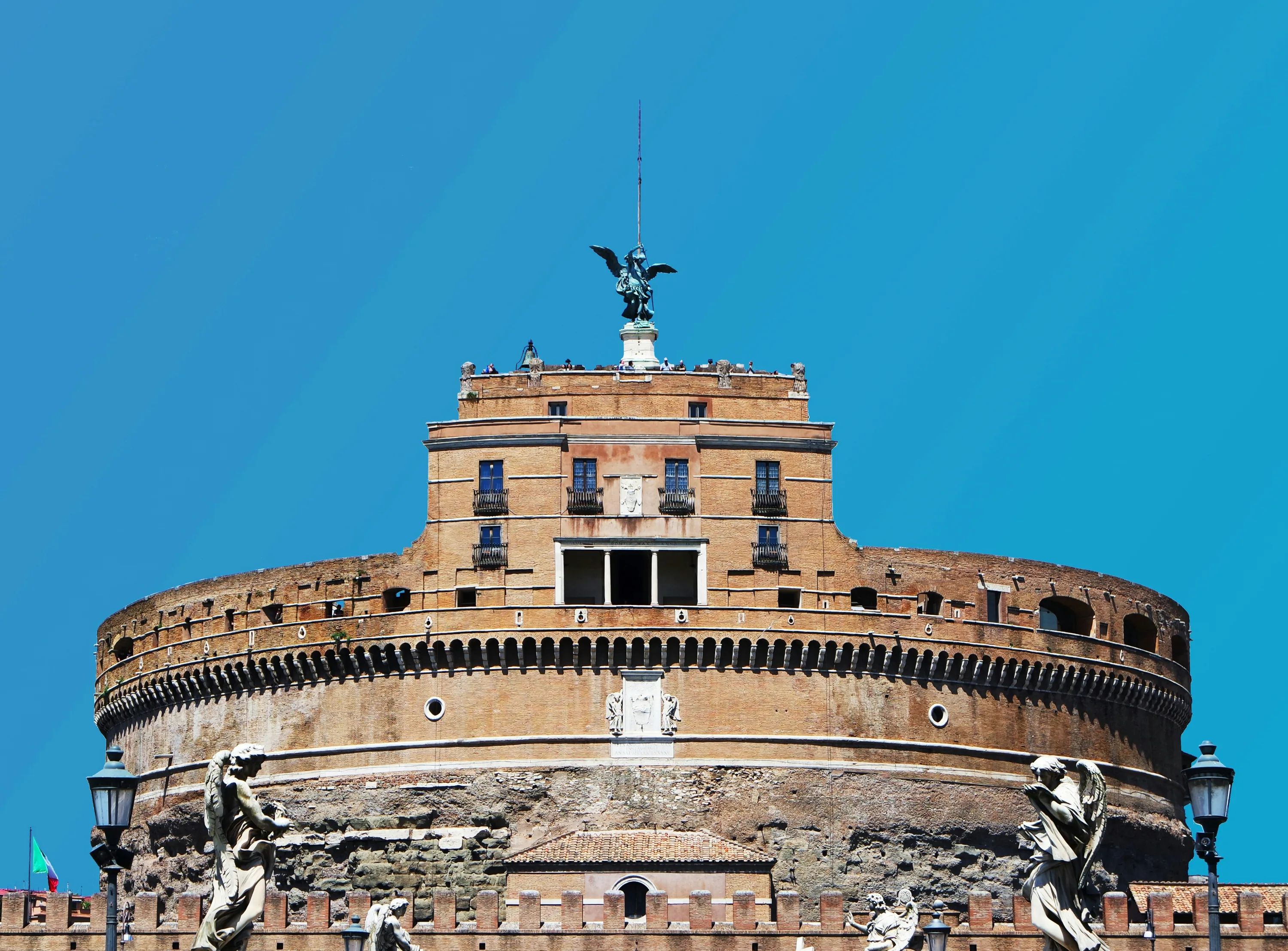
What is the Best Way to Get to Castel Sant'Angelo?
Castel Sant'Angelo sits on the right bank of the Tiber, between the Vatican and the historic centre, and is accessible on foot from most parts of central Rome.
On foot: The most pleasant approach is across Ponte Sant'Angelo, the pedestrian bridge adorned with Bernini's angel sculptures. From Piazza Navona, the walk takes around 10 minutes. From St Peter's Square and the Vatican, it is a 10 to 15-minute walk along Via della Conciliazione. From the Pantheon or Campo de' Fiori, allow around 20 minutes.
By Metro: The nearest Metro stations are Lepanto (Line A) and Ottaviano (Line A), each around a 15-minute walk from the castle. The Metro is useful if you are travelling from Termini station or want a quick connection to or from the Vatican area.
By bus: Several bus routes stop near the castle. Routes 40, 62, and 280 serve the area and connect it to the historic centre, Termini, and Trastevere. The stops are on Lungotevere or Piazza Pia, a short walk from the entrance.
Driving is not recommended. The area sits within Rome's ZTL (restricted traffic zone), and parking in this part of the city is extremely limited.
Practical tip: Start your visit by crossing Ponte Sant'Angelo from the east and pausing on the bridge itself. The view of the castle from the bridge, framed by Bernini's ten angel sculptures with the dome of St Peter's visible in the background, is one of the iconic images of Rome, and one of the best photographs you will take on your trip.
How Much Time Should I Spend at Castel Sant'Angelo?
Allow two to three hours for a thorough visit of the main route, which covers seven floors connected by the original helical ramp and includes the lower Roman levels, the medieval fortress, the Renaissance papal apartments, the armoury, the prison cells, the bastions, and the rooftop terrace.
If you are joining a guided tour, the standard tour runs approximately two hours.
If you are adding the Passetto di Borgo visit to your ticket, allow an additional 30 to 60 minutes depending on whether you opt for the short accompanied visit or the full guided tour.
Visitors who are pressed for time and primarily want the terrace views and a sense of the building's history can complete a faster circuit in around 60 to 90 minutes, though much of the interior detail will be skipped.
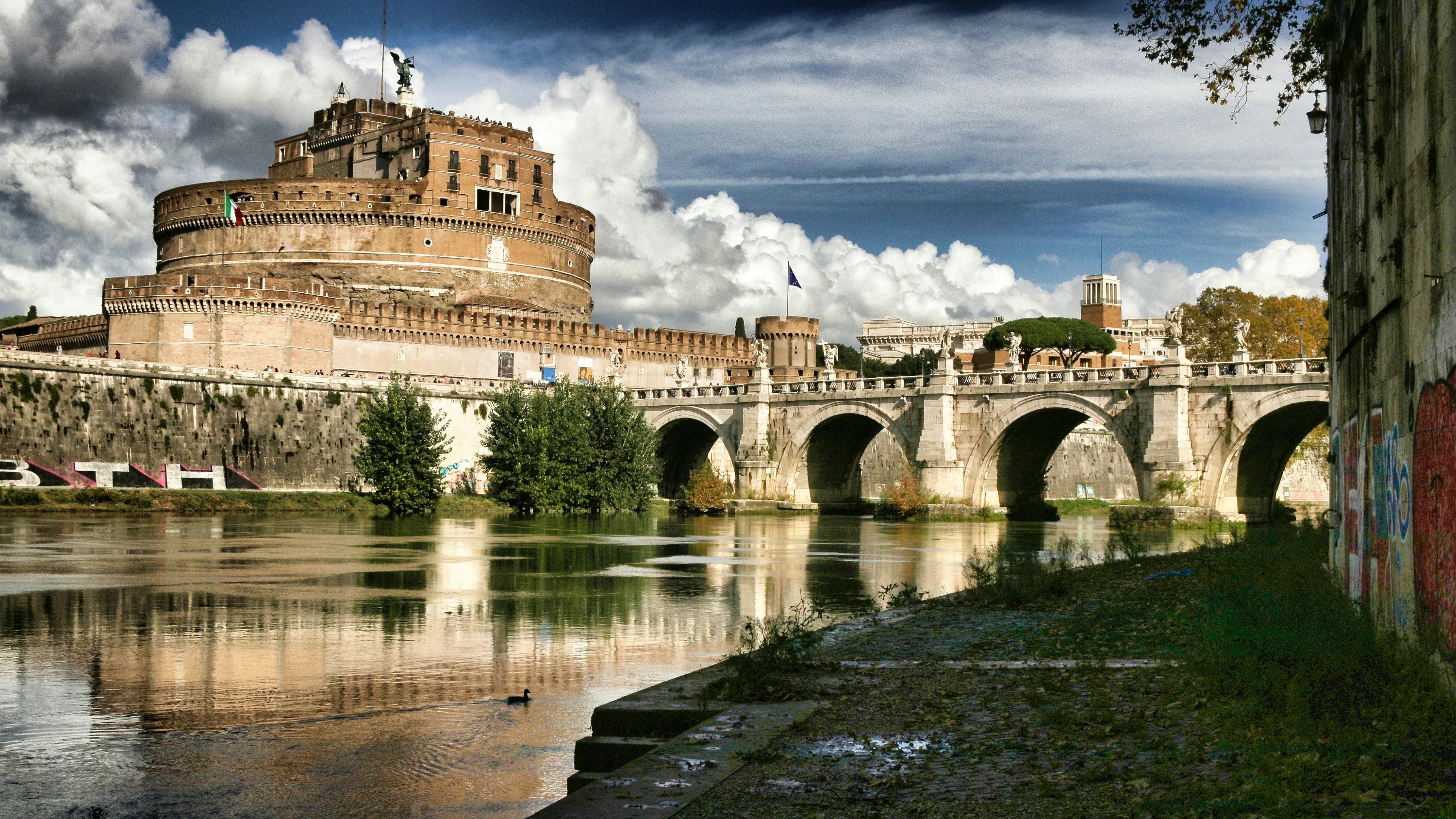
The Castel Sant'Angelo is connected to the Vatican by an 800-meter elevated passage, which has been used by popes throughout history to flee danger, including Pope Clement VII during the 1527 Sack of Rome.
What is the Best Time to Visit Castel Sant'Angelo?
Best time of day: The first hour after opening, from 9:00am to 10:00am, is the quietest window of the day. Late afternoon, after 4:00pm on weekdays, is also relatively calm and has the added benefit of golden-hour light on the terrace views. Sunset from the Angel Terrace is one of Rome's great experiences.
Best days: Weekdays throughout the year are noticeably less crowded than weekends. Saturday and Sunday, particularly from mid-morning to mid-afternoon, see the highest visitor volumes.
Best season: Spring (March to May) and autumn (September to October) offer the most comfortable conditions. Summer is the busiest period, and the combination of heat and crowds can make the interior ramp and narrow stairways feel particularly congested. The summer evening openings are an excellent alternative if you are visiting in July or August.
Free Sundays: The first Sunday of every month offers free entry to everyone, which is a significant draw but also means much larger crowds than usual. Arrive as close to 9:00am as possible if you plan to visit on one of these days. Tickets cannot be booked online on free Sundays. Everyone joins a single queue at the ticket office to collect a free ticket.
Night visits: If you are in Rome during the summer evening season, the late openings are worth serious consideration. The castle is dramatically lit, the crowds are smaller than during peak daytime hours, and the views from the terrace after dark are spectacular. Evening sessions are ticketed separately from daytime entry and capacity is limited, so book as soon as the programme is published.
What is Inside Castel Sant'Angelo?
The main route takes visitors through seven connected levels, each representing a different chapter in the building's history. The visit begins at the base and ascends via the original Roman ramp to the rooftop terrace.
The Roman base and Dromos: The outermost walls at ground level preserve the original Roman structure of Hadrian's mausoleum. The dromos is the ancient entrance passage that once carried the emperors' urns into the tomb. Several statues discovered during archaeological excavations are displayed here.
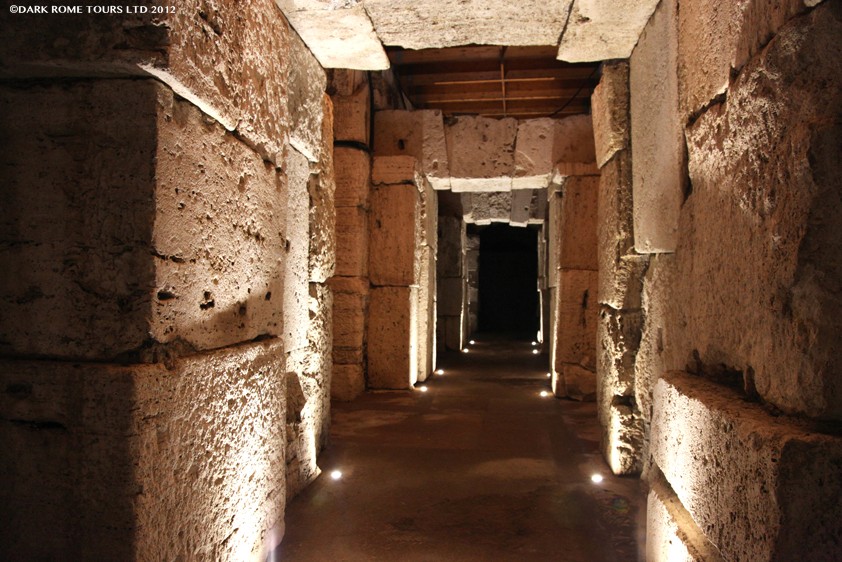
The helical ramp: One of the most physically striking features of the building is the ancient spiral ramp that climbs through the interior core. Originally built to carry funeral urns to the burial chamber, it was later used to move supplies and soldiers to the upper levels. Walking it gives a visceral sense of the scale and engineering of the original mausoleum.
The Hall of the Urns and burial chambers: The central chambers of the mausoleum, where the cremated remains of Hadrian and later emperors were housed, can be visited. The Hall of the Urns retains something of its original atmosphere despite centuries of later modifications.
The Courtyard of the Angel: A large open courtyard on the middle levels, named after the marble and bronze angel statues that once topped the building. The current bronze Archangel Michael on the rooftop, the work of Flemish sculptor Peter Anton von Verschaffelt in 1752, is the sixth version to stand there; its predecessors were variously destroyed, melted down, or moved.
The prison cells: Castel Sant'Angelo served as a papal prison for several centuries, and the cells are among the most evocative rooms in the building. Notable prisoners held here included the sculptor and goldsmith Benvenuto Cellini (who famously attempted escape) and the philosopher Giordano Bruno, who was held here for six years before his execution. Prisoner graffiti scratched into the walls is visible in several cells.
The Sala Paolina: The most magnificent room in the building, decorated with elaborate Renaissance frescoes commissioned by Pope Paul III and executed primarily by Perin del Vaga. The painted figures, trompe l'oeil architectural details, and dramatic scenes of St Michael the Archangel covering the walls and ceiling represent some of the finest secular Renaissance painting in Rome.
The papal apartments: Several rooms throughout the upper levels were decorated and furnished as a luxurious refuge for the popes who used the castle as a bolt-hole during times of danger. The Bathroom of Clement VII and the Hall of Cupid and Psyche, with its elaborate frescoes and richly decorated ceilings, illustrate the strange coexistence of military fortress and papal palace that characterised the building through the 15th and 16th centuries.
The armoury and art collections: An impressive collection of historic weapons, armour, and military equipment is displayed across several rooms, alongside paintings and decorative objects accumulated over centuries of papal occupation.
The Angel Terrace: The highest point of the castle and the undisputed highlight of any visit. The rooftop terrace is crowned by Verschaffelt's bronze Archangel Michael, and the panoramic view encompasses St Peter's Basilica and dome directly to the west, the Tiber winding north and south, the domes of the Pantheon and Sant'Agnese in Agone, the Palazzo di Giustizia, and on clear days the Alban Hills to the south-east. This is one of the finest viewpoints in Rome from a central position, and it is particularly extraordinary at sunset and in the evening sessions during summer.
A cafe and bar are located on the terrace, making it a civilised place to stop and absorb the view over a coffee or a glass of wine.
The Passetto di Borgo: The Popes' Secret Escape Route
The Passetto di Borgo is an 800-metre elevated fortified corridor running along the top of the ancient Leonine Wall, connecting the Apostolic Palace at the Vatican to Castel Sant'Angelo. Built in 1277 by Pope Nicholas III, it was used as an emergency escape route by multiple popes over the centuries. Its most famous moment came in 1527 during the Sack of Rome, when Pope Clement VII used it to flee the Vatican as troops of the Holy Roman Emperor Charles V stormed the city, watching the destruction of Rome from the battlements of the castle.
Access: The Passetto is not included in a standard Castel Sant'Angelo entry ticket. It requires a separate booking. Options include:
Daytime combined ticket: Standard castle entry (€18) plus €6 for a 30-minute silent accompanied visit to the Passetto and the Bastion of San Marco, €24.00 in total, or €8.00 reduced for EU citizens aged 18 to 25 and free for under 18s. A 60-minute guided tour is the alternative, at €18 plus €12.
Nighttime visit: Available on selected evenings after museum closing hours. Includes a guided one-hour tour of the Passetto and an atmospheric walk through the castle's bastions, ramp, and Sala Paolina with no other public present. Costs €4 entry plus €12 for the guided tour.
Booking: Passetto tickets are managed through CoopCulture and availability is released on a rolling monthly basis. Given the limited capacity of each session, booking as far in advance as possible is strongly advised, particularly for the nighttime options and summer visits.

Guided Tours and Audio Guides of Castel Sant'Angelo
Guided tours are one of the best ways to visit Castel Sant'Angelo, given the sheer volume of history compressed into the building and the relative absence of contextualising information panels in some rooms. Standard guided tours are available in English, though schedules vary through the year, so check what is running on your date when you book. These cover all seven levels and conclude on the Angel Terrace. Group size is typically capped at around 20 visitors. Book in advance through the official ticketing platform or through a reputable third-party tour operator.
Audio guides are available as a download to your smartphone and are bundled with entry tickets on several third-party platforms. The audio guide covers the building's full history in English and several other languages and is a practical option for visitors who prefer to move at their own pace. Note that the castle has no Wi-Fi, so the guide should be downloaded before your visit.
Angels and Demons tours: The castle features prominently in Dan Brown's novel and the film adaptation, and several operators run themed tours combining Castel Sant'Angelo, the Pantheon, and Piazza Navona around this storyline. These are listed on most major booking platforms if the connection interests you.
Is Castel Sant'Angelo Worth Visiting?
The Castel Sant'Angelo is one of the more underappreciated of Rome's major paid attractions. Many visitors prioritise the Colosseum, the Vatican, and the Pantheon, treating Castel Sant'Angelo as a secondary sight, but it rewards a full visit in a way that shorter stops cannot. The building's history is extraordinary: the same structure has been a tomb, a fortress, a refuge, a prison, and a palace within a single continuous span of nearly 1,900 years, and the physical evidence of each chapter is still visible as you move through it.
The terrace alone justifies the ticket price. The rooftop view of Rome, particularly in late afternoon light or at the summer evening sessions, is one of the best in the city.
Where Should I Eat Near Castel Sant'Angelo?
The streets immediately around the castle, particularly those leading toward the Vatican, contain a higher-than-usual proportion of restaurants pitched squarely at tourists. The quality drops and the prices rise the closer you get to the main pedestrian routes between Castel Sant'Angelo and St Peter's Square. Walk a few streets north into the Prati neighbourhood and the picture improves significantly.
A short walk away in Prati:
La Fraschetta di Castel Sant'Angelo on Via del Banco di Santo Spirito is a straightforward and well-regarded traditional Roman trattoria just minutes from the castle entrance, serving homemade pasta and Roman classics in an unpretentious setting. Good value and reliable.
The Prati neighbourhood, stretching north and west from the castle along streets like Via Cola di Rienzo and Via degli Scipioni, is one of Rome's better residential dining areas and largely free of tourist traps. It is worth walking five to ten minutes into Prati for a wider choice of trattorias, wine bars, and cafes frequented by locals.
For gelato: Gelateria del Teatro on Via dei Coronari, a short walk east across the Tiber toward the historic centre, is consistently rated among the best artisan gelaterias in Rome, producing small-batch flavours using seasonal ingredients. Worth the ten-minute detour.
What Else is There to Do Near Castel Sant'Angelo?
Castel Sant'Angelo sits between two of Rome's most significant and busy areas: the Vatican to the west and the historic centre to the east. Both are within easy walking distance.
The Vatican Museums, Sistine Chapel, and St Peter's Basilica are a 10 to 15-minute walk west. The Vatican Museums and Sistine Chapel require advance booking and can fill the better part of a day. St Peter's Basilica is free to enter (though the dome climb requires a small fee). If you are combining Castel Sant'Angelo with the Vatican in a single day, book the Vatican Museums session first in the morning and visit the castle in the afternoon.
Ponte Sant'Angelo is the bridge immediately adjacent to the castle, decorated with ten marble angels designed by Bernini in the 17th century. The originals of two of the angels are now in the church of Sant'Andrea delle Fratte; the versions on the bridge are copies. Walking the bridge and stopping to look back at the castle from the far end, particularly in the evening light, is one of Rome's great free experiences.
Piazza Navona is around a 10-minute walk east through the cobbled streets of the historic centre. Its centrepiece, Bernini's Fountain of the Four Rivers, is one of the finest pieces of Baroque sculpture in Rome. The surrounding buildings and churches, including Sant'Agnese in Agone, are free to visit.
The Pantheon is a 20-minute walk south-east through the historic centre, passing through some of the most beautiful and atmospheric streets in the city. If you have not already visited and have a ticket booked, the walk between the two makes a natural and rewarding itinerary.
Campo de' Fiori and the surrounding neighbourhood offer good options for food, wine, and exploring the narrower side streets of medieval Rome. The morning market on Campo de' Fiori (Monday through Saturday) is one of the most photogenic in the city.
Rules, Bags, and Security
All visitors pass through a security and bag check at the entrance. Allow an extra few minutes for this on arrival.
Bags: Large bags and backpacks are not permitted in the castle, and there is no cloakroom, so there is nowhere on site to leave anything oversized. Plan to arrive with a small bag only, or leave larger items at your accommodation.
Photography: Personal photography is permitted throughout the castle. Flash photography is not allowed in the frescoed rooms, particularly in the Sala Paolina. Tripods, selfie poles, and professional video equipment are not permitted.
Physical considerations: The museum route includes multiple staircases, uneven surfaces, and sections of the ancient helical ramp. A private elevator provides access to several levels for visitors with reduced mobility, but the rooftop terrace and some upper sections remain challenging. See the accessibility section below for full details.
Children: There are no age restrictions. The castle is reasonably well suited to older children with an interest in history, military architecture, or the stories of the papal prison and escape tunnels. Very young children may find the stair-heavy route tiring.
No re-entry: Once you leave the museum, your ticket is no longer valid for re-entry.
Accessibility at Castel Sant'Angelo
Castel Sant'Angelo is partially accessible for visitors with reduced mobility. A private elevator serves several levels of the museum, including the Chapel of the Condemned, the Courtyard of Executions, the radial cells on Level 0, the bastions and patrol walkway on Level 1, and the historical rooms, armoury, and Courtyard of the Angel on Level 2. However, the ancient spiral ramp, several staircases, and the upper terrace levels are not fully accessible due to the historic nature of the structure.
Staff at the entrance can assist visitors with accessibility requirements and advise on the most practical route through the museum. Accessible toilets are available on site.
The standard Passetto di Borgo tour is not wheelchair accessible, but an assisted route runs on the second and fourth Sunday of each month. It uses lifts at both ends of the corridor and skips the stairs and the Bastion of San Marco, taking up to 20 participants including five wheelchair users. Entry is through the Torre del Mascherino on Piazza della Città Leonina rather than the castle itself. Anyone using a manual wheelchair must bring a companion, who is admitted free.
Final Tips for Visiting Castel Sant'Angelo
Book tickets online in advance, particularly between April and October and on any weekend or public holiday. Queues without a pre-booked ticket can be long, and time spent in a queue is time not spent on the terrace.
Tickets are nominative. Each ticket is linked to a specific visitor's name. Bring a valid photo ID that matches the name on the ticket, or entry will be refused with no refund.
Book the Passetto di Borgo separately if it interests you. It is not included in the standard ticket and requires its own booking through CoopCulture, with limited slots per session. Book as far ahead as possible.
Arrive 15 minutes before your slot and carry your ID. Late arrivals may be turned away, and no refunds are given.
Check the summer evening programme. Each year the castle runs a season of evening openings, and they are one of the best-kept secrets of Rome's high season. The castle is lit dramatically, crowds are thinner, and the terrace views after dark are spectacular. Dates and tickets go up on the official site in early summer.
Sunset from the Angel Terrace is extraordinary on a clear day. If your visit falls in the afternoon, time your ascent to the rooftop for the last hour or so of sunlight.
The Sala Paolina is not to be missed. The Renaissance frescoes in this room are among the finest in Rome outside the Vatican, and they receive a fraction of the attention of more famous painted rooms elsewhere in the city.
Look for prisoner graffiti in the cells. The marks left by those imprisoned here over the centuries are one of the most quietly powerful details in the entire building.
Travel light. There is no cloakroom, so large bags and backpacks cannot be brought in or stored anywhere on site. A small bag also makes the stair-heavy route considerably more comfortable.
Cross Ponte Sant'Angelo before you enter, stop in the middle, and look back at the castle from the bridge. That view, with St Peter's dome rising behind the cylindrical fortress and Bernini's angels lining the parapet, is one of the great set pieces of Rome.
Back to Rome Attractions
Explore other Rome attractions
" width="24px"><path d="M 0 0 L 24 0 L 24 21.231 L 0 21.231 Z" fill="transparent" height="21.230768474975793px" id="nL2EwDcS9" width="24px"/><path d="M 0 0.541 C 0 0.242 0.245 0 0.547 0 L 2.735 0 C 3.037 0 3.282 0.242 3.282 0.541 L 3.282 4.598 C 3.282 4.897 3.037 5.139 2.735 5.139 L 0.547 5.139 C 0.245 5.139 0 4.897 0 4.598 Z" fill="rgb(196, 217, 201)" height="5.138657337892187px" id="hZ_rlBe_S" transform="translate(0 16.092)" width="3.2820512820512358px"/><path d="M 0 0.541 C 0 0.242 0.245 0 0.547 0 L 2.735 0 C 3.037 0 3.282 0.242 3.282 0.541 L 3.282 7.843 C 3.282 8.142 3.037 8.384 2.735 8.384 L 0.547 8.384 C 0.245 8.384 0 8.142 0 7.843 Z" fill="rgb(230, 211, 160)" height="8.38412513024521px" id="HgVBxIz3e" transform="translate(5.128 12.847)" width="3.282051282051235px"/><path d="M 0 0.541 C 0 0.242 0.245 0 0.547 0 L 2.735 0 C 3.037 0 3.282 0.242 3.282 0.541 L 3.282 12.982 C 3.282 13.281 3.037 13.523 2.735 13.523 L 0.547 13.523 C 0.245 13.523 0 13.281 0 12.982 Z" fill="rgb(232, 207, 164)" height="13.522782468137464px" id="utgrDnoM9" transform="translate(10.325 7.708)" width="3.282051282051377px"/><path d="M 0 0.541 C 0 0.242 0.245 0 0.547 0 L 2.735 0 C 3.037 0 3.282 0.242 3.282 0.541 L 3.282 16.498 C 3.282 16.797 3.037 17.039 2.735 17.039 L 0.547 17.039 C 0.245 17.039 0 16.797 0 16.498 Z" fill="rgb(233, 196, 166)" height="17.038705909853153px" id="OLOhW6STz" transform="translate(15.521 4.192)" width="3.2820512820512384px"/><path d="M 0 0.541 C 0 0.242 0.245 0 0.547 0 L 2.735 0 C 3.037 0 3.282 0.242 3.282 0.541 L 3.282 20.69 C 3.282 20.989 3.037 21.231 2.735 21.231 L 0.547 21.231 C 0.245 21.231 0 20.989 0 20.69 Z" fill="rgb(217, 170, 153)" height="21.230768474975793px" id="H5Z8wcwkd" transform="translate(20.718 0)" width="3.2820512820512278px"/></g></svg>)