Back to Rome Attractions
How Early to Book Tickets to the Vatican Museums and Sistine Chapel
Updated August 2026
The Vatican Museums are, by sheer scale and concentration of significance, among the most extraordinary institutions in the world. Spread across 54 galleries and more than 7 kilometres of corridors within the Apostolic Palace of Vatican City, they house a collection assembled by popes over five centuries: ancient Roman and Greek sculpture, Egyptian antiquities, Renaissance masterworks, Flemish tapestries, hand-painted maps, and room upon room of frescoed ceilings that have no equal anywhere on earth. The undisputed centrepiece is the Sistine Chapel, where Michelangelo's ceiling, painted between 1508 and 1512, and his later Last Judgement on the altar wall together constitute perhaps the single greatest concentration of artistic genius in Western history. With over six million visitors per year, the Vatican Museums are also the most visited museum complex in the world, and navigating them without a plan can turn a once-in-a-lifetime experience into an exhausting endurance test. This guide is designed to help you avoid that.
At a Glance
How Early to Book:
1-2 months, aiming closer to 2 months if you are planning to visit during morning hours.
Tickets Released:
At least 3 months ahead, sometimes as far as 6 months ahead.
Best Times to Visit:
Right at opening (8am) is the best time, but it will be the most difficult to secure tickets for. Avoid weekends when crowds are the largest, as well as Wednesday mornings when Papal Audience occurs.
Ticket price:
€20 plus €5 reservation fee both General Admission and Guided Tours.
Where to Book:
Do You Need to Book Vatican Museums Tickets in Advance?
Booking in advance is the single most important practical decision you will make before visiting the Vatican Museums.
The ticket queue along Viale Vaticano is one of the longest in Rome. During peak season, visitors without pre-booked tickets wait two to four hours before reaching the entrance, and that is before they have seen a single fresco. Booking online costs a small premium but bypasses the ticket queue entirely, securing you a specific entry time and ensuring you get inside on the day you plan.
Where to book:
The official booking portal is the Vatican Museums website. Tickets are released at midnight (Central European time) at least 3 months in advance, and sometimes as far as 6 months in advance. It seems to vary depending on the part of the year. During peak season (April through October), popular morning slots sell out weeks ahead. If you know your travel dates, booking as soon as the window opens for your preferred date is strongly advisable.
Third-party platforms (GetYourGuide, Tiqets, Viator, and others) also carry Vatican tickets, often bundled with an audio guide or guided tour, and sometimes at slightly higher prices. These platforms are useful if the official site shows your preferred slot as sold out, as they sometimes maintain their own allocation.
Important ticket details:
Tickets are now issued in your name. You will need to show a government-issued ID that matches the name on the ticket at the entrance. This was introduced to combat resale.
Tickets are valid only for the selected date and entry time.
Re-entry is not permitted after you exit.
The booking fee is non-refundable.
Free entry:
The Vatican Museums are free for everyone on the last Sunday of every month, from 9:00am to 2:00pm (last entry 12:30pm). This sounds appealing but comes with very significant caveats: these free Sundays draw enormous crowds, the available time is shorter than a regular day, and some of the best windows for visiting the Sistine Chapel (early morning, late afternoon) are not available. The free Sunday is best considered by visitors who are flexible, patient, and prepared for a busier experience than usual. Note that the last-Sunday free opening does not apply when that Sunday falls on Easter Sunday, the Feast of Saints Peter and Paul (29 June), Christmas Day, St Stephen's Day (26 December), or the Feast of St Sylvester (31 December).
A note on "skip-the-line" claims:
No ticket literally skips all queues at the Vatican. All visitors, including those with pre-booked tickets and guided tours, must pass through airport-style security, which can take 10 to 30 minutes during busy periods. What a pre-booked ticket actually skips is the ticket purchase queue, which is where the real wait happens. This distinction matters when comparing tickets.
Vatican Museums Opening Hours and Entry Information
Monday to Saturday: 8:00am to 8:00pm (last entry 6:00pm; visitors must begin leaving the galleries at 7:30pm)
Last Sunday of the month: 9:00am to 2:00pm (last entry 12:30pm; free entry)
All other Sundays: closed
Closed on the following dates:
1 January (New Year's Day) and 6 January (Epiphany)
11 February (Lateran Treaty Anniversary)
19 March (St Joseph's Day)
Easter Sunday
1 May (Labour Day)
29 June (Feast of Saints Peter and Paul)
14 and 15 August (Ferragosto period)
1 November (All Saints' Day)
8 December (Immaculate Conception)
25 and 26 December (Christmas Day and St Stephen's Day)
Additional temporary closures for special events, papal audiences, or conservation work can occur with limited advance notice. Always verify your specific visit date against the official Vatican Museums calendar before booking.
A note on Wednesdays: The Wednesday Papal Audience, held in St Peter's Square or the Paul VI Audience Hall, draws very large crowds to the surrounding area during the morning. The museums themselves remain open, but access to and from the Vatican can be busier than usual on Wednesday mornings. If possible, choose a Tuesday or Thursday for the calmest experience.
Address: Viale Vaticano, 00120 Vatican City. The ticket entrance and priority queues are on the north side of Vatican City, along Viale Vaticano. This is a 10-minute walk from St Peter's Square.

What is the Best Way to Get to the Vatican Museums?
The Vatican Museums entrance on Viale Vaticano is a 10-minute walk from St Peter's Square, on the north side of the Vatican walls. The two are not the same place, and confusing them adds unnecessary walking time.
By Metro: The nearest station is Ottaviano (Line A), a 10-minute walk from the museum entrance. This is the most straightforward option from most of central Rome.
By bus: Multiple routes serve the area, including buses 23, 40, 64, 492, and 982, with stops on Via della Conciliazione and around Piazza del Risorgimento, both within a short walk of the entrance.
On foot: The Vatican is accessible on foot from Castel Sant'Angelo (around 15 minutes), Piazza Navona (around 25 minutes), and the Spanish Steps (around 30 to 35 minutes). The walk along the Tiber from the historic centre is pleasant.
By taxi: Reliable and quick from most of central Rome. Tell the driver "Musei Vaticani" or the address on Viale Vaticano.
Driving: Not recommended. The area around Vatican City is heavily restricted, parking is scarce, and public transport is far more practical.
Finding the right queue on arrival: There are two queues at the entrance. The long queue along Viale Vaticano is for visitors purchasing tickets on the day. The shorter priority queues under white-canopy tents are for visitors with pre-booked tickets and guided tours. Arriving with a pre-booked ticket and going directly to the priority lane is the correct approach.
How Much Time Should I Spend at the Vatican Museums?
Plan for most of the day. The full museum route covers over 7 kilometres of galleries and contains more than 20,000 works of art across 54 galleries. Even a focused visit targeting only the main highlights — the Pio-Clementino Museum, the Gallery of Maps, the Raphael Rooms, and the Sistine Chapel — takes a minimum of three to four hours for most visitors.
If you add St Peter's Basilica (covered separately below, as it has its own entrance), factor in at least another 90 minutes and plan for the day.
What not to do: Attempting to pair the Vatican Museums with another major Rome attraction (the Colosseum, the Borghese Gallery, the Pantheon) on the same day is one of the most common tourist mistakes in Rome. The Vatican alone is a full day.
Deciding on your priorities in advance makes an enormous practical difference in a complex this size. The suggested route on most maps leads logically from the entrance through the major galleries to the Sistine Chapel, but knowing which rooms you most want to linger in helps you pace yourself rather than rushing.
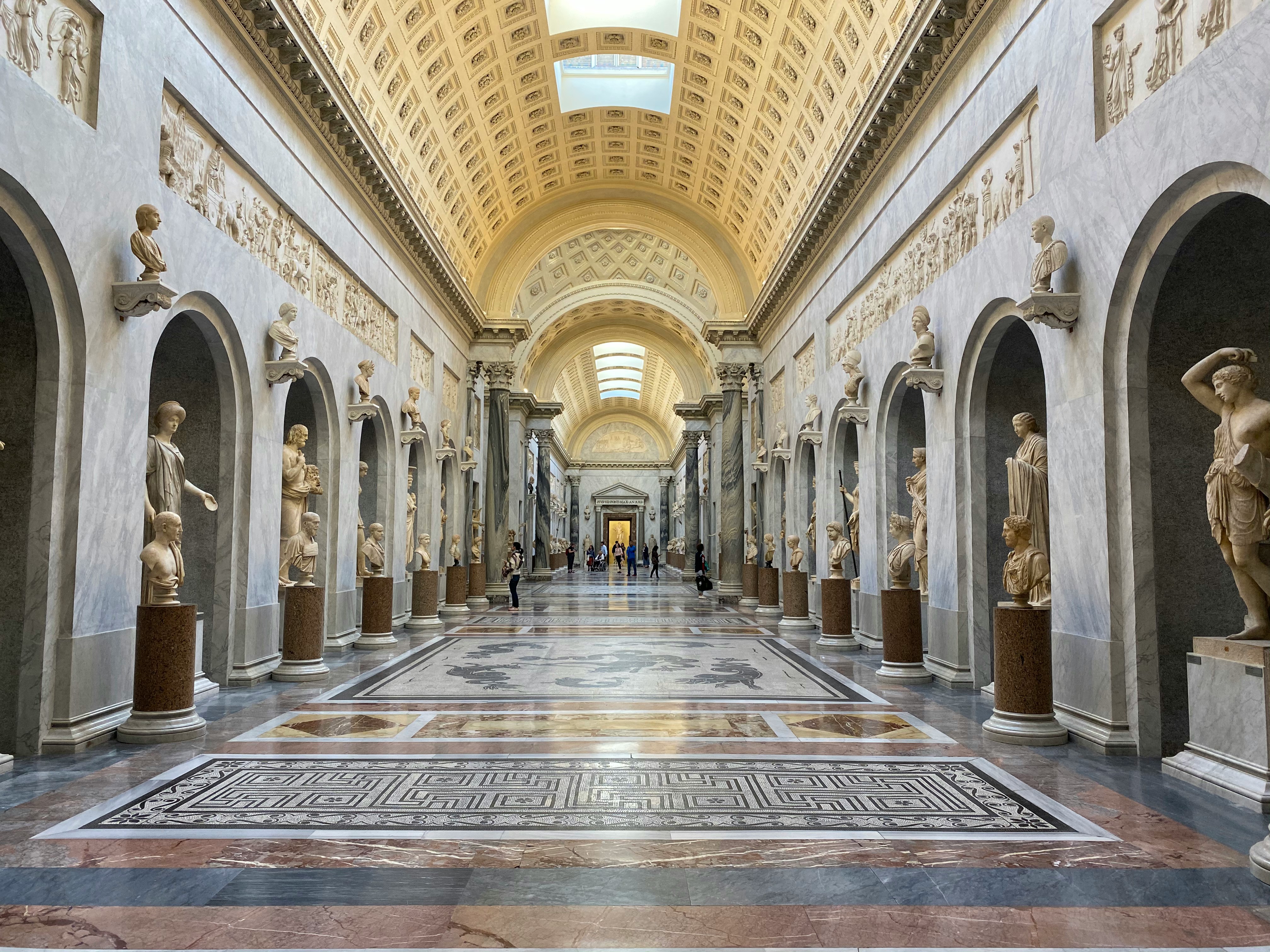
Founded in the early 16th century by Pope Julius II, the Vatican Museums span over 42,000 square meters and house roughly 20,000 works on display—a fraction of their 9 million item collection. Attracting over 6 million annual visitors, it features a 2,797-key security system managed by one guardian.
What is the Best Time to Visit the Vatican Museums?
Best time of day: First thing at opening (8:00am) on a weekday is the optimal window. Arrive at the entrance 10 to 15 minutes before opening, get through security early, and you can reach the Sistine Chapel before the main wave of large tour groups arrives. This is particularly valuable in the Sistine Chapel itself, where the experience of looking up at the ceiling in relative quiet — rather than shoulder-to-shoulder with hundreds of other visitors — is transformative.
An alternative strategy is to visit in the final two hours before closing. Large guided tours are winding down by late afternoon, and both the Raphael Rooms and the Sistine Chapel can become noticeably calmer after around 5:00pm on weekdays. The trade-off is that you may feel a sense of time pressure as closing approaches.
Best days: Tuesday, Wednesday (afternoon, once the Papal Audience crowds clear), and Thursday are consistently the least busy. Saturday is the busiest single day of the week. Sundays are closed except for the free last-Sunday, which is extremely crowded.
Best seasons: November through February (outside Christmas and New Year) is the quietest period, with shorter waits and more comfortable temperatures in the galleries. Holy Week and Easter are among the busiest periods of the entire year at the Vatican, both for the museums and for St Peter's Square, and are best avoided if crowd aversion is a priority.
Early-access tours: Several operators offer entry before the museums open to the general public at 8:00am. These early-access tours are more expensive but provide the closest thing available to a quiet experience of the Sistine Chapel, which is otherwise almost impossible to achieve during peak season.
What is Inside the Vatican Museums?
The museums cover such a range of material that a comprehensive account would fill a book. What follows focuses on the highlights that most visitors prioritise.
The Pio-Clementino Museum: The first major gallery complex on the standard route, and home to some of the most celebrated ancient sculptures in the world. The Laocoön and His Sons, discovered in Rome in 1506 and immediately recognised as a masterwork of the Hellenistic period, depicts the Trojan priest and his sons in the grip of sea serpents. The Apollo Belvedere, a Roman copy of a Greek bronze, was for centuries regarded as the pinnacle of classical beauty. The Octagonal Courtyard and its surrounding rooms are among the most atmospheric spaces in the entire complex.
The Gallery of Maps: A 120-metre corridor lined with 40 extraordinarily detailed hand-painted topographical maps of the Italian peninsula, commissioned by Pope Gregory XIII in the 1580s. The ceiling, painted in gold, green, and red with narrative scenes, is as remarkable as the maps themselves. This gallery stops most visitors in their tracks even when they thought they were on the way to the Sistine Chapel. It is one of the most visually overwhelming rooms in the world.
The Gallery of Tapestries: Running alongside the Gallery of Maps, this corridor is hung with large Flemish tapestries made from cartoons by Raphael's workshop. The tapestry known as The Resurrection features a face of Christ whose eyes appear to follow you as you move, a technique so effective that visitors stop and retrace their steps in disbelief.
The Raphael Rooms (Stanze di Raffaello): Four interconnected rooms in the Apostolic Palace, painted by Raphael and his workshop for Pope Julius II between 1508 and 1524. The Stanza della Segnatura contains the School of Athens, widely considered the greatest philosophical painting of the Renaissance: Plato and Aristotle stand at the centre of an idealised academy populated by recognisable portraits of other Renaissance figures, including Michelangelo seated on the steps in the foreground. The other rooms are each outstanding in their own right, but many visitors rush through them en route to the Sistine Chapel, which is a mistake. The Raphael Rooms alone would justify the entrance fee.
The Pinacoteca: The Vatican's painting gallery, housed in a separate building accessible near the Pinecone Courtyard, contains 18 rooms arranged chronologically with major works by Giotto, Leonardo da Vinci, Raphael (his Transfiguration, his last and largest completed painting), Caravaggio, Titian, and many others. It is frequently bypassed by visitors focused on reaching the Sistine Chapel, and the crowds here are correspondingly lighter. For serious art lovers, a detour here is rewarding.
The Gregorian Egyptian Museum: One of the largest collections of ancient Egyptian artefacts in the world, including mummies, sarcophagi, and objects from Roman-era Egypt. Often quiet and easy to overlook on a busy visit.
The Sistine Chapel: The destination towards which the entire museum route is oriented, and rightly so. The chapel is the official private chapel of the Pope and was built in the 1470s and 1480s for Pope Sixtus IV. The side walls were painted in the 1480s by some of the greatest painters of the Quattrocento, including Botticelli, Perugino, Ghirlandaio, and Rosselli. These frescoes, which most visitors scan briefly on the way to looking up, are extraordinary works of art in their own right.
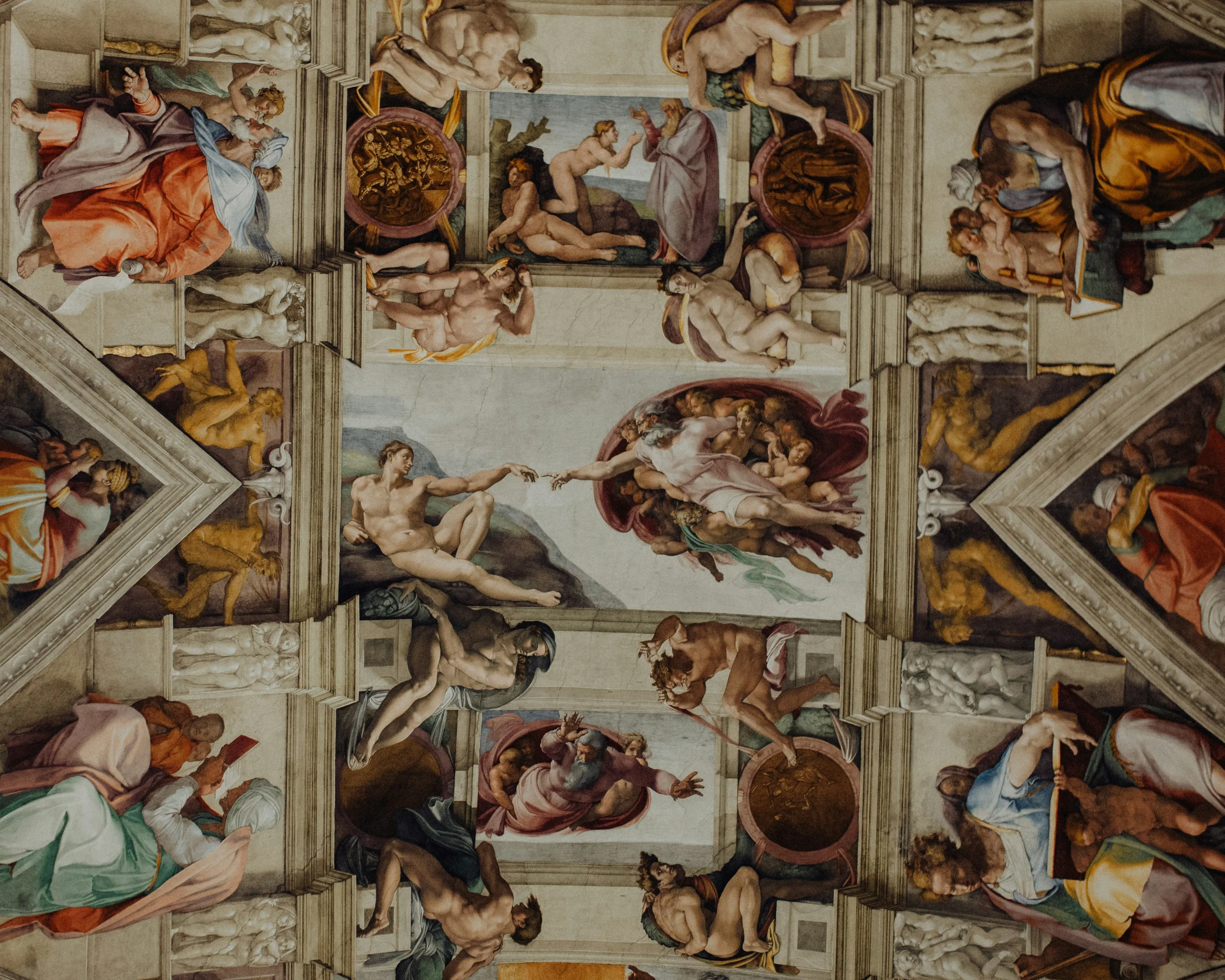
But it is the ceiling, commissioned from Michelangelo by Pope Julius II in 1508 and completed in 1512, that defines the chapel. Nine central panels from Genesis run along the vault, the most famous of which is The Creation of Adam, in which God extends his finger toward Adam's across a space that has become the most reproduced image in the history of art. Flanking the central panels are prophets and sibyls of extraordinary power, including the famous Cumaean Sibyl and the Prophet Isaiah. The ceiling took Michelangelo four years of work, much of it on scaffolding 20 metres above the floor.
The Last Judgement, painted on the altar wall between 1536 and 1541, decades after the ceiling, is a different and darker work. A vast, swirling composition of over 300 figures, it depicts Christ in judgement surrounded by saints and sinners, with the saved ascending to heaven and the damned dragged below. Michelangelo included several portraits of real contemporaries among the damned.
Silence is required inside the Sistine Chapel. Staff actively enforce this, and photography of any kind is strictly prohibited. This is not merely a rule: the combination of silence and the prohibition on photography creates an environment notably different from the rest of the museums, one that makes the experience more contemplative and personal. Guides must explain the frescoes before entering, as commentary inside the chapel is also not allowed.
Guided Tours and Audio Guides of the Vatican Museums
Given the scale and complexity of the Vatican Museums, some form of guided commentary transforms the experience.
Audio guides are available for hire at the Courtyard of the Cuirasses inside the museums, for €8 per person. They are available in multiple languages. Bring your own earphones, as those provided are basic. Alternatively, the official Vatican Museums app (free to download) includes audio content and can be used with your own earphones. Downloading it before your visit is recommended, as Wi-Fi inside the museums can be unreliable.
Group guided tours are available through the Vatican Museums directly and through numerous licensed tour operators. A standard guided tour of the museums and Sistine Chapel typically runs two to three hours and includes priority access to the entry queue. Tours are capped at various sizes; look for small-group options (15 people or fewer) for a more personal experience. Semi-private and private tours are also available.
The advantage of a guided tour at the Vatican specifically is significant: the scale of the complex and the density of outstanding work means that without direction, most visitors spend time in the wrong places and rush past the right ones. A guide who has planned a logical route through the highlights, explains the Raphael Rooms before you enter them and the Sistine Chapel ceiling before you look up, and keeps you moving at the right pace transforms a potentially overwhelming visit into a coherent and deeply satisfying one.
Early-access tours are offered by several operators and allow entry before 8:00am. These are substantially more expensive than standard admission but offer a quieter Sistine Chapel and a calmer overall experience. Booking several weeks in advance is essential.
What guided tours do not include: Guides cannot speak inside the Sistine Chapel. Their commentary on the ceiling and Last Judgement happens before entry, in the corridor outside or in the Raphael Rooms. This is why reading about the frescoes in advance is valuable even if you book a tour.

St Peter's Basilica: What You Need to Know
St Peter's Basilica is technically not part of the Vatican Museums. It is a separate attraction with its own entrance from St Peter's Square, and it is free to enter. You do not need a Vatican Museums ticket to visit the Basilica, and conversely your Vatican Museums ticket does not automatically include it.
There is a direct passage from the Sistine Chapel into the Basilica, but this shortcut is available only to guided tour groups with an authorised guide. Independent visitors who wish to visit the Basilica after the museums must exit through the main museum entrance and walk around to St Peter's Square.
What to see inside: Michelangelo's Pietà (1499), near the entrance on the right, is the most immediately moving work inside the Basilica: the Virgin Mary cradling the body of Christ, carved when Michelangelo was 24. Bernini's Baldachin, the massive bronze canopy over the high altar, is one of the defining works of the Roman Baroque. The dome, designed by Michelangelo and completed after his death, can be climbed for panoramic views of Rome (paid entry; long wait in peak season).
Dress code: The same rules apply to the Basilica as to the rest of Vatican City. Shoulders and knees must be covered for all visitors, including children. There are no exceptions and the rule is enforced at the entrance.
Opening hours: The Basilica has its own opening schedule, separate from the museums. It generally opens at 7:00am and closes between 6:00pm and 7:00pm depending on season, but check in advance as it closes without notice for special religious events. The Papal Audience on Wednesday mornings affects access to the square and surroundings.
Is the Vatican Museums Worth Visiting?
The Vatican Museums require the right approach to become the experience it should be rather than an exhausting slog through crowds. The Sistine Chapel ceiling is a work that exists beyond superlatives, and seeing it in person, even in a crowded room, is a much different experience from seeing it in reproduction. The Raphael Rooms, the Laocoön, the Gallery of Maps, the Pinacoteca: any one of these would be the highlight of most other museums in the world. Together, they make the Vatican Museums an institution without parallel.
What makes visits go wrong is usually a combination of inadequate time, no plan, and no ticket booked in advance. With a morning time slot, some prior knowledge of what you want to prioritise, and a reasonable amount of stamina, the Vatican Museums reward the effort enormously.
Where Should I Eat Near the Vatican Museums?
The streets immediately surrounding the Vatican entrance (particularly Borgo Pio and Via della Conciliazione) are among the most tourist-trap-dense in Rome, with mediocre food at high prices in many establishments. The key is to walk a few minutes into the Prati neighbourhood, which lies to the north and east of Vatican City and is one of Rome's most pleasant and authentic residential areas.
For pizza:
Pizzarium by Gabriele Bonci on Via della Meloria, a 10-minute walk from the museum entrance, is widely considered the finest pizza al taglio (pizza by the cut) in Rome. The dough is long-fermented for 72 hours and the toppings are seasonal and inventive. The line at lunchtime can be long, but it moves fast. This is a stand-up experience, not a sit-down restaurant.
For a trattoria meal:
Dino e Toni in Prati is an unassuming but beloved local trattoria, known for its no-menu format where the owner Dino guides you through what is available that day. Honest Roman food at fair prices, with the kind of relaxed slapstick service that recalls a different era. Arrive hungry.
Il Sorpasso on Via Properzio is a popular Prati restaurant-bar for everything from a coffee to a full meal, with a menu that leans toward Tuscan and broader Italian cuisine rather than strict Roman classics. Good for groups with varying tastes, and open all day.
Romané on Via Cipro, very close to the museum entrance, is run by the founder of the Trapizzino concept and serves traditional Roman cuisine including carbonara, amatriciana, and abbacchio (lamb). One of the better options for a sit-down meal within easy walking distance of the museums.
L'Arcangelo on Via Giuseppe Gioachino Belli is a more refined Prati option with sophisticated takes on Roman and Italian classics. One of the best restaurants in the neighbourhood, and worth a reservation for dinner.
For coffee:
Sciascia Caffè on Via Fabio Massimo is a historic coffee bar that has been serving the Prati neighbourhood since 1919, famous for its cioccolato espresso: an espresso served with a touch of melted dark chocolate. One of the best cups of coffee in Rome.
Inside the museums: There are two cafeterias inside the Vatican Museums complex, one outdoor near the Pinecone Courtyard and one larger indoor option. Both are expensive relative to quality and are primarily useful when you need a break and do not want to lose your place in the flow of the visit. They are adequate but not a reason to extend your stay.
The Trionfale Market on Via Andrea Doria, a five-minute walk from the museum entrance, is the largest food market in Rome with over 270 stalls selling fresh produce, cheese, cured meats, bread, and more. An excellent option for assembling a picnic to eat before or after your visit. Open Monday through Saturday, closed Sunday.ill, is a grand baroque square with two almost identical churches flanking the Flaminian Gate and an Egyptian obelisk at its centre. Free to visit and well worth including on the walk back from the gallery.
What Else is There to Do Near the Vatican Museums?
St Peter's Basilica and St Peter's Square are the obvious companions to any Vatican Museums visit. The square, designed by Bernini and enclosed by his great colonnade, is one of the finest pieces of urban design in the world. Entry to the Basilica is free; allow 90 minutes for a thorough visit.
Castel Sant'Angelo is a 15-minute walk southeast along the Tiber and is one of Rome's most dramatically sited monuments: a cylindrical fortress originally built as the mausoleum of Emperor Hadrian, converted into a papal fortress, and connected to the Vatican by a secret elevated passageway. The view from the top, across the Tiber and the rooftops of Rome, is excellent. Advance booking is recommended in peak season.
The Prati neighbourhood itself is worth exploring after your museum visit: the main shopping street of Via Cola di Rienzo runs through its centre, and the surrounding residential streets have a calm, non-touristy character that feels like a real neighbourhood rather than a visitor attraction.
Trastevere, across the Tiber, is a 20-minute walk or a short taxi ride, and is one of Rome's best neighbourhoods for evening dining and wandering. If you are based near the Vatican, the walk along the Tiber to Trastevere at dusk is a good way to end a day.
Rules, Bags, and Security
Dress code: Enforced strictly at all points of entry to Vatican City, including the museums. Shoulders and knees must be covered for all visitors, including children. No sleeveless tops, short shorts, short skirts, or clothing with transparent fabric. Bring a scarf or light layer if your outfit is borderline. There are no cover-up rentals at the Vatican Museums entrance; if your attire does not comply, you will be turned away.
Bags: Large bags, backpacks, and luggage are not permitted in the galleries. A free cloakroom is available at the entrance for these items. Bags up to a moderate size are allowed inside; check the current guidelines on the official website if you are unsure.
Security: All visitors pass through airport-style security on arrival, including a metal detector and bag X-ray. This cannot be bypassed regardless of ticket type. In peak season, this queue can add 15 to 30 minutes to entry time. Factor this into your arrival plan.
Photography: Allowed throughout most of the museums without flash. Strictly prohibited inside the Sistine Chapel, where it is also prohibited to use any camera or phone camera. This rule is actively enforced by staff. The prohibition on photography exists to preserve the silence and the quality of the experience.
Silence in the Sistine Chapel: Required, and enforced. Staff regularly remind visitors with loudspeakers and direct intervention.
No re-entry: Once you exit the museums, your ticket is no longer valid.
Accessibility at the Vatican Museums
The main museum itinerary is largely accessible to visitors with mobility impairments. Lifts and ramps connect the principal galleries, including the Raphael Rooms and the Sistine Chapel. Wheelchairs are available to borrow free of charge from the main entrance on request, subject to availability. Tactile tours for blind or partially sighted visitors are available free of charge with advance booking.
Visitors with a certified disability of at least 67% receive free entry; this extends to one accompanying companion. Free tickets for disabled visitors and their companions cannot be booked online and must be requested at the Special Permits or Welcome Desk in the entrance hall on arrival. Priority skip-the-line entry is granted to disabled visitors and their companions.
When booking online, there is an option to indicate accessibility requirements. It is worth noting that some older and more peripheral sections of the museums involve stairs without lift alternatives, and the overall distances involved can be demanding for visitors with limited mobility.
Final Tips for Visiting the Vatican Museums
Book your ticket online well in advance. In peak season, book as soon as the 60-day window opens for your preferred date. The official site is museivaticani.va. Avoid buying at the door if at all possible.
Bring a government-issued ID that matches your ticket name. This is checked at entry.
Arrive 10 to 15 minutes before your time slot to allow for the security queue.
Go on a Tuesday, Wednesday afternoon, or Thursday for the lightest crowds.
Do not plan other major sightseeing on the same day. The Vatican alone is a full day.
The Raphael Rooms are not just the corridor to the Sistine Chapel. Slow down and spend time in them. The School of Athens rewards careful attention.
Read about the Sistine Chapel ceiling before your visit. No photography is allowed inside, you cannot speak (and guides cannot speak) inside the chapel, and the ceiling is 20 metres above you. Understanding what you are looking at before you walk in transforms the experience.
Do not skip the Gallery of Maps. It is one of the most visually astonishing spaces in the building and is often rushed past on the way to the chapel.
Consider a guided tour if this is your first visit. At a museum of this scale and complexity, a good guide does not just add context; they save you from spending three hours finding your way around.
Early-access tours are expensive but deliver a significantly quieter Sistine Chapel. If budget allows and it is peak season, they are worth it.
The last Sunday of the month is free, but very crowded and shorter in hours. Only choose this option if you are flexible and patient.
Eat in Prati, not on Borgo Pio. Walk five minutes north of the entrance for dramatically better food at significantly lower prices.
The Basilica is free and separate. If you want to see it after the museums, plan for the walk around to St Peter's Square. The direct passage from the Sistine Chapel is for guided tour groups only.
Back to Rome Attractions
Explore other Rome attractions
" width="24px"><path d="M 0 0 L 24 0 L 24 21.231 L 0 21.231 Z" fill="transparent" height="21.230768474975793px" id="nL2EwDcS9" width="24px"/><path d="M 0 0.541 C 0 0.242 0.245 0 0.547 0 L 2.735 0 C 3.037 0 3.282 0.242 3.282 0.541 L 3.282 4.598 C 3.282 4.897 3.037 5.139 2.735 5.139 L 0.547 5.139 C 0.245 5.139 0 4.897 0 4.598 Z" fill="rgb(196, 217, 201)" height="5.138657337892187px" id="hZ_rlBe_S" transform="translate(0 16.092)" width="3.2820512820512358px"/><path d="M 0 0.541 C 0 0.242 0.245 0 0.547 0 L 2.735 0 C 3.037 0 3.282 0.242 3.282 0.541 L 3.282 7.843 C 3.282 8.142 3.037 8.384 2.735 8.384 L 0.547 8.384 C 0.245 8.384 0 8.142 0 7.843 Z" fill="rgb(230, 211, 160)" height="8.38412513024521px" id="HgVBxIz3e" transform="translate(5.128 12.847)" width="3.282051282051235px"/><path d="M 0 0.541 C 0 0.242 0.245 0 0.547 0 L 2.735 0 C 3.037 0 3.282 0.242 3.282 0.541 L 3.282 12.982 C 3.282 13.281 3.037 13.523 2.735 13.523 L 0.547 13.523 C 0.245 13.523 0 13.281 0 12.982 Z" fill="rgb(232, 207, 164)" height="13.522782468137464px" id="utgrDnoM9" transform="translate(10.325 7.708)" width="3.282051282051377px"/><path d="M 0 0.541 C 0 0.242 0.245 0 0.547 0 L 2.735 0 C 3.037 0 3.282 0.242 3.282 0.541 L 3.282 16.498 C 3.282 16.797 3.037 17.039 2.735 17.039 L 0.547 17.039 C 0.245 17.039 0 16.797 0 16.498 Z" fill="rgb(233, 196, 166)" height="17.038705909853153px" id="OLOhW6STz" transform="translate(15.521 4.192)" width="3.2820512820512384px"/><path d="M 0 0.541 C 0 0.242 0.245 0 0.547 0 L 2.735 0 C 3.037 0 3.282 0.242 3.282 0.541 L 3.282 20.69 C 3.282 20.989 3.037 21.231 2.735 21.231 L 0.547 21.231 C 0.245 21.231 0 20.989 0 20.69 Z" fill="rgb(217, 170, 153)" height="21.230768474975793px" id="H5Z8wcwkd" transform="translate(20.718 0)" width="3.2820512820512278px"/></g></svg>)