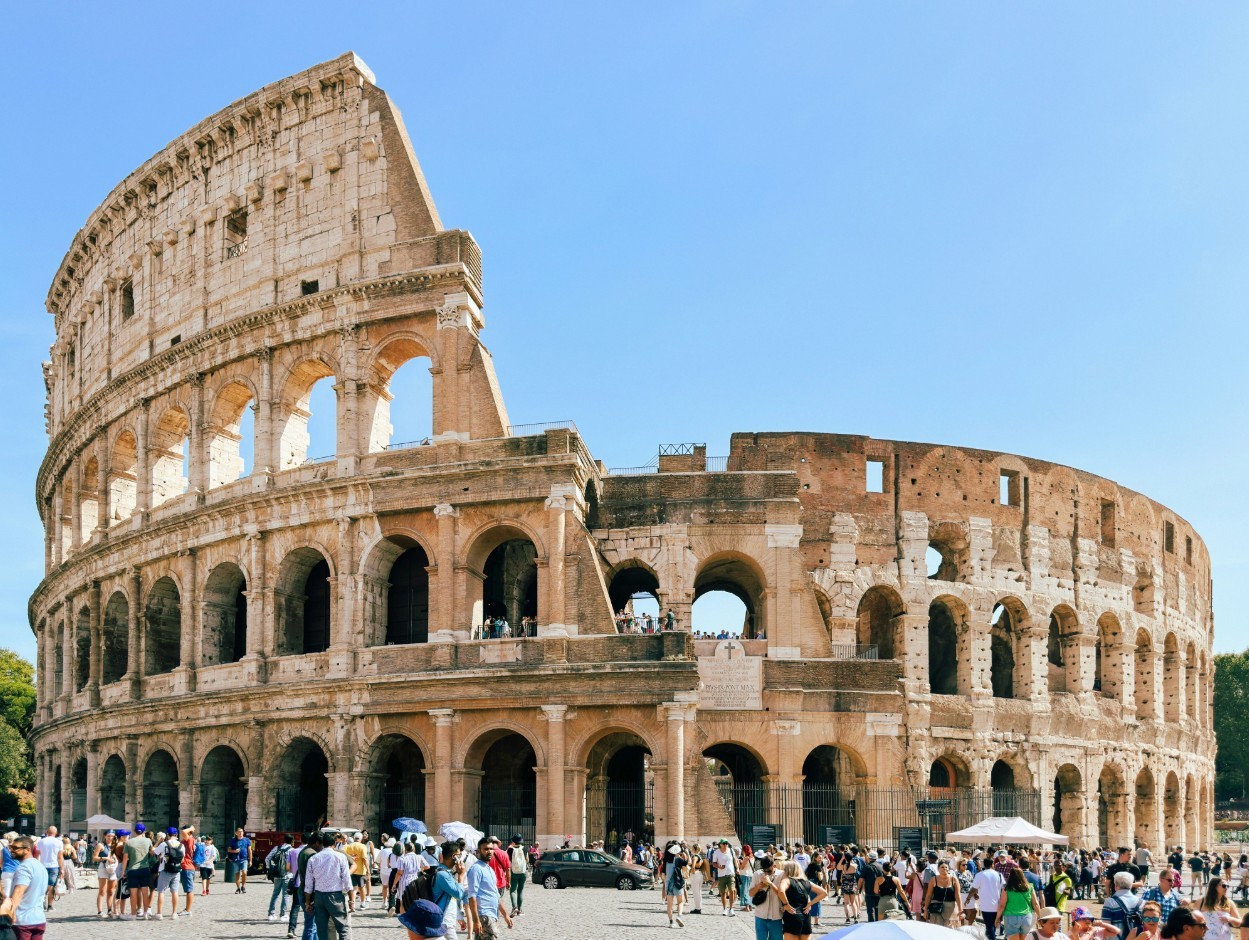
Rome • Celio, Archaeological Core
The Colosseum
Access to underground levels available as general admission and guided tours. Early booking needed for both formats due to extremely high demand. Tickets released 30 days ahead and sell out quickly.
Book 30 Days Ahead
Book 30 Days Ahead
Back to Rome Attractions
Colosseum Tickets: Prices, Hours & How to Get Underground Access
Updated August 2026
The Colosseum is the most visited monument in Italy and one of the most recognised structures on earth. Formally known as the Flavian Amphitheatre, it was built by the emperors Vespasian, Titus, and Domitian between 72 and 80 AD and could hold between 50,000 and 80,000 spectators for gladiatorial contests, wild animal hunts, public executions, and staged naval battles. For over four centuries it served as the centrepiece of Roman public life, a place where political power was demonstrated through spectacle and where admission was free to all Roman citizens. Today, nearly 15 million people visit each year, making it essential to plan carefully. The ticket system is more complex than almost any other attraction in Rome, and without advance booking in peak season, getting in at all is not guaranteed.
At a Glance
How Early to Book:
3 weeks ahead for a basic general entry visit. 30 days ahead (right when tickets are released) for a tour or access to the underground levels.
Tickets Released:
Exactly 30 days in advance down to the minute. See section below on exact details. Additional tickets sometimes are released 7 days ahead.
Best Times to Visit:
Weekday mornings at opening around 8:30am, or the last couple of hours before closing, will have the smallest crowds.
Ticket price:
€18 to €32 depending on the type of visit and tour.
Where to Book:
Landmark Address:
Do You Need to Book Colosseum Tickets in Advance?
Booking in advance is the most important step you must take before visiting the Colosseum.
At peak times, the line for same-day tickets stretches across the piazza and wait times of one to two hours or more are common. Booking online not only secures your preferred date and time slot but gets you past the ticket purchase queue entirely. All visitors, including those with pre-booked tickets, must still pass through a security check on arrival, which takes around 15 to 30 minutes. But that wait is predictable; the ticket queue is not.
Ticket prices:
Standard 24-hour: €18 (levels 1 and 2, Roman Forum, Palatine Hill, Imperial Fora)
Full Experience Arena, 48-hour: €24
Full Experience Underground, 48-hour: €24 (Park-assigned guide mandatory and included)
Full Experience Attic, 48-hour: €24
EU citizens aged 18 to 24: €2 standard, €6 Full Experience
Under 18s: free, but a ticket must still be reserved
A €2 booking fee applies to every online ticket, including free under-18 tickets
All standard tickets include the Roman Forum, Palatine Hill and Imperial Fora, and Full Experience tickets are valid for two consecutive days.
Tickets are timed, name-specific, and released 30 days in advance on the official portal. The earliest daily entry time available is 8:30am, and slots are staggered throughout the day.
Each slot becomes bookable exactly 30 days before the visit date, at the same clock time as the slot itself, but in Italian time. So if you're after a 9am entry, you need to be on the portal and ready to book at 8am UK time for example, 30 days ahead. Different ticket types also release on different cycles, and it's worth knowing which applies to the one you want:
Basic 24-hour tickets release every 15 minutes throughout the day
Attic access tickets release every 20 minutes, on the 10, 30, and 50-minute marks of each hour
During peak season (April through October), popular morning slots and premium access tickets sell out rapidly, often within hours of becoming available. The Underground experience and Attic access in particular can disappear within minutes of going on sale, so go into the release window with two or three acceptable time slots in mind rather than a single target. Landing the date and slot you want can take persistence; it isn't unusual to need an hour or more of repeated attempts before everything lines up.
If the 30-day window doesn't work out, a further batch of tickets is released 7 days before the visit date, giving you a second chance at popular slots.
A bit of preparation on release day helps. Run through the booking process once beforehand so you know exactly what to click when it counts, and have a VPN ready in case repeated attempts get your connection temporarily blocked. If the site stalls, switching wifi off and using mobile data (or the other way round) can sometimes get things moving again.
Third-party platforms (GetYourGuide, Tiqets, Viator) also carry Colosseum tickets, usually bundled with guides or audio guides, and are useful when official slots are unavailable for your preferred date.
If online booking doesn't come together through either the 30-day or 7-day release, queuing on the day remains an option, though expect the queue times described above during peak season.
Tickets are issued in your name. Bring a government-issued ID matching the name on the ticket; staff check this at entry.
Understanding the Different Ticket Types at the Colosseum
The Colosseum has multiple ticket categories covering different areas of the landmark, and choosing the right one before you arrive makes a significant difference to your experience inside.
Standard 24-Hour Ticket (€18 for adults): The base ticket and the most commonly purchased option. It covers timed entry to the Colosseum's first and second viewing levels, plus open access to the Roman Forum and Palatine Hill within 24 hours before or after your Colosseum entry time. The Roman Forum and Palatine Hill components do not require a separate timed slot, giving you flexibility in how you spread your visit. This ticket includes the free MyColosseum app audio guide. It does not include the Arena Floor, Underground, or Attic levels.
Full Experience: Arena (€24 for adults): Includes everything in the standard ticket plus access to the Arena Floor, where you can step down to the level where gladiators fought and look up at the tiers from below. Valid for two consecutive days rather than 24 hours. Also includes the Roman Forum, Palatine Hill, Imperial Fora, and SUPER sites. The Arena Floor itself is a reconstructed wooden platform spanning part of the open arena; the arena's original floor was removed by archaeologists in the 19th century to reveal the hypogeum below.
Full Experience: Underground and Arena (€24 for adults): The most sought-after ticket in the entire Colosseum system. In addition to the Arena Floor and standard levels, it includes access to the hypogeum, the network of tunnels and chambers beneath the arena floor where gladiators waited before combat and wild animals were held in cages. The hypogeum can only be visited with a licensed guide, which means this ticket must be used as part of a guided tour experience. A €32 version adds a longer educational tour led by Park staff. It is valid for two consecutive days and includes all SUPER sites and the Forum and Palatine Hill. This ticket sells out almost instantly when slots open 30 days in advance; if you want the underground, be online at the Rome time of the slot you want, exactly 30 days before your visit date.
Full Experience: Attic (€24 for adults): Covers the Colosseum's fourth and fifth levels, the uppermost tiers that were closed to visitors for decades and reopened only after extensive restoration. A lift carries you as far as the intermediate gallery and third level, with the attic itself reached by a final climb of steep steps, and from the top you gain sweeping views down into the arena and out across Rome from 50 metres up. The Attic does not include underground or arena floor access. Like the other Full Experience tickets, it is valid for two consecutive days and includes all SUPER sites. Visits are capped at eight people and run in the morning and early afternoon only, which is part of why the Attic stays consistently quieter than the lower levels.
Forum Pass SUPER (€18 for adults, no Colosseum access): If you have already visited the Colosseum or are not interested in it, this ticket covers the Roman Forum, Palatine Hill, Imperial Fora, and all SUPER sites, with no timed entry requirement. Bought online, it can be used any time within 30 days of purchase, but once you use it, it covers that one day only. It cannot be used on the free first Sunday of the month.
Colosseum Opening Hours and Entry Information
The Colosseum opens daily at 8:30am. The Roman Forum and Palatine Hill open half an hour later, at 9:00am. Closing times vary by season:
29 March to 30 September: closes 7:15pm, last admission 6:15pm
1 to 24 October: closes 6:30pm, last admission 5:30pm
25 October to 28 February: closes 4:30pm, last admission 3:30pm
Last admission is one hour before closing in every season.
Closed: 1 January and 25 December.
How long you can stay inside is set by your ticket: 75 minutes on a standard ticket, 90 minutes on any Full Experience ticket. At the end of that period you are asked to leave the monument.
The Colosseum entrance is at Piazza del Colosseo. Visitors with pre-booked tickets use a separate, shorter queue from those purchasing tickets on the day. Even with pre-booked tickets, all visitors pass through security.
Allow 15 to 30 minutes on arrival for the security check. Arriving right at your scheduled time slot with no buffer is risky; 15 minutes early is sensible, and in peak season 20 to 25 minutes is better.
Stay inside the Colosseum: Once you exit, your ticket is no longer valid. No re-entry is permitted.
Address: Piazza del Colosseo 1, 00184 Roma
What is the Best Way to Get to the Colosseum?
By Metro: The Colosseo station on Line B is directly adjacent to the monument and is the most straightforward option from most of central Rome.
By bus: Routes 51, 75, 85, and 87 stop at or near the Colosseum. From Termini station, buses 40 and 64 run toward Piazza Venezia, from which it is a short walk along Via dei Fori Imperiali.
On foot: The Colosseum is around 25 minutes from the Pantheon, 20 minutes from Piazza Navona, and 15 to 20 minutes from Testaccio. The approach on foot along Via dei Fori Imperiali from Piazza Venezia, with the Imperial Fora visible on both sides of the road, is worth doing at least once.
By taxi: Efficient and convenient from most of central Rome. Ask for "il Colosseo" or the address on Piazza del Colosseo.
Driving is not practical. The area is heavily traffic-restricted and parking is essentially non-existent near the monument.
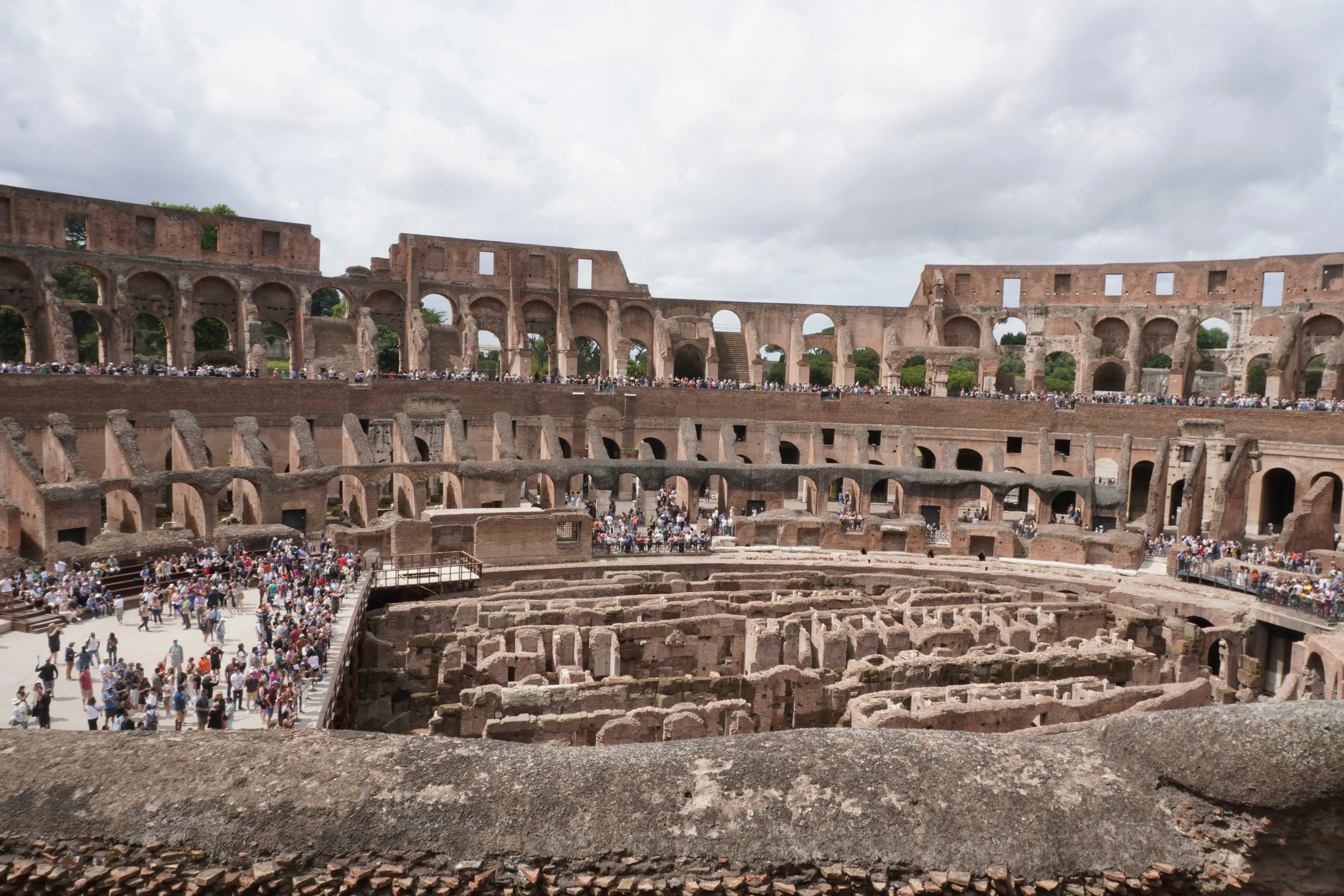
The wooden floor of the Colosseum was originally covered with sand (Latin: harena or arena) to absorb the blood of victims. This is where the modern word "arena" comes from.
How Much Time Should I Spend at the Colosseum?
Your time inside the Colosseum is capped by ticket type. A standard ticket gives you 75 minutes; any Full Experience ticket gives you 90 minutes. These limits are set in the Park's visitor regulations and are enforced, so the question is less how long you want to stay than how you use the time you have.
An hour and 15 minutes is enough to walk the full circuit of the first and second levels, take in views from several angles, look down into the exposed hypogeum, and spend 15 to 20 minutes in the second-level museum. It is not enough to drift. Have a rough route in mind before you go through security.
The Arena Floor and Attic routes sit inside the same 90 minutes rather than extending it, so those tickets make the time tighter, not longer. The Underground is visited with a Park guide on a set schedule, and that guided portion is the fixed point your visit is built around.
The Colosseum ticket also includes the Roman Forum and Palatine Hill, which together require a further two to three hours for a proper visit and have no time limit of their own. These are dealt with in detail on our separate Roman Forum page, but the key point is that if you plan to visit all three components in one day, set aside a full day. Combining the Colosseum with the Vatican Museums or any other major attraction on the same day is not advisable.
What is the Best Time to Visit the Colosseum?
Best time of day: First entry at 8:30am is the quietest window of the day. The Colosseum is significantly calmer in its first hour than at any other point. The last two hours before closing are a reasonable second option on weekdays, though you will have less flexibility if security runs slow.
Worst time: The midday window from around 10:30am to 2:30pm is when cruise group and tour bus arrivals peak. The upper levels are still viewable but the circuits can feel congested.
Best days: Tuesday, Wednesday, and Thursday consistently see lighter visitor numbers than Monday, Friday, or weekends. Saturday is the single busiest day of the week. Sundays are quieter except on free-admission Sundays.
Best season: Spring (March to May) and autumn (September to October) offer the best combination of manageable crowds and comfortable temperatures. Summer, particularly July and August, brings both the largest visitor volumes and the most demanding heat: the Colosseum interior is substantially exposed and there is limited shade in the seating corridors. The Underground, however, is cooler and many visitors find it a welcome break from summer temperatures.
Winter (late October to February) sees the smallest crowds by far, though the 4:30pm closing across those months does require careful planning.
What is Inside the Colosseum?
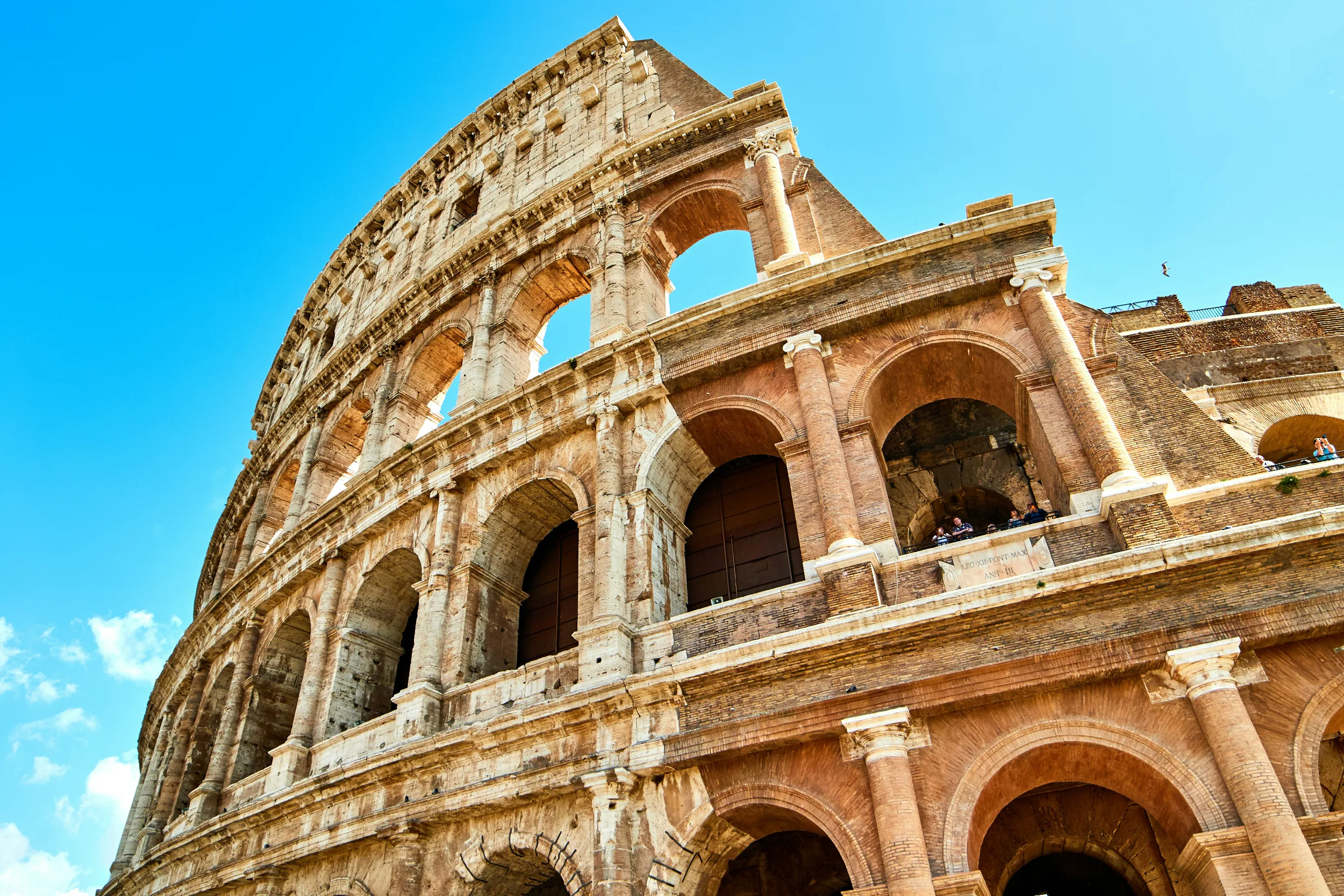
The Exterior: The scale of the Colosseum hits most visitors before they even enter. The building is 188 metres long, 156 metres wide, and 57 metres tall, constructed from travertine limestone, volcanic tuff, and brick-faced concrete. The distinctive pockmarks across the outer wall were made during the medieval period when workers pried out the iron clamps holding the stonework together for reuse elsewhere. The façade originally had 80 numbered arched entrances, which allowed the entire crowd of 50,000 or more spectators to take their seats and evacuate within 15 minutes.
The First and Second Levels (standard ticket): The primary viewing experience on a standard ticket. From the inner and outer corridors and the spectator terraces, you get a full appreciation of the building's scale and the elliptical perfection of the arena below. The seating hierarchy is explained in the museum displays: the lowest tier was reserved for senators, Vestal Virgins, and the emperor himself. Equestrians sat above them, then the general public, with women and slaves consigned to the uppermost wooden tier added by Domitian.
From the viewing terraces you can look down into the exposed hypogeum below the arena floor level, where the maze of tunnels, cages, and lift mechanisms that powered the games is clearly visible. This is the closest most standard ticket holders get to the underground.
The Museum (second level): A small but well-curated display of archaeological finds from the Colosseum and its surroundings, covering gladiatorial equipment, imperial history, and the building's architectural evolution. Worth spending 15 to 20 minutes here.
The Arena Floor (Full Experience Arena ticket): Access via the Gate of Death, which was historically the exit used to remove defeated gladiators from the arena. Standing on the reconstructed wooden platform at arena level and looking up at the tiers rising around you is one of the most powerful visitor experiences in Rome. It places you at the same sightlines as the gladiators and gives a visceral sense of what combat in front of a full house must have felt like. From the platform you also look directly down into the hypogeum through gaps in the wooden planking.
The Underground, the Hypogeum (Full Experience Underground and Arena ticket, with guide): The tunnel network beneath the arena floor was engineered under Emperor Domitian to replace an earlier system and became one of the most sophisticated pieces of theatre infrastructure in the ancient world. Thirty-six trapdoors connected to counterweight lifts allowed gladiators, animals, and elaborate props to rise dramatically into the arena above. Animals were kept in wooden cages along the corridors, driven up ramps to the lift mechanisms at the sound of horns and drums from above. Walking the hypogeum today, the mechanics of the spectacle become clear in a way that no amount of reading or viewing from above can replicate. This is the Colosseum's most closely managed space: visits are only possible with a licensed guide, in small groups, and at specific times. The limited capacity is why these tickets sell out so fast.
The Attic, levels 4 and 5 (Full Experience Attic ticket): The uppermost levels of the Colosseum were where the poorest Roman spectators sat on wooden benches with the worst sight lines. Closed for decades, they were reopened after restoration and now offer the highest viewpoint available to visitors, reached by panoramic lift. From the Attic you look down the full height of the interior, see the complete oval of the arena and hypogeum below, and look out across the rooftops of Rome. The views are exceptional and the levels are consistently uncrowded because relatively few visitors know the ticket exists.

Guided Tours and Audio Guides of the Colosseum
Audio guides are available through the free MyColosseum app (iOS and Android), which is included with all Colosseum tickets. Download it before your visit rather than trying to access it inside where connectivity can be unreliable. The app includes an interactive audio guide for the standard levels in Italian and English, and its content automatically advances as you move through the building. Audio guides in other languages can be hired at the monument.
Guided tours range from standard group tours of the main levels to small-group or private specialist experiences including the Arena Floor, Underground, or Attic. For the underground specifically, a licensed guide is not optional: the hypogeum can only be visited as part of a guided experience. If accessing the underground is a priority for you, booking a guided underground tour through a reputable operator is often the most straightforward approach, as these tours bundle guide, access ticket, and skip-the-line entry in one booking. They are more expensive than official tickets but remove the need to secure the near-impossible official underground ticket independently.
For all but repeat visitors, some form of guided commentary significantly enriches the experience. The Colosseum has limited on-site interpretation beyond the museum on the second level, and without context the corridors and seating tiers can feel repetitive.
Night visits to the Colosseum have run in recent seasons, giving access to the arena and underground with a guide after the monument closes to general visitors. They are not offered continuously and the schedule changes, so check the official site for current dates and availability rather than planning a trip around one.
Is the Colosseum Worth Visiting?
The Colosseum is one of those rare places where the experience of being inside exceeds the expectation built up by a lifetime of images. The scale of the building, the weight of its history, and the strange combination of beauty and horror that defines it are all things that photographs simply do not convey. Standing inside and looking up at the tiers, or looking down at the exposed hypogeum and trying to understand the machinery of what happened here, is affecting in a way that surprises almost everyone who visits.
The standard ticket, covering the first and second levels, is more than adequate for most visitors. The Arena Floor adds a powerful shift in perspective. The Underground is the most historically resonant option of all, but its ticketing difficulty means it should be the focus of your booking strategy from the moment you know your travel dates.
Where Should I Eat Near the Colosseum?
The restaurants on the piazza directly facing the Colosseum are, without exception, tourist traps: high prices, unremarkable food, and billing practices that have given the area a poor reputation. Walk two to three streets away in any direction and the picture changes considerably.
The two neighbourhoods closest to the Colosseum are Monti (northwest, toward the Roman Forum) and Celio (southeast, on the Coelian Hill). Both have local restaurants with consistently better food and fairer prices than anything on the tourist axis.
For a sit-down meal:
Taverna Romana on Via della Madonna dei Monti, in the heart of Monti, is a long-running neighbourhood trattoria offering reliable Roman classics including carbonara, cacio e pepe, and braised oxtail in a warm, unpretentious room. The kind of place where locals still eat regularly.
La Taverna dei Fori Imperiali on Via della Madonna ai Monti is a step up in terms of refinement, known for its truffled pasta and carefully sourced meats. One of the more celebrated restaurants in this part of the city; book ahead for dinner.
Naumachia on Via Celimontana in the Celio neighbourhood is a solid neighbourhood choice, popular with area office workers at lunch and families in the evening, with traditional Roman cooking at reasonable prices.
Luzzi on Via Celimontana in the Celio neighbourhood is a local institution, a pizzeria-trattoria serving Roman-style pizza, oxtail, and pasta in an easygoing atmosphere that draws a loyal local following. One of the most consistently recommended spots near the monument.
Ai Tre Scalini on Via dei Panisperna in Monti is a wine bar and enoteca with a rotating seasonal menu, excellent by-the-glass list, and the kind of relaxed afternoon atmosphere that makes it an ideal post-visit stop.
For a quick lunch:
Pizzeria Li Rioni in Celio, near Santi Quattro Coronati, is a straightforward pizzeria serving thin-crust Roman-style pizza from a wood-fired oven. Very good value, and a short walk from the Colosseum. Note it only opens from around 7pm.
Pizza al taglio (pizza by the slice) shops along Via della Madonna dei Monti and in Monti generally offer some of the best quick, affordable eating in this part of the city.
For a splurge with a view:
Aroma at Palazzo Manfredi, directly overlooking the Colosseum from a hotel rooftop terrace, is a Michelin-starred restaurant with what may be the finest sight line of any restaurant in Rome. The food matches the setting. Advance reservation is essential and the prices reflect both qualities.
There is no food or drink available inside the Colosseum, Roman Forum, or Palatine Hill, so plan accordingly before entering.
What Else is There to Do Near the Colosseum?
The Roman Forum and Palatine Hill are included with every Colosseum ticket and together form one of the greatest open-air archaeological sites in the world. They are covered in full on our separate Roman Forum page.
The Arch of Constantine stands between the Colosseum and the Forum entrance, erected in 315 AD to commemorate the emperor Constantine's victory in the civil war that established him as sole ruler. Free to view and one of the best-preserved triumphal arches in Rome.
The Capitoline Hill and Capitoline Museums are a 15-minute walk west, sitting directly above the western end of the Roman Forum. The museums house the world's oldest public collection, including the original bronze equestrian statue of Marcus Aurelius and the Dying Gaul. The viewing terraces at the edge of the hill offer outstanding panoramic views directly down into the Roman Forum. Advance booking recommended.
The Circus Maximus is around 15 minutes south on foot, past the Palatine Hill. Rome's great chariot racing track is now a public park and free to visit. Standing in it gives a useful sense of the scale on which Roman public entertainment operated.
The Baths of Caracalla are around 20 minutes south, among the best-preserved ancient Roman bath complexes anywhere. Advance booking advised.
Monti neighbourhood deserves time in its own right beyond its restaurants. One of Rome's oldest residential neighbourhoods, it has a cluster of independent boutiques, wine bars, and cafes along Via dei Serpenti, Via della Madonna dei Monti, and the surrounding streets that make for an excellent post-visit wander.
The Domus Aurea, Nero's legendary Golden House, is a 10-minute walk north of the Colosseum, currently being excavated and partially open to guided visits. Check the official Parco Archeologico del Colosseo website for current access, as openings are limited and scheduled in advance.
Rules, Bags, and Security
Security check: All visitors pass through airport-style security with bag X-ray and metal detectors. This cannot be bypassed regardless of ticket type. Budget 15 to 30 minutes for this on busy days.
Bags: There is no specific size restriction comparable to the Galleria Borghese, but oversized luggage and large wheeled bags are impractical inside the building and should be left at your accommodation. There is no left luggage facility at the Colosseum itself.
No food or drink inside: Nothing can be consumed inside the Colosseum complex, including the Roman Forum and Palatine Hill. No vendors operate inside. Eat or drink before entering or bring water in a sealed bottle for the Roman Forum and Palatine Hill sections.
Photography: Permitted throughout without restriction. Tripods require advance permission from the monument authority.
Shoes: Wear comfortable, closed shoes. The ancient stone surfaces inside are uneven in places and the corridors involve a good deal of walking. Heels or sandals are poor choices.
Accessibility at the Colosseum
The main entrance at Piazza del Colosseo (Sperone Valadier entrance) is wheelchair accessible with no stairs. A lift connects the ground floor to the first and second levels, giving access to the main standard-ticket viewing areas.
The underground (hypogeum) and Attic upper levels are not accessible to wheelchair users due to stairs and narrow passages. Wheelchairs can be borrowed on the first floor at the reception and security office, subject to availability, on a first come first served basis.
Disabled visitors with a certified disability and one accompanying companion receive free entry. Appropriate documentation must be presented at the entrance.
Final Tips for Visiting the Colosseum
Book your ticket the moment the 30-day booking window opens for your preferred date. Standard tickets are manageable, but Underground and Attic tickets disappear extremely quickly. If underground access is important to you, consider booking a guided underground tour through a third-party operator instead, as these often have availability even when official tickets are gone.
Arrive 15 to 20 minutes before your time slot. Security takes time and your entry slot is strict. Arriving late risks being turned away.
Even just the standard ticket is rewarding. You do not need premium access to have an outstanding Colosseum visit. The first and second levels, with their views of the exposed hypogeum below and the sweeping interior tiers, are impressive on their own terms.
The Attic is underrated and undervisited. If you want a premium experience with fewer people around you, the Attic ticket is a far more achievable booking than the underground and offers the highest viewpoint in the building.
The Roman Forum and Palatine Hill are included in your ticket. Use the 24-hour validity to spread them across two days if you find one day too much. Visit the Forum in the early morning and the Colosseum later, or vice versa.
Do not eat on the tourist strip facing the Colosseum. Walk into Monti or Celio for dramatically better food at lower prices.
There is no food or drink inside. Eat before entering or pack a snack for the Forum and Palatine Hill portion of your visit.
The free first Sunday is not always the bargain it appears. The Arena, Underground, Attic, and SUPER sites are unavailable on free Sundays, and the queues to collect a free ticket can be extremely long.
Bring government ID matching your ticket name. Checks are made at the entrance.
Book under the name of the person who will actually visit. Since May 2026 the name on a ticket can be changed once at most, only up to midnight seven days before the visit date, and only in limited circumstances such as an obvious spelling error.
Do not buy from street sellers or unofficial online resellers. Fake tickets result in denied entry with no recourse. All official tickets come through the official website or verified licensed operators.
Back to Rome Attractions
Explore other Rome attractions

" width="24px"><path d="M 0 0 L 24 0 L 24 21.231 L 0 21.231 Z" fill="transparent" height="21.230768474975793px" id="nL2EwDcS9" width="24px"/><path d="M 0 0.541 C 0 0.242 0.245 0 0.547 0 L 2.735 0 C 3.037 0 3.282 0.242 3.282 0.541 L 3.282 4.598 C 3.282 4.897 3.037 5.139 2.735 5.139 L 0.547 5.139 C 0.245 5.139 0 4.897 0 4.598 Z" fill="rgb(196, 217, 201)" height="5.138657337892187px" id="hZ_rlBe_S" transform="translate(0 16.092)" width="3.2820512820512358px"/><path d="M 0 0.541 C 0 0.242 0.245 0 0.547 0 L 2.735 0 C 3.037 0 3.282 0.242 3.282 0.541 L 3.282 7.843 C 3.282 8.142 3.037 8.384 2.735 8.384 L 0.547 8.384 C 0.245 8.384 0 8.142 0 7.843 Z" fill="rgb(230, 211, 160)" height="8.38412513024521px" id="HgVBxIz3e" transform="translate(5.128 12.847)" width="3.282051282051235px"/><path d="M 0 0.541 C 0 0.242 0.245 0 0.547 0 L 2.735 0 C 3.037 0 3.282 0.242 3.282 0.541 L 3.282 12.982 C 3.282 13.281 3.037 13.523 2.735 13.523 L 0.547 13.523 C 0.245 13.523 0 13.281 0 12.982 Z" fill="rgb(232, 207, 164)" height="13.522782468137464px" id="utgrDnoM9" transform="translate(10.325 7.708)" width="3.282051282051377px"/><path d="M 0 0.541 C 0 0.242 0.245 0 0.547 0 L 2.735 0 C 3.037 0 3.282 0.242 3.282 0.541 L 3.282 16.498 C 3.282 16.797 3.037 17.039 2.735 17.039 L 0.547 17.039 C 0.245 17.039 0 16.797 0 16.498 Z" fill="rgb(233, 196, 166)" height="17.038705909853153px" id="OLOhW6STz" transform="translate(15.521 4.192)" width="3.2820512820512384px"/><path d="M 0 0.541 C 0 0.242 0.245 0 0.547 0 L 2.735 0 C 3.037 0 3.282 0.242 3.282 0.541 L 3.282 20.69 C 3.282 20.989 3.037 21.231 2.735 21.231 L 0.547 21.231 C 0.245 21.231 0 20.989 0 20.69 Z" fill="rgb(217, 170, 153)" height="21.230768474975793px" id="H5Z8wcwkd" transform="translate(20.718 0)" width="3.2820512820512278px"/></g></svg>)