Amsterdam • Westerpark / Jordaan
Book 6 Weeks Ahead
All Formats, All Seasons
Back to Amsterdam Attractions
NOTE: Timed-entrance tickets are currently REQUIRED for The Anne Frank House. The ticket office is not selling same-day tickets.
Anne Frank House Amsterdam: Everything You Need to Know Before You Visit
Updated September 2026
The Anne Frank House on Amsterdam's Prinsengracht canal is one of the most visited and emotional sites in Europe. It is the actual building where thirteen-year-old Anne Frank, her parents Otto and Edith, her sister Margot, and four others hid from Nazi persecution for two years and one month between 1942 and 1944, in a cramped set of rooms concealed behind a hinged bookcase on the upper floors. Anne spent those two years writing in her diary, which her father published after the war. He was the only one of the eight to survive. The diary has since been translated into more than 70 languages and remains one of the most widely read books in the world.
The building opened as a museum in 1960 and now draws over 1.2 million visitors a year, making it one of the most sought-after tickets in Amsterdam. There are no walk-up tickets, no resellers, and no third-party booking platforms. Understanding exactly how the ticketing works, and planning your visit accordingly, is not a minor detail here: it is the difference between seeing the house and not seeing it at all.
At a Glance
How Early to Book:
Right at 6 weeks ahead, immediately when tickets are released (see below).
Tickets Released:
Every Tuesday at 10am Amsterdam time. At this point, all tickets become available for the week that begins 6 weeks away.
Ticket price:
€16.50 for standard museum visit. €23.50 for visit including the introductory programme.
Where to Book:
Landmark Address:
Do You Need to Book Anne Frank House Tickets in Advance?
Yes, and the Anne Frank House requires more advance planning than almost any other attraction in Amsterdam. Tickets are sold exclusively online through annefrank.org, released in a single weekly batch every Tuesday at 10am Amsterdam time, for dates exactly six weeks later. There are no tickets at the door, no same-day counter sales, and no authorised third-party resellers: not GetYourGuide, not Viator, not any guided tour operator. If a third party claims to be selling Anne Frank House admission tickets, the tickets are either fake or simply do not exist.
Once you know your Amsterdam travel dates, calculate which Tuesday the relevant tickets will go on sale and set an alarm. During peak season, from roughly April through September, Tuesday releases sell out within minutes. The queue system on the website fills fast, and having your credit card ready matters. Missing the Tuesday window often means missing the Anne Frank House entirely for your visit.
What about same-day tickets? A small number of tickets are released at 9am daily for the same day, available only through annefrank.org. These go extremely quickly and cannot be relied upon, but if your dates are flexible and you check the website early each morning, it is occasionally possible to find a slot.
Ticket prices:
Adults (18+): €16.50 (including €1 booking fee)
Youth 10 to 17 years: €7.00 (including €1 booking fee)
Children 0 to 9 years: €1.00 (including €1 booking fee)
Tickets are also available with a 30-minute introductory programme, run in English before your timed museum entry, at a higher price: €23.50 for adults, €14 for ages 10 to 17, and €8 for children under 10. See the introductory programme section below for more on whether this is worth booking.
Museum cards and passes: The Anne Frank House is one of the few major Amsterdam museums not fully covered by either the I amsterdam City Card (no discount) or a student card (no discount). The Museumkaart reduces the entry fee to €1.00 (the booking fee only), making it effectively free, but a timed slot must still be booked in advance on the website even with a Museumkaart. ICOM cardholders also pay the booking fee only. EYC cardholders receive the youth rate.
Cancellations: Tickets are non-transferable, cannot be refunded, and cannot be exchanged for another date. If you book for your whole group, all the tickets can be in your name, but you need to be at the museum with them. If you miss your 15-minute entry window, you will not be admitted regardless of the reason, and no refund will be given. This is worth taking seriously when planning the rest of your day around the visit.
What is the Tuesday Ticket Release System?
The Anne Frank House releases all tickets for a given week every Tuesday at 10am Amsterdam time, for dates exactly six weeks later. This is the only reliable way to secure admission.
The system means that if you are visiting Amsterdam, say, on 15 July, your tickets go on sale on the Tuesday six weeks before, which falls in early June. If that Tuesday passes without you realising it, the tickets for that date may be gone and the next release will cover dates one week later. Planning backwards from your travel dates is essential.
A few practical notes on the release day itself: the website experiences very high traffic the moment the window opens, and a queue system activates when demand is high. Being in the queue does not guarantee a ticket, but it does protect your place. Tickets appear in waves in the first few minutes after 10am, so refreshing once and giving up too early can mean missing a slot that becomes available a few minutes into the release. Have your payment details ready before you join the queue, since there is no cart hold.
If you are already in Amsterdam and missed the Tuesday release for your dates, checking the website each morning at 9am for same-day availability is the next best option. Cancellations do occasionally open up slots, and Tuesday mornings sometimes bring small additional releases alongside the main weekly batch.
What if Anne Frank House Tickets Are Sold Out?
If you have missed the Tuesday release for your dates, your options are limited but not zero.
Check annefrank.org each morning at 9am. A small number of same-day tickets are released daily at this time. These go very quickly but do appear, especially on weekdays outside peak season. Checking on multiple consecutive mornings is sometimes necessary.
Return to the site on Tuesday at 10am Amsterdam time. If you are in Amsterdam across multiple dates, the Tuesday drop for the following week's dates opens while you are there. The week-ahead release is slightly less competitive than the six-week release for prime summer dates.
Explore the alternatives below with an open mind. The Jewish Museum, the Portuguese Synagogue, the National Holocaust Museum, and the Hollandsche Schouwburg together make up the Jewish Cultural Quarter, around 25 minutes on foot from the Anne Frank House, and between them tell a broader and equally important story of Jewish life in Amsterdam before, during, and after the war. The Dutch Resistance Museum, a few minutes' walk from the National Holocaust Museum, covers the occupation of the Netherlands in a way that deepens the Anne Frank story rather than substituting for it.
Do not buy from any other website. Tickets are non-transferable, resale is not permitted, and the museum can refuse entry on any ticket it did not sell directly. A ticket from any other website is either fake or at real risk of being turned away at the door.

The Introductory Programme: Is It Worth Booking?
The Anne Frank House offers an optional 30-minute introductory programme that runs before your timed museum entry, in a separate educational space. Delivered in English, it covers the history of the German occupation of the Netherlands and the context of Anne Frank's story before you enter the building itself.
The programme is worth booking in two situations: if you are visiting with people who have little prior knowledge of Anne Frank's story, or if you are bringing children aged 10 to 14 who may benefit from guided context before encountering the more confronting parts of the museum. The museum itself moves at your own pace with an audio guide, but it assumes a baseline level of familiarity with the story and does not provide much introductory context in the rooms themselves. Walking through the Secret Annex having already absorbed the historical background makes the experience significantly more layered.
For visitors who have read the diary or have prior knowledge of the period, the introductory programme adds less. The audio guide, which is free and included in the standard ticket price, covers much of the same ground as you move through the building.
What is the Best Time to Visit the Anne Frank House?
Early morning, at the first slot after 9am, is consistently the quietest time of day. The canal outside and the surrounding Jordaan streets are at their calmest before 10am, and the tight interior spaces feel less pressured with fewer people moving through at the same time. The museum closes as late as 10pm on most days, which opens up the possibility of an evening visit, and the late afternoon and evening slots tend to be noticeably less crowded than midday.
Avoid midday on weekends if you have any flexibility. Saturday and Sunday slots between 11am and 3pm tend to pack the surrounding streets and the museum's cloakroom area, and the narrow stairways in the historic section feel significantly more cramped when the building is at or near capacity.
Seasonally, the quietest months are November through March, excluding the Christmas and New Year window. Even in the quieter months, tickets still sell out well ahead via the Tuesday release, so the system remains the same year-round: the difference is that you may have a slightly easier time securing your preferred slot if you are looking a few days rather than six weeks ahead. From April through September, treat the six-week Tuesday window as a requirement.
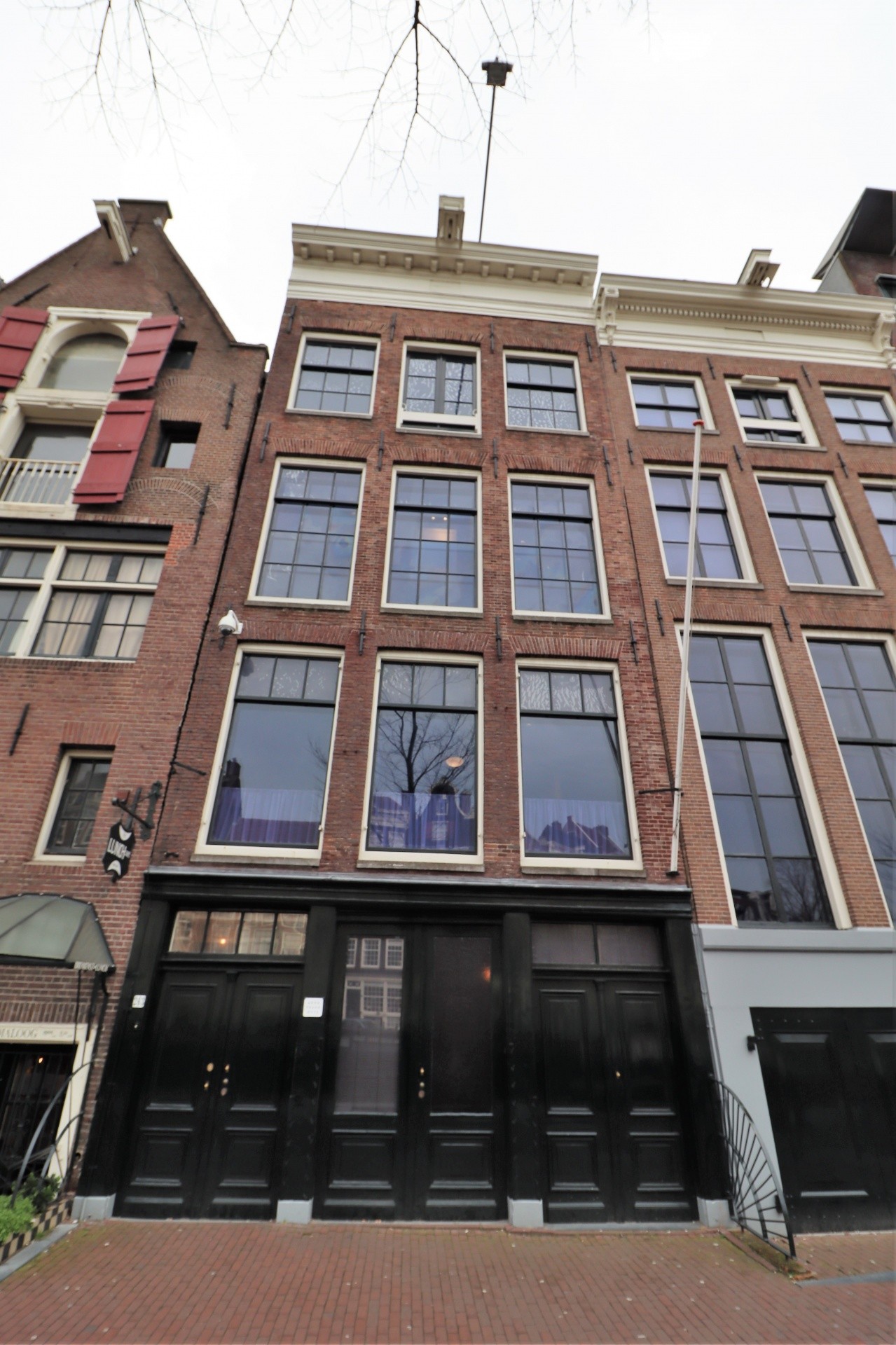
Image Credit: Bogdan Migulski, CC BY 2.0

The Anne Frank House features the hidden living space across the top floors of the building's annex, where Anne Frank, her family, and four others hid between 1942 and 1944.
Anne Frank House Opening Hours and Entry Information
Standard hours: Daily, 9am to 10pm (09:00 to 22:00). This makes it one of Amsterdam's longest-opening museums, and the late evening hours are a real advantage for visitors who struggle to secure earlier slots.
Exceptions: The museum closes or reduces hours on a small number of dates each year. On New Year's Day (1 January) hours are 12:00 to 22:00. On King's Day (27 April), 4 May (Dutch Remembrance Day), and 25 and 31 December, hours are 9:00 to 17:00. The museum also closes entirely on Yom Kippur, and occasionally for short maintenance periods. On 7 November 2026 it closes early, at 18:30. Always verify hours for your specific date at annefrank.org, particularly around Jewish and Dutch public holidays.
Entry: Your ticket is valid for a 15-minute entry window. Late arrival within that window is permitted, but arriving after the window closes means no entry and no refund. Once inside, there is no time limit: you can stay until closing.
Address: The museum building is at Prinsengracht 263-267, but the entrance is around the corner at Westermarkt 20. This catches some visitors off guard, who head to the canal-front address and cannot find the door. The entrance on Westermarkt is clearly signed but worth knowing in advance, particularly if you are navigating on foot with a tight slot window.
Payment: Tickets must be purchased online in advance. There is no on-site ticket purchase. The café and shop inside the museum accept card payment only, and the cloakroom is free.
What is the Best Way to Get to the Anne Frank House?
The Anne Frank House is in the Jordaan neighbourhood, in the heart of Amsterdam's historic canal ring, roughly equidistant between Amsterdam Centraal Station and Museumplein.
By tram: The Westermarkt stop next to the museum is out of service while the tram line on Raadhuisstraat and Rozengracht is rebuilt, so trams 13 and 17 no longer stop outside the museum. The simplest option is to take a tram to Dam Square and walk about 10 minutes west along Raadhuisstraat. The works are expected to run into 2027 at least, so check the stop's status before you travel.
On foot from Centraal Station: It is a nice 20-minute walk along the Prinsengracht canal, passing through the Jordaan. If you have time before your slot, this is one of the nicest walks in the city.
From Museumplein: If you are combining with the Rijksmuseum or Van Gogh Museum, the walk takes about 25 minutes through the Jordaan, or you can take a tram to the Dam Square area and walk the last 10 minutes from there.
By bike: The Jordaan is easily navigable by bike, and Amsterdam's bike rental infrastructure makes this a natural option. There is no dedicated bike parking directly at the museum, but the surrounding streets have ample canal-side racks.
By car: Driving into central Amsterdam and parking near the Anne Frank House is not practical. The Jordaan is one of the city's narrowest and most congested neighbourhoods. The nearest car parks are a significant walk away. Public transport is strongly preferable.
How Much Time Should I Spend at the Anne Frank House?
Most visitors spend 60 to 90 minutes inside, and this is enough to move through the building thoughtfully with the audio guide without feeling rushed. The museum is not large, but the route through it is sequential and the rooms are small, meaning the pace of your visit is partly set by the flow of people ahead of you.
If you book the introductory programme, add 30 minutes before your entry slot for the programme itself, plus a few minutes to get settled in the educational space.
Plan time after your visit as well. The café at the end of the route overlooks the Prinsengracht canal and is a good place to sit quietly before heading back into the city. The museum shop, which you pass through on exit, sells editions of the diary in dozens of languages, and many visitors want time to browse it. Neither are essential but both tend to extend the visit beyond 90 minutes.
What is Inside the Anne Frank House?
The museum occupies two connected buildings: the main front house, where Otto Frank ran his spice and pectin business, and the Secret Annex at the rear. The route is one-directional and self-guided with the free audio guide.
The front house and offices: The tour begins in the rooms of the main house, covering the wartime context of the German occupation, Otto Frank's business, and how the decision to go into hiding was made. This section includes photos, films, and original documents. The atmosphere here is more conventional museum than the annex that follows, but the information provides the grounding that makes the annex comprehensible.
The hinged bookcase: The moment of transition in the route is the hinged bookcase, which concealed the entrance to the Secret Annex during the two years of hiding. Otto Frank's trusted employee Johannes Voskuijl built it. It is still in place, and stepping through it is one of those moments in the museum that tends to stop people mid-stride.
The Secret Annex: The rooms themselves are left largely empty, as Otto Frank requested when the museum opened in 1960. This is a deliberate choice, not an oversight, and the bareness can be more affecting than any reconstruction could be. Anne's room, which she shared with Fritz Pfeffer, retains the postcard and film-star pictures she pasted on the walls during the hiding period. In the Frank family's living room, which became Otto, Edith, and Margot's bedroom at night, the pencil marks Otto and Edith used to record their daughters' heights are still on the wallpaper. Margot grew one centimetre in two years; Anne grew more than thirteen.
The diary room: Anne's original red-checked diary is displayed here, the one she received on her thirteenth birthday on 12 June 1942, weeks before the family went into hiding. Also on display are a rotating selection of the loose sheets that make up her rewritten diary, her book of favourite quotes, and her collection of short stories. The rewritten diary exists because Anne, having heard a radio broadcast in March 1944 in which a Dutch minister called for personal accounts of the occupation to be saved, began revising and expanding her diary with the intention of publishing it after the war.
The map of Normandy: In the same room as the height marks, a map of the Normandy coast that Otto Frank cut from a newspaper after D-Day still hangs on the wall. He tracked the Allied advance on it with pins, and the eight people in the Annex followed the liberation on a radio they hid from the German occupiers. They were discovered and arrested on 4 August 1944, nine months before the Netherlands was liberated.
The modern wing: After leaving the Annex, the route continues through a modern section of the museum covering what happened to each of the eight after their arrest. All but Otto died in the camps. The Allies liberated Auschwitz in January 1945; Anne and Margot died of typhus in Bergen-Belsen in February or March of that year, weeks before the camp was liberated. This section also addresses the discovery of the diary, its publication, and its impact. A short film with original wartime footage plays in this section and can be distressing: it is signposted.
The temporary exhibition: The modern wing also houses a changing temporary exhibition, included in the standard ticket. The current one, Who's gone? The Jewish Lyceum 1941-1943, follows the Jewish school Anne and Margot were forced to attend after the Nazis barred Jewish pupils from other schools, and the pupils and teachers who disappeared from its classrooms as the deportations began.
The café and shop: The museum route ends in the modern wing, where a small café looks out over the Prinsengracht canal, and the museum shop sells editions of the diary, books, and a limited range of thoughtful merchandise. The shop is reached at the exit and is accessible even after leaving the main museum route.
Is the Anne Frank House Worth Visiting?
The Anne Frank House is one of the few places where the historical record, a physical space, and a personal account converge in a way that makes the past feel present. Reading the diary is one experience; standing in the room where it was written, looking at the walls Anne decorated, seeing the bookcase that hid the door, and reading the pencil marks recording how much she had grown is a different one entirely.
That being said, obviously, the museum does not offer entertainment or spectacle. The rooms are small and deliberately bare. Visitors move through them at a pace partly controlled by the flow of others, and the route is one-directional. People who expect the kind of sweep and abundance of a large art museum may find it unexpectedly spare. The emotional weight of the visit is almost entirely in the act of being in those rooms, not in the number of artefacts or the scale of the presentation.
The visit can be deeply distressing, particularly in the final section covering what happened to the people in the Annex after their arrest. The free audio guide handles this with care, but it does not shy away from the facts, nor should it. Younger visitors aged 10 to 14 can get a great deal from the visit with preparation, including reading the diary beforehand and, where possible, booking the introductory programme: but I would not take children under 10 regardless of maturity. The minimum age is 10, and it is there for good reason.
Visitors who have read the diary before coming tend to describe the experience as transformative. Visitors who arrive without it tend to describe it as moving but somewhat abstract. If you have time before your trip, reading the diary, or at least part of it, changes the visit by a great amount.
Audio Guide and Tours at the Anne Frank House
The Anne Frank House does not offer guided tours for individual visitors or general public groups. The entire experience is self-guided using the free audio guide, which is included in the standard ticket price and available in nine languages: Dutch, English, French, German, Hebrew, Italian, Japanese, Portuguese, and Spanish.
The audio guide is not an optional extra: it is the backbone of the visit. The rooms carry only brief written information, and without the audio guide the narrative context that makes the Secret Annex comprehensible is largely absent. The guide is provided at the museum as part of your ticket, so there is nothing to download before you go.
There is a version of the audio guide called Anne's Story, designed specifically for younger visitors, which tells the story from Anne's perspective in an age-appropriate way. This is worth selecting for children aged 10 to 14.
For visitors who want a guided experience in the neighbourhood itself, a number of tour operators in Amsterdam offer walking tours that take in the exterior of the Anne Frank House, the Westerkerk, the Jordaan streets Anne knew, and the broader context of Jewish Amsterdam in the war years, without requiring entry tickets. These are a legitimate and often underrated way to deepen a visit, and a good alternative for anyone who cannot secure entry tickets.
Where Should I Eat Near the Anne Frank House?
The Anne Frank House is in the middle of the Jordaan, which is one of Amsterdam's best neighbourhoods for cafés and casual dining. A few options worth knowing:
Inside the museum:
The museum café, accessible at the end of the visit route, serves coffee, light snacks, and simple meals, with a terrace view over the Prinsengracht canal. It is a good place to sit quietly after the visit before re-entering the city. Opening hours follow the museum.
Nearby in the Jordaan:
Café de Prins is on the Prinsengracht itself, a few minutes' walk from the museum entrance, and is one of the classic Amsterdam brown cafés: dark wood, low ceilings, canal views, and a menu of Dutch and European standards including bitterballen, beef stew, and simple sandwiches. It is the most straightforwardly satisfying option if you want somewhere to decompress after the visit.
De Reiger on Nieuwe Leliestraat, a five-minute walk into the Jordaan, is a neighbourhood café-restaurant with a short daily menu, a good wine list, and a crowd of regulars that tells you everything you need to know about how local it feels. It opens at 4pm, with the kitchen serving from 5pm, so it is a dinner option rather than a lunch stop. It takes bookings but keeps part of the room for walk-ins, and early or late evening is the best time to find a table without one.
The Pancake Bakery at Prinsengracht 191 is precisely what it sounds like: an Amsterdam institution serving Dutch pancakes in both sweet and savoury forms at fair prices, in a converted canal warehouse. It tends to draw queues at peak times, but it moves quickly and the food is reliable. A good choice with children.
For something more substantial or upscale, the Nine Streets district, which starts a few minutes' walk south of the museum on the other side of Raadhuisstraat, has a concentration of mid-range to upmarket restaurants along Reestraat, Runstraat, and the cross-streets between them. This area also has some of the best independent shops in Amsterdam if you want to combine a meal with browsing.
What Else is There to Do Near the Anne Frank House?
Westerkerk is directly adjacent to the museum entrance, a 17th-century Protestant church whose bells Anne wrote about in her diary, hearing them from the hiding place above. The tower is climbable between April and October (tickets required, limited numbers) for a view over the canal ring and the Jordaan. The church itself is open to visitors free of charge. A small statue of Anne Frank stands outside on Westermarkt square.
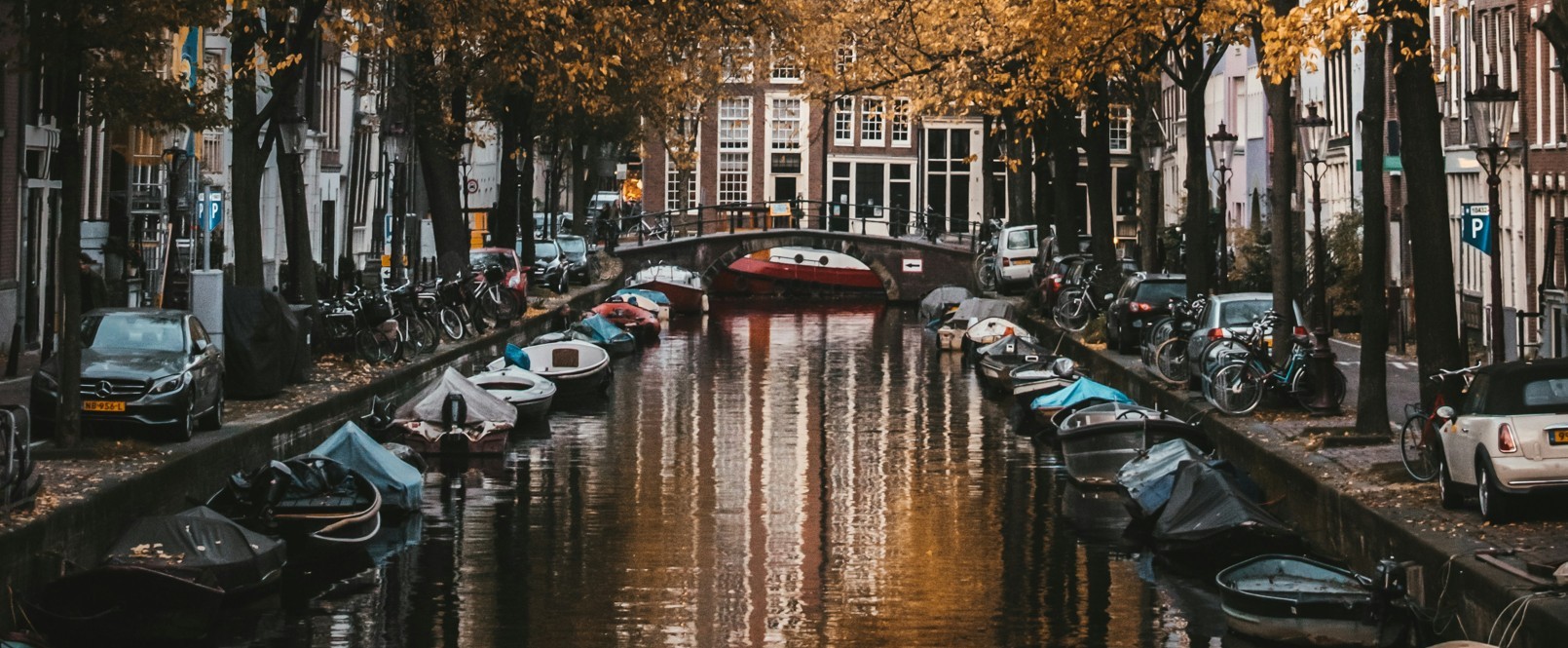
The Jordaan neighbourhood immediately surrounding the museum is one of Amsterdam's most distinctive areas: 17th-century canal houses, narrow streets, independent shops, and neighbourhood cafés that feel distant from the tourist centres around Dam Square. It is worth allowing an hour to explore on foot after your visit, particularly along Bloemgracht and Egelantiersgracht.
The Nine Streets (De 9 Straatjes), starting a few minutes' walk south of the museum across Raadhuisstraat, is a grid of small streets running between the Prinsengracht and the Singel, known for independent fashion, vintage shops, bookshops, and some of the city's better cafés. It is an easy addition to a Jordaan afternoon.
The Dutch Resistance Museum (Verzetsmuseum) is around 30 minutes on foot or a short tram ride east, and is the most natural companion visit to the Anne Frank House for anyone with a deeper interest in the wartime occupation of the Netherlands. Where the Anne Frank House is intimate and personal, the Resistance Museum is broad and contextual, covering the full range of Dutch responses to the occupation, from resistance to collaboration, in a thoughtfully designed permanent exhibition. Advance booking is not required.
The Jewish Museum and the Portuguese Synagogue form part of the Jewish Cultural Quarter around Waterlooplein, together with the National Holocaust Museum and the Hollandsche Schouwburg memorial, around 25 minutes on foot from the Anne Frank House. The Portuguese Synagogue, built in 1675, is one of the best-preserved and most beautiful synagogues in the world, and the contrast between its stillness and the story you have just come from is striking. Admission requires a ticket, available at the door or online.
Rules, Bags, and Security
Bags: Only bags smaller than an A4 sheet of paper are permitted inside the galleries. All larger bags, coats, umbrellas, pushchairs, and strollers must be left in the free cloakroom near the entrance. The cloakroom cannot store suitcases, large backpacks, or luggage: if you are carrying travel bags, these must be left at your hotel or at luggage storage at Amsterdam Centraal before you arrive. Arriving with oversized luggage can mean missing your timed entry slot entirely.
Photography: No photography, video, or filming is permitted anywhere inside the museum, including in the Secret Annex and all exhibition rooms. This applies to phones, cameras, and smart glasses. Only the exterior of the building may be photographed. This rule is firmly enforced and is explained before you enter.
Children: The minimum age for visiting the Anne Frank House is 10 years old. Children under 12 must be accompanied by an adult at all times. The introductory programme and the Anne's Story audio guide are both designed with younger visitors in mind. Pushchairs are not permitted inside the museum route and must be left in the cloakroom.
Re-entry: Not permitted. Once you exit, your timed ticket is no longer valid.
Accessibility at the Anne Frank House
The Anne Frank House has significant and unavoidable physical limitations that visitors with mobility difficulties need to know about before booking.
The historic section of the museum, which includes the Secret Annex itself, is not accessible by wheelchair or most mobility aids. The route involves three steep staircases up, three normal staircases down, a high step of 39cm at the bookcase entrance to the Annex, and two smaller staircases. The stairways are original, narrow, and steep in the way of 17th-century Dutch canal houses. Handrails are present on most but not all staircases.
The modern wing of the museum, which includes the temporary exhibition, scale models of the Secret Annex, the café, and the shop, is partially accessible via a separate accessible entrance and a lift, with staff assistance required. Visitors who cannot manage the stairs in the historic section are able to experience the modern wing, watch the film, see the scale models, and visit the café and shop, but cannot access the Secret Annex itself.
Portable stools can be borrowed from the information desk. There is seating available at the beginning and end of the museum route but not at most points along it. Accessible parking is available 40 metres from the museum entrance at Westermarkt.
For visitors with visual or hearing impairments, the audio guide is available in nine languages, a written transcript of the tour is available at the information desk, and a personal neck loop with a 3.5 mm jack plugs straight into the audio guide. The website offers a detailed accessibility guide with photographs of each staircase and step, which is worth reviewing before your visit if mobility is a consideration.
Final Tips for Visiting the Anne Frank House
Set an alarm for Tuesday at 10am Amsterdam time, six weeks before your visit date. This is the only reliable way to secure tickets. Missing the Tuesday window often means the attraction is unavailable for your dates.
Book your tickets at annefrank.org only. There are no authorised resellers. Any third-party platform offering Anne Frank House entry tickets is operating outside the official system.
Read the diary before you go, or at least some of it. The visit is far more powerful if you arrive with the voice of the diary already in your head. Even 50 pages changes the experience of standing in those rooms.
Use the audio guide all the way through. It is included with your ticket and provided at the museum, so there is nothing to download. The audio guide is not optional context here: it is how the museum tells its story, and the rooms carry only brief written information.
Arrive at the entrance on Westermarkt 20, not the Prinsengracht canal-front address. The two addresses are a few doors apart, but getting confused adds minutes you may not have.
Do not bring luggage. Only A4-sized bags enter the building, and the cloakroom cannot store large items. Arriving with a suitcase can cost you your slot.
Consider booking the introductory programme if anyone in your group has not read the diary or has limited prior knowledge of the occupation. The museum assumes familiarity, and the 30-minute programme provides it.
Allow time to sit in the café after your visit. The canal view from the terrace is calming, and most people need a few minutes before heading back into the city.
Back to Amsterdam Attractions
Explore other Amsterdam attractions
" width="24px"><path d="M 0 0 L 24 0 L 24 21.231 L 0 21.231 Z" fill="transparent" height="21.230768474975793px" id="nL2EwDcS9" width="24px"/><path d="M 0 0.541 C 0 0.242 0.245 0 0.547 0 L 2.735 0 C 3.037 0 3.282 0.242 3.282 0.541 L 3.282 4.598 C 3.282 4.897 3.037 5.139 2.735 5.139 L 0.547 5.139 C 0.245 5.139 0 4.897 0 4.598 Z" fill="rgb(196, 217, 201)" height="5.138657337892187px" id="hZ_rlBe_S" transform="translate(0 16.092)" width="3.2820512820512358px"/><path d="M 0 0.541 C 0 0.242 0.245 0 0.547 0 L 2.735 0 C 3.037 0 3.282 0.242 3.282 0.541 L 3.282 7.843 C 3.282 8.142 3.037 8.384 2.735 8.384 L 0.547 8.384 C 0.245 8.384 0 8.142 0 7.843 Z" fill="rgb(230, 211, 160)" height="8.38412513024521px" id="HgVBxIz3e" transform="translate(5.128 12.847)" width="3.282051282051235px"/><path d="M 0 0.541 C 0 0.242 0.245 0 0.547 0 L 2.735 0 C 3.037 0 3.282 0.242 3.282 0.541 L 3.282 12.982 C 3.282 13.281 3.037 13.523 2.735 13.523 L 0.547 13.523 C 0.245 13.523 0 13.281 0 12.982 Z" fill="rgb(232, 207, 164)" height="13.522782468137464px" id="utgrDnoM9" transform="translate(10.325 7.708)" width="3.282051282051377px"/><path d="M 0 0.541 C 0 0.242 0.245 0 0.547 0 L 2.735 0 C 3.037 0 3.282 0.242 3.282 0.541 L 3.282 16.498 C 3.282 16.797 3.037 17.039 2.735 17.039 L 0.547 17.039 C 0.245 17.039 0 16.797 0 16.498 Z" fill="rgb(233, 196, 166)" height="17.038705909853153px" id="OLOhW6STz" transform="translate(15.521 4.192)" width="3.2820512820512384px"/><path d="M 0 0.541 C 0 0.242 0.245 0 0.547 0 L 2.735 0 C 3.037 0 3.282 0.242 3.282 0.541 L 3.282 20.69 C 3.282 20.989 3.037 21.231 2.735 21.231 L 0.547 21.231 C 0.245 21.231 0 20.989 0 20.69 Z" fill="rgb(217, 170, 153)" height="21.230768474975793px" id="H5Z8wcwkd" transform="translate(20.718 0)" width="3.2820512820512278px"/></g></svg>)