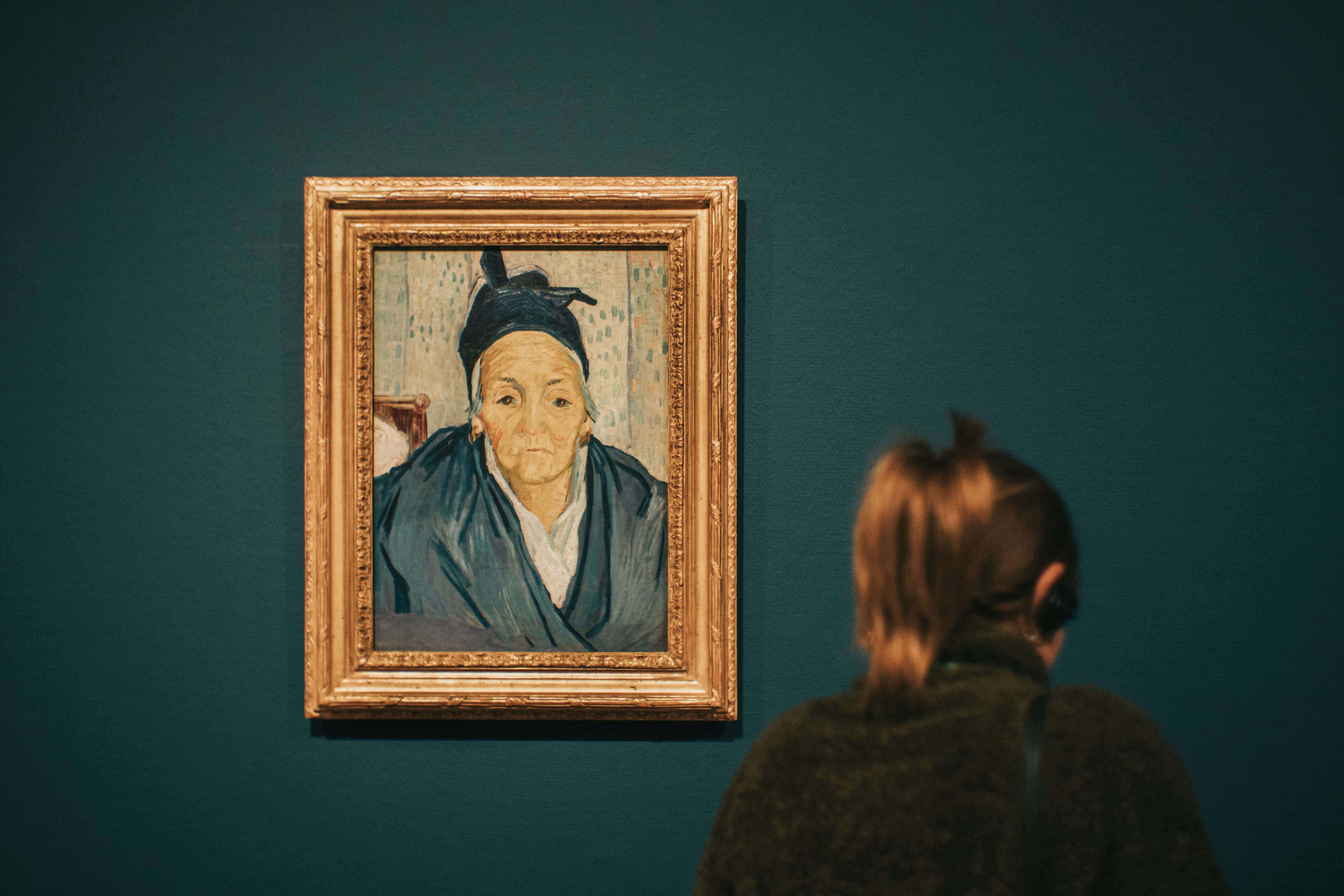
Amsterdam • Museumkwartier
Van Gogh Museum
Booking a timed-entry ticket is required; same-day tickets are not sold at the ticket office. All entrance tickets include admission to the permanent collection as well as the temporary exhibitions.
Book 2-4 Weeks Ahead
Peak Season
Book 1 Week Ahead
Off Season
Back to Amsterdam Attractions
NOTE: Timed-entrance tickets are currently REQUIRED for The Van Gogh Museum. The ticket office is not selling same-day tickets.
Van Gogh Museum Amsterdam: Everything You Need to Know Before You Visit
Updated September 2026
The Van Gogh Museum on Amsterdam's Museumplein houses the largest collection of Vincent van Gogh's work in the world: more than 200 paintings, 500 drawings, and 750 letters, including the most intimate correspondence he ever produced, the letters to his brother Theo that read as a running commentary on one of the most extraordinary creative lives of the 19th century. Opened in 1973 in a building designed by Gerrit Rietveld, with a second exhibition wing added in 1999 by Kisho Kurokawa, the museum traces Van Gogh's entire career chronologically from his dark, dense early canvases in the Netherlands through the Impressionist explosion of his Paris years, the blazing colour of Arles and Saint-Rémy, and the haunted final months at Auvers-sur-Oise. It is one of the most visited museums in the world, and it sells out. Planning ahead is not optional.
At a Glance
How Early to Book:
Book 2-3 weeks ahead during the peak and shoulder seasons. During the winter low season, you can book closer to 1 week ahead.
Tickets Released:
About 4-5 months ahead.
Best Times to Visit:
Friday evenings, when the museum is open late, is by far the best time to visit. Crowds will die down, and the museum takes on a special atmosphere.
Ticket price:
€25 for adults.
Where to Book:
Museum Address:
Van Gogh Museum Tickets
There are no tickets for sale at the door. The Van Gogh Museum sells tickets online only, with no walk-up option. Visitors who arrive without a pre-booked timed-entry ticket will be turned away. This is strictly enforced and has been the museum's policy for several years.
Where to book: The official booking platform is tickets.vangoghmuseum.com. This is the only authorised direct channel. There are a ton of unofficial sites and fraudulent ticket resellers; always verify you are on the correct domain. Authorised resellers (GetYourGuide, Tiqets) also carry tickets.
Van Gogh Museum Price:
Adults: €25 per person
Children under 18: Free (a ticket with a start time is still required; book the free ticket online through the same website above)
Audio guide: available as an add-on at the time of booking. Strongly recommended. See the dedicated audio guide section below.
There are no senior discounts, student discounts, or group rates at the Van Gogh Museum. The €25 adult price is universal for visitors 18 and over.
Museum cards and passes:
Museumkaart (Dutch Museum Card): valid for free entry, but a timed-entry slot must still be reserved online in advance. Museumkaart holders who arrive without a pre-booked slot will not be admitted. Reserve your free slot at tickets.vangoghmuseum.com, selecting the Museumkaart option.
I Amsterdam City Card: The Van Gogh Museum ended its participation in the I Amsterdam City Card scheme in June 2022. The card is no longer valid for entry.
Rijksmuseum Tickets: The Rijksmuseum and the Van Gogh Museum are separate institutions with separate ticketing systems, even though they share the same square. Buying a Rijksmuseum ticket does not give any access to the Van Gogh Museum.
Booking in advance: How far ahead you need to book depends significantly on when you are visiting. During peak season (April through September) and on any weekend year-round, tickets can sell out two to three weeks ahead. Timed entry is available in 15-minute increments; slots between 11:00am and 3:00pm are the most popular and sell out fastest. Early morning (9:00am to 11:00am) and late afternoon slots (after 3:00pm) have the best remaining availability at shorter notice.
Cancellations and changes: Tickets purchased directly through the Van Gogh Museum website are non-refundable and cannot be changed. Some authorised resellers (Tiqets, GetYourGuide) offer more flexible cancellation terms. If flexibility matters in your plans, just make sure to check the cancellation policy before booking.
Last Minute Van Gogh Museum Tickets
Finding last-minute Van Gogh Museum tickets is one of the most frequently searched questions about visiting Amsterdam, and the honest answer is that it IS possible but not reliable.
What to try if tickets appear sold out:
Check the official site at different times of day. Cancellations are released back into the system, and early morning (before 9:00am Amsterdam time) is the best window for finding newly available slots, as people cancel overnight. Checking again around midday and in the evening also catches late cancellations.
Tiqets and GetYourGuide sometimes have availability when the official site appears sold out, because they maintain their own allocation. Both are authorised resellers. Check these alongside the official platform and compare availability across different time slots.
Try dates or slots you had not considered. Very early morning slots (9:00am and 9:15am) and late afternoon slots from 3:30pm onward have more availability than the prime 11:00am to 2:00pm window. A Friday evening slot, when the museum stays open until 9:00pm, is often available at shorter notice than a Saturday morning.
Do not buy from unauthorised sources. There is an active market in fake and invalid Van Gogh Museum tickets, particularly around peak season. Any ticket purchased from a source not listed as an authorised reseller on the official museum website carries a real risk of being refused at the door with no recourse.

Van Gogh Museum Opening Hours
The museum's hours vary by season. Always verify the exact hours on the official museum website for the specific date you plan to visit.
Standard hours:
Daily: 9:00am to 6:00pm
Fridays: 9:00am to 9:00pm
Seasonal variation: From early November through to the end of the year, the museum shortens its day to 9:00am to 5:00pm, with the Friday late opening continuing through those months. The changeover dates shift slightly each year.
Friday exceptions: Six Fridays a year close at the standard time rather than 9:00pm, because the museum is turning over for a Vincent on Friday evening event. Check your specific Friday before booking an evening slot.
Public holidays: The museum opens every day of the year, including 1 January, King's Day on 27 April, and 25 December. Hours on those dates often differ from the standard day, with a later start on 1 January. King's Day closes most of the rest of Amsterdam and diverts the trams, so plan the journey rather than the museum.
Last admission: 30 minutes before closing.
Address: Museumplein 6, 1071 DJ Amsterdam
Friday Evenings at the Van Gogh Museum
The Friday late opening is, in my very humble opinion, the best time to experience the Van Gogh Museum. From 5:00pm onward, crowds drop significantly as the daytime tourists clear out. By 6:00pm, the galleries are calm enough to spend time in front of specific paintings without being pressed by the crowd behind you.
Most Fridays the museum stays open until 9:00pm on a standard timed-entry ticket, at the same €25 price as any other slot. The café stays open, and the Museumplein outside, particularly in summer, is an excellent place to spend time before or after. If your schedule allows any flexibility, make your visit a Friday evening.
One thing to get right before you book. "Vincent on Friday" is not the name of the weekly late opening. It is a separate ticketed evening event, six nights a year, running from around 7:00pm to 11:00pm, with live music, DJ sets, workshops and talks aimed at a younger crowd. On those six dates the standard Friday late opening does not run, and the museum closes at its normal time to turn the building over. So the Fridays with the most going on are exactly the Fridays you cannot visit on an ordinary evening ticket. Check the museum's Vincent on Friday page for this year's dates, and pick a different Friday if you want the quiet galleries rather than the party.

What is the Best Way to Get to the Van Gogh Museum?
The museum is at Museumplein in Amsterdam's Museum Quarter, an easy tram ride from anywhere in the city.
By tram from Amsterdam Centraal (Central Station): The most common starting point. Take tram 2 or tram 12 in the direction of Museumplein. Journey time is approximately 20 to 25 minutes. Get off at the Museumplein or Van Baerlestraat stop, both within a two-minute walk of the museum entrance.
From Amsterdam Zuid station (for visitors arriving from Schiphol or via Intercity trains): Take tram 5 toward Van Baerlestraat, right by the museum entrance. This is often the quickest and least crowded route and is recommended for visitors arriving from the airport or from southern parts of the city.
By bus: Routes 347 and 357 also serve the Museumplein area.
On foot from the city centre: The museum is around a 35-minute walk from Amsterdam Centraal through the Jordaan neighbourhood and Vondelpark.
By bike: Museumplein has bike parking. Cycling from central Amsterdam takes around 15 to 20 minutes and is the quintessentially Dutch way to arrive.
By car: Driving and parking in Amsterdam is not recommended. The city is heavily congested, parking is expensive, and the tram connections are excellent from all parts of the city. If you drive, the closest car park is Q-Park underneath Museumplein (entrance Van Baerlestraat). Street parking in the surrounding area is paid and limited.
How Much Time Should I Spend at the Van Gogh Museum?
I'd recommend budgeting for between two to three hours at the Van Gogh Museum to view the permanent collection and exhibition, including visits to the café and shop.
A focused visit covering the permanent collection highlights (The Potato Eaters, the Paris period self-portraits, Sunflowers, The Bedroom, Almond Blossom, and Wheatfield with Crows) takes around 90 minutes if you move with purpose. With the audio guide, allowing stops at each major work, allow two and a half hours comfortably. Add extra time if you also plan to visit a temporary exhibition.
The museum has four floors, arranged chronologically. Unlike the Louvre or the Musée d'Orsay, the scale is human: you will not feel overwhelmed or lost. This is one of its most appealing qualities. Once inside, you can stay as long as you like; there is no timed exit.
What is the Best Time to Visit the Van Gogh Museum?
Friday evenings from 5:00pm onward is the absolute best time to visit. See the Friday evenings section above, and check that your Friday is not one of the six Vincent on Friday dates.
Weekday mornings at 9:00am or 9:15am are the calmest daytime option. Tour groups typically arrive from 10:30am onward, and the gap between a 9:00am arrival and a 10:30am arrival in terms of gallery atmosphere is noticeable.
After 3:00pm on weekdays: A second quieter window late in the afternoon, particularly on Tuesdays, Wednesdays, and Thursdays, when visitor numbers drop in the final hours.
Avoid: Saturday and Sunday mornings from 11:00am to 2:00pm, and any date during Dutch school holidays, which see a significant spike in visitor volumes.
Season: The museum is popular year-round, but April through August represents the peak demand period when advance booking becomes most urgent. September through March is quieter, with more last-minute availability and smaller crowds within the galleries.
Van Gogh Museum Sunflowers
The Sunflowers series is the work most visitors associate with Van Gogh, and the Amsterdam museum holds one of the most important versions in the world. Understanding the full picture and context help you appreciate it.
Van Gogh painted seven versions of Sunflowers between 1888 and 1889, all at Arles in the South of France during one of the most creatively intense periods of his life. He made four in a single week in August 1888, then three repetitions the following January, which he described as identical copies. The Amsterdam canvas is one of those January 1889 repetitions: fifteen sunflowers in a yellow vase against a yellow background, following the August original now in London. The deep, interlocking yellows, ranging from pale lemon to dark ochre, represent one of his most sustained explorations of a single colour and a single subject.
The Amsterdam museum's Sunflowers is not the only version in the world, and several other canvases hang in prominent collections. The National Gallery in London holds the August 1888 original, fifteen blooms against a yellow background, widely regarded as the finest of the series. The turquoise-background version, fourteen blooms, belongs to the Neue Pinakothek in Munich, though that museum has been closed for renovation since 2019 and the painting is on show at the Alte Pinakothek instead. The Philadelphia Museum of Art holds the turquoise repetition, and the Sompo Museum in Tokyo the third. One of the original series was destroyed during the Allied bombing of Japan in 1945, and one remains in a private collection.
What the Van Gogh Museum provides that no other collection can is the original context: the letters in which Van Gogh described painting the series, his intentions, his doubts, and his assessment of the result are all here. Standing in front of the painting with the knowledge that the man who made it wrote about what it cost him, in letters preserved 50 metres away in the same building, gives the experience a density that a painting in isolation cannot fully provide.
Starry Night and the Van Gogh Museum
I'll just rip the bandaid off if you were hoping to see a Starry Night paintining: The Starry Night is not at the Van Gogh Museum in Amsterdam.
The Starry Night (1889), the famous painting of a swirling night sky over a village with a prominent cypress tree, is in the collection of the Museum of Modern Art (MoMA) in New York City. It has been there since 1941. It does not go on loan. It is not here.
Starry Night Over the Rhône (1888), a different and beautiful painting of the Rhône river at night under a star-filled sky, is at the Musée d'Orsay in Paris.
The Van Gogh Museum Amsterdam holds neither of these works.
This misconception is one of the most widespread in all of European tourism. A significant number of visitors arrive expecting to see it. If the Starry Night is your primary reason for wanting to see Van Gogh in person, your destination is MoMA in New York, not Amsterdam.
What Amsterdam does hold is extraordinary: the world's largest collection of everything else Van Gogh made. Wheatfield with Crows (one of his final paintings), Almond Blossom (arguably his most visually striking canvas), Sunflowers, The Bedroom, The Potato Eaters, dozens of self-portraits, and hundreds of letters and drawings. The case for visiting Amsterdam is not diminished by the absence of one famous painting.
What to See at the Van Gogh Museum
The permanent collection is arranged chronologically across four floors, tracing Van Gogh's full career from his earliest work in the Netherlands to his death at Auvers-sur-Oise in 1890. Following the sequence as designed gives the collection its intended coherence: you watch the palette lighten, the brushwork loosen, and the emotional register intensify as the artist develops.
Floor 0 (ground level): Lobby and orientation The entrance floor has a shop, cloakroom, café, and orientation materials. Before ascending, the building's design itself is worth a moment: Rietveld's 1973 structure combines concrete, glass, and steel with a spaciousness that feels more generous than the building's footprint suggests. The exhibition wing behind, designed by Kurokawa and opened in 1999, connects via the underground passage and houses the temporary exhibitions.
Floor 1: The early work (Netherlands, 1880 to 1885) Van Gogh only began painting seriously at 27, after failing careers as an art dealer, a teacher, and a lay preacher. The dark, earthy canvases from his years in the Netherlands are the work of a man teaching himself to paint by doing it obsessively, every day, for hours. The highlight of this floor is The Potato Eaters (1885): a large, brooding canvas of five peasants at a table, eating by lamplight, their faces weathered and angular. Van Gogh considered this his first serious masterpiece and wrote about it extensively. In reproduction it looks severe. In front of the original, the gravity of it is impossible to ignore. Many visitors who came expecting Sunflowers find themselves stopped here instead.
Floor 2: Paris, letters, and drawings (1886 to 1888) Van Gogh arrived in Paris in 1886 and was immediately exposed to the Impressionists, the Japanese woodblock prints then circulating widely in France, and the Post-Impressionist experiments of Seurat, Signac, and Toulouse-Lautrec. The transformation in his palette is dramatic and immediate. This floor contains many of his self-portraits from the Paris years, including the celebrated Self-Portrait with Grey Felt Hat (1887): a canvas of controlled intensity in which he applies paint with short diagonal strokes of contrasting colour to build a surface that almost vibrates. The museum holds eighteen of his self-portraits, the largest group anywhere, out of roughly thirty-five he painted in all. He could not afford models, so he painted himself.
The second floor also holds the museum's extraordinary collection of letters, including those to Theo, to fellow artists, and to his mother and sister. These are displayed in contexts that illuminate the paintings on the same floor, and they transform the experience of seeing his work. Reading his own precise and often beautiful descriptions of why he made specific decisions, what he was trying to achieve, and where he felt he had failed makes the canvases feel inhabited in a way that wall text from curators rarely achieves.
Floor 3: Arles, Saint-Rémy, and Auvers-sur-Oise (1888 to 1890) The top floor covers Van Gogh's move to the South of France in February 1888 and the remaining two and a half years of his life: the most famous, most productive, and most devastating period. This is where you find Sunflowers, The Bedroom (1888, showing his room in the Yellow House in Arles with its characteristic wide perspective and deliberately non-naturalistic colour), The Yellow House (1888, the building he rented in Arles and hoped to share with Gauguin in an artists' community), Wheatfield with Crows (1890, one of his last works, a churning sky above a wheat field with a path that leads nowhere), and Almond Blossom (1890).
Almond Blossom deserves specific mention. Van Gogh painted it to celebrate the birth of Theo's son, who was named after him: Vincent Willem van Gogh. The baby who would later become the driving force behind establishing this museum. The painting shows white and pale pink blossoms against a deep blue sky in a style strongly influenced by the Japanese prints Van Gogh had collected in Paris. It is probably his most immediately beautiful and most formally resolved single canvas, and it carries a biographical weight, a gift of hope for a child who would outlive his uncle by decades and preserve his legacy, that is impossible to separate from the visual experience.
The exhibition wing (Kurokawa building): The temporary exhibition programme at the Van Gogh Museum covers both Van Gogh and the wider context of his work: contemporaries who influenced him (Gauguin, Toulouse-Lautrec, Millet, Japonisme), artists who came after him and were shaped by his example (Expressionism, Fauvism), and thematic explorations of specific aspects of his practice. Past temporary exhibitions have included collaborations with David Hockney, a major Edvard Munch show, Etel Adnan, and several smaller artist-dialogue exhibitions. All temporary exhibitions are included in the standard €25 ticket, with no additional charges.
Rijksmuseum and Van Gogh Museum
The Rijksmuseum and the Van Gogh Museum are 150 metres apart on Museumplein. Visiting both in a single Amsterdam trip is one of the best things you can do in the Netherlands: the Rijksmuseum covers Dutch Golden Age art (Rembrandt, Vermeer, Hals) and 800 years of Dutch history; the Van Gogh Museum covers the post-Impressionist revolution that came after. Together they give a remarkably coherent account of the artistic tradition Van Gogh both inherited and transformed.
Is there a combined ticket? There is no single official combination ticket sold by either museum. They are separate institutions with separate booking systems. However, the Museumkaart (Dutch Museum Card, valid at over 500 Dutch museums, €75 per year or €39 for under 18s) covers free entry to both, making it the de facto combined pass for visitors who plan to visit more than three Dutch museums. Museumkaart holders must still book timed-entry slots for both museums separately. One catch that matters for visitors: the only card you can buy and use the same day is the temporary version sold at museum ticket desks, and it is capped at five visits.
Can you visit both on the same day? Yes, but it is a full day. The Rijksmuseum warrants two to four hours; the Van Gogh Museum two to three hours. If you want to see both thoughtfully, start at one at opening time and allow the full day. Most experienced visitors recommend the Van Gogh Museum in the morning (for the early quiet hours) and the Rijksmuseum in the afternoon.
The Stedelijk Museum (modern and contemporary art) and the Moco Museum (Banksy, modern art) are also on or near Museumplein and can be added to extend the day if time and stamina allow.
Is the Van Gogh Museum Worth Visiting?
This museum is most worth it if you care about Van Gogh specifically, want to follow his work more closely, and book a quieter time slot. It is a little less worth it if you hate busy galleries or want a more flexible visit.
I would add a few things to that: The Van Gogh Museum is worth visiting for virtually anyone who goes in with reasonable expectations and a spirit of engagement. The collection is extraordinary: no other institution in the world holds this concentration of his work, and the biographical dimension, with the letters and drawings providing continuous context alongside the paintings, makes it a fundamentally different experience from seeing one or two Van Goghs in a mixed collection.
The experience varies significantly with the time of day and day of week. A Friday evening visit, when the galleries quiet down, bears almost no resemblance to a Saturday lunchtime visit in July. If the former is an intimate encounter with one of the great creative lives of the 19th century, the latter can feel more like moving through a well-curated queue. Timing is the single most important variable.
The audio guide adds a ton to the visit. At €3.75 it is probably the best small purchase you will make in Amsterdam; it might even change your understanding of what you are seeing. Visitors who skip it and move through the galleries reading only the wall labels may have a more superficial experience. Given the depth of the collection and the personal nature of Van Gogh's practice, the audio guide here earns its place more directly than at most museums.
Guided Tours and Audio Guides
The audio guide is available to add when booking your ticket at tickets.vangoghmuseum.com, available in 12 languages. It covers the permanent collection and is narrated with reference to specific works, Van Gogh's own letters, and the art historical context of each period. Based on consistent visitor feedback across the past two years, adding the audio guide is the single most recommended practical step for getting more from your visit. I would book it at the same time as your ticket.
Guided tours of the museum are available in two formats: group guided tours (joining an existing group) and private guided tours. Group tours are available on selected dates and cover the permanent collection highlights in approximately 90 minutes. Private tours are available by arrangement and are particularly worthwhile for visitors with a specific focus, such as the Arles period or the Japanese influence, or those visiting with knowledgeable children who would benefit from a guided approach.
Check the museum's What's On page at vangoghmuseum.nl for current guided tour dates, times, and booking. These tours sell out for popular session times.
Family multimedia guide: A dedicated version of the interactive guide is available for families with children, with routes and activities designed for ages 6 and over. The museum also runs children's workshops and activities on selected dates.
Van Gogh Museum Shop
The Van Gogh Museum shop is one of the most highly regarded museum shops in Europe, and the best souvenir shopping in Amsterdam. It carries a wide range of products derived from the collection: high-quality art prints and posters, books, postcards, tote bags, jewellery, textiles, and limited edition items produced in collaboration with Dutch and international designers. There are three shops in the building, the largest being in the Atrium by the main entrance, with a bookshop on the top floor of the Rietveld building. The museum also runs a freely accessible shop on Museumplein together with the Rijksmuseum, so you can browse without a museum ticket.
The official online shop carries most of the same products and ships internationally, which is a useful option if you want to send heavier items home rather than carry them.
Where Should I Eat Near the Van Gogh Museum?
Inside the museum:
Bistro Vincent in the Rietveld building is the main sit-down option, open daily from 10:00am, with a menu drawing on Dutch, French and Japanese cooking and a good range of vegetarian and vegan dishes. You need a museum ticket to eat there. There are also two cafés, one in the Atrium and one beside the shop in the Rietveld building, serving coffee, pastries and lighter things.
A short walk away on Museumplein and the surrounding streets:
Brasserie van Baerle on Van Baerlestraat, a five-minute walk south along the edge of Museumplein, is a long-established neighbourhood brasserie serving classic Dutch and European cooking with a lunch and dinner menu. It is popular with local professionals and Museumplein visitors alike, with an award-winning wine list and reliable food. It is closed on Saturdays, and Sunday runs as a single service from midday, so book ahead for Sunday lunch. Worth knowing if anyone in your group has mobility needs: the building is historic and the restrooms are up a staircase.
De Pijp neighbourhood is a 10-minute walk east and is one of Amsterdam's most rewarding dining neighbourhoods, with the Albert Cuyp Market (the largest outdoor market in the Netherlands, open Monday to Saturday) and surrounding streets full of independent restaurants, Indonesian places, wine bars, and cafes at a wide range of prices. For any meal requiring more than a sandwich, De Pijp is the most interesting neighbourhood within easy reach.
Café Loetje on Johannes Vermeerstraat, around a 10-minute walk east, is a famous Amsterdam institution known above all for its steak, described by many as the best in the city. The setting is a classic brown café, the steaks are small but precisely cooked with proper frites and salad, and the crowd is largely local. Book ahead for dinner.
What Else is There to Do Near the Van Gogh Museum?
Rijksmuseum is 150 metres south on Museumplein, and is the most natural companion museum.
Stedelijk Museum is on the north side of Museumplein and is the Netherlands' leading modern and contemporary art museum, with a collection spanning 1880 to the present. The permanent collection holds works by Mondrian, Malevich, Matisse, Pollock, and many others, plus a major applied arts and design collection. Entry requires a ticket; check the official site for current exhibition programming.
Moco Museum on Honthorststraat, five minutes on foot, is a private museum holding Banksy works alongside other modern and pop art in a beautiful canal house. It is smaller and more commercially oriented than the Stedelijk, but popular and well-curated. Advance booking recommended.
Vondelpark is a five-minute walk west of the museum and is the most beloved public park in Amsterdam: a 47-hectare English-style landscape with ponds, the open-air theatre (Openluchttheater), cafes, and the constant flow of Amsterdam residents cycling, running, picnicking, and simply being in one of the most pleasant green spaces in northern Europe. Entirely free.
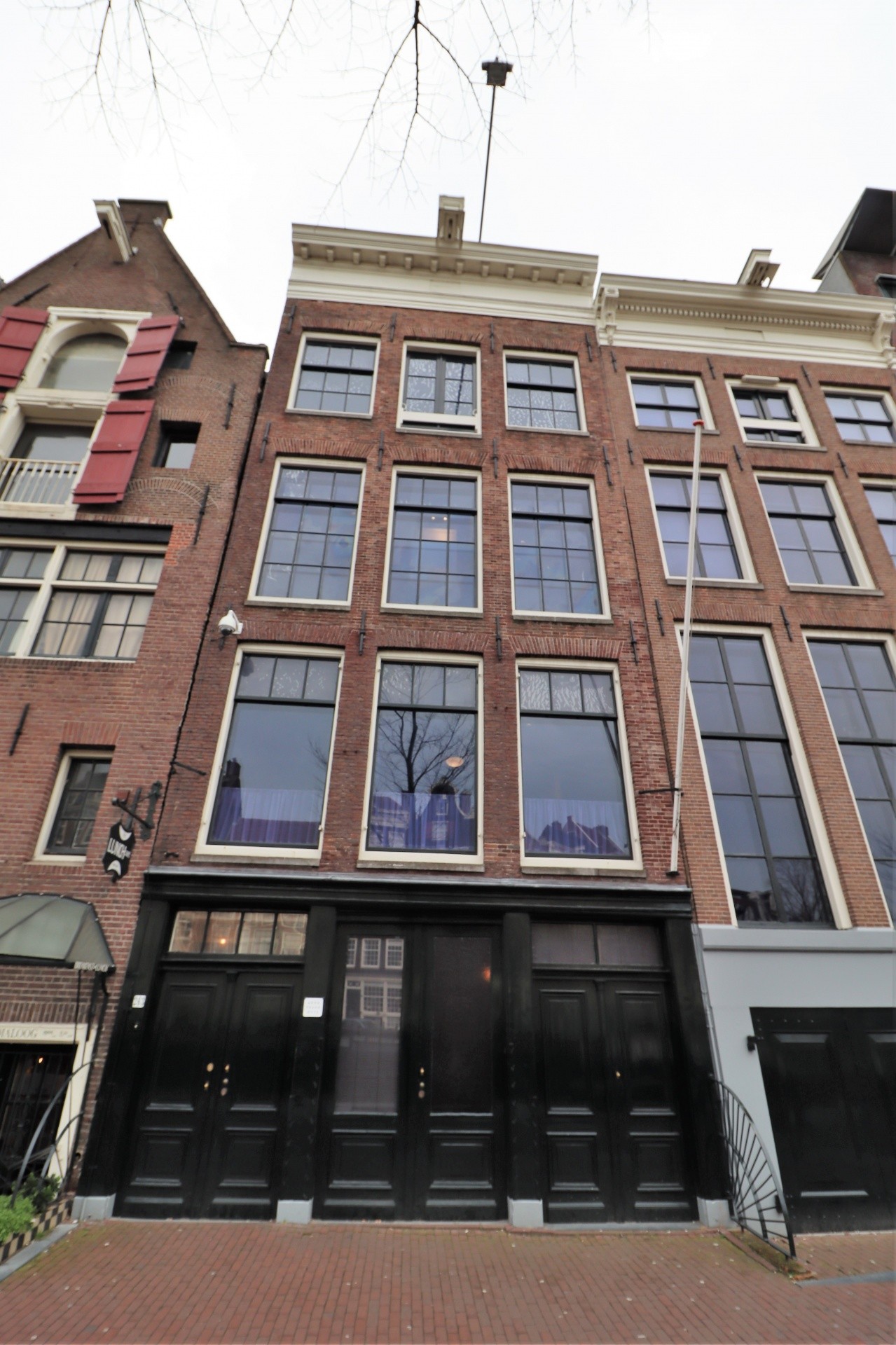
Anne Frank House is around a 25-minute walk north (or a short tram ride), in the Jordaan neighbourhood. One of the most visited and most important historical sites in the Netherlands, the house where Anne Frank hid for two years with her family before being discovered requires advance booking, typically weeks ahead. Its combination with the Van Gogh Museum on the same day is common and makes a natural Amsterdam pairing, though both warrant full attention and should ideally be visited on separate days if possible.
Heineken Experience is a 15-minute walk east and is a major tourist attraction in a historic brewery. If you are visiting Amsterdam with mixed interests, it makes a lighter companion to the museum district.
Rules, Bags, and Security
Bags: You cannot enter the Van Gogh Museum with bulky luggage. Small handbags and child-sized backpacks are permitted. Small bags, outerwear, and umbrellas can be stored at the cloakroom facility. The cloakroom is free to use.
Photography: Photography is permitted inside the entrance hall and at the selfie wall. Taking shots of the paintings inside the exhibitions is not allowed for either personal or commercial use. This rule is enforced throughout the building and applies to all galleries, both permanent and temporary.
Food and drink: Visitors to the Van Gogh Museum are not allowed to carry any food or drinks inside.
Payment: The museum is cashless. All payments inside the museum, including the café, shop, and cloakroom, are by card or contactless only.
Re-entry: Not permitted. Once you exit, your timed ticket is no longer valid.
Children: Children under 18 enter free. The museum is family-friendly with dedicated children's guide options. Children must be accompanied by an adult.
Accessibility at the Van Gogh Museum
The Van Gogh Museum is fully accessible. Both buildings (the Rietveld wing and the Kurokawa exhibition wing) are served by lifts. The museum entrance and all facilities are step-free.
Wheelchairs are available to borrow at the entrance, subject to availability. Baby prams and strollers are permitted throughout.
Companions of visitors with disabilities enter free. A Sunflower Lanyard programme is in operation: wearing the lanyard is a recognised signal to museum staff that you may need additional support, particularly useful for visitors with non-visible disabilities, autism, sensory processing differences, or anxiety. Lanyards are available at the information desk.
Hearing loops are fitted at the information desks. Large-print and Braille materials are available on request. Audio description is available via the multimedia guide.
Final Tips for Visiting the Van Gogh Museum
Book at on the official site. There are no tickets at the door, no walk-up sales, and no exceptions. Fraudulent sites exist; always verify the domain.
Book weeks ahead for summer and weekends. During peak season (April to September), popular slots sell out up to three weeks ahead. The museum's own advice is to book as early as possible.
Museumkaart holders must still book a timed slot online. Arriving with a Museumkaart and no slot does not guarantee entry.
The I Amsterdam City Card is no longer valid at the Van Gogh Museum (since June 2022). Do not rely on it for entry.
Book the audio guide at the same time as your ticket. It is one of the most consistently recommended practical steps in all recent visitor accounts, and adding it during the initial booking is the easiest route.
Go on a Friday evening. The museum stays open until 9:00pm most Fridays, and the galleries calm down significantly after 5:00pm. Check that your date is not one of the six Vincent on Friday evenings, when the museum closes at its usual time for a separate ticketed event.
The Starry Night is at MoMA in New York. The Van Gogh Museum Amsterdam holds the world's greatest collection of Van Gogh's work, but not either of the two Starry Night paintings.
Photography is not permitted in the galleries. Only the entrance hall and the selfie wall. This surprises many visitors.
No food or drink inside. Use the cloakroom and café before entering the galleries.
The museum is cashless. Bring a card or contactless payment.
Start at the top of the chronology. Floor 1 with The Potato Eaters and the dark early work is where many visitors have their most unexpected encounter with the collection. Do not skip it in a rush to get to Sunflowers.
The letters are as important as the paintings. Plan time for the second floor letter and drawing display. Van Gogh's written voice is one of the most direct and affecting in all of art history.
Combine with the Rijksmuseum for an extraordinary Amsterdam day across Dutch art history from Rembrandt to Van Gogh. Both require advance booking.
Back to Amsterdam Attractions
Explore other Amsterdam attractions
" width="24px"><path d="M 0 0 L 24 0 L 24 21.231 L 0 21.231 Z" fill="transparent" height="21.230768474975793px" id="nL2EwDcS9" width="24px"/><path d="M 0 0.541 C 0 0.242 0.245 0 0.547 0 L 2.735 0 C 3.037 0 3.282 0.242 3.282 0.541 L 3.282 4.598 C 3.282 4.897 3.037 5.139 2.735 5.139 L 0.547 5.139 C 0.245 5.139 0 4.897 0 4.598 Z" fill="rgb(196, 217, 201)" height="5.138657337892187px" id="hZ_rlBe_S" transform="translate(0 16.092)" width="3.2820512820512358px"/><path d="M 0 0.541 C 0 0.242 0.245 0 0.547 0 L 2.735 0 C 3.037 0 3.282 0.242 3.282 0.541 L 3.282 7.843 C 3.282 8.142 3.037 8.384 2.735 8.384 L 0.547 8.384 C 0.245 8.384 0 8.142 0 7.843 Z" fill="rgb(230, 211, 160)" height="8.38412513024521px" id="HgVBxIz3e" transform="translate(5.128 12.847)" width="3.282051282051235px"/><path d="M 0 0.541 C 0 0.242 0.245 0 0.547 0 L 2.735 0 C 3.037 0 3.282 0.242 3.282 0.541 L 3.282 12.982 C 3.282 13.281 3.037 13.523 2.735 13.523 L 0.547 13.523 C 0.245 13.523 0 13.281 0 12.982 Z" fill="rgb(232, 207, 164)" height="13.522782468137464px" id="utgrDnoM9" transform="translate(10.325 7.708)" width="3.282051282051377px"/><path d="M 0 0.541 C 0 0.242 0.245 0 0.547 0 L 2.735 0 C 3.037 0 3.282 0.242 3.282 0.541 L 3.282 16.498 C 3.282 16.797 3.037 17.039 2.735 17.039 L 0.547 17.039 C 0.245 17.039 0 16.797 0 16.498 Z" fill="rgb(233, 196, 166)" height="17.038705909853153px" id="OLOhW6STz" transform="translate(15.521 4.192)" width="3.2820512820512384px"/><path d="M 0 0.541 C 0 0.242 0.245 0 0.547 0 L 2.735 0 C 3.037 0 3.282 0.242 3.282 0.541 L 3.282 20.69 C 3.282 20.989 3.037 21.231 2.735 21.231 L 0.547 21.231 C 0.245 21.231 0 20.989 0 20.69 Z" fill="rgb(217, 170, 153)" height="21.230768474975793px" id="H5Z8wcwkd" transform="translate(20.718 0)" width="3.2820512820512278px"/></g></svg>)