Amsterdam • Museumkwartier
Rijksmuseum
A timed-entry ticket is required for entry into the Rijksmuseum. Most time slots are generally available up until the day before your visit. Same-day tickets may also be available at the ticket office, pending availability. Guided tours run daily and can be added when you book.
Book 1-3 Days Ahead
General Entry
Book 1 Week Ahead
Guided Tours
Back to Amsterdam Attractions
NOTE: Timed-entrance tickets are currently REQUIRED for the Rijksmuseum. The on-site ticket office only sells same-day tickets if capacity allows.
Rijksmuseum Amsterdam: Everything You Need to Know Before You Visit
Updated September 2026
The Rijksmuseum is the national museum of the Netherlands, home to more than 8,000 objects spread across 80 galleries that trace 800 years of Dutch art and history, from medieval sculpture and Delftware to Rembrandt's Golden Age portraits and Van Gogh's self-portraits. The museum reopened in 2013 after a decade-long renovation and has since become Amsterdam's most visited attraction, and right now Rembrandt's The Night Watch is being restored in full view of the public as part of the long-running Operation Night Watch project. Since 2022 all tickets have been sold online with a fixed start time, so understanding how to book, what to prioritise, and when to go will decide whether your visit feels like the highlight of your Amsterdam trip or a rushed walk through crowded rooms.
At a Glance
How Early to Book:
Book a timed-entry ticket 2-3 days ahead for general entry, and most time-slots will still have availability. Book a week in advance for a guided tour.
Tickets Released:
For the full calendar year.
Best Times to Visit:
Right at opening, or early afternoons, particularly on weekdays, will be the least busy.
Ticket price:
€25 for adults.
Where to Book:
The Official Rijksmuseum Website
Museum Address:
Do You Need to Book Rijksmuseum Tickets in Advance?
Yes, every visitor needs a booked ticket with a fixed start time. Booking is not just recommended at the Rijksmuseum, it is required. Since 2022 the museum has sold tickets exclusively online, and every ticket comes with a start time that you select when you book. A small number of tickets are sometimes available at the entrance on the day "while stocks last," but on busy days, which is most weekends and the whole of summer, there is often nothing left by mid-morning.
Where to book: The official booking platform is rijksmuseum.nl. This is the only channel selling official tickets directly.
Rijksmuseum ticket prices:
Adults: €25
Visitors aged 18 and under: Free (ID may be requested)
CJP and EYCA cardholders: €11.25 (half price)
Friends of the Rijksmuseum and ICOM/ICOMOS members: Free, and the only visitors who can arrive without a booked start time
Museum cards and passes:
Museumkaart: free entry, but a start time must still be reserved online, the same as for a paid ticket.
I amsterdam City Card: free entry, with a start time required.
Vereniging Rembrandt, KOG, VVAK, and VriendenLoterij VIP-KAART: all give free entry, with a start time required.
Even if your ticket is free through a pass or card, you still need to reserve a start time online. The only people who can turn up without a booking are Friends of the museum and ICOM/ICOMOS pass holders, who should bring their pass to be checked at the entrance.
Cancellations and changes: The Rijksmuseum will not refund a paid ticket if your plans change, but it will rebook you onto a different date or time slot free of charge, subject to availability, through the contact form on its website.
Booking in advance: In the quieter months, roughly September to May, a few days' notice is usually enough, and weekday mornings often have space even at short notice. From June through August, and around Easter, Christmas, and New Year, popular slots, especially the first hour after opening and weekends, can sell out three to seven days ahead. If a specific date matters to your trip, book as soon as your travel dates are confirmed, ideally two to three weeks ahead in peak season.
The museum is cashless throughout, including the shop, café, and restaurant, so bring a debit or credit card.
Rijksmuseum Opening Hours and Entry Information
Standard hours: The Rijksmuseum is open every day of the year, including all public holidays, from 9am to 5pm (09:00 to 17:00). The last entry is shortly before closing, so aim to arrive with at least an hour or two to spare if you want to see more than a handful of galleries.
Shop and café: Both keep slightly longer hours, open from 9am to 6pm. They are accessible only with a museum entrance ticket until 5pm, after which anyone can walk in free of charge for the final hour, useful if you only want to browse the shop or have a coffee.
RIJKS restaurant: Serves lunch Wednesday to Sunday and dinner Tuesday to Sunday, with separate reservations required.
Gardens: Open only during the summer months, from 9am to 6pm, and free to enter even without a museum ticket.
Address: Museumstraat 1, 1071 XX Amsterdam.

What is the Best Way to Get to the Rijksmuseum?
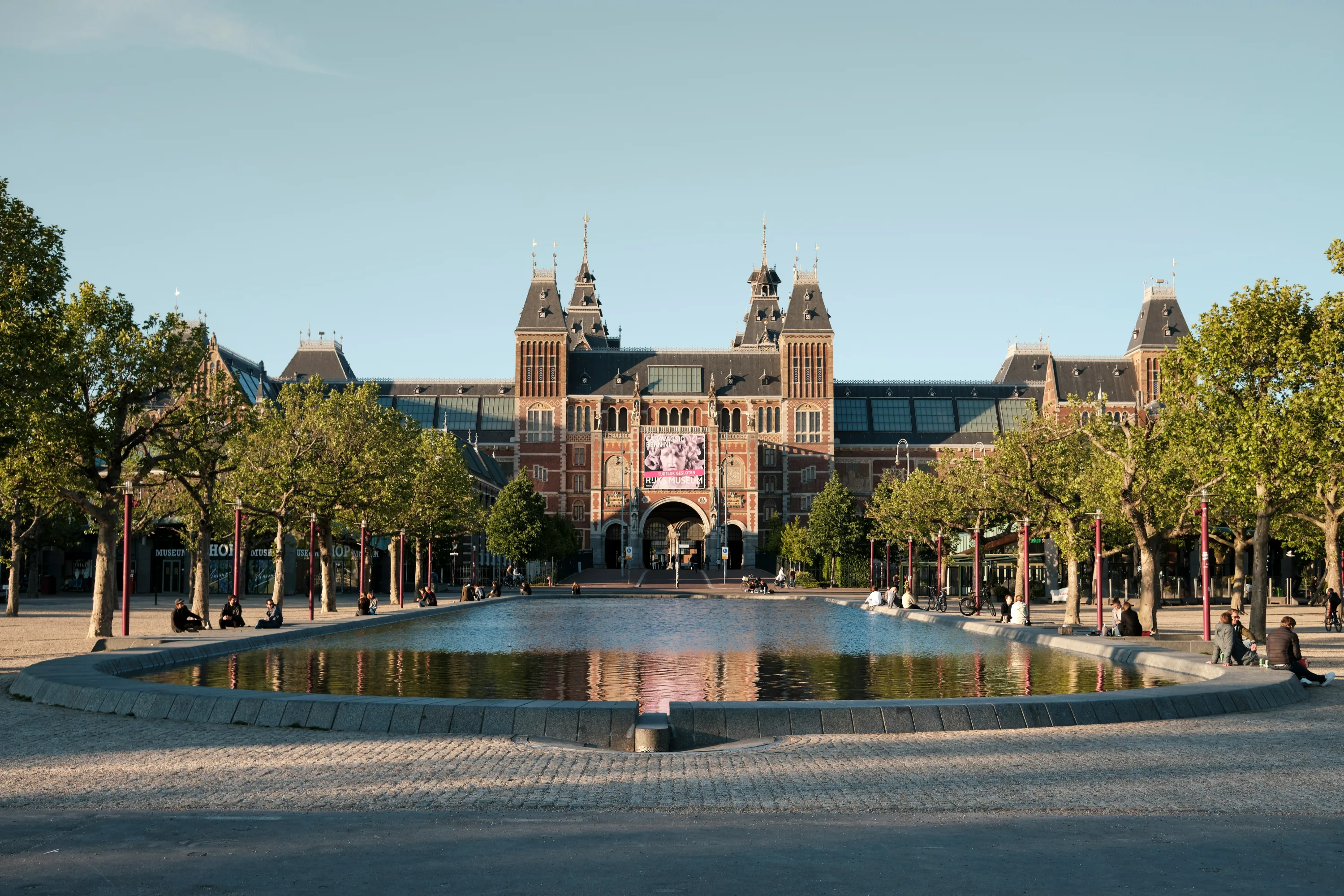
The Rijksmuseum sits on Museumplein in the heart of Amsterdam's museum quarter, a short walk from the Van Gogh Museum, the Stedelijk Museum, and Vondelpark.
By tram: Lines 2 and 12 stop directly at "Rijksmuseum," a short walk from the entrance, and run roughly every 10 minutes from Amsterdam Centraal Station, around 10 to 15 minutes in total. Trams 5, 7, and 10 also serve the surrounding streets.
By metro: Take the Noord/Zuidlijn (line 52) to Vijzelgracht, then walk about 7 to 10 minutes to the museum. This is often the fastest option from Centraal Station or from the southern parts of the city.
By bus: The 397 Amsterdam Airport Express runs directly from Schiphol Airport to a stop close to the museum, useful if you are heading there straight from a flight.
On foot or by bike: It is a scenic 25 to 30 minute walk from Centraal Station along the canals, or about 10 to 15 minutes by bike on dedicated cycle paths. Amsterdam's bike rental options make this an easy way to combine the museum with a ride through Vondelpark afterwards.
By car: Driving into central Amsterdam is generally not worth the hassle. The closest car park is Q-Park Museumplein on Van Baerlestraat, a few minutes' walk away, but central Amsterdam parking rates are steep and climb further if you turn up without a booking. Booking online in advance is both cheaper and the only way to guarantee a space.
One practical tip: because the museum sits right on Museumplein, it is easy to underestimate how much you will walk once inside. The building is enormous, and the route from the main entrance out to the Asian Pavilion alone covers real distance, so comfortable shoes are a must.
How Much Time Should I Spend at the Rijksmuseum?
If you are short on time, an hour is enough to see the absolute highlights: the Gallery of Honour, The Night Watch, and a quick pass through the ground floor. It is a tight visit, but doable if the Rijksmuseum is one stop among several on a packed day.
For most visitors, two to three hours is the sweet spot. That is enough time to take in the Gallery of Honour properly, explore one or two additional wings, such as the Asian Pavilion or the 20th-century galleries, have a coffee, and leave without feeling rushed.
If you want to go deeper, particularly into decorative arts, ship models, or a current special exhibition, set aside half a day. Adding the audio guide or a guided tour will also extend your visit, typically by 45 minutes to an hour. Keep in mind that your ticket only sets a start time, not an end time, so once you are inside you can stay until closing regardless of when you arrived.
What is the Best Time to Visit the Rijksmuseum?
The first hour after opening, from 9am, is consistently the quietest period, particularly in the Gallery of Honour, where most visitors head first to see The Night Watch and the museum's Vermeers. If seeing these works without a wall of phones in front of them matters to you, book the earliest slot available.
Early afternoon is a solid second choice. Compared with its neighbour the Van Gogh Museum, the Rijksmuseum handles crowds better simply because it is much larger. The same number of visitors spreads across 80 galleries rather than a handful of rooms, so even at busy times it rarely feels claustrophobic. This makes early afternoon slots, after the morning coach-tour rush has thinned out, a good fit, particularly if you are pairing your visit with the Van Gogh Museum earlier in the day.
Season: The quietest months are roughly November through March, excluding the Christmas and New Year period. Weekday visits, especially Tuesday to Thursday, tend to be calmer than weekends year-round. There is no dedicated free-entry day at the Rijksmuseum, so crowd levels are driven almost entirely by time of day and season rather than ticket price.
What is Inside the Rijksmuseum?
The Rijksmuseum's collection spans the 13th century to the 21st, organised across four floors of the main building plus the separate Asian Pavilion.
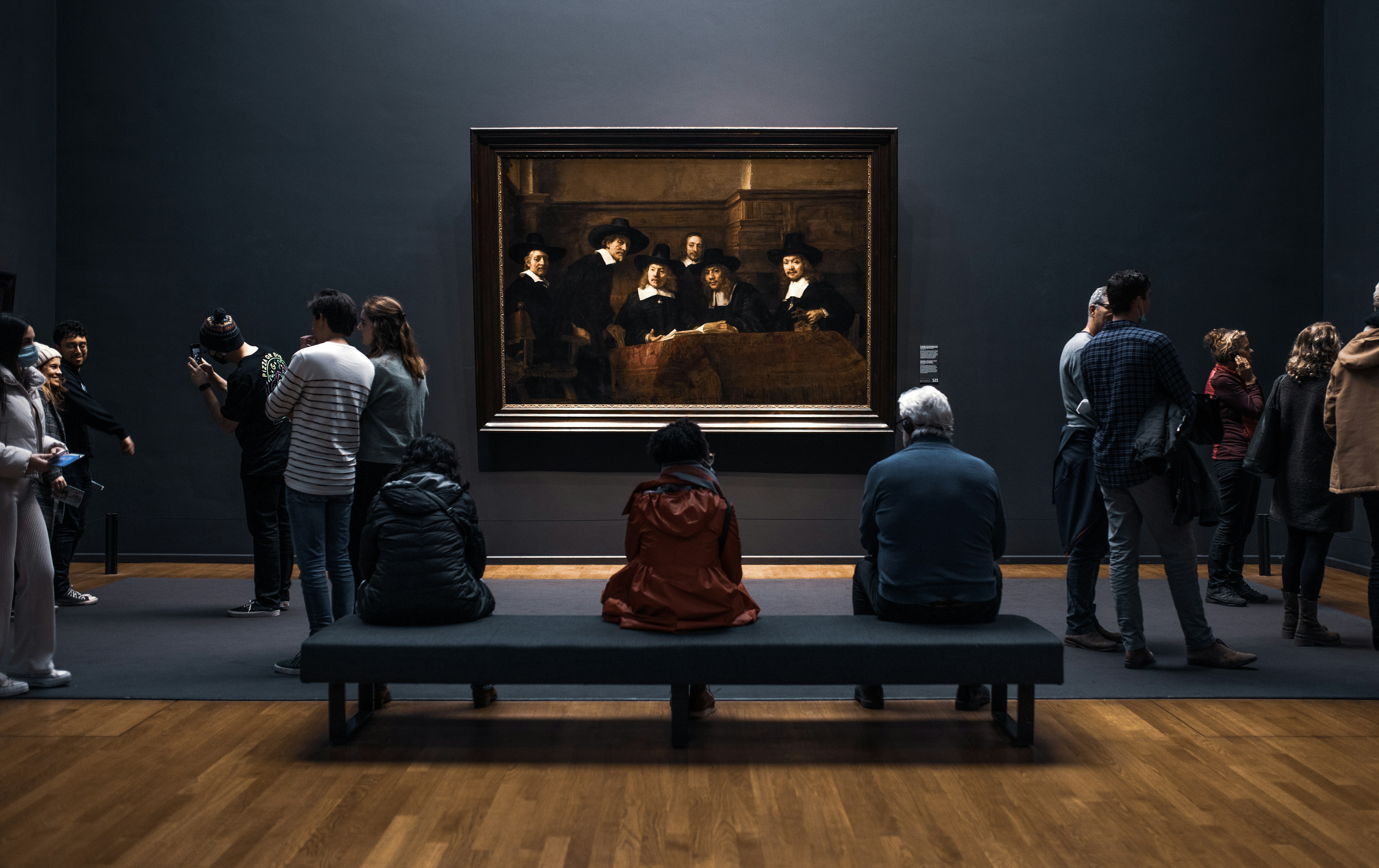
The Gallery of Honour (second floor): Most people start here, in an enormous corridor styled like the nave of a cathedral, with side alcoves displaying masterpieces by the great Dutch painters of the 17th century. The names of these artists are inscribed on cast iron beams above the alcoves, and the gallery leads directly to the Night Watch Gallery at its far end. Along the way you will pass four paintings by Johannes Vermeer, including The Milkmaid, a work that surprises many visitors with how small it actually is, roughly the size of a large book, and how the light within it seems to glow.
The dolls' houses (ground floor): Two of the collection's most charming surprises sit here, a set of 17th-century dolls' houses, built by wealthy Amsterdam women not as toys but as miniature status symbols, complete with tiny linen, glassware, and furnishings down to the last detail. They sit just off the main route to the Gallery of Honour, easy to walk past if you are focused on the paintings upstairs, but well worth seeking out.
The Asian Pavilion: A separate glass-walled wing surrounded by water in the museum's gardens, housing art from China, Japan, Indonesia, and India dating back as far as 2000 BC, including a pair of striking 14th-century Japanese temple guardian statues. Because it sits apart from the main building, it is often noticeably quieter, a good option if the main galleries start to feel overwhelming.
First and third floors: The first floor covers 18th and 19th-century art, while the third floor moves into the 20th century, including several self-portraits and other works by Van Gogh, painted before the artist's own dedicated museum next door existed.
The museum shop and Rijksstudio: Before you leave, the museum shop on the ground floor is worth a browse even if you are not planning to buy anything. Alongside the expected prints, books, and Delft Blue ceramics, it stocks a surprisingly playful range of merchandise tied to the collection, including Rembrandt and Vermeer-themed Playmobil sets that have become unexpectedly popular with both children and adults. The museum's online collection database, Rijksstudio, also lets you browse and download high-resolution images of thousands of works for free, handy if something inside catches your eye and you want to revisit it later.
The Night Watch and Operation Night Watch
No painting in the Rijksmuseum draws more attention than Rembrandt's The Night Watch, painted in 1642 and, at roughly 3.6 by 4.4 metres, the largest work in the collection. It depicts the militia company of Captain Frans Banning Cocq stepping into action, a composition that broke with the static group portraits typical of the period and instead captured a frozen moment of movement, light, and shadow.
Operation Night Watch: Since 2019, the painting has been the subject of Operation Night Watch, the most extensive research and restoration project ever carried out on the work. Rather than moving the painting to a closed conservation studio, the Rijksmuseum has carried out the work in the Night Watch Gallery at the far end of the Gallery of Honour, in full view of visitors, with the painting partly enclosed in a glass conservation structure. Conservators began removing the old varnish at the end of 2024 and the museum has not announced a completion date, so plan on seeing The Night Watch partly behind glass, and possibly with conservators working in front of it, rather than displayed in the unobstructed way shown in most photographs and postcards
This does not make the painting any less worth seeing. If anything, it adds a layer of insight into how a four-century-old masterpiece is actually cared for. It is simply worth knowing in advance so the experience does not come as a surprise, particularly if The Night Watch is the main reason for your visit.
Audio Guides and Tours at the Rijksmuseum
The audio guide is available as an add-on at the time of booking for €6.50 per person, in multiple languages, and guides you through the highlights gallery by gallery. Alternatively, the free Rijksmuseum app (for iOS and Android) includes several audio tours covering the museum's history, Rembrandt, and smart routes through the building, along with an interactive floor plan. If you use the app, bring your own headphones, since audio cannot be played through your phone's speaker inside the galleries.
Guided tours: The museum runs "The Best of the Rijksmuseum" daily, a one-hour small-group tour for visitors aged 16 and over that takes in major works alongside the group's own choices. It costs €7.50 per person on top of your entrance ticket, runs in English, and starts at the Information Desk. Private tours of the same length are €125 per group for up to 15 people and need booking at least two weeks ahead. Outside the museum, several tour operators offer private and small-group tours that combine the Rijksmuseum with the Van Gogh Museum or a canal cruise, worth considering if you would prefer a human guide over an app.
I would recommend the audio guide or app to almost everyone visiting for the first time. The Rijksmuseum's galleries are arranged thematically rather than purely chronologically, and without some context it is easy to walk past significant works without realising what you are looking at.
Is the Rijksmuseum Worth Visiting?
Yeah, I'd say it's a must-do in Amsterdam and probably the top of the list of must-see museums in the Netherlands. For anyone with an interest in art or history, it is close to essential. The building itself is part of the draw: Pierre Cuypers' 19th-century design, with its cathedral-like Gallery of Honour and elaborate stained glass, is striking even before you reach a single painting. It works as a greatest-hits visit, a chance to see Rembrandt, Vermeer, Hals, and Van Gogh under one roof, arranged in a way that tells a coherent story of Dutch history rather than feeling like a random collection of masterpieces.
That said, it helps to manage expectations in a couple of areas. The museum is large enough that museum fatigue is a real risk if you try to see everything in one go, and visitors who arrive without a plan can be overwhelmed by the second hour. Picking two or three areas in advance, the Gallery of Honour plus the Asian Pavilion and dolls' houses, for example, tends to produce a far better experience than attempting to cover all 80 galleries. The Night Watch, as noted above, is part of an active restoration and partly obscured by glass and equipment, which can be a letdown for visitors expecting the clean, unobstructed view shown on postcards and posters.
Families tend to do well here: ship models, weapons, and the dolls' houses give younger visitors something concrete to focus on beyond paintings, and the free app has routes designed with children in mind. Solo travellers and couples who enjoy a slower pace will likely get the most out of a visit, since the museum rewards lingering rather than rushing. If your main interest is specifically Van Gogh, the dedicated Van Gogh Museum next door may be a better use of limited time, though the Rijksmuseum's small collection of his self-portraits is still worth a look if you are already inside.
Where Should I Eat Near the Rijksmuseum?
Inside the museum:
The Café, on the ground floor near the Atrium, serves coffee, pastries, sandwiches, soup, and salads throughout the day, along with a classic Amsterdam touch: bitterballen with your drink. It is casual, reasonably priced for a museum café, and a good option if you just want a quick break between galleries. If The Café feels busy, which it often does around midday, there are quieter espresso bars elsewhere in the building, including one in the Philips Wing near the restaurant.
RIJKS, the museum's restaurant, holds a Michelin star under chef Joris Bijdendijk and focuses on what the team calls the "cuisine of the Low Countries," vegetable-forward dishes built from Dutch produce, including a beetroot mille-feuille that has become something of a signature. A three-course lunch runs €55, with a five-course tasting menu at €125. The menu changes with the season, so treat those as a guide rather than a fixed price. Reservations are essential and carry a €25 per person deposit, which comes off your final bill. I would book this ahead if it is a special occasion. The dining room itself, in the renovated Philips Wing, is worth seeing even aside from the food.
A short walk away:
Brasserie de Joffers, on the corner of Willemsparkweg on Cornelis Schuytstraat, a ten-minute walk away and sometimes nicknamed Amsterdam's "Little Paris," has been a neighbourhood fixture since 1993 and serves an all-day menu from breakfast through dinner, with a sunny terrace that is hard to beat on a clear afternoon.
Eetcafé Schotsheuvel, on nearby Banstraat, serves dinner Tuesday to Saturday from 5pm, with drinks from 4pm on Saturdays, and changes its menu every six weeks. They hold back part of the room for walk-ins, so you can turn up without booking, though reserving is safer on a weekend. It is closed Sunday and Monday, which makes it an evening plan rather than something to fall back on straight after the museum.
Albert Cuyp Market, in De Pijp, about 15 minutes' walk, is the place for cheap eats: stroopwafels made fresh on the spot, herring stalls, and a wide spread of street food. It is a useful contrast to the museum quarter's more polished cafés if you want something quick and affordable.
What Else is There to Do Near the Rijksmuseum?
Van Gogh Museum is a five-minute walk across Museumplein and the most natural pairing with the Rijksmuseum. There is no official combined ticket, but both accept the Museumkaart, and the two are easy to combine in a single day if you plan around their separate timed-entry systems. Because the Van Gogh Museum is smaller and tends to sell out faster, especially in summer, it is worth booking that one first and fitting your Rijksmuseum slot around it. An early Van Gogh slot followed by a Rijksmuseum visit after lunch tends to work well.
Stedelijk Museum, also on Museumplein, covers modern and contemporary art and design, a useful contrast if the Rijksmuseum's historical focus leaves you wanting something more current.
Concertgebouw, one of the world's most acoustically renowned concert halls, sits at the far end of the square and often has affordable lunchtime concerts.
Vondelpark, Amsterdam's largest and most popular park, is a five to ten-minute walk and an easy way to unwind after a few hours of galleries, with cafés, open lawns, and, in summer, an open-air theatre.
Moco Museum, a short walk away near Vondelpark, focuses on contemporary and street art, including work by Banksy, and tends to appeal to visitors who find the Rijksmuseum's historical collection a little heavy.
None of these nearby attractions require the level of advance planning that the Rijksmuseum and Van Gogh Museum do, though the Van Gogh Museum especially benefits from booking ahead.
Rules, Bags, and Security
Bags: Only small bags, up to A4 paper size, are allowed into the galleries themselves. Larger bags, backpacks, coats, and umbrellas must be left in the free, supervised cloakroom or in self-service lockers near the entrance, both at no charge. However, the museum cannot store suitcases, large travel luggage, or similarly bulky items, so if you are arriving with check-in luggage, heading straight from or to the airport, for example, you will need to use an external luggage storage service before you arrive.
Photography: Personal photography is allowed throughout most of the museum for private, non-commercial use. Flash photography, tripods, monopods, selfie sticks, and drones are not permitted, partly to protect the artworks and partly out of consideration for other visitors. Some temporary exhibitions may carry their own photography restrictions, which are signposted at the entrance to those spaces.
Children: Children are welcome, and prams and pushchairs are generally fine in the main galleries, though you may be asked to leave larger buggies at the cloakroom in particularly busy rooms.
Payment: The museum is fully cashless, so card or digital payment is required everywhere, including the shop, café, and restaurant.
Accessibility at the Rijksmuseum
The Rijksmuseum has invested heavily in accessibility and describes its goal as allowing every visitor to explore independently and see the full collection, not a reduced version of it.
The entire museum, including the Asian Pavilion, is wheelchair and mobility-scooter accessible, with lifts connecting all floors and ramps alongside the small staircases found in a handful of older sections. The one exception is the lift in the Philips Wing, which is too small for larger mobility scooters; an alternative route through the 19th-century galleries reaches the same exhibition spaces, and staff can point you to it if needed. Wheelchairs, rollators, walking frames, walking sticks, and foldable museum stools can all be borrowed free of charge from the information desk, along with a floor plan marking lifts, accessible toilets, and seating throughout the building.
Accessible toilets, including ones with adult changing facilities, are available on multiple floors, and staff at the information desk can direct you to the nearest one. Guide dogs and other assistance animals are welcome throughout the museum. Visitors who need additional support can be accompanied by one companion free of charge, provided both have a reserved entry time.
For visitors with visual or hearing impairments, the museum offers tours with audio description and sign language interpretation, generally bookable in advance.
Final Tips for Visiting the Rijksmuseum
Book your ticket online before you travel. This is the single most important step: tickets are sold exclusively through rijksmuseum.nl, every visitor needs a fixed start time, and walk-up availability cannot be relied on, especially from June to August.
If The Night Watch is your main reason for visiting, know that it is currently part of an active restoration project and partly enclosed in glass. It is still very much worth seeing, but it will not look exactly like the postcard.
Book the first slot of the day, 9am, if you want the Gallery of Honour to yourselves, or close to it. By mid-morning it is the busiest room in the building.
Pack light. Only A4-sized bags are allowed in the galleries, and the cloakroom cannot take suitcases, so plan ahead if you are travelling with luggage.
Download the free Rijksmuseum app before you arrive and bring your own headphones. The audio tours add real depth to galleries that can otherwise feel like "just more paintings."
Do not skip the ground floor dolls' houses. They are tucked just off the main route to the Gallery of Honour and easy to miss, but consistently one of the most memorable parts of a visit, especially for families.
If the main galleries feel packed, head for the Asian Pavilion. It is a different collection entirely and is almost always calmer.
Pair your visit with the Van Gogh Museum, but book that one first since it tends to sell out faster, then fit the Rijksmuseum around it.
The museum is cashless everywhere, including the café, shop, and restaurant, so bring a card.
If you are visiting more than two or three museums in Amsterdam, look into the Museumkaart. It covers the Rijksmuseum and Van Gogh Museum free of charge and often pays for itself within a couple of visits.
My biggest tip from experience: do not try to do the Rijksmuseum and the Van Gogh Museum back to back on the same morning without a buffer. Both really do deserve their own dedicated day, but if you do plan both in the same day, have lunch in between at the very least.
Combine your visit with a walk through Vondelpark afterwards. It is a short stroll away and a relaxed way to wind down after a few hours of intense art viewing.
Back to Amsterdam Attractions
Explore other Amsterdam attractions

" width="24px"><path d="M 0 0 L 24 0 L 24 21.231 L 0 21.231 Z" fill="transparent" height="21.230768474975793px" id="nL2EwDcS9" width="24px"/><path d="M 0 0.541 C 0 0.242 0.245 0 0.547 0 L 2.735 0 C 3.037 0 3.282 0.242 3.282 0.541 L 3.282 4.598 C 3.282 4.897 3.037 5.139 2.735 5.139 L 0.547 5.139 C 0.245 5.139 0 4.897 0 4.598 Z" fill="rgb(196, 217, 201)" height="5.138657337892187px" id="hZ_rlBe_S" transform="translate(0 16.092)" width="3.2820512820512358px"/><path d="M 0 0.541 C 0 0.242 0.245 0 0.547 0 L 2.735 0 C 3.037 0 3.282 0.242 3.282 0.541 L 3.282 7.843 C 3.282 8.142 3.037 8.384 2.735 8.384 L 0.547 8.384 C 0.245 8.384 0 8.142 0 7.843 Z" fill="rgb(230, 211, 160)" height="8.38412513024521px" id="HgVBxIz3e" transform="translate(5.128 12.847)" width="3.282051282051235px"/><path d="M 0 0.541 C 0 0.242 0.245 0 0.547 0 L 2.735 0 C 3.037 0 3.282 0.242 3.282 0.541 L 3.282 12.982 C 3.282 13.281 3.037 13.523 2.735 13.523 L 0.547 13.523 C 0.245 13.523 0 13.281 0 12.982 Z" fill="rgb(232, 207, 164)" height="13.522782468137464px" id="utgrDnoM9" transform="translate(10.325 7.708)" width="3.282051282051377px"/><path d="M 0 0.541 C 0 0.242 0.245 0 0.547 0 L 2.735 0 C 3.037 0 3.282 0.242 3.282 0.541 L 3.282 16.498 C 3.282 16.797 3.037 17.039 2.735 17.039 L 0.547 17.039 C 0.245 17.039 0 16.797 0 16.498 Z" fill="rgb(233, 196, 166)" height="17.038705909853153px" id="OLOhW6STz" transform="translate(15.521 4.192)" width="3.2820512820512384px"/><path d="M 0 0.541 C 0 0.242 0.245 0 0.547 0 L 2.735 0 C 3.037 0 3.282 0.242 3.282 0.541 L 3.282 20.69 C 3.282 20.989 3.037 21.231 2.735 21.231 L 0.547 21.231 C 0.245 21.231 0 20.989 0 20.69 Z" fill="rgb(217, 170, 153)" height="21.230768474975793px" id="H5Z8wcwkd" transform="translate(20.718 0)" width="3.2820512820512278px"/></g></svg>)