
I solo traveled to Iceland earlier this year, with Reykjavik as my home base. You can still see an incredible amount of Iceland’s scenery without venturing too far from Iceland’s capital and largest city. I took a total of 3 day trips in my 4 full days in Reykjavik: The Golden Circle, The Snaefellsnes Peninsula, and the South Coast. Instead of renting a car, which can be expensive especially if solo-traveling, I opted for guided tours with BusTravel Iceland and East West Tours. The full price I paid for each tour is included below. This post is not sponsored by any company in any way, shape, or form.
All three tours are standard routes that are available through a large number of tour operators that will make virtually the same stops. The main difference between the operators will be the size of the tour group. Some operators run out of larger 60-seat coaches, and more expensive tours will run out of 20-seater Mercedes Sprinter buses. There isn’t too much variation otherwise, as all follow similar schedules where they depart Reykjavik around 8am and return shortly before dinner.
Here are highlights from the three day trips along with my thoughts. All photos are my own.
Day Trip 1: Golden Circle
The most famous day trip from Reykjavik. I took this one with East West Tours and it cost roughly $155 USD. It was about an 8-hour long tour pickup to dropoff, leaving at 8:30am and returning at about 6pm.
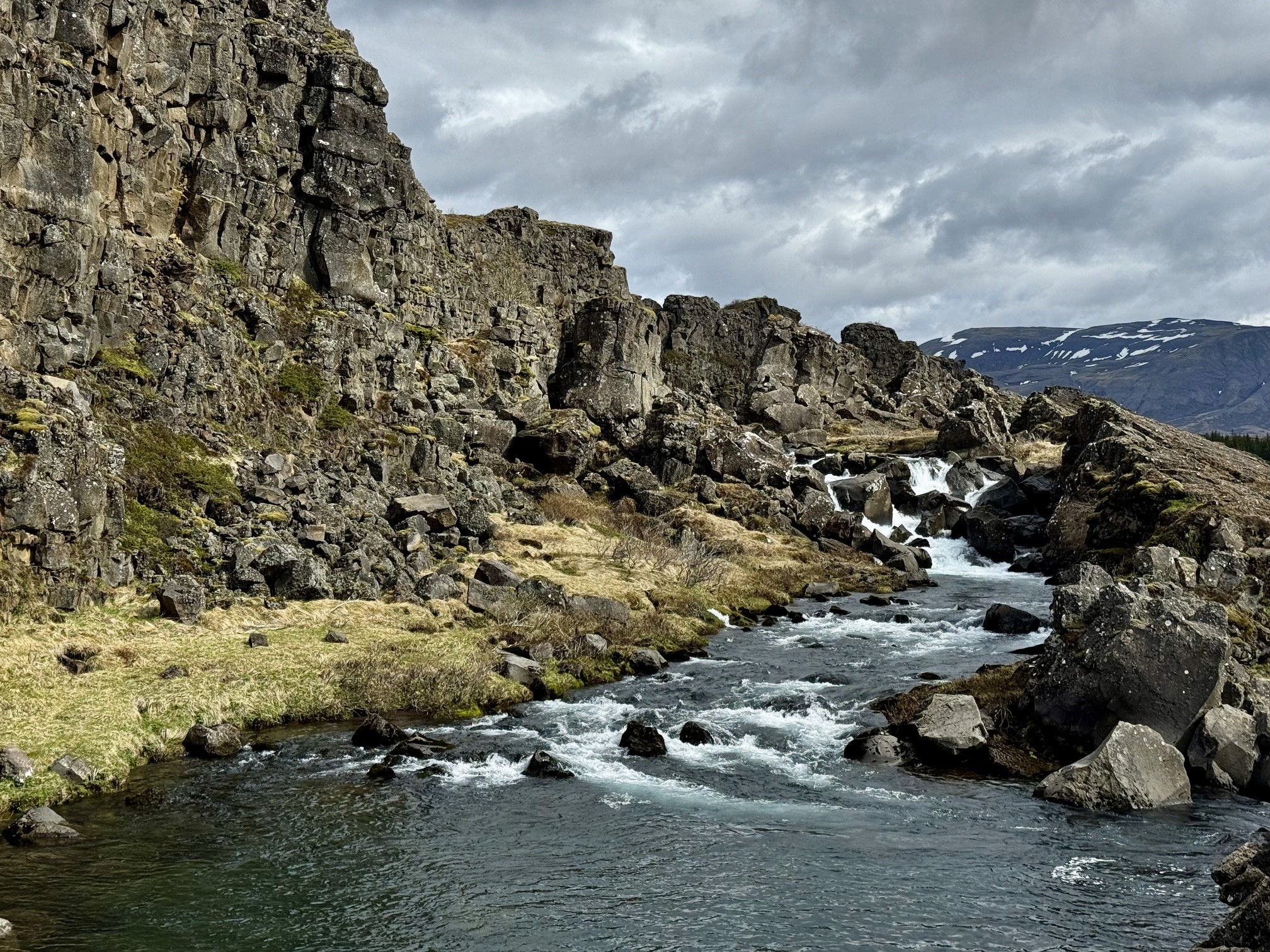
A river running through the Thingvellir National Park rift valley.
Thingvellir National Park
The first stop is Thingvellir National Park, famously the birthplace of Icelandic democracy. There are not any remaining structures from where the Althing (Iceland’s Parliament) used to meet, but far more interesting is the geology of the area. This is where the North American and Eurasian Tectonic Plates are pulling apart, at about 2 centimeters per year, creating dramatic canyons, fault lines, and cracked earth. It’s a really good first stop for giving you the background and context for why Iceland has so much geologic activity going on just beneath the surface.
In the hour or so that I had in the park, I started off by viewing the 7-mile-wide rift valley from above, and then took a walk down a paved path that traverses one of these fault lines. As with most outdoor sites in Iceland, there are a few waterfalls to spot as well.

A bubbling pool of water at the Haukadalur Geothermal Area.
Haukadalur Geothermal Area
After a quick ice cream break at Efstidalur, a family-run dairy farm, we were off to Haukadalur Geothermal Area. This area has a few different geysers, including the Strokkur Geyser, which is the largest active geyser in Iceland and erupts every 6-10 minutes or so, shooting water 100+ feet into the air. While there are a lot of countries that have hot springs, there are only a very small handful that have active geysers. The word “Geyser” actually comes from this very place, from the Icelandic “Geysir”.
In addition to the geysers themselves, walking around the paths I saw lots of bubbling and steaming pools of water, sulfur vents, and other features that made it obvious I was standing on active geothermal ground.
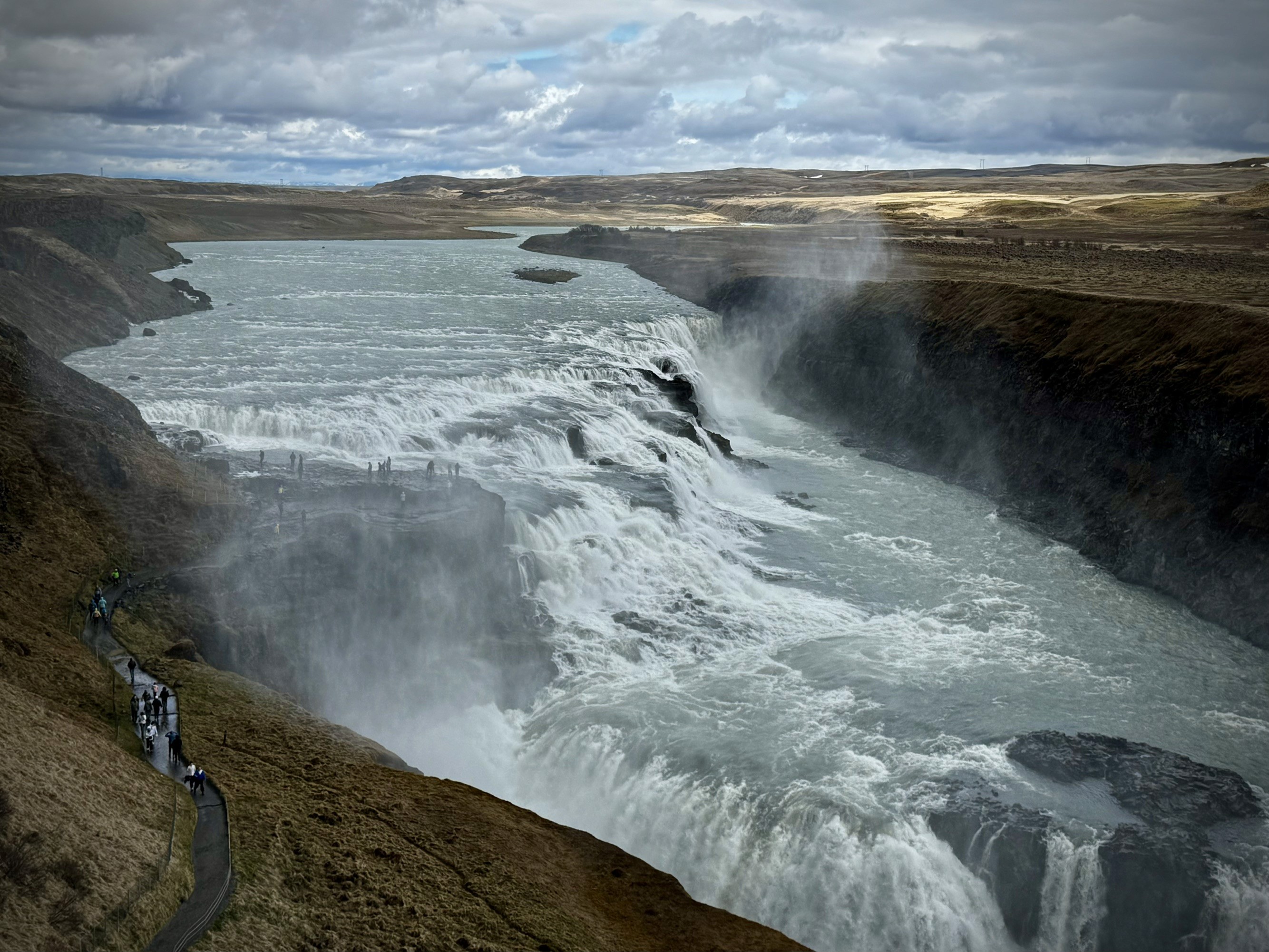
Gullfoss Falls from the main viewing area. You can see the path on the left which brings you up close if you're willing to get a little wet.
Gullfoss Falls
I saw many different types of waterfalls in Iceland. This one was the most powerful, rivaling Niagara Falls in my opinion. What’s great is that you can choose how close you get to it. Because it’s a tiered waterfall, it’s difficult to capture the entire scene in one photograph but I did my best.
If you do choose to take the path to get up close to the falls, make sure you’re wearing shoes that can handle the slick surfaces, as well as a waterproof jacket - I got a heavy amount of mist on my face, although I wouldn’t quite say it completely soaked me. I’m sure on windier days you’d need to be wearing waterproof pants but I got away with just a rain jacket.
Friðheimar Tomato Greenhouses
The next stop was the tomato greenhouses which supply about half of all the tomatoes consumed in Iceland. A guide came through and gave us a quick tour of one of the massive greenhouses that grow these gigantic tomato plants. All the heat comes from geothermal energy below ground.
The restaurant on the inside, which doubles as the late lunch stop for the tour, is a bit of a tourist trap if I am being honest. Because almost all Golden Circle tours stop here, it feels like they have a monopoly on serving lunch to anyone in a tour group. A decent but not exceptional bowl of tomato soup with bread on the side cost me upwards of $30 per plate, which even for steep Iceland prices, seemed excessive and a little scammy. To be fair, you are not required to buy anything, but unless you’ve packed your own lunch and are okay with eating away from your group, you’ll feel somewhat obligated to partake in the meal.
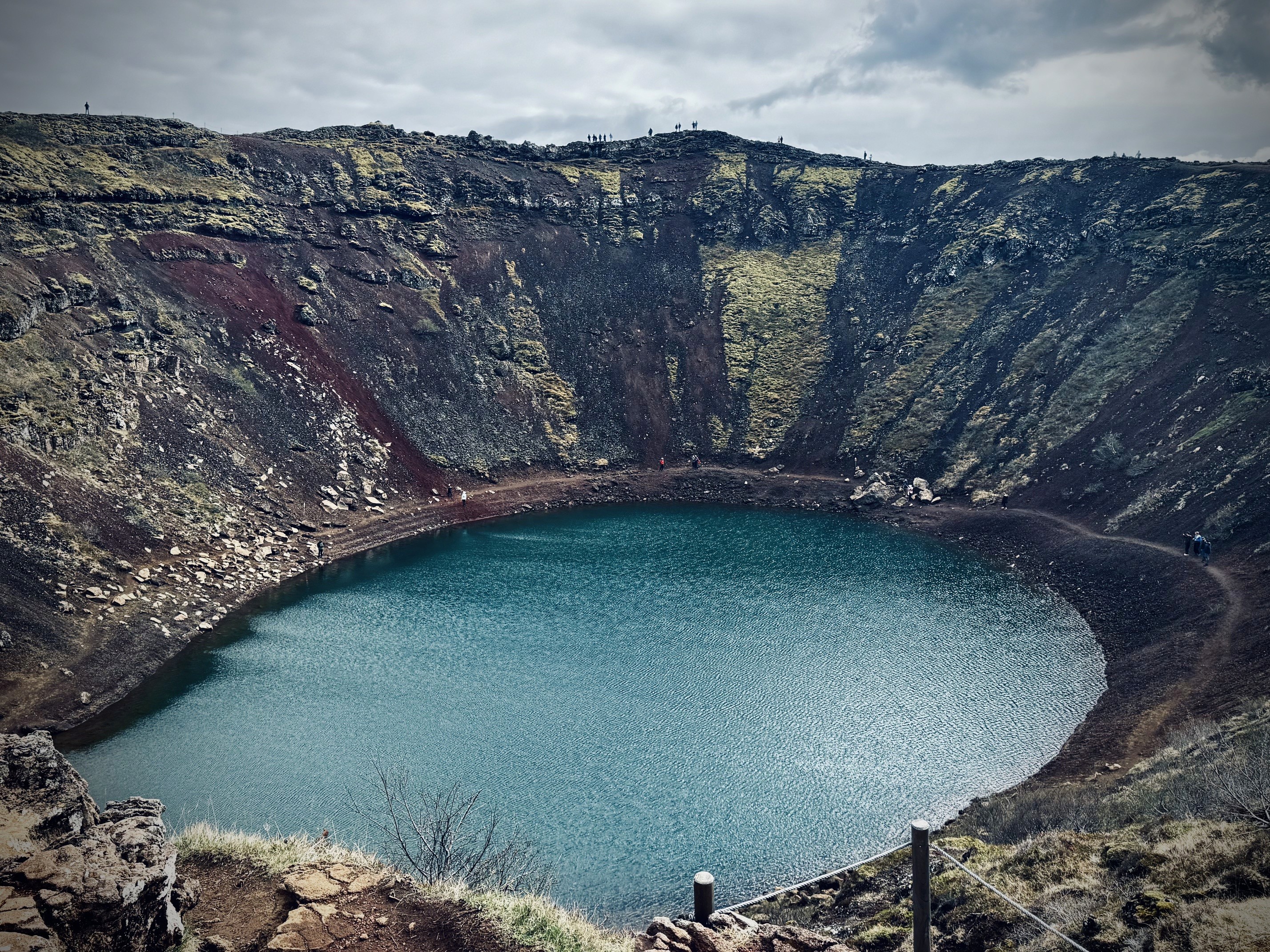
Kerid Crater as viewed from the elevated perimeter path.
Kerid Crater
Kerid closed out our day on the Golden Circle. It’s basically a giant crater with a lake in the middle. The slopes of the crater are made up of porous volcanic rock with tons of iron in it, which gives it a very dramatic red color. There are two paths that give distinct vantage points - you can walk around the crater and view the lake from above, or you can take steps down to descend to the edge of the lake. I walked quickly so I could see both vantage points in the 40 or so minutes that we had at this spot, and I’d recommend the view from above if you only have time for one.
What’s really interesting is that this site is not a national park but is rather privately owned, with the owners charging a fee to anyone who visits (if you’re with a tour like I was, the admission fee will be covered by the tour company).
Day Trip 2: South Coast
The second day trip I took was to the South Coast, which was also with East West Tours. Funny enough, a few of the same people who were on my Golden Circle Tour were also on this one. This one was a little longer and a little more expensive - it came out to about $170 USD, and ran about 10 hours long. The biggest difference in this tour is that when you leave Reykjavik, you don't make any stops for the first two hours as you make your way down to the Southern Coast. So if you are in need of some extra sleep, you can catch some shut eye on the way down.
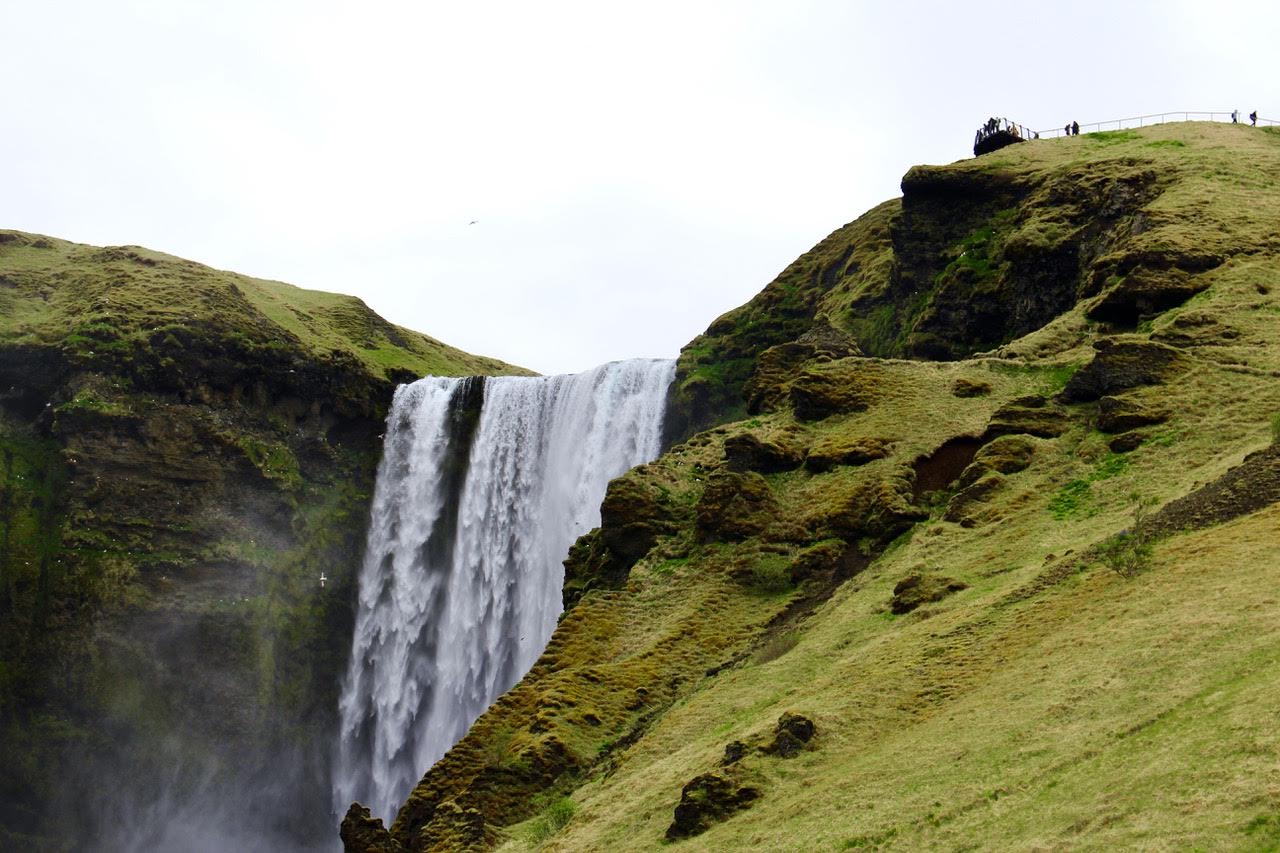
The Skogafoss Waterfall on the South Coast, with the observation deck to its right.
Skogafoss
Skogafoss is a single-tier waterfall, with water crashing straight down below in dramatic fashion. The fall is 200 feet, making it one of the largest waterfalls in Iceland.
Something you can't really see in a lot of photos online is that there is a path to the right where you can climb a long staircase up to the very top for an alternative vantage point. It took me about 20 minutes to climb, but it was a popular day so there was a lot of pedestrian traffic. Honestly, the view from the bottom was better in my opinion, so I wouldn't sweat it if you don't feel like making the climb up. There were some sheep grazing in the fields around the waterfall's base which was a nice bonus as well.
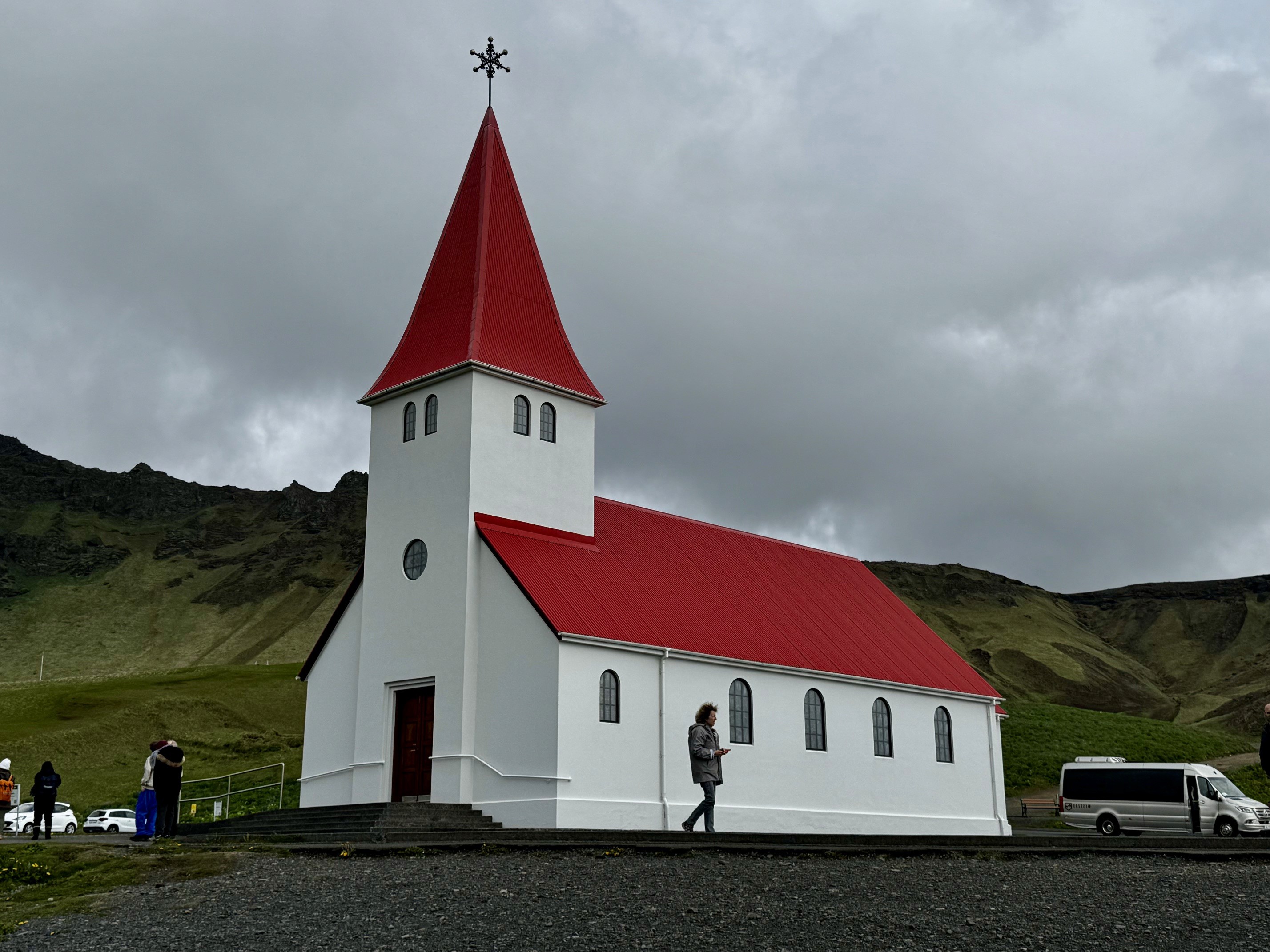
The Vík í Mýrdal Church in Vik.
Vík í Mýrdal Church
In the small town of Vik sits the very picturesque Vík í Mýrdal Church. The building, originally constructed in the 1930s, features a bright red roof over a white wooden frame and overlooks Vik. This wasn't a long stop, only 15 minutes or so, just enough time to walk around the building and snap some photos at different angles.
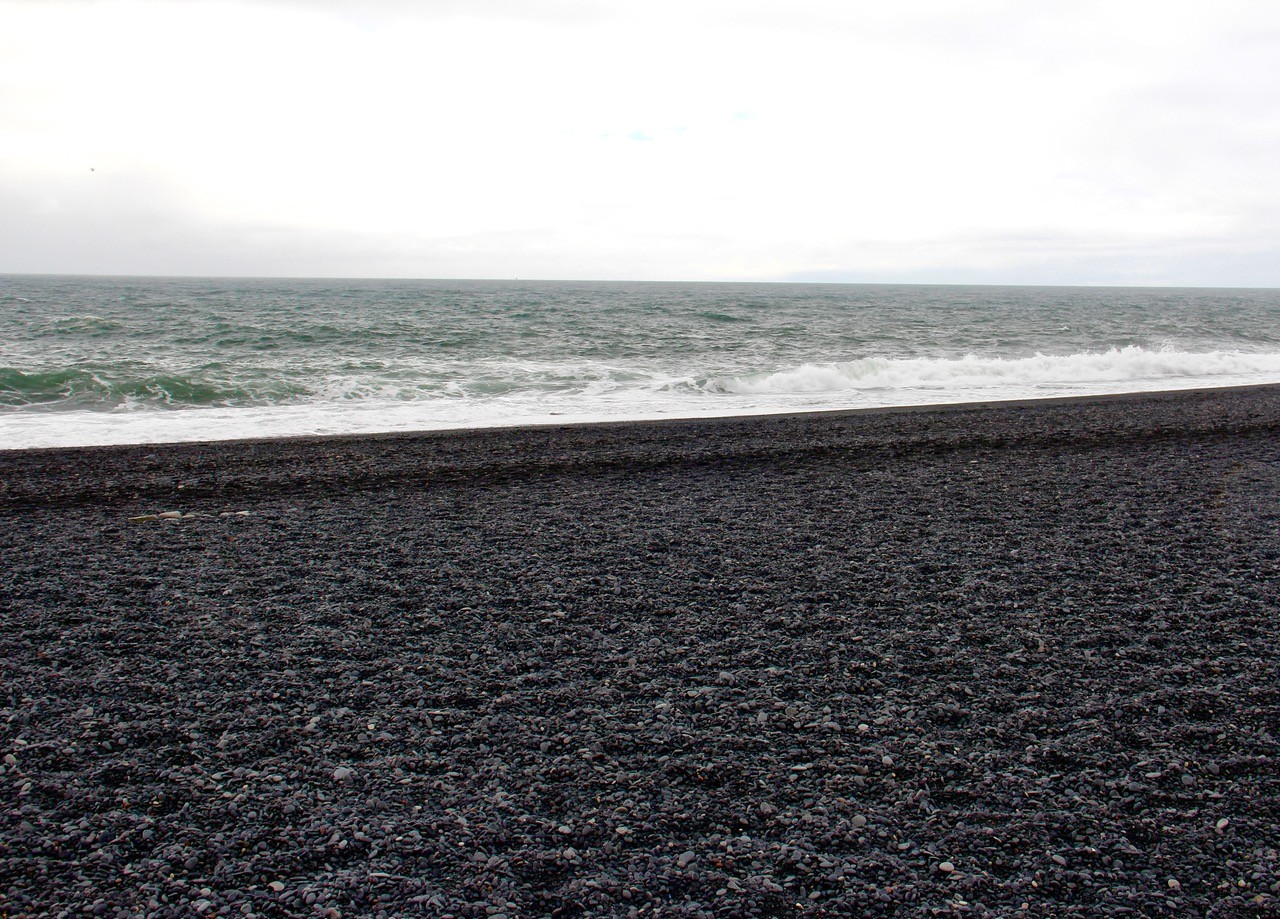
The famous black sand beach near Vik.
Víkurfjara Black Sand Beach
Just a 10-minute or so drive away is the Víkurfjara Black Sand Beach. This also doubled as our lunch stop for the day, and as is typical with a lot of the main tourist spots in Iceland, there was a full restaurant on-site serving up hamburgers and pasta dishes. To me, this was one of the more underwhelming stops I made in Iceland, and the 90-minute break felt too long for how little there was to see.
The black "sand" on this beach, more like pebbles, isn't as dramatic as you'll see in some photos online, which I am sure are using filters to make the sand appear darker. The beach is nice but cold and very windy. Our guide told us that you can sometimes spot the famous puffins flying by the cliffs, but I couldn't find any.
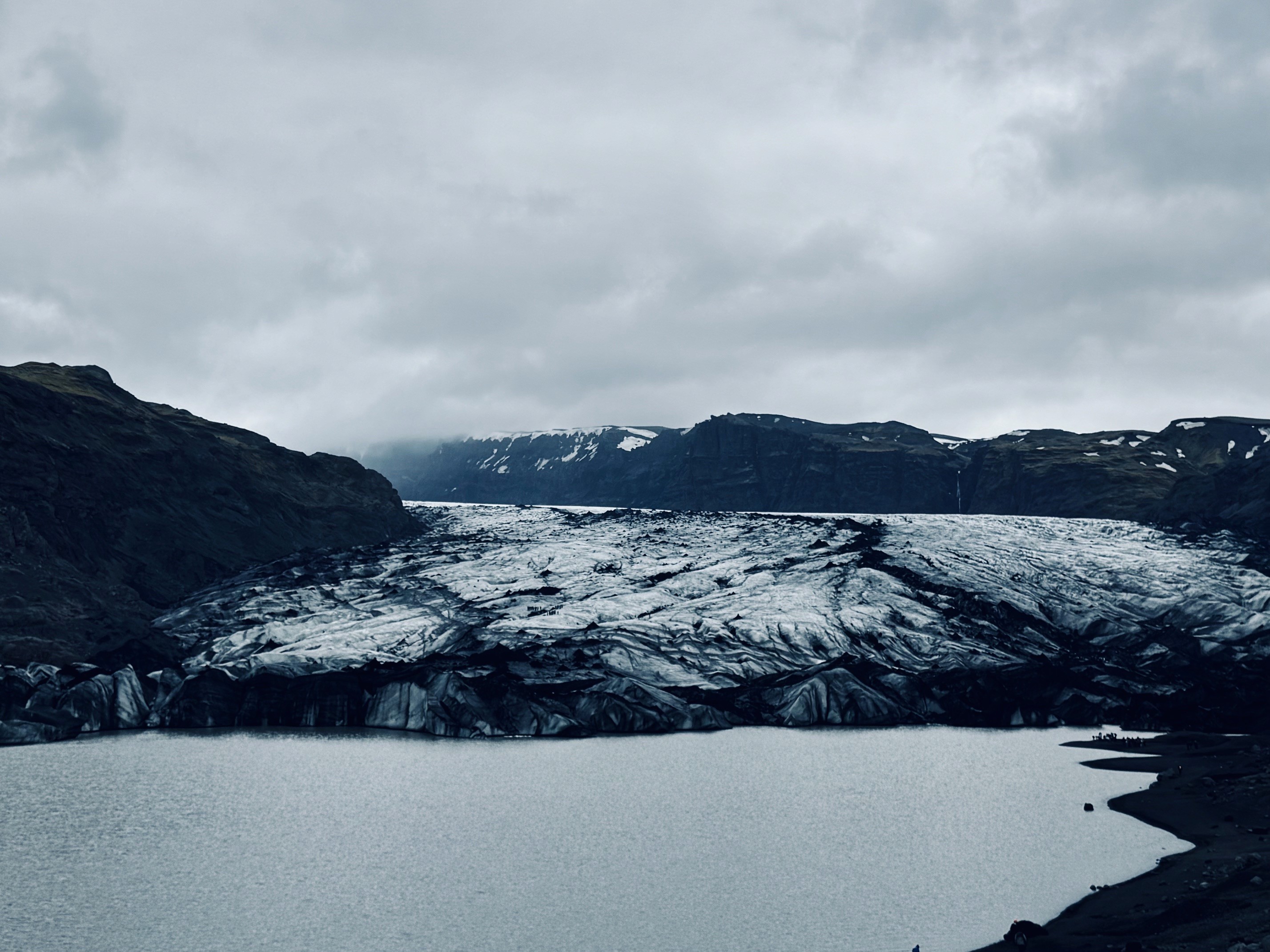
The Sólheimajökull Glacier is only a few minutes off the Ring Road on the South Coast.
Sólheimajökull Glacier
This was the most surprising stop of the day for me. The entire trip had been driving around the coastline in the springtime, and so when I heard that we were going to see a glacier, I thought this would mean gazing up towards the mountaintops. Not so. The Sólheimajökull Glacier was just a few minutes off the main Ring Road. There's a 10-minute path that leads from the parking lot to the main viewing point, and as I got closer, my brain was having trouble comprehending the sheer scale of what I was seeing. Maybe this is only because this was the first time I had seen a glacier at such close range, but I found it to be one of the more impressive and dramatic landscapes in a country full of them. When people say that Iceland feels "otherworldly" this is what they're referring to.
We viewed the glacier from the observation point, but looking closely I could see a large tour group hiking on top of the icy surface. You can book glacier hikes here if you want something more daring!
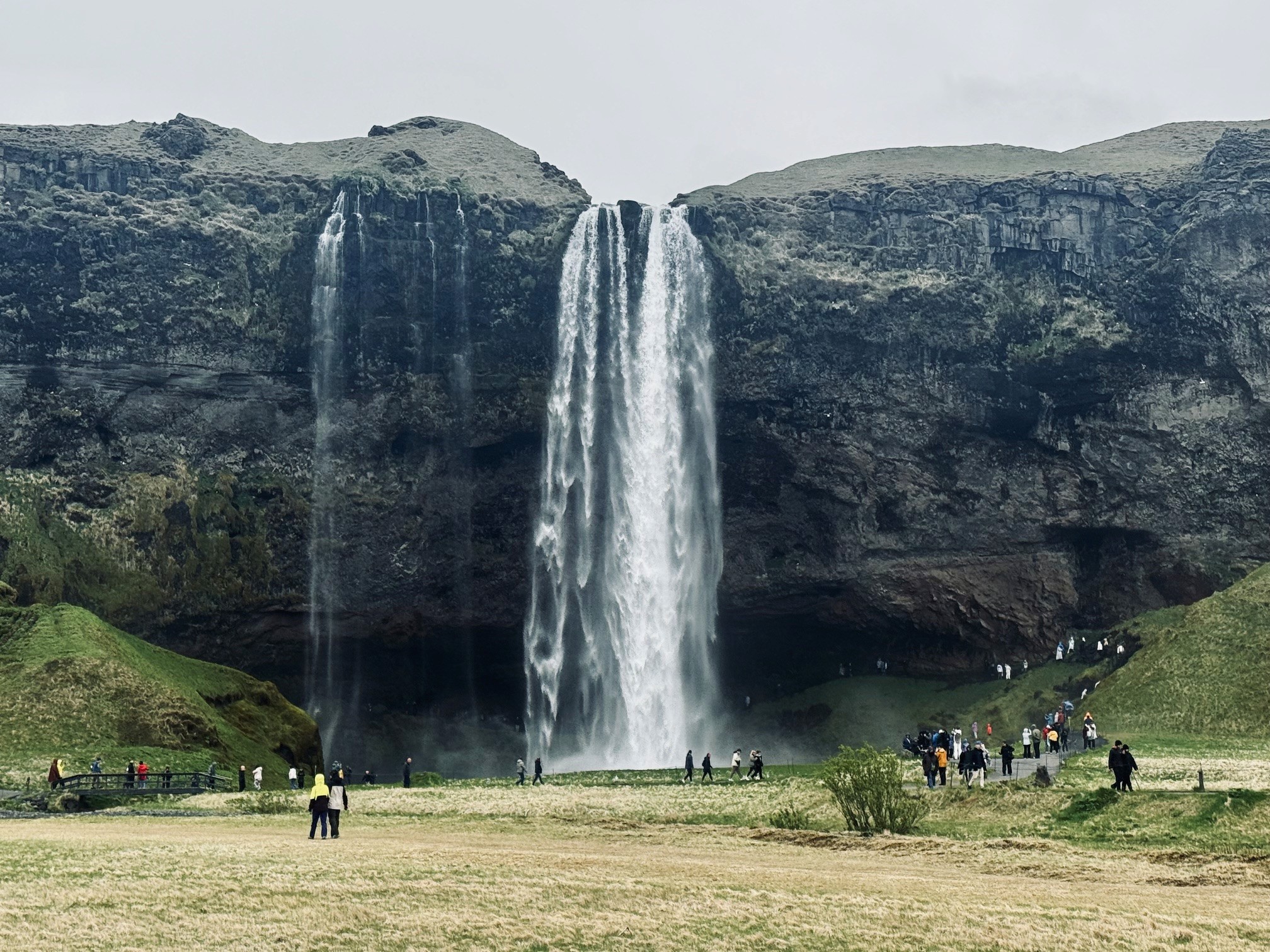
The Seljalandsfoss Waterfall has a path that wraps around the back if you're willing to get a little wet.
Seljalandsfoss Waterfall
Our guide told us that he had saved the best for last and it was hard to disagree. The Seljalandsfoss Waterfall is spectacular from all angles. What makes this one a little different than a lot of others is that there's a path that wraps around and into an alcove behind the falls. If I had to choose one word to describe this waterfall, it would be "powerful". The water is crashing violently down, exploding off of the rocks below. I had a blast walking behind the waterfall but wasn't able to get a good selfie due to the backlighting.
There's another waterfall just a 10-minute walk further called Gljúfrabúi. It's a lot more hidden, so you'll have to seek it out. I'd recommend taking the extra few minutes to find it, because the crowds are much smaller as many tourists don't know it's there.
Day Trip 3: Snaefellsnes Peninsula
The third and last day trip I took was to the Snaefellsnes Peninsula, affectionately nicknamed the "Miniature Iceland". I took this one with BusTravel Iceland, and it cost me about $139 for the 11-hour tour. In theory, this tour was supposed to have a larger group, hence the cheaper price tag, but despite the large coach bus, it was only about a third full. This made the trip surprisingly comfortable, as just about everyone had a window seat and an empty seat beside them.
One thing to note about the Snaefellsnes Peninsula is that, compared to the Golden Circle and South Coast, the infrastructure is a little more outdated as it's a less traveled and more rural region of Iceland. Think bumpier and narrower roads, and fewer facilities (restrooms, gas stations, restaurants etc.) at each stop. This, of course, was no problem for me, but for some visitors it might be something to consider.
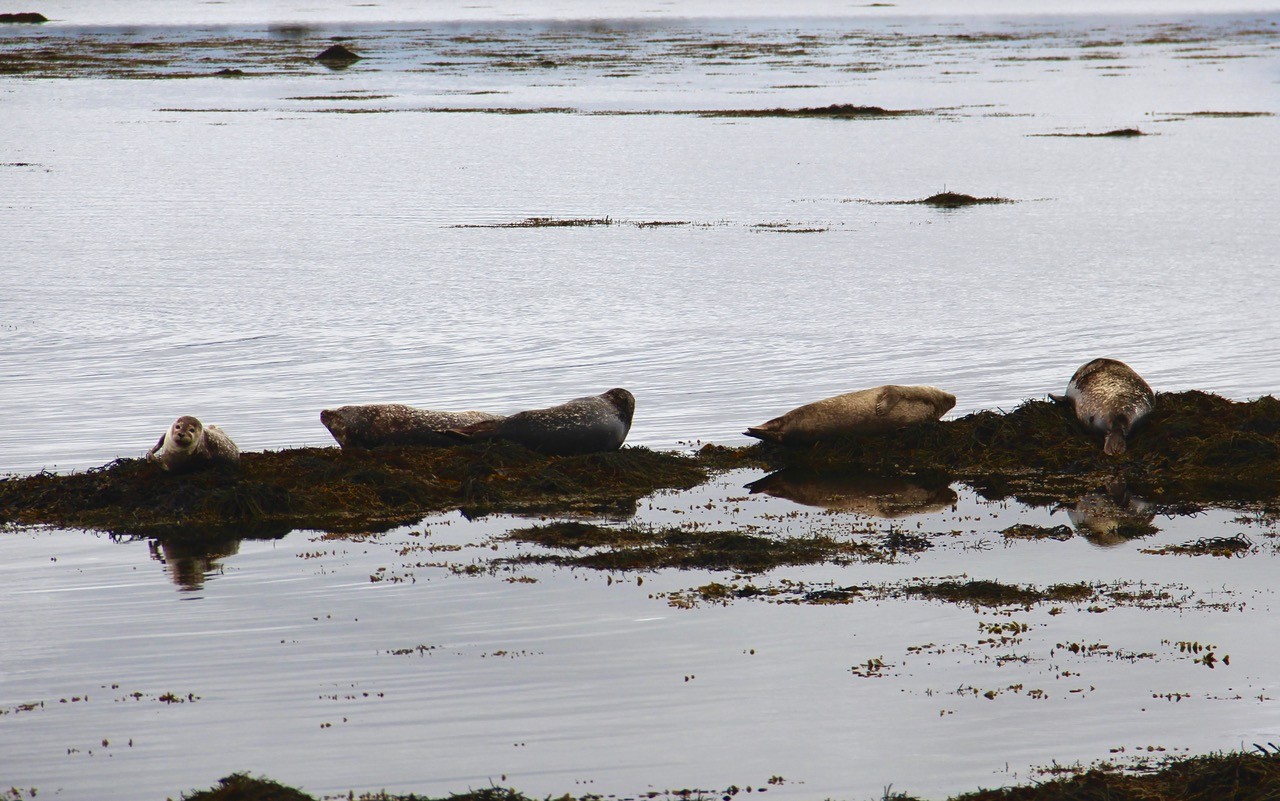
Harbor seals are seen frequently lounging on the rocks near Ytri Tunga Beach.
Ytri Tunga Beach and Harbor Seals
After a quick pitstop for snacks and coffee, our first stop was the Ytri Tunga Beach, a popular area for spotting harbor seals and occasionally grey seals. I often have bad luck whenever there's an opportunity to spot wildlife, but there was a full colony of seals lounging on the rocks. We were there at low tide, but getting a good view of the seals was still tricky; there wasn't a path straight out to the water, and the rocks were jagged and uneven. But after stepping carefully for the 100 meters or so, I was able to snap some pictures while maintaining my distance and respecting their space. This is one of the best spots in Iceland for spotting seals year-round and if you're an animal-lover this will be a highlight.
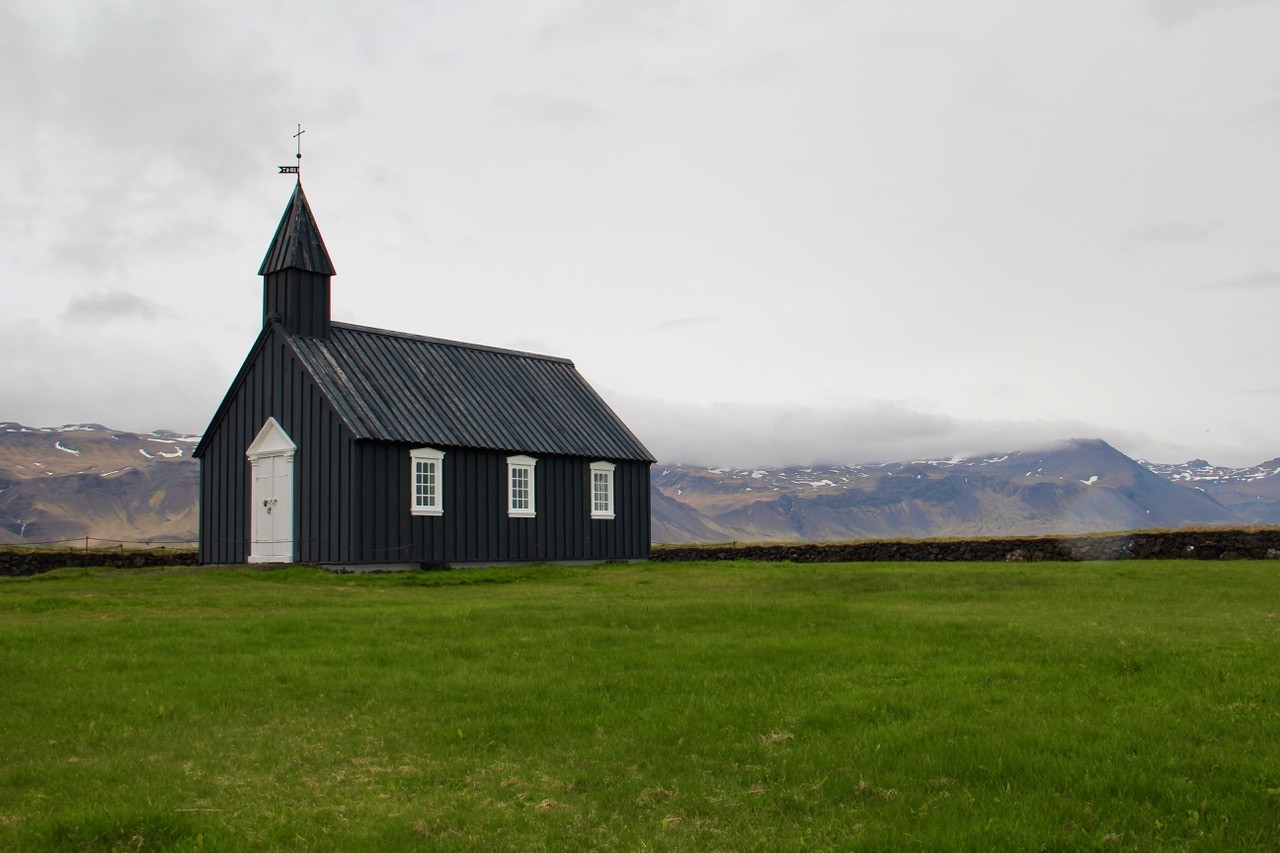
The Black Church, one of the most photographed spots in the Snaefellsnes Peninsula.
The Black Church of Búðakirkja
Next up was the black church of Búðakirkja, a famous wooden chapel that sits all by itself with no other buildings in sight. It doesn't really have any historical significance, but makes for an especially photogenic stop, standing out against the dramatic volcanic landscape. For those who are curious, the black color is for weatherproofing and doesn't hold any religious meaning. You cannot actually go inside the chapel, and even if you could it wouldn't fit more than a couple of people at a time as it is truly quite tiny. You won't need more than 10 minutes or so to snap some photos, as there is literally nothing else to see.
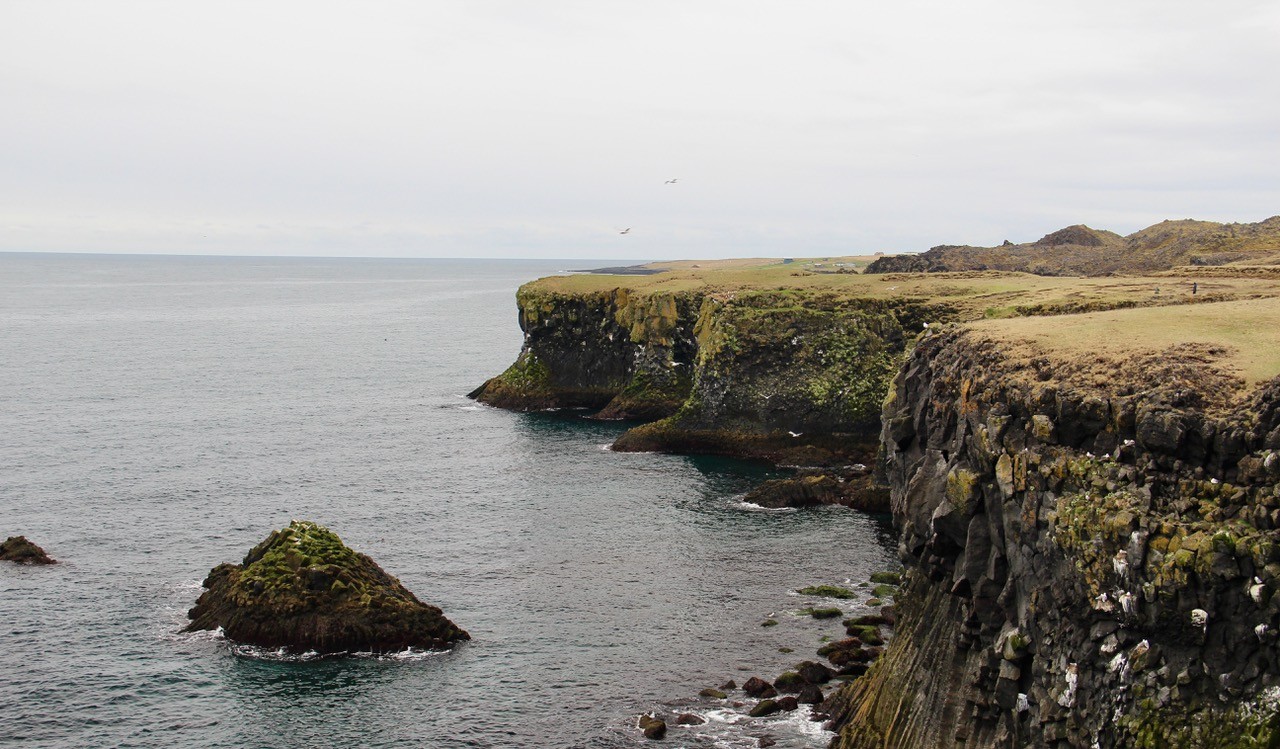
Flocks of seabirds build nests on the Arnarstapi Cliffs.
Arnarstapi Cliffs
Our lunch break was at the Arnarstapi Cliffs. There were a few different restaurants to choose from here each catering to different tastes. Walking towards the coastline, I passed by the imposing Monument to Bárður Snæfellsás, which is supposedly good luck to walk under. As I continued to the cliffs, I could tell that this would be a stop I wouldn't want to rush through, so I was glad we had a full 90 minutes. The combination of the ocean waves, the cliffs, the birds, and the smell of the salty ocean air was so refreshing. The basalt formations and iconic arch rock (Gatklettur) that rises out of the ocean just added to the unique geological formations I found in this part of the world.
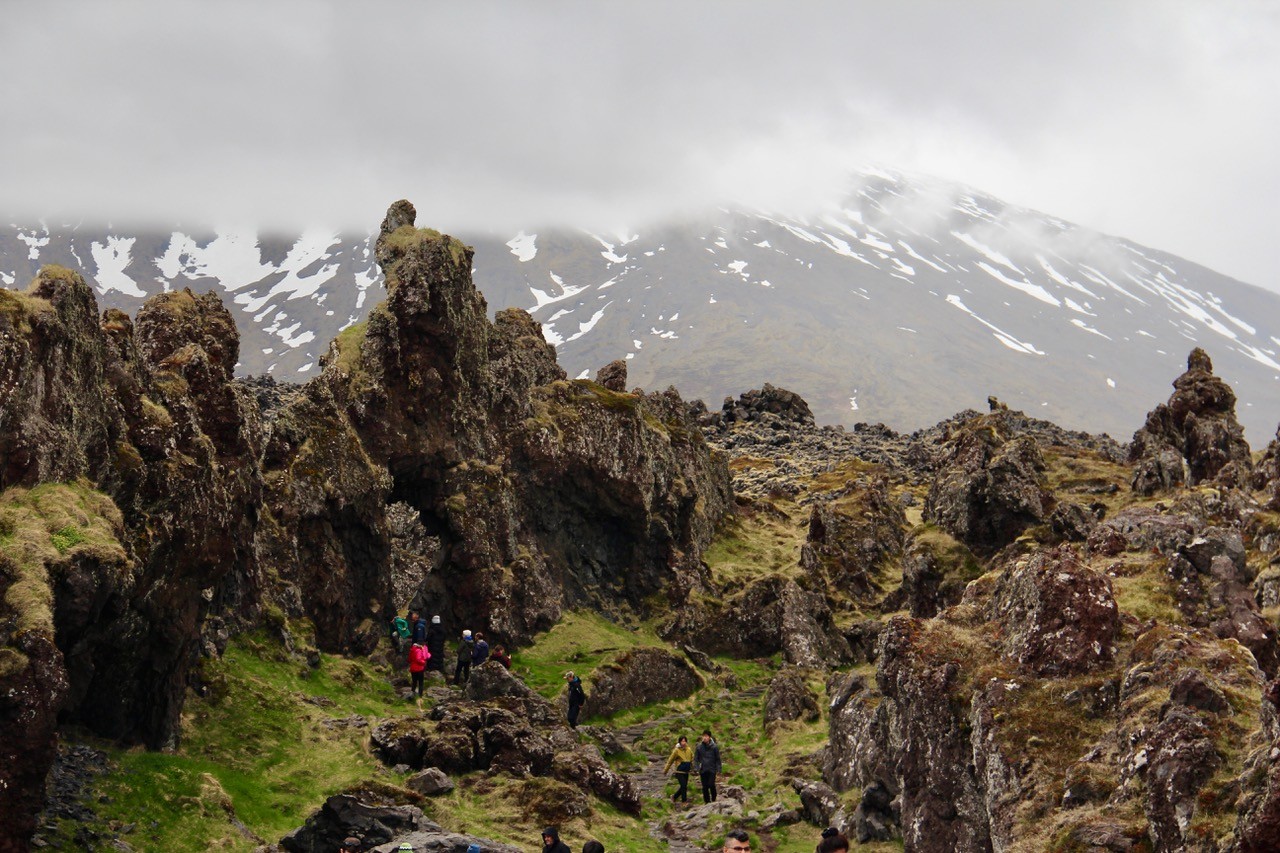
In addition to the beach, Djúpalónssandur features these massive volcanic structures towering above the jagged landscape.
Djúpalónssandur Black Sand Beach
As our adventure continued, we made our way out to the Djúpalónssandur Black Sand Beach, which lies all the way at the very tip of the Snaefellsnes Peninsula. This stop was more than just a simple beach, however. There were different paths that wrapped around the cliffs and volcanic formations, with different information guides scattered throughout the site. If you keep your eyes peeled, you can spot scraps of metal from a shipwreck.
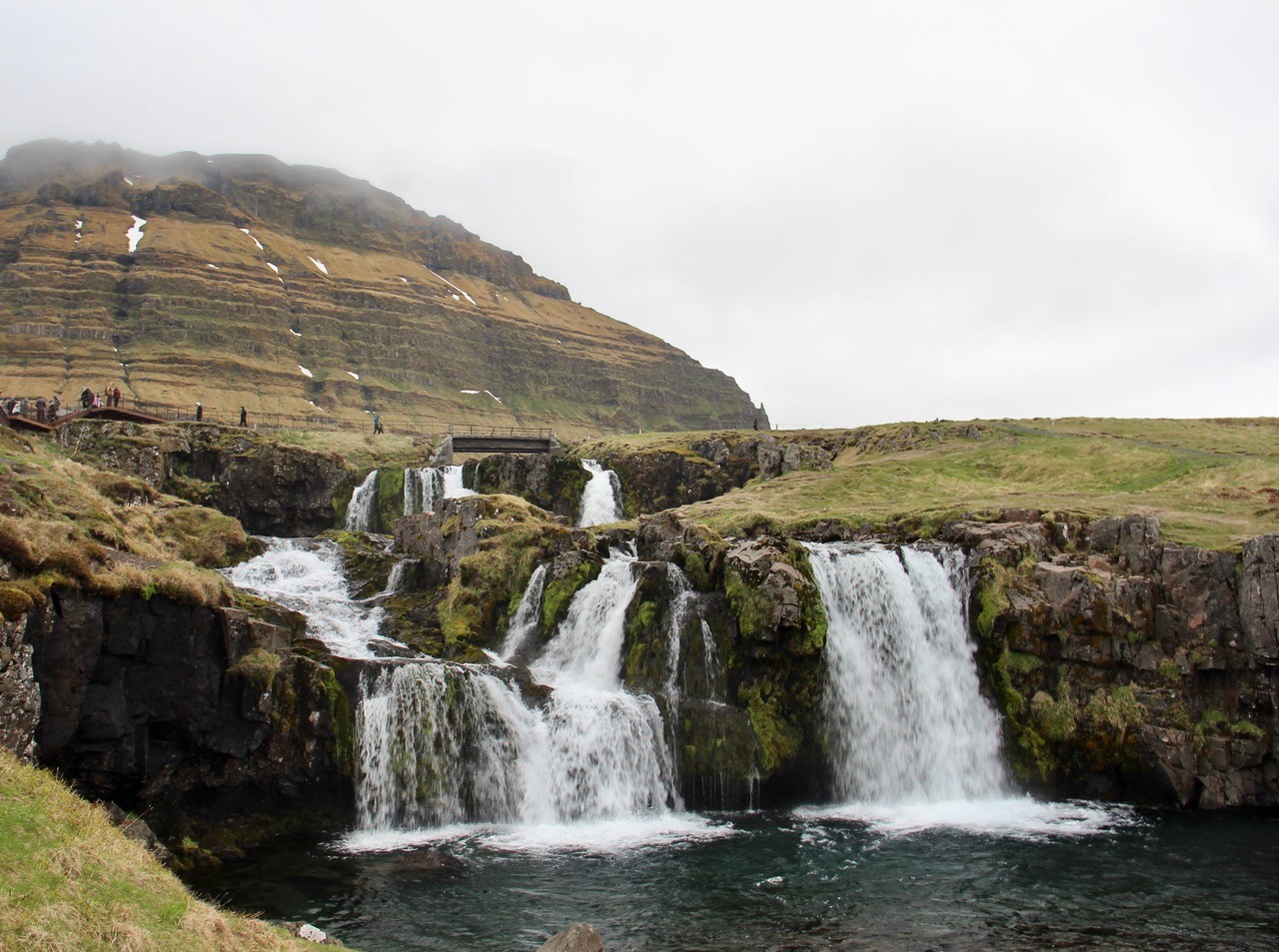
Kirkjufellsfoss isn't the biggest waterfall you'll see in Iceland, but its surroundings make it one of the most photogenic.
Kirkjufellsfoss Waterfall
Around the northern coast of the peninsula, we stopped at the Kirkjufellsfoss Waterfall. This is one of the most iconic places in all of Iceland. It's the type of spot where a photo of it will randomly show up as your computer desktop image one day and you'll need to know where it is. What makes it unique is not the tiered waterfall, but rather its backdrop: a very dramatic cone-shaped mountain that resembles a witch's hat and looks like it's right out of Game of Thrones. The combination of everything makes the whole area especially fun to photograph, as you can experiment with some interesting and artistic framing. Make sure your camera still has some battery left because you will not be able to put it down.
Concluding Thoughts
Which Day Trips Should You Choose?
Three tours, about $460 total, and zero minutes behind the wheel. If you only have time for one, I'd go with the South Coast. Seljalandsfoss and the glacier were the two stops that stuck with me the most, and the drive down gives you the biggest change in scenery. The Golden Circle is more of a safe pick if you want the famous names and a shorter day. Snaefellsnes is the oneto go with if you've already done the other two, or if you're the type who is willing to trade some polish for marginally smaller crowds.
Skipping the rental car cost me nothing I actually missed. Yes, you're on someone else's schedule, and yes, you'll occasionally wish you had another 20 minutes at a stop. But you also get to stare out the window at the scenery instead of at the road, you don't have to shell out for gravel protection insurance, and you don't have to think about parking (the tiny lots at a lot of these spots were packed). For a solo traveler, the math is clear.
How Far Ahead Should You Book?
You don't need to book any of these tours weeks in advance, but I'd recommend making the purchase before you land. All three tours run daily and sell out on a rolling basis, especially in summer, and the operators running the smaller Sprinter buses fill up first because there are simply fewer seats. For what it's worth, when I booked, all were fully refundable up until about 24 hours before the tour start, so there was peace of mind in booking early. Hotel pickup is included for East West Tours but not with BusTravel Iceland.
Iceland is one of a growing number of destinations where showing up and figuring it out on the day costs you real options. If you want to know which attractions need advance reservations and how far ahead to book them, that's exactly what we cover at What2Book.com.


" width="24px"><path d="M 0 0 L 24 0 L 24 21.231 L 0 21.231 Z" fill="transparent" height="21.230768474975793px" id="nL2EwDcS9" width="24px"/><path d="M 0 0.541 C 0 0.242 0.245 0 0.547 0 L 2.735 0 C 3.037 0 3.282 0.242 3.282 0.541 L 3.282 4.598 C 3.282 4.897 3.037 5.139 2.735 5.139 L 0.547 5.139 C 0.245 5.139 0 4.897 0 4.598 Z" fill="rgb(196, 217, 201)" height="5.138657337892187px" id="hZ_rlBe_S" transform="translate(0 16.092)" width="3.2820512820512358px"/><path d="M 0 0.541 C 0 0.242 0.245 0 0.547 0 L 2.735 0 C 3.037 0 3.282 0.242 3.282 0.541 L 3.282 7.843 C 3.282 8.142 3.037 8.384 2.735 8.384 L 0.547 8.384 C 0.245 8.384 0 8.142 0 7.843 Z" fill="rgb(230, 211, 160)" height="8.38412513024521px" id="HgVBxIz3e" transform="translate(5.128 12.847)" width="3.282051282051235px"/><path d="M 0 0.541 C 0 0.242 0.245 0 0.547 0 L 2.735 0 C 3.037 0 3.282 0.242 3.282 0.541 L 3.282 12.982 C 3.282 13.281 3.037 13.523 2.735 13.523 L 0.547 13.523 C 0.245 13.523 0 13.281 0 12.982 Z" fill="rgb(232, 207, 164)" height="13.522782468137464px" id="utgrDnoM9" transform="translate(10.325 7.708)" width="3.282051282051377px"/><path d="M 0 0.541 C 0 0.242 0.245 0 0.547 0 L 2.735 0 C 3.037 0 3.282 0.242 3.282 0.541 L 3.282 16.498 C 3.282 16.797 3.037 17.039 2.735 17.039 L 0.547 17.039 C 0.245 17.039 0 16.797 0 16.498 Z" fill="rgb(233, 196, 166)" height="17.038705909853153px" id="OLOhW6STz" transform="translate(15.521 4.192)" width="3.2820512820512384px"/><path d="M 0 0.541 C 0 0.242 0.245 0 0.547 0 L 2.735 0 C 3.037 0 3.282 0.242 3.282 0.541 L 3.282 20.69 C 3.282 20.989 3.037 21.231 2.735 21.231 L 0.547 21.231 C 0.245 21.231 0 20.989 0 20.69 Z" fill="rgb(217, 170, 153)" height="21.230768474975793px" id="H5Z8wcwkd" transform="translate(20.718 0)" width="3.2820512820512278px"/></g></svg>)