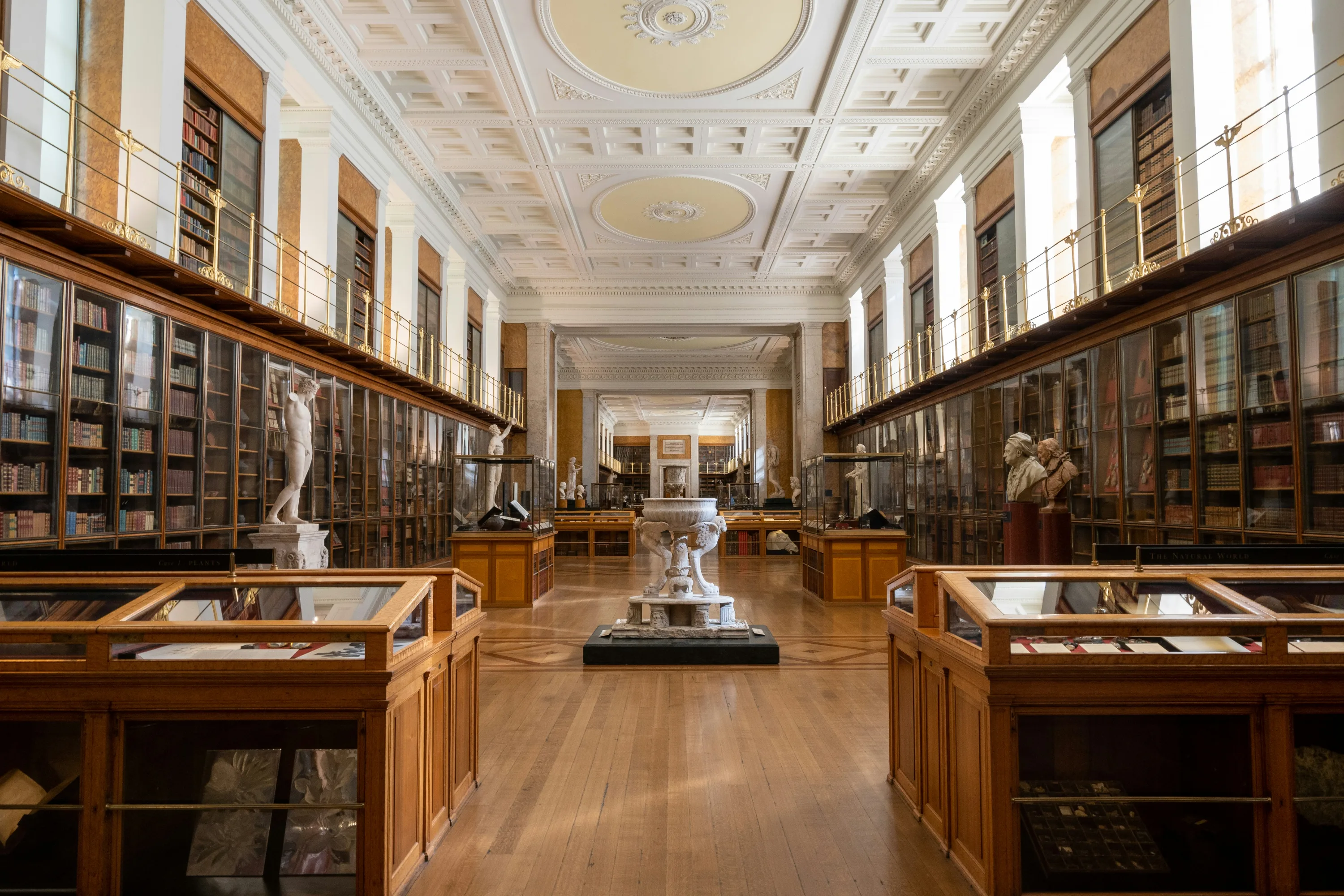
Back to London Attractions
How Far in Advance to Book the British Museum in London
Updated August 2026
There are very few institutions in the world that can honestly claim to tell the story of all of human history and culture across all of recorded time. The British Museum, founded in 1753 and opened to the public in 1759, is one of them. Its collection of around eight million objects spans two million years of human civilisation, from a hand axe made 700,000 years before the earliest known writing to contemporary works commissioned last year, with everything in between: Egyptian mummies, Assyrian palace reliefs, the Elgin Marbles, Lewis chess pieces, the Sutton Hoo helmet, the Rosetta Stone. Housed in a spectacular neoclassical building in Bloomsbury, with the extraordinary glass-and-steel Great Court at its centre, it is the most visited museum in the United Kingdom, receiving around six million visitors a year. In 2026, with the Bayeux Tapestry arriving in autumn for its first ever exhibition outside of France, it is expected to receive up to seven and a half million, making this the most significant year in the museum's 273-year history. This guide covers everything you need to know before you go.
At a Glance
How Early to Book:
2 weeks ahead of visit for prime time-slots. 1-2 days ahead for off-peak time-slots. Special exhibits may require stricter booking requirements.
About 4 months in advance.
Best Times to Visit:
Mid-week (Tues - Thurs) are most quiet, especially early mornings and late afternoons.
Ticket price:
Like many museums in London, the British Museum is free of charge. Special exhibits may cost extra.
Where to Book:
Museum Address:
Do You Need to Book British Museum Tickets in Advance?
The answer depends on whether you are visiting the permanent collection or a temporary exhibition, and the distinction is crucial.
For the permanent collection, entry is free, but this does not mean entry is unlimited or unrestricted. The museum uses timed entry reservations to manage crowd levels during all times of the year. I've personally visited the British Museum in the midst of the off-season in Mid-February, and prospective visitors without timed-entry tickets were still asked to queue up. Staff weren't turning people away, but it was nevertheless an additional 15-20 minute wait to get in for these folks.
Booking a free timed entry slot in advance is strongly recommended, especially during weekends, school holidays, and summer months. Visitors without reservations may need to wait in line and could be turned away if capacity is reached.
For temporary and special exhibitions, advance booking is strongly recommended, and for the Bayeux Tapestry exhibition opening in autumn 2026, it will be close to essential. Special exhibitions operate on a timed entry system, meaning your ticket is valid for a specific date and time slot, and you must arrive within 15 minutes of the time stated on your ticket. The museum cannot guarantee admission before or after your allotted slot.
British Museum Opening Hours and Entry Information
The British Museum is open daily throughout the year, with extended hours on Friday evenings.
Sunday to Thursday: 10:00am to 5:00pm (last entry 4:45pm)
Fridays: 10:00am to 8:30pm (last entry 8:15pm)
Great Court: 10:00am to 5:30pm daily (8:30pm on Fridays); visitors must exit the building by these times
Note on gallery clearing: Staff begin clearing galleries 10 minutes before they close. On busy days this can mean being asked to move towards exits from 4:50pm for the main building. Plan accordingly, particularly if you want to visit the Egyptian galleries or the Sutton Hoo room in the final hour of the day.
The museum is closed on 24, 25, and 26 December. It is open on all other public holidays including bank holidays, though some restricted hours may apply. Check the official website for specific dates.
The cloakroom is open daily from 10:00am to 5:00pm (8:30pm on Fridays). Last deposit is one hour before closing.

What is the Best Time to Visit the British Museum to Avoid Crowds?
The British Museum is one of the most visited attractions in the world, and on peak days visitor numbers can make the most popular galleries feel uncomfortably crowded. Planning your timing carefully makes a significant difference to the quality of the experience.
Weekday mornings from Tuesday to Thursday are the quietest time for the permanent collection. Arriving at opening at 10:00am on a Wednesday or Thursday gives you the Egyptian galleries, the Elgin Marbles, and the Sutton Hoo helmet room in conditions that are noticeably calmer than at any weekend. The first hour is consistently the most peaceful.
Friday evenings are one of the most underused and most rewarding times to visit. The extended opening until 8:30pm draws far fewer visitors than the daytime hours, and the atmosphere in the galleries from around 6:00pm onwards is quieter and more contemplative than any time on a weekend. For exhibition visitors, Friday also offers the 2-for-1 student ticket. There is no late opening on Good Friday (3 April 2026).
Weekends are the busiest time overall, particularly Sunday afternoons. If visiting on a weekend is unavoidable, arriving at 10:00am and prioritising your most important galleries in the first two hours is the most effective strategy.
School holidays bring significantly higher visitor numbers, particularly in the Egyptian galleries and around the Rosetta Stone, which draws enormous crowds at all times. Arriving early is especially important during these periods.
What is the Best Way to Get to the British Museum?
The museum is located on Great Russell Street in Bloomsbury, WC1B 3DG, and is very well served by public transport.
By Tube: The two most convenient stations are Tottenham Court Road (Central and Northern lines), around an eight-minute walk from the main entrance, and Russell Square (Piccadilly line), around a five-minute walk from the museum's rear entrance on Montague Place. Holborn (Central and Piccadilly lines) is also within walking distance, around 10 minutes. If approaching from the north, Goodge Street (Northern line) is around 10 minutes on foot.
By Bus: Several bus routes stop close to the museum, including the 1, 7, 8, 10, 14, 19, 24, 25, 29, 38, 55, 68, 73, 91, 98, 242, and 390, with stops on New Oxford Street, High Holborn, Southampton Row, and Tottenham Court Road.
On foot: The museum is walkable from Covent Garden (around 10 to 12 minutes), from the West End and Oxford Street (around 10 to 15 minutes), from Fitzrovia and the area around Goodge Street (around 10 minutes), and from Holborn and the Inns of Court (around 10 minutes). The approach through the streets of Bloomsbury from any direction is pleasant and lined with Georgian townhouses and garden squares.
By car: Driving is not recommended. Great Russell Street and the surrounding streets have no public parking. The area is within the Congestion Charge zone, and the nearest public car parks are some distance away. Public transport is significantly faster and less stressful from anywhere in London.
Entrances: The main entrance is on Great Russell Street (the south side of the building). A rear entrance is available on Montague Place (the north side), which is useful for visitors arriving from Russell Square station or from the north. Both entrances are served by security on entry.
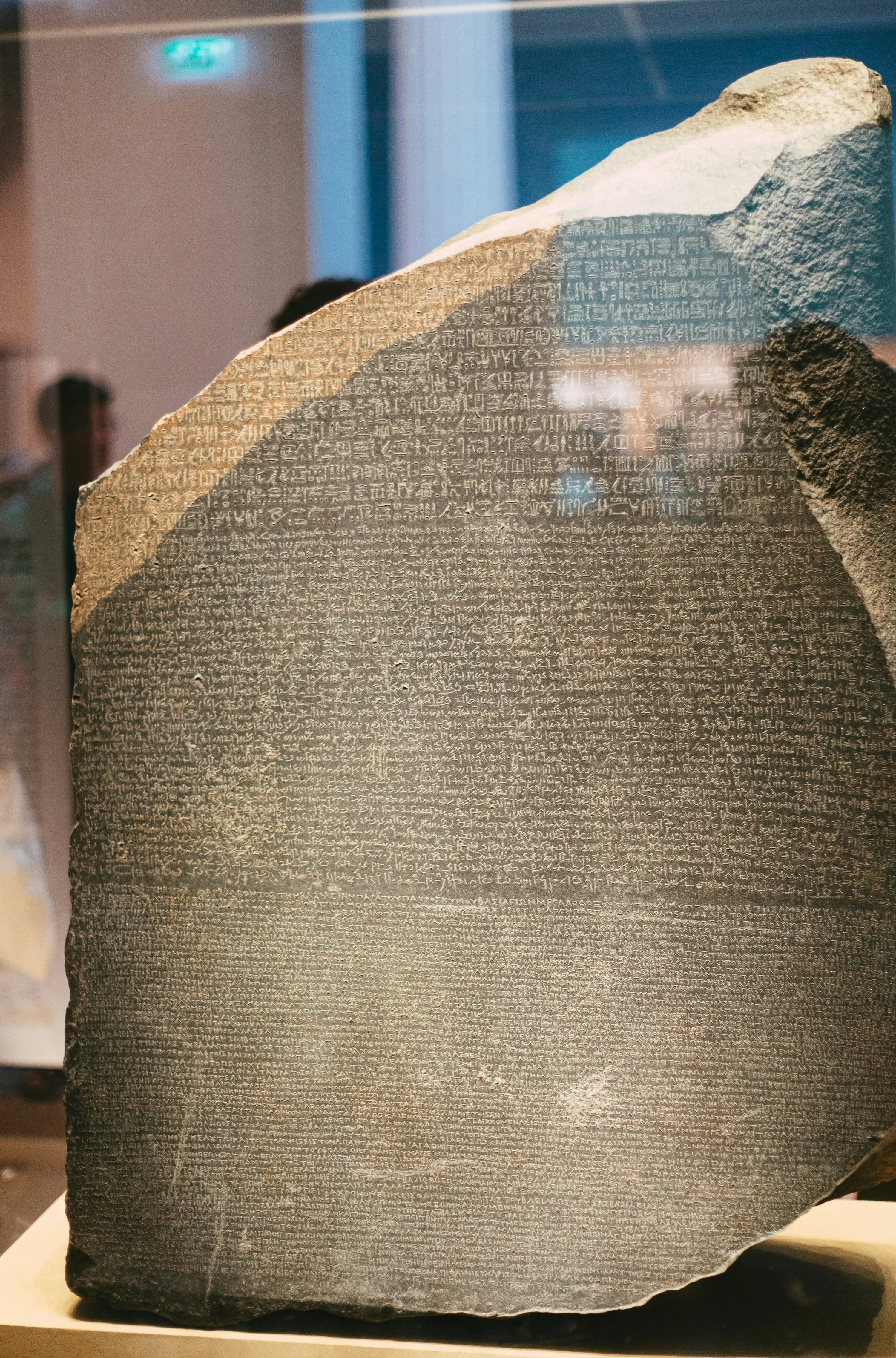
The Rosetta Stone is one of the British Museum's most treasured relics. Its inscription provided the key to deciphering Egyptian hieroglyphs, unlocking centuries of forgotten history, culture, and language.
The Bayeux Tapestry at the British Museum (2026 to 2027)
For ten months, the British Museum is hosting the loan of the century. The Bayeux Tapestry, the 70-metre embroidery depicting the Norman Conquest and the Battle of Hastings in 1066, is on display in the Sainsbury Exhibitions Gallery (Room 30) from 10 September 2026 to 11 July 2027. It is the first time the tapestry has been on English soil since it was made, almost certainly in England, around 950 years ago, and the first time it has ever been displayed flat, in one continuous length, in a specially built case that lets you walk the full story from end to end like reading a book. With the Bayeux Museum in Normandy closed for renovation until late 2027, this is the only place in the world to see it.
This is the hardest ticket to get in London, and you will want to plan as far ahead as possible to get in. Tickets are released in three phases, each covering a block of dates:
September to December 2026: Released 1 July 2026 and already sold out, on the biggest single day of ticket sales in the museum's history, with an online queue that peaked above 80,000 people.
January to March 2027: Released in October 2026.
April to July 2027: Released in January 2027.
If you want to see the tapestry, here's my advice: sign up for the British Museum's newsletter now, put the October and January release windows in your calendar, and book the moment they open with payment details ready. Expect a long online queue on release day; joining it early matters. Up to 10 tickets can be booked at once, but multiple bookings from the same email address are cancelled, so one order per household. Under-16s go free with a paying adult, and adult tickets run from roughly £25 to £33 depending on date and time.
Membership is the back door worth knowing about. British Museum Membership (from £82) includes two visits to the tapestry during the run, with priority booking windows that open before each public release. For a couple planning to visit anyway, Membership can cost little more than a pair of peak tickets while adding free entry to the museum's other paid exhibitions all year. Note that reciprocal entry passes (ICOM, ICOMOS, and similar) are not valid for the tapestry through at least December 2026, and even Members must book a timed slot in advance and bring their physical membership card.
What to expect inside: Allow 45 to 60 minutes for the tapestry itself and up to two hours with the supporting displays. The embroidery repays slow viewing: the main narrative runs through 58 scenes of feasting, fleets, oaths, and battle, while the borders carry their own parallel world of beasts, fables, and the fallen. Halley's Comet blazing over Harold's coronation and the famous arrow-in-the-eye scene near the end are the moments everyone waits for. No guided tours or talks run inside the gallery itself, so the crowds move at their own pace, and morning slots early in each ticket window are the calmest.
If you do miss out, which is understandable, take some comfort: the tapestry returns to a fully renovated museum in Bayeux from late 2027, and everything else on this page remains free.
Is the British Museum Worth Visiting?
It is the closest thing to a complete record of human civilisation housed under a single roof, and the answer is definitely yes, with one important caveat: the scale of the collection is so vast that visiting without some sense of what you most want to see can be overwhelming rather than rewarding. The key to a satisfying visit is having a loose plan.
The highlights that draw the largest crowds are also, in many cases, the highlights that deserve the most attention. The Rosetta Stone, in Room 4, is one of the most significant objects ever recovered: the decree that unlocked the understanding of ancient Egyptian hieroglyphics, and with it the entire written record of one of history's greatest civilisations. Seeing it up close, in the room that thousands of scholars have stood in before you, carries a weight that photographs do not convey.
The Elgin Marbles (the Parthenon Sculptures), in Room 18, are among the finest examples of Classical Greek sculpture in existence. Whatever your view on the long-running repatriation debate, the sculptures themselves, carved between 447 and 432 BC and depicting the processions and mythological scenes that adorned the Parthenon in Athens, are extraordinary objects that reward time spent in their presence.
The Egyptian galleries (Rooms 62 to 65), with their extraordinary collection of mummies, sarcophagi, canopic jars, and funerary objects, are consistently among the most visited rooms in the museum and for good reason. The mummification exhibition in Room 63 is particularly well curated and provides the most complete account of ancient Egyptian funerary practice available outside of Cairo.
The Sutton Hoo Helmet in Room 41 is one of the most emotionally powerful objects in the collection: the ceremonial helmet of an Anglo-Saxon king, buried on a ship in Suffolk in the early 7th century and unearthed in 1939 in one of the most significant archaeological discoveries in British history. The room around it, dedicated to the Early Medieval period, is among the museum's finest and least crowded.
The Lewis Chessmen, displayed in Room 40, are the most captivating medieval objects in the collection: a set of 93 chess pieces carved from walrus ivory in 12th-century Norway, their faces wearing expressions that range from stolid to anxious, discovered on the Isle of Lewis in 1831.
For a museum of this scale, the permanent galleries repay multiple visits spread across years, each time revealing rooms and objects that earlier visits skipped.
How Much Time Should I Spend at the British Museum?
The British Museum has 80,000 items on display (about 1% of its total collection!), so you are not going to see everything in a day. Most visitors spend between two and four hours at the British Museum. This allows time to see major highlights without feeling rushed.
For a first-time visit focused on the highlights, plan for a minimum of three hours, and four to five hours if you want to move through the major galleries at a comfortable pace without feeling rushed. A full day is entirely sustainable and will still leave whole wings unexplored.
For a visit combining the permanent collection with a special exhibition, add at least one to two hours depending on the size of the show.
A rough guide to planning your time:
Egyptian galleries and Rosetta Stone (Rooms 4, 62 to 65): 45 to 75 minutes
Parthenon Sculptures (Room 18) and Greek and Roman galleries: 30 to 45 minutes
Sutton Hoo and Early Medieval galleries (Room 41): 20 to 30 minutes
Lewis Chessmen and Medieval Europe (Room 40): 15 to 20 minutes
Special exhibitions (timed entry): 60 to 90 minutes depending on the show
The Great Court, the spectacular glass-roofed atrium at the heart of the building, is both the natural starting point and a destination in its own right. It is one of the finest architectural spaces in London and worth pausing in at the start and end of every visit.
Where Should I Eat Near the British Museum?
The British Museum offers multiple cafes and a restaurant within the building, which are convenient for longer visits.
Outside the museum, the Bloomsbury area has many dining options ranging from casual cafes to traditional pubs. Nearby areas like Soho and Covent Garden offer even more variety within walking distance.
A couple of my favorites: Seoul Bakery offers great Korean street food (Bibimbap, etc.) and is cheap and has quick service. It's about a 4 minute walk from the British museum, and so it can be a great option if you don't have a lot of time before your timed tickets.
Higher priced options in the area that I would recommend include Salt and Pepper for traditional London fare open for 3 meals per day, including afternoon tea service, and Abeno for high-end Japanese.
British Museum Guided Tours and Audio Guides
The British Museum offers official guided tours led by knowledgeable staff and volunteers. These tours focus on highlights or specific themes and are a good option for first time visitors. I'd recommend the "Around the World in 90 Minutes" tour, which covers the museum's best bits in a manageable and digestible format. The guides that lead these are extremely knowledgeable, upbeat, and happy to answer any and all questions you may have about the extensive collection.
Audio guides are also available for rent and provide commentary on key objects throughout the museum. A mobile app and digital gallery guides are also available and can help with navigation.
Lastly, free gallery talks and short tours are also frequently offered throughout the day. These do not require advance booking and are a great way to learn more in a short amount of time.
British Museum Temporary Exhibitions
The museum hosts several major temporary exhibitions each year, often focusing on specific civilizations, historical periods, or archaeological discoveries. These exhibitions usually require paid tickets and are extremely popular.
Exhibition tickets are timed and should be booked in advance, particularly for blockbuster exhibitions. These events often drive higher visitor numbers throughout the museum.
Checking the exhibition schedule before your visit can help you decide the best day and time to go.
The British Museum is comprehensively accessible, with step-free routes throughout the building including the use of lifts to all gallery floors and step-free access from both the Great Russell Street and Montague Place entrances.
The museum publishes a detailed accessibility map available at the information desk in the Great Court and on the official website. This shows the full step-free route and identifies any temporary accessibility limitations due to building works or gallery closures.
Wheelchairs are available to borrow free of charge from the cloakroom (subject to availability; a deposit is not required). A small number of powered mobility scooters are also available to borrow.
Assistance dogs are welcome throughout the museum.
Timed exhibition visits with additional needs: The museum periodically offers relaxed sessions for its major temporary exhibitions, designed for people with disabilities, neurodivergent individuals, and those with sensory needs. Check the current exhibition's accessibility page for availability, as these are bookable in advance through the museum website.
Disabled visitors do not receive automatic free exhibition entry as a standard policy, though specific concession rates are available. Carer or companion tickets are available at no charge when accompanying a disabled visitor. Contact the Box Office for details specific to your visit.
The museum's sensory maps for visitors with autism and sensory processing needs are available to download from the accessibility page of the official website.
Rules, Bags, and Security
All visitors pass through a security check on entry to the museum. Bags are X-rayed and visitors pass through a scanner. During peak periods this can add five to ten minutes to arrival time. Security is located at both the Great Russell Street and Montague Place entrances.
The cloakroom is on the west side of the Great Court, open daily 10:00am to 5:00pm (8:30pm on Fridays). Large bags, umbrellas, and bulky coats can be deposited here; last deposit is one hour before closing. There is a small fee for the cloakroom service.
Bag restrictions: The museum does not publish a specific maximum bag dimension for entry, but large wheeled luggage and suitcases are strongly discouraged and may not be admitted at security's discretion. Visitors with large luggage should plan to leave bags elsewhere before visiting.
Photography for personal, non-commercial use is permitted throughout the permanent galleries. Tripods and flash are not permitted. Photography rules for special exhibitions vary by show and are displayed at the entrance to each exhibition. Commercial and professional photography requires prior approval.
Food and drink are not permitted in the galleries. The cafés and restaurants are the designated eating areas.
Sketching with pencil is welcome in the galleries, including in the presence of most objects. Paints, inks, and other wet media are not permitted.
What Else is there to Do Near the British Museum?
The British Museum's Bloomsbury location puts it within easy reach of several of London's most rewarding and undervisited attractions.
The Sir John Soane's Museum in Lincoln's Inn Fields, around 10 minutes on foot to the south, is one of the most extraordinary museums in Britain: the preserved home and collection of the architect Sir John Soane, displayed exactly as he arranged it at his death in 1837. The collection includes Hogarth's complete Rake's Progress series, a sarcophagus of Seti I, Egyptian antiquities, architectural models, and a building that Soane extended and rebuilt across his lifetime. Entry is free. It is one of London's best-kept secrets and should not be missed by anyone spending a day in this part of the city.
The Charles Dickens Museum in nearby Doughty Street is around 10 minutes on foot and is the only surviving London home of the novelist, furnished in period style and holding a significant collection of manuscripts, letters, and personal objects. Admission applies.
The Courtauld Gallery in Somerset House is around 15 minutes on foot, housing one of the world's greatest Impressionist collections in a setting of exceptional beauty. Free for students. Particularly recommended for anyone who has exhausted the British Museum's ancient collections and wants a change of aesthetic register.
The Foundling Museum on Brunswick Square, around five minutes from the museum, occupies the site of Britain's first public art gallery and tells the story of the Foundling Hospital through a collection that includes works by Hogarth, Reynolds, and Gainsborough, alongside Handel's conducting score for the Messiah. Entry is charged; the museum is quiet and deeply rewarding.
Bloomsbury's garden squares, particularly Russell Square, Bloomsbury Square, and Bedford Square, are all within a few minutes' walk and provide excellent places to rest, eat a picnic lunch, or simply decompress after the intensity of the museum.
Final Tips for Visiting the British Museum
Prioritise before you arrive. The scale of the museum means that visitors who arrive without any sense of what they most want to see can easily spend two hours in galleries that interest them less, and miss the objects they would have found most compelling. A few minutes with the museum map before you arrive pays dividends.
Go on a Friday evening. The extended opening until 8:30pm is significantly less busy than daytime visits, the 2-for-1 student ticket applies to special exhibitions, and the atmosphere in the galleries from around 6:00pm is notably calmer.
Download the audio guide app before you arrive. The British Museum Audio App is free, covers over 600 objects in multiple languages, and works offline once downloaded. Museum Wi-Fi can be overloaded during busy periods. Having it ready on your phone before you arrive ensures it works when you need it.
Allow time for the Great Court. The Norman Foster-designed glass roof is one of the finest architectural achievements in London, and the space rewards ten minutes spent simply looking up. It is also the best orientation point for planning the rest of your visit.
The Sutton Hoo room deserves more time than most visitors give it. The Sutton Hoo Helmet is one of the most affecting objects in the entire collection, and the room around it, including the Staffordshire Hoard and the Prittlewell warrior burial material, is among the museum's finest. It is consistently less crowded than the Egyptian galleries and the Elgin Marbles room.
Eat on Lamb's Conduit Street. It is 10 to 15 minutes on foot through the pleasant streets of Bloomsbury to the east, it is one of London's finest independent dining streets, and it offers significantly better value and quality than the most tourist-facing options immediately outside the museum.
Back to London Attractions
Explore other London attractions

" width="24px"><path d="M 0 0 L 24 0 L 24 21.231 L 0 21.231 Z" fill="transparent" height="21.230768474975793px" id="nL2EwDcS9" width="24px"/><path d="M 0 0.541 C 0 0.242 0.245 0 0.547 0 L 2.735 0 C 3.037 0 3.282 0.242 3.282 0.541 L 3.282 4.598 C 3.282 4.897 3.037 5.139 2.735 5.139 L 0.547 5.139 C 0.245 5.139 0 4.897 0 4.598 Z" fill="rgb(196, 217, 201)" height="5.138657337892187px" id="hZ_rlBe_S" transform="translate(0 16.092)" width="3.2820512820512358px"/><path d="M 0 0.541 C 0 0.242 0.245 0 0.547 0 L 2.735 0 C 3.037 0 3.282 0.242 3.282 0.541 L 3.282 7.843 C 3.282 8.142 3.037 8.384 2.735 8.384 L 0.547 8.384 C 0.245 8.384 0 8.142 0 7.843 Z" fill="rgb(230, 211, 160)" height="8.38412513024521px" id="HgVBxIz3e" transform="translate(5.128 12.847)" width="3.282051282051235px"/><path d="M 0 0.541 C 0 0.242 0.245 0 0.547 0 L 2.735 0 C 3.037 0 3.282 0.242 3.282 0.541 L 3.282 12.982 C 3.282 13.281 3.037 13.523 2.735 13.523 L 0.547 13.523 C 0.245 13.523 0 13.281 0 12.982 Z" fill="rgb(232, 207, 164)" height="13.522782468137464px" id="utgrDnoM9" transform="translate(10.325 7.708)" width="3.282051282051377px"/><path d="M 0 0.541 C 0 0.242 0.245 0 0.547 0 L 2.735 0 C 3.037 0 3.282 0.242 3.282 0.541 L 3.282 16.498 C 3.282 16.797 3.037 17.039 2.735 17.039 L 0.547 17.039 C 0.245 17.039 0 16.797 0 16.498 Z" fill="rgb(233, 196, 166)" height="17.038705909853153px" id="OLOhW6STz" transform="translate(15.521 4.192)" width="3.2820512820512384px"/><path d="M 0 0.541 C 0 0.242 0.245 0 0.547 0 L 2.735 0 C 3.037 0 3.282 0.242 3.282 0.541 L 3.282 20.69 C 3.282 20.989 3.037 21.231 2.735 21.231 L 0.547 21.231 C 0.245 21.231 0 20.989 0 20.69 Z" fill="rgb(217, 170, 153)" height="21.230768474975793px" id="H5Z8wcwkd" transform="translate(20.718 0)" width="3.2820512820512278px"/></g></svg>)