Back to London Attractions
How Far in Advance to Book a Visit to the Churchill War Rooms in London
Updated August 2026
Beneath a nondescript building on King Charles Street in Westminster, twelve feet of concrete and steel protect a warren of rooms, corridors, and offices that were never meant to be seen by the public. The Cabinet War Rooms were built in secret in the summer of 1938, when war with Germany was no longer a question of whether but when, and they were occupied continuously from 27 August 1939, two days before Britain declared war, until 16 August 1945, the day after Japan surrendered. In those rooms, Winston Churchill chaired 115 Cabinet War meetings, planned the Allied response to the Axis powers, slept in an underground bedroom, broadcast to the nation from an underground studio, and made secret telephone calls to Franklin Roosevelt from a tiny room disguised as a lavatory. When the war ended, the staff simply stopped using the rooms and locked the doors. The lights stayed on. The maps stayed on the walls, their pin marks and pencil traces intact. The papers stayed on the desks. When the rooms were opened to the public in 1984 as part of the Imperial War Museum, they were found almost exactly as they had been left thirty-nine years earlier. That is what you visit today: not a reconstruction, not a recreation, but the actual rooms. This guide covers everything you need to know before you go.
At a Glance
How Early to Book:
Book 3 months ahead for guided tours of the War Rooms. General entry tickets can be booked just a few days before or even on the same day at the door.
Tickets Released:
At least 4 months in advance, sometimes as far as 1+ year into the future.
Best Times to Visit:
Mornings and late afternoons, especially on weekdays, are the least crowded.
Ticket price:
£34 for general entry, £54 for a guided tour.
Where to Book:
Landmark Address:
Do You Need to Book Churchill War Rooms Tickets in Advance?
For general entry, not really. In fact, the official website says every visitor is welcome to turn up and buy a ticket on the day, and in virtually all of What2Book's monitoring, a next-day ticket was available to be purchased. Booking online is still worth doing: there is no booking fee, and a timed ticket lets you skip the ticket-desk queue, which can be long at weekends and in school holidays. The guided tour is the one to plan for. It runs once a day, before the museum opens, and in the same checks the first available date was usually around four weeks away (between two and seven weeks).
Booking online also guarantees your chosen time slot, which matters more here than at most London attractions. The building's capacity constraints mean that arriving without a slot on a busy day may result in a wait of an hour or more before you can enter, or being turned away entirely.
Book through the official Imperial War Museum ticketing site. This is the only officially authorised booking platform. The IWM does not recommend third-party resellers and buying direct guarantees the most accurate ticketing information.
The audio guide in 8 languages (English, French, German, Spanish, Dutch, Hebrew, Mandarin, and Italian) is included in the admission price for all visitors. A Family Tour in English and a Visually Impaired Tour in English are also available on the audio guide device at no extra charge.
You can arrive within 30 minutes of the start of your booked time slot. For example, if you book for 10:00am, you can arrive any time between 10:00am and 10:29am. The museum cannot guarantee entry before your time slot, even if you arrive early.
Discounted afternoon tickets are occasionally offered for entry after 3:30pm, at the IWM's discretion. Check the official booking page when making your reservation to see if a current offer is available.
IWM Membership is the most cost-effective option for visitors planning to see multiple IWM sites or likely to return within a year. Members receive free admission to Churchill War Rooms and all other IWM charging branches (including HMS Belfast and IWM Duxford), priority access, access to exclusive early-opening members' hours events, and a 10% discount in IWM shops. Individual annual membership is available from the IWM website. For London visitors planning both Churchill War Rooms and HMS Belfast in a single trip, membership pays for itself in a single day.
The London Pass covers Churchill War Rooms admission and is worth comparing against individual ticket prices if your London itinerary includes multiple paid attractions. You can read our blog post about city museum passes here.
Opening Hours and Entry Information
The Churchill War Rooms are open daily throughout the year, with the following schedule:
Sunday to Thursday: 9:30am to 6:00pm (last admission 5:00pm)
Friday and Saturday: 9:00am to 6:00pm (last admission 5:00pm)
From 1 June 2026 to 31 August 2026: 9:00am to 6:00pm every day (last admission 5:00pm), with the earlier 9:00am opening extended across all days during summer
Closed: 24, 25, and 26 December.
Early opening on Fridays and Saturdays from 9:00am operates year-round, and special early openings from 1 June 2026 to 31 August 2026 extend the 9:00am start to all days of the week.
The on-site café is open daily from 10:00am to 5:00pm. It is located in the historic room once used by switchboard operators during the war, which makes it one of the more characterful places to have a coffee of any museum café in London.
IWM Members' Early Opening Days are held periodically, allowing members to explore the War Rooms an hour before they open to the general public. Dates are announced on the IWM membership pages and events calendar.

What is the Best Way to Get to the Churchill War Rooms?
The Churchill War Rooms are located at Clive Steps, King Charles Street, London SW1A 2AQ, in the heart of Westminster, and are very well served by public transport.
By Tube (recommended): The closest station is Westminster (Jubilee, District, and Circle lines), around a five-minute walk from the entrance. From the Westminster station exit on Parliament Square, walk south along St Margaret Street past Westminster Abbey, turn left onto Broad Sanctuary, left again onto Storey's Gate, and then right onto King Charles Street. The Clive Steps entrance is at the end of the street on the left. St James's Park (District and Circle lines) is around a seven-minute walk through the local streets and provides a pleasant alternative approach.
If you have mobility difficulties, the IWM recommends making your way to the front entrance via Birdcage Walk adjacent to St James's Park, which provides the most accessible approach to the building. The war rooms themselves are wheelchair accessible throughout once inside.
By bus: Multiple routes stop on Parliament Square, Whitehall, or Birdcage Walk within a five to ten-minute walk, including the 3, 11, 12, 24, 53, 77, 87, 88, 148, 159, and 453.
On foot: The War Rooms are around 10 minutes from Trafalgar Square, around five minutes from Westminster Abbey, and around 12 minutes from Tate Britain.
By car: There is no on-site parking. King Charles Street and the surrounding streets are within the London Congestion Charge zone and have no public parking. Public transport is strongly recommended from any starting point in central London.
What is the Best Time to Visit the Churchill War Rooms?
Early morning on a weekday (Monday to Thursday) is consistently the best time to visit. The first slot at 9:30am on a weekday is the quietest window for the visit, and the bunker can become very busy by midday, making it harder to hear the audio guide or see the smaller exhibits. In the first hour, the corridors and the Map Room are far less congested than during the peak midday period, and the hushed atmosphere that the site is designed to evoke is much easier to experience.
Fridays and Saturdays from 9:00am offer the early start advantage on days when weekday schedules may not permit a morning visit. The extended 9:00am opening on these days is specifically designed to spread visitor flow.
Late afternoon (after 3:30pm) is the second reliable quiet window. Visitor numbers thin noticeably after mid-afternoon, and the final 90 minutes before the 5:00pm last admission are often the calmest of the day. Visiting after 3:30pm, when the morning tour groups have usually departed, is one of the most recommended timing strategies for avoiding the peak crowds.
School holidays are the busiest periods throughout. Christmas, Easter, half-terms, and the summer holidays all bring significantly elevated visitor numbers. During these windows, booking as far ahead as possible and selecting the earliest available morning slot is the most effective approach.
Weekends are consistently busier than weekdays. If you have any flexibility in your schedule, a Tuesday or Wednesday morning visit will be noticeably more comfortable than any weekend slot.
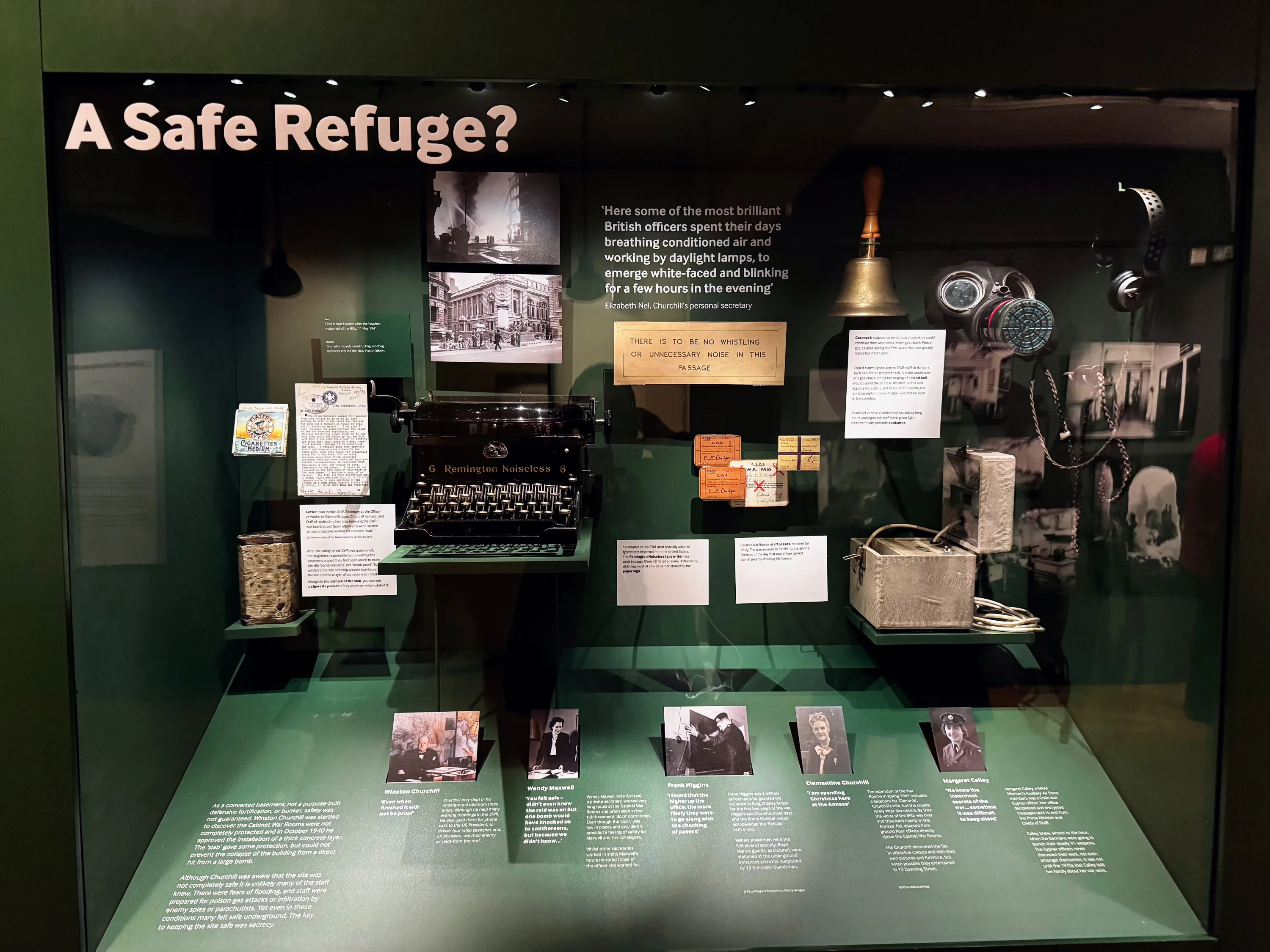
The Churchill War Rooms in London are a secret underground bunker system where Winston Churchill and his government directed the course of World War II. Located beneath the Treasury building in Westminster, this preserved bunker, is now a museum managed by the Imperial War Museums
Is the Churchill War Rooms Worth Visiting?
The Churchill War Rooms is one of the finest visitor experiences in London and consistently one of the highest-rated paid attractions in the country. Its combination of a historically extraordinary site, excellent interpretation, and the irreplaceable quality of walking through rooms that are exactly as they were left in 1945 makes it unlike any other museum in Britain.
The key word is "actual." The Cabinet War Rooms are not a reconstruction or a themed experience. Every room you walk through is the original room. Every map on the wall, every telephone on the desk, every pin in the chart, is where it was placed in wartime. The fire bucket behind Churchill's chair in the Cabinet Room, which he used as an ashtray, is still there. The alcoves in the tunnel walls, cut as defensive positions for soldiers if the bunker had ever been breached by enemy forces, are still there. The sense of standing in a place where the course of the war was determined is not manufactured; it is simply the result of the rooms being preserved as they were found.
The Cabinet Room is the centrepiece. From October 1940, this was the room where Churchill and his War Cabinet met to plot the Allied victory. The clocks in the room are set to 4:58pm, the time the first meeting began. The three seats opposite Churchill's position were occupied by the heads of the Army, Navy, and Air Force. The black phones with green handles on the tables were scrambler phones, which prevented external listening in on top-secret conversations. The level of operational detail preserved in this room is exceptional.
The Map Room is the most visually spectacular space in the complex. The Map Room remains untouched since 1945, its walls lined with charts, pins, and telephones that once tracked daily Allied movements. This was the room that operated 24 hours a day, every day of the war, staffed in rotating shifts to keep track of the movements of Allied and Axis forces across every theatre of the war simultaneously. The maps still carry the marks made during those years.
The Transatlantic Telephone Room is one of the most striking objects in the complex. The tiny Transatlantic Telephone Room, once disguised as a lavatory, shows how secret calls connected Churchill to global leaders. Until 1944, even Churchill believed the scrambled calls were transmitted via a simple device that distorted the voice. In fact, the system used was SIGSALY, a state-of-the-art encryption machine housed in the basement of Selfridges on Oxford Street. Visitors today can listen to recordings of conversations between the two leaders from a replica handset in the room, which is one of the more memorable interactive elements in the complex.
Churchill's underground bedroom is a small, austere room that conveys the reality of the man's existence underground during the heaviest periods of the Blitz. Churchill rarely actually slept here, preferring to return to Downing Street or Chequers whenever possible, but the room was ready for him at all times.
The Churchill Museum is the second and equally important half of the visit. Opened in 2005 and updated since, it is a full biographical museum dedicated to Churchill's ninety-year life, from his unhappy childhood at Harrow to his early military career in India, Sudan, and South Africa, through the political reversals of the 1930s, the wartime premiership, and his later years. A central interactive table, a twelve-metre-long digital display, allows visitors to explore Churchill's life chronologically, pulling up documents, photographs, letters, and film footage from any period. Personal objects throughout the museum include his famous siren suits, his desk, and original documents from Downing Street. This is not a hagiography; the museum addresses Churchill's complex and contested legacy with seriousness, covering both his wartime achievements and the aspects of his record that remain the subject of historical debate.
How Much Time Should I Spend at the Churchill War Rooms?
I'd recommend allowing at least 90 minutes for your visit, and longer if you want to grab a bite to eat at the cafe, or want to read everything at the Churchill Museum. Visitors who want to read every display and explore the Churchill Museum in depth should allow up to three hours.
A rough guide:
The Cabinet War Rooms (Map Room, Cabinet Room, Churchill's bedroom, Transatlantic Telephone Room, and adjoining corridors): 60 to 75 minutes at a comfortable pace with the audio guide
The Churchill Museum: 45 to 60 minutes
For families with children: The audio guide includes a dedicated Family Tour in English, and the interactive elements of the Churchill Museum are designed to engage younger visitors. Two hours is realistic for families, though children under five may find the low lighting and narrow corridors of the war rooms themselves challenging.
Audio Guides, Guided Tours, and the Bloomberg Connects App
The audio guide is included in the price of admission for all visitors and is available in eight languages: English, French, German, Spanish, Dutch, Hebrew, Mandarin, and Italian. A Family Tour in English and a Visually Impaired Tour in English are also available on the same device. The guides provide expert commentary on every room and object throughout the War Rooms, and given the density of the site, using the audio guide is strongly recommended rather than trying to navigate the rooms without it. Look out for the friendly and knowledgeable volunteers in red uniforms throughout the site; they can tell you what's happening on the day of your visit and help you make the most of your experience.
The Bloomberg Connects app is a free digital guide available on iOS and Android, offering an additional layer of curatorial insight from IWM specialists. It covers the history and stories of the War Rooms in greater depth than the audio guide device alone and can be downloaded before your visit at home so it is ready to use immediately on arrival. IWM advises downloading before your visit rather than on the museum's Wi-Fi.
The Secrets of Churchill's War Rooms guided tour is an expert-led group tour of approximately one hour, departing before the museum opens to general visitors. It provides behind-the-scenes access and expert guidance through the key rooms, uncovering stories not covered on the standard self-guided route. The tour is intended for visitors aged 16 and over. Following the tour, participants are free to continue exploring the war rooms and Churchill Museum at their own pace with the audio guide. IWM members receive a discounted rate. Book through the official IWM events page.
Afternoon Tea at Churchill War Rooms is a separate ticketed experience combining a luxury afternoon tea served in the historic site with an introductory talk exploring the history of the venue. It is a distinctive occasion for visitors who want to spend more time in the building than the standard visit allows, or for those marking a special event.
Where Should I Eat at and Near the Churchill War Rooms?
The on-site café is located in the historic room once used as the switchboard operations centre during the war, which gives it a character that no purpose-built museum café can replicate. It serves hot and cold drinks, cakes, sandwiches, and light meals and is open from 10:00am to 5:00pm daily. It is the most convenient option for a break during or after the visit.
For eating beyond the War Rooms, the Westminster area has a range of options within a short walk.
Café in the Crypt, St Martin-in-the-Fields (around 15 to 20 minutes on foot along Whitehall and Northumberland Avenue to Trafalgar Square) is one of the most characterful lunch venues in central London, serving a full café menu in the medieval crypt beneath an 18th-century church. It is consistently well-reviewed, reasonably priced for the area, and a rewarding destination in its own right.
The St James's Park café is around eight to ten minutes on foot through the park and offers drinks and snacks in an outdoor setting by the lake on fine days.
Victoria Street running south towards Victoria station has an increasing range of cafés and restaurants, with the quality improving as you move further from Parliament Square. The Nova development around Victoria station has a concentration of mid-range restaurants and is around 15 minutes on foot.
Westminster and Whitehall as a whole are not London's most rewarding dining areas, and visitors with more flexibility in their day are better served by heading to Soho or Covent Garden (around 20 minutes on foot or 10 minutes by Tube) for a broader range of options at better prices.
Accessibility at the Churchill War Rooms
Once inside, the historic Churchill War Rooms is wheelchair accessible throughout. The entrance via Birdcage Walk adjacent to St James's Park is the recommended accessible approach for visitors with mobility difficulties; contact the IWM in advance if you need to confirm the most appropriate arrival route.
Please be aware that due to the historic nature of the War Rooms, there are some areas with low lighting. Visitors with visual impairments should be aware of this, and the Visually Impaired Tour audio option on the guide device provides additional descriptive support.
Corridors are narrow in places. The IWM asks all visitors with small rucksacks or backpacks to wear them on the front of their body to make it easier to move around, and to prevent damage to the historic site.
Concession rate of £30.60 applies to disabled visitors.. One personal assistant accompanying a disabled visitor receives free admission.
A Visually Impaired Tour in English is available on the audio guide device at no additional charge.
The Bloomberg Connects app is compatible with screen readers and provides additional accessible content.
Rules and Practical Information
Large items of luggage are not admitted, and there are no luggage storage facilities at Churchill War Rooms. Suitcases and large baggage will be refused entry. If you are visiting on a day when you are also travelling from or to another destination with luggage, store it at a station left-luggage facility before arriving. London Bridge, Waterloo, and Victoria stations all have left-luggage facilities and are within reasonable distance.
Photography and video for personal, non-commercial use is permitted throughout the War Rooms. Flash photography and tripods are not permitted. The IWM asks that you do not film people without their permission.
Low lighting is a feature of the historic rooms, in keeping with the wartime atmosphere. The IWM flags this specifically for visitors with visual impairments, but all visitors should expect some areas to be significantly darker than a typical museum.
Children under 16 must be accompanied by an adult at all times.
The audio guide device should be collected at the start of your visit and returned at the exit. Standard wired headphones are compatible with the device.
What Else is There to Do Near the Churchill War Rooms?
Westminster Abbey is around five minutes on foot from the War Rooms, directly across Parliament Square. One of the most significant buildings in the country, holding nearly a thousand years of royal, religious, and national history, it requires a separate admission ticket.
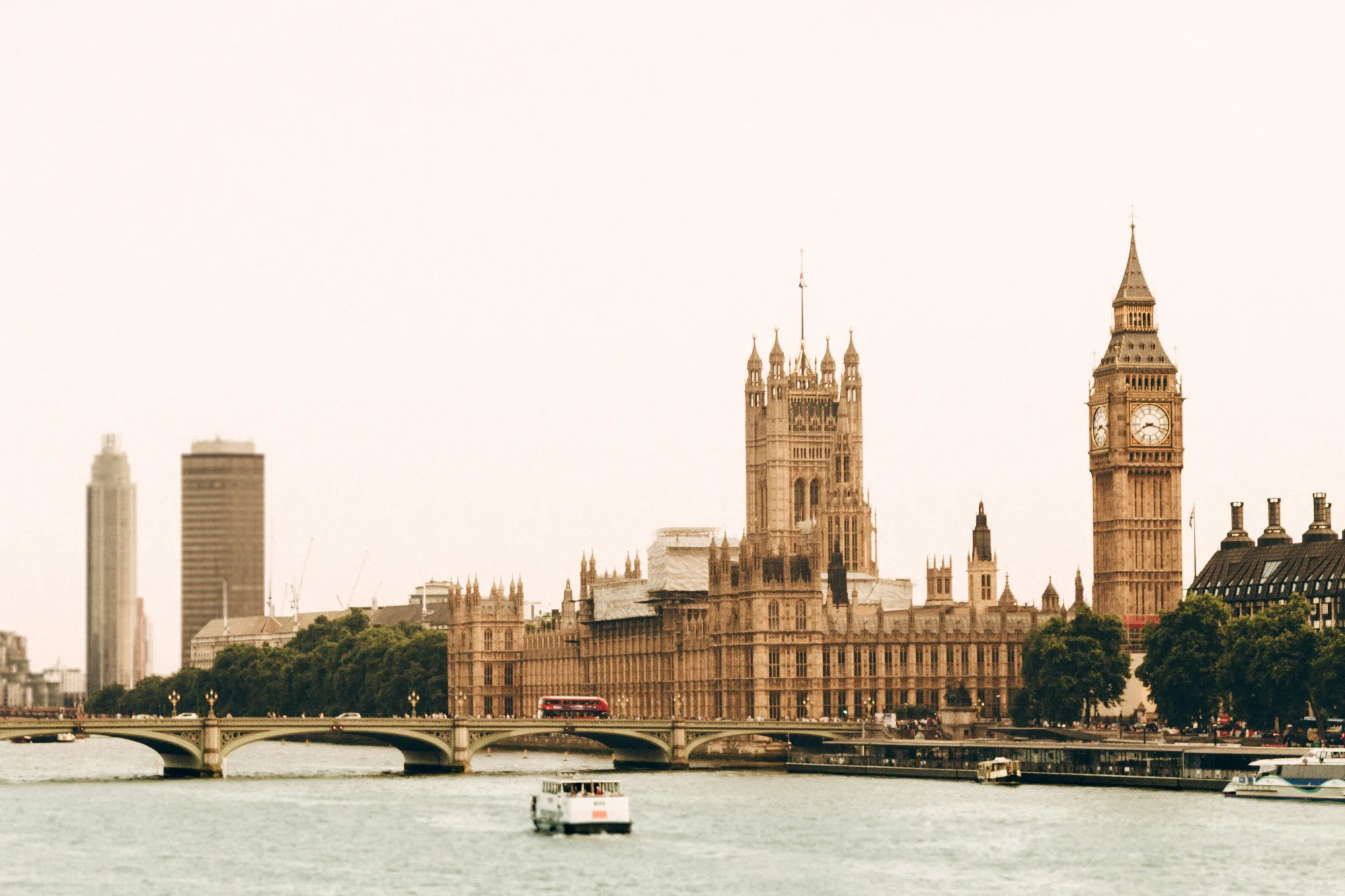
The Houses of Parliament and the Elizabeth Tower (Big Ben) are around five minutes on foot to the north-east. Full guided tours of the Houses of Parliament run on Saturdays year-round and on weekdays during recess, covering the House of Commons, the House of Lords, and the Central Lobby. The Elizabeth Tower climb is one of the most extraordinary experiences available in London.
The National Gallery and Trafalgar Square are around 15 minutes on foot along Whitehall and Northumberland Avenue. The National Gallery is free to enter for its permanent collection and holds one of the most significant collections of European painting in the world.
Tate Britain, around 15 minutes on foot south along Millbank beside the Thames, is the national museum of British art and is free to enter for the permanent collection. Its collection of Turner, Constable, and pre-Raphaelite painting is outstanding.
St James's Park is immediately adjacent to the War Rooms to the west, and the short walk through the park to Buckingham Palace and back is one of the pleasantest free activities in central Westminster.
HMS Belfast, a Second World War light cruiser moored on the Thames near London Bridge, is the most natural IWM companion to the Churchill War Rooms. Where the War Rooms tell the story of the command and strategic direction of the war, HMS Belfast tells the story of the men who fought it at sea. It is approximately 25 minutes from the War Rooms by Tube (Westminster to London Bridge). IWM membership covers both sites.
Final Tips for Visiting the Churchill War Rooms
Book online a day or two ahead for general entry, and 2-3 months ahead for the behind-the-scenes guided tour.
Book the first time slot of the day. The first slot, at 9:30am on Sunday to Thursday and 9:00am on Friday and Saturday, is consistently the calmest. The audio guide narration is most effective when you can stand in a room and listen without being jostled or distracted.
Use the audio guide throughout. The rooms are densely packed with objects and detail, and the written captions alone do not convey the full significance of what you are looking at. The audio guide is included in the price and is worth using in every room, not just the Cabinet Room.
Download the Bloomberg Connects app before you arrive. It provides an additional layer of curatorial depth from IWM specialists and is free. Having it downloaded at home ensures it is immediately available without relying on museum Wi-Fi.
Do not bring large luggage. There is no storage facility, and large bags are refused entry. This is a firm policy at a site where the narrow corridors make large items impractical regardless of the rule.
Allow time for the Churchill Museum. Many visitors spend their full allocated time on the War Rooms themselves and treat the Churchill Museum as an afterthought. It is the second half of a carefully designed two-part experience, and Churchill's ninety-year life, presented through the central interactive table and the surrounding personal objects, is as absorbing as the rooms themselves. Allow at least 45 minutes for it.
Consider IWM membership if you plan to visit HMS Belfast as well. The combined cost of adult admission to the Churchill War Rooms and HMS Belfast as of April 2026 is approximately £67 for two visits. IWM individual annual membership covers both sites plus IWM Duxford for less than that, and includes early-opening members' events, shop discounts, and no advance booking requirement.
Combine with Westminster Abbey or the Houses of Parliament. The three institutions are within five minutes of each other and cover complementary dimensions of British history. A morning at the War Rooms and an afternoon at Westminster Abbey is one of the most historically complete days central London offers.
Back to London Attractions
Explore other London attractions
" width="24px"><path d="M 0 0 L 24 0 L 24 21.231 L 0 21.231 Z" fill="transparent" height="21.230768474975793px" id="nL2EwDcS9" width="24px"/><path d="M 0 0.541 C 0 0.242 0.245 0 0.547 0 L 2.735 0 C 3.037 0 3.282 0.242 3.282 0.541 L 3.282 4.598 C 3.282 4.897 3.037 5.139 2.735 5.139 L 0.547 5.139 C 0.245 5.139 0 4.897 0 4.598 Z" fill="rgb(196, 217, 201)" height="5.138657337892187px" id="hZ_rlBe_S" transform="translate(0 16.092)" width="3.2820512820512358px"/><path d="M 0 0.541 C 0 0.242 0.245 0 0.547 0 L 2.735 0 C 3.037 0 3.282 0.242 3.282 0.541 L 3.282 7.843 C 3.282 8.142 3.037 8.384 2.735 8.384 L 0.547 8.384 C 0.245 8.384 0 8.142 0 7.843 Z" fill="rgb(230, 211, 160)" height="8.38412513024521px" id="HgVBxIz3e" transform="translate(5.128 12.847)" width="3.282051282051235px"/><path d="M 0 0.541 C 0 0.242 0.245 0 0.547 0 L 2.735 0 C 3.037 0 3.282 0.242 3.282 0.541 L 3.282 12.982 C 3.282 13.281 3.037 13.523 2.735 13.523 L 0.547 13.523 C 0.245 13.523 0 13.281 0 12.982 Z" fill="rgb(232, 207, 164)" height="13.522782468137464px" id="utgrDnoM9" transform="translate(10.325 7.708)" width="3.282051282051377px"/><path d="M 0 0.541 C 0 0.242 0.245 0 0.547 0 L 2.735 0 C 3.037 0 3.282 0.242 3.282 0.541 L 3.282 16.498 C 3.282 16.797 3.037 17.039 2.735 17.039 L 0.547 17.039 C 0.245 17.039 0 16.797 0 16.498 Z" fill="rgb(233, 196, 166)" height="17.038705909853153px" id="OLOhW6STz" transform="translate(15.521 4.192)" width="3.2820512820512384px"/><path d="M 0 0.541 C 0 0.242 0.245 0 0.547 0 L 2.735 0 C 3.037 0 3.282 0.242 3.282 0.541 L 3.282 20.69 C 3.282 20.989 3.037 21.231 2.735 21.231 L 0.547 21.231 C 0.245 21.231 0 20.989 0 20.69 Z" fill="rgb(217, 170, 153)" height="21.230768474975793px" id="H5Z8wcwkd" transform="translate(20.718 0)" width="3.2820512820512278px"/></g></svg>)