Back to Barcelona Attractions
Do You Need to Book Casa Batlló Tickets in Advance?
Updated July 2026
There is a building on the Passeig de Gràcia in Barcelona that looks, depending on your angle and the light, like a living creature covered in shimmering scales, a cathedral built from sea foam and bones, or a fever dream of colour and organic form that somehow managed to be finished and is now standing in the middle of one of Europe's great boulevards. Casa Batlló, Antoni Gaudí's 1904 to 1906 remodelling of an unremarkable apartment block for the textile magnate Josep Batlló i Casanovas, is widely considered the most concentrated expression of his genius in a single domestic work. The façade, sheathed in a mosaic of broken ceramic and glass that shifts from gold to green to blue depending on the sunlight, the skeletal balconies nicknamed "the House of Bones," the dragon-spine rooftop with its polychrome tiled scales and cross-tipped tower, the interior designed without a single straight angle and flooded with carefully modulated light: all of it is the work of an architect who had by this point entirely left behind the conventions of his profession and was building according to principles drawn from nature, faith, and the Catalan identity. Declared a UNESCO World Heritage Site in 2005, it is one of the most visited buildings in Spain and one of the most extraordinary things a human being has ever built. It requires advance booking, and it is worth every bit of the considerable effort of getting in.
At a Glance
How Early to Book:
Book a few days ahead for general entry tickets. Book earlier for special experiences, such as night visits and rooftop concerts.
At least 2 months in advance, sometimes up to 5 months.
Best Times to Visit:
Early mornings at opening, and late afternoons, are the least busy, especially on weekdays. It's generally recommended to avoid 10am to 1pm as crowds will be heavy.
Ticket price:
Tickets start at €29 for adults for general entry when booked online. Dynamic pricing is implemented, meaning ticket prices increase closer to the date of visit.
Where to Book:
Landmark Address:
Do You Need to Book Casa Batlló Tickets in Advance?
Yes, and this is non-negotiable. Casa Batlló is one of the most popular attractions in Barcelona, receiving around a million visitors a year within a relatively small building, and the timed entry system means that popular time slots, particularly between 10:00am and 1:00pm and on weekends, sell out days or weeks in advance during the main tourist season. Do not plan to buy a ticket at the door on the day and expect to simply walk in at a time that suits you.
Booking online in advance is also significantly cheaper than buying at the box office. Ticket prices are dynamic: they increase as the visit date approaches, meaning that the earlier you book, the less you pay. The gap between advance online prices and last-minute or walk-up prices can be as much as €12 to €17 per ticket. The only tickets that cannot be purchased at the box office at all are the Magic Nights and the "Be the First" early entry tickets: these are exclusively available online.
Book through the official website at casabatllo.es/en/online-tickets. Tickets from the official site carry a best-price guarantee and no additional commission. Third-party resellers charge booking fees on top of the official price.
Casa Batlló operates a tiered ticket system with four main options for the standard daytime visit, each including progressively more features:
Blue Ticket (from approximately €29 online): Includes the self-guided visit with audio guide and access to the Gaudí Cube installation. The rooftop terrace is not included in the Blue ticket since January 2025, which is a significant change from before. For most visitors, this represents poor value compared to the Silver ticket.
Silver Ticket (from approximately €34 online): Includes everything in the Blue ticket plus rooftop terrace access. This is the recommended baseline option for most visitors.
Gold Ticket (from approximately €39 online): Includes everything in the Silver ticket plus the tablet SmartGuide (augmented reality), the Gaudí Dome immersive experience, access to the Concierge Room (fully restored, with its original scenography), and access to the first-floor private rooms of the Batlló family residence. This is the best option for visitors who want the fullest possible experience.
Platinum Ticket (from approximately €49 online): Includes everything in the Gold ticket plus skip-the-line priority entry and a flexible ticket allowing free cancellation up to three hours before the visit. The most practical option if your schedule might change or if you want guaranteed fast entry at peak times.
All tickets include the standard audio guide and access to the main visitor route. Children aged 0 to 12 enter free, but a free ticket must still be reserved online for each child. Without a reserved ticket, children will not be admitted.
Combo tickets pairing Casa Batlló with Park Güell, the Sagrada Família, or both are available and offer a small discount on individual prices. The "3 Houses of Gaudí" package covers Casa Batlló, Casa Milà (La Pedrera), and Casa Vicens and includes a 10% discount on other attractions.
Opening Hours and Entry Information
Casa Batlló is open every day of the year including public holidays and Christmas, with the following standard hours:
Daily: 8:30am to 10:30pm for the general visit (last admission 9:30pm; ticket office closes at 9:00pm)
Magic Nights: Separate evening programme starting at 8:00pm for the visit and 9:00pm for the rooftop concert, running on selected dates from March through to late autumn (see Magic Nights section below)
"Be the First" early entry is available at 8:30am on selected dates, allowing visitors to explore the building in near-solitude before the main crowds arrive. This option is exclusively available online and at a premium over the standard Silver or Gold ticket prices. For visitors who want a quiet, almost private experience of the building, it is one of the most recommended options. Availability is very limited; book well in advance.
Hours are consistent year-round with minor seasonal adjustments. Always confirm the current times for your specific visit date on the official website.

What is the Best Way to Get to Casa Batlló?
Casa Batlló is located at Passeig de Gràcia 43, in the heart of the Eixample district, and is one of the most centrally and conveniently positioned major attractions in Barcelona.
By Metro: The most direct option is Passeig de Gràcia station, served by Lines 2 (purple), 3 (green), and 4 (yellow). The station has a dedicated exit labelled "Carrer d'Aragó / Rambla de Catalunya / Casa Batlló" which brings you up onto the Passeig de Gràcia within one minute's walk of the building. This is by far the most convenient transport option.
By FGC (Ferrocarrils de la Generalitat): The Provença station (FGC Lines L6, L7, S1, and S2) is around a 10-minute walk from Casa Batlló and is useful if you are travelling from the Sarrià or Vallès areas.
By Rodalies (suburban train): The Renfe Passeig de Gràcia station (R2 Nord and R2 Sud lines) is immediately below the Metro station and is useful for those arriving from the airport on the R2 Nord line or from towns along the Maresme or Garraf coasts.
By Bus: Several routes stop directly outside or very close to Casa Batlló on the Passeig de Gràcia, including lines 7, 22, and V15 (stop: Pg de Gràcia / Aragó), line 24 (stop: Passeig de Gràcia / Consell de Cent), and the Barcelona Bus Turístic (both red and blue routes stop at Casa Batlló / Fundació Antoni Tàpies).
On foot: Casa Batlló is walkable from Plaça de Catalunya (around 10 minutes), from the Gothic Quarter (around 20 minutes), and from the Sagrada Família (around 25 minutes). The Passeig de Gràcia is one of Barcelona's most pleasant streets to walk, lined with Modernista buildings, trees, and elegant pavements.
By taxi or rideshare: Taxis can drop directly on the Passeig de Gràcia. This is a practical option from the airport or from distant parts of the city, but entirely unnecessary from the city centre given how well served the area is by public transport.
By car: Driving is not recommended. Parking in the Eixample is restricted and expensive, and the area around the Passeig de Gràcia is congested during tourist hours. The Metro is significantly faster and less stressful from virtually any starting point in Barcelona.
What is the Best Time to Visit Casa Batlló?
Given the timed entry system and the building's limited capacity, the experience of visiting Casa Batlló varies considerably depending on when you arrive.
Early morning (9:00am to 10:00am) is the quietest time for the standard daytime visit. The building feels significantly calmer at this hour, the audio guide is easier to use without competing noise, and the light through the interior light well and the Noble Floor windows is particularly beautiful in the morning. If your budget allows, the "Be the First" 8:30am entry is even quieter.
The period from 10:00am to 1:00pm sees the highest concentration of visitors and is the busiest part of the day. These slots are the most sought-after and sell out fastest, which can trap visitors into thinking they need to go at this time. They do not.
Late afternoon from around 5:00pm is the second-best option for a comfortable visit. Visitor numbers thin noticeably after the main lunchtime rush, and the building is calmer for the final hours of the day. The light at this hour on the façade is also particularly warm, especially in summer.
On days of the week: Weekdays from Tuesday to Thursday are less busy than Fridays and weekends. Saturday is consistently the busiest single day of the week.
For the façade photography: The façade of Casa Batlló faces south-west on the Passeig de Gràcia, and catches the afternoon and early evening light most directly. Late afternoon, from around 4:00pm to 6:00pm in summer, is when the ceramic and glass tiles on the façade are most brilliantly lit. Arriving early enough to photograph the building from across the Passeig de Gràcia before your entry slot is always worthwhile.
Is Casa Batlló Worth Visiting?
Absolutely, though it is worth being clear-eyed about what kind of experience it is. Casa Batlló is not a museum with a collection. It is a building: a single private house that Gaudí transformed into one of the most extraordinary interior spaces in the world, and that has since been enhanced with contemporary digital and immersive experiences that aim to deepen the visitor's engagement with the architecture. The visit is relatively short compared to a full museum day, and the entry price is high. Neither of these things is a reason not to go; they are simply context for setting expectations correctly.
The Noble Floor, the main living quarters of the Batlló family on the first floor, is where Gaudí's interior design is at its most concentrated. The central drawing room, with its undulating mushroom-shaped fireplace and wooden ceiling that ripples like a whirlpool, is one of the most compelling domestic interiors ever created. Every element, the door handles, the window frames, the built-in furniture, the fireguard, has been designed as part of a unified whole, and the cumulative effect is unlike anything else in the world. The furniture was made for specific locations within the room and cannot be moved without the composition collapsing; this is architecture as total art.
The central light well, running the full height of the building, is one of Gaudí's most ingenious structural and aesthetic achievements. Tiled in a gradient from deep cobalt blue at the top to lighter blue-white at the bottom, it distributes natural light evenly to every apartment on every floor. The effect from the staircase spiralling around it is hypnotic.
The attic (now the Gaudí Cube gallery), with its series of 60 catenary parabolic arches forming a continuous undulating tunnel in white, is one of the most serene spaces in the building.
The Dragon Rooftop is the most photographed part of the building and deserves every image taken of it. The great scaly ridge of the roof, the ceramic chimneys grouped like warriors in twisted helmets, and the tower topped with a four-armed cross all cohere into a roofscape that is simultaneously an act of architectural sculpture, a narrative about Saint George and the dragon (Catalonia's patron saint), and a piece of pure visual delight. The panoramic view over the Passeig de Gràcia, with Casa Milà visible to the north and the Sagrada Família in the middle distance, is spectacular on a clear day.
The Gaudí Cube by digital artist Refik Anadol, the world's first six-sided LED cube, offers a very 21st-century counterpoint to the 19th-century architecture around it. It is included in the Gold and Platinum tickets and generates some of the most widely shared photographs taken in the building. Whether it enhances or distracts from the Gaudí experience will depend on your point of view; it is at least very well made.
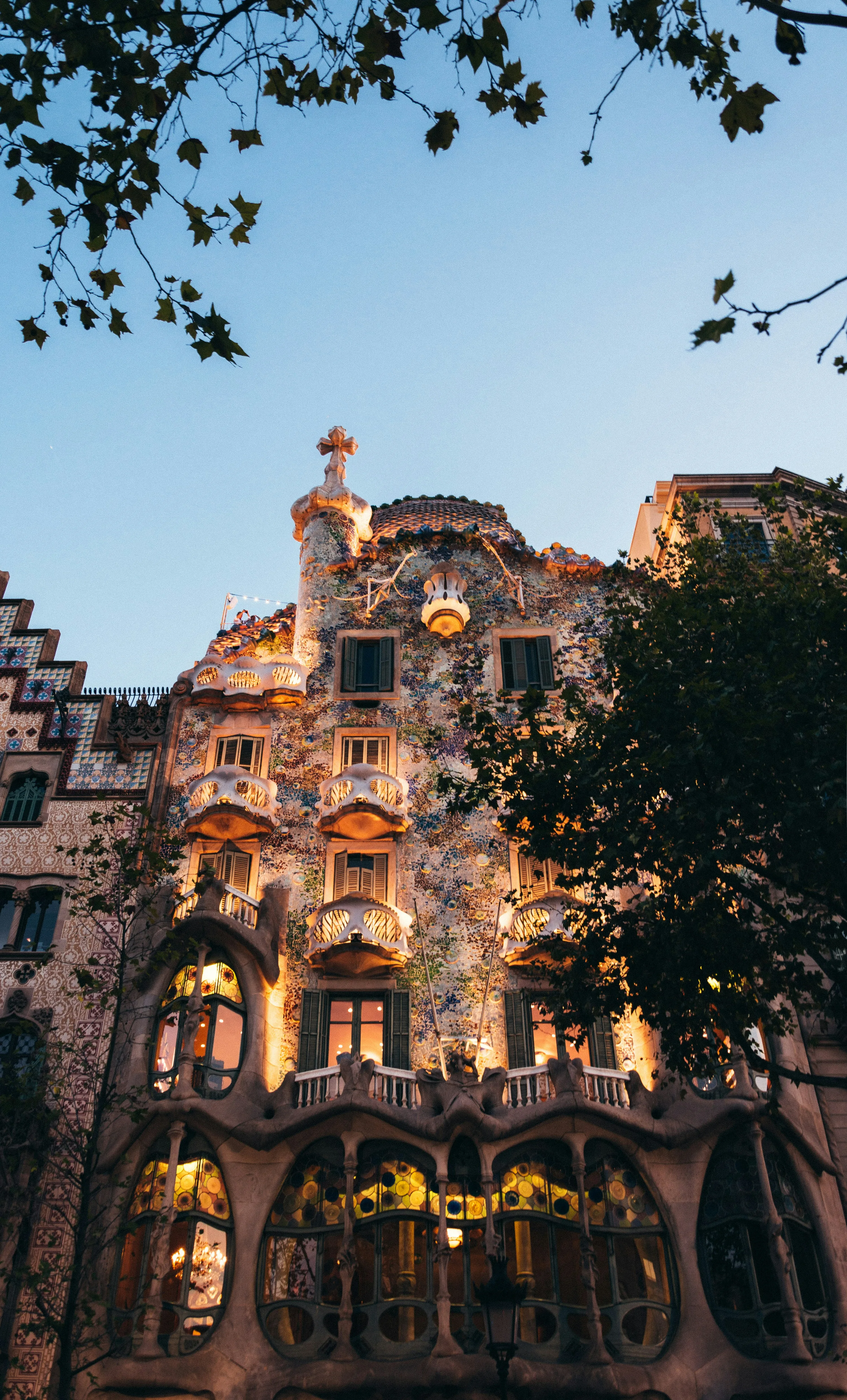
Casa Batlló's façade resembles a dragon’s back, representing the legend of Saint George, while the interior is inspired by marine life. The roof is covered in colorful, iridescent ceramic tiles that resemble scales, with a four-armed cross on a tower representing St. George’s sword.
How Much Time Should I Spend at Casa Batlló?
Most visitors will find that 60 to 90 minutes is sufficient for a thorough self-guided visit using the audio guide, covering the Noble Floor, the light well, the attic, and the rooftop. Gold and Platinum ticket holders adding the Gaudí Dome, the Concierge Room, and the private rooms should plan for up to two hours.
The building is compact and the visitor route is well paced. Unlike a large museum, there is no risk of running out of things to look at within the allotted visit length; the risk, if anything, is rushing through too quickly. The audio guide runs to approximately 45 minutes on the standard version; the Gold ticket tablet SmartGuide adds significantly more content for those who want it.
A rough guide for planning:
Noble Floor (main living quarters): 15 to 25 minutes
Light well and staircase: 5 to 10 minutes
Upper floors and private rooms (Gold/Platinum): 15 to 20 minutes
Attic and Gaudí Cube: 10 to 15 minutes
Dragon Rooftop terrace: 15 to 20 minutes (longer for photographers)
Gaudí Dome experience (Gold/Platinum): 10 to 15 minutes
If you are combining a daytime visit with the Magic Nights programme on the same date, the evening visit begins at 8:00pm and runs approximately two hours in total including the concert.
Audio Guides and Guided Tours
The audio guide SmartGuide is included with all ticket levels and is available directly on your own smartphone, downloaded through the official Casa Batlló app (iOS and Android). It is available in 15 languages and features music composed specifically for the visit by Dani Howard. Download the app and your ticket content before you arrive, as connectivity inside the building can be unreliable. The audio guide takes you through the building room by room and includes audio, visual content, and the story of each space.
The tablet SmartGuide, included in the Gold and Platinum tickets, adds an augmented reality layer to the visit. Holding the tablet up in specific rooms, you can see how the spaces were originally furnished, watch the windows transform into marine animals, and view the building's architectural geometry overlaid on the real space. It is technically impressive and enhances the understanding of Gaudí's intentions, though several reviewers note that focusing solely on the tablet risks missing the actual building around you. Use it as a complement, not a substitute for looking.
Guided group tours are available for an additional fee and must be booked in advance through the official website or authorised tour operators. Tours are conducted in multiple languages and run for approximately 1.5 hours. They are particularly worthwhile for visitors with a deep interest in the architectural and symbolic programme of the building, given the complexity of Gaudí's references to Catalan identity, Catholic theology, and natural forms.
Magic Nights: Evening Concerts on the Dragon Rooftop
The Magic Nights programme is one of the most special experiences that any building in Barcelona offers, and for visitors whose Barcelona evenings are free, it is one of the most worthwhile bookings on this page.
Running from March through to late autumn on selected dates (check the online calendar), Magic Nights transforms the Dragon Rooftop into an intimate outdoor concert venue. The programme begins with a self-guided visit to the building at 8:00pm, followed by a live concert on the rooftop at 9:00pm lasting approximately one hour. A complimentary drink (cava or non-alcoholic alternative) is included with all Magic Nights tickets. The whole experience lasts around two hours.
Musical programmes vary by date and span jazz, soul, flamenco, rumba, pop, and classical, performed by Catalan and international musicians. Concerts change weekly, and the schedule on the official website lists the specific artist and genre for each date, allowing you to choose the programme that appeals most.
Magic Nights tickets are tiered similarly to daytime tickets. The standard Blue version seats visitors at the back of the rooftop performance area; the Silver and Gold versions offer progressively better positions, with Gold providing front-row seating. For the concert specifically, the difference between the Blue and Gold positions is significant. Note that the Gaudí Cube and some private rooms are not accessible during Magic Nights visits for operational reasons.
Tickets start from approximately €59 for the Blue tier and are only available online. Unlike daytime tickets, Magic Nights tickets are typically only bookable one to two months in advance as each month's schedule is released. For the most popular programmes and summer weekends, booking within a few days of release is advisable. Tickets sell out.
In the event of light rain, concerts generally proceed as normal. In heavy rain or severe weather, the concert may be relocated to a covered area or rescheduled. No refunds are provided for cancellations due to weather; check the Casa Batlló terms before booking.
Where Should I Eat Near Casa Batlló?
There is no restaurant or café inside Casa Batlló. Food and drinks are not permitted within the building. Visitors should plan to eat before their visit or in the surrounding neighbourhood afterwards.
The Passeig de Gràcia itself and the Eixample streets immediately surrounding it are among the finest dining areas in Barcelona, with an extraordinary range of options at every price point. A few highlights worth knowing:
For tapas: The Eixample has dozens of excellent tapas bars, particularly on the streets running perpendicular to the Passeig de Gràcia. Vinitus is one of my personal favorite tapas restaurants in this neighborhood, but there are tons of others with great reviews.
For a special meal: The broader Eixample neighbourhood is home to some of Barcelona's most celebrated destination restaurants, including several with Michelin stars. Moments is a two-starred Michelin restaurant and is basically across the street. The area around the Passeig de Gràcia is particularly well represented for high-end Catalan and contemporary cuisine.
For a quick lunch before your visit: The streets around Passeig de Gràcia station have numerous cafés and bakeries serving coffee, pastries, and sandwiches. Federal Café on Carrer del Parlament (a short walk into the Esquerra de l'Eixample) is a long-standing favourite for brunch and coffee.
The Block of Discord: Casa Batlló sits on a stretch of the Passeig de Gràcia nicknamed the "Manzana de la Discordia" (Block of Discord), which also contains notable buildings by Puig i Cadafalch and Domènech i Montaner, and Casa Milà (La Pedrera) is just a three-minute walk north. The café at La Pedrera's ground floor is a reasonable option for a coffee between the two visits.
For a broader range of dining at lower prices, the Gràcia neighbourhood is around a 15-minute walk north and is one of Barcelona's most enjoyable and authentic areas for eating and drinking.
Accessibility at Casa Batlló
Casa Batlló has invested significantly in accessibility and is well equipped for visitors with reduced mobility.
Wheelchair users are welcome throughout the building. Two lifts with priority use for visitors with disabilities, reduced mobility, and pregnant women serve all floors of the visitor route. The building's historic layout means that some areas involve narrow passages, but the management has ensured that the core visitor experience is accessible.
For visitors with hearing difficulties, the tablet SmartGuide (included in the Gold and Platinum tickets) features subtitles for all content in 15 languages. A dedicated tablet is available at the entrance for hearing-impaired visitors. The building is a cardioprotected space with trained staff and defibrillators present.
Pushchairs and strollers are welcome at the entrance but must be folded and stored in the cloakroom (free of charge) before proceeding into the main building. Baby carriers are available on request.
Disabled visitors (65% or higher disability with documentation) receive free admission. One accompanying companion also enters free. This must be confirmed at the ticket desk with the relevant documentation.
Rules, Bags, and Security
Photography for personal, non-commercial use is permitted throughout the building. Flash photography is not permitted. Tripods, selfie sticks, and drones are prohibited. During the Magic Nights rooftop concert, photography is welcome during the golden hour before the concert begins; specific photography rules during the performance will be indicated on the night.
Bags: There are no published bag size restrictions for the standard visit, but large bags and luggage are discouraged given the narrow passages and historic interiors. A cloakroom is available at the entrance.
Food and drink are not permitted inside the building. Water in a sealed bottle is generally tolerated.
Animals: Animals are generally not permitted inside the building, though staff may permit small animals at their discretion. Guide dogs accompanying disabled visitors are welcome throughout.
Ticket terms: Tickets are non-transferable and linked to the booking. Standard tickets (not Platinum) cannot be rescheduled. Refundable tickets are available exclusively at the Platinum tier. For all other ticket types, no refund or date change is possible once booked.
What Else is There to Do Near Casa Batlló?
The immediate neighbourhood of Casa Batlló on the Passeig de Gràcia is one of the richest concentrations of Modernista architecture in the world, and the building sits in a larger Gaudí and Modernisme itinerary that is one of the great urban architectural walks in Europe.
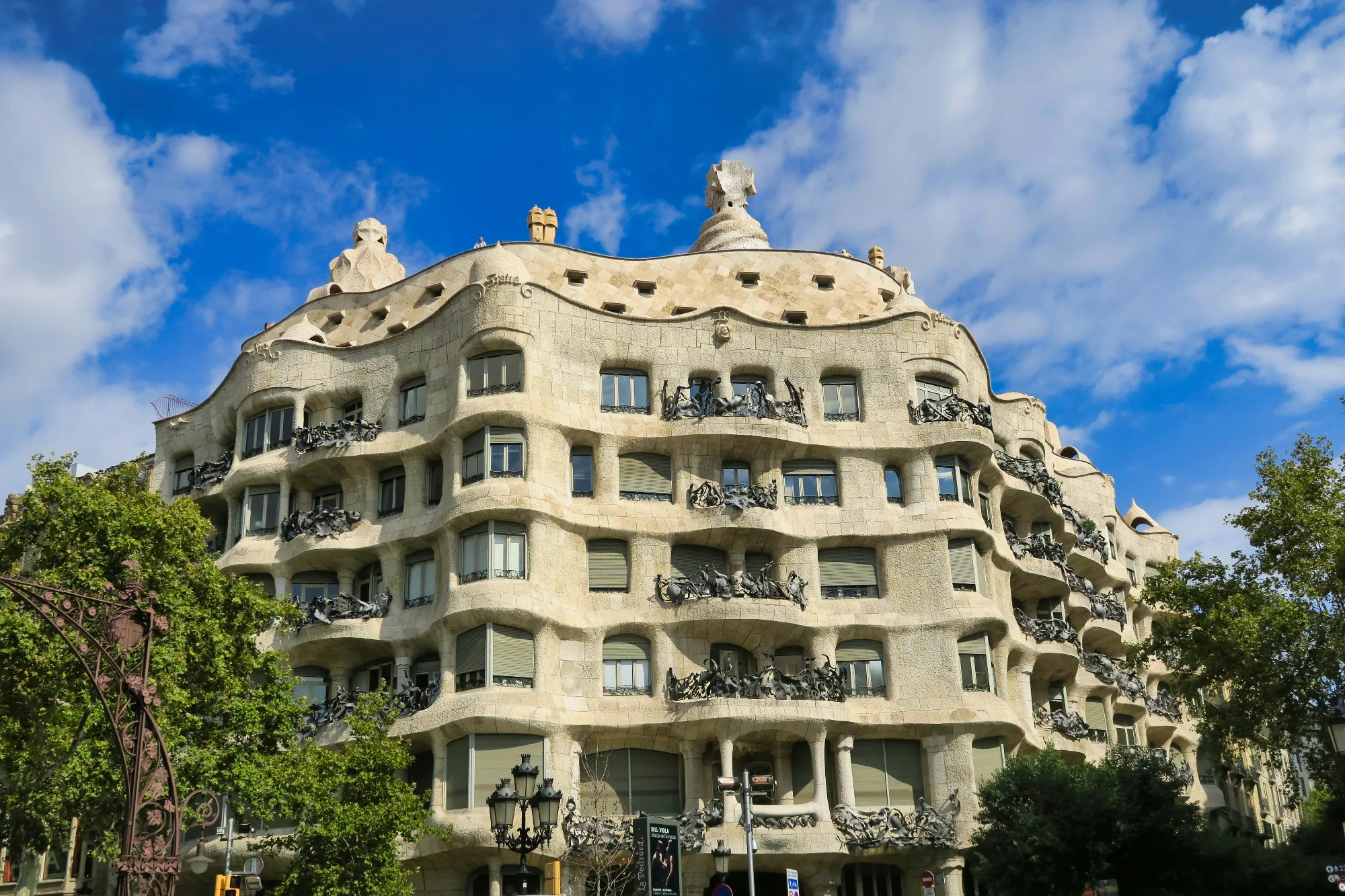
Casa Milà (La Pedrera), just three minutes' walk north on the Passeig de Gràcia (number 92), is Gaudí's other major work on this boulevard, built between 1906 and 1912. Where Casa Batlló is dense with colour and organic decoration, La Pedrera is starker and more geological in feel, its limestone façade rippling like a cliff face. The rooftop, with its warrior-helmet chimneys and winding walkways, is spectacular and offers some of the finest views in the Eixample. La Pedrera requires advance booking. A combined ticket covering both buildings is available and represents good value.
The Block of Discord: The stretch of Passeig de Gràcia between Carrer d'Aragó and Carrer del Consell de Cent also contains Casa Amatller (by Josep Puig i Cadafalch, with a distinctive stepped gable and Gothic-influenced façade) and Casa Lleó Morera (by Lluís Domènech i Montaner, with exuberant floral decoration). Neither requires booking for the exterior, and both are worth a few minutes of attention as you walk between them.
Park Güell, Gaudí's hillside park and garden city project in the Gràcia district, is around 25 minutes from Casa Batlló on the Metro (Line 3 from Passeig de Gràcia to Lesseps). It requires advance booking for the Monumental Zone and should be treated as a separate half-day experience.
The Sagrada Família is approximately 25 minutes on foot from Casa Batlló or a short Metro ride.
Casa Vicens, Gaudí's first major commission (1883 to 1889) in the Gràcia neighbourhood, is around 30 minutes on foot or a short Metro ride from Casa Batlló. It is smaller and quieter than the later works and offers a fascinating glimpse of Gaudí's early Orientalist style before he had fully developed his mature vocabulary. It requires advance booking but sees far fewer visitors than Casa Batlló or La Pedrera.
Fundació Antoni Tàpies, directly adjacent to Casa Batlló at Carrer d'Aragó 255, occupies the former Montaner i Simon publishing house and is dedicated to the work of Barcelona's most significant 20th-century artist. It is a manageable complement to a Passeig de Gràcia visit and does not require advance booking for standard entry.
Final Tips for Visiting Casa Batlló
Book as early as possible, and as early in the day as possible. Prices increase as the visit date approaches, and early morning slots are both the cheapest and the most peaceful. The combination of the lowest price and the quietest experience is always available at the first entry of the day.
The Silver ticket is the minimum worthwhile option. Since January 2025, the rooftop terrace has been excluded from the Blue ticket, and without the Dragon Rooftop the visit feels significantly incomplete. The Silver ticket should be treated as the baseline. The Gold ticket adds enough to be worth the additional cost for most visitors.
Download the app before you leave your accommodation. Connectivity inside the building is unreliable. Having the audio guide downloaded and ready to go on your phone before arrival ensures the experience works as intended.
Do not spend the entire visit looking at the tablet. The Gold ticket's tablet SmartGuide is technically impressive, but the building itself is what you came to see. Use the tablet selectively for the rooms where it adds the most context, and spend the majority of your time looking at the actual architecture with your own eyes.
Book the Magic Nights if your Barcelona evenings allow it. The combination of the building, the rooftop at sunset, live music, and a glass of cava is one of the best evenings any Barcelona visitor can have. Book within a few weeks of the date you want, choose the Gold seating tier for the best concert view, and check the weekly concert programme to find the musical genre that appeals most to you.
Photograph the façade from across the Passeig de Gràcia. The full width and brilliance of the Casa Batlló façade can only be seen from the far pavement of the boulevard. Allow time before your entry slot to cross the street and take the building in from a distance. Early morning and late afternoon light are best.
Combine with Casa Milà on the same day. The two buildings are three minutes apart, they are Gaudí's two great Passeig de Gràcia works, and they are more illuminating seen in sequence than either is alone. A combined ticket is available and saves money. A morning at Casa Batlló followed by lunch and an afternoon at La Pedrera is one of the most rewarding single days in Barcelona.
Back to Barcelona Attractions
Explore other Barcelona attractions
" width="24px"><path d="M 0 0 L 24 0 L 24 21.231 L 0 21.231 Z" fill="transparent" height="21.230768474975793px" id="nL2EwDcS9" width="24px"/><path d="M 0 0.541 C 0 0.242 0.245 0 0.547 0 L 2.735 0 C 3.037 0 3.282 0.242 3.282 0.541 L 3.282 4.598 C 3.282 4.897 3.037 5.139 2.735 5.139 L 0.547 5.139 C 0.245 5.139 0 4.897 0 4.598 Z" fill="rgb(196, 217, 201)" height="5.138657337892187px" id="hZ_rlBe_S" transform="translate(0 16.092)" width="3.2820512820512358px"/><path d="M 0 0.541 C 0 0.242 0.245 0 0.547 0 L 2.735 0 C 3.037 0 3.282 0.242 3.282 0.541 L 3.282 7.843 C 3.282 8.142 3.037 8.384 2.735 8.384 L 0.547 8.384 C 0.245 8.384 0 8.142 0 7.843 Z" fill="rgb(230, 211, 160)" height="8.38412513024521px" id="HgVBxIz3e" transform="translate(5.128 12.847)" width="3.282051282051235px"/><path d="M 0 0.541 C 0 0.242 0.245 0 0.547 0 L 2.735 0 C 3.037 0 3.282 0.242 3.282 0.541 L 3.282 12.982 C 3.282 13.281 3.037 13.523 2.735 13.523 L 0.547 13.523 C 0.245 13.523 0 13.281 0 12.982 Z" fill="rgb(232, 207, 164)" height="13.522782468137464px" id="utgrDnoM9" transform="translate(10.325 7.708)" width="3.282051282051377px"/><path d="M 0 0.541 C 0 0.242 0.245 0 0.547 0 L 2.735 0 C 3.037 0 3.282 0.242 3.282 0.541 L 3.282 16.498 C 3.282 16.797 3.037 17.039 2.735 17.039 L 0.547 17.039 C 0.245 17.039 0 16.797 0 16.498 Z" fill="rgb(233, 196, 166)" height="17.038705909853153px" id="OLOhW6STz" transform="translate(15.521 4.192)" width="3.2820512820512384px"/><path d="M 0 0.541 C 0 0.242 0.245 0 0.547 0 L 2.735 0 C 3.037 0 3.282 0.242 3.282 0.541 L 3.282 20.69 C 3.282 20.989 3.037 21.231 2.735 21.231 L 0.547 21.231 C 0.245 21.231 0 20.989 0 20.69 Z" fill="rgb(217, 170, 153)" height="21.230768474975793px" id="H5Z8wcwkd" transform="translate(20.718 0)" width="3.2820512820512278px"/></g></svg>)