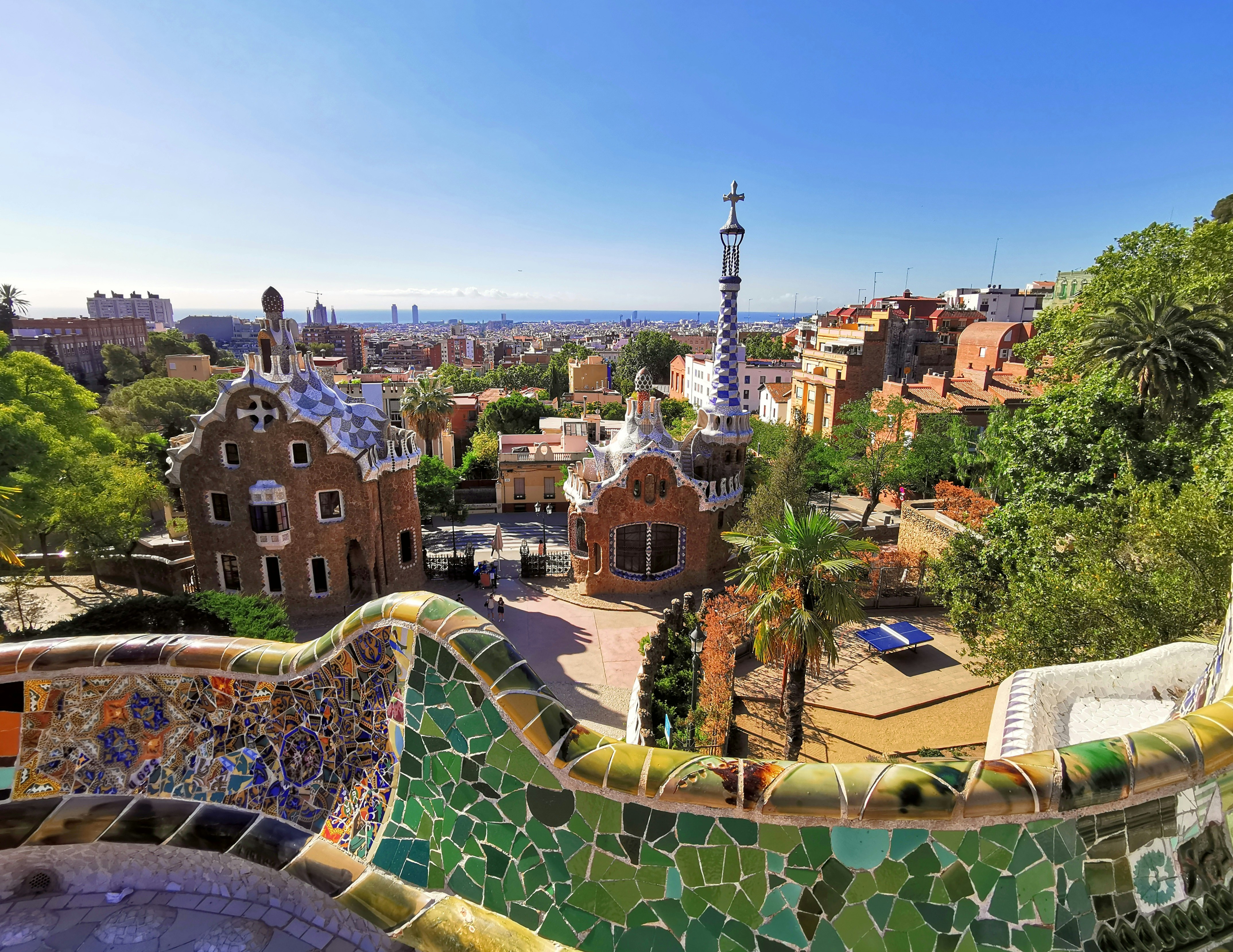
Barcelona • La Salut, Gràcia
For General Entry, pre-booking a timed-entry ticket currently required; there is no on-site ticket office that sells same day tickets. Guided tours are also given several times per day in a few different languages, and require booking ahead.
Book 1 Week Ahead
Peak Season
Book 1-3 Days Ahead
Off Season
Back to Barcelona Attractions
NOTE: Timed-entrance tickets are currently required for entry into Park Güell.
Do you Need to Book Tickets in Advance for Park Güell?
Updated July 2026
Perched on the slopes of Carmel Hill in the Gràcia district, Park Güell is one of the most joyful and inventive places in Barcelona. Designed by Antoni Gaudí between 1900 and 1914 on a commission from the Catalan industrialist Eusebi Güell, it was originally conceived as a private residential garden city along the lines of the English garden city movement. The project failed commercially: of the sixty houses envisioned, only two were ever built, and by 1926, the year of Gaudí's death, the city of Barcelona had taken ownership and opened it to the public as a park. What remained was something more interesting than any housing estate: a remarkable fusion of architecture, landscape, and mosaic art that reads like a conversation between Gaudí's imagination and the natural hillside around it. Declared a UNESCO World Heritage Site in 1984, Park Güell now draws over ten million visitors a year, making it the second most visited attraction in Spain after the Sagrada Família. Getting in requires planning, and understanding the park's two distinct zones before you visit makes the whole experience significantly more rewarding.
At a Glance
How Early to Book:
Book about 1 week ahead to ensure wide timeslot availability. Last-minute tickets may be available up to the day before pending availability.
About 3 months in advance for general entry, and 1 month in advance for guided tours.
Best Times to Visit:
Early mornings at opening, and late afternoons, will have the smallest crowds.
Ticket price:
€18 for general entry, €35 for guided tours.
Where to Book:
Landmark Address:
Do You Need to Book Park Güell Tickets in Advance?
Yes, and this is the single most important practical thing to understand before visiting Park Güell. The Monumental Zone, which contains all of Gaudí's most celebrated architectural works, operates a strict timed entry system with a maximum of 1,400 visitors admitted per hour. Tickets must be purchased online in advance through the official website or app. There is no walk-up ticket purchase at the gate for tourist visitors during opening hours, and popular time slots, particularly in the peak season between April and October, sell out well in advance.
Arriving without a pre-booked ticket during busy periods means you will not be able to enter the Monumental Zone. This is a firm rule, not a risk to be weighed up. Given the walk to the park from the nearest Metro station, arriving to find no tickets available is a particularly frustrating outcome. Book before you travel.
Tickets are available exclusively through the official website. The official app also allows ticket purchase. There is no authorised third-party sales channel for the standard entry ticket; any third-party site selling Park Güell tickets will be charging a commission on top of the official price.
Your timed entry ticket is valid for the specific date and time slot selected. You have a 30-minute grace period after the time printed on your ticket to present yourself at the access control point. If you arrive later than 30 minutes after your slot time, you will be refused entry without a refund. Aim to arrive at the park gates at least 15 minutes before your booked time, factoring in the uphill walk from the Metro or bus stop.
Once inside the Monumental Zone, there is no time limit on how long you can stay. However, exit is final: if you leave the Monumental Zone, you cannot re-enter on the same ticket.
Gaudí House Museum: The Gaudí House Museum, Gaudí's personal residence from 1906 to 1925, is located within the park but requires a separate ticket from the standard Monumental Zone entry. A combined ticket covering both the Monumental Zone and the Gaudí House Museum is available at a higher price. The museum reopened recently following restoration works and is a worthwhile addition to the visit for anyone with a deep interest in Gaudí.
The Barcelona Card includes access to the Monumental Zone. Combo tickets pairing Park Güell with the Sagrada Família are available through the official websites of both attractions and through authorised tour operators. (You can read more about our thoughts about city passes like the Barcelona Card in our blog here).
The free zone of the park (the forested upper area, covering approximately 95% of the park's total area) is accessible to all visitors at any time during park hours without a ticket. It does not contain any of Gaudí's architectural works, but it is a pleasant green space with walking paths, views, and a calmer atmosphere than the Monumental Zone.
Opening Hours and Entry Information
Park Güell is open every day of the year without exception. Opening hours for the Monumental Zone vary by season:
Spring and Summer (approximately 31 March to 28 October): 9:30am to 7:30pm, last admission 30 minutes before closing
Autumn and Winter (approximately 29 October to 30 March): 9:30am to 6:00pm, last admission 30 minutes before closing
Exact seasonal dates and any extensions to summer hours are confirmed on the official website in advance of each season change. Always check the website for the current season's hours before booking your ticket slot.
Residents-only hours: The first and last slots of each day are reserved exclusively for local Barcelona residents with Gaudir Més registration, and tourist visits are not permitted during these windows. Tourist visit slots begin after the residents-only morning period. The official website lists the specific reserved times for each season.
The park may close entirely or partially at short notice in the event of extreme weather conditions. In these situations, the park's official website and social media channels post updates as quickly as possible.
The free forest zone is open throughout park hours. The Gaudí House Museum has its own opening hours within the park's general hours; check the museum's page on the official website for current times.
What is the Best Way to Get to Park Güell?
Park Güell is located on Carmel Hill in the Gràcia district, and getting there requires some uphill effort regardless of how you arrive. Planning your route in advance makes the approach considerably less tiring.
By Metro (recommended): The closest stations are on Line 3 (green). Lesseps is the more commonly used station and involves a 15 to 20-minute uphill walk to the main entrance at Carrer d'Olot. The walk is signposted and relatively straightforward, though it is steep in sections. Vallcarca is the alternative station for the side entrance on Baixada de la Glòria; the mechanical escalators on this route, previously out of service for renovation works, have since reopened following a Barcelona City Council improvement project, making this a viable alternative to the Lesseps entrance..
By Bus: Several bus routes bring you closer to the park than the Metro stations, reducing the uphill walk. Bus 24 from Plaça de Catalunya stops closest to the main entrance and is popular precisely because it saves the most climbing. Buses H6 and 92 are also options. For visitors who find the uphill walk difficult, the bus is strongly recommended over the Metro.
By taxi or rideshare: A taxi can drop you directly at the main entrance on Carrer d'Olot, eliminating the uphill walk entirely. This is the most practical option for families with young children, visitors with mobility difficulties, and anyone carrying luggage. Taxis are available throughout Barcelona and can be booked via apps including FreeNow and Cabify.
On foot from Gràcia: If you are staying in the Gràcia neighbourhood or arriving from the lower slopes, the walk up through the residential streets below the park is scenic and enjoyable in good weather, though it is consistently uphill. Allow 20 to 30 minutes from the heart of Gràcia.
By car: Driving is not recommended. Parking in the immediate vicinity of the park is extremely limited, and the area around Carmel Hill sees significant traffic congestion on busy tourist days. If driving is unavoidable, the park's website lists the nearest parking options, but public transport will almost always be faster and less stressful.
Understanding the Two Zones of Park Güell
One of the most commonly misunderstood things about Park Güell is that it is not a single, uniformly ticketed experience. Understanding the distinction between its two zones before you visit clarifies both what your ticket covers and what is accessible for free.
The Monumental Zone covers approximately 12 hectares and contains all of Gaudí's major architectural works: the entrance pavilions, the Dragon Stairway with its famous mosaic salamander El Drac, the Hypostyle Room with its 86 Doric columns, the Plaça de la Natura (Nature Square) with its serpentine mosaic bench and panoramic views over Barcelona, and the stone viaducts that wind through the park. This is the ticketed area. Capacity is strictly limited to 1,400 visitors per hour, and pre-booked timed entry is mandatory for all tourist visitors.
The Free Access Zone covers the remaining forested hillside, approximately 95% of the park's total area, and is open to everyone at all times during park hours without a ticket. It consists of woodland paths, gardens, and quieter viewpoints, with no Gaudínian architectural features. The Gaudí House Museum, confusingly, is located in this zone but requires its own separate paid ticket. The free zone is pleasant for walking and offers its own views over the city, but it is not a substitute for the Monumental Zone if Gaudí's work is your reason for visiting.
What is the Best Time to Visit Park Güell?
Given the timed entry system, the Monumental Zone never reaches the uncontrolled saturation of a freely accessible attraction. But the experience of moving through the terrace and the Hypostyle Room varies considerably depending on when you arrive, and choosing your time slot thoughtfully makes a real difference.
Early morning (9:30am to 11:00am) is consistently the best time for a comfortable visit. The first tourist slots of the day see the lowest visitor numbers, the light is at its most flattering for photography, and the atmosphere on the serpentine bench and the terrace is calmer than at any other time. This is particularly important during peak season, when even the first slots can feel busy; in winter, an early morning visit can feel almost private.
Late afternoon (from around 5:00pm in summer) is the second-best option for crowd management. Day-trippers and tour groups tend to move through the park between mid-morning and mid-afternoon, and the hour or two before closing sees numbers thin noticeably. The late afternoon light on the mosaics is also particularly beautiful.
The midday period from around 11:00am to 3:00pm sees the heaviest concentrations of visitors on most days, especially in summer. If these are the only slots available when you book, an early morning or late afternoon visit on an alternative date is worth considering if your schedule allows.
On days of the week: Weekdays from Tuesday to Thursday are the least crowded. Saturday is consistently the busiest single day of the week throughout the year.
By season: The park is most visited from June to September. April, May, October, and November offer a good balance of pleasant weather and more manageable crowds, and are widely recommended for those with scheduling flexibility. December to February brings the fewest visitors, cooler weather, and a markedly more peaceful experience.
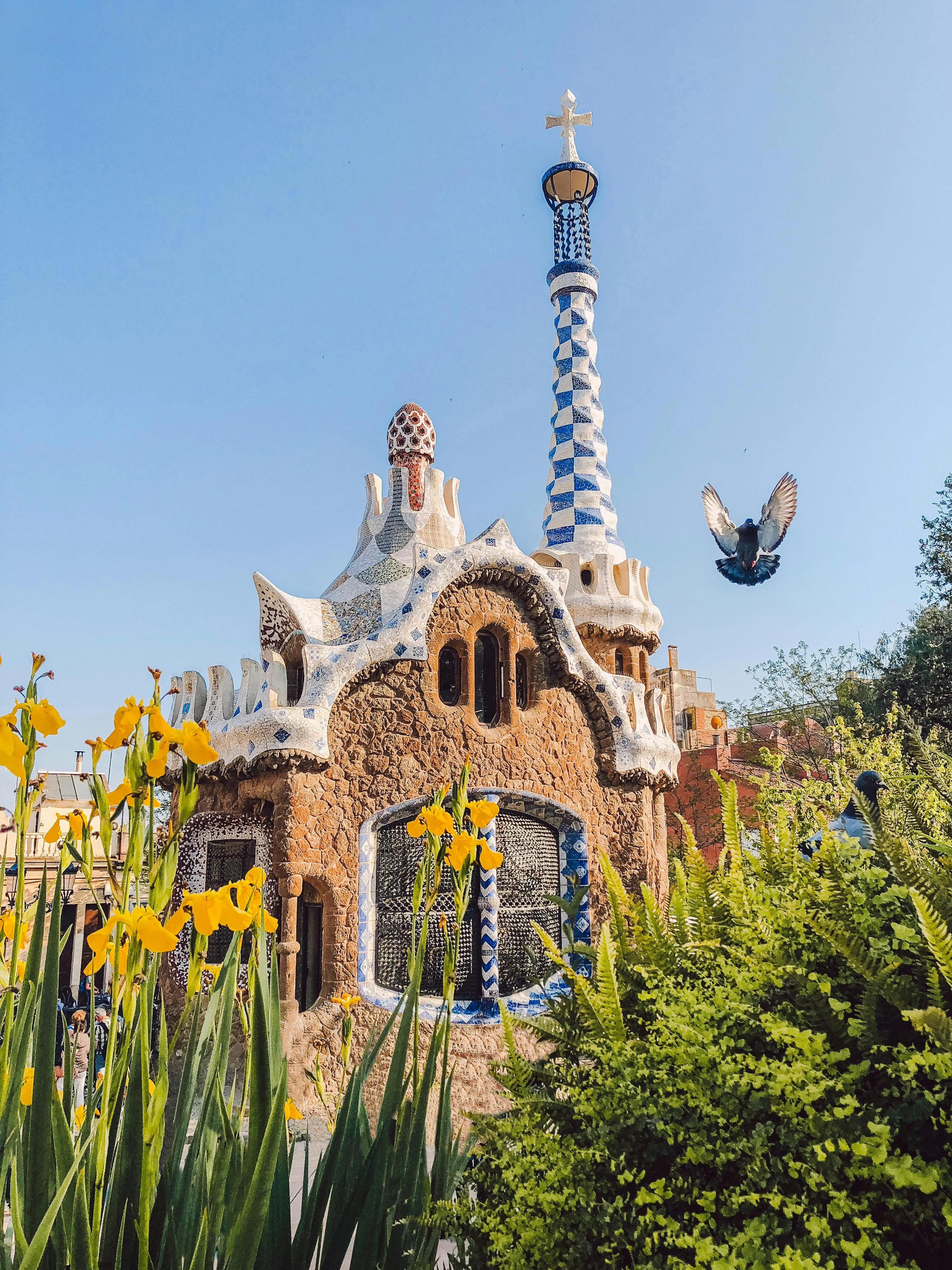
Park Güell was originally designed as a failed luxury housing estate for 60 homes, but only two were built (neither by Gaudí) before it became a public park. It was inspired by the British "garden city" movement and features no straight lines, as Gaudí aimed to mimic nature.
Is Park Güell Worth Visiting?
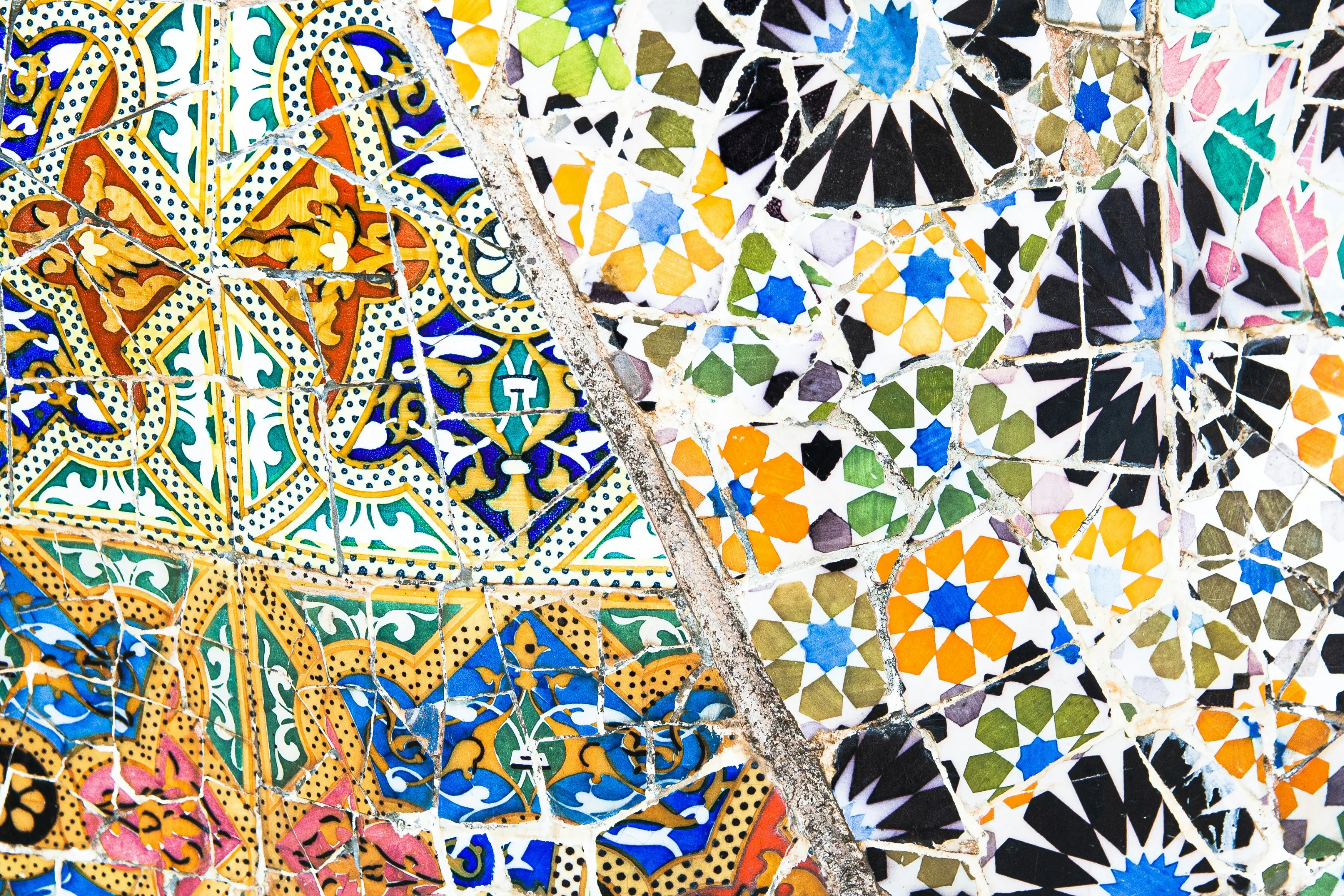
For anyone visiting Barcelona, yes, unreservedly, but with one important note about managing expectations. Park Güell is an outdoor landscape work, not a museum or a grand interior. Its genius lies in the way Gaudí integrated architecture into the hillside, the way the colours of the trencadís mosaics shift in different light, and the way the Plaça de la Natura terrace opens suddenly into a panoramic view over the entire city and the sea beyond. These are things that no photograph fully conveys, and they are worth experiencing in person.
The Dragon Stairway and El Drac, the mosaic salamander that has become one of the symbols of Barcelona, greet you at the main entrance and set the visual tone for everything that follows. Note that El Drac is currently undergoing conservation and restoration work; check the official website for the latest status before your visit.
The Hypostyle Room, with its 86 columns supporting the terrace above, is one of Gaudí's most ingenious structural achievements: the columns are hollow, and a hidden system within them channels rainwater collected from the terrace down through the hill and out through El Drac's mouth in the fountain below. The ceiling medallions by Josep Maria Jujol, made from broken ceramics, crockery, and glass, are extraordinarily detailed and reward time spent looking up.
The Plaça de la Natura terrace, with its sinuous mosaic bench encircling the perimeter, is the centrepiece of the park and the most photographed spot in Gaudí's Barcelona. The views from here, with the Sagrada Família visible to the south and the sea beyond the city, are among the finest in Barcelona. On a clear day, the panorama is remarkable.
The stone viaducts winding through the park below the terrace are perhaps the most underappreciated element of the design, where Gaudí used the natural terrain to create arched stone walkways that look as though they have grown from the hillside rather than been built upon it. These are quieter than the main terrace and worth exploring at your own pace.
At €18 per adult, Park Güell is not a cheap visit, particularly after the significant price increase at the start of 2026. Whether it represents value will depend on how much time you spend and how much you engage with what you are looking at. For those who rush through in 45 minutes to tick a box, it may feel expensive. For those who take their time with the mosaics, the views, and the extraordinary technical ingenuity of what Gaudí built here, it is one of the great experiences in a city full of them.
How Much Time Should I Spend at Park Güell?
Most visitors will find that 1.5 to 2 hours is sufficient for a thorough self-guided visit to the Monumental Zone, including the Dragon Stairway, the Hypostyle Room, the terrace, and the viaducts. Those who want to visit the Gaudí House Museum should add a further 30 to 45 minutes. Photography enthusiasts and those who want to linger on the terrace or explore the quieter viaduct paths should plan for up to three hours in total.
The free forest zone requires additional time if you want to explore it: the upper paths and the summit of the hill, with its stone cross and the highest views over the city, are around a 20 to 30-minute walk from the Monumental Zone and offer a significantly quieter experience.
A rough guide to planning your time within the Monumental Zone:
Dragon Stairway and entrance area: 15 to 20 minutes
Hypostyle Room: 15 to 20 minutes
Plaça de la Natura terrace and serpentine bench: 20 to 30 minutes (more if the views are your priority)
Stone viaducts: 15 to 20 minutes
Guided Tours and Audio Guides
The official Park Güell audio guide is available free through the official app, downloadable from the App Store and Google Play. It covers the history and architectural highlights of the Monumental Zone in English, Catalan, Spanish, and French, and includes an interactive map. Since the park is on a hillside with variable connectivity, downloading the app and all its content before you arrive is strongly recommended. Mobile data within the park can be unreliable during busy periods.
Guided tours are available through the official website and through authorised tour operators, in groups of up to 25 people. Tours run in Catalan, Spanish, English, and French, and typically last around 75 minutes covering the main highlights of the Monumental Zone. Private guided tours for smaller groups of 2 to 6 people are also available at a higher price and must be booked well in advance. For visitors who want the context and storytelling that brings Gaudí's symbolism to life, particularly around the mythological and religious references embedded in the design, a guided tour is a worthwhile investment.
Combined guided tours covering both Park Güell and the Sagrada Família in a single day are popular and logistically sensible, given that the two sites are Barcelona's most visited Gaudí works. These tours are offered by multiple authorised operators and typically include a transfer between the two sites.
The Gaudí House Museum
The Gaudí House Museum (Casa Museu Gaudí) is one of the most intimate and personal ways to encounter the architect, and it is included in the park but often overlooked by visitors focused on the Monumental Zone. The pink tower building known as La Torre Rosa was designed not by Gaudí but by his collaborator Francesc Berenguer; Gaudí purchased it with his own savings and lived here with his father and niece from 1906 until 1925, the year before his death. It was converted into a museum in 1963.
The museum displays furniture, personal objects, drawings, and models connected with Gaudí's life and work, offering a much more human and domestic view of the architect than the grand public works for which he is famous. The recently completed restoration works have improved both the presentation and the conservation conditions of the displays significantly.
A separate ticket is required and can be purchased as a combined ticket with the standard Monumental Zone entry. The museum is located in the free zone of the park, between the main Monumental Zone entrance and the forest paths above. Check the museum's current opening hours on the official website before planning to include it in your visit, as these may differ from the Monumental Zone hours.
Where Should I Eat Near Park Güell?
There is no restaurant within Park Güell's Monumental Zone. Vending machines and a small café exist within the park precincts, though the dedicated restaurant that previously operated on site is currently closed. Visitors should plan to eat before their visit or after leaving the park. Picnics are welcome in the non-restricted areas of the park; the free forest zone has pleasant spots for eating outdoors.
For eating in the immediate area, the streets below the park leading down towards Lesseps and Gràcia have cafés and small restaurants. The Mercat de Lesseps, near the Metro station, is an excellent and very local option for coffee and a pastry before heading up to the park, or for a more substantial meal after your visit.
The Gràcia neighbourhood, a 15 to 20-minute walk or a short Metro ride downhill, is one of Barcelona's most appealing districts for eating and drinking. Its squares, particularly Plaça de la Vila de Gràcia and Plaça del Sol, are lined with terraces that fill up at lunchtime, and the surrounding streets have an excellent range of independent cafés, tapas bars, and restaurants ranging from neighbourhood Catalan cooking to international options.
For a broader range of choices, Passeig de Gràcia and the Eixample are around 30 minutes on foot downhill or a short Metro ride and offer the full spectrum of Barcelona's dining scene, from casual tapas to destination restaurants.
Accessibility at Park Güell
Park Güell presents very real accessibility challenges due to its hillside location, though the management has made efforts to improve the situation in recent years.
A dedicated accessible route is available through the Monumental Zone, designed for visitors using wheelchairs or with mobility difficulties. This route avoids the steepest staircases and provides access to the main areas of the Monumental Zone, though some areas remain difficult due to the terrain. For the most accessible entry point, the Carretera del Carmel entrance (the lower entrance) is recommended over the main Carrer d'Olot entrance, as the approach is less steep.
Wheelchairs are available for loan at the entrance, subject to availability. Advance contact with the park is recommended if wheelchair assistance is a priority.
The uphill walk from the nearest Metro stations is a significant accessibility barrier for visitors with mobility difficulties, and a taxi or rideshare to the Carretera del Carmel entrance is strongly recommended for anyone who would find the approach on foot challenging.
Disabled visitors receive free entry to the Monumental Zone with valid documentation. A free ticket must still be reserved online in advance. The Gaudí House Museum has its own accessibility provisions; contact the museum directly for specific information.
Rules, Bags, and Security
The following rules apply within the Monumental Zone and are enforced by park staff:
Ticket and ID requirements: Your ticket is nominative and linked to your booking. You will be asked to present your ticket at the access control point. Ensure the name on your booking matches the identification you carry.
30-minute entry window: You must arrive within 30 minutes of the time printed on your ticket. Late arrivals are refused entry without a refund. Build in time for the uphill walk from wherever you are arriving.
No re-entry: Leaving the Monumental Zone forfeits your right to return on the same ticket. Plan your visit accordingly.
Photography: Photography for personal, non-commercial use is permitted throughout the park. Tripods and selfie sticks are not allowed in the busiest areas during peak hours. Drone flights over the park are strictly prohibited.
Food and drink: Eating is not permitted in the Monumental Zone. Drinks in non-glass containers are generally tolerated. Picnicking is welcome in the free forest zone and outdoor areas outside the Monumental Zone.
Pets: Dogs and other pets are not permitted in the Monumental Zone. Assistance dogs accompanying disabled visitors are welcome.
What Else is There to Do Near Park Güell?
The Gràcia neighbourhood immediately below the park is one of the most characterful districts in Barcelona, with a village-within-a-city atmosphere, independent shops, excellent restaurants, and a series of lively squares. It is very much worth exploring before or after your park visit, and the 20-minute downhill walk from the park to the heart of Gràcia is entirely pleasant.
Casa Batlló and Casa Milà (La Pedrera) on the Passeig de Gràcia are the two most significant Gaudí domestic works in the city and are around 30 minutes on foot downhill from the park or a short Metro ride. Both require advance booking and are entirely different architectural experiences from Park Güell: where the park is outdoor, organic, and coloured by the landscape, these are dense, detailed, interior-focused masterpieces. Casa Batlló in particular is one of the finest individual buildings in the world, and its evening show is a separate, highly atmospheric programme worth booking.
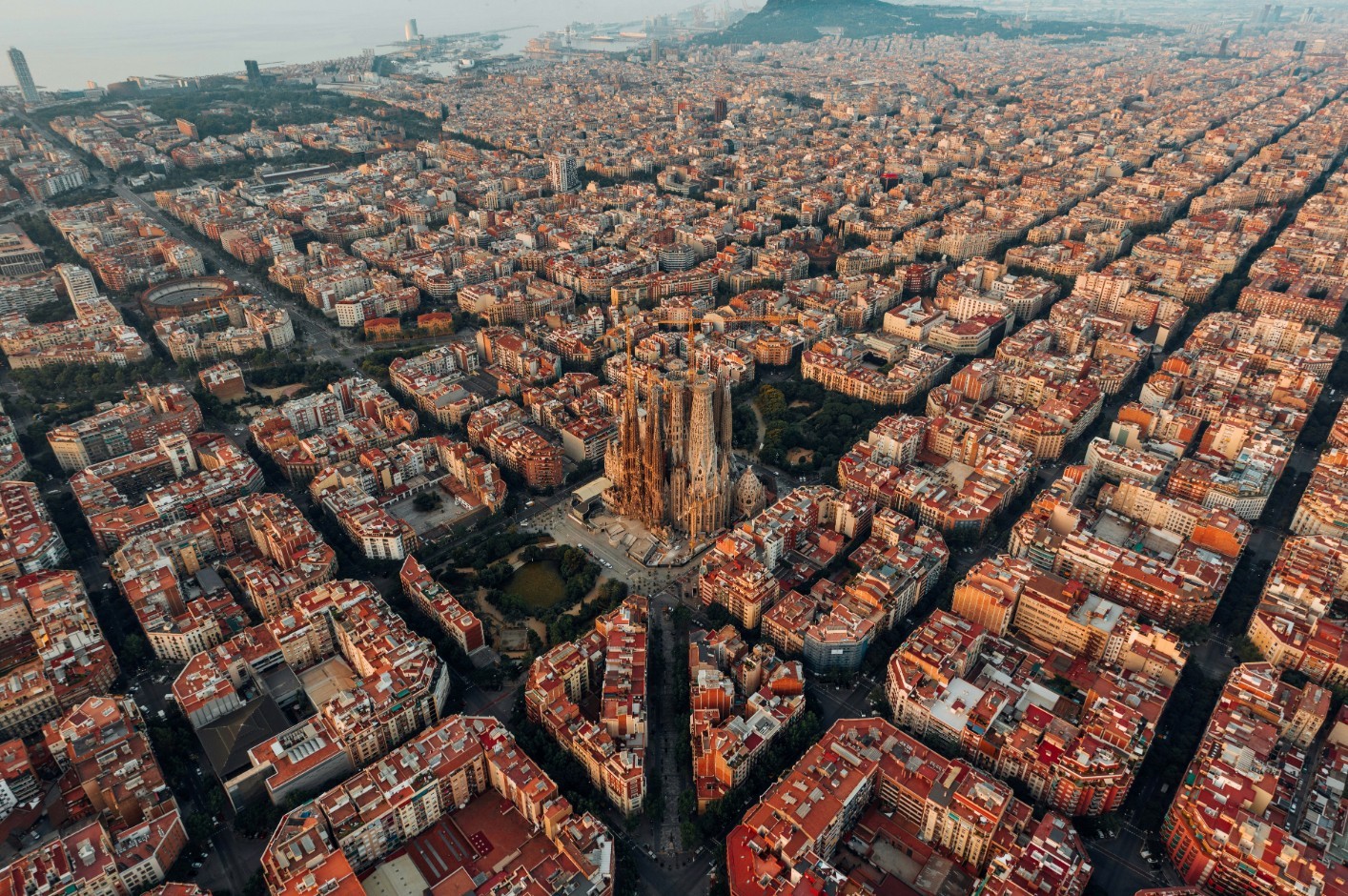
The Sagrada Família is approximately 2.5 kilometres south-east and is easily reached by Metro. Given the exceptional significance of 2026 as the centenary of Gaudí's death, combining a visit to Park Güell with one to the Sagrada Família is particularly meaningful this year.
The Carmel Bunkers (Turó de la Rovira), a short walk north of Park Güell, are the ruins of an anti-aircraft battery used during the Spanish Civil War and offer what many visitors consider the finest panoramic view of the entire city. Access is free, the site is accessible throughout the day, and the 360-degree view from the top is perhaps the best in Barcelona. It is a quieter and entirely free alternative or complement to the Park Güell terrace view.
Palau Güell, in the Raval neighbourhood near Las Ramblas, is the other major Güell commission undertaken by Gaudí and presents a fascinating contrast to Park Güell. Built as the Güell family's Barcelona townhouse between 1886 and 1890, it is a darker, more severe building than Gaudí's later works, and one that rewards close attention. It requires advance booking.
Final Tips for Visiting Park Güell
Book your ticket before you travel. This is not precautionary advice but a practical necessity, particularly between April and October. Slots sell out, and there is no walk-up option. Set a reminder and book as soon as your Barcelona dates are confirmed.
Arrive on time. The 30-minute entry window is strictly enforced. Factor in the uphill walk from your transport and aim to reach the access control point 10 to 15 minutes before your slot time, not 10 to 15 minutes after.
Book your slot for the first or last available tourist time. Early morning and late afternoon slots see significantly fewer visitors than the midday rush. The difference in atmosphere is substantial, particularly on the main terrace.
Download the app before you go. The official audio guide is free and significantly enriches the visit, particularly for understanding the symbolism in the mosaics and the engineering of the Hypostyle Room. Download all content at your accommodation before arriving, as connectivity on the hill is unreliable.
Take the bus rather than the Metro if the uphill walk is a concern. Bus 24 from Plaça de Catalunya stops closest to the main entrance and saves a significant amount of climbing compared to the walk from Lesseps station. The escalators at the Vallcarca entrance have reopened and offer another accessible route into the park.
Check the status of El Drac before your visit. The salamander on the Dragon Stairway is currently under conservation and restoration. If photographing it undisturbed is a specific goal, check the official website for the current state of the works before booking.
Combine with the Gràcia neighbourhood. A morning at Park Güell followed by lunch in Gràcia is one of the most enjoyable half-days in Barcelona. The downhill walk through the residential streets is easy, and the neighbourhood rewards aimless exploration.
Consider the Carmel Bunkers as a free panoramic alternative. The view from the Turó de la Rovira is arguably finer than the one from the Park Güell terrace, it is free, and it requires no booking. Visiting both gives you two of the best vantage points in the city in a single morning.
Back to Barcelona Attractions
Explore other Barcelona attractions
" width="24px"><path d="M 0 0 L 24 0 L 24 21.231 L 0 21.231 Z" fill="transparent" height="21.230768474975793px" id="nL2EwDcS9" width="24px"/><path d="M 0 0.541 C 0 0.242 0.245 0 0.547 0 L 2.735 0 C 3.037 0 3.282 0.242 3.282 0.541 L 3.282 4.598 C 3.282 4.897 3.037 5.139 2.735 5.139 L 0.547 5.139 C 0.245 5.139 0 4.897 0 4.598 Z" fill="rgb(196, 217, 201)" height="5.138657337892187px" id="hZ_rlBe_S" transform="translate(0 16.092)" width="3.2820512820512358px"/><path d="M 0 0.541 C 0 0.242 0.245 0 0.547 0 L 2.735 0 C 3.037 0 3.282 0.242 3.282 0.541 L 3.282 7.843 C 3.282 8.142 3.037 8.384 2.735 8.384 L 0.547 8.384 C 0.245 8.384 0 8.142 0 7.843 Z" fill="rgb(230, 211, 160)" height="8.38412513024521px" id="HgVBxIz3e" transform="translate(5.128 12.847)" width="3.282051282051235px"/><path d="M 0 0.541 C 0 0.242 0.245 0 0.547 0 L 2.735 0 C 3.037 0 3.282 0.242 3.282 0.541 L 3.282 12.982 C 3.282 13.281 3.037 13.523 2.735 13.523 L 0.547 13.523 C 0.245 13.523 0 13.281 0 12.982 Z" fill="rgb(232, 207, 164)" height="13.522782468137464px" id="utgrDnoM9" transform="translate(10.325 7.708)" width="3.282051282051377px"/><path d="M 0 0.541 C 0 0.242 0.245 0 0.547 0 L 2.735 0 C 3.037 0 3.282 0.242 3.282 0.541 L 3.282 16.498 C 3.282 16.797 3.037 17.039 2.735 17.039 L 0.547 17.039 C 0.245 17.039 0 16.797 0 16.498 Z" fill="rgb(233, 196, 166)" height="17.038705909853153px" id="OLOhW6STz" transform="translate(15.521 4.192)" width="3.2820512820512384px"/><path d="M 0 0.541 C 0 0.242 0.245 0 0.547 0 L 2.735 0 C 3.037 0 3.282 0.242 3.282 0.541 L 3.282 20.69 C 3.282 20.989 3.037 21.231 2.735 21.231 L 0.547 21.231 C 0.245 21.231 0 20.989 0 20.69 Z" fill="rgb(217, 170, 153)" height="21.230768474975793px" id="H5Z8wcwkd" transform="translate(20.718 0)" width="3.2820512820512278px"/></g></svg>)