Barcelona • El Born
Recommended to pre-book timed-entry ticket to guarantee entry at desired time. Same-day tickets may be available at on-site ticket office, if capacity allows. Pre-booking always required during free entry times.
Book 1-3 Days Ahead
Peak Season
No Booking Needed
Off-Season
Back to Barcelona Attractions
Do you Need to Book Tickets in Advance for the Museu Picasso in Barcelona?
Updated September 2026
Spread across five connected medieval palaces on Carrer de Montcada in the El Born neighbourhood, the Museu Picasso is one of the most visited museums in Spain and the most important collection in the world dedicated to Picasso's formative years in Barcelona. Opened in 1963 at Picasso's own suggestion, the museum holds more than 4,250 works spanning his teenage academic drawings through the Blue Period, the 1917 Barcelona studio works, and the complete 58-painting Las Meninas series he donated to the city in 1968. Getting the most out of this museum means understanding what it is and what it is not before you arrive, and booking your tickets before slots disappear.
At a Glance
How Early to Book:
Book about 2-3 days ahead to ensure wide timeslot availability. Last-minute tickets may be available same-day at the door pending availability.
Tickets Released:
About 3 months in advance.
Best Times to Visit:
Early mornings at opening, and late afternoons at 4pm, are the least busy.
Ticket price:
€14 when booked online, €15 at the ticket office.
Where to Book:
Museu Picasso Tickets
Advance booking is strongly recommended and, for free-entry sessions, effectively mandatory. Timed-entry slots are released online and fill quickly, particularly during peak season and on free-access days.
Standard ticket prices:
Collection and temporary exhibitions: €14 online, €15 at the ticket office
Reduced rate (18 to 25s, over 65s, accredited university students, Barcelona Libraries Card holders, and registered unemployed with documentation): €7.50
Children under 18: Free
ICOM members and accredited teachers: Free
Bicing cardholders: 25 per cent off the standard ticket
Where to book: The official booking site is museupicassobcn.cat. This is the cheapest route to a ticket. Third-party platforms add fees of between 10 and 25 per cent on top of the face price for no meaningful additional benefit, unless they are bundling a licensed guided tour. Book directly through the official site wherever possible.
Free entry sessions and how to book them: Free entry is available at specific times, but these slots are not unlimited and require online reservation. The museum releases free tickets four days in advance at 10:00am Barcelona time. They move fast, particularly the Thursday evening slots, which can disappear within two hours of release. If you are planning to use a free session, set a calendar reminder for exactly four days before your visit at 10:00am local time.
Thursday evenings (winter schedule, late September to late March): 16:00 to 19:00
Thursday to Saturday evenings (summer schedule, late March to late September): 19:00 to 21:00
First Sunday of every month: all day
Open Door days: 4 January, 12 February (Santa Eulàlia), 17 May (International Museum Day), and 24 September (La Mercè)
Barcelona Card: The Barcelona Card includes free entry to the Museu Picasso and is worth calculating if you plan to use public transport extensively and visit several attractions across your trip. It is sold in two, three, four, and five-day versions, with the shorter cards costing the least.
Articket BCN: The Articket gives access to six Barcelona museums over 12 months, including the Museu Picasso, MACBA, MNAC, CCCB, Fundació Antoni Tàpies, and Fundació Joan Miró. At €38 per adult, it can be a good value if you plan to visit more than two of the six institutions.
How far in advance to book: During peak season (May through October) and on any weekend year-round, book 2-3 days ahead. During the offseason, I recommend booking just a day ahead, but you can also get in by purchasing tickets at the ticket office. For free sessions, set your reminder for four days in advance and be prepared to move quickly at 10:00am.
Museu Picasso Opening Hours and Entry Information
Summer schedule (31 March to 27 September):
Tuesday, Wednesday, and Sunday: 9:00am to 8:00pm
Thursday, Friday, and Saturday: 9:00am to 9:00pm
Closed Mondays
Winter schedule (29 September to 29 March):
Tuesday to Sunday: 10:00am to 7:00pm
Closed Mondays
The ticket office closes 30 minutes before the museum closes. Last entry is 30 minutes before closing.
Reduced hours: 24 and 31 December, 10:00am to 2:00pm.
Closed: Mondays, 1 January, 1 May, 24 June (Sant Joan), and 25 December.
Address: Carrer de Montcada 15-23, 08003 Barcelona
Picasso Museum Barcelona Location
The museum is on Carrer de Montcada, one of the oldest and most beautiful streets in Barcelona, in the El Born district of the Sant Pere, Santa Caterina i la Ribera neighbourhood. This is a pedestrianised medieval lane where the facades have barely changed in five centuries. If you are approaching from the main roads, you will need to navigate the narrow streets of El Born on foot from the nearest metro stop.
By Metro: The most convenient option is Jaume I (Line 4, yellow line), which is approximately a four-minute walk from the museum. From the metro exit, walk down Carrer de la Princesa, then turn right onto Carrer de Montcada. You will immediately see the museum queue.
By bus: Routes 39, 45, 51, 120, V15, V17, H14, and D20 all stop within walking distance. The tourist bus also stops nearby.
On foot from key landmarks:
From the Gothic Quarter: around 10 minutes
From the Cathedral (Barri Gòtic): around 12 minutes
From Barceloneta beach: around 15 minutes
From Passeig de Gràcia: around 25 minutes
By bike: Bicing and other bike-share stations are available around the perimeter of El Born, though Carrer de Montcada itself is narrow and best approached on foot.
Driving to the Museu Picasso is not practical. The streets of El Born are mostly pedestrianised and the surrounding area has very limited parking. Arriving by Metro or on foot is the right approach for almost every visitor.
Practical tip: Approach from Carrer de la Princesa rather than trying to navigate through the Gothic Quarter's narrower lanes. The museum entrance on Carrer de Montcada is on your right as you turn off Carrer de la Princesa, and you will recognise it by the queue forming outside the medieval archway.
How Much Time Should I Spend at Museu Picasso Barcelona?
Most visitors spend between 90 minutes and two hours in the permanent collection at a comfortable pace. The museum is not enormous, but it rewards slow looking, and the five interconnected palaces have a slightly labyrinthine quality that encourages lingering.
If you add a temporary exhibition to your visit, allow two and a half to three hours in total. If you are using an audio guide or joining a guided tour, budget towards the top of the range.
For casual visitors or those with limited time, one focused hour is enough to cover the highlights, including the early academic works, the Blue Period, and the Las Meninas suite.
A popular and well-paced half-day in this part of Barcelona combines a 10:00am opening visit to the museum, emerging around noon, then tapas at El Xampanyet (a one-minute walk away), followed by a wander through El Born and a visit to Santa Maria del Mar. The whole circuit takes four to five hours and covers one of the most historically dense neighbourhoods in Spain.
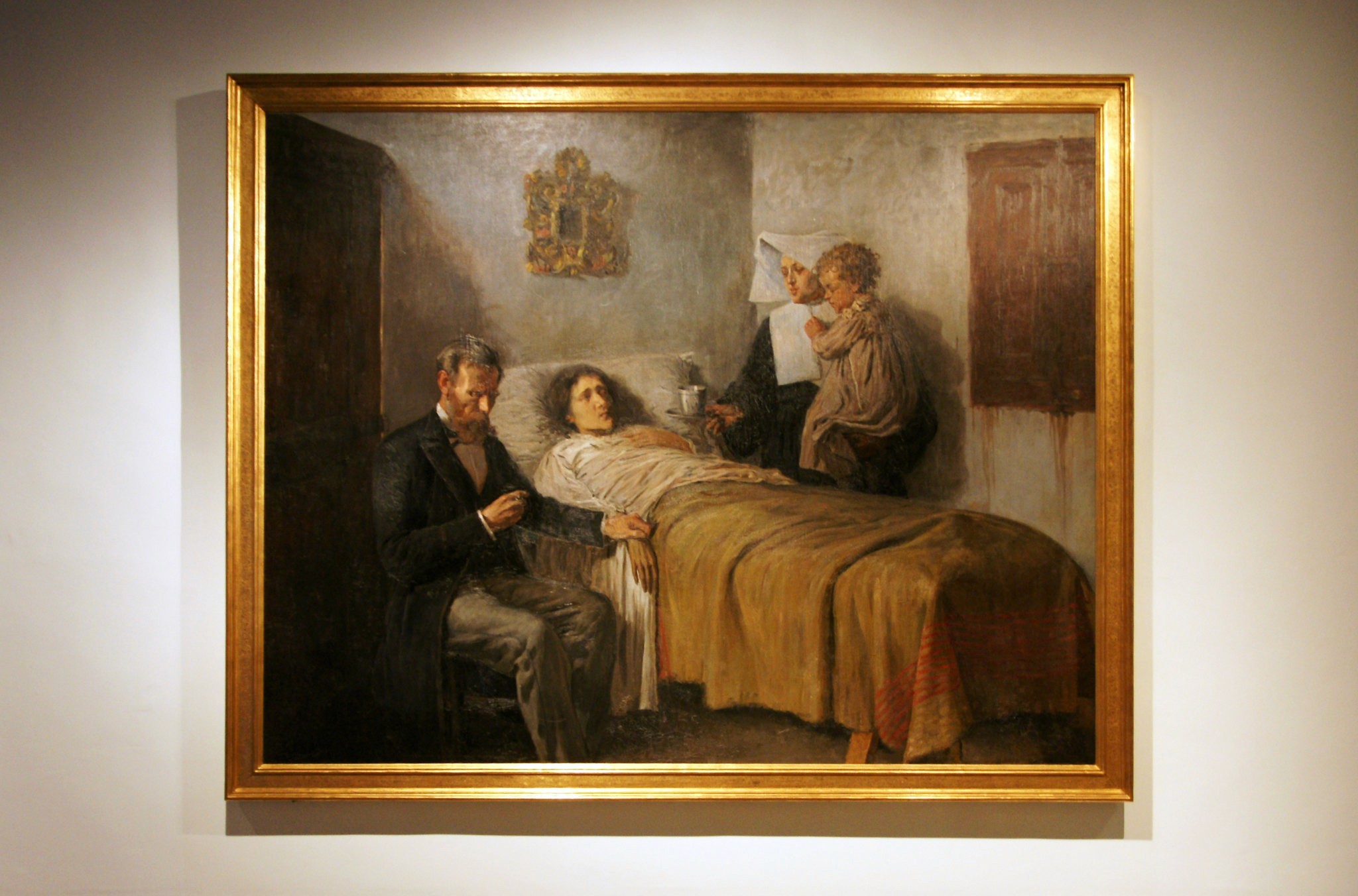
The Museu Picasso's collection includes some of Picasso's earliest works, including Science and Charity, pictured here, which he painted in 1897 at 15-years old.
What is the Best Time to Visit Museu Picasso Barcelona?
Best time of day: Arriving at opening time, either 9:00am in summer or 10:00am in winter, gives you the museum at its quietest. The first hour before tour groups arrive is noticeably calmer, particularly in the Las Meninas rooms. Late afternoon on weekdays, from around 4:00pm, also tends to be less congested.
Best days: Tuesdays, Wednesdays, and Thursdays in the morning are the quietest days of the week, with visitor numbers reported to be 30 to 40 per cent lower than at weekends. Saturdays and Sundays from late morning onward are the busiest. Avoid Thursday evenings from 4:00pm in winter and weekend evenings in summer, when free-entry crowds fill the galleries.
Best season: Spring (March to May) and autumn (September to October) offer the best balance of manageable crowds and good weather in the surrounding neighbourhood. Summer is the busiest period; the museum is air-conditioned and can actually be a welcome break from the heat, but the queues and gallery congestion are at their peak.
Free Sundays and Thursday evenings: These sessions are the best way to visit cheaply, but they come with a trade-off. A recurring theme among recent visitors is that free-entry sessions bring significantly higher crowd levels, and the museum can feel noticeably congested, particularly in the smaller rooms. The Las Meninas suite, which is the highlight for many, becomes harder to appreciate when packed. If crowd levels affect your enjoyment of art museums, it is worth paying the standard ticket and visiting on a quiet weekday morning.
What are the Picasso Museum Barcelona Paintings?
This is the question that most shapes whether you will leave satisfied or disappointed: understanding the collection before you go in is more important here than at most major art museums.
The Museu Picasso does not hold Guernica, Les Demoiselles d'Avignon, or any of the major Cubist works for which Picasso is most famous to a general audience. Guernica is in the Museo Reina Sofía in Madrid. The museum in Barcelona was never intended as a comprehensive retrospective. It is a museum about Picasso's formative years and his relationship with this specific city. If you arrive expecting the greatest hits of his most celebrated period, you will be frustrated. If you arrive understanding what the museum actually offers, it is outstanding.
What the collection does hold:
The early academic works (1890 to 1897): Picasso began producing serious oil paintings as a young teenager. The rooms covering his years as a student at the Llotja art school in Barcelona and then Madrid's Royal Academy are startling. The academic precision of paintings like Science and Charity (1897), completed when he was fifteen, is extraordinary, and seeing them reframes everything that comes later. This is where many visitors who came sceptical find themselves slowing down.
The Blue Period (1901 to 1904): The collection is close to exhaustive for this period, with muted canvases of poverty, isolation, and grief that mark his first distinctively personal style. The weight and melancholy of these rooms tend to be quietly powerful, even for visitors who do not ordinarily engage with this kind of work.
The 1917 Barcelona studio works: Picasso returned to Barcelona with the Ballets Russes and filled sketchbooks with the streets outside his window. A lesser-known section of the museum covers this brief but productive return.
The Las Meninas suite (1957): This is what makes the Museu Picasso truly one of a kind. In 1957, Picasso spent five months in his studio in Cannes reinterpreting Velázquez's 17th-century masterpiece Las Meninas in a series of 58 paintings. He donated the entire series to Barcelona, and it has been displayed here ever since. Three dedicated rooms trace how he broke apart the Velázquez composition, multiplied the infanta Margarita across dozens of variants, reduced court figures to geometric fragments, and introduced doves and pigeons as running counterpoints. No other museum in the world holds all 58 canvases together. I found this suite alone justified the visit, even having come in with no particular interest in the specific period. The experience of watching a single painting taken apart and rebuilt 58 times, hanging in sequence across three rooms, is unlike anything else in Barcelona's museum scene.
The ceramic collection: The final rooms contain a donation from Picasso's widow Jacqueline of plates, pitchers, and figurines from the 1950s and 1960s. These are often overlooked and worth a few minutes.
A note on navigation: Because the museum occupies five interconnected medieval palaces, the layout can feel disorienting, with rooms connecting at unexpected angles and stairways leading to sections that are easy to miss. I'd suggest picking up the free floor map at the entrance and checking it before you start. The audio guide is also useful here, as some of the less prominent rooms have limited printed explanation.
Is the Picasso Museum Barcelona Worth Visiting?
There are two main camps of how people think of this museum if I'm being 100% honest with you. Those who go in knowing it is a museum about Picasso's early work and his relationship with Barcelona tend to find it wonderful, particularly the academic rooms and the Las Meninas suite. Those who arrive expecting the famous Cubist work, or who are hoping for a comprehensive survey of his entire career, often come away feeling the ticket was steep for what they got.
The strongest case for going is the Las Meninas suite. There is simply nothing else like it anywhere, and it is one of those things that photographs cannot prepare you for. You need to be in the room with all 58 canvases to understand what Picasso was doing. On that basis alone, I would not miss it.
The strongest case for caution is if Cubism and the late career are your primary interest in Picasso. The collection essentially stops at the Blue Period and the 1917 Barcelona works, with the Las Meninas representing a jump to 1957. If you want to see the main Cubist output, Madrid's Reina Sofía or Paris's Centre Pompidou are where you need to be.
For families travelling with teenagers who are not particularly interested in art, the museum is probably not the best use of a morning. I personally have some friends whose teen children found it hard going, and the absence of his most recognisable work makes it a tougher sell to visitors coming without a prior interest in Picasso specifically.
The building is extraordinary regardless of your feelings about the art: five 13th-century Gothic palaces with internal courtyards and stone staircases that are worth walking through in their own right. Even on a sceptical visit, the setting adds something that a neutral gallery space cannot.
My overall view: if you have any interest in art, or any curiosity about Picasso the man rather than just his greatest hits, go. If your Barcelona itinerary is tight and you are choosing between this and the Sagrada Família or a Gaudí building, the latter is harder to replicate and probably takes priority. But if you have time for both, I would not skip this.
Picasso Museum Barcelona Skip the Line Tickets
Since timed-entry booking was introduced for the Museu Picasso, the traditional "skip the line" dynamic has changed. All visitors, whether they book directly through the official site or through a third-party tour operator, enter at a specific time slot. There is no longer a walk-up queue in the traditional sense; arriving without a pre-booked ticket means joining a potentially long wait for any available slots on the day, which is not guaranteed.
What "skip the line" actually means here: Tour operators marketing skip-the-line Picasso Museum tickets are typically offering one of two things: a paid entry ticket bundled with an audio guide or guided tour (which gives you the same timed access as anyone else, at a higher price), or a guaranteed slot as part of a group tour that uses a separate operator allocation. The second can be useful when official paid slots are sold out, as some operators maintain their own allocations.
What actually skips the line: Booking any timed ticket in advance through the official website means you bypass the walk-up ticket purchase queue at the door, which during peak season can save 20 to 45 minutes. The security check on entry is still required for all visitors.
Recommendation: Book directly through the official site at the standard ticket price. This is the cheapest option and functions as a skip-the-line ticket in the meaningful sense. Only consider a third-party operator if official timed slots are fully sold out.
Guided Tours and Audio Guides
Audio guides are available from the museum and are recommended, particularly for visitors who want context in rooms where printed explanation is limited. They are not included in the standard ticket price and must be added separately. Available in English, Catalan, Spanish, French, German, Italian, Japanese, Russian, and Mandarin.
Official guided tours of the permanent collection are available and cover the key rooms including the Las Meninas suite with expert commentary. These are particularly worthwhile for the early academic period, where the teaching exercises and academic conventions visible in the work are not always self-explanatory without some art history context. Check the museum's What's On page for current tour schedules.
Private tours and small-group tours with licensed guides are offered through various operators and are available in English. A guided tour of the Museu Picasso combined with a walking tour of El Born is a popular format and makes for a well-rounded morning, as the neighbourhood that surrounded Picasso during his years in Barcelona is still partially recognisable in the medieval streets outside the museum doors.
A note on the self-guided option: The museum is navigable without a guide or audio commentary, particularly if you read the printed panels carefully. However, the early academic section and the Las Meninas suite specifically gain considerably from explanation. If you are going without a guide, I would suggest spending some time reading about the Las Meninas series before your visit. Understanding what Velázquez's original painting looks like, and what Picasso was doing with it, changes the experience of the three-room suite entirely.
Where Should I Eat Near Museu Picasso Barcelona?
El Born is one of Barcelona's best neighbourhoods for food, and the streets immediately surrounding the museum have some of the most enjoyable eating in the city. The area does draw tourists, but unlike the Gothic Quarter's main drag, the food quality in El Born stays high even at the most visited addresses.
El Xampanyet on Carrer de Montcada, literally a one-minute walk from the museum exit, is the place I always end up after a visit. It has been run by the same family since the 1930s, and the interior, lined with coloured tiles, barrels, and antique curiosities, has barely changed. The house cava is basic but works perfectly as a companion to their anchovies, which are the thing to order. This is not a restaurant; it is a standing tapas bar, and the best approach is to arrive around noon before the 1pm crowds, order a few plates at the bar, and eat standing up. Plan on €12 to €18 per person.
Tapeo on Carrer de Montcada, around two minutes from the museum, is the sit-down option if you want a proper table. The tapas here are a step up in ambition and execution from El Xampanyet, with creative modern takes on Catalan classics alongside well-executed standards. Budget €18 to €28 per person. Reserve ahead for weekends, as it fills quickly.
Bodega la Puntual, a few doors along Carrer de Montcada from El Xampanyet, is a traditional Catalan wine bar and small restaurant where the food is honest and the wine list emphasises Catalan producers. I find it particularly good for a longer, more relaxed meal if you are not in a rush. Around €15 to €25 per person.
Bormuth on Carrer del Rec is a slightly more modern tapas bar that draws a good mix of locals and visitors. The patatas bravas and the fried dogfish are consistently good, and the broken-egg dishes with sausage are worth seeking out. Popular enough that weekends require some patience or a reservation.
Mercat de Santa Caterina, five minutes on foot from the museum, is the local market. Santa Caterina's wavy tiled roof, designed by Enric Miralles, is worth seeing in its own right. The market bar inside is a good option for a quick and inexpensive lunch Monday through Saturday, though most stalls wind down by mid-afternoon. The market closes on Sundays, which catches visitors out.
For a coffee before or after your visit, the café inside the museum itself has reopened after a long closure and is a pleasant option for a quick break in the courtyard. For a better neighbourhood experience, several small independent cafes operate on Carrer de la Princesa and the surrounding streets.
What Else is There to Do Near Museu Picasso Barcelona?
El Born and the surrounding area are dense with things worth doing, and the Museu Picasso sits at the centre of one of the most walkable sightseeing circuits in Barcelona.
Basílica de Santa Maria del Mar is a five-minute walk south down Carrer de Montcada and is widely considered the finest Gothic church in Barcelona, possibly in Catalonia. Built between 1329 and 1383 by the local community of the Ribera neighbourhood, it has a simplicity and spatial clarity that distinguishes it from the more ornate Gothic churches of northern Europe. Entry is free for the main church, with a small fee for the rooftop tour. It is worth at minimum walking inside for ten minutes.
El Born neighbourhood itself is worth a dedicated wander after your museum visit. The streets around Carrer del Rec, Carrer del Comerç, and the Passeig del Born are pedestrianised and lined with independent shops, bars, and restaurants. The Passeig del Born, a long tree-lined promenade, is one of the most pleasant public spaces in central Barcelona and connects naturally to Santa Maria del Mar and the Parc de la Ciutadella.
Parc de la Ciutadella is around a ten-minute walk east and is the largest park in central Barcelona. The rowing lake, the zoo entrance, the large ornamental waterfall (in which the young Gaudí had a hand as an assistant to Josep Fontsère), and the glass-and-iron greenhouse make it a good place to spend an hour after the museum, particularly on a warm day.
Moco Museum Barcelona is a contemporary art museum on Carrer de Montcada, a short walk from the Museu Picasso, focused on modern and street art, with works by Banksy, Jean-Michel Basquiat, and Andy Warhol. It is an entirely different experience from the Museu Picasso and a natural pairing for visitors interested in seeing how the art world moved from Picasso's generation to the late 20th century.
Palau de la Música Catalana, around ten minutes on foot northwest, is a UNESCO World Heritage Site and one of the most extraordinary works of Catalan Modernisme, designed by Lluís Domènech i Montaner and completed in 1908. The exterior, covered in ceramic mosaics, stained glass, and sculpted stone, is worth the walk on its own. Guided tours of the interior are available and should be booked ahead.
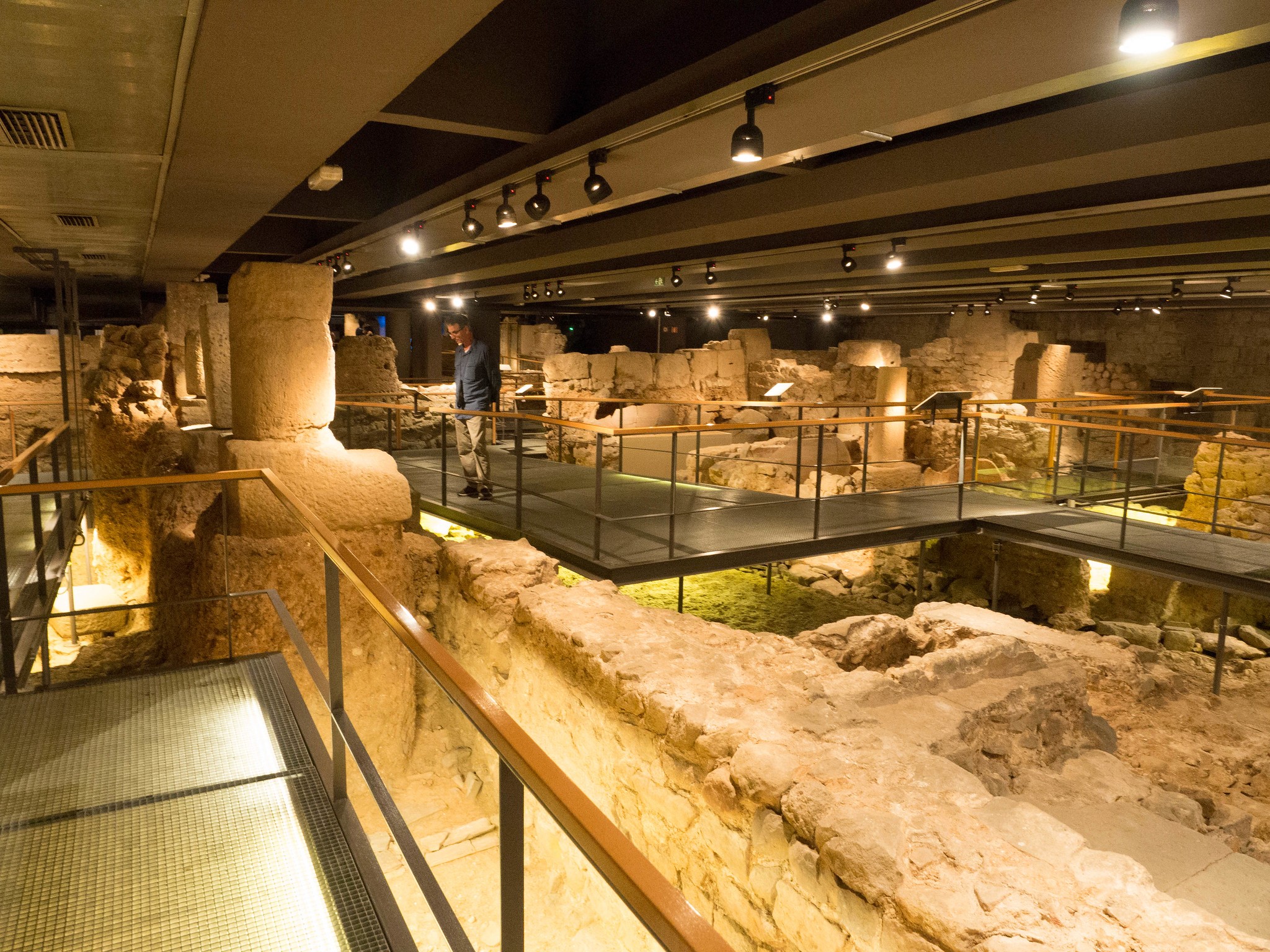
The Gothic Quarter is directly west across Via Laietana, around a ten to fifteen minute walk, and pairs naturally with an El Born morning. The Cathedral, Plaça de Sant Jaume, and the Roman ruins visible through the glass floors of the MUHBA history museum are all within easy walking distance.
Rules, Bags, and Security
Bags: Free luggage lockers are available inside the museum entrance and must be used for large bags and backpacks. This is enforced. Travelling with only a day bag avoids any complications at the entrance, but if you have a larger bag, the lockers are free and reliable.
Dress code: There is no dress code at the Museu Picasso. It is a municipal art museum, not a religious site.
Photography: Personal photography is permitted in the permanent collection without flash. Some temporary exhibitions may restrict photography; signage and staff will indicate where restrictions apply. Tripods and selfie sticks are not permitted.
Children: Children under 14 must be accompanied by an adult at all times. Children under 18 enter free.
Re-entry: Not permitted on a single ticket.
Accessibility at Museu Picasso Barcelona
The museum has invested in accessibility across the five connected palaces. Ramps and lifts have been installed throughout most of the route, and the majority of the permanent collection is accessible to wheelchair users and visitors with reduced mobility.
However, the historic nature of the five medieval buildings means that some architectural elements, including original stone staircases in transition areas between palaces, cannot be fully adapted. Visitors with specific accessibility requirements are encouraged to contact the museum in advance to discuss the best route through the collection and any specific arrangements needed.
Accessible toilets are available on site. Wheelchairs can be borrowed from the entrance. Audio guide content is available for visually impaired visitors. The museum participates in the Barcelona Pink Card scheme, which gives free entry to certain disability-related cardholders.
Final Tips for Visiting Museu Picasso Barcelona
The museum is closed on Mondays. This is the most common way visitors miss their planned visit. Double-check your day before you travel.
The Museu Picasso is not where Guernica is. Guernica is in the Museo Reina Sofía in Madrid. If you are hoping to see it, you need a different trip. Managing this expectation before arrival makes an enormous difference to how much you enjoy what is actually here.
The Las Meninas suite is the unmissable section. If time is short, move through the early rooms at pace and give yourself unhurried time in the three Las Meninas rooms. Read briefly about Velázquez's original painting beforehand if you can.
Pick up the free floor map at the entrance. The five connected palaces can feel maze-like on a first visit, and the map makes it considerably easier to ensure you have not accidentally missed a wing.
Tuesdays, Wednesdays, and Thursdays before noon are the quietest windows. Saturday and Sunday afternoons are the most congested.
Free-entry sessions are crowded. If the experience of standing in a packed gallery bothers you, pay the standard ticket and visit on a quiet weekday morning. The difference in the vibes is real!
El Xampanyet is one minute from the exit. Arrive at the museum at opening time, spend 90 minutes inside, walk out around noon, and you will hit the tapas bar at exactly the right moment before the lunch crowd arrives. It closes on Sundays and does not open for lunch on Mondays, so save this plan for Tuesday to Saturday. This is the best possible ending to a Picasso Museum morning.
Use the lockers. They are free, they are just inside the entrance, and the galleries are much more enjoyable without a large bag.
The Barcelona Card and the Articket BCN both cover free entry and are worth calculating if you plan to visit other major Barcelona museums during your trip.
Back to Barcelona Attractions
Explore other Barcelona attractions
" width="24px"><path d="M 0 0 L 24 0 L 24 21.231 L 0 21.231 Z" fill="transparent" height="21.230768474975793px" id="nL2EwDcS9" width="24px"/><path d="M 0 0.541 C 0 0.242 0.245 0 0.547 0 L 2.735 0 C 3.037 0 3.282 0.242 3.282 0.541 L 3.282 4.598 C 3.282 4.897 3.037 5.139 2.735 5.139 L 0.547 5.139 C 0.245 5.139 0 4.897 0 4.598 Z" fill="rgb(196, 217, 201)" height="5.138657337892187px" id="hZ_rlBe_S" transform="translate(0 16.092)" width="3.2820512820512358px"/><path d="M 0 0.541 C 0 0.242 0.245 0 0.547 0 L 2.735 0 C 3.037 0 3.282 0.242 3.282 0.541 L 3.282 7.843 C 3.282 8.142 3.037 8.384 2.735 8.384 L 0.547 8.384 C 0.245 8.384 0 8.142 0 7.843 Z" fill="rgb(230, 211, 160)" height="8.38412513024521px" id="HgVBxIz3e" transform="translate(5.128 12.847)" width="3.282051282051235px"/><path d="M 0 0.541 C 0 0.242 0.245 0 0.547 0 L 2.735 0 C 3.037 0 3.282 0.242 3.282 0.541 L 3.282 12.982 C 3.282 13.281 3.037 13.523 2.735 13.523 L 0.547 13.523 C 0.245 13.523 0 13.281 0 12.982 Z" fill="rgb(232, 207, 164)" height="13.522782468137464px" id="utgrDnoM9" transform="translate(10.325 7.708)" width="3.282051282051377px"/><path d="M 0 0.541 C 0 0.242 0.245 0 0.547 0 L 2.735 0 C 3.037 0 3.282 0.242 3.282 0.541 L 3.282 16.498 C 3.282 16.797 3.037 17.039 2.735 17.039 L 0.547 17.039 C 0.245 17.039 0 16.797 0 16.498 Z" fill="rgb(233, 196, 166)" height="17.038705909853153px" id="OLOhW6STz" transform="translate(15.521 4.192)" width="3.2820512820512384px"/><path d="M 0 0.541 C 0 0.242 0.245 0 0.547 0 L 2.735 0 C 3.037 0 3.282 0.242 3.282 0.541 L 3.282 20.69 C 3.282 20.989 3.037 21.231 2.735 21.231 L 0.547 21.231 C 0.245 21.231 0 20.989 0 20.69 Z" fill="rgb(217, 170, 153)" height="21.230768474975793px" id="H5Z8wcwkd" transform="translate(20.718 0)" width="3.2820512820512278px"/></g></svg>)