Back to Barcelona Attractions
NOTE: Timed-entrance tickets are currently required for the Sagrada Familia. The ticket office is not selling same-day tickets.
Sagrada Família Tickets: Prices, Hours & Which Tower to Climb
Updated July 2026
There is no building in the world quite like the Sagrada Família. Antoni Gaudí's extraordinary basilica in the Eixample district of Barcelona has been under construction since 1882, has survived a civil war, the destruction of Gaudí's original plans, and a global pandemic, and has been drawing visitors in their millions for well over a century, all while still unfinished. In February 2026, the upper arm of the cross was finally installed atop the Tower of Jesus Christ, completing the external works of the basilica's central tower and bringing the structure to its full height of 172.5 metres. With that milestone, the Sagrada Família became the tallest church in the world, surpassing the Cathedral of Ulm in Germany, and the completed tower was formally blessed by Pope Leo XIV in June 2026. The exterior of the basilica is now architecturally complete; interior finishing work is expected to continue until around 2028, with decorative details and the controversial Glory staircase continuing until around 2034. This is, without question, the most remarkable construction project in the history of architecture. It is also the most popular tourist attraction in Spain, receiving around five million visitors a year. This guide tells you everything you need to know before you go.
At a Glance
How Early to Book:
Book at least 1 month ahead, preferably 2+ months ahead for tower visits and guided tours. Last minute tickets may be available at low-demand slots closer to visit date.
About 2 months in advance for guided tours and self-guided general entry. Tickets for self-guided visits of the towers are released about 1 month in advance.
Best Times to Visit:
Weekdays are the least busy, while Saturdays are busiest. From 9am-11am, and 3pm-5pm, the light will shine most dramatically through the stained glass panels.
Ticket price:
€26 for general entry, increasing to up to €40 for guided tours and tower access.
Where to Book:
Landmark Address:
Do You Need to Book Sagrada Família Tickets in Advance?
Yes, absolutely, and this is the most important practical thing to understand before planning your visit. The Sagrada Família is the most visited monument in Spain, with around five million visitors a year entering a building with strictly controlled capacity. Tickets are only available to purchase online, in advance, either through the official website and app or via a handful of officially authorised third-party resellers. There is no walk-up ticket queue at the door. Visitors who arrive without a pre-booked ticket will not be able to enter.
Ticket prices (adult / senior / under 30 or student card):
Basilica with audio guide app: €26 / €21 / €24
Basilica with towers: €36 / €28 / €34
Basilica with guided tour: €30 / €23 / €28
Basilica with guided tour and towers: €40 / €32 / €38
Under 11s: free
Visitors with a disability: free (companion pays €4 on guided, €10 with towers, €14 with guided and towers)
No booking fee on the official channel
Tickets are currently available to purchase approximately two months in advance, and popular time slots, particularly on weekends, can sell out quickly during the main tourist season. Book only through the official website. Third-party resellers charge commissions and may sell invalid or fraudulent tickets. The official channel has no booking fee and offers the best price guarantee.
Your ticket is nominative: you will need to show official photo ID matching the name on the ticket at the entrance. Group tickets are not accepted; each visitor requires an individual ticket.
Tickets are only valid for the exact date and time slot selected. Late arrivals are not admitted, and as a general rule no ticket exchanges or refunds are available once booked.
A guided tour option is also available for an additional charge and provides a live guide rather than the audio guide app. Guided tour with tower access is the most comprehensive ticket option.
Neither the Barcelona Card nor most city passes cover entry to the Sagrada Família. (You can read our blog post about the Barcelona Card here).
Opening Hours and Entry Information
The Sagrada Família is open every day of the year, with seasonal hours that vary significantly and are important to know before you book your ticket time slot.
Standard sightseeing hours:
November to February: Monday to Saturday 9:00am to 6:00pm; Sunday 10:30am to 6:00pm
March and October: Monday to Friday 9:00am to 7:00pm; Saturday 9:00am to 6:00pm; Sunday 10:30am to 7:00pm
April to September: Monday to Friday 9:00am to 8:00pm; Saturday 9:00am to 6:00pm; Sunday 10:30am to 8:00pm
Last admission is approximately 30 to 45 minutes before closing. Tower elevator access closes approximately 60 minutes before the basilica closes, so factor this in if tower access is a priority.
Sundays: Sightseeing visits do not begin until 10:30am, after the Sunday morning multilingual international Mass (9:00am to 10:00am). Do not book a ticket slot before 10:30am on Sundays.
Special hours apply on 25 December, 26 December (St. Stephen's Day), 1 January (New Year's Day), and 6 January (Three Kings' Day or Epiphany): on these days the basilica operates from 9:00am to 2:00pm only.
From 2 February 2026, the first hour of each day (9:00am to 10:00am) has been designated a quiet hour: during this period, earphones are required for all audio content, visitors must remain quiet, and the atmosphere is reserved for contemplation. This is an excellent time to visit if you prefer a more meditative experience.
What is the Best Way to Get to the Sagrada Família?
The basilica is located in the Eixample district at Carrer de Mallorca 401, approximately two kilometres north-east of the old city, and is very well served by public transport.
By Metro: The most direct option is Sagrada Família station on Line 2 (purple) and Line 5 (blue), which is immediately adjacent to the basilica and exits directly onto the surrounding streets. This is the recommended option and takes around 10 minutes from the city centre (Passeig de Gràcia). The Metro is also the simplest option from Barcelona-Sants mainline station (change at Passeig de Gràcia) and from Plaça de Catalunya (take Line 5 or walk to Line 2).
By Bus: Routes 19, 33, 34, D50, H10, and B24 all serve the Sagrada Família area. These are useful alternatives if your starting point is not well served by the Metro.
On foot: The basilica is walkable from the Passeig de Gràcia (around 20 minutes on foot through the Eixample grid), and from the Arc de Triomf area (around 15 minutes). The walk through the Eixample, with its distinctive Modernista apartment buildings, is a pleasant way to approach.
By taxi or rideshare: Taxis are plentiful in Barcelona and can drop you on Carrer de la Marina in front of the Nativity façade entrance. Rideshares operate normally.
By car: Driving is not recommended. Parking in the Eixample is restricted and expensive, and traffic around the basilica during peak hours is significant. If you are arriving by car from outside the city, parking at one of Barcelona's peripheral park-and-ride facilities and taking the Metro is a better option.
Getting there from Barcelona airport (El Prat): The Aerobus express bus service runs from the airport to Plaça de Catalunya in around 35 minutes, from where you can take the Metro. The Rodalies R2 Nord suburban train also connects the airport with Passeig de Gràcia station (around 25 minutes).
Important note on entrances: Individual visitors use the entrance on Carrer de la Marina, on the Nativity façade side. Groups use a separate entrance also on Carrer de la Marina. Going to the correct entrance before your timed slot is important.
What is the Best Time to Visit the Sagrada Família?
Given that the Sagrada Família receives around five million visitors a year in a building with timed entry and controlled capacity, the difference between a good visit and an overwhelming one depends almost entirely on when you go.
For the fewest crowds overall: January, February, and November are the quietest months, with significantly lower visitor numbers than the peak summer season. The weather is mild by northern European standards, and the basilica's extraordinary stained glass is visible in full year-round.
For the best light through the stained glass: The interior of the basilica is arguably the greatest stained glass experience in the world. The Nativity façade windows on the east side glow with warm amber and green light in the morning; the Passion façade windows on the west side produce deep blues and purples in the afternoon. For the most dramatic morning light, book an early slot between 9:00am and 11:00am. For the afternoon light show on the west side, a slot from around 3:00pm to 5:00pm is ideal. Visiting twice, for morning and afternoon, is seriously worthwhile if your schedule allows.
For the quietest experience within any given day: The first slot of the day (9:00am, or 10:30am on Sundays) is the quietest, particularly on weekdays. The 9:00am to 10:00am quiet hour from February 2026 offers an unusually peaceful start to the visit. Midday from around 11:00am to 2:00pm is the busiest period on most days.
For avoiding the worst seasonal crowds: The summer months of July and August are the most visited, with the highest temperatures and the longest queues even within timed entry. If visiting in summer, early morning slots on weekdays are the most manageable.
On days of the week: Weekdays are consistently quieter than weekends. Saturday is particularly busy, as Saturdays have shorter opening hours than weekdays and concentrate demand into a smaller window.

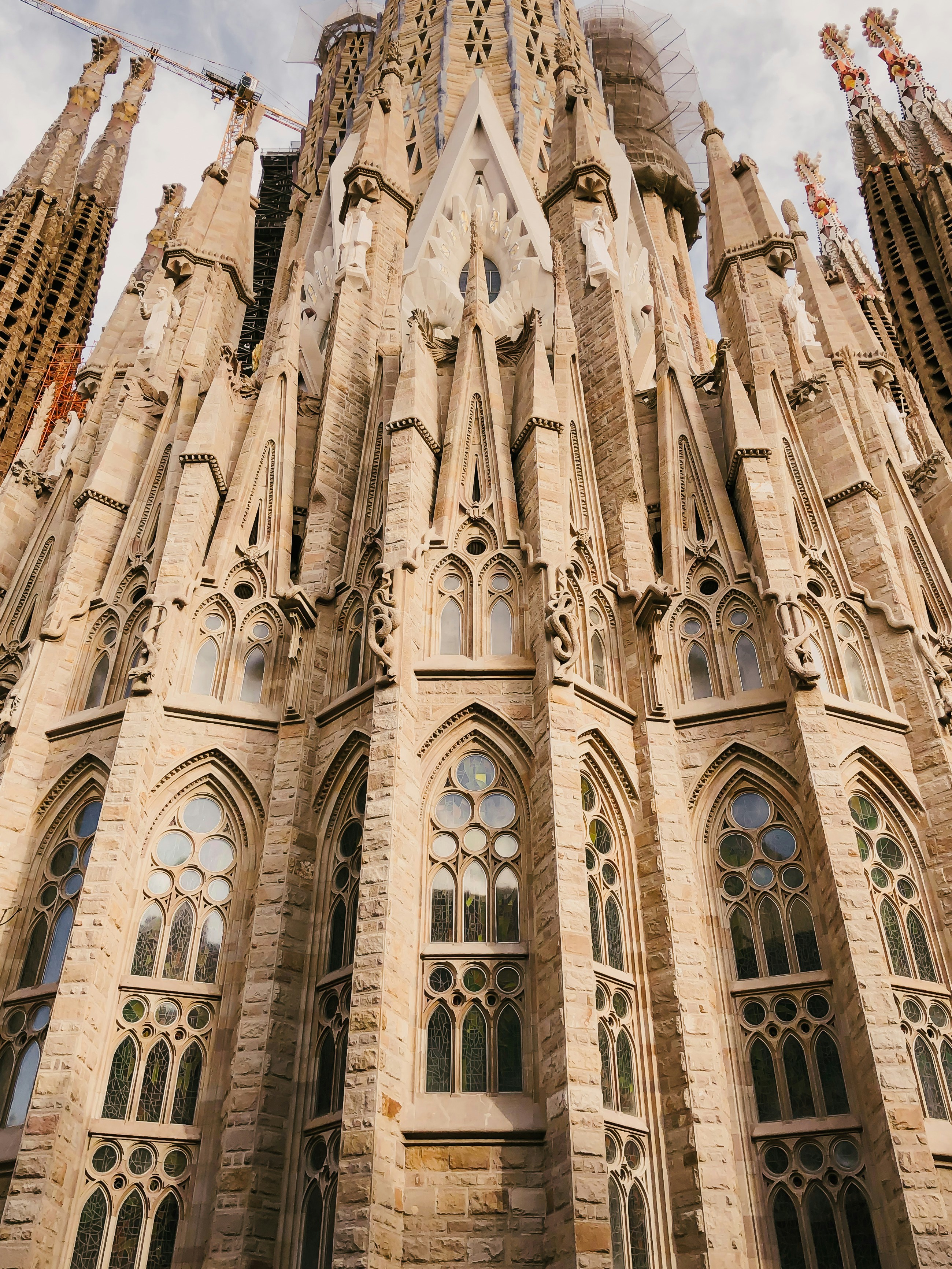
The Sagrada Familia is now the tallest church in the world at 172.5 meters (564 feet), following the completion of its central tower in 2026. It was designed by Antoni Gaudí to be slightly shorter than Barcelona's Montjuïc hill.
Is the Sagrada Família Worth Visiting?
It is one of the most extraordinary things a human being has built, and no photograph or description prepares you adequately for standing inside it. This is worth stating plainly, because the Sagrada Família attracts enormous crowds and is, depending on who you ask, either the most remarkable building on earth or a confusing nightmare to get tickets for. Both things are true, and neither negates the other.
The exterior of the basilica is astonishing from any angle: three elaborate façades covered in intricate sculptural detail depicting scenes from the life of Christ, the natural world, and Christian symbolism, surrounded by towers that grow organically like coral formations or stone trees. The Nativity façade, largely completed under Gaudí himself and dripping with organic forms, is the most richly decorative; the Passion façade, angular and austere by sculptor Josep Maria Subirachs, provides a jarring and moving contrast. The Glory façade, facing south, remains incomplete and will be the final major façade to be realised.
The interior is, for most visitors, the revelation. Where the exterior is dense with detail and symbolism, the interior is transcendent. Gaudí designed the columns to branch like forest trees, distributing weight in a system that eliminated the need for flying buttresses and flooded the building with light. The stained glass windows, in extraordinarily intense blues, greens, amber, and gold, transform the light that enters throughout the day. Standing in the central nave at the crossing, looking up at the lantern tower and out through the forest of columns in four directions, is an experience that is unlike anything else in the world.
The museum within the basilica, included in the standard ticket, is also excellent: it traces the history of the construction, displays original models and drawings (including reconstructed fragments from those destroyed in the Civil War), and explains Gaudí's complex geometrical systems in ways that make the extraordinary engineering comprehensible.
How Much Time Should I Spend at the Sagrada Família?
Allow 90 minutes to two hours for a thorough self-guided visit using the audio guide app, covering the basilica interior and the museum. Visitors who want to climb a tower should allow two and a half to three hours in total.
A rough guide to planning:
Security and entry: 5 to 10 minutes
Basilica interior and crossing: 45 to 60 minutes
The museum: 20 to 30 minutes
Tower ascent and descent: 30 to 45 minutes (including time at the top for views and photography)
Photography enthusiasts, those doing a guided tour, and anyone who wants to spend unhurried time in front of the stained glass should add extra time. The quiet hour from 9:00am to 10:00am is ideal for extended contemplation without crowd pressure.
Guided Tours and Audio Guides
The official Sagrada Família audio guide app must be downloaded to your own smartphone before your visit. It is free once your ticket is purchased, and can be downloaded via the confirmation email you receive after booking. The app is available in 19 languages, plus sign-language guides in Catalan, Spanish, and International Sign. A standard version runs approximately 45 minutes; an express version runs approximately 25 minutes.
Critically, download the app and its content before you leave your accommodation. Mobile data inside the basilica is extremely unreliable due to the thickness of the walls and the volume of visitors. Pre-downloading all content is essential for the app to work as intended during your visit.
The app also includes an augmented reality "What You Don't See" experience, which reveals areas of the basilica normally inaccessible to visitors. This feature requires the camera on your phone and is included at no extra cost.
Live guided tours are available for an additional charge and provide a significantly richer experience than the audio guide alone. Guided tours last approximately two to two and a half hours and can be booked with or without tower access. They are conducted in multiple languages. For visitors with a serious interest in the architecture, the theology, or Gaudí's design methodology, a guided tour is strongly recommended.
Climbing the Towers of the Sagrada Familia
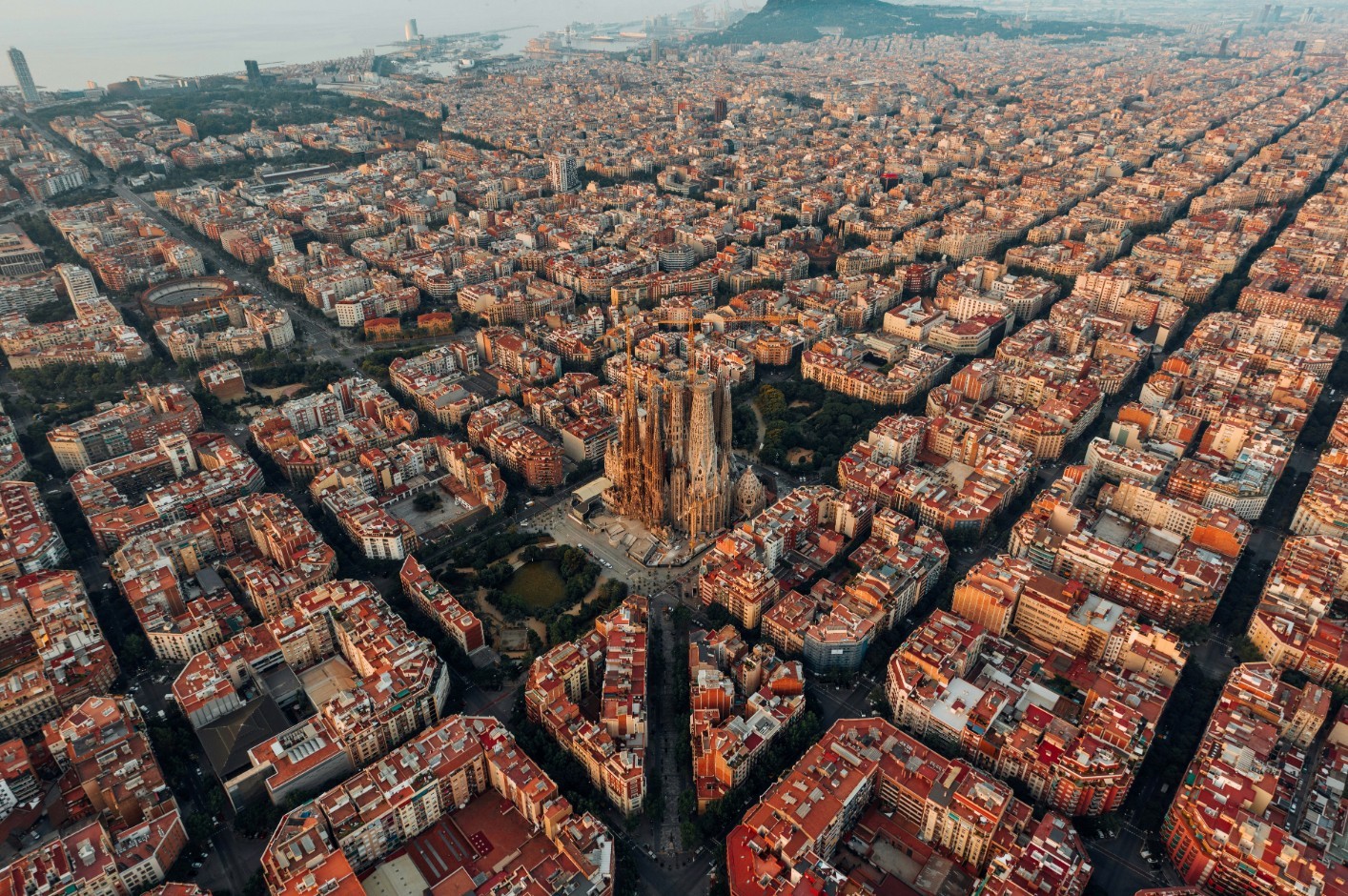
Tower access is available to two of the basilica's completed towers and represents one of the most spectacular views in Barcelona. The Nativity Tower (north-east side) offers views over the Eixample grid, the sea, and towards the hills; the Passion Tower (south-west side) looks out over the city centre and provides an excellent view of the façade sculptures up close.
Tower access is included only in tickets that specifically include it (approximately €36 for an adult), and must be selected at the time of booking. You cannot add tower access on the day.
The ascent is by lift; the descent is via a narrow, winding staircase. Tower access is not suitable for visitors with reduced mobility, as the descent staircase is steep and narrow by necessity. The towers may close at short notice due to high winds or rain, in which case a partial refund for the tower portion of the ticket is provided.
No bags or rucksacks are allowed in the towers for safety reasons. Lockers are available at the tower entrance for bag storage during the ascent; bags must be collected immediately on return.
Where Should I Eat Near the Sagrada Família?
There is no restaurant inside the basilica. Food and drinks are not permitted inside the building. There is no dedicated café on the Sagrada Família site.
The streets immediately surrounding the basilica, particularly Carrer de Provença and Avinguda Diagonal, have a range of cafés and restaurants. The Eixample neighbourhood generally is one of the best in Barcelona for eating: the grid layout makes it easy to explore, and the density of restaurants and bars is very high.
For a special meal near the basilica: The Eixample is home to some of Barcelona's most celebrated restaurants, including several with Michelin stars. The area around Passeig de Gràcia and the streets running off it (Carrer d'Aragó, Carrer de Provença, Carrer de Mallorca) offers everything from outstanding tapas to high-end Catalan cuisine.
For a quick and authentic lunch: The Eixample's many neighbourhood mercats (markets) and tapas bars are excellent for unpretentious, good-value Catalan food. The Mercat de l'Abaceria in Gràcia and the Mercat de la Llibertat are both within easy reach.
For a broader exploration of Barcelona's food culture, El Born and La Barceloneta (the old city and seafront respectively) are around 30 to 40 minutes on foot or a short Metro ride and offer some of the city's most atmospheric and diverse eating options.
Attending Mass at the Sagrada Família
Attending a Sunday morning mass is free and does not require a tourist ticket. The international multilingual mass takes place every Sunday from 9:00am to 10:00am and is open to all without an invitation. Capacity is limited; arriving before 8:00am is recommended to secure a seat in the main nave.
Attending mass is one of the most moving ways to experience the basilica: the sound of the organ and choir in the extraordinary acoustic space of the central nave is deeply atmospheric, and the light through the stained glass at 9:00am on a bright morning is at its most spectacular during this hour.
Accessibility at the Sagrada Família
The basilica is generally well equipped for visitors with reduced mobility. The main visitor route through the interior is accessible to wheelchair users, and the museum is fully accessible. However, tower access is not accessible: the tower descent involves a narrow, steep staircase that cannot be navigated by wheelchair users or visitors with significant mobility difficulties.
Disabled visitors with a disability certificate confirming 65% or higher disability receive free admission, and one accompanying person also enters free. Documentation must be presented at the entrance. Free tickets can be requested in advance or obtained on arrival with supporting documentation.
Guide dogs accompanying visitors with disabilities are welcome inside the basilica.
The audio guide app is available in sign-language versions (Catalan, Spanish, and International Sign) at no extra charge.
Rules, Bags, and Security
Dress code: The Sagrada Família is an active Catholic church, and a dress code applies. See-through clothing is not permitted. Trousers and skirts must reach at least mid-thigh. Shoulders may need to be covered (scarves or shawls are a practical solution). Hats are not permitted inside the nave or museum except for religious, health, or belief-related reasons. Visitors who do not meet the dress code will be refused entry without a refund.
Bags and rucksacks: All bags are checked at the entrance. Dangerous items, food, drinks, and narcotics are not permitted inside. Bags and rucksacks are not permitted in the towers; lockers are provided at the tower entrance for temporary storage.
No large luggage: Suitcases and large bags are not permitted inside the basilica.
Photography: Photography for personal, non-commercial use is permitted throughout the basilica. During masses and religious services, photography is not allowed. Drones are strictly prohibited in and around the basilica and the surrounding streets.
Ticket ID requirement: You must present official photo ID matching the name on your ticket at the entrance. Without ID, you will not be admitted, and no refund is provided.
What Else is There to Do Near the Sagrada Família?
The Eixample district that surrounds the basilica is one of the richest areas of Barcelona for architecture and culture, and several of Gaudí's other buildings are within easy reach.
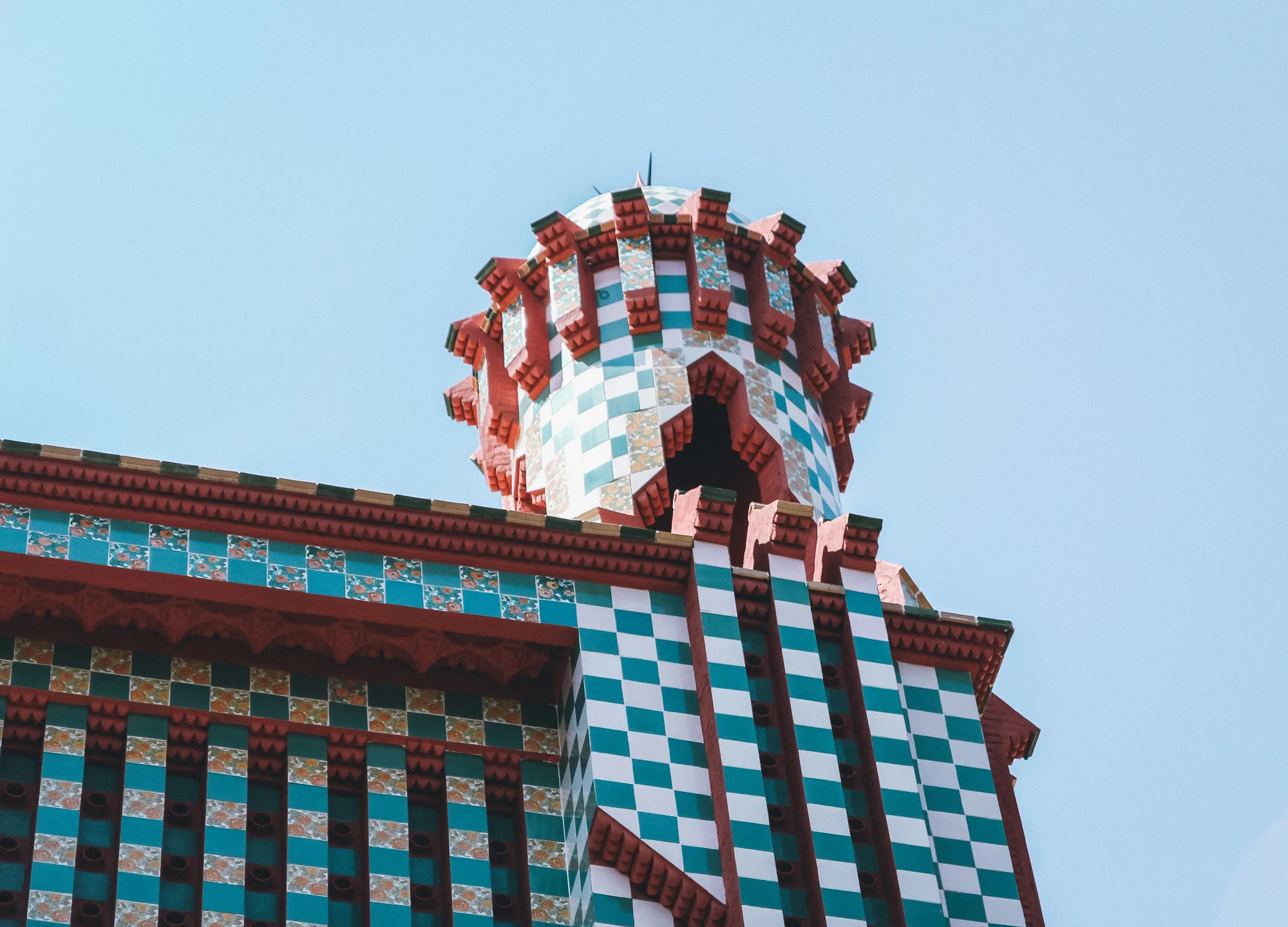
Casa Batlló on Passeig de Gràcia (around 1.5km on foot) is one of Gaudí's most celebrated domestic works, with a façade of shimmering ceramic scales and a dragon-spine roofline. It is open daily and requires advance booking.
Casa Milà (La Pedrera), just a short walk from Casa Batlló on the same boulevard, is another major Gaudí work with a spectacular rooftop terrace and excellent museum. Both are top-tier Barcelona attractions in their own right.
Park Güell, Gaudí's extraordinary hilltop garden and parkland in the Gràcia district (around 3km north, accessible by bus or Metro), is the most popular of his outdoor works and a UNESCO World Heritage Site. The central Monumental Zone, with its famous mosaic terrace and the Hypostyle Room, requires advance booking. The surrounding parkland is free to enter.
Palau de la Música Catalana, a UNESCO World Heritage Site by architect Lluís Domènech i Montaner (around 2.5km from the Sagrada Família), is one of the most beautiful concert halls in the world and offers daily guided tours.
La Rambla and the Gothic Quarter, the historic heart of Barcelona, are around 3km south-west and are easily reached by Metro. The Museu Picasso in El Born is one of the finest collections of Picasso's early work and requires advance booking.
For a quieter neighbourhood that rewards walking, Gràcia, immediately north of the Eixample, has excellent independent restaurants, cafés, and squares and is one of the most charming areas of the city.
Final Tips for Visiting the Sagrada Família
Book as early as the booking window allows. Tickets open approximately two months before the visit date. Set a reminder and book on the first day slots become available for your dates.
Download the app in advance. Mobile coverage inside the basilica is unreliable. Download the audio guide app and all its content at your hotel before leaving. Failing to do this is one of the most common visitor regrets.
Consider the quiet hour. The 9:00am to 10:00am quiet hour introduced from February 2026 is an exceptional opportunity to experience the basilica in a contemplative atmosphere. Book the first slot of the day if this appeals to you.
Plan your stained glass lighting. Morning light floods the Nativity façade windows (east); afternoon light transforms the Passion façade windows (west). If you can, time your visit for the light you most want to see, or allow enough time to experience both.
Book a tower if views are important to you. Tower access must be booked in advance and sells out faster than standard tickets. If you want to climb, include it in your initial booking rather than hoping to add it later.
Attend mass if your schedule allows. The Sunday multilingual mass at 9:00am is free, open to all, and one of the most moving experiences the city offers. Arriving before 8:00am gives you the best chance of a seat in the central nave.
Combine with other Gaudí sites for a full Modernista day. Casa Batlló, Casa Milà, and Park Güell are all within reach and together with the Sagrada Família represent the greatest concentration of one architect's work in any single city. All three require advance booking.
Back to Barcelona Attractions
Explore other Barcelona attractions
" width="24px"><path d="M 0 0 L 24 0 L 24 21.231 L 0 21.231 Z" fill="transparent" height="21.230768474975793px" id="nL2EwDcS9" width="24px"/><path d="M 0 0.541 C 0 0.242 0.245 0 0.547 0 L 2.735 0 C 3.037 0 3.282 0.242 3.282 0.541 L 3.282 4.598 C 3.282 4.897 3.037 5.139 2.735 5.139 L 0.547 5.139 C 0.245 5.139 0 4.897 0 4.598 Z" fill="rgb(196, 217, 201)" height="5.138657337892187px" id="hZ_rlBe_S" transform="translate(0 16.092)" width="3.2820512820512358px"/><path d="M 0 0.541 C 0 0.242 0.245 0 0.547 0 L 2.735 0 C 3.037 0 3.282 0.242 3.282 0.541 L 3.282 7.843 C 3.282 8.142 3.037 8.384 2.735 8.384 L 0.547 8.384 C 0.245 8.384 0 8.142 0 7.843 Z" fill="rgb(230, 211, 160)" height="8.38412513024521px" id="HgVBxIz3e" transform="translate(5.128 12.847)" width="3.282051282051235px"/><path d="M 0 0.541 C 0 0.242 0.245 0 0.547 0 L 2.735 0 C 3.037 0 3.282 0.242 3.282 0.541 L 3.282 12.982 C 3.282 13.281 3.037 13.523 2.735 13.523 L 0.547 13.523 C 0.245 13.523 0 13.281 0 12.982 Z" fill="rgb(232, 207, 164)" height="13.522782468137464px" id="utgrDnoM9" transform="translate(10.325 7.708)" width="3.282051282051377px"/><path d="M 0 0.541 C 0 0.242 0.245 0 0.547 0 L 2.735 0 C 3.037 0 3.282 0.242 3.282 0.541 L 3.282 16.498 C 3.282 16.797 3.037 17.039 2.735 17.039 L 0.547 17.039 C 0.245 17.039 0 16.797 0 16.498 Z" fill="rgb(233, 196, 166)" height="17.038705909853153px" id="OLOhW6STz" transform="translate(15.521 4.192)" width="3.2820512820512384px"/><path d="M 0 0.541 C 0 0.242 0.245 0 0.547 0 L 2.735 0 C 3.037 0 3.282 0.242 3.282 0.541 L 3.282 20.69 C 3.282 20.989 3.037 21.231 2.735 21.231 L 0.547 21.231 C 0.245 21.231 0 20.989 0 20.69 Z" fill="rgb(217, 170, 153)" height="21.230768474975793px" id="H5Z8wcwkd" transform="translate(20.718 0)" width="3.2820512820512278px"/></g></svg>)