Spain • Figueres, Catalonia
Dalí Theatre-Museum
Recommended to purchase a timed-entry ticket to guarantee entry, especially in peak season. On-site ticket office also sells tickets pending availability, but queues may be long.
Book 1 Week Ahead
Book 1-3 Days Ahead
Back to Barcelona Attractions
Pro Tip: Arriving about 15 minutes after the timed-entry on your ticket can be a clever way to avoid the swell of crowds that will rush in at the start of the entry time.
How Far in Advance to Book Tickets to the Dalí Theatre-Museum in Figueres, Spain
Updated August 2026
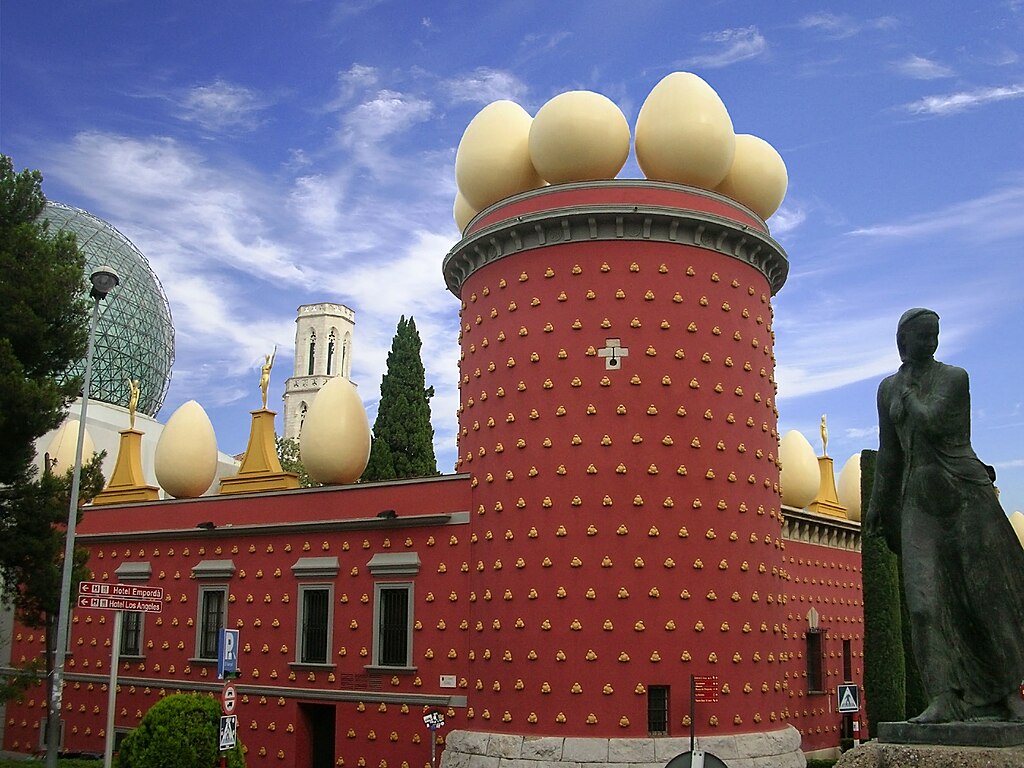
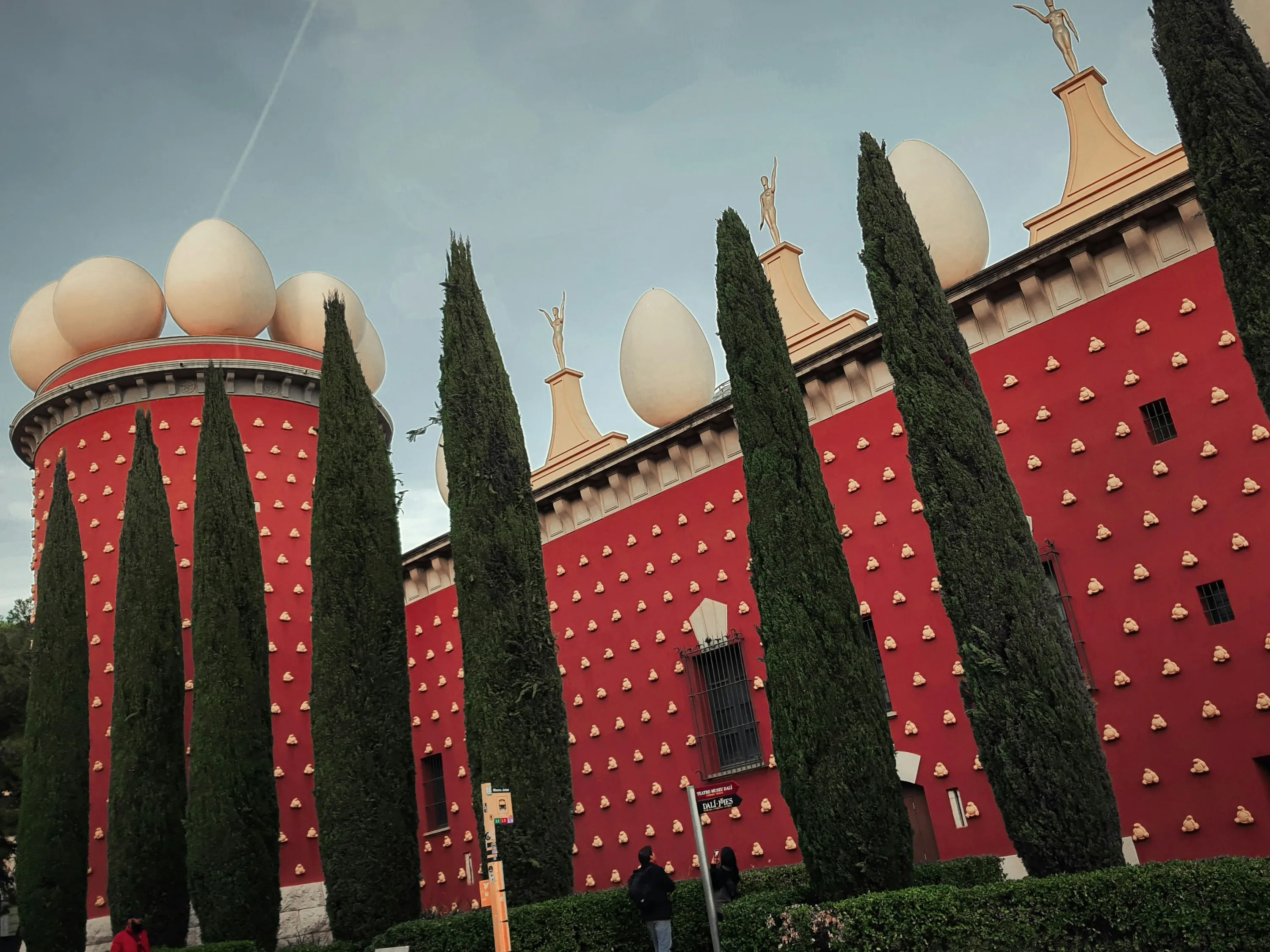
The Dalí Theatre-Museum in Figueres is one of the most remarkable and singular museum experiences in the world: a building conceived, designed, and curated entirely by Salvador Dalí himself, built on the ruins of the town's bombed-out municipal theatre and opened in 1974 as his final and most personal masterpiece. It holds the world's largest collection of the artist's work, drawing over a million visitors a year, and unlike most museums it is a complete artistic statement rather than a collection housed in a neutral space. Knowing how to book, when to go, and how to get there will make the difference between stepping into something truly extraordinary and spending an hour in a queue outside it.
At a Glance
How Early to Book:
Book 1 week in advance for a wide availability of time-slots. Last minute timeslots may be a available online at off-peak hours, and same-day tickets are sometimes available at the ticket office if space allows.
Tickets Released:
Through the end of the following month.
Best Times to Visit:
Early mornings at opening, particularly on weekdays, will have the smallest crowds.
Ticket price:
€18.50 online for adults off-season, €22.00 in July and August. Add €2 when purchased at the ticket desk.
Where to Book:
Museum Address:
Do You Need to Book Dalí Theatre-Museum Tickets in Advance?
Booking in advance is essential for the Dalí Theatre-Museum. The museum attracts over a million visitors annually, and during the summer months queues for walk-in visitors can stretch for an hour or more outside the entrance. On busy summer Saturdays in particular, visitors have reported being turned away entirely after arriving without a timed ticket.
Tickets are sold online via the official Gala-Salvador Dalí Foundation booking system. This is the only official booking platform, and it is strongly recommended over any third-party reseller. Online booking also saves you €2 per person compared to paying at the ticket desk.
Current off-season prices are as follows:
General admission (online): €18.50
General admission (at the door): €20.50
Reduced admission (online): €15.00 (for students aged 18 and over with proof, juniors aged 9 to 17, Carnet Jove holders, pensioners aged 65 and over, and visitors with a disability of 33% or above plus one companion)
Reduced admission (at the door): €17.00
Guided visit (general): €26.50
Guided visit (reduced): €23.00
Groups of 25 or more (online): €14.00
Groups of 25 or more (at the door): €16.00
Free: Children aged 0 to 8, visitors with a disability of 50% or above (plus one companion), and ICOM members with a valid membership card
In July and August every rate rises. General admission is €22.00 online and €24.00 at the door, reduced admission is €17.50 online and €19.50 at the door, and a guided visit costs €30.00 general or €25.50 reduced.
Tickets are timed entry, so you will select a specific entry slot when booking. The museum is strict about entry times. Book as far in advance as possible in summer, ideally several weeks ahead. In the quieter months between October and March, a few days' notice is usually sufficient, but there is no reason not to book early.
All visitors must keep their ticket with them throughout the visit. Those claiming reduced or free admission must carry the relevant proof of eligibility.
Dalí Theatre-Museum Opening Hours and Entry Information
The museum's hours change significantly by season, so it is worth checking the official website before you visit.
1 January – 22 March: Tuesday to Sunday, 10:30 am – 6:00 pm 23 March – 31 May: Tuesday to Sunday, 9:30 am – 6:00 pm 1 June – 30 June: Tuesday to Sunday, 10:30 am – 6:00 pm 1 July – 31 August: Every day including Monday, 9:00 am – 8:00 pm 1 September – 30 September: Tuesday to Sunday, 9:30 am – 6:00 pm 1 October – 31 December: Tuesday to Sunday, 10:30 am – 6:00 pm
Exceptional openings (open despite being Monday): 5 January, 30 March, 6 April, 25 May, 12 October, 9 November, and 7 December.
Exceptional closures: 1 January and 25 December. On 24 December the museum closes at 3:00 pm.
Last admission is 45 minutes before closing time. Rooms begin closing 15 minutes before the official closing time, so plan your visit accordingly. The museum is closed every Monday outside of July and August and the exceptional dates listed above.
Address: Gala i Salvador Dalí Square, 5, 17600 Figueres, Girona.
How to Get from Barcelona to the Dalí Theatre-Museum
The train is by far the easiest and most practical way to reach Figueres from Barcelona, and for most visitors the journey is a significant part of the day-trip experience.
By high-speed train (recommended): High-speed AVE and Avant services run from Barcelona-Sants station to Figueres-Vilafant, covering the journey in as little as 42 to 58 minutes depending on the service. Around 14 to 17 trains run in each direction per day, with the first departure from Barcelona at around 6:40 am and the last at approximately 11:05 pm. Tickets start from around €10 to €14 online when booked in advance via Renfe (renfe.com). Figueres-Vilafant is the high-speed station and sits about 20 minutes on foot from the museum, or a short taxi ride away. Taxis wait at the station exit.
By regional train: Slower Renfe regional services take around 1.5 to 2 hours from Barcelona-Sants and arrive at Figueres' central station in the town centre, which is just a 12-minute walk from the museum. These trains are cheaper and run more frequently. If you don't mind the extra travel time, arriving at the central station can be more convenient for the museum itself.
Which station to use in Barcelona: Depart from Barcelona-Sants for all services. Passeig de Gràcia also stops some services if it is more convenient for where you are staying.
By car: Driving from Barcelona via the AP-7 motorway takes approximately 1.5 hours depending on traffic. There are pay car parks in the town centre, and a car is particularly useful if you want to combine the visit with other Dalí sites at Port Lligat or Púbol (see the Dalinian Triangle section below). Parking directly adjacent to the museum can be tight in summer.
From Figueres-Vilafant station to the museum: The walk takes around 15 to 20 minutes and passes through residential streets before reaching the town centre. Taxis are readily available outside the station and the ride takes a few minutes.
From Figueres central station to the museum: A straightforward 12-minute walk through the town centre, much of it pedestrianised.
One practical tip: book your return train at the same time as your outward journey, particularly in summer. Seats on peak-hour services back to Barcelona sell out, and being stranded in Figueres waiting for a later service is not how anyone wants to end the day.
What is Inside the Dalí Theatre-Museum?
The museum holds the world's most extensive collection of Dalí's work, but calling it a collection barely captures what the experience is actually like. Dalí designed every room, every transition, every visual trick. The experience is not of art displayed in a neutral space; it is of stepping into the artist's imagination and being played with.
The main courtyard greets you with the Rainy Taxi, a vintage black Cadillac with a naked figure draped across the bonnet and the car's interior filled with ivy and water that drips constantly down through the vehicle. It is deliberately disorienting, funny, and slightly unsettling: the tone for everything that follows.
The Mae West Room is one of the most photographed spaces in the museum. From floor level, you see a fireplace, two paintings, a sofa, and curtains. Climb the staircase behind the room and view it through a periscope from above, and the furniture and artworks arrange themselves into the face of the American actress. It is a brilliant optical illusion and the queue to use the periscope is usually short enough to be worth waiting for.
The Palace of the Wind is the grand ceremonial hall beneath the museum's famous geodesic dome. Dalí painted the ceiling mural himself in the 1970s, depicting himself and Gala rising heavenwards in a forced-perspective composition that feels vast even from floor level. It is the most theatrical space in the building and worth lingering in.
Throughout the museum you will find major paintings from across Dalí's career, including the "Soft Self-Portrait with Fried Bacon" (1941), his portrait of Picasso, the monumental "Apotheosis of the Dollar," and his late mystical works. Unlike some other major collections, the museum also includes sculptures, installations, holograms, and objects Dalí collected from other artists. A dedicated gallery on the second floor is devoted to the work of Antoni Pitxot, Dalí's close friend and fellow Catalan artist.
Dalí's crypt is located beneath the stage, in the lower level of the building. It is marked simply by a stone slab. Many visitors find this the most affecting moment of the visit.
The layout is deliberately labyrinthine and not always well signposted. This is intentional: Dalí wanted visitors to wander, to backtrack, to encounter things unexpectedly. Go with that rather than against it, and you will get more out of the experience.
Image Credit: Kippelboy, CC BY-SA 3.0
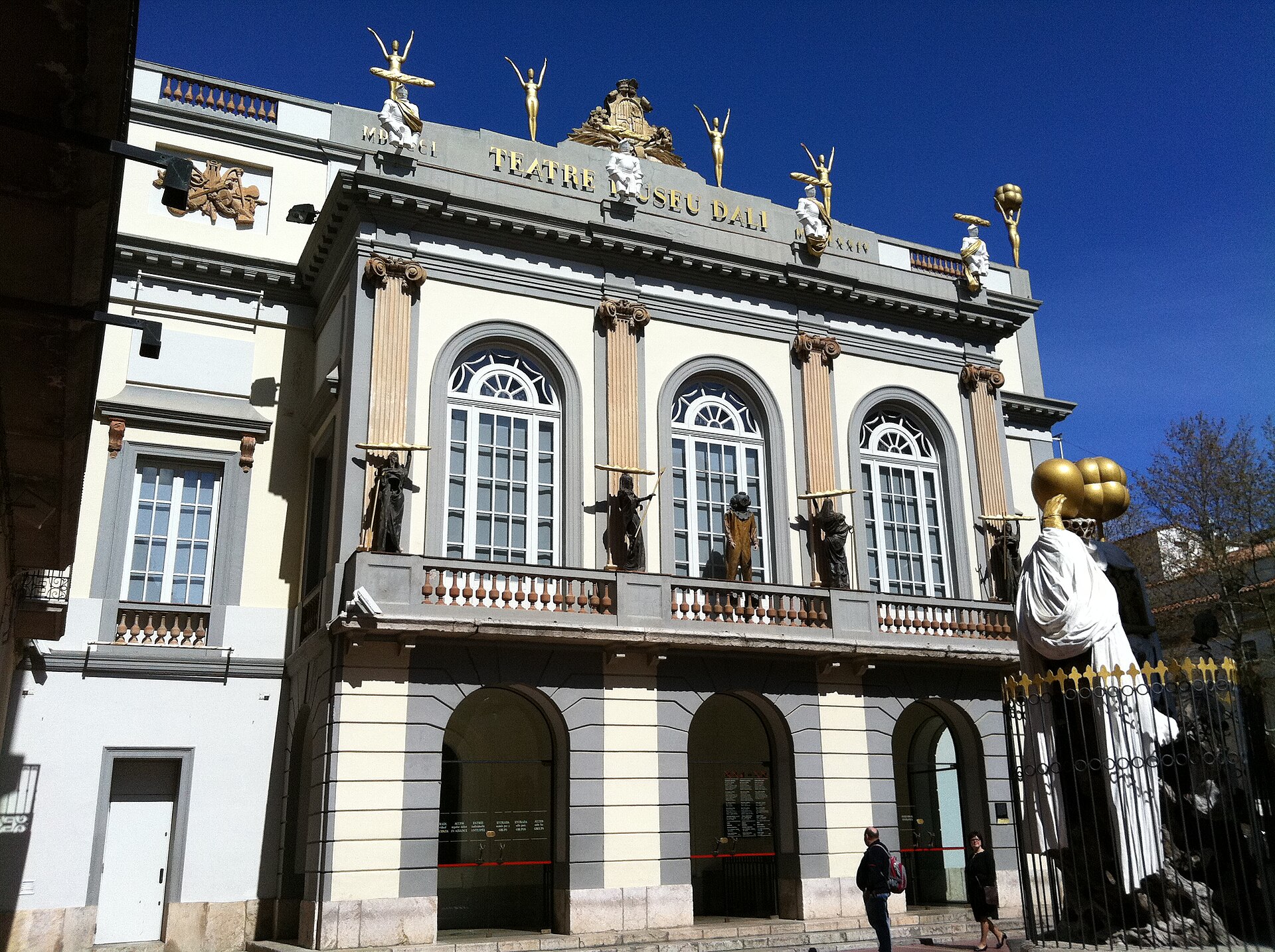
The Dali Theatre-Museum houses the largest and most diverse collection of Dalí’s works in the world. This includes over 1,500 pieces spanning his entire life, including paintings, sculptures, holograms, and works he collected by other artists.
The Dalí Jewels Exhibition
Included with standard admission, the Dalí Jewels exhibition is housed in an adjacent building accessed from within the main museum. It contains 39 extraordinary pieces of jewellery that Dalí designed on paper and had made in New York by the Argentine-born goldsmith Carlos Alemany, working under the artist's close supervision, alongside the drawings and paintings he produced while designing them.
The jewels are displayed in a deliberately theatrical, dark, labyrinthine space, accessed via an unusual staircase. Standout pieces include the Ruby Lips brooch, the Royal Heart with its mechanically beating rubies, and The Eye of Time, a diamond and platinum brooch-watch. Each piece is both technically extraordinary and completely Dalíesque in spirit. Many visitors focus so heavily on the main museum that they miss this exhibition entirely. It takes around 20 to 30 minutes and is well worth the time.
What is the Dalinian Triangle?
The Dalí Theatre-Museum is the centrepiece of what the Gala-Salvador Dalí Foundation calls the Dalinian Triangle: three sites connected to different phases of Dalí's life, all within reach of each other in northern Catalonia.
The Dalí Theatre-Museum, Figueres: Dalí's hometown and the site of his first public exhibition. The building that became the museum is where he spent his final years, from 1984 until his death in 1989. He is buried here.
The Salvador Dalí House-Museum, Port Lligat: The cove-side house near Cadaqués that Dalí and Gala built, extended, and lived in for most of their lives together. Port Lligat is around 40 km from Figueres, but the winding mountain road means the drive takes at least an hour. This is the most intimate of the three spaces, showing Dalí's private world rather than his public theatre. Visitor numbers are strictly limited, and booking is essential and often difficult to secure. The house sells out weeks or months in advance during high season. Book as soon as you know your dates at the Foundation website.
The Gala Dalí Castle, Púbol: A medieval castle that Dalí converted and gave entirely to Gala, around 40 km south of Figueres. It was her domain: Dalí required her written permission to visit, and later lived here himself after her death. Less visited than the other two sites, it offers a more peaceful and melancholic experience.
All three in a single day is not realistic. Allow at least two days, with two separate 40 km drives out of Figueres to factor in. Most visitors choose the Theatre-Museum alone for a day trip from Barcelona, and treat Port Lligat and Púbol as separate excursions if they have more time in the region.
Guided Tours of the Dalí Theatre-Museum
Official guided tours of the museum are bookable through the Foundation website. Tours are available in English and Spanish, cost €26.50 general and €23.00 reduced, rising to €30.00 and €25.50 in July and August, and last approximately one hour. Groups of 25 or more can arrange group guided tours at the reduced group ticket price.
The Foundation also offers educational visits for school groups and youth groups, which must be arranged in advance through the Foundation's education team.
There is no standard audio guide available for self-guided visitors. Given the museum's complexity and the layers of meaning embedded in almost every room, visiting with a guide or doing some reading before you arrive will significantly deepen the experience. Several well-regarded independent walking tours of Figueres include skip-the-line museum entry, which can be a useful option in summer.
The Foundation's own visit map, available as a download from the official website, is strongly recommended. The museum's layout is complex and difficult to navigate, and the map helps ensure you don't miss major rooms.
Is the Dalí Theatre-Museum Worth Visiting?
Yes, and I say this even for visitors who are not especially interested in Dalí's paintings. The museum is not just a place that houses art; it is itself an artwork and an experience that you cannot replicate anywhere else. Even visitors who find Dalí's surrealism difficult or alienating consistently report that the building, the rooms, and the sheer ambition of what Dalí created here are unlike anything they have seen elsewhere.
That said, a few honest caveats are worth making.
The crowds are a real issue, especially in summer. A recurring theme is that peak-season visits (particularly summer Saturdays) can feel uncomfortably packed, with certain rooms so full that it is difficult to stand back and properly look at anything. If you visit in July or August, go on a weekday and arrive at opening time. The experience in the off-season, by contrast, is far more contemplative and I would strongly recommend an autumn or spring visit if you have any flexibility.
The museum is not primarily a painting gallery. Dalí's most famous canvases ("The Persistence of Memory," "The Elephants," and others) are held in museums in New York, Madrid, and elsewhere. What you will find here are major works, but the focus is on installations, optical illusions, theatrical environments, sculptures, and multimedia. Visitors expecting a conventional painting experience may be surprised by how few of Dalí's most reproduced images are actually on the walls.
For families: the museum is entertaining for children who enjoy visual tricks, optical illusions, and the unexpected. The Mae West Room and the Rainy Taxi are particular hits. Younger children, or those who find unusual imagery unsettling, may struggle with some of the darker and more disturbing pieces. Teenagers generally either love it completely or dismiss it entirely, often along the lines of whether they are open to art that challenges them.
For art lovers and architecture fans: this is an unmissable visit. For casual tourists in Barcelona looking for a day out: it is an excellent choice, provided you book ahead and manage your expectations around crowds.
How Much Time Should I Spend at the Dalí Theatre-Museum?
Allow at least two hours for a thorough self-guided visit. For a properly unhurried experience that includes the Dalí Jewels exhibition and time to sit with the major rooms, two and a half hours is more comfortable. Very engaged visitors, or those with a guided tour, may spend three hours or more.
If you are combining the museum with a wander around Figueres itself, the birthplace museum, and lunch, you should plan for at least a full day.
What is the Best Time to Visit the Dalí Theatre-Museum?
Best time of day: The first entry slot of the day, as soon as the museum opens. Crowds build steadily through the morning and peak in the early afternoon, particularly in summer. Arriving at opening time gives you at least an hour with significantly fewer people in the most popular rooms.
Best days of the week: Weekdays are noticeably quieter than weekends. If you are doing this as a day trip from Barcelona, travelling on a Tuesday, Wednesday, or Thursday and arriving at opening time gives the most relaxed experience.
Best season: Spring (April to June) and autumn (September to October) offer the best balance of pleasant weather, reasonable crowds, and full opening hours. The museum is at its busiest in July and August, when it opens every day and draws enormous volumes of visitors. Winter visits (November to February) are very quiet, but the museum is closed on Mondays and the town itself is less lively.
There is one free entry day a year. At Dalí's own request, the museum admits everyone free on 6 January, the Epiphany, so expect it to be busy. There is no monthly free-admission day of the kind some Spanish museums offer.
Where Should I Eat Near the Dalí Theatre-Museum?
Figueres has a better food scene than its tourist-town reputation might suggest, and there are some excellent options close to the museum.
Restaurant Duran (Hotel Duran) is the most historically significant choice. This family-run hotel restaurant a five-minute walk from the museum was one of Dalí's favourite dining spots, and the walls are covered with photographs of the artist and letters he sent the family. The menu is built around traditional Catalan cooking with a modern sensibility, and the cooking is reliably excellent. It is mid-range to upscale and well worth the price. Booking is recommended for lunch.
Bocam is the most exciting option for food-focused visitors. It serves creative Catalan dishes built around seasonal market ingredients and high-quality local produce, with a terrace where you can eat outside in good weather. The kitchen takes regional classics and approaches them with ambition and precision. Several recent visitors have described it as one of the best meals of their trip. Booking ahead is advisable, and note that it closes on Mondays.
For something quick and inexpensive before or after your visit, the pinchos bars along Carrer Monturiol (a short walk from the museum entrance) offer good-value bites at around €2 to €3 each. Narcís at Carrer Monturiol, 3 is consistently well reviewed.
A word on the restaurants immediately adjacent to the museum entrance: the couple of cafes and tapas places within metres of the front door are convenient but aren't that great. If you have time to walk five minutes in any direction, you will eat better.
What Else is There to Do Near the Dalí Theatre-Museum?
Casa Natal de Salvador Dalí (Dalí's Birthplace): A five-minute walk from the museum, this is the house where Salvador Dalí was born in 1904, now run as a museum by the town of Figueres. It offers an audiovisual journey through Dalí's early life and formative years, with a strong sense of who he was before fame and surrealism took over. Several visitors rate it as an excellent companion piece to the Theatre-Museum, adding biographical context that the larger museum does not provide. Admission is separate.
Castell de Sant Ferran: Approximately a 15-minute walk from the museum, this enormous 18th-century military fortress is one of the largest fortifications in Europe and is remarkably well preserved. It is far less visited than the Dalí museum but impressive in scale and history. Guided tours are available.
Museu del Joguet (Toy Museum): On La Rambla de Figueres, a few minutes from the museum. It holds one of the most extensive toy collections in the world, with pieces from the past two centuries spanning Europe, Asia, and beyond. An unexpected delight if you have children with you or an interest in material culture.
La Rambla de Figueres: The town's main pedestrian promenade runs through the centre and is an enjoyable place to stroll, have a coffee, and get a sense of ordinary Catalan life away from the museum crowds. The morning market is worth catching if you are arriving early.
Girona (30 minutes by train): If you have the appetite for more after Figueres, Girona is 30 minutes south by regional train and is one of the most beautiful medieval cities in Spain, with a remarkably preserved Jewish quarter, a cathedral that appeared in Game of Thrones, and a world-class food scene. It makes an excellent addition to a day trip from Barcelona and can be combined efficiently with Figueres on the same route.
Rules, Bags, and Security
Bags: The museum operates strict bag size restrictions. No bags, rucksacks, or backpacks larger than 35 x 35 x 25 cm are permitted inside. Bags must not be worn on the back inside the museum. Larger bags and luggage must be deposited at the left-luggage service in the museum lobby. You collect them afterwards from the desk in the shop and exit area, not from where you left them. Bulky items, valuables, and anything dangerous cannot be checked into left luggage. Bags will be inspected by security at the entrance.
Photography: Photography is permitted inside the museum without flash. Flash photography, tripods, selfie sticks, and professional equipment are prohibited. Staff may hold a camera until you finish the visit.
Children: Visitors under 16 must be accompanied by an adult. There are baby-changing facilities in the ground-floor toilets.
Animals: Not permitted, except for trained guide dogs.
Accessibility at the Dalí Theatre-Museum
The museum is a complex, multi-floor building within a 19th-century theatre structure, which creates some inherent accessibility challenges.
The entrance for visitors with reduced mobility is located in Plaça Gala-Dalí, next to Wolf Vostell's sculpture "Obelisk Television." Visitors with reduced mobility should notify the museum's admission staff upon arrival so appropriate assistance can be arranged.
Accessible toilets are available on the ground floor, below the stage. Wheelchair users can reach the central courtyard with the Rainy Taxi, the stage area beneath the dome, the ground floor and below-stage rooms including the crypt and the Fishmonger's Hall, and the Dalí Jewels section. Other parts of the building involve stairs, and lifts do not reach every level.
Admission is free for visitors with a disability of 50% or above, and one companion accompanies them free of charge. Visitors with reduced mobility or using a wheelchair also enter free regardless of their disability percentage, again with one companion. Visitors with a disability of 33% or above qualify for reduced admission, with one companion also receiving reduced admission.
Final Tips for Visiting the Dalí Theatre-Museum
Book your ticket online at tickets.salvador-dali.org as far in advance as possible. Do not assume walk-in availability will exist.
Book your return train to Barcelona at the same time as your outward journey. Seats on afternoon services fill up, especially in summer.
Arrive at the museum at opening time. The first hour of the day is significantly calmer than midday, and the most atmospheric rooms are best experienced without crowds.
Download the official visit map from the Foundation website before you go. The museum's layout is deliberately disorienting, and the map helps ensure you find the rooms that matter most to you.
The Dalí Jewels exhibition is included in your ticket and housed in the adjacent building. Do not skip it. Many visitors walk past the entrance without realising it is included.
Wear comfortable shoes. The museum has multiple floors, irregular surfaces from the original theatre structure, and enough to see that you will be on your feet for two hours or more.
The security queue at the entrance can itself take up to an hour during peak summer periods, even with a reserved ticket. Arrive a little before your entry slot to give yourself time.
For a less crowded experience, the autumn and spring shoulder seasons are far more pleasant than July and August, and the town of Figueres itself is a more enjoyable place to spend time outside the museum.
Combine your visit with the Casa Natal (birthplace) five minutes away. It takes 45 minutes and provides biographical context that makes the Theatre-Museum feel richer.
If you want to visit the Salvador Dalí House-Museum at Port Lligat, book it separately the moment you know your travel dates. It sells out weeks in advance and cannot be combined easily with Figueres using public transport in a single day.
Back to Barcelona Attractions
Explore other Barcelona attractions
" width="24px"><path d="M 0 0 L 24 0 L 24 21.231 L 0 21.231 Z" fill="transparent" height="21.230768474975793px" id="nL2EwDcS9" width="24px"/><path d="M 0 0.541 C 0 0.242 0.245 0 0.547 0 L 2.735 0 C 3.037 0 3.282 0.242 3.282 0.541 L 3.282 4.598 C 3.282 4.897 3.037 5.139 2.735 5.139 L 0.547 5.139 C 0.245 5.139 0 4.897 0 4.598 Z" fill="rgb(196, 217, 201)" height="5.138657337892187px" id="hZ_rlBe_S" transform="translate(0 16.092)" width="3.2820512820512358px"/><path d="M 0 0.541 C 0 0.242 0.245 0 0.547 0 L 2.735 0 C 3.037 0 3.282 0.242 3.282 0.541 L 3.282 7.843 C 3.282 8.142 3.037 8.384 2.735 8.384 L 0.547 8.384 C 0.245 8.384 0 8.142 0 7.843 Z" fill="rgb(230, 211, 160)" height="8.38412513024521px" id="HgVBxIz3e" transform="translate(5.128 12.847)" width="3.282051282051235px"/><path d="M 0 0.541 C 0 0.242 0.245 0 0.547 0 L 2.735 0 C 3.037 0 3.282 0.242 3.282 0.541 L 3.282 12.982 C 3.282 13.281 3.037 13.523 2.735 13.523 L 0.547 13.523 C 0.245 13.523 0 13.281 0 12.982 Z" fill="rgb(232, 207, 164)" height="13.522782468137464px" id="utgrDnoM9" transform="translate(10.325 7.708)" width="3.282051282051377px"/><path d="M 0 0.541 C 0 0.242 0.245 0 0.547 0 L 2.735 0 C 3.037 0 3.282 0.242 3.282 0.541 L 3.282 16.498 C 3.282 16.797 3.037 17.039 2.735 17.039 L 0.547 17.039 C 0.245 17.039 0 16.797 0 16.498 Z" fill="rgb(233, 196, 166)" height="17.038705909853153px" id="OLOhW6STz" transform="translate(15.521 4.192)" width="3.2820512820512384px"/><path d="M 0 0.541 C 0 0.242 0.245 0 0.547 0 L 2.735 0 C 3.037 0 3.282 0.242 3.282 0.541 L 3.282 20.69 C 3.282 20.989 3.037 21.231 2.735 21.231 L 0.547 21.231 C 0.245 21.231 0 20.989 0 20.69 Z" fill="rgb(217, 170, 153)" height="21.230768474975793px" id="H5Z8wcwkd" transform="translate(20.718 0)" width="3.2820512820512278px"/></g></svg>)