
Back to Barcelona Attractions
Do You Need to Book Tickets to the Museu Nacional d'Art de Catalunya (MNAC) in Advance?
Updated July 2026
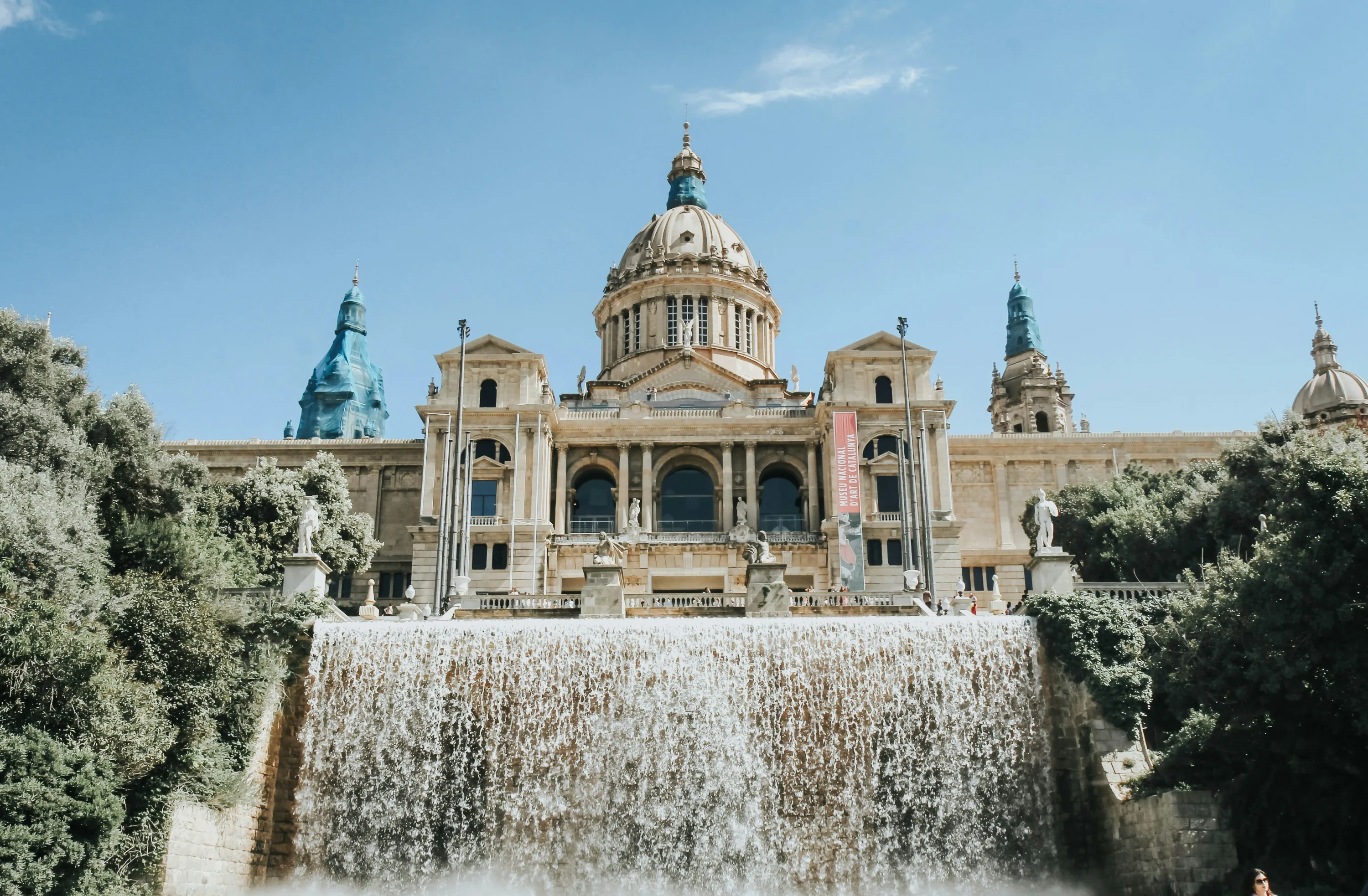
There is a palace at the top of Montjuïc hill that announces itself from almost anywhere in Barcelona: a vast, cream-coloured dome flanked by two square towers, dominating the southern horizon above the cascading fountains and Venetian towers of Plaça d'Espanya. The Palau Nacional was built in 1929 for the Barcelona International Exposition and was, from the beginning, conceived as a monument to Spanish cultural ambition at the grandest possible scale. What nobody planned was that it would become home to one of the finest art museums in southern Europe. The Museu Nacional d'Art de Catalunya, known universally as the MNAC, holds a collection that spans a thousand years of Catalan visual culture, from 11th-century Romanesque church frescoes transported from remote Pyrenean valleys to avant-garde paintings and photographs from the mid-20th century, with Gothic altarpieces, Renaissance canvases, Baroque masters, Gaudí-designed furniture, and an extraordinary collection of Catalan Modernisme in between. Its Romanesque collection is widely considered the finest in the world. Its building is one of the most spectacular museums in which any collection has ever been housed. And at €12 for a general admission ticket that is valid for two visits within a month, it is one of the most remarkable value propositions in Barcelona. This guide covers everything you need to know before you go.
At a Glance
How Early to Book:
Book about 1-2 days ahead to skip queues. Visitors can also purchase same-day tickets at the on-site ticket office; tickets during normal hours almost never sell out.
Through the end of the calendar year.
Best Times to Visit:
Weekday mornings in the first hour of opening are the least busy, but the sunset at golden hour in the late afternoon or evening is supreme. It is worth weathering the crowds.
Ticket price:
€12 for adults for general admission. A €2 basic ticket allows access to some building spaces.
Where to Book:
Do You Need to Book MNAC Tickets in Advance?
Advance booking is recommended but not mandatory. The MNAC does not operate a strict timed-entry system for the permanent collection, and walk-up tickets are available at the ticket desk during opening hours. On most weekdays outside the peak summer season, queues at the desk are manageable.
That said, booking online in advance is advisable for visits on free-entry days (Saturday afternoons and the first Sunday of the month), when visitor numbers are higher and the museum asks visitors to reserve even their free ticket online to manage capacity. Booking online also avoids any wait at the desk, which during summer can be extended.
Book through the official MNAC website. Buy directly from the official site to avoid commission fees charged by third-party resellers.
Free admission applies on the following occasions. A free ticket must still be reserved online for all free days to manage capacity:
Every Saturday from 3:00pm
First Sunday of every month (all day)
18 May (International Museums Day)
11 September (Diada Nacional de Catalunya, Catalonia's national day)
Plus occasional open-door days announced on the official website
The two-visit validity of the general admission ticket deserves particular attention. A single €12 ticket allows you to re-enter the museum on any second occasion within the same calendar month. For visitors spending a week or more in Barcelona, splitting the collection across two shorter visits is a far more satisfying approach than attempting to see everything in a single exhausting day.
MNAC Opening Hours and Entry Information
The MNAC operates two seasonal schedules and is closed every Monday (except when a Monday falls on a public holiday).
Winter hours (October to April):
Tuesday to Saturday: 10:00am to 6:00pm
Sundays and public holidays: 10:00am to 3:00pm
Mondays: Closed (except public holidays)
Summer hours (May to September):
Tuesday to Saturday: 10:00am to 8:00pm
Sundays and public holidays: 10:00am to 3:00pm
Mondays: Closed (except public holidays)
Annual closures: 1 January, 1 May, and 25 December.
Ticket office closing: 30 minutes before the museum closes. Rooms begin to be cleared 15 minutes before closing. Plan your visit accordingly, particularly if you want to spend time in the Romanesque galleries or the rooftop towards the end of the day.
Sundays: The 10:00am to 3:00pm Sunday schedule is significantly shorter than the weekday hours. Visitors planning a Sunday visit should arrive early to allow sufficient time for the collection. Arriving at 10:00am on a Sunday gives you three hours before the museum closes, which is enough for a focused visit but not for a comprehensive one.
The Rooftop Viewpoint operates on the same seasonal hours as the main museum but may close temporarily due to adverse weather conditions. Refunds are not available if the rooftop is closed on the day of your visit.
What is the Best Way to Get to the MNAC?
The museum is located in the Palau Nacional at Parc de Montjuïc and is very well connected to central Barcelona, with a particularly pleasant approach on foot.
By Metro and on foot (recommended approach): Take Lines L1 or L3 to Espanya station on the Plaça d'Espanya. From the station, walk south along the Avinguda de la Reina Maria Cristina, a broad ceremonial avenue flanked by pavilion buildings from the 1929 Exposition, with the Palau Nacional visible at the far end. The route passes the Magic Fountain and a series of cascading pools and is one of the most enjoyable approaches to any museum in Barcelona. The final section involves a staircase with escalators alongside, which are recommended in summer. The entire walk from the metro exit takes around 15 to 20 minutes and gains around 50 metres of elevation. This is by far the most satisfying way to arrive.
By Bus: Bus 150 runs from Plaça d'Espanya directly to the Parc de Montjuïc, passing close to the MNAC. Bus 55 also serves the museum area. Both run seven days a week. For visitors who want to avoid the uphill walk or are arriving with limited mobility, Bus 150 is the most practical option.
By Bus Turístic: The red route of Barcelona's hop-on, hop-off tourist bus has a stop serving the MNAC area on Montjuïc.
By taxi: Taxis can drive directly to the museum entrance. A taxi stand is located at the entrance to the Palau Nacional. This is the most practical option for visitors with significant mobility limitations. The drive from Plaça de Catalunya takes around 10 to 15 minutes.
By car: Free parking is available in the area near the Palau Nacional, which is unusual for a major Barcelona attraction. However, spaces fill quickly during weekend mornings and in summer. Public transport or taxi remains the most reliable option.
Note on the Montjuïc Funicular: The funicular from Paral·lel station is primarily used for reaching the higher areas of Montjuïc, such as the castle and the Fundació Joan Miró. For the MNAC specifically, the escalator approach from Plaça d'Espanya is the more direct and more rewarding route.
What is the Best Time to Visit the MNAC?
Weekday mornings from Tuesday to Friday in the first hour of opening are consistently the quietest time. The Romanesque galleries, which are also the most important in the collection, are particularly calm at 10:00am on a Wednesday or Thursday. The combination of the natural light admitted through the high-level windows of the original Palau Nacional spaces and the absence of crowds makes a morning visit the most immersive experience the museum offers.
Late weekday afternoons in summer (from around 5:00pm to 8:00pm) are a significantly underused window. The summer extended opening to 8:00pm attracts far fewer visitors than the midday period, the light inside the galleries is warmer, and the rooftop viewpoint in the hour before closing, with Barcelona lit by the late afternoon sun, is one of the finest panoramas the city offers at any time of day.
Saturday afternoons from 3:00pm bring free admission for all visitors, which predictably increases visitor numbers. If you are taking advantage of the free entry, arriving at 3:00pm on the dot gives you the best chance of a smooth entry, though the Romanesque galleries remain large enough that the experience is rarely unpleasant even when busy.
Sunday mornings are suitable only for visitors who arrive early and have a clear plan. With the museum closing at 3:00pm, arriving after 11:00am leaves insufficient time for a thorough visit.
Seasonal considerations: The Romanesque galleries are housed in naturally lit spaces that are beautiful at any time of year, but the external approach to the museum, up the Avinguda de la Reina Maria Cristina with the Palau Nacional ahead and the Magic Fountain below, is particularly dramatic on a clear morning in spring or autumn. In summer the uphill walk from Plaça d'Espanya is hot; the escalators on the final approach are worth using.
Is the MNAC Worth Visiting?
Absolutely, and the Romanesque collection alone would justify the answer even if the rest of the museum were empty. This is one of the great museums of Europe, and it is less visited by international tourists than its quality warrants.
The Romanesque collection (Rooms 1 to 24) is the most important thing in the building and one of the most remarkable assemblages of medieval art anywhere in the world. In the early 20th century, Catalan art historians became alarmed that the extraordinary Romanesque frescoes decorating the remote churches of the Pyrenean valleys were deteriorating and at risk of being sold to foreign collectors. Between 1919 and 1923, a team of specialists undertook the systematic detachment of the painted plaster from the walls of dozens of churches and its transfer to canvas, preserving the works and transporting them to Barcelona. The result is a collection that effectively reconstitutes entire Pyrenean church interiors within the museum's galleries.
The centrepiece is the Apse of Sant Climent de Taüll, an almost fully preserved 12th-century church apse whose apse painting depicts a commanding, frontally presented Christ in Majesty (Pantocrator) surrounded by the symbols of the four evangelists and the figures of the Virgin and the Apostles, executed in a palette of deep reds, golds, and blues that has remained vivid for nine centuries. Standing in the reconstructed apse, with the original painted curve overhead and the rest of the frescoed ensemble around you, is one of the most extraordinary museum experiences in Spain. A 3D projection recreates the full church interior in its original Pyrenean setting, adding context that makes the detached fragments significantly more legible.
The Gothic collection (Rooms 25 to 45) is the natural continuation of the Romanesque galleries and is one of the finest Gothic art collections in the Iberian Peninsula, covering 13th to 15th-century altarpieces, sculpture, and metalwork. Jaume Huguet, Bernat Martorell, Lluís Dalmau, and other masters of the Catalan Gothic school are all well represented. The panels of the Sant Jordi Altarpiece by Jaume Huguet, remarkable for the fastidiousness of their painting and the richness of their gold grounds, are among the standout works.
The Renaissance and Baroque collection includes international canvases that are less expected in a museum with this name. Titian, Tintoretto, Velázquez, El Greco, and Rubens are all present, reflecting the importance of the Thyssen-Bornemisza collection: a significant group of works from the Thyssen collection deposited at the MNAC since 2004, covering European painting from the 13th to the 18th century and adding an international dimension to what might otherwise be a narrowly Catalan narrative.
The Modern Art collection (Rooms 52 to 68) is the largest section of the museum by floorspace and covers Catalan art from the mid-19th century through to the 1950s. Its most compelling wing is dedicated to Modernisme, the Catalan variant of Art Nouveau that produced Gaudí, Domènech i Montaner, and Puig i Cadafalch in architecture and Ramon Casas, Santiago Rusiñol, and Isidre Nonell in painting. Casas's large-format canvases, including his monumental Barcelona 1902 (showing the charge of Civil Guard cavalry against protesters) and his earlier scene of a Montmartre garçon on a tandem bicycle, are among the most directly compelling works in the section. The furniture, glassware, ceramic tiles, and decorative objects designed by Gaudí and his contemporaries give this section a richness of material culture that pure painting galleries rarely achieve.
The Numismatic Cabinet holds over 135,000 coins, medals, and decorative objects spanning from the 6th century BC to the present, and is one of the most extensive numismatic collections in Spain. It is less visited than the painting galleries and is an absorbing experience for visitors with an interest in economic and political history.
The building itself is part of the visit. The Oval Hall (Sala Oval), where King Alfonso XIII opened the 1929 International Exposition, is a spectacular ceremonial interior. The Dome Hall (Sala de la Cúpula), with its painted ceiling and the quality of light admitted through the surrounding clerestory, is one of the finest individual rooms in any museum in Spain.

The view from atop the steps of the Museu Nacional d'Art de Catalunya is one of the best in all of Spain, especially leading up to sunset. It's worth a visit even if you don't plan on going inside the museum.
How Much Time Should I Spend at the MNAC?
The MNAC is a large museum and a single long visit is the least satisfying way to experience it. The two-visit validity of the €12 ticket is specifically designed for this reality, and taking advantage of it is strongly recommended.
For a single focused visit concentrating on the Romanesque and Gothic galleries, allow two to three hours at a comfortable pace. This is the minimum to do justice to the Romanesque collection alone.
For a comprehensive visit covering all major collections including Modern Art and the Thyssen deposit, plan for four to five hours or split across two visits using the two-day ticket validity.
A rough guide to timing:
Romanesque collection (Rooms 1 to 24): 60 to 90 minutes
Gothic collection (Rooms 25 to 45): 30 to 45 minutes
Renaissance, Baroque, and Thyssen deposit: 20 to 30 minutes
Modern Art and Modernisme (Rooms 52 to 68): 45 to 60 minutes
Temporary exhibition (if current): 20 to 40 minutes
Rooftop Viewpoint: 15 to 20 minutes
For visitors with limited time: If you have only two hours, spend them entirely in the Romanesque and Gothic galleries. The Romanesque collection alone is a sufficient reason to visit and is significantly more concentrated and rewarding than an attempt to rush through everything.
Guided Tours and Audio Guides at MNAC
The Second Canvas Museu Nacional app is the museum's free official audio guide and is the most practical way to explore the collection independently. Available for free download on iOS and Android, it covers 20 outstanding works from the permanent collection in nine languages (Catalan, Spanish, English, French, German, Italian, Portuguese, Russian, and Japanese) through audio commentary and ultra-high-resolution imagery that allows close examination of details not visible to the naked eye at normal gallery distances. The interactive storytelling format makes it engaging for visitors who are not specialists. Download the app before arriving to ensure it functions properly without relying on the museum's Wi-Fi.
The combined general admission and audio guide ticket (€14) provides an audio guide device from the museum desk, preferable for visitors who prefer a dedicated device over using their own phone during the visit.
Guided tours of the permanent collection are available in Spanish on selected dates and must be reserved through the official website. These cover the major collections with contextual commentary and are particularly worthwhile for visitors who want the Romanesque paintings explained in the context of their original Pyrenean settings. The museum's visitor services team can be contacted at the desk for the current schedule of English-language guided options.
Guided tours for families with children, tailored to younger visitors, are available on selected dates and must be reserved in advance. The museum provides clipboards and drawing materials for children during the visit, making it a practical family museum even without a dedicated family tour.
The Rooftop Viewpoint at MNAC
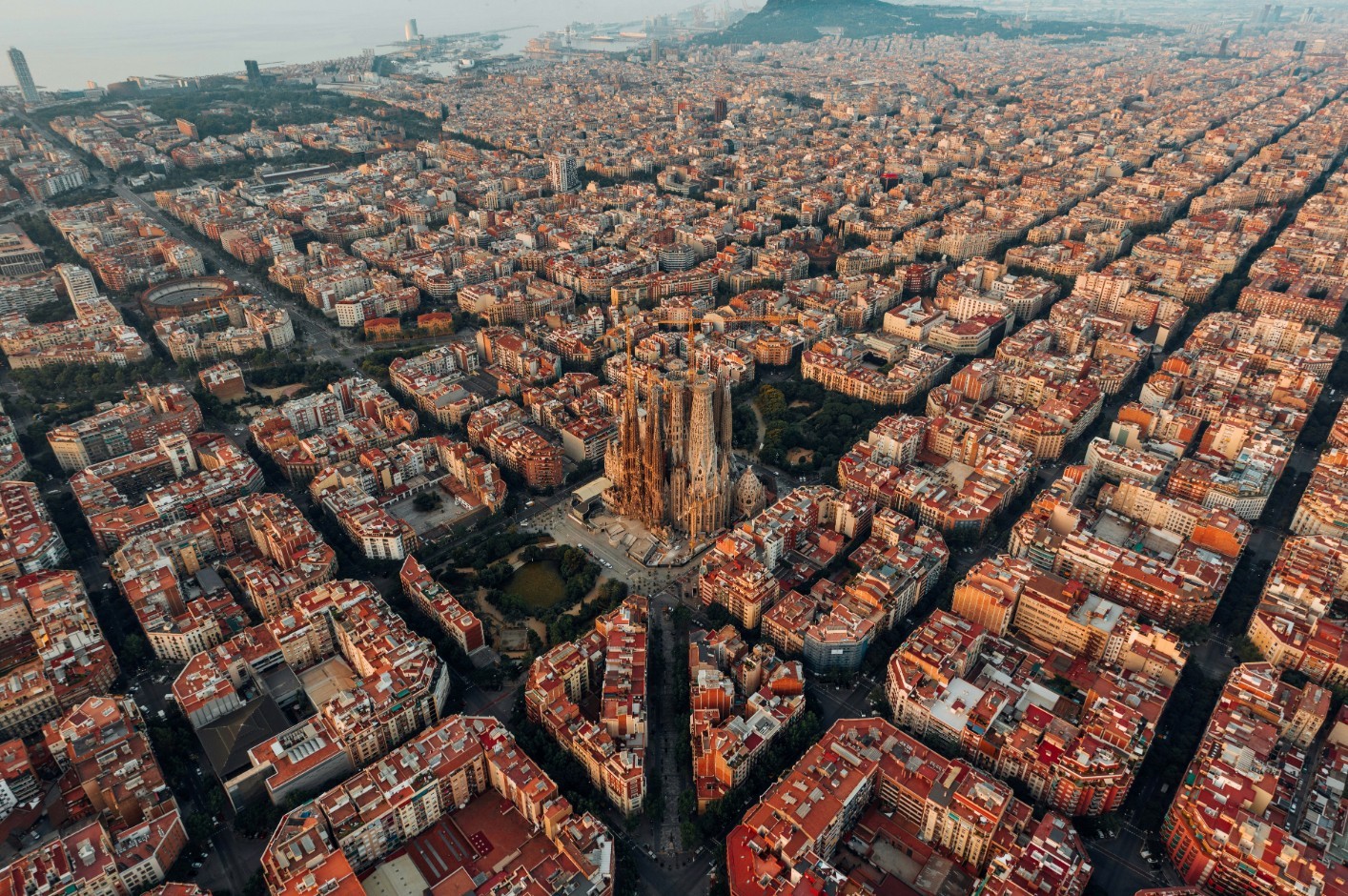
The Rooftop Viewpoint, accessible since 2013, is one of the finest elevated viewpoints in Barcelona and is included in the €12 general admission ticket. It sits above the main dome of the Palau Nacional and offers a 360-degree panorama covering Plaça d'Espanya and the Venetian towers below, the twin towers of the Hotel Arts and the Torre Glòries in the distance, the Barceloneta coast and the Mediterranean to the east, the Eixample grid with the Sagrada Família rising above it to the north-east, the hills of Collserola and Tibidabo behind the city, and the Llobregat delta and the airport to the south.
The viewpoint is exposed to weather and can be breezy even in warm conditions. It may close temporarily in high winds or rain. Refunds are not available if the rooftop is closed on the day of your visit; the museum recommends checking the weather forecast before planning a rooftop visit.
The view from the rooftop complements rather than competes with the terrace panorama from the front of the building: the terrace level, just below the main entrance, looks directly down the Avinguda de la Reina Maria Cristina towards the Venetian towers and Plaça d'Espanya, and this specific view is best enjoyed at terrace level before entering the museum.
Where Should I Eat at and Near the MNAC?
The museum has two on-site eating options at very different price points.
Restaurant Óleum is one of the most beautifully positioned restaurants in Barcelona, occupying the former Throne Room (Salón del Trono) of the Palau Nacional on the upper floor of the museum, with a panoramic terrace overlooking the city. The space is extraordinary: a gilded, high-ceilinged hall designed for a king, now serving a contemporary Mediterranean menu with views of Barcelona spread below. It is open for lunch from Tuesday to Sunday (and for dinner on Friday and Saturday evenings in summer), and advance booking is strongly recommended, particularly for weekend lunch and for any outdoor terrace table. Booking is available through the Óleum website at oleumbarcelona.com.
The cafeteria in the Oval Hall (Sala Oval) serves coffee, cold drinks, pastries, and light snacks in a considerably more casual setting. It is a practical option for a break during the visit without leaving the building. No advance booking required.
For eating outside the museum, the approach via Plaça d'Espanya and the Avinguda de la Reina Maria Cristina offers limited dining options, and the most convenient restaurants for a pre- or post-visit meal are in the surrounding neighbourhoods.
Poble-sec, the neighbourhood at the eastern foot of Montjuïc below the hill, is one of Barcelona's most rewarding dining neighbourhoods and is around 15 to 20 minutes on foot from the museum, or a short metro ride from Espanya to Poble Sec station on Line L3. Carrer de Blai, famous for its concentration of pintxos bars, is the most animated street, and the broader neighbourhood has an excellent range of restaurants at accessible prices.
The Arenas de Barcelona shopping centre (the converted 19th-century bullring on Plaça d'Espanya, directly below the museum) has a food court on its lower floors and is a convenient if undistinguished option for a quick meal before or after the museum. The rooftop of the Arenas has a terrace bar and views that are worth the detour.
Poble Espanyol, around 15 minutes on foot from the museum through Montjuïc, has several restaurants and tapas bars within the architectural village complex, including some offering good-value set lunch menus.
Accessibility at the MNAC
The MNAC is among the more accessible major museums in Barcelona, with lifts throughout the building providing step-free access to all gallery floors.
The standard visitor route from the main entrance through the permanent collection and to the Rooftop Viewpoint is fully accessible to wheelchair users. The escalators on the approach up the Avinguda de la Reina Maria Cristina make the external approach accessible; for visitors arriving by taxi or bus, drop-off directly at the museum entrance is available.
Free admission applies to disabled visitors, and one accompanying companion also enters free with valid documentation.
The Second Canvas Museu Nacional app audio guide, available in nine languages, is accessible via personal smartphone and supports visitors with hearing or visual impairments through its detailed image-based commentary.
Pushchairs and strollers are welcome throughout the museum, and the building's scale and lift access make it a family-friendly space.
Rules, Bags, and Security
Photography for personal, non-commercial use is permitted throughout the permanent galleries and the rooftop. Flash photography is not permitted anywhere in the museum. Tripods and selfie poles are prohibited. Photography restrictions for specific temporary exhibitions are posted at the entrance to each show.
Bags and rucksacks: Large bags and rucksacks must be stored in the cloakroom, which is located near the entrance and is free of charge. The museum does not publish a specific size restriction, but bulky bags are not permitted in the galleries.
Food and drink are not permitted in the galleries or the Oval Hall. The cafeteria and Restaurant Óleum are the designated eating areas.
The museum offers free Wi-Fi in most areas of the building.
What Else is There to Do Near the MNAC?
The MNAC's position at the heart of Montjuïc makes it a natural anchor for a full day on the hill, which is one of the most culturally rich areas of Barcelona.
Poble Espanyol (Spanish Village), around 15 minutes on foot from the MNAC, is a full-scale architectural village built for the 1929 Exposition, with buildings representing the regional architecture of every part of Spain. It functions as a museum, a shopping precinct, a cultural venue, and an active craft centre with workshops in ceramics, glass-blowing, and other traditional trades. A combined MNAC and Poble Espanyol ticket is available for €20. It also holds the Fundació Fran Daurel's collection of 300 works by Miró, Dalí, Picasso, and others.
Fundació Joan Miró, around 20 to 25 minutes on foot from the MNAC through the hillside gardens (or a short ride on Bus 150), is one of the most important modern art museums in Spain and the most logical companion to the MNAC on a Montjuïc day. Where the MNAC looks back through a thousand years of history, the Miró Foundation looks at the 20th century through the prism of one extraordinary Catalan imagination. The two museums together give a remarkably complete account of Catalan artistic identity. Advance booking for the Miró Foundation is recommended.
Montjuïc Castle is approximately 25 to 35 minutes on foot from the MNAC along the hillside paths and roads, or accessible via Bus 150 and the cable car. For visitors who want a full Montjuïc day covering culture, history, and panoramic views, the combination of the MNAC, the Fundació Joan Miró, and the castle is one of the most satisfying single-day itineraries Barcelona offers.
The Magic Fountain (Font Màgica) at the foot of the Avinguda de la Reina Maria Cristina is directly on the route from the MNAC down to Plaça d'Espanya, and is a Barcelona institution in its own right. The free evening light and music shows run Thursday to Sunday from spring to autumn. Descending from the museum on an evening in summer to find the fountain display in full effect as you reach the bottom of the hill is one of the more unexpectedly pleasurable things Barcelona regularly delivers. Check the City of Barcelona website for the current schedule.
Mies van der Rohe Pavilion (Pavelló Mies van der Rohe), around 10 minutes on foot below the MNAC back towards Plaça d'Espanya, is the reconstructed German Pavilion designed by Ludwig Mies van der Rohe for the 1929 Exposition. One of the most influential buildings of the 20th century, it is a mandatory stop for anyone with an interest in modern architecture: a near-minimalist composition of travertine, glass, water, and a single Georg Kolbe sculpture that prefigured the entire trajectory of modernist design. Admission is charged.
Final Tips for Visiting the MNAC
Use the two-visit ticket validity. The €12 general admission is valid for two visits within a calendar month. If you are spending a week or more in Barcelona, visiting the Romanesque and Gothic collections on one morning and returning for the Modern Art collection on another afternoon is incomparably better than attempting everything in a single exhausting visit.
Start with the Romanesque galleries. Whatever else you plan to see, begin here. They are at the back of the building on the lower level, and many first-time visitors make the mistake of walking straight into the main hall and turning left towards the Gothic and Modern collections, reaching the Romanesque galleries depleted from two hours of looking. The Romanesque collection deserves your freshest attention. Turn right from the entrance, or follow the signs from the Oval Hall.
The approach from Plaça d'Espanya on foot is part of the experience. The walk up the Avinguda de la Reina Maria Cristina, with the Palau Nacional ahead and the city behind you, is one of the great urban approaches in Barcelona. Allow time for it rather than rushing straight to the museum entrance.
Download the Second Canvas app before you arrive. The free audio guide covers 20 key works in nine languages and is the most accessible way to understand what you are looking at in the Romanesque galleries in particular, where the context of the original Pyrenean churches is not obvious to most visitors. Having it downloaded and ready before entering saves time and avoids connectivity problems inside the building.
Go on a free afternoon if your schedule allows. Saturday from 3:00pm is free for everyone, and the first Sunday of each month is free all day. Reserve your free ticket online in advance to guarantee entry on these days.
Combine with the Fundació Joan Miró on the same day. The MNAC and the Miró Foundation are the two strongest art museums on Montjuïc, they are complementary in their scope, and the escalator and walking route connecting them through the hillside gardens is a pleasant 20-minute walk. The Articket BCN covers both in a single pass.
Check whether the current temporary exhibition is included in general admission. Most temporary exhibitions at the MNAC are included in the €12 ticket, but occasional major shows carry a separate admission. The website clarifies this for each current exhibition before you book.
Back to Barcelona Attractions
Explore other Barcelona attractions
" width="24px"><path d="M 0 0 L 24 0 L 24 21.231 L 0 21.231 Z" fill="transparent" height="21.230768474975793px" id="nL2EwDcS9" width="24px"/><path d="M 0 0.541 C 0 0.242 0.245 0 0.547 0 L 2.735 0 C 3.037 0 3.282 0.242 3.282 0.541 L 3.282 4.598 C 3.282 4.897 3.037 5.139 2.735 5.139 L 0.547 5.139 C 0.245 5.139 0 4.897 0 4.598 Z" fill="rgb(196, 217, 201)" height="5.138657337892187px" id="hZ_rlBe_S" transform="translate(0 16.092)" width="3.2820512820512358px"/><path d="M 0 0.541 C 0 0.242 0.245 0 0.547 0 L 2.735 0 C 3.037 0 3.282 0.242 3.282 0.541 L 3.282 7.843 C 3.282 8.142 3.037 8.384 2.735 8.384 L 0.547 8.384 C 0.245 8.384 0 8.142 0 7.843 Z" fill="rgb(230, 211, 160)" height="8.38412513024521px" id="HgVBxIz3e" transform="translate(5.128 12.847)" width="3.282051282051235px"/><path d="M 0 0.541 C 0 0.242 0.245 0 0.547 0 L 2.735 0 C 3.037 0 3.282 0.242 3.282 0.541 L 3.282 12.982 C 3.282 13.281 3.037 13.523 2.735 13.523 L 0.547 13.523 C 0.245 13.523 0 13.281 0 12.982 Z" fill="rgb(232, 207, 164)" height="13.522782468137464px" id="utgrDnoM9" transform="translate(10.325 7.708)" width="3.282051282051377px"/><path d="M 0 0.541 C 0 0.242 0.245 0 0.547 0 L 2.735 0 C 3.037 0 3.282 0.242 3.282 0.541 L 3.282 16.498 C 3.282 16.797 3.037 17.039 2.735 17.039 L 0.547 17.039 C 0.245 17.039 0 16.797 0 16.498 Z" fill="rgb(233, 196, 166)" height="17.038705909853153px" id="OLOhW6STz" transform="translate(15.521 4.192)" width="3.2820512820512384px"/><path d="M 0 0.541 C 0 0.242 0.245 0 0.547 0 L 2.735 0 C 3.037 0 3.282 0.242 3.282 0.541 L 3.282 20.69 C 3.282 20.989 3.037 21.231 2.735 21.231 L 0.547 21.231 C 0.245 21.231 0 20.989 0 20.69 Z" fill="rgb(217, 170, 153)" height="21.230768474975793px" id="H5Z8wcwkd" transform="translate(20.718 0)" width="3.2820512820512278px"/></g></svg>)