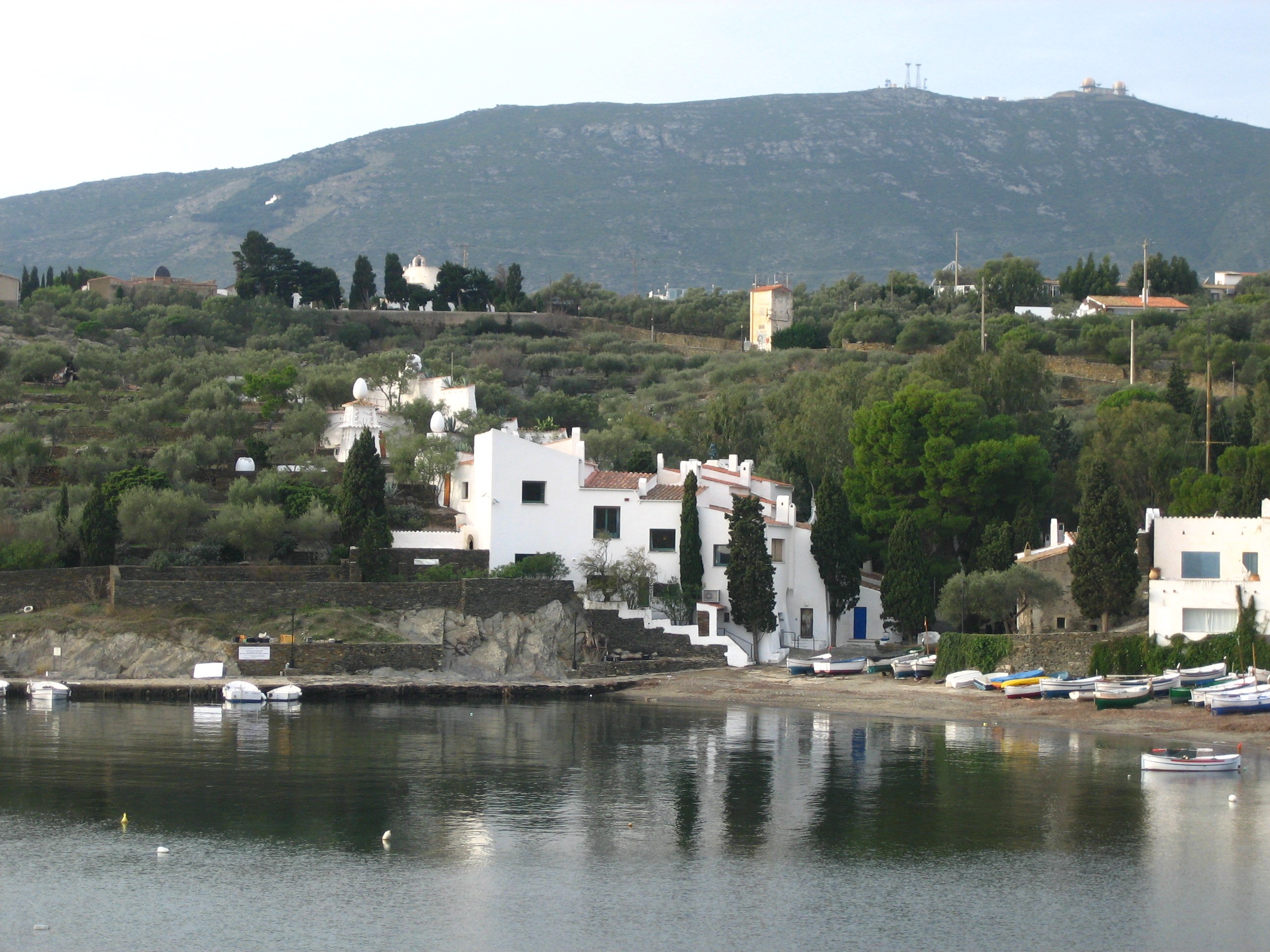
Spain • Portlligat, Catalonia
Dalí House-Museum
Pre-booking a timed-entry ticket currently required; there is no on-site ticket office. Last minute tickets may be available up until a few days ahead of visit.
Book 2-4 Weeks Ahead
Book 1-2 Weeks Ahead
Back to Barcelona Attractions
NOTE: Timed-entrance tickets are currently required for the Dalí House-Museum. The ticket office is not selling same-day tickets.
Dalí House-Museum Portlligat: Everything You Need to Know Before You Visit
Updated August 2026
In 1930, Salvador Dalí bought a tiny fisherman's hut in the remote cove of Portlligat, on Catalonia's rugged Costa Brava, and over the next four decades he and his wife Gala transformed it, room by room, into one of the most extraordinary artist's homes in the world. Unlike the theatrical spectacle of the Dalí Theatre-Museum in Figueres, Portlligat is intimate: you stand in the actual studio where Dalí painted some of his most celebrated works, look out over the same bay that appears in his canvases, and move through spaces that are entirely personal. Knowing exactly how the booking system works before you arrive will save you from making the trip to one of Catalonia's most remote corners only to be turned away at the gate.
At a Glance
How Early to Book:
Book 3 weeks in advance for a wide availability of time-slots. Last minute timeslots may be a available until a couple days before visit.
Tickets Released:
Through the end of the following month.
Ticket price:
€15.50 to €18.50 for adults depending on season.
Where to Book:
Museum Address:
Do You Need to Book Dalí House-Museum Tickets in Advance?
Yes, and this is non-negotiable. The official Dalí Foundation website states clearly: advance booking is always required for all visitors, with no exceptions. There is no walk-up option. If you arrive without a pre-booked ticket, you will not get in, and a recurring theme among recent visitors is the frustration of having driven an hour along winding mountain roads only to discover this the hard way.
The house operates with timed entry slots, with groups of no more than eight people entering every ten minutes. This small-group system is what makes the visit so special, but it also means capacity is extremely limited. In peak summer (July and August), tickets regularly sell out several weeks in advance. During spring and early autumn, a week or two ahead is generally sufficient, though earlier is always safer.
Where to book: Always book directly through the official Gala-Salvador Dalí Foundation website. This is the only booking platform guaranteed to honour your reservation and reflect the correct prices. A lot of folks have issues booking through TripAdvisor and other third-party resellers, including people having tickets cancelled by the platform moments before entry, with the museum unable to recognise the confirmation number. Third-party sites also add significant commission on top of the official prices.
City pass coverage: The Dalí House-Museum is not covered by the Barcelona Card, the Articket BCN, or any other city pass. Each of the three Dalí Foundation museums (Portlligat, Figueres, Púbol) requires a separate ticket. If you have visited the Theatre-Museum in Figueres that day, you still pay the full admission here.
The cancellation and refund policy is strict. If you do not collect your tickets from the museum at least 30 minutes before your booked entry time, your booking will be cancelled and the tickets will not be refunded. The museum is equally firm about this: being five minutes late can cost you your entire visit. If you are arriving by bus or walking from Cadaqués, build in more time than you think you need.
Dalí House-Museum Opening Hours and Entry Information
The museum closes entirely for several weeks each winter, so checking the current schedule before planning your trip is essential.
1–6 January: Tuesday to Sunday, 10:30am–6:00pm
7 January–11 February: Closed
12 February–31 March: Tuesday to Sunday, 10:30am–6:00pm
1 April–14 June: Every day, 10:30am–6:00pm
15 June–13 September: Every day, 9:30am–8:00pm
14 September–31 October: Every day, 10:30am–6:00pm
1 November–31 December: Tuesday to Sunday, 10:30am–6:00pm
Exhibition rooms close 15 minutes before the stated closing time. Access to the museum and ticket office is permitted up to 40 minutes before closing.
Exceptional closures (no visits on these dates): 1 January, 8 June, 5 October, 25 December. On 24 December, the last admission is at 1:30pm.
Exceptional openings (open on days that would otherwise be closed): 5 January, 30 March, 9 November, 7 December, 28 December.
The museum is open every day from 1 April to 31 October. Outside those dates it closes on Mondays, apart from the exceptional openings listed above. If you are planning a Monday visit in winter or early spring, check the website carefully.
Address: Platja Portlligat, s/n, 17488 Cadaqués, Girona
The Ticket Collection Rule: Read This Before You Go
Even though you will have booked and paid for your ticket online in advance, you must physically collect your ticket at the museum's left-luggage and ticket desk at least 30 minutes before your booked entry time. If you arrive at the gate with only your booking confirmation email and not the physical or scanned ticket, or if you arrive less than 30 minutes before your slot, the museum will cancel your booking with no refund.
The left-luggage office is on the ground floor, opposite the museum entrance. Plan to arrive in Portlligat at least 45 minutes before your slot to give yourself time for the walk from parking, collecting your ticket, and settling in before entry.
What is the Best Way to Get to the Dalí House-Museum?
Portlligat is 1.5 kilometres from the centre of Cadaqués, a walk of roughly 15 to 20 minutes. Cadaqués itself sits at the end of a long, spectacular, and demanding mountain road from the rest of Catalonia. However you get there, factor in more travel time than mapping tools suggest.
By car: This is by far the easiest option, and most visitors with any flexibility will choose it. From Barcelona, take the AP-7 motorway north towards France and exit at Figueres. Then follow the C-260 towards Roses, and turn onto the GI-614 towards Cadaqués. The Figueres to Cadaqués section alone takes at least one hour due to the winding mountain road, despite being only 40 kilometres. The road is narrow in places and demands full attention. Parking in Portlligat is limited and fills quickly in high season. There is a free unattended lot behind the Portlligat beach a few minutes from the museum, and a paid car park closer in. If both are full, the large public car parks in Cadaqués are a 15 to 20-minute walk over the headland.
By coach from Barcelona: MOVENTIS operates intercity service Route 3 directly from Barcelona to Cadaqués. The journey takes around two and a half hours from the city. Check the current timetable on the MOVENTIS website, as services are reduced on weekends and in the off-season.
By train and bus: Take a RENFE high-speed train from Barcelona Sants to Figueres (around one hour on the AVE). Note that the high-speed station is Figueres-Vilafant, on the outskirts of town, not the central Figueres station. From the central Figueres bus station, MOVENTIS Route 12 runs to Cadaqués (around one hour). From Cadaqués, it is a 15 to 20-minute walk over the headland to Portlligat, or a short eco-taxi ride. Allow a full day for this journey by public transport.
By seasonal boat: Several companies operate routes between Roses, Cadaqués, and Portlligat during summer. This is a scenic alternative if you are already staying on the Costa Brava.
One practical tip worth knowing: the buses back from Cadaqués to Figueres are less frequent than those going in, and the last bus may be earlier than you expect. Check the return schedule before you leave.
Image Credit: Anthiro 57, CC BY-SA 4.0
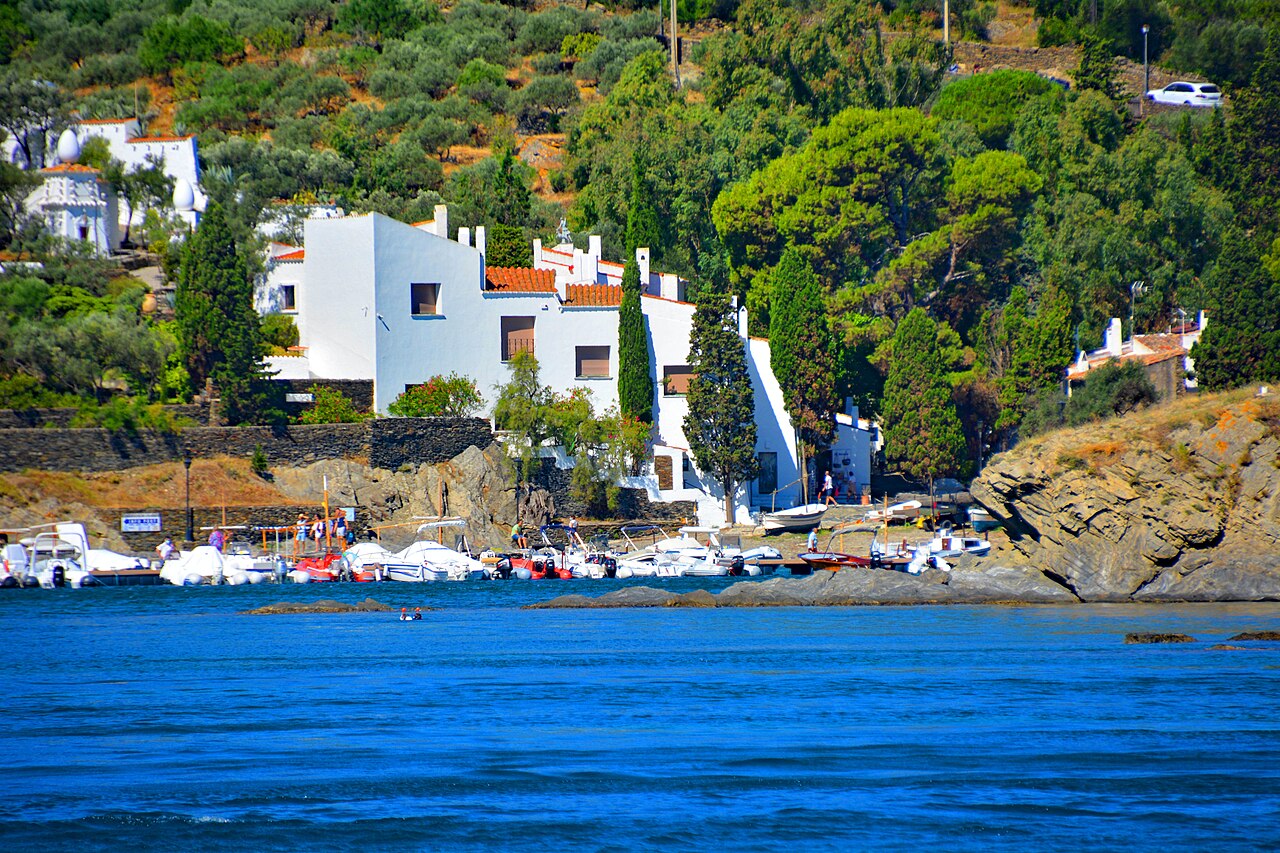
Situated in the small bay of Portlligat, Salvador Dalí bought this small fisherman's hut in 1930, drawn by the light and landscape. Over the next 40 years, he added adjacent huts to create a "biological structure" of living and working cells.
What is Inside the Dalí House-Museum?
The house is divided into three distinct zones. The indoor section (rooms 1 to 13) is where the accompanied visit takes place, led by a well-informed member of staff who speaks multiple languages and shares anecdotes about Dalí and Gala's life together. The outdoor zones (rooms 14 to 20), including the olive grove and courtyards, are self-guided.
The Bear Lobby and Private Apartments. The visit begins in the Bear Lobby, which sets the tone immediately: taxidermy, surrealist objects, and Dalí's characteristically layered personal aesthetic. The private rooms that follow include the couple's bedroom, where Dalí installed a mirror angled precisely to catch the first rays of sunrise so they could watch dawn without getting out of bed. This is the kind of detail that the house delivers brilliantly: practical eccentricity, private life made visible.
The Library. The library preserves Dalí and Gala's personal book collection alongside manuscripts and correspondence from their decades at Portlligat. For visitors interested in the intellectual life behind the paintings, this is one of the more quietly revealing rooms in the house.
The Studio. This is the heart of the visit and the reason serious Dalí admirers make the journey. The large, light-filled studio looks directly over Portlligat Bay, the same view you can identify in canvas after canvas. Original equipment remains in place, and the atmosphere of active work is unusually strong. Standing here, it is easy to understand why Dalí called Portlligat "the most immortal studio."
The Terrace. The upper terrace offers sweeping panoramic views over the bay and the Cap de Creus coastline, the same landscape that fuelled decades of Dalí's most productive work. This is one of the best spots to simply stop and understand the relationship between the place and the paintings.
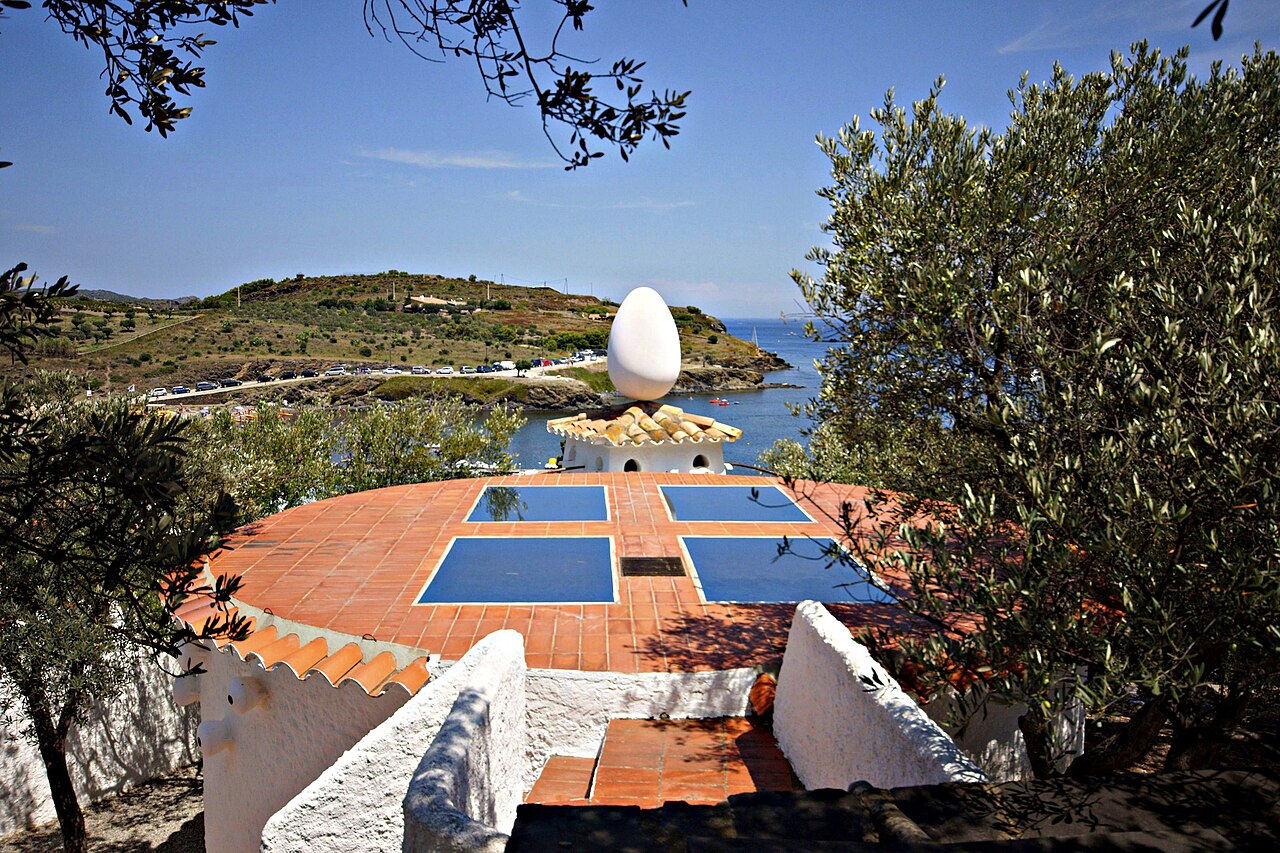
The Swimming Pool and Outdoor Areas. The swimming pool, completed in 1971, became the centre of Dalí and Gala's social life and is one of the most visually striking elements of the property. Classical statues, giant egg motifs, a lip-shaped sofa flanked by Pirelli tyre signs, and Dalí's signature surrealist touches are scattered throughout the garden. Even visitors who found the interior slightly underwhelming tend to be won over by the outdoor spaces. A garden-only ticket (the Olivar) is available for €8 if the house tour is fully sold out, and several visitors have reported this to be a more than worthwhile consolation visit.
Guided Tours and Audio Guides
The Dalí Foundation does not offer a traditional audio guide for the house. The indoor part of the visit is conducted in small accompanied groups, with staff who speak Catalan, Spanish, English, and French. The commentary they provide is informative, covering the history of the house, personal details about Dalí and Gala's relationship, and the significance of specific objects and design choices.
Several tour operators in Barcelona and Figueres offer guided day trips that include the Dalí House-Museum as part of a wider Costa Brava or Dalí Triangle itinerary. These can be a practical solution if you are not driving, as they handle the logistics of the mountain road and the complex public transport connections. Private tours are also available through Viator and similar platforms; expect to pay significantly more for a private guide versus a group tour, but the experience of having an art historian walk you through the studio can be exceptional for dedicated Dalí enthusiasts.
If you are visiting independently, downloading the museum map in advance from the foundation's website is recommended.
Is the Dalí House-Museum Worth Visiting?
Portlligat offers something the Theatre-Museum in Figueres, spectacular as it is, cannot: the feeling of stepping into a private life rather than a public performance. The small groups, the intimacy of the spaces, and the setting itself combine to create a visit that feels unlike a conventional museum experience.
For more casual visitors, the honest answer is that it depends. The interior of the house does not have the jaw-dropping spectacle of Figueres. Some visitors have found the contents of certain rooms underwhelming relative to the ticket price, and a few have described some of the décor as more surreal than aesthetically satisfying in the way they expected. The tour group is small and moves at a pace set by the guide, so you will not be able to linger in the studio the way you might want to. The outdoor garden and pool areas compensate generously, but if your main interest is seeing great Dalí paintings, Figueres is the better destination.
For Dalí enthusiasts, couples who appreciate exceptional settings, or anyone interested in the private lives of artists, I would put this firmly in the essential category. The studio view over Portlligat Bay is one of those experiences that quietly reframes how you think about a painter's work. And the journey itself, through the Cap de Creus landscape that Dalí was so attached to, is part of what makes the visit feel like more than just a museum trip. Families with children who love the Theatre-Museum in Figueres will enjoy it too, though the small group format and the emphasis on personal space means it suits slightly older children better than very young ones.
One practical note: photography inside the house is limited to handheld shots without flash. Tripods, selfie sticks and professional equipment are not allowed, and staff enforce this firmly. The gardens and the views can be photographed freely.
Where Should I Eat Near the Dalí House-Museum?
There is no café or restaurant inside the Dalí House-Museum itself. There is one beachfront spot in the Portlligat cove; everything else is in Cadaqués village, a 15 to 20-minute walk away.
Es Racó d'en Dani (Platja Port Lligat, Portlligat): The most conveniently positioned option, right next to the museum on the beachfront. A simple, relaxed place with outdoor seating and good tapas. I would not call it destination dining, but it is perfect for a beer and something small before or after your visit, with nice views over the bay. Affordable.
Compartir (Riera de Sant Vicenç, Cadaqués): One of the best restaurants on the Costa Brava and a destination in its own right. The concept is Spanish sharing plates, with a tasting menu at around €80 per person that represents real value for the quality. The wine list leans heavily into the local Empordà wines. Booking in advance is essential, as it fills up weeks ahead in summer. Mid-range to higher-end.
Casa Anita (Carrer Miguel Roset 16, Cadaqués): A Cadaqués institution, founded by the same family that opened the village's first restaurant. It is simple, honest, and beloved by both locals and repeat visitors. Traditional Catalan cooking with excellent fresh fish. Moderately priced and the kind of place that makes you want to come back.
Tiramisu (Passeig de Cadaqués): A solid choice for families, with a nice garden where children can run around while parents eat. Seafood, fresh fish, rice dishes, and reliable house-made desserts. The cocktails are well-reviewed. Moderate prices.
Es Baluard (Riba Nemesi Llorens, Cadaqués): Right on the seafront with some of the best views in the village. Seafood-focused, slightly more upmarket, and the kind of terrace that makes a long lunch feel entirely justified. Mid to higher-range.
A word of warning: Cadaqués in high season is very well aware of its tourist appeal, and some spots on the main waterfront promenade charge tourist-trap prices for unremarkable food. Stepping one or two streets back from the front tends to yield better value.
What Else is There to Do Near the Dalí House-Museum?
Cadaqués old town (15 minutes' walk). The whitewashed, labyrinthine streets of Cadaqués are worth at least an hour of wandering. The village climbs up around the Gothic-style Church of Santa Maria, with its 18th-century Baroque altarpiece, and offers some lovely boutique shops selling ceramics, local oils, and artisan goods. Dalí described Cadaqués as "a mystical paradise," and while it is certainly touristy today, the setting retains real beauty. No advance booking required.
Museum of Cadaqués (Carrer de Narcís Monturiol, Cadaqués). A small museum dedicated to modern and contemporary art with a strong Dalí connection, including works by artists who visited the village over the decades. Worth a look if you have time after the house visit. Check opening hours locally, as they vary by season.
Cap de Creus Natural Park (accessible from Portlligat on foot or by car). Cap de Creus is the easternmost point of the Iberian Peninsula and one of the most dramatic coastal landscapes in Spain. The rocky headland, with its lighthouses and extraordinary rock formations, directly inspired some of Dalí's most recognisable imagery. A hike through the park offers a vivid understanding of where his visual imagination came from. The walk from Portlligat towards the cape is beautiful and manageable on a half-day.
Dalí Theatre-Museum, Figueres (40 km, approximately one hour's drive). The other major Dalí Foundation museum, in the town of Figueres, is the building Dalí designed as his own tomb and considered his greatest single work. It is a larger, more theatrical experience than Portlligat and houses an extensive collection of paintings, sculptures, and installations. The two complement each other well, though most visitors find them too much to combine in a single day.
Gala Dalí Castle, Púbol (roughly 80 km south of Cadaqués via Figueres). The third museum in the Dalí Foundation triangle, the castle in Púbol was the private home Dalí gave to Gala and where he himself moved after her death. It is a quieter and less visited site than either Figueres or Portlligat, and the drive from Cadaqués is not particularly convenient without a car. It also closes for several weeks in winter, so check the current schedule before building a trip around it. For completists doing the Dalinian Triangle, allow two separate days.
Rules, Bags, and Security
Photography: Non-flash photography is permitted. Tripods, selfie sticks and professional equipment are not, and staff may hold a camera until you finish the visit. The outdoor gardens, the swimming pool area, and the surrounding landscape can be photographed freely.
Bag restrictions: Bags larger than 35 x 35 x 25 cm cannot be brought into the museum. A left-luggage service is available at the entrance on the ground floor. Bulky items, valuables, and anything dangerous cannot be checked at the left-luggage office. Rucksacks and other bags worn on the back are not allowed inside regardless of size.
Children: Minors under 16 must be accompanied by an adult at all times. Children aged 0 to 8 enter free but still require a ticket.
Pets: Not permitted, except for guide dogs.
Re-entry: Not permitted. Once you leave the site, your ticket is spent.
Accessibility at the Dalí House-Museum
The house is not wheelchair-accessible. The architectural character of the building and the natural terrain of Cap de Creus make access difficult for visitors with limited mobility. The house was expanded and connected organically over decades rather than designed with accessibility in mind, and it includes uneven surfaces, narrow passageways, changes of level, and areas that are not reachable via step-free routes.
Visitors who use wheelchairs and have a disability rating of 33% or above receive free admission, as do those with any disability rating of 50% or above. In both cases one companion also enters free. The museum does provide adapted toilets on site.
Final Tips for Visiting the Dalí House-Museum
Book directly on the official website, and do it weeks in advance in summer. Third-party platforms add commission and have caused real problems for visitors.
Arrive at the museum at least 45 minutes before your booked time slot. You must collect your ticket at least 30 minutes before entry or it will be cancelled with no refund. This rule is not flexible.
Download the museum map in advance from the Dalí Foundation website. It helps you orient yourself between the indoor and outdoor zones.
Drive if you can. The public transport connections to Cadaqués are possible but time-consuming, and the mountain road is one of the most scenic drives in Catalonia.
If house tickets are sold out, buy a garden-only ticket for €8. The Olive Grove and swimming pool area are worth the visit on their own, and the coastal views from the outdoor terraces are spectacular.
Combine your visit with a meal in Cadaqués. The walk between Portlligat and the village is part of the experience, and the village has excellent restaurants. Book Compartir well in advance if you want to eat there.
The best pairing is Portlligat in the morning and the Theatre-Museum in Figueres in the afternoon if you are driving. Start early at Portlligat, have lunch in Cadaqués, then make the one-hour drive to Figueres. It is a long day but entirely manageable with a car.
Wear comfortable shoes. The walk from parking to the museum involves an uphill section, and the garden areas include uneven stone paths.
Check the exceptional closure dates before you book your travel, particularly around early June (8 June closure) and early October (5 October closure), which catch visitors out more than the obvious Christmas dates.
Back to Barcelona Attractions
Explore other Barcelona attractions
" width="24px"><path d="M 0 0 L 24 0 L 24 21.231 L 0 21.231 Z" fill="transparent" height="21.230768474975793px" id="nL2EwDcS9" width="24px"/><path d="M 0 0.541 C 0 0.242 0.245 0 0.547 0 L 2.735 0 C 3.037 0 3.282 0.242 3.282 0.541 L 3.282 4.598 C 3.282 4.897 3.037 5.139 2.735 5.139 L 0.547 5.139 C 0.245 5.139 0 4.897 0 4.598 Z" fill="rgb(196, 217, 201)" height="5.138657337892187px" id="hZ_rlBe_S" transform="translate(0 16.092)" width="3.2820512820512358px"/><path d="M 0 0.541 C 0 0.242 0.245 0 0.547 0 L 2.735 0 C 3.037 0 3.282 0.242 3.282 0.541 L 3.282 7.843 C 3.282 8.142 3.037 8.384 2.735 8.384 L 0.547 8.384 C 0.245 8.384 0 8.142 0 7.843 Z" fill="rgb(230, 211, 160)" height="8.38412513024521px" id="HgVBxIz3e" transform="translate(5.128 12.847)" width="3.282051282051235px"/><path d="M 0 0.541 C 0 0.242 0.245 0 0.547 0 L 2.735 0 C 3.037 0 3.282 0.242 3.282 0.541 L 3.282 12.982 C 3.282 13.281 3.037 13.523 2.735 13.523 L 0.547 13.523 C 0.245 13.523 0 13.281 0 12.982 Z" fill="rgb(232, 207, 164)" height="13.522782468137464px" id="utgrDnoM9" transform="translate(10.325 7.708)" width="3.282051282051377px"/><path d="M 0 0.541 C 0 0.242 0.245 0 0.547 0 L 2.735 0 C 3.037 0 3.282 0.242 3.282 0.541 L 3.282 16.498 C 3.282 16.797 3.037 17.039 2.735 17.039 L 0.547 17.039 C 0.245 17.039 0 16.797 0 16.498 Z" fill="rgb(233, 196, 166)" height="17.038705909853153px" id="OLOhW6STz" transform="translate(15.521 4.192)" width="3.2820512820512384px"/><path d="M 0 0.541 C 0 0.242 0.245 0 0.547 0 L 2.735 0 C 3.037 0 3.282 0.242 3.282 0.541 L 3.282 20.69 C 3.282 20.989 3.037 21.231 2.735 21.231 L 0.547 21.231 C 0.245 21.231 0 20.989 0 20.69 Z" fill="rgb(217, 170, 153)" height="21.230768474975793px" id="H5Z8wcwkd" transform="translate(20.718 0)" width="3.2820512820512278px"/></g></svg>)