Back to Barcelona Attractions
Do you Need to Book Tickets in Advance for Montjuïc Castle?
Updated July 2026
There is a fortress on the summit of Montjuïc hill, 173 metres above Barcelona's port, that has watched over this city for nearly four centuries and has, at different points in its history, defended it, bombarded it, imprisoned its citizens, and executed its leaders. The Castell de Montjuïc is not a comfortable monument, and that is precisely what makes it one of the most compelling things to visit in Barcelona. Built initially in 1640 during the Catalan Revolt against Madrid, expanded into its current star-shaped military form in the mid-18th century under the military engineer Juan Martín Cermeño, used as a prison across multiple political regimes, and made infamous by the execution of Lluís Companys, the President of the Generalitat de Catalunya, in its grounds in 1940 on the orders of Francisco Franco, it carries a weight that Barcelona's Modernista architecture, for all its brilliance, does not. Today, owned by the City of Barcelona and operated as a public museum and cultural venue, the castle is one of the finest viewpoints in the city, with 360-degree panoramas taking in the port, the Mediterranean Sea, the entire grid of the Eixample, and the mountains beyond, and it is in the middle of a gradual transformation into the full-scale historical museum it deserves to be. This guide covers everything you need to know before you go.
At a Glance
How Early to Book:
Book a timed-entry ticket for the castle 1-2 days ahead to guarantee entry and to avoid queues, especially during free entry times. Visitors do not need to pre-book cable car tickets.
About 1 month in advance.
Best Times to Visit:
Mornings at opening on weekdays are the least busy. However, the view at sunset is magical if the crowds do not deter you.
Ticket price:
€12 for adults for castle entry. The cable car is €17.10 for a return trip.
Where to Book:
The Castell de Montjuïc Website for Castle tickets, and the Montjuïc Cable Car Website for cable car tickets.
Landmark Address:
Do You Need to Book Montjuïc Castle Tickets in Advance?
Advance booking is recommended but not mandatory for the standard self-guided visit. Walk-up tickets can be purchased at the castle's ticket office on arrival during opening hours, and on most weekdays outside the peak summer season, queues at the desk are short. During the busy months of June to September and on summer weekends, buying online in advance is the more convenient option and avoids any waiting.
Important: The castle only sells online tickets through its own platform. It has no agreements with third-party resellers, and the castle accepts no complaints about tickets purchased from other sites. Buy only from the official website. Tickets purchased through unofficial resellers may carry added fees and come with no protection.
The Gaudir Més programme (formerly Gaudir+BCN), a free cultural membership card offered by the City of Barcelona, gives unlimited free access to the castle year-round. Membership is free and can be registered online. It also covers free entry to the Monumental Zone of Park Güell, making it one of the most useful cultural cards available in the city for longer-stay visitors.
Ticket terms: Purchases are non-refundable except in duly justified cases of force majeure. There is no date-change flexibility. Do not book online if there is any uncertainty about your visit date; in that case, simply purchase on the day at the ticket office.
Guided tour tickets, which unlock access to areas including the dungeons that are not open to self-guided visitors, are booked separately through the official website. See the Guided Tours section below.
Montjuïc Castle Opening Hours and Entry Information
The castle is open every day of the year with the exception of 25 December and 1 January, with two distinct seasonal schedules:
1 March to 31 October: Daily 10:00am to 8:00pm (box office closes at 7:30pm; last admission 7:30pm)
1 November to 28 February: Daily 10:00am to 6:00pm (box office closes at 5:30pm; last admission 5:30pm)
The castle may close temporarily or partially for special events, official ceremonies, or maintenance works. Check the official website before your visit if you are travelling on a major public holiday or local festival date.
What is the Best Way to Get to Montjuïc Castle?
The castle sits at the very summit of Montjuïc hill, 173 metres above sea level, and getting there requires a combination of public transport, cable car, or walking. The route is slightly more involved than for most Barcelona attractions, but it is well signposted and manageable.
By Bus 150 (recommended for simplicity): The most direct and straightforward route when the funicular is closed. Bus 150 runs from Plaça d'Espanya (Metro Lines L1 and L3) directly to the castle entrance, with the last stop at the Castell de Montjuïc. The journey takes around 20 minutes. This is the recommended option for visitors who want to arrive at the castle entrance without changing transport modes. Bus 150 runs seven days a week from around 7:00am to 9:00pm.
By Montjuïc Cable Car (Telefèric de Montjuïc): The most scenic route and a rewarding experience in its own right. The cable car runs from the Parc de Montjuïc station (adjacent to the upper shuttle bus stop) to the Castell de Montjuïc station at the summit in approximately eight minutes, with an optional intermediate stop at Miramar. The cabins carry up to eight passengers and offer uninterrupted views of the city, the port, and the Mediterranean. The cable car requires a separate ticket (not included in the castle admission); a return ticket costs from approximately €17 for adults, with a 10% discount available when purchasing online through the Hola Barcelona platform. The cable car operates on seasonal hours: 10:00am to 7:00pm from March to May and October; 10:00am to 9:00pm from June to September; 10:00am to 6:00pm from November to February. On 25 December and 1 and 6 January it runs from 10:00am to 2:30pm only.
By the Aeri del Port (Port Cable Car): A longer and more dramatic approach from the Barceloneta beach area, with aerial views over the entire port and harbour. This cable car connects Torre de Sant Sebastià (near Barceloneta) with Montjuïc, passing over the port. It is a spectacular journey but is not recommended for visitors with reduced mobility as it is not wheelchair accessible. It also requires a separate ticket. This route is most suitable if you are spending the morning in the Barceloneta or waterfront area and want to combine that with a Montjuïc visit on the same day without backtracking.
By walking: From the Parc de Montjuïc station (upper shuttle bus stop), a signed walking route leads through the castle's surrounding gardens to the entrance in approximately 20 to 25 minutes. It is an uphill walk on paved paths with several viewpoints along the way. In the cooler months this walk is very pleasant and is recommended for visitors who enjoy approaching a place gradually and at their own pace. In summer it is a strenuous hot climb; in that case, the cable car is worth the additional cost.
By taxi or car: Taxis can drive all the way to the castle entrance on Carretera de Montjuïc. This is the most practical option for visitors with mobility limitations who are not using the cable car. Limited public parking is available near the castle; it fills quickly on summer weekends. The drive up Carretera de Montjuïc is steep and winding but well surfaced.
By Barcelona Bus Turístic: The Red Route of the hop-on, hop-off tourist bus has a stop at Telefèric de Montjuïc (the cable car lower station), from where you continue by cable car or on foot.
What is the Best Time to Visit Montjuïc Castle?
The castle is open for long hours and receives visitors spread across the full day, which gives considerable flexibility.
Early morning (10:00am to 11:00am) is the quietest time for the castle itself. The terrace and the rampart walls are calm and uncrowded at this hour, and the light over the port and the sea in the morning is clear and sharp. From the western bastions in the morning you look back into the city with the sun behind you, which is also the best angle for photography of the Eixample grid.
Late afternoon and early evening is the most popular and most atmospheric time to visit, and for good reason. The afternoon light from the south and west warms the stone of the bastions and the views across the Mediterranean become progressively more golden. In the warmer months (April to September), the castle stays open until 8:00pm, which allows visitors to be on the terrace well into the evening with the port illuminated below. If you are visiting in summer and can arrive by 6:00pm, the experience on the terrace in the final two hours is hard to beat anywhere in the city.
Sunset timing note: In summer the castle closes before sunset. Visitors who want to see the full sunset from the summit should note that the terraces and viewpoints outside the castle, visible without a ticket from the area around the entrance, remain accessible after closing. The Mirador del Migdia on the opposite side of the hill is the most celebrated local sunset viewpoint and does not require a castle ticket.
Sundays from 3:00pm offer free entry for all visitors, which makes Sunday afternoon the busiest time of the week. Arriving at 3:00pm on a Sunday in summer will place you in a queue. If you are using the free entry, arriving between 3:00pm and 4:00pm on a non-summer Sunday is manageable; in summer, the 10:00am opening with a paid ticket will give you the more comfortable experience.
Weekday mornings from Tuesday to Friday are consistently the least crowded. On a clear winter or shoulder-season weekday, the castle can feel almost solitary, which is one of the more unexpectedly rewarding experiences Montjuïc offers.
Is Montjuïc Castle Worth Visiting?
Montjuïc Castle is absolutely worth visiting, especially if you'll be in Barcelona for more than just a couple of days, but the nature of what makes it worthwhile might be a little different than other Barcelona attractions.
The castle's museum offering recently took a significant step forward. The permanent Interpretation Centre reopened in April 2026 after a renovation, with a new exhibition covering the mountain's history, the fortress's construction, its use for repression, and its history as a prison, included at no extra cost with standard castle admission. The wider transformation into the comprehensive historical museum the City of Barcelona has long committed to building is still ongoing, but this reopening marks real progress. What the castle offers right now is a combination of three things: a physically impressive and historically resonant fortification that rewards time spent walking its bastions and moat; one of the most spectacular viewpoints in the city, with a 360-degree panorama that takes in the entire geography of Barcelona at a single glance; and a site whose dark past, once you know it, colours every stone you walk past.
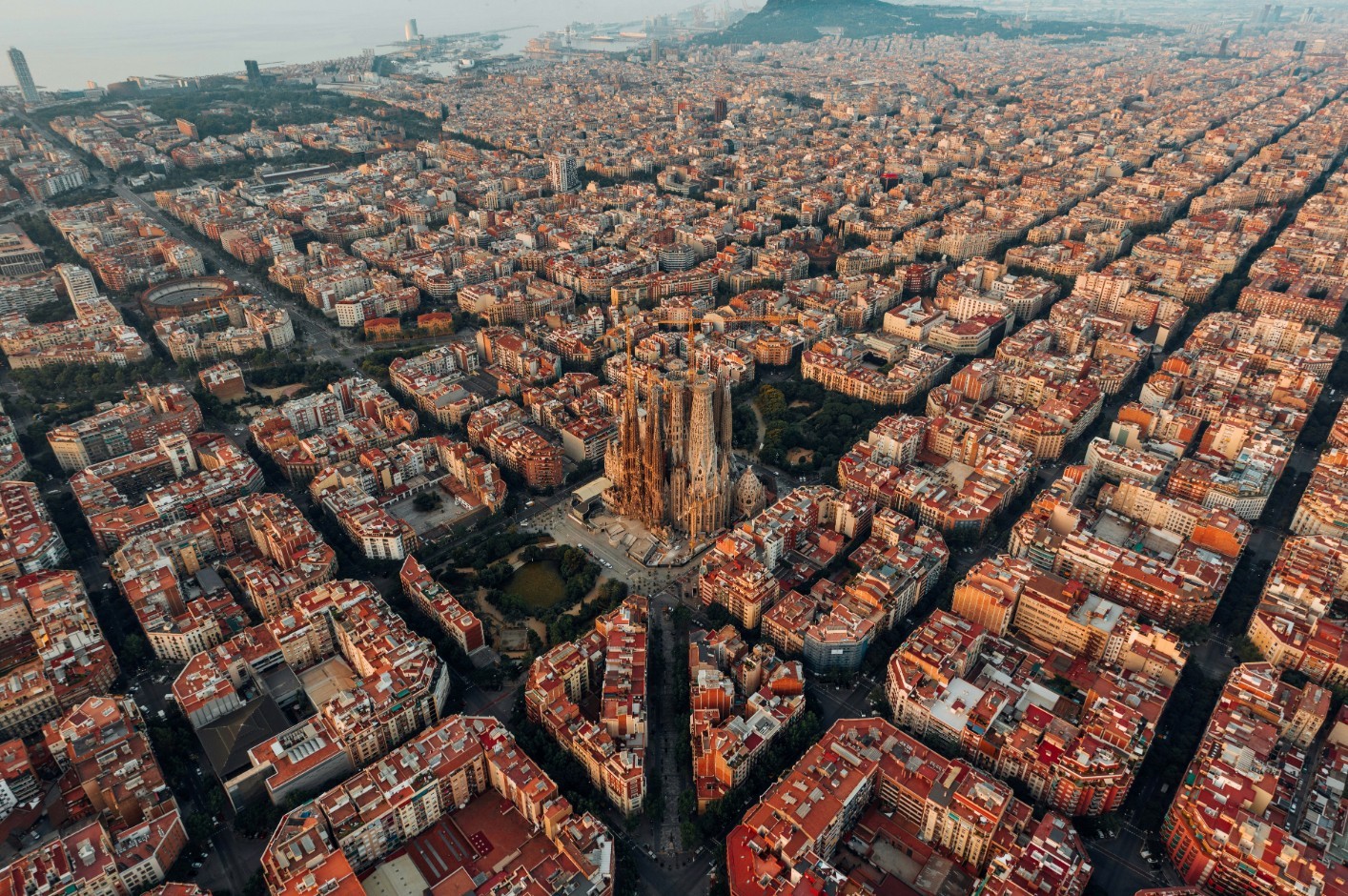
The panoramic view from the terrace and the rampart walls is the reason most visitors come, and it does not disappoint. From the highest point you can see the full sweep of the Barcelona coastline from the Besòs delta in the north to the Llobregat delta and the airport in the south, the Mediterranean extending to the horizon ahead, the entire chess-board grid of the Eixample laid out below you, and in clear weather, the Sagrada Família and Tibidabo visible in the middle distance. On a clear day in any direction, this is an incomparable urban panorama.
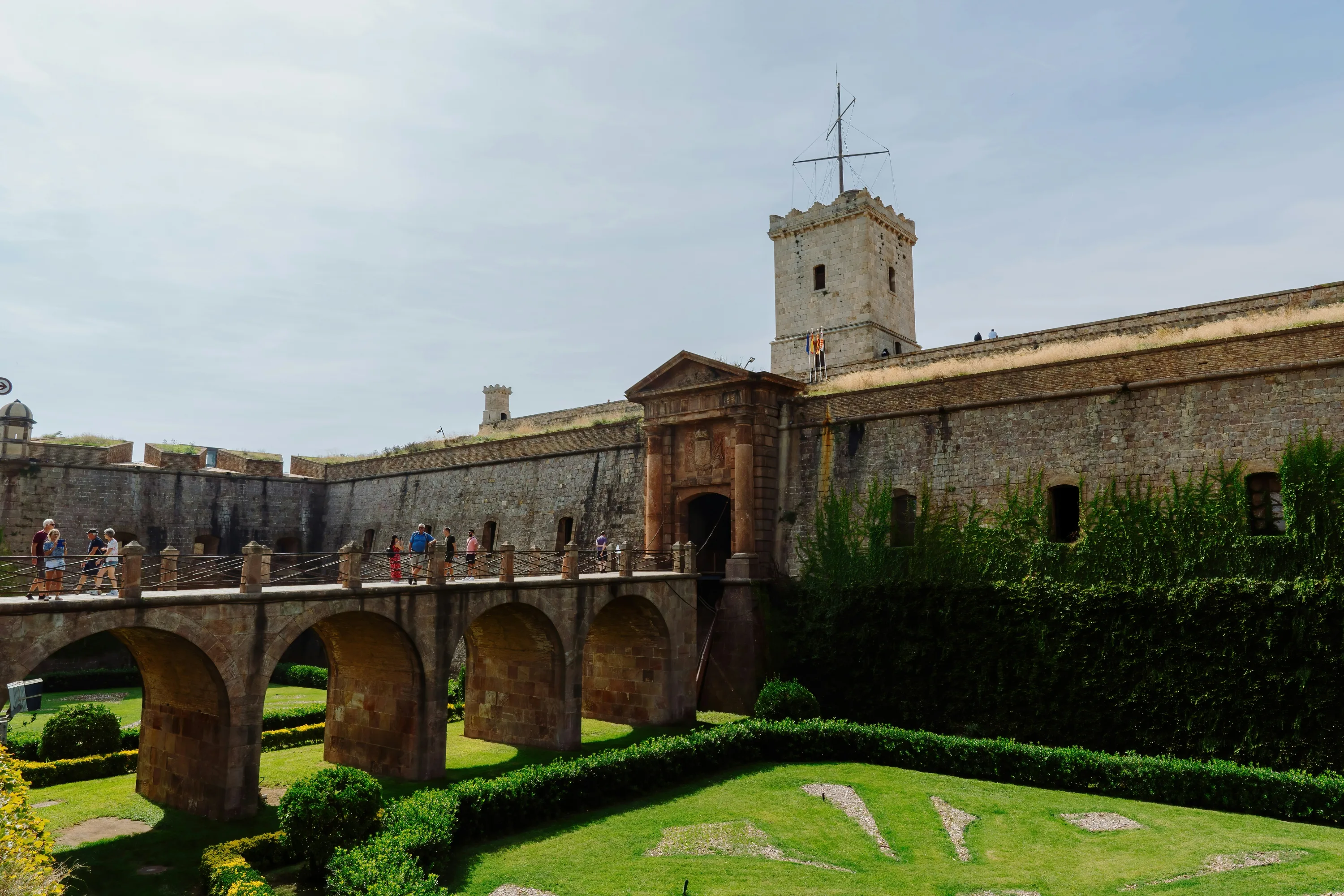
The physical fabric of the castle is compelling for visitors interested in military architecture. The four angled bastions, designed to eliminate blind spots in the field of fire; the dry moat; the neoclassical arched entry bridge designed by Cermeño in 1751; the parade ground with its former barracks and service buildings; and the watchtower at the summit all cohere into a place that feels its history rather than merely displaying it. In the moat there is an unusual curiosity: a sculpture honouring the metre as a unit of measurement, marking the spot where French geographer Pierre-André Méchain stood in 1792 to make the astronomical observations that were used to define the new metric unit. It is one of the more unexpected objects in the city.
The history itself is the castle's most powerful quality and its most complicated legacy. This is not a fortress that defended its city in the conventional sense. Its cannons were turned on Barcelona during the War of the Spanish Succession in 1714, when the city refused to accept the Bourbon claimant to the throne, and again during the urban uprisings of the mid-19th century. It functioned as a political prison across multiple regimes, holding anarchists, Republicans, and political dissidents throughout its modern history. And it was here, on 15 October 1940, that Lluís Companys, the democratically elected President of the Generalitat de Catalunya, was executed by firing squad after being extradited from France by the Gestapo and handed to Franco's regime. There is a commemorative plaque in the castle dedicated to him. Visiting with this history in mind transforms what might otherwise be a pleasant afternoon with views into something considerably more substantial.
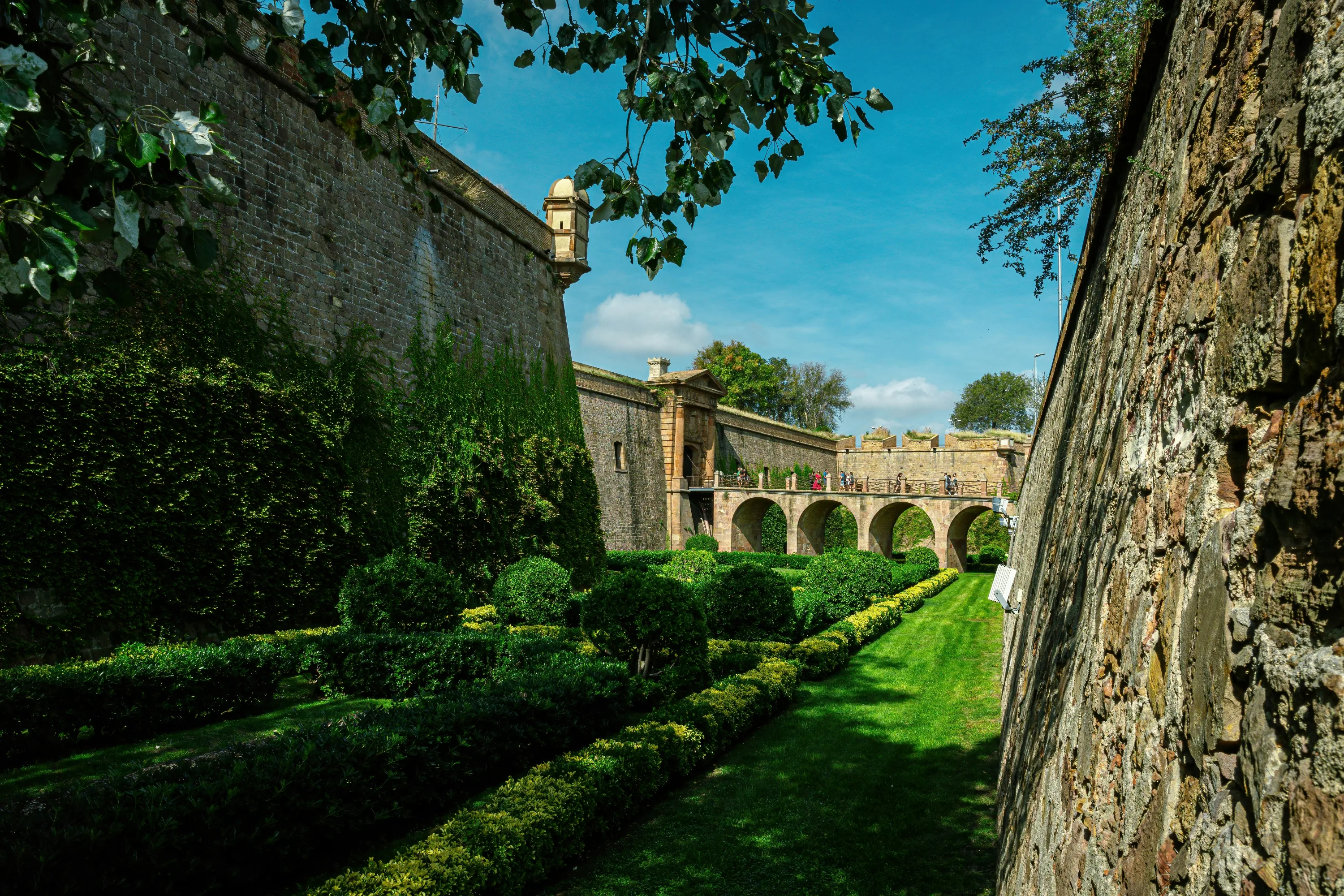
Montjuïc Castle was used to bombard its own city during 19th-century insurrections, functioning more as a tool of repression than defense. It also has a dark history as a military prison and execution site, including the 1940 execution of Catalan leader Lluís Companys.
How Much Time Should I Spend at Montjuïc Castle?
Plan for 60 to 90 minutes for a self-guided visit at a comfortable pace covering the parade ground, the bastions, the moat, the terrace, and the watchtower. Visitors with a particular interest in the military architecture or the history may find 90 minutes to two hours appropriate.
If combining the castle with the cable car, allow an additional 30 to 45 minutes for the cable car round-trip including waiting time at the stations.
A day on Montjuïc combining the castle with one or two of the other major sites on the hill (the Fundació Joan Miró, MNAC, Poble Espanyol, or the Olympic Stadium) is one of the most rewarding full days Barcelona offers. See the nearby attractions section below for more detail.
Guided Tours at Montjuïc Castle
Guided tours of the castle are available on selected dates and depart from the castle entrance. The key advantage of the guided tour over the self-guided visit is access to the dungeons, a section of the castle's former prison that is not open to general visitors and that represents the most directly affecting part of the castle's history as a place of incarceration.
Tours cover the main areas of the castle including the bastions, the parade ground, the terrace, and the watchtower, and add the dungeon visit and guided contextualisation of the military and political history of the site. They are available in Catalan, Spanish, and English on varying days.
Tours must be booked in advance through the official castle website. Check the calendar at ajuntament.barcelona.cat/castelldemontjuic/en for available dates and times.
Third-party tour operators also offer guided castle visits, often combined with a cable car ride and a broader Montjuïc itinerary. These typically run as small-group tours of two to three hours and can be a practical option for visitors who want the full Montjuïc experience within a single booked slot. When choosing a third-party tour, verify that the dungeon access is included; not all operator tours include this section.
Events: Sala Montjuïc and the Festes de la Mercè
The castle grounds host a programme of cultural and civic events throughout the year, and for visitors in Barcelona in the summer months, one of these is particularly worth knowing about.
Sala Montjuïc is an open-air cinema programme that takes place in the castle grounds each summer, typically running from late June through to the end of August. Films are screened on a large outdoor screen within the castle, preceded by live music, and the combination of a film under the stars with Barcelona spread out below and the castle walls around you is one of the most atmospheric cinema experiences in Spain. Tickets are ticketed events sold separately from castle admission. The programme covers a mixture of classic films, art-house cinema, and family screenings, and the full schedule is published each spring at sala-montjuic.com. Popular screenings sell out in advance; booking early for any specific film is advisable.
Festes de la Mercè (around 24 September each year): Barcelona's main city festival, held in honour of the patron saint La Mercè, includes open days at Montjuïc Castle with free admission and special cultural activities within the grounds. If you are in Barcelona around the third week of September, the Mercè celebrations are one of the most animated civic events in the Catalan calendar, and the castle's open day is one of the most popular free events of the festival.
Concerts and cultural events are held periodically at the castle throughout the year, with a concentration of activity in the summer months. The full events programme is listed on the official castle website and updated regularly.
Where Should I Eat at and Near Montjuïc Castle?
There is a small bar and terrace within the castle grounds, open during visiting hours, serving drinks, coffee, and light snacks. It occupies a spot with castle views and is a reasonable option for a break without leaving the site. It is not a restaurant and the food options are limited.
For more substantial eating, the castle's hilltop location means that the nearest restaurants are on Montjuïc itself or at the base of the hill in the surrounding neighbourhoods. The most practical options depend on how you are approaching the visit.
On Montjuïc: The Hotel Miramar Barcelona, on the hillside below the castle on Avinguda de Miramar, has a restaurant and terrace bar with outstanding views over the port and sea. It is a more relaxed and higher-quality option than the on-site castle café. The hotel terrace bar, in particular, is one of the most pleasant spots to have a drink on the entire hill.
Poble-sec (the neighbourhood at the foot of the Paral·lel side of Montjuïc) is one of Barcelona's most rewarding dining neighbourhoods and has undergone a significant transformation in recent years. The streets around Carrer de Blai, known for its concentration of pintxos bars, are lively and affordable and make an excellent pre- or post-visit stop. Carrer de Blai itself runs along the bottom of the hill and is accessible on foot in around 15 to 20 minutes from the castle via the signed walking paths, or a short taxi or bus ride.
Plaça d'Espanya area: For visitors arriving and departing via Bus 150 from Plaça d'Espanya, the streets around the square and the adjacent Avinguda del Paral·lel offer a range of cafés, tapas bars, and restaurants at accessible prices.
Barceloneta and the waterfront, around 25 to 30 minutes on foot from the cable car lower station or a short metro ride from Paral·lel, is the natural complement to a Montjuïc morning for visitors who want to end the day at the beach.
Accessibility at Montjuïc Castle
The castle has made efforts to improve accessibility but the nature of the historic fortification means that some areas present challenges.
The main visitor areas, including the parade ground and the principal terrace, are accessible by wheelchair via the main entrance and paved internal routes. Some sections of the bastions and the rampart walks involve uneven stone surfaces, steps, and narrow passages that may be difficult for wheelchair users or visitors with significant mobility limitations. Staff are available to advise on the most accessible routes through the castle.
The Montjuïc Cable Car (Telefèric de Montjuïc) is fully wheelchair accessible, with staff assistance available at all three stations. The modern cabins accommodate wheelchair users comfortably. The Port Cable Car (Aeri del Port) from Barceloneta is not wheelchair accessible.
Bus 150 from Plaça d'Espanya is a standard TMB bus service and is accessible with ramps for wheelchair users.
Accessible toilets are available on site.
For visitors who cannot manage the walking route to the castle from the cable car upper station, taxis can drive directly to the castle entrance at Carretera de Montjuïc 66.
Rules, Bags, and Security
No wheeled transport of any kind is permitted within the castle, including bicycles, skateboards, skates, scooters, and electric mobility devices. An exception is made for mobility aids required by visitors with reduced mobility. Bicycles can be parked in the designated area at the entrance. Personal scooters and electric transport devices must be stored in the lockers provided at the entrance.
Photography for personal, non-commercial use is permitted throughout the castle and on the terraces. Flash photography and tripods may be restricted in specific exhibition areas.
Pets are not permitted inside the castle. Guide dogs and recognised assistance animals are welcome throughout.
Food and drink can be consumed in the outdoor areas of the castle. The bar within the grounds is the designated area for eating and drinking.
Smoking is prohibited inside the castle buildings. Designated outdoor areas are indicated on site.
What Else is There to Do Near Montjuïc Castle?
Montjuïc hill is one of the most culturally dense areas of Barcelona, and a visit to the castle combines naturally with one or more of the other major sites on the hill. A full day on Montjuïc is entirely realistic and is one of the best ways to structure a Barcelona itinerary.
Fundació Joan Miró, around a 20 to 25-minute walk from the castle through the hillside gardens (or a short cable car ride to the intermediate Miramar station followed by a 10-minute walk), is one of the most important modern art museums in Spain. Dedicated to the work of Barcelona's greatest 20th-century artist, it holds the world's largest collection of Miró's paintings, sculptures, and graphic works in a building designed by his friend Josep Lluís Sert. The rooftop terrace has some of the finest views of any museum in the city. Advance booking for this museum is recommended. The combination of the castle and the Miró Foundation in a single day is one of the most satisfying pairings on the hill.
Museu Nacional d'Art de Catalunya (MNAC) is housed in the monumental Palau Nacional at the top of the Avinguda de la Reina Maria Cristina, a 30 to 40-minute walk from the castle or a short bus ride. It holds the finest collection of Romanesque church art in the world, transported from remote Pyrenean churches in the early 20th century, alongside outstanding Gothic, Baroque, and Modernista collections. The exterior of the building and its cascade of fountains on the approach from Plaça d'Espanya are among the great civic set pieces of Barcelona.
Poble Espanyol (Spanish Village), around 25 minutes on foot from the castle, is a full-scale architectural replica of buildings from every region of Spain, built for the 1929 International Exposition. It functions as a museum of Spanish regional architecture, a shopping centre, and a cultural venue, and is considerably more interesting in practice than the description suggests. It also houses one of Barcelona's most celebrated nightlife venues, Tablao de Carmen, and the Fundació Fran Daurel collection of modern and contemporary art.
The Olympic Stadium (Estadi Olímpic Lluís Companys), named in honour of the executed Catalan president, is the main venue from the 1992 Barcelona Olympic Games and is around 20 minutes on foot from the castle. It is open for visits and is free to enter during non-event days, with a small museum of the 1992 Games inside.
The Botanical Gardens (Jardí Botànic de Barcelona) are on the western slope of Montjuïc below the castle, with a collection of Mediterranean-climate plants from five different global regions. They offer a quieter alternative to the main tourist sites and are particularly pleasant in spring.
Mirador del Migdia, on the far side of the hill from the castle, is a local favourite sunset viewpoint with a bar terrace and views over the sea and the Llobregat delta. It is less visited by tourists than the castle terrace and is the spot to head for if the sunset is your priority.
The Magic Fountain (Font Màgica) at Plaça d'Espanya is at the opposite end of Montjuïc from the castle and is best treated as a separate evening activity rather than part of a castle day. The fountain's light and music shows run on Thursday to Sunday evenings from spring to autumn and are free to watch. Check the City of Barcelona website for the current schedule before planning your evening around it.
Final Tips for Visiting Montjuïc Castle
Take the cable car at least one way. The Telefèric de Montjuïc is more than transport: the eight-minute ride above the hillside gardens with Barcelona and the port spread out below is one of the best experiences on the hill. Buy online via Hola Barcelona for a 10% discount on the ticket price. Going up by cable car and descending on foot through the gardens, or vice versa, is the most satisfying way to structure the day.
Visit on a Sunday afternoon for free. Entry is free every Sunday from 3:00pm and on the first Sunday of each month all day. This is consistently the busiest time, but it is a worthwhile saving on a relaxed Barcelona Sunday when you can afford to queue a little and take your time.
Book the guided tour for the dungeons. The dungeon visit, accessible only on the guided tour, is the most directly affecting part of the castle's history as a place of incarceration. If the human history of the castle interests you, it is worth booking the tour specifically to access this section.
Know the history before you arrive. The castle rewards visitors who arrive knowing something about what happened here. The War of the Spanish Succession in 1714, the use of the castle against Barcelona's own citizens, and most of all the execution of Lluís Companys in 1940 are the context that transforms the bastions and the parade ground from military architecture into a place of memory. A short piece of reading before you go changes the experience substantially.
Come late afternoon if the weather allows. The combination of the warm afternoon light, the progressively quieter crowds in the final two hours before closing, and the port illuminated below as the sun drops makes the late afternoon the most atmospheric time for the castle's extraordinary views. In summer, arriving at 5:30pm for a 6:30pm departure gives you this light in ideal conditions.
Combine with the Fundació Joan Miró. The two are different enough to balance each other perfectly: the castle's weight and darkness against Miró's colour and joy, both on the same hill, both offering views of the city, both essential to understanding what Barcelona has been and what it is.
Check the Sala Montjuïc schedule in summer. If you are in Barcelona in July or August, an evening at the open-air cinema in the castle grounds is one of the most memorable things the city offers at any price. Check the programme at sala-montjuic.com and book the specific film you want early.
Back to Barcelona Attractions
Explore other Barcelona attractions
" width="24px"><path d="M 0 0 L 24 0 L 24 21.231 L 0 21.231 Z" fill="transparent" height="21.230768474975793px" id="nL2EwDcS9" width="24px"/><path d="M 0 0.541 C 0 0.242 0.245 0 0.547 0 L 2.735 0 C 3.037 0 3.282 0.242 3.282 0.541 L 3.282 4.598 C 3.282 4.897 3.037 5.139 2.735 5.139 L 0.547 5.139 C 0.245 5.139 0 4.897 0 4.598 Z" fill="rgb(196, 217, 201)" height="5.138657337892187px" id="hZ_rlBe_S" transform="translate(0 16.092)" width="3.2820512820512358px"/><path d="M 0 0.541 C 0 0.242 0.245 0 0.547 0 L 2.735 0 C 3.037 0 3.282 0.242 3.282 0.541 L 3.282 7.843 C 3.282 8.142 3.037 8.384 2.735 8.384 L 0.547 8.384 C 0.245 8.384 0 8.142 0 7.843 Z" fill="rgb(230, 211, 160)" height="8.38412513024521px" id="HgVBxIz3e" transform="translate(5.128 12.847)" width="3.282051282051235px"/><path d="M 0 0.541 C 0 0.242 0.245 0 0.547 0 L 2.735 0 C 3.037 0 3.282 0.242 3.282 0.541 L 3.282 12.982 C 3.282 13.281 3.037 13.523 2.735 13.523 L 0.547 13.523 C 0.245 13.523 0 13.281 0 12.982 Z" fill="rgb(232, 207, 164)" height="13.522782468137464px" id="utgrDnoM9" transform="translate(10.325 7.708)" width="3.282051282051377px"/><path d="M 0 0.541 C 0 0.242 0.245 0 0.547 0 L 2.735 0 C 3.037 0 3.282 0.242 3.282 0.541 L 3.282 16.498 C 3.282 16.797 3.037 17.039 2.735 17.039 L 0.547 17.039 C 0.245 17.039 0 16.797 0 16.498 Z" fill="rgb(233, 196, 166)" height="17.038705909853153px" id="OLOhW6STz" transform="translate(15.521 4.192)" width="3.2820512820512384px"/><path d="M 0 0.541 C 0 0.242 0.245 0 0.547 0 L 2.735 0 C 3.037 0 3.282 0.242 3.282 0.541 L 3.282 20.69 C 3.282 20.989 3.037 21.231 2.735 21.231 L 0.547 21.231 C 0.245 21.231 0 20.989 0 20.69 Z" fill="rgb(217, 170, 153)" height="21.230768474975793px" id="H5Z8wcwkd" transform="translate(20.718 0)" width="3.2820512820512278px"/></g></svg>)