Back to New York City Attractions
Tenement Museum: Everything You Need to Know Before You Visit
Updated August 2026
The Tenement Museum on the Lower East Side is built around 97 Orchard Street. This was a tenement originally constructed in 1863 whose landlord later evicted every tenant in 1935 and sealed the upper floors rather than pay to meet new housing codes, leaving them untouched for more than fifty years until Ruth Abram and Anita Jacobson found the building in 1988. It is the only fully preserved tenement of its kind in the United States, an estimated 15,000 people from more than 20 countries lived across its two buildings. Unlike a normal museum, you can't just simply walk in and look around. Access is by guided tour only, tours run 60 to 75 minutes, and choosing which one to book is the most important decision you have to make when visiting.
At a Glance
How Early to Book:
We recommend booking at least a few weeks ahead, and closer to a month ahead if visiting during peak summer season and if you have a specific tour in mind that you want to go on.
Tickets Released:
Additional tickets are released every Thursday, with about 2-3 months of dates posted at a time.
Best Times to Visit:
Mornings, especially if visiting during the summer when the buildings can get quite hot during the middle of the day.
Ticket price:
Most tours are about $30.00 per adult, food tours run about $55.00. Online and phone orders have an additional $3.00 service fee.
Where to Book:
Museum Address:
All tours begin at 103 Orchard St, New York, NY 10002
Do You Need to Book Tenement Museum Tickets in Advance?
Yes, this is one of the few attractions in NYC where booking ahead is pretty much mandatory. Many tours sell out, and the museum sells the majority of its tickets in advance.
There is no general admission ticket and no way to wander the buildings unaccompanied. Every visitor is on a scheduled tour with an educator, group sizes are small because the apartments are small, and when a session is full it is properly full. If the website shows a tour as sold out, it is.
Where to book: Book directly at tenement.org through the tour calendar. Tickets are also sold by phone on and in person at the Visitor Center on a first-come, first-served basis.
The booking fee quirk: online and phone orders carry a $3.00 per ticket service fee. Tickets bought in person do not. Keep this in mind because the fees stack up if purchasing for a family.
How the schedule works: a limited version of the upcoming tour calendar is posted two to three months ahead, and additional tickets are released every Thursday. If your dates are not showing yet, or the tour you want is sold out, check back on a Thursday rather than giving up. Groups of eight or more and private tours can be booked further ahead through the group reservations page.
How far ahead: book a month ahead for weekends, holidays and any group of five or more. Summer is the tightest period of the year. Midweek in winter you can often book a few days ahead, and walk-ups sometimes work.
Cancellations: tickets are non-refundable and non-exchangeable. There is no flexibility here at all, so be certain of your date before you pay. The one exception runs in your favour: if fewer than two visitors are booked on a tour it may be cancelled, and you will be offered the next available tour or refunded in full.
Running late: staff can catch you up to your tour up to 30 minutes after the start time, which is very generous. For 6A: Confinos the window is only 15 minutes, because of how that programme is structured. Check in at the Visitor Center desk at least 10 minutes before your start time.
How Much Do Tenement Museum Tickets Cost?
Pricing is flat regardless of the tour. There is no adult, senior or student tier on the standard tours.
Apartment and walking tours: $30 per person, per tour, for adults, seniors and students alike
Food experiences: $55 per person, with under-5s free
Members: free on apartment and walking tours, $27.50 on food experiences
Service fee: $3.00 per ticket on online and phone orders only
Discounts are available for teachers, active military, neighbourhood residents in the 10002 zip code, visitors with disabilities, and members of AAM, MANY and the National Trust. New York teachers get free admission on Sundays with a valid school ID and the code TEACHNY, one free ticket per order.
Free tickets are offered to New York museum employees, tour guides, travel agents and AAM card holders. These cannot be reserved in advance because capacity is limited: you turn up, present credentials plus photo ID at the desk, and the ticket fee is reimbursed there. Discounted tickets bought online still carry the service fee.
Membership is the real discount. Because tickets are $30 each and each tour is a separate ticket, anyone planning to take more than two tours, or to come back, hits the break-even point quickly. Membership gives free admission to apartment and walking tours and half off food experiences. If you have already paid full price and then decide to join, the museum will apply some or all of what you spent towards the membership.
That structure is worth understanding before you book: a couple doing two tours each pays $120 plus fees, which is a lot for one afternoon, and the museum should let you know that membership is the cheaper route.

Tenement Museum Opening Hours and Entry Information
The Visitor Center and Shop at 103 Orchard Street set the daily rhythm, and tours run within those hours.
Monday: 10:00am to 6:00pm
Tuesday: 10:00am to 5:00pm
Wednesday: 10:00am to 5:00pm
Thursday: 10:00am to 5:00pm
Friday: 10:00am to 6:00pm
Saturday: 10:00am to 6:00pm
Sunday: 10:00am to 6:00pm
The call centre operates Monday to Saturday, 11:00am to 4:00pm.
Not every tour runs every day. Individual tours have their own schedules, and some appear only on certain days or at certain times of year, so the last tour of the day is well before closing. The tour calendar is the authoritative source rather than the opening hours.
On air conditioning: the buildings use a passive climate control system designed to protect the historic fabric, which means the tenement spaces are kept comfortable but not chilled. On a hot New York afternoon this will make it somewhat uncomfortable. Bring water, or pick up one of the hand fans at the Visitor Services desk. The Shop, Visitor Center and theatre are fully air conditioned.
Address: 103 Orchard Street, New York, NY 10002, on the corner of Delancey Street. All tours start and end here.
What is the Best Way to Get to the Tenement Museum?
The museum sits in the middle of the Lower East Side, well served by subway and easy to combine with the rest of downtown Manhattan on foot.
By subway: the F at Delancey Street and the J, M and Z at Essex Street put you two blocks away; walk along Delancey away from the Williamsburg Bridge to Orchard Street and turn left. The B and D at Grand Street are a slightly longer walk: exit at Grand and Chrystie, head east four blocks, then left on Orchard for two blocks.
By bus: the M15 local stops at Allen and Delancey, diagonally opposite the museum. The M15 Select stops at Allen/Houston, Allen/Hester and Allen/Grand. The M14A Select stops at Delancey and Essex.
On foot: about 10 minutes from Chinatown, 15 from the Bowery and the New Museum, 20 from the Brooklyn Bridge approach.
By car: don't. There is no onsite parking, metered street parking in this part of the Lower East Side is extremely limited, and the museum itself recommends public transport over driving. If you must drive, the nearest lot is Essex Street Municipal Parking at 109 Essex Street, and you should allow a lot of extra time.
The exact address is a little confusing: the famous building is 97 Orchard Street, and that is the address on most maps, older guidebooks and the National Historic Landmark listing. But all tours begin at 103 Orchard Street, a separate building on the corner of Delancey, and there is nothing to do at number 97 except look at the facade. Go to 103.
Accessible entrance: on the Delancey Street side of 103 Orchard, at 81 Delancey Street.
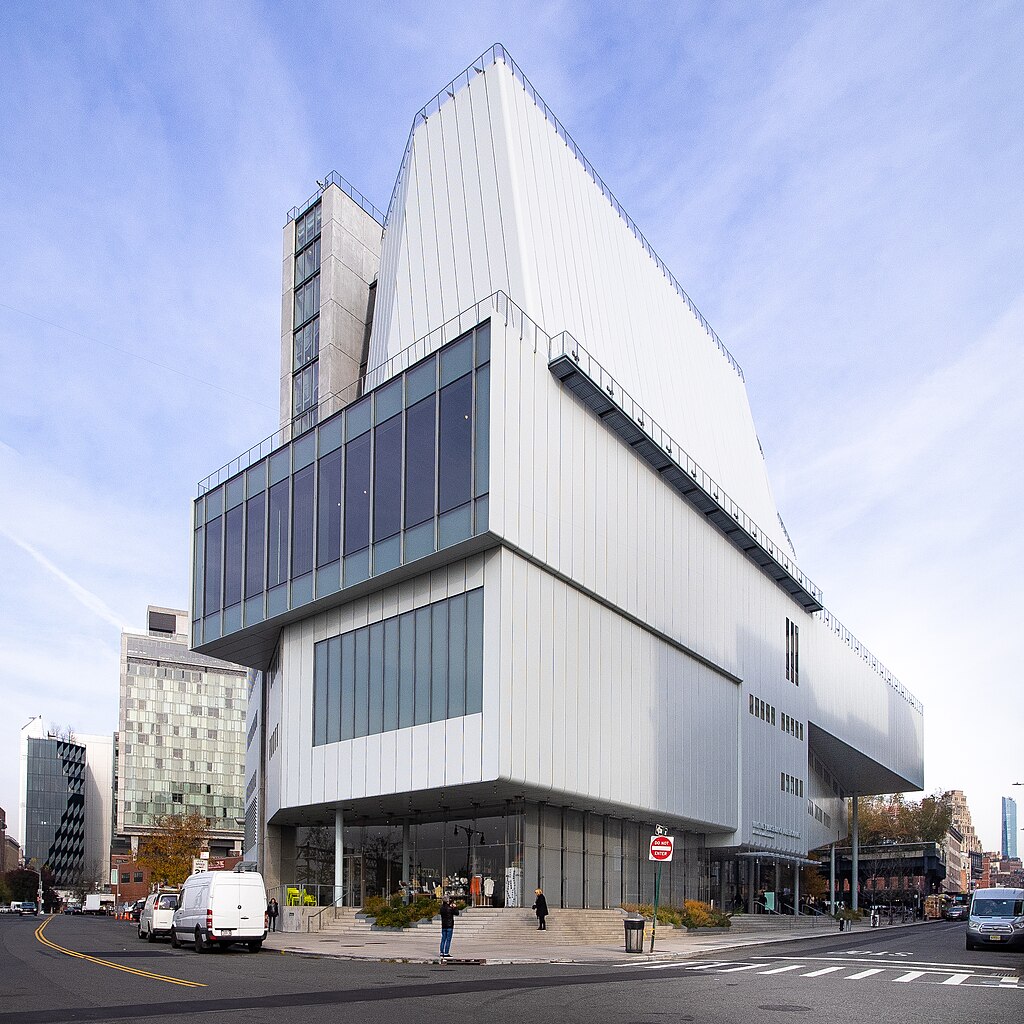
Image Credit: Krzysztof Ziarnek, Kenraiz, CC BY-SA 4.0

Located on the Lower East Side, the Tenement Museum features two preserved tenement buildings once home to over 15,000 people from more than 20 different countries.
How Much Time Should I Spend at the Tenement Museum?
About 90 minutes covers one tour comfortably: 60 to 75 minutes on the tour itself, plus check-in beforehand and time in the Shop after.
Three hours is the sweet spot for a proper visit. The museum's own recommendation is to take more than one tour, and the best combination is a building tour plus a neighbourhood walking tour, leaving 15 minutes between scheduled start times. That gives you the interior and the streets it sat in, which complement each other well.
Half a day if you add the theatre. A 30-minute film runs in the Ruth J. Abram Theater and is free to browse alongside the Shop, and it is a good way to fill a gap between two booked tours.
You cannot extend a visit by lingering. When the tour ends, you leave the building with your group. There is no wandering afterwards, no café to sit in, and no permanent gallery to drift through. Plan your day around the tour times rather than around opening hours.
What is the Best Time to Visit the Tenement Museum?
Best time of day: the first tours of the morning, from 10:00am. Groups are smaller, the buildings are cooler, and the educator has more room to take questions.
Best days: Tuesday to Thursday. These are also the days the Visitor Center closes earlier, at 5:00pm, so the tour schedule is shorter, but availability is far better. Weekends are the hardest to book and carry the largest groups.
Best season: autumn and early spring. Summer combines peak demand with buildings that are deliberately not chilled, and the stairwells get warm. January and February are the quietest weeks of the year and the easiest for walk-ups.
Ticket release dates: check the calendar on Thursdays, when new tickets are released.
For photography: photography is permitted on tours, with the exception of 6A: Confinos, though audio and video recording are not allowed anywhere. The apartments are dim and cramped, so expect to shoot handheld at high ISO, and the museum asks that you do it without disrupting the group. This is not a place to prioritise photographs over listening.
Which Tenement Museum Tour is Best?
There is no starter tour and no general tour, so the best tour is the one that matches what you are interested in. All eight apartment tours cost the same, all run 60 to 75 minutes, and none is a highlights tour that covers the others.
One thing to understand before you read the descriptions: none of the tours is about a single ethnic group. The Lower East Side was mixed, and each tour follows specific real families across a period rather than telling one community's story. Searching for a "Jewish tour" or an "Irish tour" will not direct you to a specific tour.
The apartment tours:
1A: Wongs & Gumpertzes follows two women a century apart, Natalie Gumpertz and Mrs Wong, both coping with economic hardship. It is the museum's recommendation for children, and the comparative structure makes it a good first tour if you want breadth.
2A: Moores visits Joseph and Bridget Moore, Irish Catholic immigrants who grew up through the famine years and raised a family in post-Civil War New York. This is the tour people are looking for when they search for Irish immigrant history.
3A: Schneiders is about tenement businesses: a saloon run by a married couple during the Civil War, and an auction house inherited during the Great Depression. The reconstructed saloon is one of the more atmospheric spaces in the building.
4A: Moores is a different family with the same surname, which confuses people constantly. Joseph and Rachel Moore were Black New Yorkers living in Lower Manhattan tenements in the 1860s and 1870s. This was the first apartment the museum devoted to a Black family, and it is the newest interpretation in the building.
5A: Levines covers Jewish immigrant mothers in 1902, the Levine family apartment, and the Kosher Meat Boycott that women in this neighbourhood organised. Strong on labour and protest history.
6A: Confinos is the outlier and the one to book with young children. An actor plays Victoria Confino, a real Sephardic Jewish teenager who arrived in 1913, and you meet her in 1916 in her family's apartment as newly arrived immigrants yourself. It is the only apartment tour that admits children under 5, you can handle objects, and it is the one tour where photography is not permitted and translation via the Forum app is unavailable.
7A: Rogarshevskys & Baldizzis traces the high-immigration years of the early 1900s through two families, set against the debates about tenement and factory conditions that shaped reform.
8A: Epsteins & Saez Velezes jumps forward to the 1950s and 1960s, following Jewish Holocaust survivors and Puerto Rican migrants as the neighbourhood diversified. This one is in 103 Orchard rather than 97, and it is the tour that connects most directly to the Lower East Side you walk out into.
If you are only doing one: pick by period rather than by reputation. For the classic nineteenth-century tenement experience, 2A or 3A. For turn-of-the-century immigration and labour, 5A or 7A. For post-war New York, 8A. For children, 6A or 1A.
A note on old tour names. The museum used to sell tours under names like Hard Times, Sweatshop Workers, Irish Outsiders, Shop Life and Under One Roof, and a great deal of third-party content still uses them. The lineup has been reorganised around apartment numbers. If you have read a review recommending a tour name you cannot find on the calendar, that is why, and the equivalent content usually survives under one of the numbered tours rather than having disappeared.
Languages: simultaneous translation is offered on apartment tours through the Forum app, with limited coverage during the interactive segments of 1A, 3A and 4A, and no availability at all on 6A.
Virtual tours and online programmes run separately and are open to all ages, which is worth knowing if you cannot get a ticket or cannot manage the stairs.
Inside 97 Orchard Street: The Building That Was Sealed
The reason this museum exists is an act of landlord parsimony. 97 Orchard Street was built in 1863 by Lukas Glockner, a German immigrant, as 22 apartments over a basement saloon, in a neighbourhood then known as Kleindeutschland. Over the following seventy years it absorbed successive waves of arrivals and successive rounds of housing legislation, gaining indoor plumbing, gas, electricity and fire escapes as the law demanded them.
In 1935, faced with another round of required upgrades, the landlord evicted every residential tenant and sealed the upper floors. The ground-floor storefronts kept trading into the 1980s. The apartments above simply stopped.
When Abram and Jacobson came through the boarded door in 1988, after two years of searching for an unrestored pre-1867 tenement, they found rooms holding the ordinary residue of people's lives: layers of wallpaper, toys, hairpins, library notices, business cards, high holiday tickets. Those objects are the evidence base for the tours, because tenement families did not leave archives.
That history explains the visiting rules. The building is a National Historic Landmark, designated in 1994, and it is also fragile. There are no vitrines and no velvet ropes, so preservation depends on visitors not touching the walls. It also explains why the museum expanded into 103 Orchard Street next door, an 1888 building lived in until 2015, which is where the post-war stories are told: 97 Orchard had no residents after 1935, so its walls could not hold them.
Walking Tours and Food Experiences
Not everything here happens indoors, and the outdoor tours solve two problems at once: they are easier to book, and they take all ages.
Neighbourhood walking tours cost the same $30 and run daily.
W1: Outside the Home looks at how Lower East Siders shaped and were shaped by the shops, parks, cinemas and schools around them across the nineteenth and early twentieth centuries. This is the natural companion to any apartment tour, and it is the pairing the museum itself recommends the most.
W2: Building On The LES is about the architecture and the people who designed and used it, and is the pick for anyone who likes reading streetscapes.
W3: Reclaiming Black Spaces runs from Sebastiaen de Britto, one of the area's first Black residents in the 1640s, through to the Studio We musicians' collective in the 1970s. It covers ground almost no other Lower East Side tour touches.
Food experiences cost $55 and are the museum's most expensive programme.
F1: Foods of the LES covers 150 years of neighbourhood history through immigrant food cultures. F2: Tour & Tasting: Schneiders combines the 1870s Kleindeutschland apartment tour with tasting. F3: Tour & Tasting: Levine pairs the 1902 Levine story with a visit to The Pickle Guys on Grand Street, which is about as direct a link between the history and the living neighbourhood as you will find.
At $55 the food tours are a harder sell than the apartment tours, but the tour-and-tasting format solves the biggest weakness of a standalone apartment tour, which is that you finish inside a building and then stand on the pavement wondering what to do next.
Walking and food tours also admit children of all ages, dogs are permitted on the outdoor walking tours, and neither involves the stairs that make the apartment tours difficult for some visitors.

Is the Tenement Museum Worth Visiting?
The Tenement Museum is, for many tourists to the Big Apple, one of the most pleasant surprises of their visit. It is a fantastic way to get to know the history of New York through immersion, rather than by reading panels next to a display case.
The most common complain I've heard. $30 buys you one hour in one apartment. If you arrive expecting a museum in the ordinary sense, with galleries, a café and the freedom to move at your own pace, you will feel short-changed. Some people will find the tours slow or rushed depending on the educator, and educator quality is the biggest single variable in the experience. There is no café, no air conditioning in the historic spaces, and several flights of stairs. Photography restrictions frustrate some people. And the cost compounds fast: seeing three families means paying three times.
What you get in return is something no other New York museum offers. These are the actual rooms, at actual scale, and standing in a 325-square-foot apartment that housed a family of seven does something that no amount of reading achieves. The research underneath the interpretation is unusually serious, built from objects rather than documents, and the museum has been willing to complicate its own story, adding the Black Moore family and the post-war Puerto Rican and Holocaust-survivor apartments rather than settling into a comfortable Ellis Island narrative.
For first-time visitors to New York, this pairs extraordinarily well with Ellis Island. Ellis Island shows the arrival; the Tenement Museum shows what arrival actually led to. Doing both, in that order, is one of the better history days available in the city.
For families, 6A: Confinos with under-8s, 1A with children 5 and over. Under-5s are not permitted on most apartment tours at all, so read the age guidance before booking. Everyone 14 and under needs an adult with them.
For anyone with mobility limitations, think carefully. The apartment tours involve stairs in a nineteenth-century building. The walking tours are the better route in.
For repeat visitors and New Yorkers, membership rather than tickets, and work through the tours over a year. That is clearly how the institution wants to be used.
For anyone on a tight budget, one tour is enough to get the point, and a walking tour at the same price covers more ground. Do not feel obliged to stack them.
Where Should I Eat Near the Tenement Museum?
There is no café at the museum, only water and soft drinks in the Shop, and this is one of the great eating neighbourhoods in New York, so that is no loss at all. Most of the following are within a ten-minute walk, and several are woven into the same immigration history the tours cover.
Katz's Delicatessen, 205 East Houston Street, is the obvious one and still worth it. Pastrami on rye, the ticket system at the door, open since 1888. Touristy and excellent at the same time.
Russ & Daughters Cafe, 127 Orchard Street, is two minutes away and sits directly in the story: an appetising shop founded by a Polish Jewish immigrant in 1914, now a sit-down café doing smoked fish, bagels and egg creams properly.
Kossar's Bagels & Bialys, 367 Grand Street, has been making bialys since 1936 and is the place to understand what a bialy actually is.
The Pickle Guys, 357 Grand Street, sells pickles from barrels the old way and is a two-minute detour. This is also the stop on the F3 food tour.
Yonah Schimmel's Knish Bakery, 137 East Houston Street, opened in 1910 and has barely changed since.
Nom Wah Tea Parlor, 13 Doyers Street in Chinatown, is a ten-minute walk and one of the oldest dim sum rooms in the city, on a street with its own considerable history.
Vanessa's Dumpling House, 118 Eldridge Street, is the cheap and fast option, and very good for what it costs.
Scarr's Pizza, 35 Orchard Street, is three minutes south and mills its own flour. Essex Market, 88 Essex Street, gathers dozens of vendors under one roof if your group cannot agree.
Cafe Katja, 79 Orchard Street, is the Austrian option a few doors down, and a nice sit-down counterpoint if you have had enough delis.
Economy Candy, 108 Rivington Street, has been selling sweets since 1937 and is a good stop with children after a tour.
Tenement Museum members get discounts at several neighbourhood spots including The Pickle Guys and a handful of the restaurants above, so if you have joined, ask at the Visitor Center. The staff there will also give restaurant recommendations on request, in person or by email before you arrive, and they know the neighbourhood well.
What Else is There to Do Near the Tenement Museum?
The Museum at Eldridge Street, 12 Eldridge Street, is a restored 1887 synagogue five minutes away, and the best complement to a Tenement Museum tour in the neighbourhood. Small, beautiful, and rarely crowded.
Kehila Kedosha Janina, 280 Broome Street, is the only Romaniote synagogue in the western hemisphere and has a small museum attached.
The International Center of Photography, 79 Essex Street, is a three-minute walk and reliably good.
The Merchant's House Museum on East 4th Street is the counterpoint to everything the Tenement Museum shows: an intact 1832 merchant family home, preserved with its furnishings, about 15 minutes north.
Seward Park and the M'Finda Kalunga Garden on Chrystie Street are the two green spaces worth knowing about, the latter a community garden on the site of a former African burial ground.
The Metrograph, 7 Ludlow Street, is an independent cinema with a bar, and a good end to an afternoon.
Orchard Street itself repays a slow walk. Sweet Pickle Books at number 47 sells books and pickles, MOSCOT at 94 has been fitting glasses in the neighbourhood since 1915, and the block still carries traces of the retail history the tours describe.
Ellis Island and the Statue of Liberty are the natural pairing on another day, reachable from Battery Park about 25 minutes away.
The Museum Shop
The Shop at 103 Orchard Street is one of the better museum shops in New York, and it gets sought out for on its own. It carries a deep selection of books on New York history, immigration and tenement life, well beyond the usual gift-shop stock, along with reproductions and neighbourhood-made goods.
You do not need a tour ticket to visit it. The Shop, the Visitor Center and the theatre are open to anyone during opening hours, they are fully air conditioned, and the 30-minute film runs free in the Ruth J. Abram Theater. If a tour is sold out on your dates, this is still a worthwhile 20 minutes.
There is also an online shop, and gift cards can be bought that work for tour tickets, memberships and donations.
Rules, Bags, and Security
The buildings are a National Historic Landmark without glass cases or barriers, so the rules are stricter than at a conventional museum and they are enforced.
Bags: large bags, backpacks and luggage are not permitted on apartment tours. Storage lockers are available in the Visitor Center, which is more than most New York attractions offer, but arrive early enough to use them.
Touching: do not touch walls, objects or fittings unless an educator invites you to.
Staying with the group: you must remain with your guide throughout. There is no independent movement inside the buildings.
Food and drink: no eating, drinking (other than water) or gum chewing in exhibit spaces. The whole site is smoke and vape free.
Photography: permitted on tours except 6A: Confinos, provided you are not disrupting others. Audio and video recording is prohibited everywhere.
Phones: silent before the tour starts.
Animals: service dogs are welcome on all tours. Pets and emotional support animals cannot enter the tenement buildings, but pets are allowed on the outdoor walking tours, leashed and cleaned up after, and cannot be left with staff.
Children: under-5s are not permitted on most apartment tours, though they are welcome on 6A: Confinos, the walking tours, and in the Shop, Visitor Center and theatre. Anyone 14 or under needs an accompanying adult.
Tipping: your guide is a salaried museum educator. Tips are not solicited or expected. Feedback or a donation at the Visitor Center is the intended alternative.
Accessibility at the Tenement Museum
This is the weak point, and it follows from the building rather than from any lack of effort. The apartment tours take place in a nineteenth-century tenement with narrow staircases and no lift to most spaces, and several flights of stairs are unavoidable on most routes.
The accessible entrance is on the Delancey Street side of 103 Orchard Street, at 81 Delancey Street.
Discounted admission is offered to visitors with disabilities, and the museum runs a range of accessible programmes and services detailed on its accessibility page.
Walking tours are the most broadly accessible option, taking place outdoors at street level, and they cost the same $30.
Virtual programmes run regularly and are open to all ages, which is the route in for anyone who cannot manage the buildings at all.
If stairs are a concern, contact the museum before booking rather than after. Tickets are non-refundable, and tour routes differ in how much climbing they involve, so a direct question to Visitor Services is worth the email.
Final Tips for Visiting the Tenement Museum
Book ahead, and check back on Thursdays. New tickets are released weekly, so a sold-out calendar today is not the final answer.
Choose your tour by period, not by ranking. There is no starter tour, all eight cost the same, and none summarises the others. Read the descriptions and pick the era you actually want.
Go to 103 Orchard Street, not 97. The famous building is number 97, but every tour starts at 103 on the corner of Delancey, and there is nothing to do at the old address.
Buy in person if you can, online if you must. In-person tickets skip the $3 per ticket service fee, but online booking is the only way to guarantee the tour you want.
Pair a building tour with a walking tour, leaving 15 minutes between start times.
Run the numbers on membership before booking a third ticket. Two people taking two tours each already costs $120, and the museum will credit what you have spent towards joining.
Bring water in summer. The historic buildings are climate controlled but not chilled, and the stairwells get warm.
Eat afterwards, not before. There is no café, and Russ & Daughters, Katz's, Kossar's and The Pickle Guys are all within a few minutes of the door and all part of the same story you just heard.
Back to New York City Attractions
Explore other New York City attractions


" width="24px"><path d="M 0 0 L 24 0 L 24 21.231 L 0 21.231 Z" fill="transparent" height="21.230768474975793px" id="nL2EwDcS9" width="24px"/><path d="M 0 0.541 C 0 0.242 0.245 0 0.547 0 L 2.735 0 C 3.037 0 3.282 0.242 3.282 0.541 L 3.282 4.598 C 3.282 4.897 3.037 5.139 2.735 5.139 L 0.547 5.139 C 0.245 5.139 0 4.897 0 4.598 Z" fill="rgb(196, 217, 201)" height="5.138657337892187px" id="hZ_rlBe_S" transform="translate(0 16.092)" width="3.2820512820512358px"/><path d="M 0 0.541 C 0 0.242 0.245 0 0.547 0 L 2.735 0 C 3.037 0 3.282 0.242 3.282 0.541 L 3.282 7.843 C 3.282 8.142 3.037 8.384 2.735 8.384 L 0.547 8.384 C 0.245 8.384 0 8.142 0 7.843 Z" fill="rgb(230, 211, 160)" height="8.38412513024521px" id="HgVBxIz3e" transform="translate(5.128 12.847)" width="3.282051282051235px"/><path d="M 0 0.541 C 0 0.242 0.245 0 0.547 0 L 2.735 0 C 3.037 0 3.282 0.242 3.282 0.541 L 3.282 12.982 C 3.282 13.281 3.037 13.523 2.735 13.523 L 0.547 13.523 C 0.245 13.523 0 13.281 0 12.982 Z" fill="rgb(232, 207, 164)" height="13.522782468137464px" id="utgrDnoM9" transform="translate(10.325 7.708)" width="3.282051282051377px"/><path d="M 0 0.541 C 0 0.242 0.245 0 0.547 0 L 2.735 0 C 3.037 0 3.282 0.242 3.282 0.541 L 3.282 16.498 C 3.282 16.797 3.037 17.039 2.735 17.039 L 0.547 17.039 C 0.245 17.039 0 16.797 0 16.498 Z" fill="rgb(233, 196, 166)" height="17.038705909853153px" id="OLOhW6STz" transform="translate(15.521 4.192)" width="3.2820512820512384px"/><path d="M 0 0.541 C 0 0.242 0.245 0 0.547 0 L 2.735 0 C 3.037 0 3.282 0.242 3.282 0.541 L 3.282 20.69 C 3.282 20.989 3.037 21.231 2.735 21.231 L 0.547 21.231 C 0.245 21.231 0 20.989 0 20.69 Z" fill="rgb(217, 170, 153)" height="21.230768474975793px" id="H5Z8wcwkd" transform="translate(20.718 0)" width="3.2820512820512278px"/></g></svg>)