Back to New York City Attractions
Whitney Museum New York: Everything You Need to Know Before You Visit
Updated August 2026
The Whitney Museum of American Art holds the deepest collection of twentieth and twenty-first century American art anywhere in the world, more than 27,000 works by over 7,000 artists, in a Renzo Piano building that sits at the foot of the High Line with terraces looking out over the Hudson. Since late 2024 the museum has been free every single day for anyone aged 25 and under, on top of free Friday evenings and free second Sundays, which makes it one of the best-value major museums in New York if you know how to time it. Getting the timing right is the whole game here, because the difference between a $30 ticket and a $0 ticket comes down to which hour of which day you walk through the door.
At a Glance
How Early to Book:
Book a timed-entry ticket a couple days ahead if visiting during a free-admission time (Friday nights and second Sundays). If visiting during a weekday morning, you can get a ticket same-day at the ticket office.
Best Times to Visit:
Early mornings, right at 10:30am opening, will have the least crowds.
Ticket price:
$30 for adults.
Where to Book:
Museum Address:
Do You Need to Book Whitney Museum Tickets in Advance?
Advance booking is recommended at certain times, but not strictly required. Walk-up tickets are sold at the admissions desk on Floor 1 on a first come, first served basis, and on a quiet weekday morning you will have no trouble going straight in. The problem is that timed slots for the busiest windows, Friday evenings, second Sundays, weekend afternoons, and the closing weeks of a major exhibition, regularly sell out online before the day arrives, and once a slot is gone it is gone whether you are standing at the desk or not.
Where to book: whitney.org is the only place you need. Tickets are timed entry, and the same general admission ticket covers everything on view, including the Biennial and every special exhibition. There are no separate exhibition tickets at the Whitney, which is unusual among big New York museums and worth knowing before you buy an upsold package elsewhere.
Prices:
Adults: $30
Seniors 65 and over: $24
University students with valid ID: $24
Visitors 25 and under: free, every day
Visitors with disabilities: $18, with admission for one care partner included free
Members: free
Groups of 10 or more: discounted rates, booked separately
Free admission also applies to active US military, veterans and military families, SNAP/EBT cardholders (one ticket per visit), and students and staff at NYU, Pratt, SVA and CUNY. IDNYC cardholders get free entry on selected dates published on the museum calendar rather than year-round.
City pass coverage: the Whitney is included in the New York Pass and the New York Explorer Pass (Go City). It is not included in the New York CityPASS, where the Guggenheim is the only art museum on the list. This trips people up constantly, so if you have bought a CityPASS specifically to cover the Whitney, you will still need a separate ticket.
How far ahead to book: two to three days is plenty for a weekday morning in the low season. For a Saturday between May and September, or for the final month of a Biennial, book a week or more ahead. Free Friday Night tickets are released up to five weeks in advance and free Second Sunday tickets roughly a month ahead, and both move fast.
Refunds: tickets cannot be refunded, exchanged, resold or transferred. Buy the slot you are confident you can make.
Whitney Museum Opening Hours and Entry Information
Standard hours: the museum is open Wednesday to Monday, 10:30 am to 6 pm, with a late opening on Friday until 10 pm. It is closed on Tuesdays for the rest of the year.
Summer schedule: through summer 2026 the Whitney is open seven days a week from 16 June to 18 August, including Tuesdays. Regular hours, and the Tuesday closure, resume on 19 August.
Closed days: New Year's Day, Independence Day, Thanksgiving and Christmas Day. The museum stays open on Memorial Day and Labor Day.
Last entry: the galleries begin clearing around 15 minutes before closing, so an entry slot after 5 pm on a standard day gives you well under an hour. Treat 4:30 pm as the realistic last useful slot on a 6 pm day.
Free spaces without a ticket: the ground floor is always free. That covers the lobby, the gallery on Floor 1, the Whitney Shop, and Frenchette Bakery. You can walk in during museum hours, look at whatever is installed in the lobby gallery, and leave without buying anything.
Dining hours: Frenchette Café and Bakery on Floor 1 opens earlier than the museum at 9 am most days, and closes at 3 pm on Tuesdays. Studio Bar on Floor 8 runs 10:30 am to 5 pm, extending to 9 pm on Fridays, and is closed on Tuesdays year-round.
Address: Whitney Museum of American Art, 99 Gansevoort Street, New York, NY 10014.
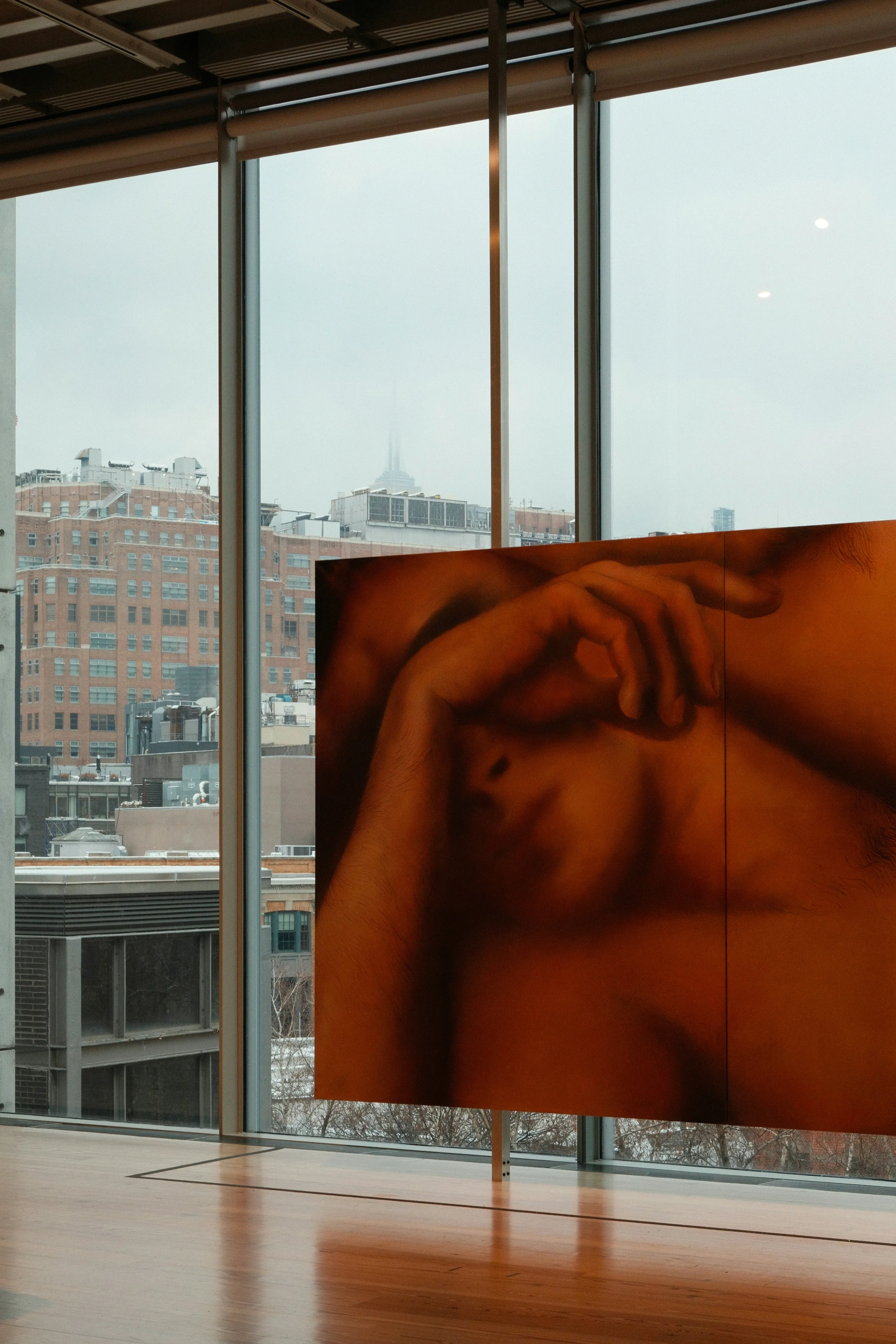
Whitney Museum Friday Nights and Free Admission Days
The admission policies on Fridays are important to understand if you plan on visiting on that particular day of the week.
Free Friday Nights: from 5 pm to 10 pm every Friday, admission is free for everyone, regardless of age. This is not a reduced or pay-what-you-wish rate, it is full free access to every exhibition on view, plus programming that usually includes DJ sets in the lobby and a run of free 15-minute highlight tours through the evening. Tickets are still required and capacity is capped, so reserve online rather than turning up.
Free Second Sundays: the second Sunday of every month is free all day, 10:30 am to 6 pm, with artmaking, story times, tours and family programming layered on top. This is the best day to bring children and the worst day to come if you want quiet galleries.
Free 25 and Under: anyone 25 or younger gets in free every day the museum is open. You can book a timed ticket, or take the Free 25 and Under Anytime Pass for unlimited visits. Bring ID.
If you are under 26 or can shift your plans to a Friday evening, the Whitney stops being an expensive museum and becomes one of the best free nights out in the city. The trade-off is real though: Friday evening attendance runs roughly double the normal rate, the galleries are loud, and the terraces get packed around sunset. If you want to look at art in peace, come at 10:30 am on a Wednesday and pay the $30.
What is the Best Way to Get to the Whitney Museum?
By subway: the A, C, E and L lines all stop at 14th Street and Eighth Avenue, about a six-block walk. Head west on 14th Street to Washington Street, turn left, and go two blocks south to Gansevoort. It takes about 10 minutes.
On foot from the High Line: the southern end of the High Line comes down on the same block as the museum. Walking the High Line south from Chelsea and arriving at the Whitney at street level is the nicest way to get into the building, and it takes about 25 minutes end to end from Hudson Yards.
By bus: the M12 runs south along Washington Street past the museum, and the M14A and M14D cross 14th Street to the Hudson, leaving a short walk down.
By bike: there are bike racks directly in front of the building, and Citi Bike docks on the southwest corner of Gansevoort and Washington. The Hudson River Greenway runs a block west, which makes this one of the easier major museums in Manhattan to reach by bike.
By car: street parking here is close to non-existent. There are ICON garages at 99 Jane Street, 134-136 Jane Street and 385 West 15th Street. Taxi and rideshare drop-off is at 99 Gansevoort Street itself, and the easiest place to hail a cab afterwards is at Hudson Street, three blocks east.
One practical tip: the cobblestones on Gansevoort and Washington are original Belgian block and are uneven to walk on. Wheeled luggage, heels and small wheels of any kind will be a challenge, which matters because the museum does not accept luggage at coat check either.

Edward Hopper's Early Sunday Morning, painted in 1930, is one of the Whitney Museum's most famous paintings in its permanent collection.
How Much Time Should I Spend at the Whitney Museum?
I'd say you need about two to three hours covers a standard self-guided visit comfortably. The Whitney is vertical rather than sprawling: galleries occupy Floors 1, 3, 5, 6, 7 and 8, Floor 4 is staff-only, and each gallery floor is small enough to absorb properly rather than route-march through.
If you are here mainly for the permanent collection and the Hoppers, 90 minutes is plenty. Add an hour when a Biennial is on, since it spreads across four separate floors. Add another 30 to 45 minutes if you want to sit on the terraces or have a drink at Studio Bar, which most people end up doing whether they planned to or not.
Pairing the Whitney with the High Line, Little Island and Chelsea Market makes a comfortable half day of about five hours. Pairing it with a second large museum on the same day does not work well: the Whitney is downtown and all the other major museums are uptown or midtown.
What is the Best Time to Visit the Whitney Museum?
Best time of day: the 10:30 am opening slot. Get in the elevator, ride straight to Floor 8, and work downwards. You will have the top floors close to empty for the first 30 minutes while the crowd works its way up from the lobby.
Best days: Monday, Wednesday and Thursday are consistently the quietest. Saturday afternoons are the worst. Friday from 5 pm is free and lively but busy, and second Sundays are busy in a family-oriented way.
Best season: late autumn and January through early March give you the emptiest galleries. Spring and summer bring both crowds and the terraces at their best, and from mid-June to mid-August the museum drops its Tuesday closure entirely.
For sunset: the terraces face west over the Hudson. Arriving around 90 minutes before closing on a Friday puts you on Floor 8 as the light goes, which is the single best free view the museum offers.
One thing to check first: the Whitney closes individual floors between exhibitions, and it does this more often than most museums because so much of the programme rotates. Check the exhibitions page the morning of your visit. Turning up to find the fifth floor dark is a common and avoidable disappointment.
What is Inside the Whitney Museum?
The building holds eight floors, six of them public gallery space, and the layout rewards starting at the top.
Floor 8 has the largest terrace, Studio Bar, and rotating exhibition space. Floors 5 and 6 hold the big temporary shows, with Floor 5 offering a vast column-free gallery that the museum uses for its most ambitious installations. Floor 7 is where the permanent collection displays usually live, and it is where you will find the Hoppers and Alexander Calder's Circus, the miniature wire-and-cloth circus troupe that reliably delights children and adults in equal measure. Floor 3 has a smaller gallery plus the theatre and education spaces, and Floor 1 has the free lobby gallery.
Collection highlights that rotate through the displays include Edward Hopper's Early Sunday Morning, Georgia O'Keeffe's flower paintings, Jasper Johns's Three Flags, and work by Jacob Lawrence, Faith Ringgold, Jean-Michel Basquiat, Carrie Mae Weems, Kara Walker and Lee Krasner. Because the Whitney rotates its collection aggressively rather than keeping a fixed hang, no two visits a year apart will look the same, and no specific work other than the Hoppers is guaranteed to be up.
What not to miss: the outdoor stairs. The terraces on Floors 5 through 8 are linked by exterior staircases on the east side of the building, and walking down them instead of taking the lifts is the best architectural experience in the museum. Most visitors never realise they are there.
The Biennial is the Whitney's signature exhibition and the longest-running survey of contemporary art in the United States, running since 1932. It takes over multiple floors of the museum every two years and functions as the closest thing American art has to a state-of-the-nation report.
Whitney Biennial 2026 is the eighty-second edition, on view from 8 March to 23 August 2026 across Floors 1, 5, 6 and 8, plus a billboard on Gansevoort Street opposite the entrance. It features 56 artists, duos and collectives, co-organised by Whitney curators Marcela Guerrero and Drew Sawyer, and it runs without a title or stated theme, which is itself a departure. Alongside artists from across the country it includes work by artists from places shaped by American power, from Afghanistan to Vietnam and the Philippines.
No extra ticket is needed. The Biennial is covered by standard admission.
Critical reception for this one is split. I'll spare my own subjective opinions, and just say that reviewers have described this edition as the least didactic in a decade, quieter and weirder than recent iterations, and several have found the sixth floor considerably stronger and more coherent than the fifth. Others have read the absence of a theme as conflict-avoidance at a tense moment. If you like contemporary art that argues with you, you may find this one soft. If recent Biennials felt overcrowded and lecture-like, this is the one to try.
There is also a live performance programme attached to the exhibition that activates several works, and a number of pieces make far more sense with a performance running than without. Check the events calendar before choosing your day.
The next Biennial will open in 2028.
Edward Hopper at the Whitney Museum
The Whitney holds more than 3,000 works by Edward Hopper, the largest concentration of his output anywhere in the world, the result of a bequest from his widow Josephine. A selection is on view at all times as part of the collection displays, currently on Floor 7. Early Sunday Morning, the 1930 painting of a low brick row of shopfronts in raking light, is the anchor work and is almost always up.
One important thing to keep in mind, because a lot of people arrive expecting it: Nighthawks is not at the Whitney. It belongs to the Art Institute of Chicago and it has never been part of the Whitney's collection. What the Whitney has instead is far deeper and less familiar, including drawings, studies, prints and the working sketches that show how his compositions were built, which for anyone with a real interest in Hopper is even better than a single famous canvas would be.
Major dedicated Hopper exhibitions come around every few years rather than annually. Outside those, expect a room or two rather than a full floor, and calibrate your expectations accordingly. If Hopper is the entire reason for your visit, check the exhibitions page first, because a rotation can temporarily reduce what is on view.
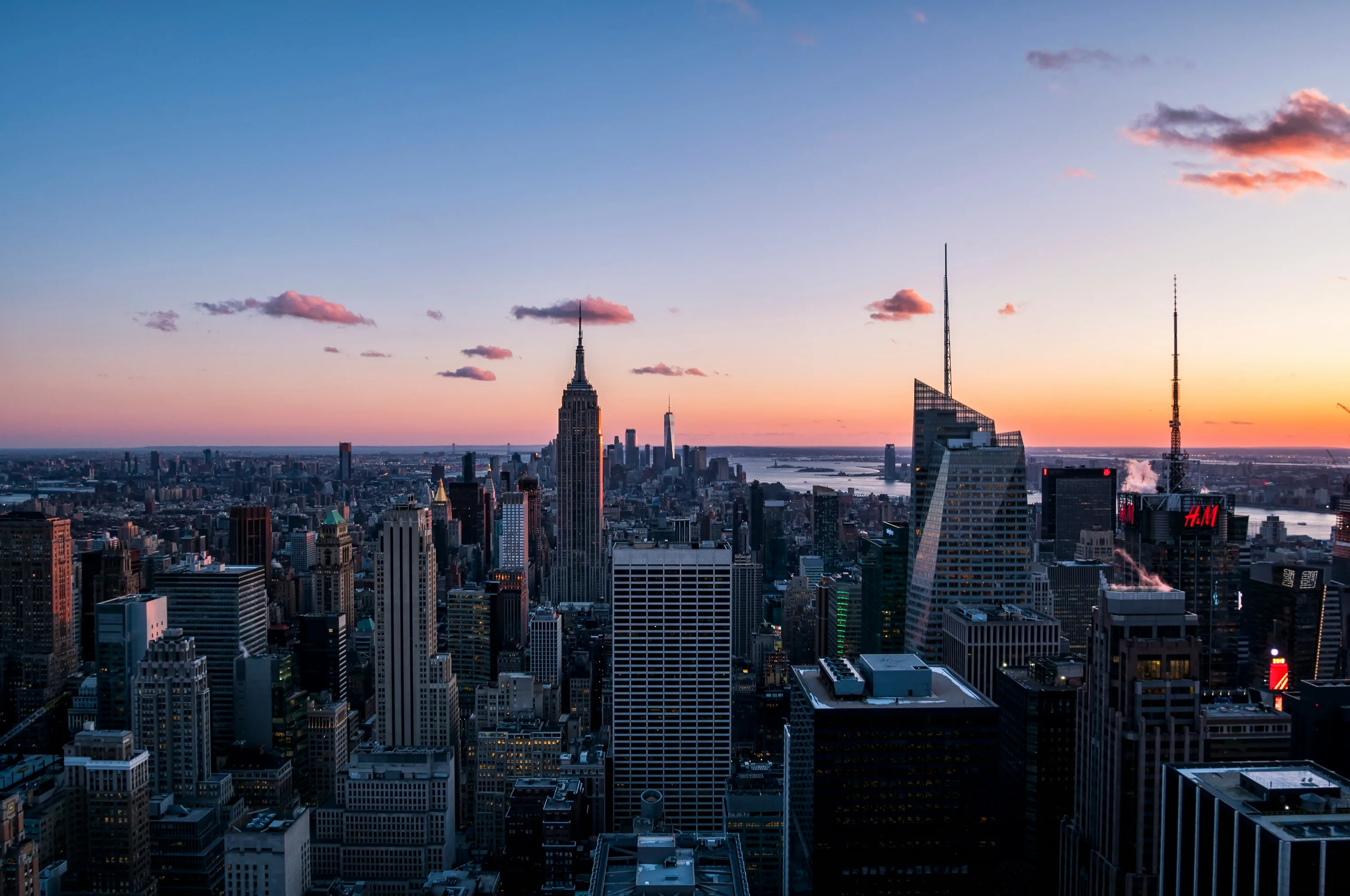
The Terraces and the Views
The terraces are the Whitney's secret weapon and a substantial part of what you are paying for. They occupy the east side of the building on Floors 5, 6, 7 and 8, they are linked by open-air staircases, and they look out across the Meatpacking District rooftops, the Hudson, and south towards One World Trade.
You need a ticket. The terraces are inside the paid zone and cannot be reached from the free ground floor, which surprises people who assume a rooftop viewing deck would be public.
Floor 5 hosts the Hyundai Terrace Commission, an annual site-specific outdoor installation. Kelly Akashi's Monument (Altadena), a glass-brick tower, occupies it through 23 August 2026.
Floor 8 is the biggest and has Studio Bar attached, so it is where everyone congregates. If it is crowded, drop to Floor 6, which has a similar outlook and a fraction of the people.
The view worth hunting for: from the west-facing windows and terraces you can look down at David Hammons's Day's End, a ghostly open steel outline in the Hudson tracing the exact dimensions of the old Pier 52 shed. It is free, permanent, sits in Hudson River Park, and most visitors walk straight past it without knowing what they are looking at. Seeing it from above first and then walking out to it afterwards is the better order.
Smoking, including e-cigarettes, is banned on the terraces along with the rest of the property.
The Building: Renzo Piano, Marcel Breuer and the Old Whitney
The current building opened in May 2015, designed by Renzo Piano, with around 63,000 square feet of indoor and outdoor exhibition space and an asymmetrical, industrial profile that answers the meat warehouses it replaced rather than the townhouses of the Upper East Side. The fifth-floor gallery is column-free and one of the largest open exhibition spaces in any New York museum.
Plenty of people still search for the Whitney at its old address, so to be clear: the Marcel Breuer building at 945 Madison Avenue is no longer the Whitney. Breuer's inverted granite ziggurat housed the museum from 1966 until 2014. After the Whitney moved downtown it became the Met Breuer, then the temporary home of the Frick Collection during that museum's renovation, and it was bought by Sotheby's, which opened it as its global headquarters in November 2025 after a restoration by Herzog & de Meuron. The exterior and lobby were granted New York City landmark status in May 2025. You can still see inside it, since Sotheby's exhibitions are open to the public and free, but it holds none of the Whitney's collection.
If you have an interest in architecture, the two buildings make an instructive pair, and they are a 30-minute subway ride apart.
The Whitney Museum Gift Shop and Store
The Whitney Shop sits on Floor 1 and needs no ticket. You can walk in off Gansevoort Street during museum hours and browse freely, which makes it one of the better rainy-day stops in the neighbourhood even if you are not visiting the galleries.
It is honestly better than the average museum shop on artist collaborations, exhibition catalogues and design objects, and weaker on generic souvenirs. The Whitney Biennial 2026 catalogue, built around long-form conversations between each artist and a curator or writer, is the standout book if you want something that outlasts the visit. Museum members get a discount here, as well as at Frenchette Bakery and Studio Bar.
There is also a separate online print shop selling custom prints of works from the collection, which is where to look if you want a Hopper on your wall rather than a tote bag.
One thing worth knowing: hold on to your same-day admission ticket. It gets you discounts at a rotating list of neighbourhood restaurants and shops through the museum's neighbourhood partner scheme, and almost everyone doesn't realize they can use it.
Guided Tours and Audio Guides
Free daily tours: the Whitney runs free exhibition tours every day it is open, typically around midday and mid-afternoon, led by museum educators and included with admission. They cannot be reserved in advance, so just show up at the stated floor. On Free Friday Nights the format switches to a run of 15-minute highlight tours spread across the evening, which suits a busy gallery far better than a full-length tour does.
Audio guide: there is no rental handset and no fee. The Whitney's digital guide streams free through the Bloomberg Connects app or directly from whitney.org, over the museum's free WiFi, in more than 40 languages. It includes curator and artist commentary, an ASL video guide, verbal descriptions of selected works, and transcripts.
Bring your own headphones, it really makes a difference. The guide assumes you have them, and there is nothing to borrow at the desk.
I would say the guide matters more at the Whitney than at most museums, particularly for the Biennial. A lot of the work is deliberately opaque without context, the wall labels are terse, and hearing an artist explain a piece in their own voice is often the difference between shrugging at something and remembering it.
Is the Whitney Museum Worth Visiting?
At $30 the Whitney is a harder sell than the Met or MoMA on pure volume. You are getting six modest gallery floors, not a day-long labyrinth, and if you arrive expecting European masters or a greatest-hits wall of instantly recognisable paintings you will feel short-changed. The most common complaint is that the ticket price sits at big-museum level while the quantity of famous work sits well below it. The wall labels are also thinner than MoMA's, which compounds the problem if you come without the audio guide.
What you get instead is focus. The Whitney is the only major museum built entirely around American art, and its collection has real depth in areas the bigger institutions treat as footnotes, from the Ashcan School through to artists whose first museum show is happening right now. Add the building, the terraces and the Hudson light, and it works as an experience even in the stretches where the art is not to your taste.
For art lovers and anyone following contemporary work: an easy yes, and the Biennial makes it essential in a Biennial year.
For families: better than you would expect. Calder's Circus on Floor 7 lands reliably with under-tens, the outdoor terraces let children move around, and Second Sundays are built for them.
For casual tourists on a tight schedule and budget: if it is not free for you and you can only fit in one museum, the Met gives more for the money. Come to the Whitney on a Friday evening instead, or skip it and walk the High Line and Little Island, which cost nothing.
For anyone 25 or under: unequivocally yes. It is free, every day, permanently, and there is no reason not to go.
The caveat I would flag hardest is the floor closures. The Whitney rotates so much of its programme that arriving to find a floor dark between exhibitions is a real risk, and paying full price for five floors when you expected six stings. Five minutes on the exhibitions page beforehand removes the problem entirely.
Where Should I Eat Near the Whitney Museum?
The Meatpacking District is expensive and a little bit pretentious, and the strip immediately around the museum leans heavily towards scene restaurants with prices to match. The good news is that a two-minute walk in almost any direction gets you somewhere better value.
Inside the museum:
Frenchette Bakery at the Whitney, on Floor 1, is open to anyone without a ticket and it is the best-value option in the immediate area. The grab-and-go bakery counter is excellent, the sit-down café is first come, first served, and the pastries hold their own against dedicated bakeries in the neighbourhood. It opens at 9 am, before the museum does, which makes it a good place to sit with coffee before an opening-time slot.
Studio Bar on Floor 8 does snacks, cocktails and wine with the terrace view. It is priced for the view and it is worth it once. Closed Tuesdays.
A short walk away:
Simò Pizza at 90-92 Gansevoort Street is directly across from the museum entrance and is the cheapest good meal within sight of the front door. Thin Neapolitan bases, quick service, and no scene whatsoever. This is where I would send anyone with kids or a budget.
Los Tacos No. 1 inside Chelsea Market, about five minutes north, is worth the queue and the queue moves faster than it looks. Order at the counter, eat standing, spend under $20.
maman at 800 Washington Street is a French café a minute from the museum, good for coffee, pastries and a light lunch, and considerably calmer than anywhere on Ninth Avenue.
La Bonbonniere at 28 Eighth Avenue is a proper old West Village diner, cash-friendly prices, eggs and pancakes, open until mid-afternoon. It is the antidote to everything else in this neighbourhood.
Pastis at 52 Gansevoort Street is the upscale pick, a classic French brasserie a block from the museum. Book ahead, expect to spend properly, and go for the room as much as the food.
A word of warning: the restaurants directly along the Ninth Avenue and Washington Street corners nearest the High Line entrance charge a substantial premium for the location. If a menu looks like it costs $40 for a burger, it does. Walk two blocks east into the West Village and your dollar will go a lot further.
What Else is There to Do Near the Whitney Museum?
The High Line starts on the same block, with the southern entrance on Gansevoort Street. It is free, needs no booking, and walking it north to Hudson Yards takes about 25 minutes at a stroll. Doing this straight after the museum just makes plain sense, provided the weather is nice.
Little Island, the floating park on tulip-shaped concrete columns at Pier 55, is a seven-minute walk north along the Hudson River Greenway. Entry is free but a timed reservation is required for any visit after midday, so book on the day if you plan to go in the afternoon. Ticketed evening performances run in the amphitheatre through the summer season.
Pier 57 Rooftop Park sits directly across from Little Island, is free, needs no booking, and has close to two acres of open lawn and benches with views down to Lower Manhattan. It is far quieter than Little Island and has good public restrooms, which in this part of Manhattan is not a small thing.
David Hammons's Day's End stands in the water beside Pier 52, a two-minute walk from the museum entrance. Free, always open, and best appreciated after you have seen it from above through the Whitney's west windows.
Chelsea Market is five minutes north at Ninth Avenue and 15th Street. Free to enter, packed at lunchtime, and the most efficient way to feed a group with different tastes.
The West Village starts immediately east of the museum. Walking east along Gansevoort and then wandering the streets around Bleecker, Bank and Hudson costs nothing and is one of the better hours you can spend in New York with no plan at all.
Rules, Bags, and Security
Bags: all bags are inspected on arrival. Small bags can be carried in the galleries as long as they are worn at the front or held in your hand. Large bags and backpacks must go to coat check. Luggage of any size is prohibited entirely, and it will not be accepted at coat check either, so do not plan a Whitney visit around a train or flight with a suitcase in tow.
Coat check: free, on Floor -1, reachable by lift or the central stairs. Everything must be collected before closing. Larger umbrellas must be checked; smaller ones can be carried in a protective sleeve the museum provides.
Photography: personal, non-commercial photography is allowed in the galleries unless a specific work or exhibition is signed otherwise. Flash, tripods and selfie sticks are all prohibited.
Sketching: pencil only. Charcoal, pastels, markers and paint are not permitted anywhere in the building, including coat check.
Food and drink: not allowed in the galleries, and there is no space to eat food brought from outside. Water in a secure bottle is fine.
Children: children aged 12 and under must be accompanied by an adult at all times. Strollers are welcome throughout the building but cannot be left unattended or checked. On very busy days such as Second Sundays the museum sometimes sets up designated stroller areas.
Accessibility at the Whitney Museum
The Whitney is one of the most thoroughly accessible museums in New York, and every level of the building is reachable by lift.
Getting in: the accessible route to the main entrance runs from Washington Street along the south side of the building, past the ground-floor restaurant, just north of the Largo stairs. The Rudin Family Entrance at 555 West Street is also accessible. MTA Access-A-Ride drops off and picks up at the corner of Washington and Gansevoort Streets.
Wheelchairs: manual wheelchairs are available free of charge on a first come, first served basis at the admissions desk on Floor 1 or at the coat check on Floor -1.
Terraces: all outdoor terrace doorways are fitted with automatic openers, so the outdoor spaces are usable independently.
Restrooms: accessible restrooms are on Floors -1, 3, 7 and 8. Single-user, all-gender restrooms are on Floors -1, 3 and 8.
Hearing: induction hearing loops are installed at the admissions and membership desks on Floor 1, in the Hess Theater and the education spaces on Floor 3, and in the Kaufman Gallery on Floor 5. Switch hearing aids to the T setting, or request an infrared receiver from staff in the theatre and education spaces.
Deaf and blind or low-vision visitors: the free digital guide includes an ASL video tour with closed captioning, verbal and audio descriptions of selected works, transcripts for audio and video pieces, and synchronous mobile captioning for selected video and sound works, accessed by scanning a QR code in the gallery. Many video works carry open captions.
Autistic visitors: the museum publishes a downloadable social narrative walking through what a visit looks like step by step, which is worth reading in advance with children.
By request: ASL interpretation and live captioning for public programmes need five business days' notice. Braille publications and verbal description for programmes need two weeks.
Tickets: visitors with disabilities pay $18 and admission for one care partner is included free. Select the option at the point of booking. Service animals are welcome throughout the building.
Final Tips for Visiting the Whitney Museum
Check the exhibitions page the morning you go. The Whitney closes individual floors between shows more often than any comparable New York museum, and this is the number one cause of disappointed visits.
If you are 25 or under, book the free ticket and go more than once. It costs nothing, every day, and the collection rotates enough that a second visit two months later is a different museum.
Take the lift to Floor 8 and walk down. Everyone else starts at the bottom and works up, so going against the flow buys you 30 quiet minutes at the top and avoids the lift queues entirely.
Use the outdoor staircases between the terraces on Floors 5 to 8. Most visitors never find them, and they are the best part of Piano's building.
Bring headphones for the free digital guide. There is nothing to borrow, and the guide matters more here than at most museums because the labels are sparse.
Do not come expecting Nighthawks. It is in Chicago. The Whitney's Hopper holdings are deeper but quieter, so come for Early Sunday Morning and the drawings.
Keep your same-day ticket in your pocket after you leave. It unlocks discounts at neighbourhood restaurants and shops that almost nobody claims.
Pair it with the High Line and Little Island in that order. Museum at 10:30 am, High Line north at 1 pm, back down to Little Island and Pier 57 for sunset over the Hudson, which is close to a perfect free afternoon in downtown Manhattan.
Back to New York City Attractions
Explore other New York City attractions
" width="24px"><path d="M 0 0 L 24 0 L 24 21.231 L 0 21.231 Z" fill="transparent" height="21.230768474975793px" id="nL2EwDcS9" width="24px"/><path d="M 0 0.541 C 0 0.242 0.245 0 0.547 0 L 2.735 0 C 3.037 0 3.282 0.242 3.282 0.541 L 3.282 4.598 C 3.282 4.897 3.037 5.139 2.735 5.139 L 0.547 5.139 C 0.245 5.139 0 4.897 0 4.598 Z" fill="rgb(196, 217, 201)" height="5.138657337892187px" id="hZ_rlBe_S" transform="translate(0 16.092)" width="3.2820512820512358px"/><path d="M 0 0.541 C 0 0.242 0.245 0 0.547 0 L 2.735 0 C 3.037 0 3.282 0.242 3.282 0.541 L 3.282 7.843 C 3.282 8.142 3.037 8.384 2.735 8.384 L 0.547 8.384 C 0.245 8.384 0 8.142 0 7.843 Z" fill="rgb(230, 211, 160)" height="8.38412513024521px" id="HgVBxIz3e" transform="translate(5.128 12.847)" width="3.282051282051235px"/><path d="M 0 0.541 C 0 0.242 0.245 0 0.547 0 L 2.735 0 C 3.037 0 3.282 0.242 3.282 0.541 L 3.282 12.982 C 3.282 13.281 3.037 13.523 2.735 13.523 L 0.547 13.523 C 0.245 13.523 0 13.281 0 12.982 Z" fill="rgb(232, 207, 164)" height="13.522782468137464px" id="utgrDnoM9" transform="translate(10.325 7.708)" width="3.282051282051377px"/><path d="M 0 0.541 C 0 0.242 0.245 0 0.547 0 L 2.735 0 C 3.037 0 3.282 0.242 3.282 0.541 L 3.282 16.498 C 3.282 16.797 3.037 17.039 2.735 17.039 L 0.547 17.039 C 0.245 17.039 0 16.797 0 16.498 Z" fill="rgb(233, 196, 166)" height="17.038705909853153px" id="OLOhW6STz" transform="translate(15.521 4.192)" width="3.2820512820512384px"/><path d="M 0 0.541 C 0 0.242 0.245 0 0.547 0 L 2.735 0 C 3.037 0 3.282 0.242 3.282 0.541 L 3.282 20.69 C 3.282 20.989 3.037 21.231 2.735 21.231 L 0.547 21.231 C 0.245 21.231 0 20.989 0 20.69 Z" fill="rgb(217, 170, 153)" height="21.230768474975793px" id="H5Z8wcwkd" transform="translate(20.718 0)" width="3.2820512820512278px"/></g></svg>)