Rome • Campitelli, Archaeological Core
The Roman Forum
Tickets can be purchased online or at ticket office. Tickets purchased online are valid for 30 days; there is no timed-entry for the Roman Forum. Combined ticket can also be purchased with timed-entry to the Colosseum.
Book 1-3 Days Ahead
No Booking Needed
Back to Rome Attractions
Do You Need a Timed Reservation to Visit the Roman Forum?
Updated August 2026
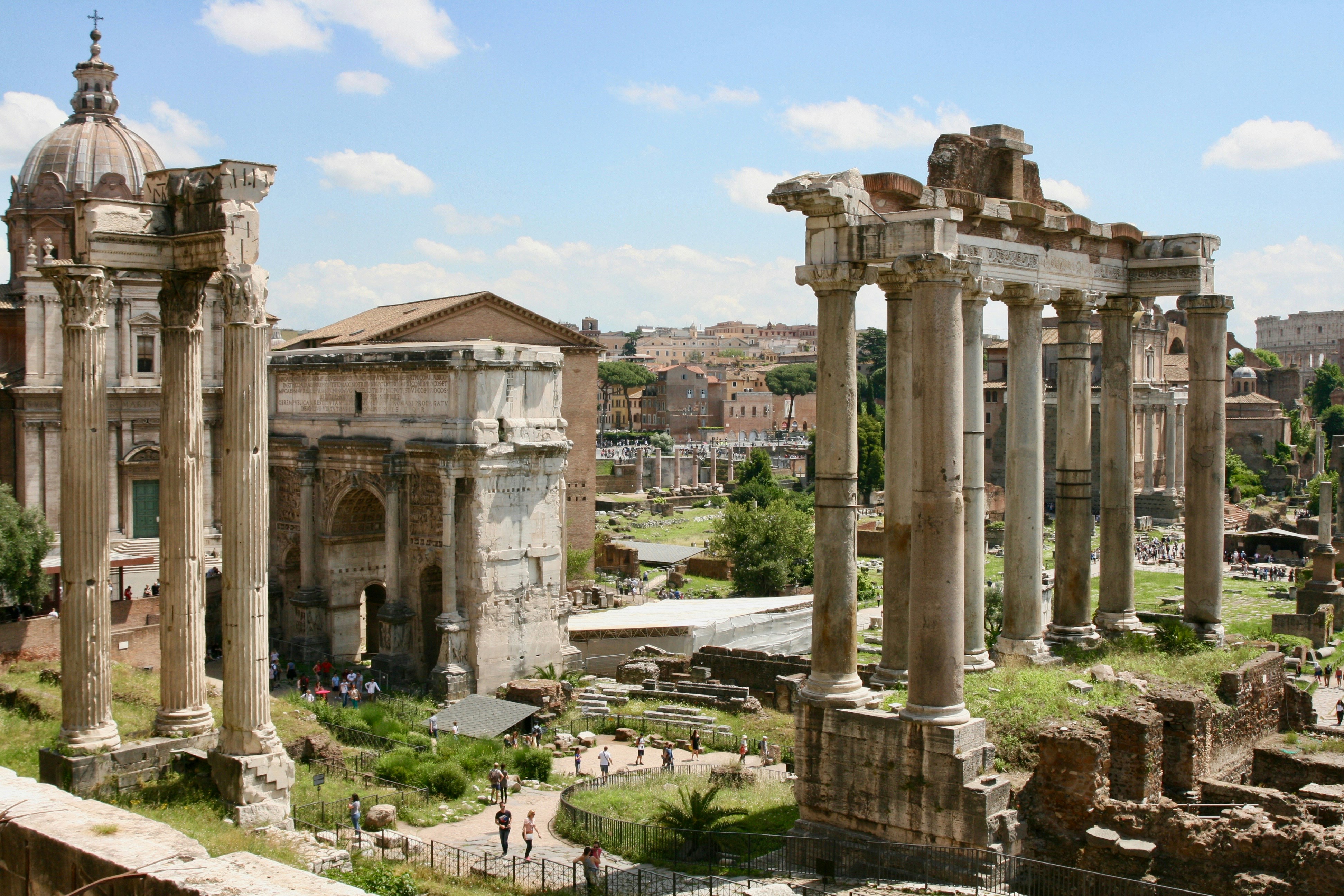
The Roman Forum was the beating heart of the ancient world. For more than a thousand years, this valley between the Palatine and Capitoline Hills served as the political, religious, legal, and commercial centre of first the Roman Republic and then the Roman Empire. Senators debated here in the shadow of temples. Emperors were deified on its stones. Julius Caesar was cremated in the Forum, and the ashes of his funeral pyre mark a spot that pilgrims still lay flowers on today. Walking through it now, among ruins that range from barely legible foundations to imposing arches and standing temple columns, is one of the most historically charged experiences in all of Europe. It requires patience, some prior knowledge, and a willingness to use your imagination, but the reward is a connection to the ancient world that no other site in Rome quite matches.
At a Glance
How Early to Book:
Book 1-2 days in advance. Online ticketing rarely sells out, but it will allow you to bypass the entry queues which may be quite long.
Best Times to Visit:
Right at opening around 9:00am will have the smallest crowds. Late afternoon an hour or so before close is another desirable window when there is shade.
Ticket price:
Between €18 and €24, depending on the ticket type.
Where to Book:
Landmark Address:
Do You Need to Book Roman Forum Tickets in Advance?
If visiting during the peak summer season, you should book a couple days in advance to avoid the long ticket office queues. During the offseason, getting a ticket ahead of time is more optional.
The Roman Forum is part of the Colosseum Archaeological Park (Parco Archeologico del Colosseo), managed by the same authority as the Colosseum. There is no standalone Roman Forum ticket sold separately from the rest of the park. Your entry covers the Roman Forum, Palatine Hill, and the Imperial Fora area. Whether or not you are also visiting the Colosseum determines which ticket type is right for you.
The ticket options in 2026:
Standard 24-Hour Combination Ticket (€18, most common choice): This is the ticket most visitors buy. It covers the Colosseum (with a timed entry slot), the Roman Forum, and Palatine Hill, valid for 24 hours from the time of your Colosseum entry. The Colosseum requires a specific timed slot, but the Roman Forum and Palatine Hill can be visited at any point during your 24-hour window without a set time slot.
Forum Pass SUPER (€18, if you have already seen the Colosseum, or want the Forum only): This ticket covers the Roman Forum, Palatine Hill, and the Imperial Fora, and crucially includes access to the SUPER sites (see below). It does not include the Colosseum. No timed slot is required. Bought online, it can be used any time within 30 days of purchase, but once you use it, it covers that one day only. It cannot be used on the free first Sunday of the month.
Full Experience tickets (from €24, for deep Colosseum access plus Forum): These more expensive tickets include the Colosseum arena floor or underground hypogeum, plus all SUPER sites and the Forum and Palatine Hill. They are valid for two consecutive days.
Concessions: EU citizens aged 18 until the day of their 25th birthday pay €2 on any of these tickets, and the same rate applies to citizens of some non-EU countries on a reciprocal basis. Under-18s enter free, though a ticket is still required.
Where to book: The official ticketing portal. Tickets go on sale 30 days before the date of the visit. During peak season (April to October), popular time slots for the Colosseum component of the combined ticket sell out weeks ahead. Third-party platforms (GetYourGuide, Tiqets, Viator) also carry tickets and are useful when the official site shows your preferred date as sold out, at a modest premium.
Free entry days: The first Sunday of every month is free admission to all sites in the Colosseum Archaeological Park, including the Roman Forum and Palatine Hill. Entry is also free on 25 April, 2 June, and 4 November. On these days, tickets must be collected at the ticket offices in order of arrival. Expect very large crowds.
The Roma Pass (both 48-hour and 72-hour versions) covers entry to the Colosseum and the Roman Forum and Palatine Hill as one of its free attraction slots, and is accepted at the site. A separate timed reservation for the Colosseum must be made after activating the pass. Book that reservation immediately, as slots fill quickly during peak season.
Do I need a timed slot for the Roman Forum specifically? No. Unlike the Colosseum, entry to the Roman Forum and Palatine Hill does not require a specific timed slot. You can enter at any point during opening hours on the day of your visit, provided you have a valid ticket. This flexibility is one of the practical advantages of the Forum over the Colosseum.
Roman Forum Opening Hours and Entry Information
The Roman Forum and Palatine Hill open daily at 9:00am. The Colosseum, on the same ticket, opens half an hour earlier at 8:30am. Closing times vary by season:
29 March to 30 September: closes 7:15pm, last admission 6:15pm
1 to 24 October: closes 6:30pm, last admission 5:30pm
25 October to 28 February: closes 4:30pm, last admission 3:30pm
Last admission is one hour before closing in every season.
The Roman Forum is closed on 1 January (New Year's Day) and 25 December (Christmas Day). It is open on all other days of the year, including all other public holidays.
Entrances: There are five ways into the Roman Forum and Palatine Hill complex, which is worth knowing because queues vary considerably between them. Two are the most useful for most visitors:
Largo della Salara Vecchia 5/6: The main Forum entrance, located along the Via dei Fori Imperiali between the Colosseum and Piazza Venezia. This is the entrance that drops you directly into the Forum ruins. Queues here are typically shorter than at the Colosseum.
Via di San Gregorio 30: The Palatine Hill entrance, on the road running south from the Colosseum. This entrance tends to have the fewest queues of any point in the entire archaeological park, making it an excellent choice if you want to avoid waiting. It also has a lift, making it the most accessible entry point for visitors with mobility needs or with pushchairs. Once through this entrance you can move freely between the Palatine Hill and the Roman Forum below.
The other three are the gate on the Via Sacra near the Arch of Titus, the passage at Via del Tulliano, and Via del Foro Romano. All are quieter than the Colosseum entrance.
Practical note: The ticket office at the Colosseum itself has the longest queues in the entire complex and is not recommended for purchasing tickets on the day. If you must buy at the gate, use the ticket kiosk at the Palatine Hill entrance on Via di San Gregorio instead.
What is the Best Way to Get to the Roman Forum?
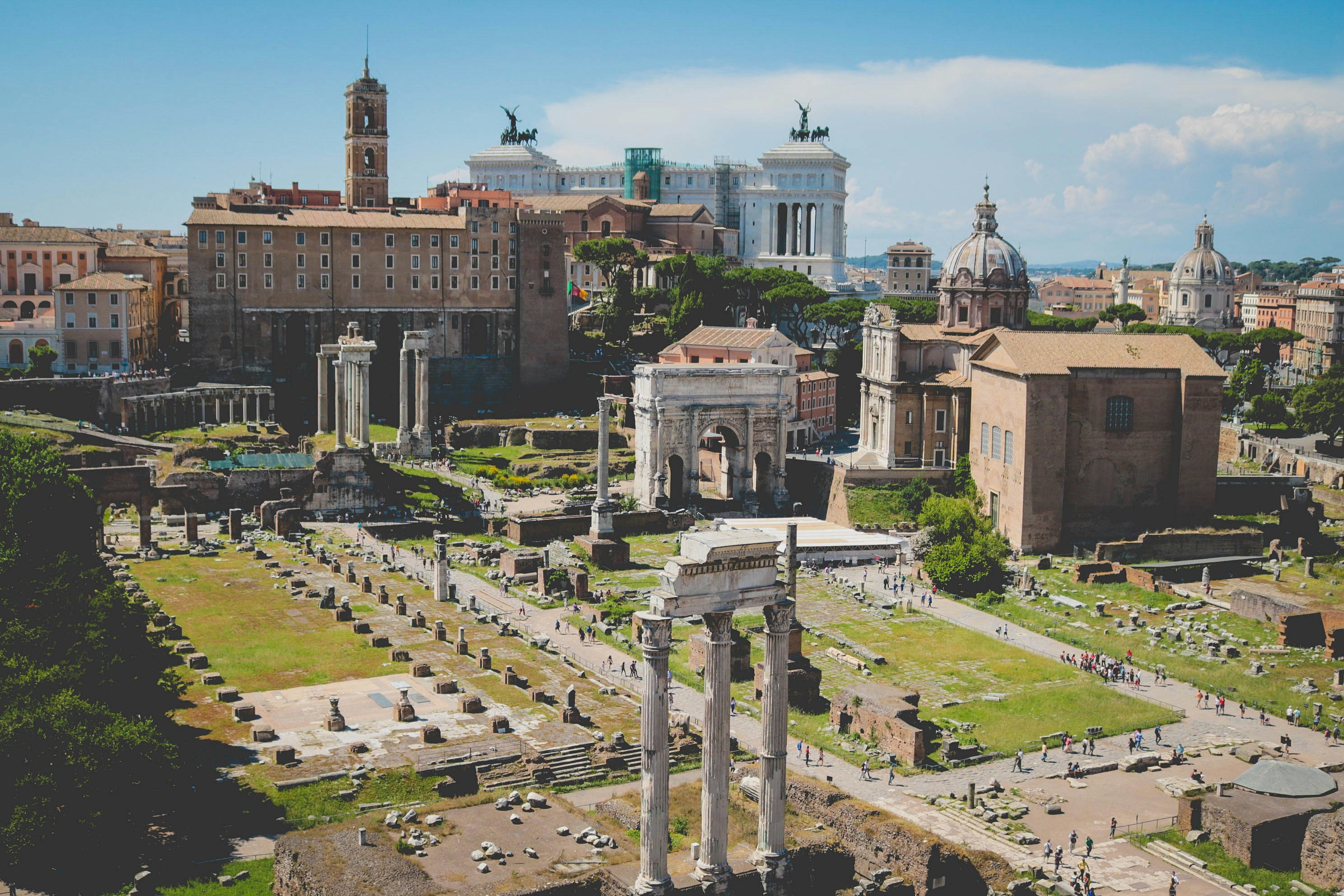
The Roman Forum sits at the centre of ancient Rome, between the Colosseum to the east and Piazza Venezia to the west. It is well connected from across the city.
By Metro: Colosseo (Line B) is the closest Metro station, a very short walk from the Forum entrances. This is the most direct public transport connection from most parts of Rome.
By bus: Several bus routes stop on Via dei Fori Imperiali or at Piazza Venezia, both within easy walking distance. Routes 51, 75, 85, and 87 serve the area, along with bus 40 and 64 from Termini station via Piazza Venezia.
On foot: The Forum is around a 25-minute walk from the Pantheon, 20 minutes from Piazza Navona, and 15 minutes from the Circus Maximus. The walk from Piazza Venezia along Via dei Fori Imperiali, with the Imperial Fora visible on both sides of the road, is one of Rome's great urban approaches and highly recommended.
Driving to the Roman Forum is not practical. The surrounding area is restricted traffic and parking is extremely limited. Public transport is far more efficient.
How Much Time Should I Spend at the Roman Forum?
The Roman Forum and Palatine Hill together are much larger than most first-time visitors expect. They form a single archaeological zone that can take three to five hours to explore thoroughly, even without the Colosseum.
A focused self-guided walk through the main monuments of the Roman Forum, following the Via Sacra from the Arch of Titus to the Arch of Septimius Severus and back, takes around 90 minutes to two hours. Adding a proper exploration of the Palatine Hill above, including the imperial palace ruins and the gardens with their views over the Forum and the Circus Maximus, adds another 60 to 90 minutes at minimum.
If you are visiting the SUPER sites (covered below), allow an additional hour or more on top of that, as some of the sites have timed entry or guided elements within them.
Pace matters at the Forum. This is not a traditional museum where objects are displayed with explanatory labels. The ruins require you to mentally reconstruct what once stood here, and the experience is significantly richer for those who arrive with some preparation, whether that is a guidebook, an audio guide, or a guided tour. Without any orientation, the Forum can feel like a confusing field of fragments. With it, the same space becomes one of the most extraordinary walks in the world.
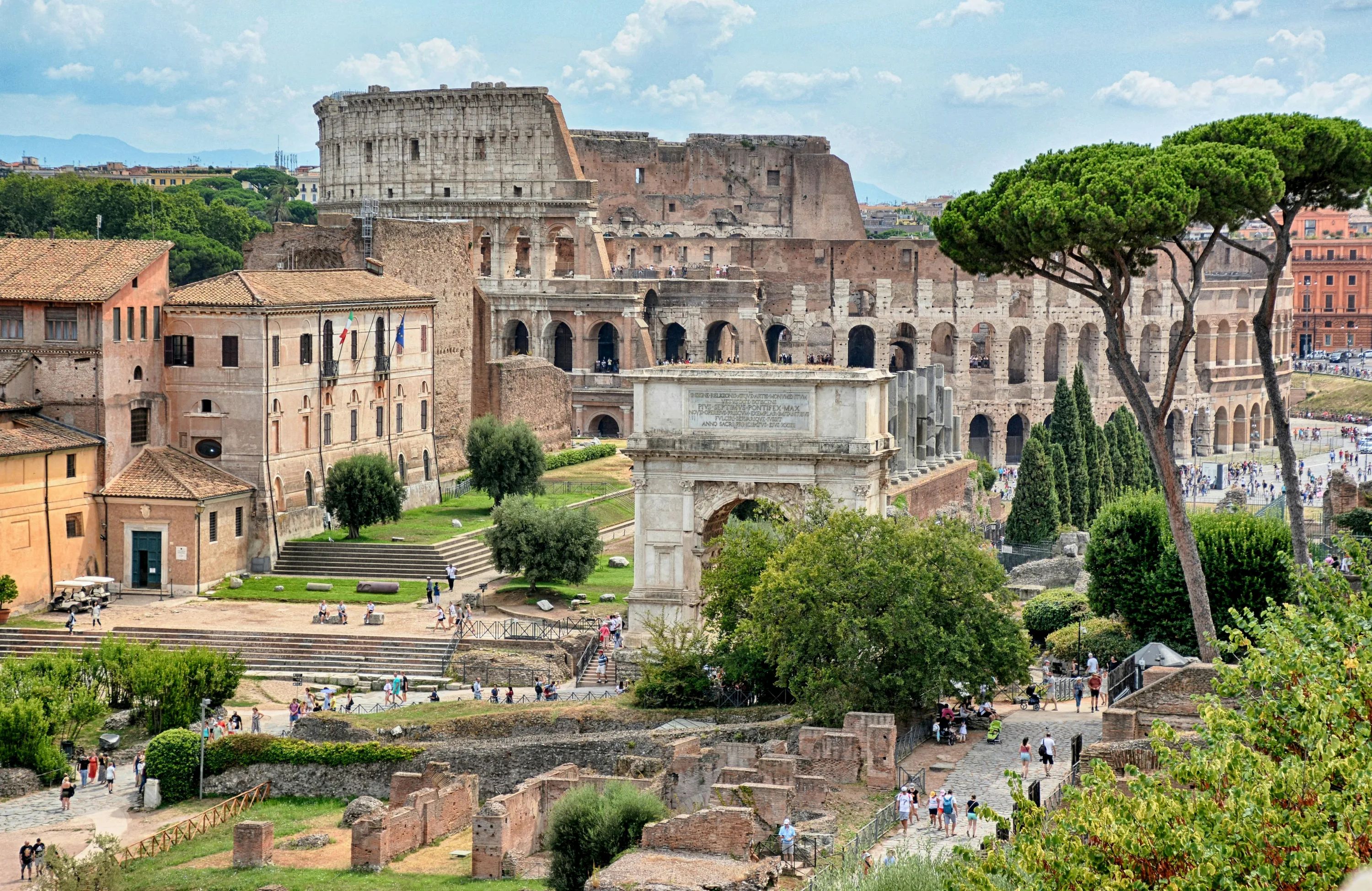
Besides politics, the Forum hosted brutal events. The Rostra (speaker's platform) was notoriously used to display the severed head and hands of Cicero. And following his assassination, Julius Caesar was cremated in the southeastern quarter of the Forum, where a temple was later built on the spot.
What is the Best Time to Visit the Roman Forum?
Best time of day: First thing at opening, 9:00am, is when the Forum is quietest. The site is vast and largely open-air, so early morning offers both the fewest crowds and, in summer, far more comfortable temperatures before the heat of the day sets in. Large tour groups typically arrive from 10:00am onwards.
The late afternoon, in the final hour or two before closing, is a second quieter window, and the quality of the light on the ancient stones at this time of day is exceptional.
Days of the week: Weekdays are significantly calmer than weekends. Saturday mornings in peak season can be very busy; Sunday is quieter at most times of year except on the free first-Sunday-of-the-month when the site fills rapidly.
Best season: Spring (March to May) and autumn (September and October) offer the best balance of pleasant weather and manageable crowds. Summer, particularly July and August, brings intense heat and large visitor numbers. The Forum is almost entirely exposed and offers very little shade; in summer, a hat, sunscreen, and water are not optional.
Winter (late October to February) sees notably fewer visitors and the site feels more atmospheric and peaceful. The 4:30pm closing across those months does require careful planning, and some SUPER sites run shorter hours, though the core Forum ruins are always accessible.
What is Inside the Roman Forum?
The Forum is an open-air archaeological zone covering around 4.5 hectares, traversed by the ancient Via Sacra (Sacred Way) that once carried triumphant processions from the Arch of Titus to the Capitoline Hill. What follows covers the most significant monuments you will encounter.
The Arch of Titus: Standing at the eastern end of the Forum, this triumphal arch was erected by Emperor Domitian in 81 AD to commemorate his brother Titus's destruction of Jerusalem in 70 AD. The interior reliefs, depicting Roman soldiers carrying the treasures of the Temple of Jerusalem including the great Menorah, are among the most historically significant sculptural images to survive from antiquity. Jewish tradition long held that Jews should not walk under the arch; after the founding of the State of Israel in 1948, many Jewish communities held ceremonies walking through it.
The Temple of Julius Caesar: A modest but profoundly significant altar marks the spot where Julius Caesar was cremated in 44 BC following his assassination on the Ides of March. People still lay flowers here. The temple, dedicated to the deified Caesar by his successor Augustus, established the precedent of imperial deification that would define the Roman state religion for centuries.
The House of the Vestal Virgins: The long, elegant courtyard flanked by headless statues once housed the Vestals, the priestesses whose sacred duty was to tend the eternal flame of Vesta. The Vestals served for 30 years from childhood, lived in considerable luxury by Roman standards, and held an elevated social position. The adjacent circular Temple of Vesta, with its distinctive round form, once sheltered that flame, which was never allowed to go out.
The Rostra: The curved stone platform from which Rome's greatest orators addressed the people of the city. The word "rostrum" derives from the bronze prows of enemy ships (rostra) that once decorated it as trophies. Mark Antony delivered his eulogy of Caesar here. The severed heads of political enemies were displayed on the Rostra on the orders of various dictators.
The Arch of Septimius Severus: At the western end of the Forum, this well-preserved triumphal arch dates to 203 AD and commemorates victories over the Parthians. The reliefs on its four faces are detailed, if damaged. It marks roughly the edge of the Forum's political heart, adjacent to the Rostra and the Curia Julia.
The Curia Julia (Senate House): One of the best-preserved buildings in the entire Forum, the Curia was the meeting place of the Roman Senate. The large brick building you see today dates primarily to 283 AD, a restoration after a fire, though it stands on the site of the Senate House commissioned by Julius Caesar. The interior, with its original marble floor and ancient speaker's platform, is accessible (it serves as a SUPER site). Standing inside, you are in the room where the fate of the Roman Empire was debated.
The Temple of Saturn: Eight granite Ionic columns rising dramatically at the foot of the Capitoline Hill are all that remain of one of Rome's oldest temples, dedicated to the god of agriculture and time. Founded in the early Republic, it was rebuilt several times. The Roman state treasury was once kept in its base. The surviving columns are among the most photographed images in the Forum.
The Temple of Antoninus and Faustina: Remarkably well preserved, this temple was converted into a church (now San Lorenzo in Miranda) in the medieval period, which is why its columns and porch have survived largely intact. The deep grooves cut by medieval ropes attempting to pull down the columns are still clearly visible, a reminder of how close the entire Forum came to destruction.
The Basilica of Maxentius: Just off the Via Sacra toward the Colosseum, these three enormous coffered vaults are the remains of one of the largest buildings ever constructed in ancient Rome. Even as ruins, they are staggering in scale. The building's engineering directly influenced Michelangelo's design for the dome of St Peter's Basilica.
Palatine Hill: The hill directly above the Roman Forum is included in every Forum ticket and is arguably as rewarding as the Forum below. This is where Rome was legendarily founded, where emperors built their palaces, and where wealthy Romans lived for centuries. The ruins of the Domus Flavia and Domus Augustana spread across the hilltop, and the Palatine Gardens (Orti Farnesiani) offer shaded terraces with spectacular views down into the Forum and across to the Capitoline Hill. On the south side of the Palatine, the view over the Circus Maximus is one of the great panoramas of ancient Rome.
The SUPER Sites: What Are They and Are They Worth It?
The SUPER sites (officially S.U.P.E.R.: Seven Unique Places to Experience Rome) are a curated selection of remarkable locations within the Roman Forum and Palatine Hill that go well beyond the standard ruins most visitors see. They include buildings, decorated rooms, and museums that are not accessible on a standard combined ticket.
SUPER site access is included in the Forum Pass SUPER (€18, no Colosseum) and in the Full Experience tickets. It is not included in the standard 24-hour combination ticket. A supplement to upgrade a standard ticket is sometimes available on the day, but it cannot be relied on, so if the SUPER sites matter to you, buy a ticket that includes them from the outset.
The key SUPER sites:
House of Augustus: The actual residence of Rome's first emperor is one of the most extraordinary archaeological experiences in Rome. Augustus lived here deliberately modestly by the standards of his successors, but the rooms are decorated with some of the finest surviving Roman frescoes anywhere in the world, including the Room of the Masks and the Room of the Pine Garlands, painted in vivid reds and blacks with architectural perspectives and theatrical motifs. Standing in a room where Augustus himself lived, surrounded by 2,000-year-old paint that has barely faded, is a profoundly moving experience. Closed on Mondays.
House of Livia: Adjacent to the House of Augustus and similarly decorated, this is associated with Augustus's wife Livia. The frescoes here feature mythological scenes, imaginary landscapes, and architectural illusions of exceptional quality. Entry is timed in small groups. Closed on Tuesdays.
Santa Maria Antiqua: Carved into the base of the Palatine Hill within the ruins of an earlier imperial building, this is one of the oldest Christian churches in Rome, decorated with Byzantine frescoes dating from the 6th to 9th centuries. It was buried by an earthquake and forgotten for centuries, which preserved its frescoes in exceptional condition. The combination of ancient Roman structure, early Christian function, and Byzantine art makes it unlike anything else on the site.
Domus Tiberiana: The vast palace built by Emperor Tiberius, Rome's second emperor, sits at the edge of the Palatine Hill. Recently opened to visitors, the monumental ramp (Domitian's Ramp) that once connected the imperial palaces to the Forum below is among the most impressive pieces of ancient engineering on the whole site.
Palatine Museum: Houses artefacts excavated from the Palatine Hill, including statues, frescoes, mosaics, and objects spanning from the Iron Age to the imperial period.
Aula Isiaca and Loggia Mattei: The Aula Isiaca is a chamber decorated with Egyptian-influenced frescoes from the Augustan period, reflecting the cult of Isis that was popular among Rome's elite. The Loggia Mattei above it is a Renaissance addition, frescoed in the 16th century, and the two are visited together as a single stop.
Horrea Piperataria: The remains of the ancient spice and pepper warehouses beneath the Basilica of Maxentius, opened to visitors relatively recently. It closes earlier than the other SUPER sites, so visit it first if it is on your list.
Are the SUPER sites worth the additional cost? For visitors with a strong interest in Roman history and art, the Houses of Augustus and Livia alone are worth the extra ticket. These are places that most visitors to Rome never reach, and the experience of seeing those frescoes in context is qualitatively different from the open Forum ruins. For visitors on a tighter schedule or with more casual interest in the archaeology, the standard sites are more than sufficient.
Important: Some SUPER sites have specific opening days and close on certain weekdays. Check the official calendar for the current schedule before building your itinerary around any specific site.

Guided Tours and Audio Guides of the Roman Forum
Audio guides are available through the free MyColosseum app (iOS and Android), the official app of the Colosseum Archaeological Park, which covers the Roman Forum and Palatine Hill as well as the Colosseum. It is included with all tickets. Download it before your visit rather than trying to access it inside, where connectivity can be unreliable. An audio guide makes a significant practical difference at the Roman Forum: unlike a conventional museum, the site has very limited explanatory signage among the ruins, and without some form of commentary it can be difficult to understand what you are looking at.
Guided tours covering the Roman Forum and Palatine Hill are widely available through licensed operators and range from small group tours to private experiences. A good guided tour of the Forum and Palatine Hill typically runs two to three hours. The best guides are licensed archaeologists or classicists who can bring the daily life of the Roman Republic and Empire alive in the spaces where it actually happened.
If you are also visiting the Colosseum on the same trip, many operators offer combined tours of all three sites in a single session, which can be a very efficient way to cover a lot of ground in one day.
The Imperial Fora: The area also includes the Imperial Fora of Caesar, Augustus, Nerva, and Trajan (including Trajan's Column), located along Via dei Fori Imperiali. These are partly visible from the road and partly accessible through the archaeological park. They are included in your Forum ticket and are often covered by guided tours combining all the ancient Roman sites in this area.
Is the Roman Forum Worth Visiting?
The Roman Forum is not a polished attraction with helpful displays and guided routes. It is an archaeological site, largely in ruins, exposed to the elements, and requiring you to do some mental work to understand what you are seeing.
For visitors who arrive knowing at least something about Roman history, or who invest in a guide or audio commentary, the Forum is one of the most memorable places in Europe. Walking the Via Sacra, standing at the spot where Caesar was cremated, looking up at columns that have stood for the better part of two thousand years: these are experiences that printed photographs cannot replicate.
For visitors with no particular interest in ancient history and no preparation, the Forum can feel like a confusing and hot walk among broken stones. It depends almost entirely on what you bring to it.
Where Should I Eat Near the Roman Forum?
The area immediately around the Colosseum and the Forum entrance on Via dei Fori Imperiali is saturated with overpriced tourist restaurants. The advice that applies to every major monument in Rome applies here with particular force: do not eat on the tourist strip.
The most practical and rewarding strategy is to walk slightly away from the archaeological zone before stopping to eat.
For a Roman meal:
The Testaccio neighbourhood, around 20 minutes on foot south of the Forum (or a short Metro ride from Colosseo to Circo Massimo), is one of Rome's most food-focused residential areas. It is where Rome's working-class culinary traditions are most intact: offal dishes, proper pasta, and local wine at honest prices. The Testaccio market hall is an excellent place to graze and pick up lunch provisions.
Viale Aventino, the long avenue connecting Circo Massimo to the Ostiense district, runs south from the Circus Maximus and is lined with bars and restaurants popular with local professionals and UN Food and Agriculture Organisation staff (the FAO building is here). The restaurants here are notably better value than anything near the Forum entrance.
Near Piazza Venezia (approaching from the Forum's western end): Piazza Venezia itself is tourist territory, but the streets heading north into the historic centre contain better options. The Campo de' Fiori area is 15 minutes on foot and has a daily morning market and a dense cluster of restaurants and wine bars for lunch and dinner.
What Else is There to Do Near the Roman Forum?
The Roman Forum sits within the most extraordinary concentration of ancient monuments in the world. The following are all within easy walking distance.
The Capitoline Hill and Capitoline Museums: Directly adjacent to the western end of the Forum, the Capitoline Hill is Rome's civic heart and the site of the Campidoglio, the square designed by Michelangelo and flanked by two buildings housing the Capitoline Museums. These are the oldest public museums in the world, with exceptional collections of ancient Roman sculpture including the original bronze equestrian statue of Marcus Aurelius, the She-Wolf of Rome, and the Dying Gaul. There are also extraordinary views down into the Roman Forum from the viewing terraces at the edge of the hill. Advance booking is recommended for the museums.
The Circus Maximus: The vast oval racetrack where Roman chariot races were held is just south of the Palatine Hill and clearly visible from its terraces. The earthen racetrack is now a public park and free to enter. It gives a useful sense of the scale on which Roman public entertainment operated.
Palatine Hill (included with Forum ticket): Worth emphasising again as a separate experience from the Forum ruins below. The hilltop gardens, the views, and the palace remains here reward at least 60 to 90 minutes of careful exploration.
The Arch of Constantine: Between the Forum entrance and the Colosseum, this is the largest triumphal arch in Rome, erected in 315 AD to celebrate Constantine's victory in the civil war that made him sole emperor. It is free to view and highly photogenic alongside the Colosseum.
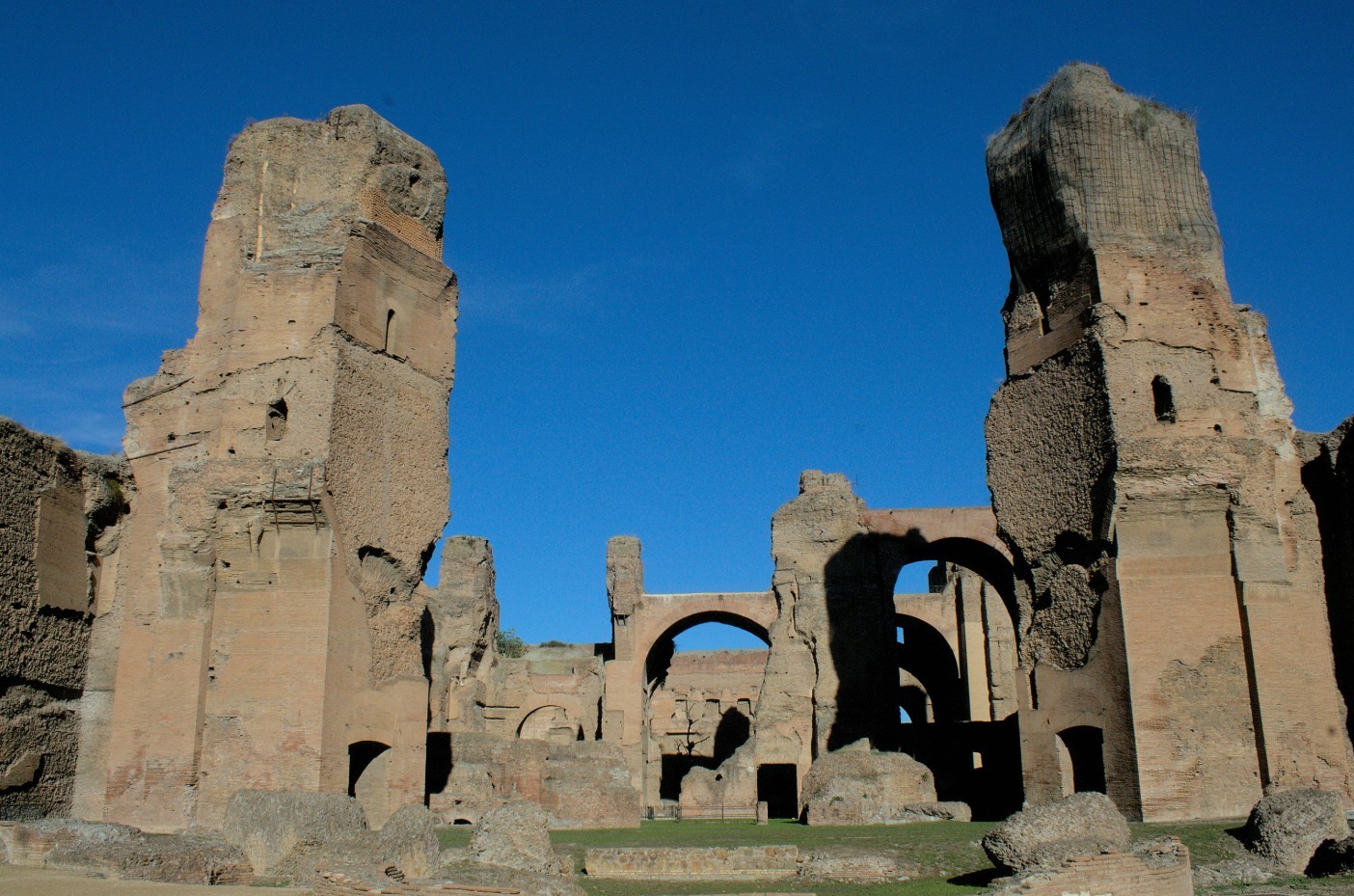
The Baths of Caracalla: Around 20 minutes south on foot from the Circus Maximus, these are among the best-preserved ancient Roman bath complexes in existence. Three massive vaulted halls once formed the central bathing suite of a complex that could accommodate 1,600 bathers simultaneously.
The Palatine Museum's view terrace: Free to access for Forum ticket holders, the terrace on the south edge of the Palatine Hill provides some of the finest views in Rome, looking south over the Circus Maximus toward the Aventine Hill. Allow time for this.
Rules, Bags, and Security
All visitors pass through a security check at whichever entrance they use, including bag X-ray and metal detectors. Allow 10 to 20 minutes for this at busy times.
Bags: No specific size restriction applies at the Forum entrances, but large rolling luggage and oversized bags should be deposited elsewhere before visiting. There is no left luggage facility at the Forum itself.
Water: The Forum and Palatine Hill are extensive outdoor sites with very limited shade. Bring a refillable bottle, especially in summer. Rome's drinking fountains (nasoni) provide free, drinkable water and there are some within the archaeological park, though they are sparse across a site this size, so filling up before you enter is the safer plan.
Photography: Permitted throughout the site without restriction. Tripods require advance permission. Drone photography is not permitted.
Dogs: Small dogs (5 to 10kg) in appropriate carriers are permitted in the open-air areas of the Roman Forum and Palatine Hill. Dogs are not permitted in any closed areas or in the SUPER sites.
Accessibility at the Roman Forum
The Roman Forum and Palatine Hill are a challenging site for visitors with significant mobility impairments, given the uneven ancient paving, gradients, and extensive distances involved. However, reasonable provision exists:
The Via di San Gregorio entrance (Palatine Hill side) has a lift, making it the most accessible point of entry. This entrance is strongly recommended for visitors with wheelchairs, pushchairs, or limited mobility.
Lifts and ramps provide access to parts of the Palatine Hill. Some areas of the Forum and Palatine are not fully accessible due to the nature of the ancient terrain and ongoing conservation constraints.
Visitors with a documented disability receive free entry, along with a family member or other accompanying person able to show they provide care. Appropriate documentation must be presented at the entrance. This concession is not restricted by nationality.
Loan wheelchairs may be available at the main entrances, though availability is not guaranteed. If you rely on one, bring your own or contact the park in advance.
Final Tips for Visiting the Roman Forum
Book your ticket online before you go. The standard combined ticket (with Colosseum) requires a timed slot for the Colosseum, and peak-season slots sell out weeks ahead. The Roman Forum itself has flexible entry, but you need the ticket in advance.
Use the Palatine Hill entrance on Via di San Gregorio rather than the Colosseum ticket kiosk. It has the shortest queues in the entire archaeological park and a lift for accessibility.
Arrive at 9:00am at opening. The Forum is at its quietest and coolest in the first hour of the day.
Bring water. The site is largely exposed, especially on the Palatine Hill. In summer, dehydration is a real risk. Fill up at a Roman drinking fountain (nasoni) before entering.
Wear comfortable, closed shoes. The ancient paving is uneven and slippery in places. Sandals and heels are poor choices.
Get an audio guide or do some reading beforehand. The Forum has very limited on-site interpretation. Without some context, it can feel like a confusing field of rubble. With it, the same space becomes one of the most remarkable walks in the world.
The Forum and Palatine Hill are one ticket, two experiences. Do not rush through the Forum to get to the Palatine or vice versa. Give yourself time for both.
The SUPER sites need a ticket that includes them. If the House of Augustus is a priority for you, buy the Forum Pass SUPER or a Full Experience ticket. Upgrading a standard ticket on the day is sometimes possible but not something to count on. The Houses of Augustus and Livia are extraordinary and relatively uncrowded.
The first Sunday of the month is free but very crowded. If you choose a free Sunday, arrive right at 9:00am opening to collect your free ticket before the queues build. Note that the Forum Pass SUPER cannot be used on free Sundays.
Do not eat on Via dei Fori Imperiali or directly around the Colosseum. Walk south to Testaccio or west to the historic centre for significantly better food at lower prices.
Combine with the Capitoline Museums for a full day of ancient Rome. The museums contain many of the sculptures and artefacts that once stood in the Forum, giving crucial context to the ruins below.
Back to Rome Attractions
Explore other Rome attractions
" width="24px"><path d="M 0 0 L 24 0 L 24 21.231 L 0 21.231 Z" fill="transparent" height="21.230768474975793px" id="nL2EwDcS9" width="24px"/><path d="M 0 0.541 C 0 0.242 0.245 0 0.547 0 L 2.735 0 C 3.037 0 3.282 0.242 3.282 0.541 L 3.282 4.598 C 3.282 4.897 3.037 5.139 2.735 5.139 L 0.547 5.139 C 0.245 5.139 0 4.897 0 4.598 Z" fill="rgb(196, 217, 201)" height="5.138657337892187px" id="hZ_rlBe_S" transform="translate(0 16.092)" width="3.2820512820512358px"/><path d="M 0 0.541 C 0 0.242 0.245 0 0.547 0 L 2.735 0 C 3.037 0 3.282 0.242 3.282 0.541 L 3.282 7.843 C 3.282 8.142 3.037 8.384 2.735 8.384 L 0.547 8.384 C 0.245 8.384 0 8.142 0 7.843 Z" fill="rgb(230, 211, 160)" height="8.38412513024521px" id="HgVBxIz3e" transform="translate(5.128 12.847)" width="3.282051282051235px"/><path d="M 0 0.541 C 0 0.242 0.245 0 0.547 0 L 2.735 0 C 3.037 0 3.282 0.242 3.282 0.541 L 3.282 12.982 C 3.282 13.281 3.037 13.523 2.735 13.523 L 0.547 13.523 C 0.245 13.523 0 13.281 0 12.982 Z" fill="rgb(232, 207, 164)" height="13.522782468137464px" id="utgrDnoM9" transform="translate(10.325 7.708)" width="3.282051282051377px"/><path d="M 0 0.541 C 0 0.242 0.245 0 0.547 0 L 2.735 0 C 3.037 0 3.282 0.242 3.282 0.541 L 3.282 16.498 C 3.282 16.797 3.037 17.039 2.735 17.039 L 0.547 17.039 C 0.245 17.039 0 16.797 0 16.498 Z" fill="rgb(233, 196, 166)" height="17.038705909853153px" id="OLOhW6STz" transform="translate(15.521 4.192)" width="3.2820512820512384px"/><path d="M 0 0.541 C 0 0.242 0.245 0 0.547 0 L 2.735 0 C 3.037 0 3.282 0.242 3.282 0.541 L 3.282 20.69 C 3.282 20.989 3.037 21.231 2.735 21.231 L 0.547 21.231 C 0.245 21.231 0 20.989 0 20.69 Z" fill="rgb(217, 170, 153)" height="21.230768474975793px" id="H5Z8wcwkd" transform="translate(20.718 0)" width="3.2820512820512278px"/></g></svg>)