Amsterdam • Waterlooplein / Jewish Quarter
Book 1-3 Days Ahead
Peak Season
No Booking Needed
Off-Season
Back to Amsterdam Attractions
Rembrandt House Museum Amsterdam: Everything You Need to Know Before You Visit
Updated September 2026
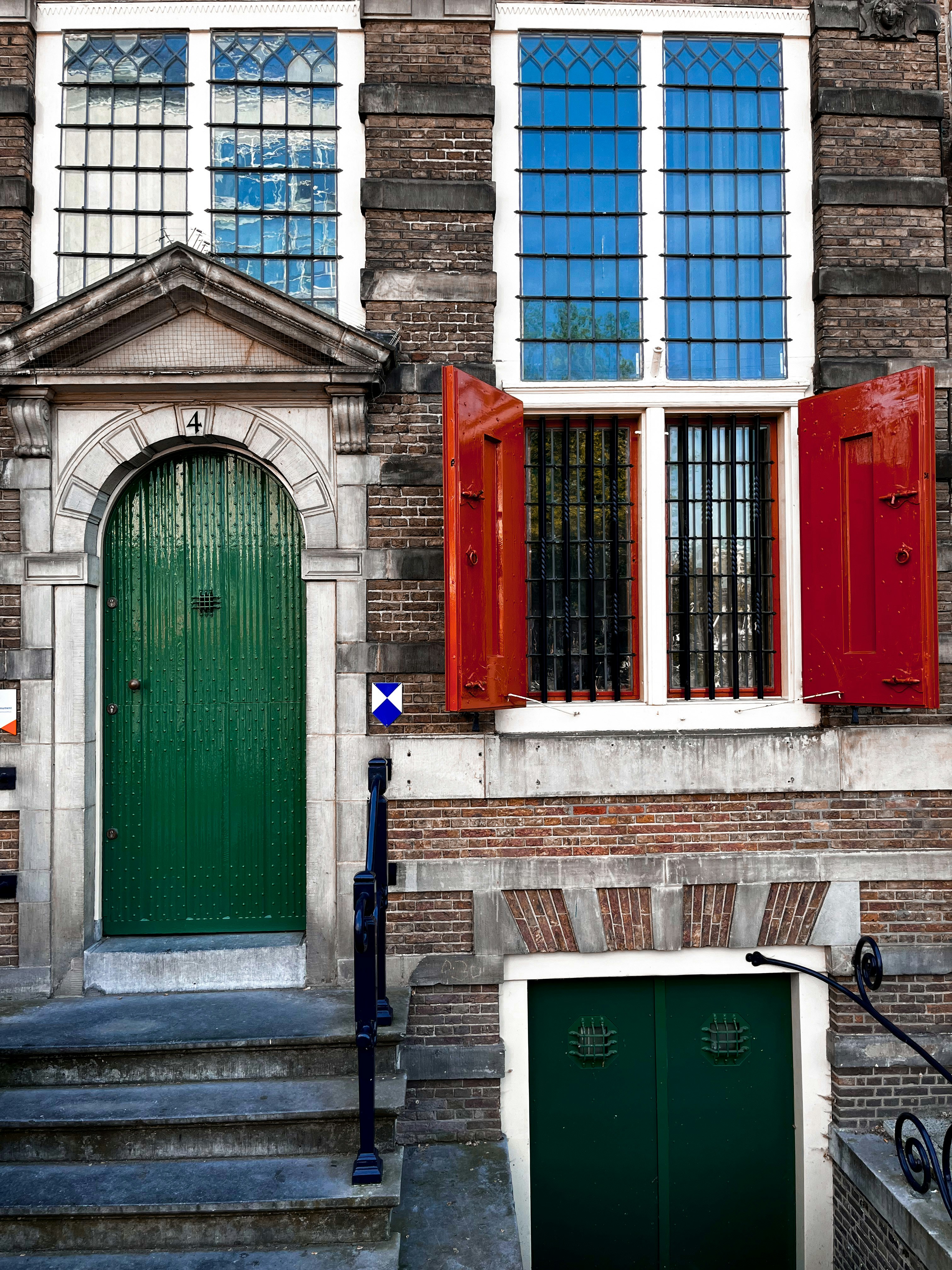
The Rembrandt House Museum occupies the actual house Rembrandt van Rijn bought in 1639, at the height of his fame, and lived in for nearly twenty years. This is where he painted some of his most significant work, ran a busy studio with paying pupils, dealt art to wealthy clients, and built up the extravagant collection of curiosities that eventually helped bankrupt him. The house was restored to its 17th-century appearance using a detailed inventory drawn up when Rembrandt's possessions were seized and sold, which means the rooms you walk through are reconstructed with real documentary evidence of what stood where. Unlike the Rijksmuseum, this is not a museum built around major paintings: it is a museum built around a life, told through the rooms Rembrandt actually occupied, his collection of etchings, and live demonstrations of the techniques he used. It is one of the more intimate experiences Amsterdam's museum scene has to offer, and considerably less crowded than the city's headline attractions.
At a Glance
How Early to Book:
Book a timed entry ticket 1-2 days ahead for quick entry into the Rembrandt House Museum. Same-day tickets are also available at the on-site ticket office, but lines may be long on weekends during peak season.
Best Times to Visit:
Mornings at 10am are consistently the quietest, while the 4pm-6pm period is also calmer and comes with a modest discount. The live demonstrations finish by 3:30pm, so the off-peak slot will miss them.
Ticket price:
€23.50 for adults, €19.50 after 4pm.
Where to Book:
Museum Address:
Do You Need to Book Rembrandt House Museum Tickets in Advance?
Booking online is recommended but not strictly required. Tickets can be purchased at the register inside the museum on arrival, subject to availability, with payment by debit card only. However, the museum sells tickets with a start time, and the official advice is to book online to be sure of getting in on the day and time you want. This matters more on weekends, during Dutch and international school holidays, and in the summer months, when the museum's relatively small size means it can sell out a particular time slot well before closing.
If you are visiting on a quiet weekday outside peak season, walking up and buying at the register is a sure-fire option. If your schedule is tight or you are visiting in summer, on a weekend, or want a specific time, book ahead through the official site.
Where to book: The official ticketing platform is rembrandthuis.nl.
Ticket prices (2026):
Adults: €23.50
Adults, off-peak hours 4pm to 6pm: €19.50
Youth up to 25: €15 (off-peak 4pm to 6pm: €11)
CJP / ISIC card: €15 (off-peak 4pm to 6pm: €11)
Children aged 6 to 17: €8
Children under 6: Free
Museum cards and passes:
Museumkaart: Free entry, with a timed ticket still recommended
I amsterdam City Card: Free entry, with a timed ticket still recommended
ICOM: Free entry
BGL VIP Card: Free entry
Friends of the Museum and Rembrandt Huysgenoten: Free entry, no timed ticket needed
Rembrandtkaart (Vereniging Rembrandt): Free entry
Even with a free card, booking a timed ticket online in advance is advised so you can be certain of a specific entry slot, with the exception of Friends of the Museum and Rembrandt Huysgenoten, who can walk straight in.
Cancellations: Paid tickets cannot be cancelled or refunded once booked, but they can be rebooked free of charge to a different date through the museum's self-service ticket tool. Choose your date carefully when purchasing.
The off-peak discount is worth knowing about: arriving between 4pm and 6pm saves €4 on the standard adult ticket, and the museum is also typically quieter in this window since most day-trip itineraries are wrapping up by then.
All ticket prices include the museum's multimedia tour, available in 15 languages.
Rembrandt House Museum Opening Hours
Standard hours: Open daily from 10am. Closing is at 6pm for most of the year, drops to 5pm for a winter stretch running from early November to mid-December, then returns to 6pm over Christmas and New Year. The museum publishes exact changeover dates a year at a time, so check the official opening hours page if your trip falls near one.
Remainder of 2026:
Until 1 November: 10am to 6pm
2 November to 18 December: 10am to 5pm
19 to 31 December: 10am to 6pm
2027:
1 to 3 January: 10am to 6pm
4 January to 12 February: 10am to 5pm
13 February to 31 October: 10am to 6pm
1 November to 17 December: 10am to 5pm
18 to 31 December: 10am to 6pm
Closed: Christmas Day (25 December), King's Day (27 April), and Thursday 7 January 2027.
Reduced hours: Christmas Eve and New Year's Eve, closing at 5pm.
Address: Jodenbreestraat 4, 1011 NK Amsterdam, in the Waterlooplein area at the edge of the old Jewish Quarter.

What is the Best Way to Get to the Rembrandt House Museum?
The museum sits in central Amsterdam, close to Waterlooplein and within easy walking distance of Dam Square and Nieuwmarkt.
By tram: Tram 14 stops at Waterlooplein, three to four minutes' walk from the museum entrance. This is the most direct route from most parts of the city centre.
By metro: Waterlooplein station, served by metro lines 51, 53, and 54, is a few minutes' walk away and a fast connection from Amsterdam Centraal Station or the south of the city.
On foot from Centraal Station: A flat 15 to 20 minute walk through the old city centre, passing Nieuwmarkt and the edge of the Red Light District.
By car: The museum has no parking of its own. The nearest car parks are Waterlooplein, Muziektheater/Stadhuis, and Valkenburgerstraat, all a short walk away, though central Amsterdam parking is expensive and public transport is the more practical option.
By ferry: A Cultuur ferry runs from Amsterdam Centraal every 30 minutes, which is a pleasant alternative to the metro if you are not in a hurry.
How Much Time Should I Spend at the Rembrandt House Museum?
The museum is compact, and you can see everything in about 60 to 90 minutes. This is enough time to work through the multimedia tour at a normal pace and watch one of the live demonstrations if the timing lines up.
If you have a strong interest in art history or want to read every panel and watch both the etching and pigment demonstrations, two to three hours allows for a much deeper visit.
Because the rooms are small and the route is single-file in places, visiting outside the busiest hours makes a noticeable difference to how much time you can spend lingering in any one room without feeling rushed by other visitors behind you.
Image Credit: bertknot, CC BY-SA 2.0

The Rembrandt House Museum in Amsterdam is the restored 17th-century home and studio where the Dutch master lived and worked from 1639 to 1658. It is the only museum worldwide entirely dedicated to Rembrandt and houses an almost complete collection of his iconic etchings.
What is the Best Time to Visit the Rembrandt House Museum?
Right at opening, 10am, is the quietest period of the day, before tour groups and the day's main wave of visitors arrive. Given how small the rooms are, getting ahead of the crowds matters more here than at larger museums where visitor numbers spread out across more space.
The 4pm to 6pm off-peak window is the other strong option, and comes with a built-in incentive: tickets are €4 cheaper in this slot, and it also tends to be quieter as most visitors plan museum visits for the morning or early afternoon.
Crowding here is less about season and more about time of day and tour groups. The museum stays fairly busy year-round rather than having a sharply defined low season, though September, October, and February tend to be calmer months if you have flexibility. Weekday visits are typically calmer than weekends regardless of season.
What is Inside the Rembrandt House Museum?
The tour follows a single route through the historic house, supplemented by a separate modern wing next door used for temporary exhibitions.
The kitchen and ground floor: The tour begins in the kitchen, the heart of the household, before moving into the so-called front house: a grand entrance hall decorated with marble, paintings, and fine furniture, where Rembrandt received clients and conducted business. A box-bed of the kind common in 17th-century Dutch homes, where people slept in a seated position, is on display here, along with the side room where Rembrandt dealt in art by Dutch, Flemish, and Italian painters.
The Hall: Widely considered the finest room in the house, decorated to reflect the wealth and status Rembrandt projected at the height of his career, in stark contrast to the financial trouble that would later force him out.
The studio: Upstairs, lit by large north-facing windows for consistent daylight, this is where Rembrandt painted, taught his pupils, and developed the dramatic use of light and shadow, chiaroscuro, that defines his work. The room is laid out with period easels, palettes, and brushes, recreating the working space as closely as the historical record allows.
The Cabinet of Curiosities: Known as the Kunstkaemer in Dutch, this room held Rembrandt's personal collection of objects: classical busts, shells, weapons, exotic specimens, and even a taxidermy crocodile, all of which he used as study material and props for his paintings and etchings. It is a vivid window into the obsessive, eclectic collecting habit that was as much a part of Rembrandt's identity as his painting, and one of the contributing factors in the debt that eventually forced him to sell the house.
The etching attic: Added during the museum's 2023 expansion, this space is dedicated to Rembrandt's printmaking, displaying original copper plates, acids, and the tools of the etching process: drypoint needles, burins, and scrapers. Rembrandt is widely credited with elevating etching from a minor craft to a serious independent art form, and the works on display, including self-portraits, biblical scenes, and everyday moments, show a different side of his output than the paintings most visitors associate with his name.
Live demonstrations: The etching and paint-pigment demonstrations are one of the museum's signature features. A costumed museum guide shows how Rembrandt would have ground pigments and mixed paint, or operates a reconstructed printing press to produce an etching using the same techniques Rembrandt used. Demonstrations run between 10:30am and 3:30pm, with exact times posted at the museum on arrival, and no booking is needed. That window is worth knowing before you pick a time slot: the cheaper 4pm to 6pm entry falls after the demonstrations have finished, so come in the morning or early afternoon if you want to catch one.
The modern wing: A separate building next door houses temporary exhibitions, drawn primarily from the museum's collection of Rembrandt's drawings and etchings, since the museum holds very few of his paintings. Exhibitions rotate regularly and often focus on specific themes, such as Rembrandt's pupils or particular periods of his working life. Two or three usually run at once, and the museum's exhibitions page lists what is on during your dates.
Is the Rembrandt House Museum Worth Visiting?
For anyone with an interest in Rembrandt, the Dutch Golden Age, or how a 17th-century artist's studio actually functioned, yes, and the intimacy of the experience is precisely what makes it worthwhile. Unlike the Rijksmuseum, where Rembrandt's most famous paintings hang among thousands of other works, this museum gives you his actual physical environment: the rooms, the light, the studio where the work happened. The live demonstrations bring a tactile, hands-on element that larger museums rarely attempt.
It is worth setting expectations before visiting, though. This is not a museum built around major paintings: the collection is overwhelmingly etchings and drawings, supplemented by works from Rembrandt's teachers, students, and contemporaries, not his own canvases. Visitors expecting to see paintings on the scale of the Rijksmuseum's Gallery of Honour will be disappointed; this is a different kind of experience, built around atmosphere and biography rather than masterworks. The house has also been heavily restored, and it shows: some visitors find the result feels a little too polished and modern compared with what an actually lived-in 17th-century interior might convey.
The compact size cuts both ways. It makes the museum manageable in an hour, which suits travellers juggling a packed itinerary, but it also means rooms can feel crowded quickly when a tour group or school group passes through, since there is limited space to spread out. Visiting at opening or during the 4pm to 6pm window noticeably improves the experience for this reason.
Families tend to do well here. The multimedia tour has a dedicated children's version, the demonstrations hold younger visitors' attention better than static paintings would, and the house's domestic scale, kitchen, bedroom, studio, makes Rembrandt's life feel concrete rather than abstract for kids who might otherwise find a traditional art museum hard going.
Audio Guide and Tours at the Rembrandt House Museum
Every ticket includes the museum's multimedia tour at no extra cost, available in 15 languages plus Dutch sign language: Dutch, English, German, French, Italian, Portuguese, Russian, Spanish, Japanese, Korean, Mandarin Chinese, Hebrew, Modern Standard Arabic, Ukrainian, and Turkish. A separate children's version of the tour, built around a guide character, is also available and well suited to younger visitors who might find the standard narration too dense.
Both tours can be accessed at home in advance by scanning a QR code on the museum's website, which is a useful way to prepare with children before arriving, or to revisit the story afterwards.
The museum does not offer staff-led guided tours for individual visitors, but the live etching and pigment-preparation demonstrations function as a kind of guided experience built into the visit itself, run by costumed museum staff at scheduled times through the day.
Two hands-on options are worth knowing about if you have time. A free drawing studio on the third floor of the exhibition wing provides tables, materials and simple instructions, suits anyone aged 6 and up, and is open throughout the day. The museum also runs a paid workshop, Etching at Rembrandt's Home, where you try the drypoint technique and print two etchings to take away. It costs €12.50 on top of your entry ticket and needs booking ahead.
Where Should I Eat Near the Rembrandt House Museum?
Rembrandt Corner, next door to the museum at Jodenbreestraat 2, is the most convenient option, serving modern Dutch cooking for breakfast, lunch, and dinner with a sunny canal-side terrace, and staying open until 10pm on weekdays and 11pm on Fridays and Saturdays. It is unmistakably aimed at museum visitors, but the location and food both deliver, and it is hard to beat for sheer convenience if you want to eat immediately before or after your visit.
Soup en Zo, a few minutes' walk away on Jodenbreestraat, is a simple, reliably good lunch spot with a menu that changes daily and carries at least eight soup varieties, plus salads and quiches. Most of the menu is vegetarian or vegan, and the meat, eggs, cheese, and spices are organic. It is the kind of unfussy, fast option that works well between museum visits without committing to a sit-down meal.
MOAK Pancakes City Center, directly across the street from the museum, serves generously stacked American-style pancakes in sweet and savoury versions, with vegan and halal options, and is a good choice if you are travelling with children. One catch: it closes at 3:30pm and takes walk-ins only, so it does not pair with a late-afternoon visit.
A short walk further, Waterlooplein itself has a daily flea market and a scattering of casual food stalls, while Nieuwmarkt, ten minutes north, has a denser concentration of cafés and restaurants spanning everything from traditional Dutch brown cafés to Chinese restaurants in the adjoining Chinatown district.
What Else is There to Do Near the Rembrandt House Museum?
Waterlooplein Market, immediately next to the museum, is Amsterdam's oldest flea market, running daily except Sunday, with stalls selling vintage clothing, antiques, vinyl, and bric-a-brac. It is worth a browse even if you are not buying, and pairs naturally with a museum visit given the proximity.
The Portuguese Synagogue, a five-minute walk away, is one of the best-preserved 17th-century synagogues in the world, built in 1675, and forms part of the Jewish Cultural Quarter that also includes the Jewish Historical Museum nearby. The contrast between its grand, candlelit stillness and the Rembrandt House's domestic intimacy makes a thoughtful pairing for visitors interested in Amsterdam's Golden Age history more broadly.
Nieuwmarkt and the Red Light District, ten to fifteen minutes on foot, offer one of Amsterdam's oldest neighbourhoods, anchored by the medieval Waag building, now a café and restaurant.
Artis Royal Zoo, around a 15-minute walk through the Plantage neighbourhood, is a great next stop for families, particularly if children need a change of pace after the more contemplative Rembrandt House experience.
Dam Square and the Royal Palace, a 15-minute walk in the other direction, anchor the more touristy centre of the city if your itinerary includes the major landmarks.
Bags, Rules, and Security
Bags: Large bags and suitcases are not permitted inside the museum. A cloakroom is available for storing coats and bags during your visit.
Photography: Photography for personal use is generally permitted inside the museum, though flash photography is discouraged to protect the historic interiors and artworks. Some temporary exhibitions may carry their own restrictions.
Refreshments: Drinking is not allowed inside the museum, in order to protect the artworks. There are cafés and restaurants immediately around the building, so plan refreshments before or after your visit rather than during it.
Stairs: The house has narrow, steep 17th-century staircases connecting the floors, which become noticeably steeper the higher you climb. This is original to the building's age and not something the museum can change, but it is worth knowing if stairs are a concern.
Children: The museum is family-friendly, with a dedicated children's multimedia tour and demonstrations designed to hold younger visitors' attention.
Accessibility at the Rembrandt House Museum
The Rembrandt House Museum is partially accessible. Rembrandt's historic house has many narrow, steep original staircases and no lift, so the upper floors, including the studio and the Cabinet of Curiosities, cannot be reached by wheelchair. The staircases do have handrails.
The modern wing next door is a different matter. A lift serves the entrance area, the museum shop, the cloakroom, the toilets, all three temporary exhibition rooms, and the workshop rooms, so a visitor who cannot manage the house itself can still see the temporary exhibitions and use the facilities. There is a toilet for wheelchair users.
Companions: Anyone accompanying a visitor who needs assistance is admitted free.
Assistance dogs: Guide dogs and assistance dogs are welcome, though the many stairs will not suit every dog. You may be asked to show a valid certificate.
Hearing and vision: The text of the standard multimedia tour is available on paper for visitors with a hearing impairment. The museum does not have a hearing loop, audio description, Braille material, or sign language interpretation on site.
Prams and buggies: These are not permitted inside. Leave them in the cloakroom or the designated area at the entrance, and carry small children.
Final Tips for Visiting the Rembrandt House Museum
Arrive at opening, 10am, for the quietest experience. The rooms are small, and getting ahead of tour groups makes a big difference here compared with larger museums.
Time your visit around a demonstration. The etching and pigment demonstrations run between 10:30am and 3:30pm, with exact times posted at the museum on arrival. They are one of the best parts of the visit, and a 10:30am demonstration pairs well with arriving at opening.
Consider the 4pm to 6pm off-peak slot if a demonstration is not a priority. Tickets are €4 cheaper for adults and the museum tends to be quieter, but the demonstrations have finished by then.
Set expectations correctly: this is not a paintings museum. The collection is mostly etchings and drawings, with very few of Rembrandt's actual paintings on display. Visit for the house and the story, not expecting a Rijksmuseum-style gallery.
Book online if visiting in summer, on a weekend, or during school holidays. Walk-up tickets are usually available on quiet weekdays, but the timed-ticket system means popular slots can sell out.
Pair it with the Portuguese Synagogue and Waterlooplein Market, both a few minutes' walk away, for a focused half-day covering this corner of the old Jewish Quarter.
If you hold a Museumkaart or I amsterdam City Card, entry is free, but book a timed slot online in advance anyway to guarantee your preferred time.
Back to Amsterdam Attractions
Explore other Amsterdam attractions
" width="24px"><path d="M 0 0 L 24 0 L 24 21.231 L 0 21.231 Z" fill="transparent" height="21.230768474975793px" id="nL2EwDcS9" width="24px"/><path d="M 0 0.541 C 0 0.242 0.245 0 0.547 0 L 2.735 0 C 3.037 0 3.282 0.242 3.282 0.541 L 3.282 4.598 C 3.282 4.897 3.037 5.139 2.735 5.139 L 0.547 5.139 C 0.245 5.139 0 4.897 0 4.598 Z" fill="rgb(196, 217, 201)" height="5.138657337892187px" id="hZ_rlBe_S" transform="translate(0 16.092)" width="3.2820512820512358px"/><path d="M 0 0.541 C 0 0.242 0.245 0 0.547 0 L 2.735 0 C 3.037 0 3.282 0.242 3.282 0.541 L 3.282 7.843 C 3.282 8.142 3.037 8.384 2.735 8.384 L 0.547 8.384 C 0.245 8.384 0 8.142 0 7.843 Z" fill="rgb(230, 211, 160)" height="8.38412513024521px" id="HgVBxIz3e" transform="translate(5.128 12.847)" width="3.282051282051235px"/><path d="M 0 0.541 C 0 0.242 0.245 0 0.547 0 L 2.735 0 C 3.037 0 3.282 0.242 3.282 0.541 L 3.282 12.982 C 3.282 13.281 3.037 13.523 2.735 13.523 L 0.547 13.523 C 0.245 13.523 0 13.281 0 12.982 Z" fill="rgb(232, 207, 164)" height="13.522782468137464px" id="utgrDnoM9" transform="translate(10.325 7.708)" width="3.282051282051377px"/><path d="M 0 0.541 C 0 0.242 0.245 0 0.547 0 L 2.735 0 C 3.037 0 3.282 0.242 3.282 0.541 L 3.282 16.498 C 3.282 16.797 3.037 17.039 2.735 17.039 L 0.547 17.039 C 0.245 17.039 0 16.797 0 16.498 Z" fill="rgb(233, 196, 166)" height="17.038705909853153px" id="OLOhW6STz" transform="translate(15.521 4.192)" width="3.2820512820512384px"/><path d="M 0 0.541 C 0 0.242 0.245 0 0.547 0 L 2.735 0 C 3.037 0 3.282 0.242 3.282 0.541 L 3.282 20.69 C 3.282 20.989 3.037 21.231 2.735 21.231 L 0.547 21.231 C 0.245 21.231 0 20.989 0 20.69 Z" fill="rgb(217, 170, 153)" height="21.230768474975793px" id="H5Z8wcwkd" transform="translate(20.718 0)" width="3.2820512820512278px"/></g></svg>)