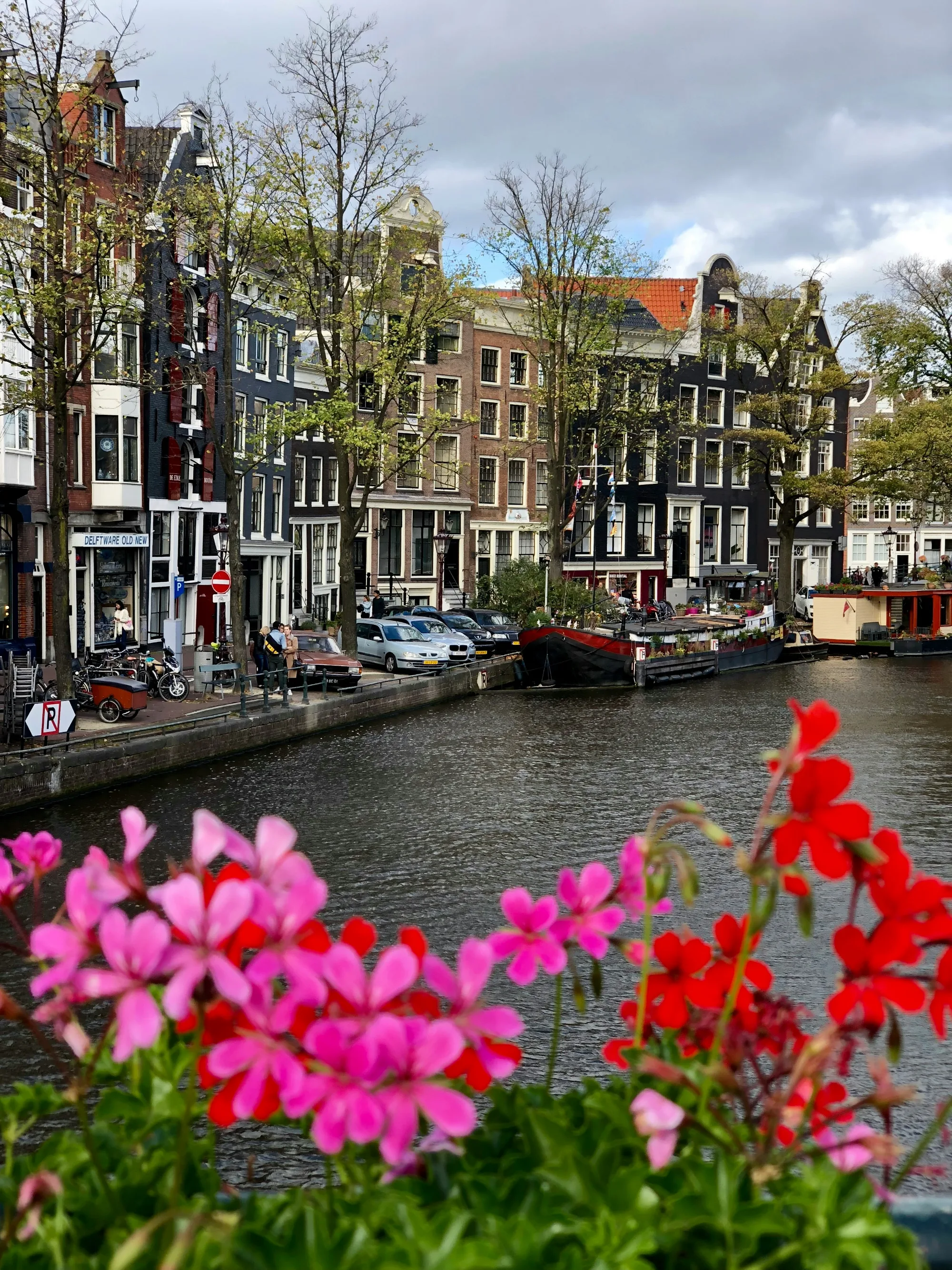
A lot of planning advice for Amsterdam, including most of what's on this very website, revolves around timing. The Van Gogh Museum, the Anne Frank House, the Rijksmuseum: these are places where showing up without tickets in hand will probably mean waiting in an endless queue or being turned away outright. At these places, the difference between a smooth visit and a frustrating or non-existent one often comes down to whether you reserved your slot weeks in advance.
But if you forgot you get tickets ahead of time, all is not lost. Amsterdam has an enormous amount to offer that requires absolutely no planning at all. No ticket, no time slot, no ridiculous app download, no QR code. Just you, showing up, whenever you feel like it. Some of these are well known. But a few of them are the kind of thing that locals and Amsterdam aficionados quietly assume tourists already know about, and tourists quietly assume must require a ticket because surely something this good can't just be free.
It isn't. Here's where to go.
The Civic Guards Gallery and the Begijnhof
If you only do one thing from this list, make it this one, because it sits right in the heart of Amsterdam and almost nobody walking past it knows it's there.
Tucked behind the busy Kalverstraat shopping street, between the Amsterdam Museum and a small courtyard called the Begijnhof, runs a covered passageway lined with enormous 17th-century group portraits. This is the Civic Guards Gallery, sometimes called the Schuttersgalerij or the Amsterdam Gallery, and it is one of the strangest and most wonderful free spaces in the city. The paintings depict the civic guard companies of Amsterdam's Golden Age: groups of wealthy citizens who served as a kind of volunteer militia and commissioned enormous group portraits to mark their service, in much the same artistic tradition that produced Rembrandt's Night Watch. These paintings are on the same scale and from the same era, just hanging in what is effectively a public hallway with a glass roof. You can walk straight through it, for free, any day of the week.
At the far end of the gallery stands an enormous 17th-century wooden Goliath, originally built as an attraction for a Dutch amusement park, alongside smaller figures of David and Goliath's shield bearer. It's an unexpected thing to encounter in a passageway and exemplifies exactly the type of thing you find if you let yourself wander aimlessly in a city like Amsterdam.
The gallery connects directly to the Begijnhof, a small enclosed courtyard that has been a residential community for unmarried religious women since the 14th century and remains a quiet residential courtyard to this day. Stepping through the entrance from the busy street outside into the Begijnhof's hushed green courtyard, with its old houses and a small wooden church, is one of those contrasts that Amsterdam does better than almost anywhere. Visitors are welcome but asked to keep their voices down, since people still live here.
Both the gallery and the courtyard are open daily and free to enter, with the gallery generally open from 10am to 5pm.
Vondelpark
Vondelpark and the City's Green Spaces
Amsterdam's parks are free, plentiful, and well used by the people who live here, which makes them a good way to experience the city the way locals do rather than the way tourists are funneled through it.
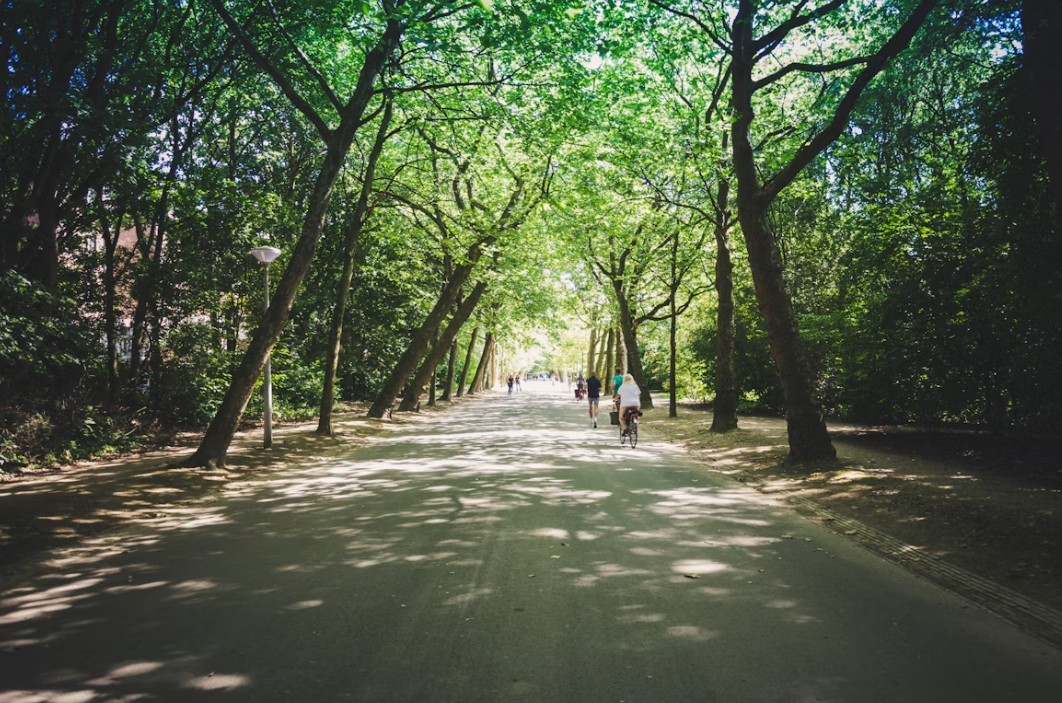
Vondelpark is the obvious starting point. It sits just south of the Museum Quarter, making it an easy add-on to a day spent around the Rijksmuseum and Van Gogh Museum, and it's the kind of park that is pretty darn nice just sitting down in it. There are ponds, an open-air theatre that runs free performances in summer, and a near-constant stream of cyclists, joggers, and people having a beer on the grass. The Rijksmuseum itself has a free garden running along both wings of the building, with sculptures, fountains, and seasonal flower displays, and it's worth a wander even if you're not going inside the museum.
Beyond Vondelpark, Amsterdam has a pretty impressive spread of green space depending on which part of the city you find yourself in. Sarphatipark in De Pijp is a smaller, more local park that pairs naturally with a visit to the Albert Cuyp Market nearby. Oosterpark in the east has a large pond and the National Slavery Monument, an important piece of public history that's worth pausing at. Westerpark, on the western edge of the city center, has a more industrial, reclaimed feel and hosts events and festivals throughout the year.
If you want something on a different scale entirely, the Amsterdamse Bos, or Amsterdam Forest, sits on the southern edge of the city and is roughly three times the size of Central Park. It has walking and cycling trails, a rowing course, and even a small free goat farm, and on a warm day it feels like a different country entirely from the canal ring.
The Ferry from Centraal Station to Amsterdam Noord
The Free Ferries to Amsterdam Noord
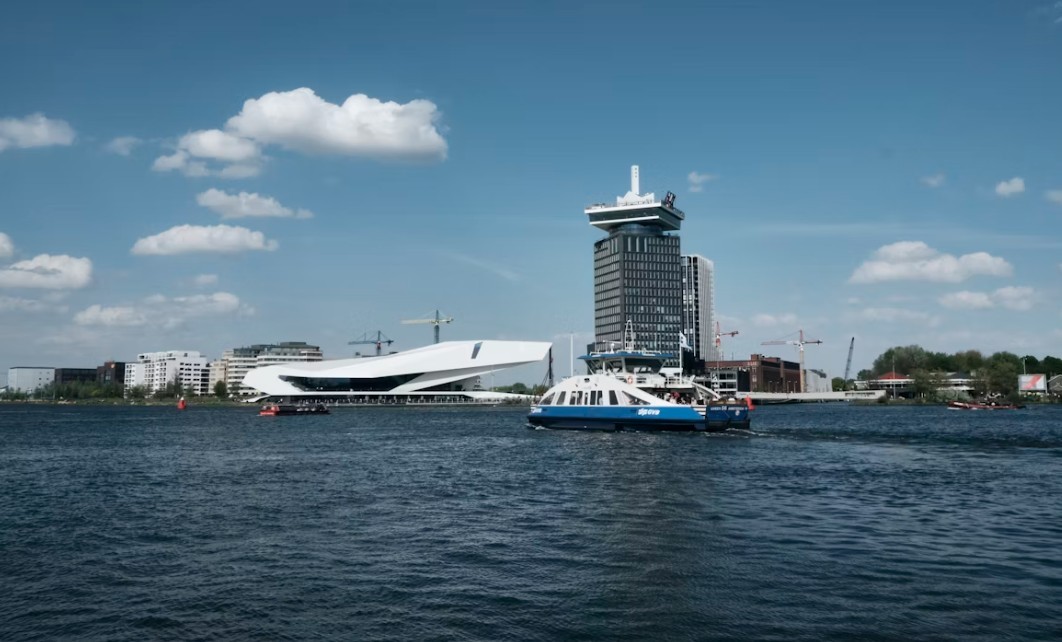
Behind Centraal Station, several ferries cross the IJ river to Amsterdam Noord, and all of them are totally free. You don't need a ticket, you don't need to book, and you don't need to do anything except walk on when the boat arrives.
The crossing itself is worth doing for its own sake. The short ride gives you a view of the city's skyline from the water, including some of Amsterdam's more striking modern architecture along the waterfront, for the price of nothing and the time of about five to fifteen minutes depending on which route you take.
On the other side, Amsterdam Noord has developed into one of the more interesting parts of the city for visitors willing to go slightly further afield. The ferry to Buiksloterweg drops you near the EYE Filmmuseum, a striking white building right on the water, and the surrounding streets retain a village-like quality that's increasingly hard to find in the center. The longer ferry route to NDSM Wharf takes you to a former shipyard that has been reinvented as a creative hub, teeming with artist studios, large-scale street art, and a generally scruffy, creative energy that's a contrast to the postcard version of Amsterdam. As you step off the ferry at NDSM, one of the first things you'll see is a massive mural of Anne Frank, and the rest of the area can be explored at your own pace and style.
None of this costs anything beyond whatever you spend on coffee once you get there.
Albert Cuyp Market
Albert Cuyp Market and Amsterdam's Street Markets
Amsterdam's markets are free to walk through, and several of them are important for understanding how the city actually functions day to day, as opposed to how it presents itself to visitors.
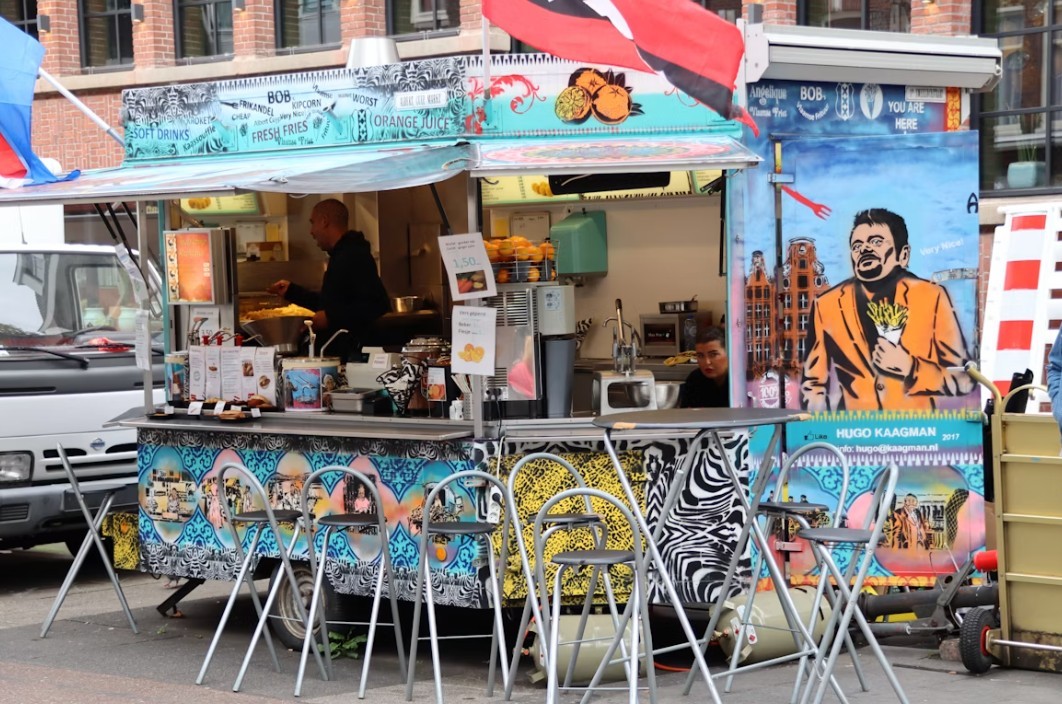
Albert Cuyp Market, in the De Pijp neighborhood, is the largest and best known. Stretching along Albert Cuypstraat for several blocks, it has more than 250 stalls selling everything from fresh produce and cheese to clothing, fabric, and street food. It's busy, it's loud, and it's one of the best places in the city to get a sense of Amsterdam beyond the canal ring. Make sure to get a stroopwafel straight off the griddle here, it's a totally different experience than the stale one you get on a United flight. The market is open every day except Sunday.
Noordermarkt, in the Jordaan, runs a Saturday farmers' market with a strong focus on organic produce, fresh flowers, and local crafts, and has a noticeably different vibe from Albert Cuyp: smaller, more boutique, and very much woven into the daily life of one of Amsterdam's most picturesque neighborhoods. Waterlooplein, near the Stadsschouwburg and the Jewish Quarter, is Amsterdam's oldest flea market and a good spot for vintage clothing, antiques, and the kind of slightly chaotic browsing that flea markets are built for.
All three are free to enter and wander, and none require anything beyond showing up during opening hours.
Roam the Jordaan and the Nine Streets
Some of the best things to do in Amsterdam (or honestly any city) aren't really things at all. They're the places to simply exist and watch the world go by.
The Jordaan, just west of the city center, was once a working-class neighborhood and is now one of the most charming parts of Amsterdam to walk through, with narrow streets, small canals, independent galleries, and a noticeably calmer pace than the areas immediately around Dam Square or the central station. There's no single attraction that defines the Jordaan. The point is the accumulation of small, pretty details: a canal-side bench, a converted warehouse, a tiny specialty shop that's been there for decades.
The Nine Streets, or De 9 Straatjes, sit between the Jordaan and the main canal ring, a small grid of streets connecting some of Amsterdam's most famous canals. They're packed with independent boutiques, vintage stores, and cafés, and while plenty of what's for sale isn't free, walking the streets themselves costs nothing and gives you one of the most rewarding canal-side wanders in the city. Early morning, before the shops open and the crowds arrive, the Nine Streets have a stillness that's hard to find later in the day.
A Note on Free Entry for Under-18s
If you're traveling with kids, it's worth pointing out that several of Amsterdam's major paid museums, including the Van Gogh Museum and the Rijksmuseum, offer free entry for visitors under 18. The adult tickets for these museums still require advance booking, and that part of the planning doesn't change. But it's a detail that can make a difference to the cost of a family day out, and it's the kind of thing that's easy to miss when you're focused on getting the booking itself all figured out.
Free and Paid, Side by Side
Booking ahead for the big, capacity-limited museums is definitely worth doing, and the rest of What2Book's Amsterdam coverage is built around exactly that. But filling the rest of your time with the things on this list, walking through a 17th-century painting gallery on your way to lunch, taking a free ferry across the IJ for no particular reason, or just sitting in Vondelpark with something from a bakery, costs nothing and often ends up being what people remember most.
" width="24px"><path d="M 0 0 L 24 0 L 24 21.231 L 0 21.231 Z" fill="transparent" height="21.230768474975793px" id="nL2EwDcS9" width="24px"/><path d="M 0 0.541 C 0 0.242 0.245 0 0.547 0 L 2.735 0 C 3.037 0 3.282 0.242 3.282 0.541 L 3.282 4.598 C 3.282 4.897 3.037 5.139 2.735 5.139 L 0.547 5.139 C 0.245 5.139 0 4.897 0 4.598 Z" fill="rgb(196, 217, 201)" height="5.138657337892187px" id="hZ_rlBe_S" transform="translate(0 16.092)" width="3.2820512820512358px"/><path d="M 0 0.541 C 0 0.242 0.245 0 0.547 0 L 2.735 0 C 3.037 0 3.282 0.242 3.282 0.541 L 3.282 7.843 C 3.282 8.142 3.037 8.384 2.735 8.384 L 0.547 8.384 C 0.245 8.384 0 8.142 0 7.843 Z" fill="rgb(230, 211, 160)" height="8.38412513024521px" id="HgVBxIz3e" transform="translate(5.128 12.847)" width="3.282051282051235px"/><path d="M 0 0.541 C 0 0.242 0.245 0 0.547 0 L 2.735 0 C 3.037 0 3.282 0.242 3.282 0.541 L 3.282 12.982 C 3.282 13.281 3.037 13.523 2.735 13.523 L 0.547 13.523 C 0.245 13.523 0 13.281 0 12.982 Z" fill="rgb(232, 207, 164)" height="13.522782468137464px" id="utgrDnoM9" transform="translate(10.325 7.708)" width="3.282051282051377px"/><path d="M 0 0.541 C 0 0.242 0.245 0 0.547 0 L 2.735 0 C 3.037 0 3.282 0.242 3.282 0.541 L 3.282 16.498 C 3.282 16.797 3.037 17.039 2.735 17.039 L 0.547 17.039 C 0.245 17.039 0 16.797 0 16.498 Z" fill="rgb(233, 196, 166)" height="17.038705909853153px" id="OLOhW6STz" transform="translate(15.521 4.192)" width="3.2820512820512384px"/><path d="M 0 0.541 C 0 0.242 0.245 0 0.547 0 L 2.735 0 C 3.037 0 3.282 0.242 3.282 0.541 L 3.282 20.69 C 3.282 20.989 3.037 21.231 2.735 21.231 L 0.547 21.231 C 0.245 21.231 0 20.989 0 20.69 Z" fill="rgb(217, 170, 153)" height="21.230768474975793px" id="H5Z8wcwkd" transform="translate(20.718 0)" width="3.2820512820512278px"/></g></svg>)