Back to Amsterdam Attractions
Pro tip: Visiting the village of Zaanse Schans without the attractions is free of charge and does not require any ticket.
Zaanse Schans: Everything You Need to Know Before You Visit
Updated August 2026
The Zaanse Schans is a working heritage village on the river Zaan just north of Amsterdam, where a collection of industrial windmills, green timber houses and craft workshops were relocated from across the Zaan region and rebuilt from 1961 onwards in an effort to rescue them from demolition. It is not an open-air museum exactly, but rather a real neighbourhood with around 100 residents, and it now takes in roughly 2.6 million visitors a year, a pressure that has pushed the municipality of Zaanstad towards introducing a paid entry system. If you're planning a visit, it's important to understand what is free and what isn't.
At a Glance
How Early to Book:
Village access is free. For the ticketing attractions, during high summer season, book 1-2 days ahead to guarantee entry and skip the ticket line. No need to pre-book during offseason. Same-day tickets are sold at the on-site ticket office.
Best Times to Visit:
Near opening, or after 4pm, on weekdays will have the least crowds.
Ticket price:
Village access only is free. €29.50 for adults for all-access. Individual attractions can be purchased "a la carte".
Where to Book:
Attraction Address:
Do You Need to Book Zaanse Schans Tickets in Advance?
It depends if you are visiting just the village or not. If you just want to take a stroll through the village, there is no timed entry, no reservation system and no requirement to buy anything before you arrive. You can turn up at any hour of any day and walk through the village any time.
What you may want to book is the Zaanse Schans Ticket, the combined ticket that gets you inside the paid attractions.
Where to book: Buy directly at tickets.dezaanseschans.nl. Tickets are also sold on site at the information desk in the Zaans Museum, though this can queue up badly in summer.
How far ahead: A day or two is plenty. The ticket is dated and valid only on the date you choose. Availability is rarely the constraint, but buying online the night before saves you the information desk queue on arrival.
Cancellations: Both cancellation and date changes are free online up to 24 hours before your visit. Inside 24 hours, neither is possible. Tickets are not personalised, so a different name on the ticket is not a problem.
The one thing that catches people off-guard: your e-ticket cannot be scanned from your phone. You have to exchange it for a physical A5 card, the Zaanse Schans Card, at the Zaans Museum information desk, the World of Windmills mill museum, or the Zaanse Tijd Museum. That paper card is then scanned at every location you enter.
Is Zaanse Schans Free? Entrance Fee and Ticket Prices
The village itself is free. There is no entrance fee to walk the dyke, photograph the mills from outside, browse the shops, watch the clog-making demonstration or visit the cheese farm. This surprises a lot of visitors who arrive expecting a gate.
What costs money is going inside the windmills and museums, and parking.
Ticket Zaanse Schans covers the Zaans Museum and Verkade Experience, the World of Windmills mill museum, the Zaanse Tijd Museum, the Weavers' House, the Heritage Chambers Kalverringdijk, Tiemstra's Coopery, two windmills of your choice from those open that day, a digital audio tour, a printed map, and 10% off at pancake restaurant De Kraai.
Adults: €29.50
Children 4 to 17: €20.00
Children under 4: free
Groups of 10 or more: €26.55 adult, €18.00 child
Individual tickets are also available, but only in person at each location. Expect somewhere around €7.50 per adult for a single windmill and roughly €16 for the mill museum. If you only want to go inside one or two mills and skip the museums, buying separately at the door will cost you far less than the combined ticket. The combined ticket only pays for itself if you intend to do the Zaans Museum plus two mills plus at least one of the smaller museums.
Parking is €15 per visit for cars and €55 for coaches, paid by card at the exit. The fee covers a single stay, so you cannot drive out and come back the same day without paying again.
Museumkaart: Holders get free entry to the participating museums and heritage sites, but not to the windmills. This trips people up constantly. If you have a Museumkaart and want to go up a mill, you still pay at that mill.
I Amsterdam City Card: This one does cover the windmills, along with the mill museum, the Zaans Museum and the Zaanse Tijd Museum. For Zaanse Schans specifically, the I Amsterdam card is the more useful of the two.
Go City covers the Zaans Museum, Verkade Experience and Weavers' House.
The Proposed Entrance Fee:
In May 2025 Zaanstad council approved a plan to charge visitors from outside the immediate region €17.50 to enter the area, with pre-booking online, on top of any museum or mill tickets. It was originally set for spring 2026. It has not yet been implemented.
Residents and traders applied for a referendum, the council rejected the request against the advice of its own referendum commission and the city lawyer, and the rejection went to court on appeal in January 2026. The council then pushed the target date back to spring 2027. As of now the village remains free, and the timing beyond that is unsettled. If you are planning a trip for 2027 or later, check the status before you budget.

What is the Best Way to Get to Zaanse Schans from Amsterdam?
The site sits about 16km north of central Amsterdam, and it is one of the easiest day trips in the Netherlands to do independently.
By bus: EBS bus routes 800 and 801 run direct from Amsterdam Centraal to a stop right beside the Zaans Museum, taking about 24 minutes. Between 15 March and 18 October 2026 they run roughly every 15 minutes, with the 801 continuing on to Volendam every 30 minutes between 09:40 and 16:10. Outside that window the regular service applies. A single fare on OV-pay is around €4.75.
By train: Sprinter services from Amsterdam Centraal reach Zaandijk Zaanse Schans station in 17 minutes. From there it is a 10 to 15 minute walk, crossing the Julianabrug over the Zaan with the mills lining up ahead of you. This is the more scenic arrival and the cheaper one if you already have an OV-chipkaart topped up.
Combination tickets: The MeerPlus & Zaanse Schans ticket bundles a return on buses 800 and 801 with the Ticket Zaanse Schans for €39.50 adult, €30.00 for 12 to 17s and €18.00 for 4 to 11s. Against €29.50 plus roughly €9.50 in return bus fares, it saves a few euros and one transaction. The Amsterdam & Region Travel Ticket also covers these buses and is the better buy if you are combining Zaanse Schans with Volendam, Marken or Zandvoort on the same days.
By bike: The ride from Amsterdam takes around an hour along the Zaan, and bikes can be rented on site through Enjoy Bikes by appointment. On a clear day this is the best way to arrive, and the cycle route north through the polder is flat the whole way.
By car: Possible but doesn't make the most sense. Parking is €15, the lot fills by mid-morning on spring and summer weekends, and parking anywhere outside the marked lot is prohibited and actively enforced. Payment is by card only.
The practical tip: take the train out and the bus back, or vice versa. The train drops you at the far end of the village so you walk in past the mills, while the bus drops you at the museum end by the car park. Arriving one way and leaving the other means you see the whole site without doubling back.
How Much Time Should I Spend at Zaanse Schans?
If you're a normal person I'd plan on spending about three hours, and that is a fair benchmark for a free walk around the village plus one or two paid attractions.
Just the village, no interiors: 60 to 90 minutes is enough to walk the dyke, see the mills from outside, watch the clog demonstration and get your photographs.
With Ticket Zaanse Schans: Budget 3 to 4 hours minimum. The Zaans Museum and Verkade Experience alone take an hour, and two mills plus the mill museum will fill another two comfortably.
With a boat trip and lunch: A half day, around five hours.
The scheduling trap is the afternoon. Attractions begin closing between 4:30pm and 6pm, and the toilets close with them. Arriving at 3pm with a full-price combined ticket means racing through what you paid for. If you are buying the ticket, arrive before 1pm.
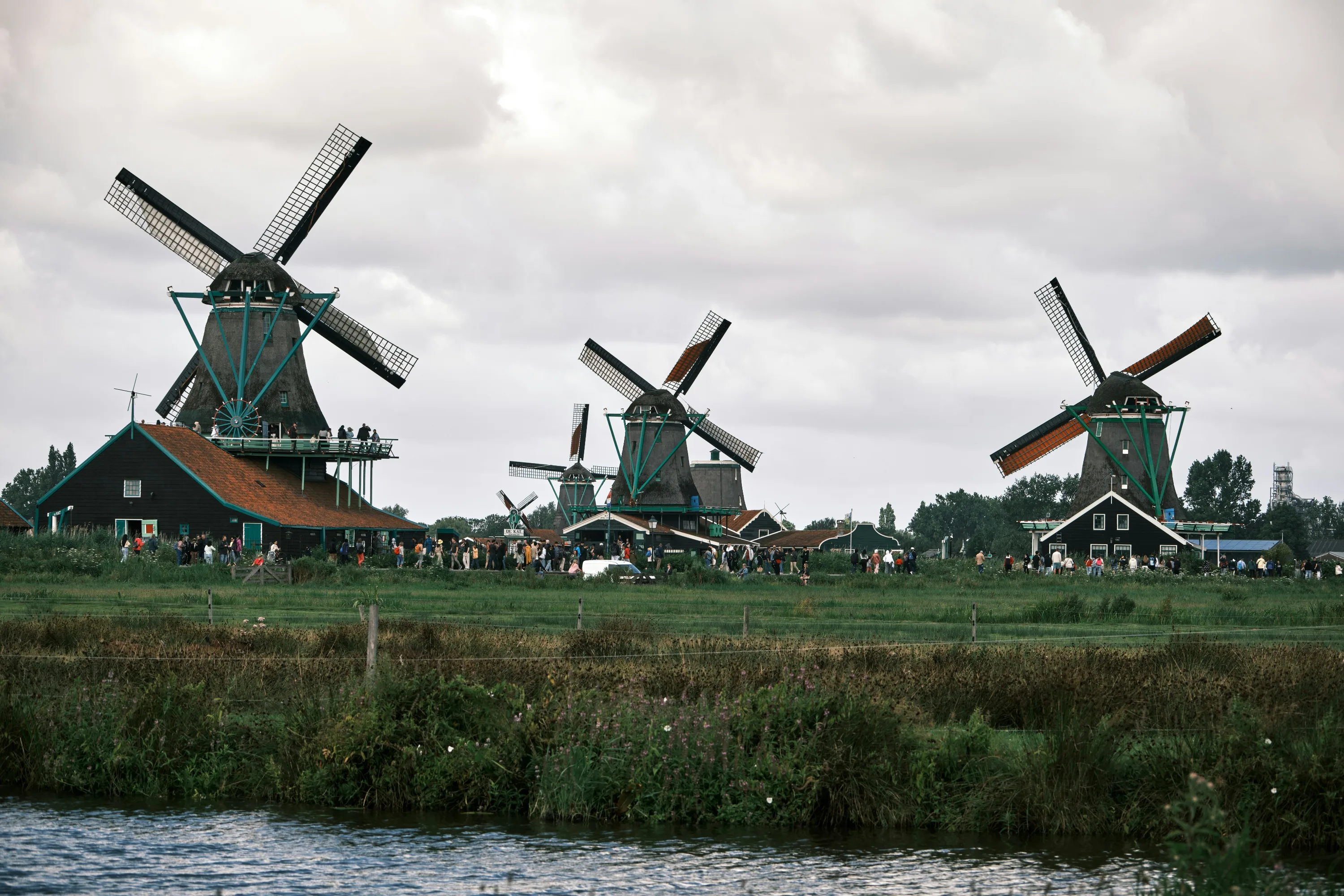
Zaanse Schans is a preserved open-air heritage neighborhood in Zaandam, Netherlands. Created starting in 1961, it brings together historic 18th- and 19th-century windmills, barns, and green wooden houses relocated from across the Zaan region to showcase the area's intense industrial past
What is the Best Time to Visit Zaanse Schans?
Best time of day: Before 10am or after 4pm. Coach groups and the Amsterdam day-trip crowd arrive in a wave from mid-morning and thin out through late afternoon, and between roughly 11am and 3pm in summer the dyke gets seriously congested. Arriving at 9am gets you the mills, the water and the light with almost nobody in the frame. The trade-off after 4pm is that the interiors start shutting.
Best days: Weekdays, and Monday or Tuesday over Thursday or Friday. Weekends in spring and summer are the busiest the site gets, and the car park regularly fills.
Best season: Late autumn through early spring is quiet and beautiful, with mist over the polder and low light on the timber. The cost is that several mills close for the season and the days are short. April to September gives you every mill open and long evenings, at the price of crowds. Late September and early October is the balance point: most things still open, but the massive crowds of people easing up.
For photography: Early morning, from the Zaandijk side across the water. The classic line of mills faces east across the Zaan, so morning light hits them directly and the jetties are empty. Sunset from the dyke is also good, though by then the mills are closed and you are photographing them shut.
Wind matters here more than weather. The mills are working machines and they only turn when there is wind to turn them. On a still day you get a beautiful but static village. On a blustery one you get the sails moving, the millstones grinding and the whole timber structure creaking around you, which is the entire point of the place.
The Windmills at Zaanse Schans: Which Ones Can You Go Inside?
There are around a dozen mills at the Zaanse Schans and its immediate surroundings, but only a handful are open to the public, and fewer still every day. These are industrial mills, not the drainage mills most people picture: they were built to saw timber, press oil, grind pigment and mill spices, and several of them still do exactly that commercially.
Open to visit:
De Kat is the one to prioritise. Built in 1664, it is the only working windmill in the world still producing paint pigments, supplying artists and restorers internationally. The millers grind lapis lazuli and other mineral stone into pigment on enormous edge runners, and when the mill is running the entire building vibrates with it. Open daily, closed on public holidays.
Het Jonge Schaap is a six-sided wind-powered sawmill, a reconstruction completed in 2007 using seventeenth-century building methods, of an original from 1680. Timber sales are its main income, so when the wind allows it is really working rather than demonstrating. If you want to understand how a wind-driven industrial machine actually operates, this is the clearest example on the site, and it is the only mill that is wheelchair accessible. Open daily.
De Huisman is a snuff and spice mill from 1786, now sitting on top of the Indië's Welvaren spice warehouse. Three pairs of millstones grind tropical products in the corner of the warehouse and the smell reaches you before the building does. The shop downstairs is free to enter and sells the spices; the mill above charges. Open daily.
De Bonte Hen is an oil mill from 1693 that has survived several lightning strikes, which most of the region's 600 mills did not. It still presses oil regularly. Open Tuesday to Sunday in high season, closed in low season.
De Zoeker, an oil mill dating from around 1610, opens only on Saturdays in June, July and August. If it is on your list, check the calendar first.
Visible but not open to the public:
De Gekroonde Poelenburg is a paltrok sawmill from 1869, a type with an open working floor on three sides that once numbered 200 in the Zaan region. De Bleeke Dood is the oldest surviving smock mill in the Netherlands, and its shop sells flour and bread mix on Fridays. De Ooievaar and De Os are oil mills, the latter notable as the point where the Zaan industry switched from wind to diesel in 1916. Het Klaverblad is a hollow post mill hand-built by miller Ru Pos between 2000 and 2005, reviving a lost small mill type. Two miniature mills, De Hadel and De Windhond, sit on the paths between the larger ones.
Climbing a mill means narrow, steep wooden stairs and, at the top, an outdoor gallery running around the outside of the structure. The gallery is where the visit earns its money: you get the panorama across the polder and you can stand next to the turning sails. It is also exposed, and not suitable for anyone unsteady on stairs.
What Else is There to See at Zaanse Schans?
Zaans Museum and the Verkade Experience is the main museum, at the car park end, and the anchor of the combined ticket. The Verkade Experience recreates the early twentieth-century Verkade biscuit and chocolate factory, with production machinery and packaging lines you can work; it is the part children remember. The museum proper covers the region's industrial history and holds a Monet, painted during his 1871 stay in Zaandam.
World of Windmills is the mill museum on Kalverringdijk, a multimedia walk through Zaan milling history. Its centrepiece is an 11-metre panoramic painting of the Zaandam mills around 1800, when there were several hundred of them.
The Zaanse Tijd Museum covers the Zaan clockmaking industry, which produced a distinctive regional clock type. Small, well done, and usually empty compared to everything else.
The Weavers' House on the dyke housed two families in the eighteenth century alongside five looms, working sail and mill cloth. Tiemstra's Coopery demonstrates barrel-making with an intact original workshop, though it is currently closed, as are the Heritage Chambers Kalverringdijk, a 1650 merchant's house, which is closed for renovation of the Noorderhuis.
Free to visit: the clog workshop, where a log becomes a wooden shoe in a few minutes and the demonstration runs continuously; the Catharina Hoeve cheese farm, with tastings; the Tinkoepel pewter foundry; the Tweekoppige Phoenix liqueur distillery; the bakery museum; and Blik op Cacao. None of these need a ticket, which is worth knowing before you buy one.
The houses are private. The green timber homes along the dyke are lived in. Gardens and interiors are not open, and residents ask visitors not to enter them.
Seeing Zaanse Schans From the Water
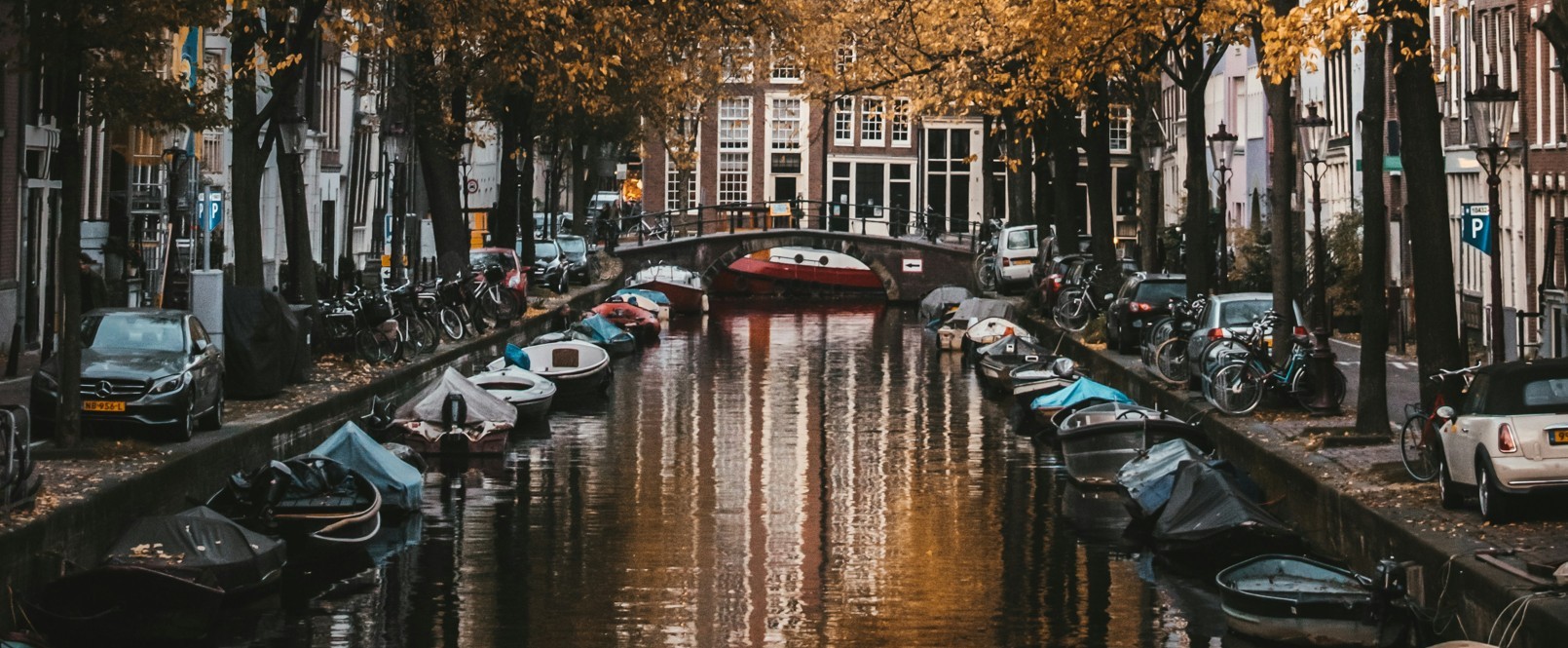
The mills were built facing the Zaan because the river was the transport artery, and seeing them from it puts the whole layout into sense in a way that walking the dyke does not.
The Windmillhopper runs short trips along the mill row in season. Rederij de Schans operates longer windmill cruises out into the surrounding water, though these run on a restricted seasonal schedule.
The Zaandijk pedestrian ferry is the one worth knowing about, and it is the cheapest thing on this page. It is a small foot ferry crossing the Zaan between the Zaanse Schans and Zaandijk on the opposite bank, and it takes about a minute. Crossing it puts you on the west bank, which is where the postcard view of the whole mill row comes from, and where the local cafés are. Most visitors never cross the water at all.
Zaanse Schans Tours and Day Trips: Are They Worth It?
For most people, no, organized tours don't actually add anything over visiting independently. This is one of the easier arguments to make against an organised tour.
The site is 24 minutes by direct bus from Amsterdam Centraal, entry is free, and the village is small enough to navigate without guidance. A half-day coach tour from Amsterdam typically costs from around €32 and delivers you into the middle of the busiest window of the day alongside every other coach, with a fixed departure time that usually gives you 90 minutes on site. That is enough to walk around and not enough to go inside anything properly.
Where tours do earn their place:
Combination day trips pairing Zaanse Schans with Volendam and Marken, or with Edam, make sense if you have one free day and want three places. Doing that combination on public transport is possible, since bus 801 runs Zaandam to Zaanse Schans to Volendam, but it eats the day. Keukenhof combinations in tulip season, roughly late March to mid-May, are the other reasonable case, since Keukenhof is in the opposite direction and awkward to pair independently.
Private and small-group tours with a guide who knows the milling history add real value at De Kat and Het Jonge Schaap specifically, where the machinery rewards explanation.
If you go independently, the digital audio tour included with Ticket Zaanse Schans covers the mill panorama and the historic housing in Dutch and English, and free third-party audio walks exist if you are not buying the ticket. The volunteer millers themselves are the best guides on the site and will talk at length if you ask them a real question.
Is Zaanse Schans Worth Visiting?
Yes, but only with the righ timing and reasonable expections. This is a place that is either quietly wonderful or actively unpleasant depending almost entirely on when you get there.
The case against it is real and worth being honest about. Between late morning and mid-afternoon in high season, the dyke is shoulder to shoulder, the paths near the cheese farm and clog workshop back up, and the whole thing can feel like a queue with windmills attached. The food on site is priced for a captive audience. A family of four doing the full combined ticket is looking at close to €100 before lunch, and some visitors reasonably conclude the museums did not justify it. There are prettier and quieter windmill sites in the Netherlands, and if authenticity is what you are after, Kinderdijk is a working drainage landscape rather than a relocated collection.
What Zaanse Schans has that the alternatives do not is machinery you can stand inside. The mills here are not scenery, they are functioning industrial equipment operated by people who care about it, and the difference between looking at De Kat from the path and standing on its grinding floor while it works is the difference between a photograph and an experience. The millers are volunteers and enthusiasts, and they are the best thing on the site.
For first-time visitors to the Netherlands, go, but go at 9am. An hour before the huge coaches arrive is a different place entirely, and free.
For families, it works well. The Verkade Experience, the clog demonstration and the cheese tasting cover a good age range, and the site is compact enough that small children can walk it.
For photographers, early morning or off-season only. Mid-afternoon in July you will not get a clean frame.
For anyone on a tight schedule in Amsterdam, this is a strong half day precisely because it is so quick to reach. Two hours here and back beats most alternatives.
For anyone who wants to skip paying entirely, that is a legitimate visit. Walk the dyke, cross the ferry, watch the free demonstrations, buy a stroopwafel, spend nothing but the bus fare. Plenty of visitors do exactly that and leave satisfied. Just be aware this option may not survive to 2027.
Where Should I Eat Near Zaanse Schans?
The on-site options are limited and priced accordingly. Walking five minutes off the dyke improves both things substantially.
On site:
Pancake Restaurant De Kraai is the obvious lunch, in an eighteenth-century Zaan granary near the car park, with a tiled smuiger fireplace and seating for about 200. It does 29cm Dutch pancakes, sweet and savoury, plus sandwiches and soup, and it runs cafeteria style: order and pay at the register, collect at the counter. Ticket Zaanse Schans holders get 10% off. It handles gluten-free and lactose-free pancakes with advance notice. Reviews split between people delighted to find decent pancakes in a tourist hub and people finding them greasy, but it is a reliable, fast, family-friendly stop and the setting is lovely.
De Hoop op d'Swarte Walvis is the proper sit-down restaurant, on the water at Kalverringdijk 15 with its own jetty and a large terrace. French-leaning cooking in a historic building, the best setting on the site by a distance, and priced to match. Reserve ahead in season, and consider lunch over dinner for a calmer room and lower prices.
MuseumCafé inside the Zaans Museum does soups, sandwiches and coffee. Functional rather than memorable, but it has a large window over the polder and the mills, and it is the practical option if you do not want to lose your place in the day.
A short walk away, in Zaandijk:
Café de Slager on Lagedijk is where locals actually eat, just outside the tourist area, in a historic building with two monumental fireplaces and outdoor seating with a windmill view. Solid lunch and dinner, relaxed, and noticeably better value than anything on the dyke. Reserve for evenings.
Het Zaanse Bakkertje around the corner is the cheap answer for a sandwich and coffee.
Brouwerij Hoop is a local brewery and pub, a slightly longer walk, and a good end to the afternoon if you are not rushing for a bus.
Quick warning: food inside the village is set up for people who have nowhere else to go. Pancakes from €9 and hot dogs at €6.50 are normal here. Crossing the ferry to Zaandijk takes a minute and roughly halves what you spend.
What Else is There to Do Near Zaanse Schans?
Zaandijk, directly across the ferry, is the historic Zaan village most visitors miss entirely. Lagedijk is lined with the same green timber houses as the Schans, without the crowds, and the Honig Breethuis there is a preserved 1830s merchant's house museum.
Zaandam town centre, two train stops away, is worth 20 minutes for the Inntel Hotel, a stacked assembly of traditional Zaan house façades piled into a single modern tower. It is either brilliant or absurd and it is unlike anything else in the country.
Volendam and Marken, 30 to 40 minutes on bus 801 or by combination tour, are the classic pairing: a former fishing harbour and an island village connected by causeway, plus a short ferry between them. Combining all three in a day is common but tight, so start early.
Edam, about 30 minutes north, is the quieter and more active of the cheese towns, with a working market square rather than a tourist strip.
The Kalverpolder, immediately behind the mills, is open reed marsh with walking and cycling paths and almost no visitors. Ten minutes out along it and the crowds vanish completely.
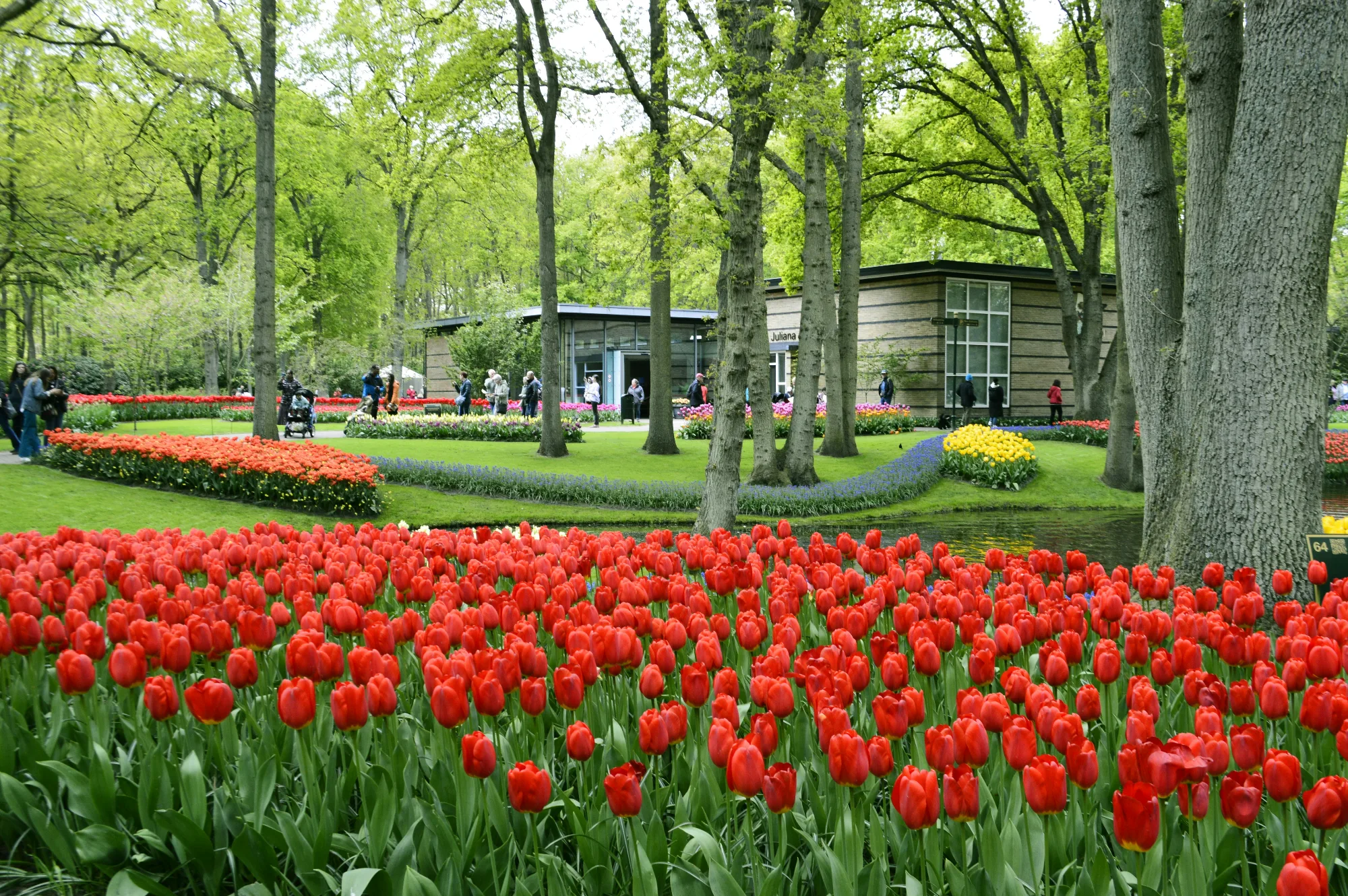
Keukenhof is a spring-only option, roughly 90 minutes away on the other side of Amsterdam, and only sensible as a combination tour or with an early start.
Rules, Facilities, and What to Know Before You Go
Payment: Most locations are card only, debit or credit. A few accept cash in euros, but the Ticket Zaanse Schans and the parking cannot be paid in cash at all. Do not plan around having notes.
Toilets: Public toilets are at two locations, the East Entrance in the De Bezem building on Schipperplein and near the jetty on Kalverringdijk. They cost €1.00 per person per visit, and they close when the attractions do, generally around 5pm. Accessible toilets and baby changing facilities are at De Bezem and Kalverringdijk, and De Bezem has a shower.
Luggage: There are no lockers or any luggage storage anywhere on site. If you are visiting between hotels or on the way to Schiphol, you are carrying everything with you all day.
Food and drink: You are welcome to bring your own and eat it in the village. You may not eat or drink your own supplies inside the restaurants, museums, mills or heritage sites.
Dogs: Allowed throughout the village on a lead. Individual businesses set their own policies, and dogs other than assistance dogs are not permitted inside the museums and mills.
Photography: Personal photography is fine everywhere. Commercial shoots, indoors or out, need advance permission from the Zaanse Schans, as do professional film and camera crews. Wedding photography does not need permission unless you are bringing a professional crew, and shooting inside a mill, museum or workshop needs a request either way.
Drones: Not permitted anywhere on the Zaanse Schans or over the Kalverpolder, for private or commercial purposes, because of disturbance to residents and wildlife. Exceptions require an operator certificate and prior approval.
Lost property: Handed in at the information desk in the Zaans Museum.
Accessibility at Zaanse Schans
The site recreates the Zaan region as it was in the seventeenth and eighteenth centuries, and its accessibility reflects that period rather than modern standards. Wheelchair and rollator users will not be able to reach everything, and this is worth planning around rather than discovering on arrival.
What is accessible: The Zaans Museum and the World of Windmills mill museum are both wheelchair accessible. Of the windmills, only Het Jonge Schaap is. The Zaanse Tijd Museum has two wheelchair boards that make the ground floor accessible.
What is not: The other mills involve narrow, steep internal staircases and are not accessible. Several of the historic buildings have raised thresholds and tight interiors.
Around the site: There are accessible bridges across the waterways, and the main paths along the dyke are manageable. Accessible toilets are in the toilet blocks on Schipperplein and Kalverringdijk and in the Zaans Museum.
Parking: Designated accessible spaces are available in the main car park.
Wheelchair loan: The Zaans Museum keeps a limited number of wheelchairs that can be reserved in advance.
Final Tips for Visiting Zaanse Schans
Arrive at 9am, before the coaches. This decision will positive change the visit more than anything else you can do, and the village is just as free at that hour as it is at noon.
Do not buy Ticket Zaanse Schans by default. If you want one mill and a wander, pay €7.50 at the door and save over €20. The combined ticket only makes sense if you are doing the Zaans Museum plus two mills plus another museum.
Exchange your e-ticket for the paper card first thing at the Zaans Museum, World of Windmills or the Zaanse Tijd Museum. A QR code on your phone will not get you into a mill.
Check the live opening calendar the morning you go, because several mills open only on selected days and De Zoeker runs Saturdays in summer only.
Cross the pedestrian ferry to Zaandijk. It takes a minute, gives you the best view of the whole mill row, and puts you where the food is half the price.
Bring a card, not cash, and a euro coin for the toilet.
Check the wind, not just the sun. A still day means static mills, and watching the machinery work is the reason to go inside one.
Pair it with Volendam and Marken on bus 801, or walk ten minutes into the Kalverpolder behind the mills for the version of this landscape with nobody in it.
Back to Amsterdam Attractions
Explore other Amsterdam attractions
" width="24px"><path d="M 0 0 L 24 0 L 24 21.231 L 0 21.231 Z" fill="transparent" height="21.230768474975793px" id="nL2EwDcS9" width="24px"/><path d="M 0 0.541 C 0 0.242 0.245 0 0.547 0 L 2.735 0 C 3.037 0 3.282 0.242 3.282 0.541 L 3.282 4.598 C 3.282 4.897 3.037 5.139 2.735 5.139 L 0.547 5.139 C 0.245 5.139 0 4.897 0 4.598 Z" fill="rgb(196, 217, 201)" height="5.138657337892187px" id="hZ_rlBe_S" transform="translate(0 16.092)" width="3.2820512820512358px"/><path d="M 0 0.541 C 0 0.242 0.245 0 0.547 0 L 2.735 0 C 3.037 0 3.282 0.242 3.282 0.541 L 3.282 7.843 C 3.282 8.142 3.037 8.384 2.735 8.384 L 0.547 8.384 C 0.245 8.384 0 8.142 0 7.843 Z" fill="rgb(230, 211, 160)" height="8.38412513024521px" id="HgVBxIz3e" transform="translate(5.128 12.847)" width="3.282051282051235px"/><path d="M 0 0.541 C 0 0.242 0.245 0 0.547 0 L 2.735 0 C 3.037 0 3.282 0.242 3.282 0.541 L 3.282 12.982 C 3.282 13.281 3.037 13.523 2.735 13.523 L 0.547 13.523 C 0.245 13.523 0 13.281 0 12.982 Z" fill="rgb(232, 207, 164)" height="13.522782468137464px" id="utgrDnoM9" transform="translate(10.325 7.708)" width="3.282051282051377px"/><path d="M 0 0.541 C 0 0.242 0.245 0 0.547 0 L 2.735 0 C 3.037 0 3.282 0.242 3.282 0.541 L 3.282 16.498 C 3.282 16.797 3.037 17.039 2.735 17.039 L 0.547 17.039 C 0.245 17.039 0 16.797 0 16.498 Z" fill="rgb(233, 196, 166)" height="17.038705909853153px" id="OLOhW6STz" transform="translate(15.521 4.192)" width="3.2820512820512384px"/><path d="M 0 0.541 C 0 0.242 0.245 0 0.547 0 L 2.735 0 C 3.037 0 3.282 0.242 3.282 0.541 L 3.282 20.69 C 3.282 20.989 3.037 21.231 2.735 21.231 L 0.547 21.231 C 0.245 21.231 0 20.989 0 20.69 Z" fill="rgb(217, 170, 153)" height="21.230768474975793px" id="H5Z8wcwkd" transform="translate(20.718 0)" width="3.2820512820512278px"/></g></svg>)