
Back to New York City Attractions
Pro tip: For first time visitors, it's generally recommended to focus first on the fifth floor which houses the core modern art collection, and then work your way back down.
MoMA (Museum of Modern Art) New York: Everything You Need to Know Before You Visit
Updated July 2026
The Museum of Modern Art opened in 1929 as the first museum in the world devoted entirely to modern art, and the collection it built in the decades since is the reason The Starry Night, Les Demoiselles d'Avignon, and Campbell's Soup Cans all live within a few floors of each other on West 53rd Street. Unlike most major museums, MoMA does not charge extra for special exhibitions, so one $30 ticket covers every gallery and every show in the building on the day you visit. The two things worth knowing before you book are that the famous free Friday evenings are now restricted to New York State residents, and that MoMA PS1 in Queens became free for everyone in January 2026.
At a Glance
How Early to Book:
No need to book in advance; tickets can be purchased at on-site ticket kiosks.
About 3 months in advance.
Best Times to Visit:
Early mornings and late afternoons are the quietest, as well as Fridays when the museum stays open later than other days.
Ticket price:
$30 for adults.
Where to Book:
The MoMA Website
Museum Address:
Do You Need to Book MoMA Tickets in Advance?
I'd recommend booking a day ahead, but I haven't had any trouble getting same day tickets even during busier times of the year. The museum says that a limited number of tickets are released at the ticketing desk each day on a first-come, first-served basis, and that relying on those is a gamble. The biggest advantage is that booking online also lets you walk past the ticket line and go straight into the galleries, which on a busy morning saves a chunk of time.
Where to book: The official platform is moma.org for ticket selection. GetYourGuide and Tiqets also sell legitimate admission at the same price, and are worth considering only because their cancellation terms are more flexible than MoMA's own.
Ticket prices:
Adults: $30
Seniors (65 and over with ID): $22
Students (full-time with ID, including international students): $17
Visitors with disabilities: $22, with free admission for an accompanying care partner
Children 16 and under: free, though a ticket is still required
Members: free
What is included: Every ticket covers all collection galleries and all special exhibitions, with no additional charge for headline shows. Film screenings in the museum's theatres are also included with admission, which is one of the best-value things in New York that most visitors never think to use.
City passes: MoMA is covered by the New York Pass, the New York Explorer Pass by Go City, the Sightseeing Pass, and the All-Inclusive Pass. With any of those, skip the online reservation and present your pass at the ticketing desk on arrival. New York C3 by CityPASS also includes MoMA, and with that one you should reserve your date and time in advance through the CityPASS app.
Refunds: Tickets cannot be transferred, refunded, or exchanged once purchased. If your plans are uncertain, the third-party sellers with 24-hour cancellation windows are the safer route.
Is MoMA Free? UNIQLO Free Friday Nights Explained
Some people can get into MoMA for free at certain times, but not everyone. Here are the details:
UNIQLO Free Friday Nights are for New York State residents only. Admission is free every Friday from 5:30 to 8:30pm, sponsored by UNIQLO, but only for residents of New York State. Free tickets must be reserved in advance online, are subject to availability, and proof of residency is required on arrival. Visitors from elsewhere in the United States or from abroad pay the standard $30 on Friday evenings like any other time.
A lot of online guides get this wrong. For years the Friday evening slot was free for everyone, and a large amount of travel content I've found even today still says so. Some sources also describe it as the first Friday of the month, which is also incorrect. It runs every Friday, and it is residents-only.
Who else gets in free: Children 16 and under, always, though they still need a ticket. Members. Care partners accompanying a visitor with a disability. Certain groups including active US military and their families, and students at a number of New York colleges, qualify through the museum's discount programmes.
The one free option open to everyone: MoMA PS1 in Long Island City has been free to all visitors since January 2026. If your budget is the deciding factor, that is where to go.
If you are a New York resident using the free slot, arrive closer to 6pm than 5:30pm. The queue is heaviest in the first half hour, and you will still have two clear hours in the galleries.
MoMA Opening Hours and Entry Information
Hours:
Monday to Thursday: 10:30am to 5:30pm
Friday: 10:30am to 8:30pm
Saturday and Sunday: 10:30am to 5:30pm
Closed days: Thanksgiving Day and Christmas Day only. MoMA is open every other day of the year, including most public holidays, which makes it a reliable option when other museums close.
Last entry: Collection and exhibition galleries begin closing roughly 15 minutes before the museum itself, so arriving in the final half hour leaves very little time.
Members' hours: On Saturday and Sunday mornings from 9:30 to 10:30am, selected galleries open to members and their guests only. If you are visiting New York repeatedly, a membership pays for itself quickly on quiet weekend mornings alone.
Address: 11 West 53 Street, New York, NY 10019.
Entrances: General admission uses the main entrance on 53rd Street, between Fifth and Sixth Avenues and closer to Sixth, just east of the flagship Museum Store. Members use a separate entrance on 54th Street. Film screenings after hours enter through the Lauder Building at 11 West 53rd Street, nearest Fifth Avenue.
Stores and restaurants keep different hours from the galleries, and the ground-floor Museum Store can be visited without a ticket.
What is the Best Way to Get to MoMA?
By subway: The E and M trains to Fifth Avenue-53rd Street put you closest. Coming up from that station, MoMA is on the opposite side of the street and a short way down the block heading west. The B, D, F, and M to 47-50 Streets-Rockefeller Center is barely further, and the N, R, and W to Fifth Avenue-59th Street works well if you are coming from the east side or midtown south.
By bus: The M1, M2, M3, M4, and M5 run along Fifth and Sixth Avenues and stop within a block or two. The M50 crosstown covers 49th and 50th Streets.
On foot: Rockefeller Center is a five-minute walk, Central Park's southern edge about ten minutes north, Times Square around twelve minutes west, and Grand Central roughly fifteen minutes southeast. Almost everything in midtown is walkable from here.
By car: Several private garages nearby offer discounted rates for museum visitors, but midtown parking is expensive and traffic around Rockefeller Center is heavy. The subway is faster and cheaper.
One practical tip: The bottleneck at MoMA is not the ticket line, it is the bag check. Every bag is inspected on arrival, and large items have to be checked into the cloakroom, where the queue crawls on busy days. Carry the smallest bag you can and you will be in the galleries while others are still queueing. Large umbrellas cannot come inside at all, though there is a rack near the entrance.

MoMA was the very first museum to establish dedicated curatorial departments for film, photography, and architecture and design. In addition to the art, it also holds research materials on over 90,000 artists, making it one of the largest art study centers in the world.
How Much Time Should I Spend at MoMA?
Plan on 2 to 3 hours for a good foundational first visit covering the highlights across the collection floors and whichever exhibitions are running. That is enough to see the famous works properly without rushing.
A focused visit hitting Floor 5 and the best-known paintings can be done in 90 minutes if you go straight up and work down.
A thorough visit, taking in every floor, a special exhibition or two, the Sculpture Garden, and lunch, fills 4 hours or more.
MoMA is considerably more compact than the Met or the Natural History Museum, and that is part of its appeal: it is one of the few world-class museums in New York you can actually finish in an afternoon. The flip side is that the crowds concentrate in a smaller footprint, so the galleries can feel busier than a bigger museum with the same number of people in it.
If you are adding MoMA PS1, budget around 2.5 hours in total for the subway ride each way plus an hour or so in the galleries. It is a separate trip rather than an add-on, and best treated as its own half day.
What is the Best Time to Visit MoMA?
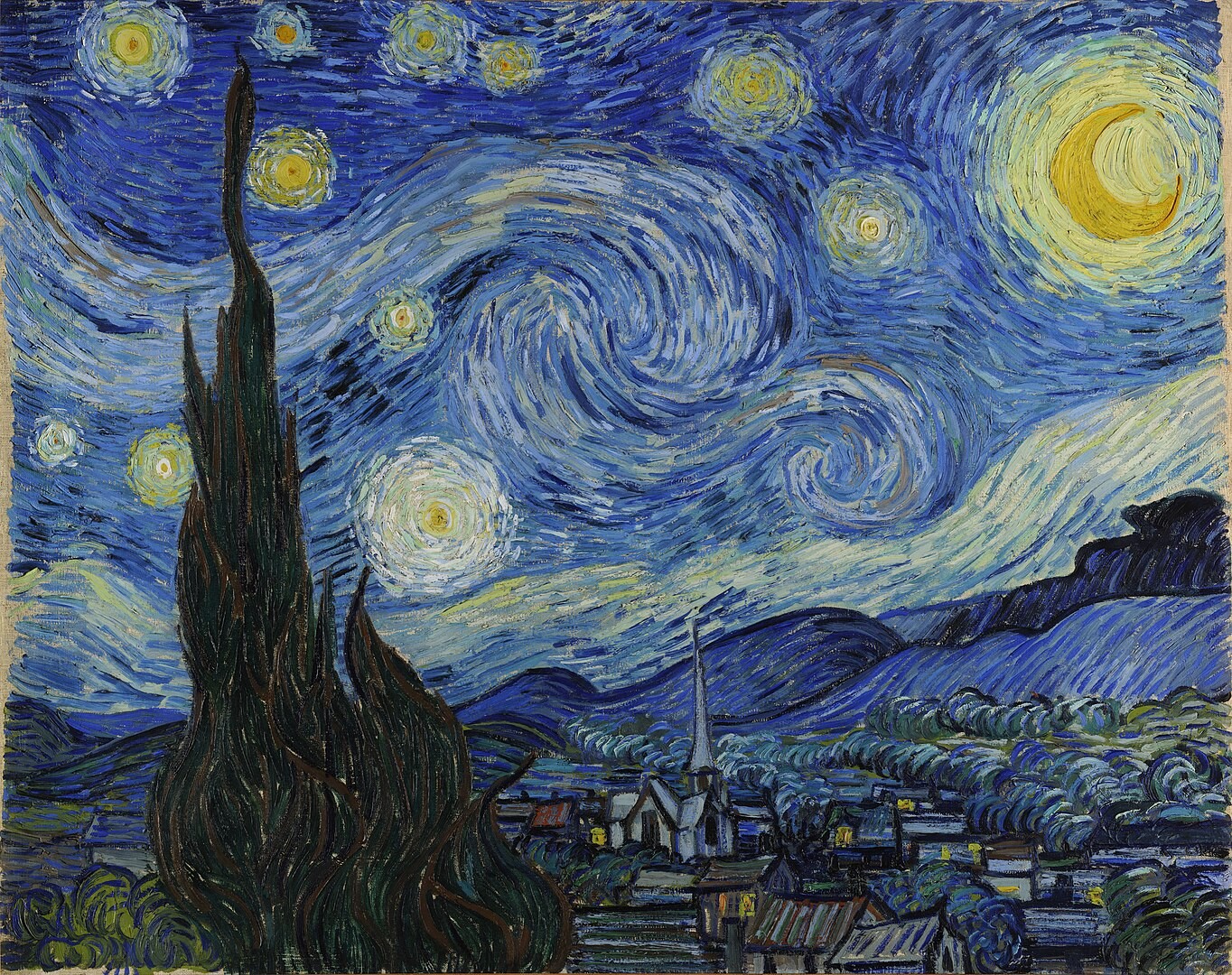
Best time of day: Arrive for the 10:30am opening and go straight to Floor 5. This is my #1 tip by far. By late morning the room holding The Starry Night is several people deep and largely composed of raised phones; at 10:30am you may get a minute with it more or less alone.
Best days: Tuesday and Wednesday mornings are consistently the quietest. Weekdays generally beat weekends, and Saturday afternoon is the busiest window of the week.
The Friday evening trade-off: Friday is the only night MoMA stays open late, and it's super nice seeing the galleries after dark. It is also the busiest evening of the week, because free admission for New York residents runs from 5:30 to 8:30pm. If you want the late-night atmosphere, accept the crowds; if you want quiet, take any other day.
Best season: January and February are the calmest months. Summer and the run-up to Christmas are the busiest, and rainy days at any time of year produce a queue outside the door as midtown looks for something indoors.
Where the crowds are not: The photography, drawings, and architecture and design galleries are consistently calmer than the painting floors, and the Abby Aldrich Rockefeller Sculpture Garden is a real escape when the weather is decent. The film theatres are almost never full, and your ticket already covers them.
What is Inside MoMA? Famous Paintings and Must-See Works
MoMA's collection runs to more than 200,000 works across painting, sculpture, photography, film, architecture, design, and performance. The layout is chronological and unusually easy to navigate, which is worth knowing before you get there.
The floor structure: Floor 5 holds the collection from 1880 to 1950, Floor 4 covers 1950 to 1980, and Floor 2 covers 1980 to today. Special exhibitions occupy Floor 6 and parts of Floor 3. Most first-time visitors should start at the top and work down.
Floor 5, the greatest hits: This single floor justifies the price of the ticket. Van Gogh's The Starry Night is the magnet, painted in 1889 from the window of his asylum room at Saint-Rémy and guarded rather like the Mona Lisa. Around it sit Picasso's Les Demoiselles d'Avignon, the 1907 canvas that broke open twentieth-century painting; Salvador Dalí's small and surprisingly tiny The Persistence of Memory; Matisse's vast Dance (I); Henri Rousseau's The Sleeping Gypsy; and Monet's Water Lilies, shown across a room built for them. Frida Kahlo's Self-Portrait with Cropped Hair is here too.
Floor 4, post-war America: Jackson Pollock's One: Number 31, 1950 dominates a wall, alongside Rothko, de Kooning, and Barnett Newman. Andy Warhol's Campbell's Soup Cans and Gold Marilyn Monroe anchor the Pop Art rooms, with Lichtenstein, Johns, and Rauschenberg nearby. Andrew Wyeth's Christina's World is also on this floor and catches people by surprise.
Floor 2, contemporary: The most recent work, and the floor where opinion divides most sharply. Some visitors find it the most alive part of the museum, others walk through quickly. It is worth twenty minutes either way.
The design collection: Easy to miss and one of MoMA's real distinctions. The museum collects industrial and graphic design as seriously as painting, and the holdings include a 1946 Cisitalia 202 sports car, a Bell helicopter, typefaces, and household objects presented as art. Design-minded visitors often rate this above the paintings.
The Abby Aldrich Rockefeller Sculpture Garden: An outdoor courtyard at ground level with works by Rodin, Picasso, and Calder among the trees and reflecting pools. It is the best place in the building to sit down, and on a fine day it is worth as much time as any gallery.
The film programme: MoMA screens films daily in its theatres, drawn from one of the most important film archives anywhere, and admission is included with your ticket. Almost no tourists use it, which is exactly why it is worth checking the schedule.
Art Lab: The Heyman Family Art Lab runs free hands-on activities for children daily, and there is a kids' audio playlist and activity guide for the galleries.
Current Exhibitions at MoMA
Every special exhibition is included in general admission, with no surcharge and no separate booking. The programme turns over constantly, so check the website before your visit for exact dates.
As of summer 2026, the headline show is Frida and Diego: The Last Dream, running until 12 September, which pairs Kahlo and Rivera and is drawing the heaviest crowds in the building. A Marcel Duchamp survey runs until 22 August, and American Folk Art: Revisiting the Collection of Abby Aldrich Rockefeller, drawn from the holdings of one of the museum's founders, closes on 9 August. Longer runs include Pierre Huyghe: UUmwelt until 29 November, Peggy Weil: Core Memory until 4 October, Architects of Liberation: Modernism in Western Africa until 2 January 2027, and Odili Donald Odita: Songs from Life until 21 February 2027.
Looking ahead, It's Alive! A Century of Animation from the Collection opens on 1 August 2026 and runs through summer 2027, The Surrealist Book: Tomorrow Lives in Mirrors opens 4 October, and Brancusi: The Artist and His Studio opens 25 October. Mondrian Boogie Woogie follows in March 2027.
A practical note: Popular exhibitions get crazy busy at weekends and in the final fortnight of their run. If a specific show is your reason for visiting, go on a weekday morning and head there before the collection floors.
MoMA PS1: The Free Museum in Queens
MoMA PS1 is MoMA's contemporary art affiliate in Long Island City, and since 1 January 2026 it has been free for every visitor, funded by a gift from Sonya Yu that covers a three-year period. That change, timed to PS1's fiftieth anniversary, made it the largest free museum in New York City.
What it is: A former public school building from 1894, converted into an exhibition space in 1976 and never really tidied up, which is the point. Galleries are classroom-sized, artworks occupy stairwells and boiler rooms, and long-term site-specific installations are built into the fabric of the building. The programming is experimental and artist-led rather than canonical, so do not come expecting more Van Goghs. Come for work being made now.
Hours: Thursday, Friday, Sunday, and Monday from noon to 6pm, and Saturday from 10am to 6pm. Closed Tuesday and Wednesday, plus Thanksgiving, Christmas, and New Year's Day. Saturday hours can shift during the summer Warm Up music series, so check before travelling.
Getting there: Take the E, M, or 7 to Court Square, or the G to Court Square or 21st Street-Van Alst. The address is 22-25 Jackson Avenue, Long Island City, Queens. From midtown it is around 25 minutes door to door.
Tickets: None needed, though free timed tickets can be reserved online if you prefer certainty for a busy show.
Worth combining with: Socrates Sculpture Park on the East River waterfront, and Long Island City's dining scene, which is considerably better than midtown's. If you have a spare half day and any interest in contemporary art, this is one of the best free things to do in New York right now.
The MoMA Design Store
The MoMA shops have a reputation as among the best museum retail anywhere, and you do not need a ticket to use the main one.
The Museum Store sits adjacent to the lobby at 11 West 53rd Street and is open to anyone off the street. This is where the art books, prints, and larger design pieces are.
The MoMA Design Store, directly across 53rd Street from the main entrance, is the one people mean when they talk about MoMA shopping. It stocks homeware, furniture, lighting, kitchen tools, toys, and gadgets, much of it drawn from or inspired by the museum's design collection. The distinction from an ordinary museum shop is that these are objects you will actually use rather than souvenirs you will store in a drawer.
Inside the museum, a second store on Floor 2 near Café 2 carries cards, stationery, totes, shirts, and smaller gifts, and a small shop on Floor 6 sells art supplies and exhibition-specific items.
Everything is also available at store.moma.org, and members receive a discount in all locations. If you are buying prints or posters, note that they must be rolled up or carried in a bag while you are in the galleries.
Guided Tours and Audio Guides
The digital guide is free and it's a good one. MoMA's audio content lives on the free Bloomberg Connects app, with commentary from artists and curators, suggested routes, and a map. There are also audio playlists on moma.org, including a version for children and a Verbal Descriptions playlist. Headphones are not required but improve the experience, and museum WiFi is free.
There are no printed maps. MoMA stopped producing them on sustainability grounds, so download the app before you arrive or use the QR codes and digital screens in the lobby and beside every lift. Turning up without either is the quickest way to lose half an hour wandering.
Self-guided itineraries: The museum publishes routes on its website covering masterpieces, highlights for children, and shorter visits. For a two-hour trip, the masterpieces route is a sensible spine.
Guided tours: Art historians lead private and group tours of the collection, the architecture, and current exhibitions, available in multiple languages and bookable through the museum. Groups of up to 30 receive discounted rates, expedited check-in, and a dedicated arrival time.
Before-hours tours: Several third-party operators run small-group tours that enter before public opening. They are expensive, but standing in front of The Starry Night in an empty room is an experience the standard ticket cannot buy.
Is MoMA Worth Visiting?
Absolutely, and I am going to be a little subjective here, but I would rank it the best museum in New York City, putting it even above the Met. That is not a knock on the Met, which is the greater museum by almost any measure. It is a practical judgement: MoMA delivers more instantly recognisable images per hour than anywhere else in the city, and you can see it properly in an afternoon rather than surrendering a whole day and still missing things.
The value case is also stronger than the headline price suggests. $30 covers every special exhibition with no surcharge, which is unusual at this level, and it covers the film programme too. Set against a Manhattan observation deck at a similar price for forty minutes of view, it holds up well.
There are a few frustrations that I've heard from tourists though. The building is compact and the crowds concentrate, so on a Saturday afternoon the fifth floor can feel like a train platform. The scrum around The Starry Night is the most common complaint I've heard, and if you arrive at midday expecting a quiet moment with it you will be disappointed. The contemporary floors divide people sharply, and visitors who came for the famous paintings sometimes feel short-changed by the newer work. The bag check is slow. And a lot of people turn up on a Friday evening believing entry is free, only to find that concession now applies to New York residents alone.
Who will love it: Anyone drawn to twentieth-century art, design enthusiasts, photographers, and first-time visitors who want to see famous works without a marathon. Teenagers tend to do better here than at more traditional museums.
Who should think twice: Visitors after breadth across world cultures and history are better served by the Met. Very young children will get more from the Natural History Museum, though the Art Lab and Sculpture Garden help.
My own recommendation: book the first slot of the day, go straight to Floor 5, work downwards, take a break in the Sculpture Garden, and finish in the Design Store across the street. Two and a half hours, and it is one of the best mornings in New York.
Where Should I Eat Near MoMA?
Inside the museum:
The Modern holds two Michelin stars and looks out over the Sculpture Garden, and you do not need museum admission to eat there. The adjoining Modern Bar Room is the more relaxed and affordable half of the same operation. Walk-ins are accepted at both, and reservations open up to 28 days ahead.
Café 2 on Floor 2 is the casual sit-down option with Italian-leaning food, and the Terrace Café on Floor 6 has outdoor seating in warm weather. Both, along with the ground-floor Espresso Bar, require museum admission. Outside food and drink are not permitted anywhere in the galleries, but you can leave and re-enter on the same ticket.
A short walk away:
The Halal Guys, on the corner of 53rd and Sixth, is the original cart that spawned the global chain, and a chicken or lamb platter over rice remains one of the best cheap meals in midtown. Expect a queue that moves fast.
La Grande Boucherie, at 145 West 53rd Street, occupies a covered arcade dressed as a Paris brasserie, and manages to have a decent atmosphere despite the location. Steak frites and onion soup, reliably done.
Il Gattopardo, just around the corner on West 54th in the Rockefeller Townhouses, is the most elegant choice: southern Italian cooking in a townhouse dining room, popular with people who work in the neighbourhood rather than tourists passing through.
Bengal Tiger, about ten minutes west on 56th Street, does a good-value Indian lunch special and is a useful antidote to midtown pricing.
Tourist trap warning: The stretch between Fifth and Sixth Avenues around Rockefeller Center is thick with mediocre, overpriced restaurants trading purely on footfall. Walking one block west or ducking into a side street improves both the food and the bill considerably.
What Else is There to Do Near MoMA?
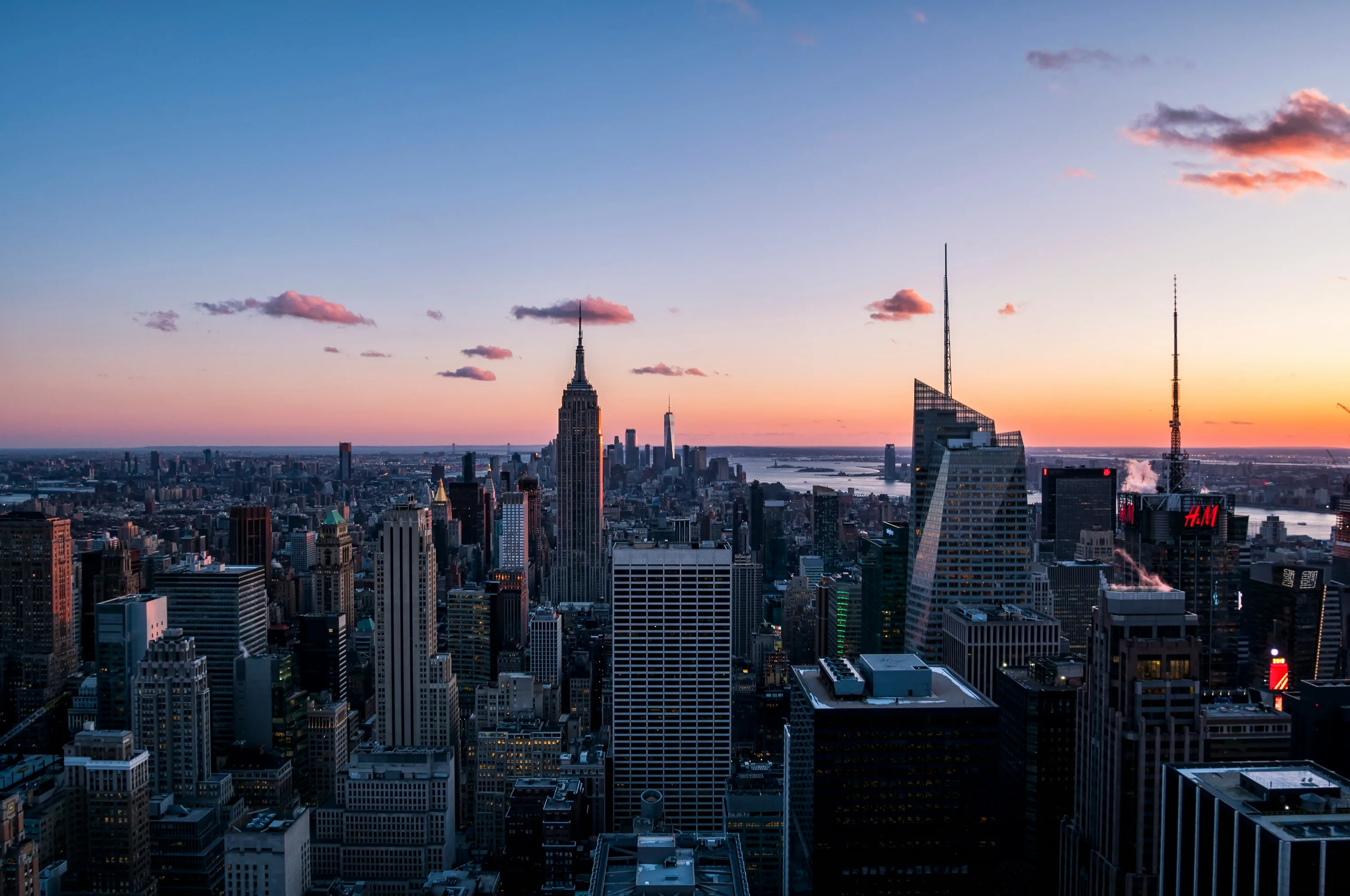
Rockefeller Center is five minutes away, with the Top of the Rock observation deck offering what many consider the best skyline view in the city, precisely because it includes the Empire State Building. Tickets are timed and cheaper booked ahead.
St Patrick's Cathedral, on Fifth Avenue at 50th Street, is free to enter and a peaceful five-minute detour from a busy museum morning.
Radio City Music Hall is a two-minute walk from Rockefeller Center, and its Stage Door Tour is worth doing if the art deco interior appeals.
Central Park begins about ten minutes north up Fifth or Sixth Avenue. The southern end, with the Pond and Wollman Rink, is the closest section and a good decompression after the galleries.
The Paley Museum, on West 52nd Street, is a small, quiet museum of television and radio history that almost nobody visits, three minutes from MoMA's door.
The Met is about twenty minutes north by bus or subway on the Upper East Side, and the two make an obvious pairing for art lovers with a spare day. Doing both in one day is possible but punishing; splitting them across two is far better.
Rules, Bags, and Security
Bags: All bags are inspected on arrival. Larger items must be checked into one of the two cloakrooms, and the queue there is the slowest part of the visit on a busy day. Backpacks may be carried but must be worn on the front of your chest or held at your side in the galleries. Large umbrellas cannot be brought in and should be left in the rack by the entrance.
Cloakroom: All checked items must be collected before closing, and the cloakroom can stop accepting drop-offs near the end of the day if it reaches capacity.
Photography: Still photography and video are allowed for personal, non-commercial use unless a sign says otherwise. Flash, tripods, and camera extension poles are not permitted.
Sketching: Permitted in pencil only, with sketchbooks no larger than 8.5 by 11 inches.
Purchases: Posters, prints, and postcards must be rolled up or carried in a bag while you are in the galleries.
Children: Children aged 12 and under must be accompanied by an adult at all times. Strollers are welcome but are not allowed on escalators and may occasionally be restricted in busy galleries. Scooters are prohibited and cannot be checked into the cloakroom.
Food and drink: Outside food and drink are not allowed in the museum.
Smoking: Prohibited everywhere on museum property, including the outdoor Sculpture Garden.
Re-entry: You may leave and return the same day as long as you keep your ticket. Hold on to it after scanning, since different gallery entrances may ask to see it again.
Accessibility at MoMA
Wheelchairs and rollators are available free of charge at all museum entrances on a first-come, first-served basis, and portable stools can be requested from any staff member in the main lobby. Lifts serve every floor, and many galleries have benches, with additional seating in the lobby, in the hallways, and in the Sculpture Garden.
Admission for visitors with disabilities is $22, and a care partner accompanying a visitor with a disability enters free, though a ticket is still required.
Free sensory kits can be collected from the information desk in the main lobby, the Crown Creativity Lab on Floor 2, and the Heyman Family Art Lab. Each contains a printed social guide and sensory map, fidgets, noise-cancelling headphones or earplugs, and sunglasses. A Sensory Friendly Map identifies quieter spaces throughout the building, and a Verbal Descriptions audio playlist is available for blind and partially sighted visitors.
All-gender restrooms are located on Floors 1, 3W, 5, and T1, and every restroom has a baby changing station. A feeding and lactation pod is available on Floor 1 beside the restrooms. Service animals are welcome throughout.
Final Tips for Visiting MoMA
Book online before you go. Advance purchase is technically required to guarantee entry, and it lets you skip the ticket line and walk straight through to the galleries. Although, I haven't had any trouble getting same-day tickets either.
Take the lift to Floor 5 the moment you are through security. The Starry Night is three people deep by late morning. At 10:30am you may get it almost to yourself, and everything else can wait.
Do not count on free Friday evenings unless you live in New York State. That concession is residents-only now, requires advance reservation and proof of address, and catches out visitors relying on older guides every week.
Nothing costs extra once you are in. Every special exhibition is covered by the standard ticket, and so is the daily film programme, which is one of the most underused things in the building.
Carry the smallest bag you can. The cloakroom queue, not the ticket desk, is what actually slows people down, and large umbrellas are turned away entirely.
Download the Bloomberg Connects app first. MoMA no longer prints paper maps, so the free app is your map, audio guide, and orientation in one.
The shops need no ticket. The Museum Store by the lobby and the Design Store across 53rd Street are both open to anyone, so you can browse before deciding whether to visit at all.
Pair MoMA with Rockefeller Center rather than another big museum. Five minutes away, with Top of the Rock and St Patrick's Cathedral in between, it makes a far better afternoon than trying to add the Met to the same day.
Back to New York City Attractions
Explore other New York City attractions


" width="24px"><path d="M 0 0 L 24 0 L 24 21.231 L 0 21.231 Z" fill="transparent" height="21.230768474975793px" id="nL2EwDcS9" width="24px"/><path d="M 0 0.541 C 0 0.242 0.245 0 0.547 0 L 2.735 0 C 3.037 0 3.282 0.242 3.282 0.541 L 3.282 4.598 C 3.282 4.897 3.037 5.139 2.735 5.139 L 0.547 5.139 C 0.245 5.139 0 4.897 0 4.598 Z" fill="rgb(196, 217, 201)" height="5.138657337892187px" id="hZ_rlBe_S" transform="translate(0 16.092)" width="3.2820512820512358px"/><path d="M 0 0.541 C 0 0.242 0.245 0 0.547 0 L 2.735 0 C 3.037 0 3.282 0.242 3.282 0.541 L 3.282 7.843 C 3.282 8.142 3.037 8.384 2.735 8.384 L 0.547 8.384 C 0.245 8.384 0 8.142 0 7.843 Z" fill="rgb(230, 211, 160)" height="8.38412513024521px" id="HgVBxIz3e" transform="translate(5.128 12.847)" width="3.282051282051235px"/><path d="M 0 0.541 C 0 0.242 0.245 0 0.547 0 L 2.735 0 C 3.037 0 3.282 0.242 3.282 0.541 L 3.282 12.982 C 3.282 13.281 3.037 13.523 2.735 13.523 L 0.547 13.523 C 0.245 13.523 0 13.281 0 12.982 Z" fill="rgb(232, 207, 164)" height="13.522782468137464px" id="utgrDnoM9" transform="translate(10.325 7.708)" width="3.282051282051377px"/><path d="M 0 0.541 C 0 0.242 0.245 0 0.547 0 L 2.735 0 C 3.037 0 3.282 0.242 3.282 0.541 L 3.282 16.498 C 3.282 16.797 3.037 17.039 2.735 17.039 L 0.547 17.039 C 0.245 17.039 0 16.797 0 16.498 Z" fill="rgb(233, 196, 166)" height="17.038705909853153px" id="OLOhW6STz" transform="translate(15.521 4.192)" width="3.2820512820512384px"/><path d="M 0 0.541 C 0 0.242 0.245 0 0.547 0 L 2.735 0 C 3.037 0 3.282 0.242 3.282 0.541 L 3.282 20.69 C 3.282 20.989 3.037 21.231 2.735 21.231 L 0.547 21.231 C 0.245 21.231 0 20.989 0 20.69 Z" fill="rgb(217, 170, 153)" height="21.230768474975793px" id="H5Z8wcwkd" transform="translate(20.718 0)" width="3.2820512820512278px"/></g></svg>)