Back to New York City Attractions
Top of the Rock: Everything You Need to Know Before You Visit
Updated August 2026
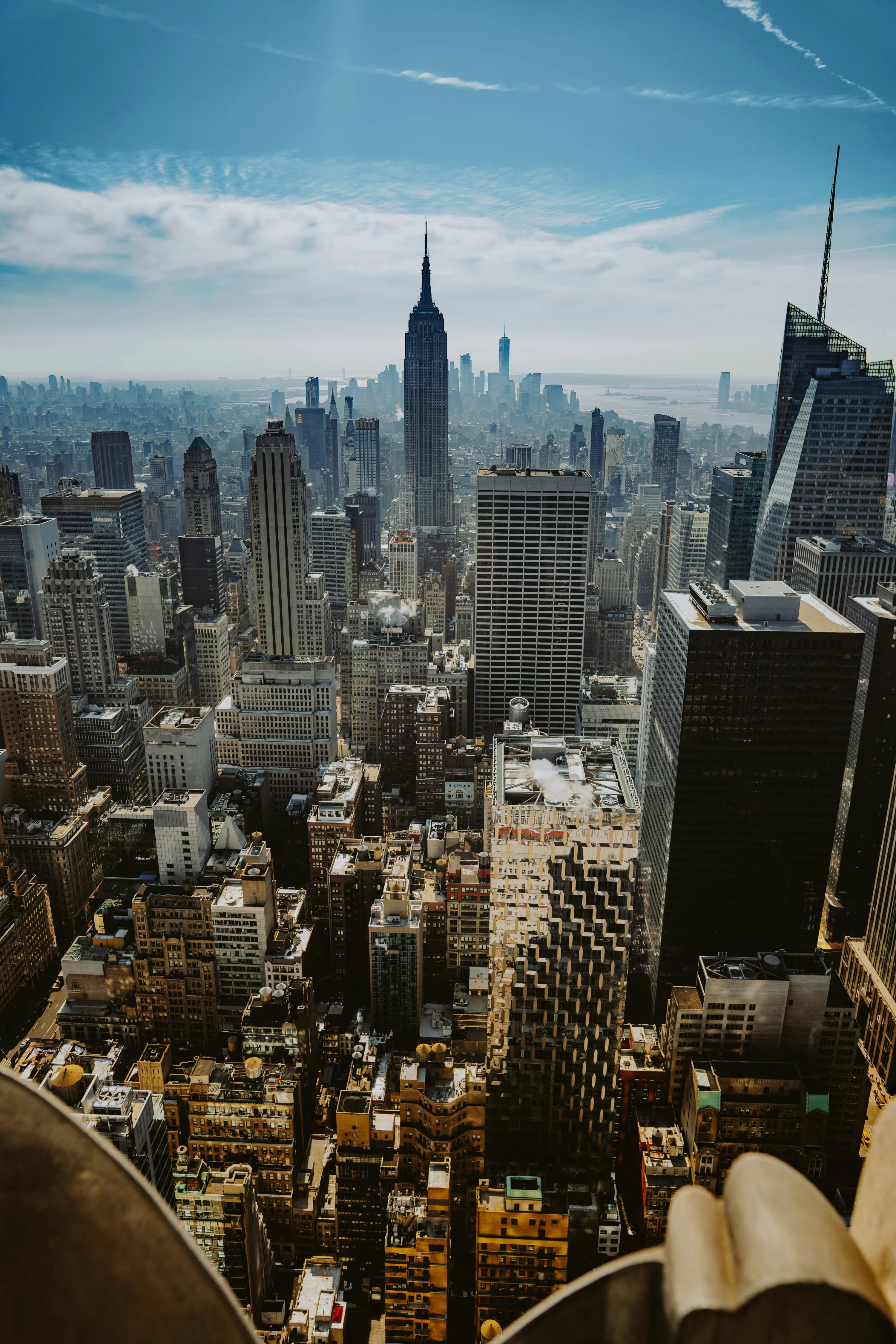
Top of the Rock sits 850 feet above 30 Rockefeller Plaza, spread across three observation levels on the 67th, 69th and 70th floors, and its 9,500 square feet of deck space is more spaceous than any other observation deck in the Big Apple. The reason people choose it over the Empire State Building is simple and hard to argue with: this is the only major deck where Central Park and the Empire State Building appear in the same 360-degree sweep, which means the skyline photograph everyone wants is only possible from here. Two newer add-ons, The Beam and SKYLIFT, have turned what was once a simple view into a big menu of decisions, and so it's worth understanding if the add-ons are really worth the price.
At a Glance
How Early to Book:
Get tickets a few days ahead to bypass ticket office queues. Same-day tickets can usually be purchased on site, especially during off-peak hours. If planning a visit during sunset, book at least 1 week ahead.
Best Times to Visit:
The most important thing is to go when it's clear. Check the forecast ahead of time. Early mornings, right at the 8am opening, will have the smallest crowds.
Ticket price:
General admission starts at $46.00 for adults, up to $73.00 for sunset slots. Additional VIP experiences sell at higher price points.
Where to Book:
Landmark Address:
Do You Need to Book Top of the Rock Tickets in Advance?
Yes, you should. Every standard ticket is timed entry, tied to a specific date and arrival window, and popular slots sell out, particularly around sunset.
Tickets are sold at the box office on the day as well, at the same face value, but doing it that way in summer means choosing from whatever slots are left rather than the one you want. Booking online also skips the box office queue, which is one of two you would otherwise stand in.
Where to book: Book directly at rockefellercenter.com. The official site carries every ticket type including several the resellers do not, and it is the only place to reschedule if your plans change.
How far ahead: For a weekday morning or midday slot, a couple of days is enough and same-day availability is common outside peak periods. For sunset slots, book at least a week ahead in summer, longer over Christmas. The two to three weeks around Thanksgiving and the tree lighting are the tightest of the year.
Timed entry, then no time limit. Your ticket books your arrival window, not your stay. Once you are up there, you can stay as long as you like until closing, and plenty of people go up before sunset and come back down after the lights are on.
Rescheduling: the official site has a dedicated reschedule contact route, which is worth knowing because this is a weather-dependent visit. If the forecast turns to low cloud, moving your slot is a better outcome than paying full price to stand inside a cloud.
The entrance can be a little confusing. The main entrance is on 50th Street between Fifth and Sixth Avenues, on the south side of the street, marked by a large red carpet. It is not in the main 30 Rockefeller Plaza lobby, and it is not on Fifth Avenue.
How Much Do Top of the Rock Tickets Cost?
Pricing is dynamic and rises for the most in-demand slots, so everything I've listed below is a starting figure rather than what the price always is. Sunset entry typically runs around $10-$20 above the same day's midday price.
Timed Admission: from $46, the standard ticket
The Beam + Admission: from $57
SKYLIFT + Admission: from $57
All-Inclusive Pass (deck, Beam and SKYLIFT): from $72
Skip-the-line Admission: from $89
Anytime Admission: from $105, arrive whenever you like on your chosen date
VIP Pass: from $185, guided, with private Beam, SKYLIFT, photo pass and champagne
VIP Rock Pass: from $225, a two-hour guided experience starting in the VIP Lounge
Rockefeller Center Tour: from $27
Visa Early Bird Admission: from $42 for eligible Visa cardholders
Children 5 and under go free when accompanied by a parent or guardian.
Combination tickets run about 10% below buying separately: Top of the Rock with MoMA from $70.50, with St. Patrick's Cathedral Audio Tour from $64, and with a Radio City Music Hall tour from $89. The MoMA pairing makes the most sense of the three, since MoMA is just a seven-minute walk away and makes sense as a rainy-afternoon backup.
The Beam on its own costs around $25 as an on-site add-on, bought at the box office or at the Beam desk on the 69th floor, if you decide once you are up there rather than when you're buying tickets.
The pricing structure is complex and it makes sense to run some numbers before you go. Standard admission plus one add-on is $57, and the All-Inclusive Pass at $72 gets you both add-ons for $15 more. If you were already leaning towards either the Beam or SKYLIFT, the all-inclusive is the better buy. If you were leaning towards neither, stay on the $49 ticket and put the difference towards a nice dinner.
Are There Top of the Rock Discounts or Promo Codes?
I'm going to be real with you. This is one of the most sought after things given the high prices of the attraction. However, discounts do not really exist.
What does not exist: working promo codes for the official site, Groupon deals, AAA rates, and student discounts. Third-party sites advertising Top of the Rock coupons are generally reselling the same timed tickets at a markup with a code applied on top, which nets out to roughly the same price with less flexibility and no ability to reschedule through the official channel.
However, this is what DOES exist:
Children 5 and under enter free, which is the single biggest saving available to families.
Visa cardholders get two real offers: Early Bird Admission from $42, which opens a private hour on the deck before general admission begins, and Visa Infinite Priority Access, available when you buy any ticket direct or at the box office. These are the closest thing to a real discount on this attraction.
CityPASS holders get $5 off the Rockefeller Center Tour, redeemed on site at the 50th Street box office.
Combination tickets save around 10% against separate purchases.
Off-peak slots are where the real savings are, but they don't really market them as a discount. A midday weekday entry can cost noticeably less than the same ticket at sunset on a Saturday, and the view in clear conditions is the same view. If your schedule has any flexibility, scrolling the booking calendar for a cheaper slot will beat any code you could hunt down.
Is Top of the Rock on the New York CityPASS?
Yes, it is, and it appears on every major New York multi-attraction pass, which makes it one of the easiest attractions to fold into a sightseeing plan.
New York CityPASS includes Top of the Rock among five attractions, from around $136, saving up to 42% against buying separately over a 9-day window.
New York C3 by CityPASS lets you pick three attractions from around $92, valid 9 days, and you choose as you go rather than up front.
The New York Pass by Go City starts from around $99 and covers 100-plus attractions over a set number of days.
Go City New York Explorer Pass starts from around $89 for a chosen number of attractions, with 60 days to use them.
Two things to know. First, passes cover general admission only. The Beam and SKYLIFT are add-ons you pay for separately, either in the pass provider's app or at the box office. Second, pass holders still need a timed reservation, and on some products that reservation has to be made separately before you arrive. Sort it when you buy the pass rather than on the morning of your visit, because a pass does not hold a slot for you.
Image Credit: Paul Hermans, CC BY-SA 1.0

The Top of the Rock observation deck at 30 Rockefeller Plaza originally opened in 1933. It closed to the public in 1986, and then officially reopened on November 1, 2005, following a major multi-million dollar renovation.
Top of the Rock Opening Hours and Entry Information
The observation deck runs daily from 8:00am to midnight, with last entry at 11:10pm. It is open 365 days a year.
Those hours are the longest of any major New York observation deck, and it's one of the better arguments for choosing it over the alternatives. An 8:00am opening means you can be on the deck in clear morning light before Midtown completely wakes up, and a midnight close means the city-lights version is available at a civilised hour rather than as a rushed last entry.
The Beam generally operates from 9:00am. SKYLIFT runs its nighttime light show from around 8:00pm.
Hours can shift for private events, extreme weather and some holidays, and the individual add-ons occasionally close earlier than the deck itself with little notice. If The Beam or SKYLIFT is the reason you are going, check on the day rather than assuming they run until midnight too.
Address: 30 Rockefeller Plaza, New York, NY 10112. The visitor entrance is on 50th Street between Fifth and Sixth Avenues.
What is the Best Way to Get to Top of the Rock?
The building sits in the middle of Midtown, and almost every subway line in Manhattan puts you within a few minutes of it.
By subway: the B, D, F and M stop at 47-50th Street-Rockefeller Center, which comes up directly into the complex and is the easiest arrival by a distance. The 6 stops at 51st Street, then walk west on 50th. The 1 stops at 50th Street, then walk east on 50th. The N, Q and R stop at 49th Street, then walk east.
By bus: the M1, M2, M3, M4 and M5 run along Fifth Avenue southbound and Madison northbound, stopping at 50th Street. The M50 runs crosstown on 49th Street. The M7 runs along Broadway, exit at 50th and walk east.
By bike: Citi Bike docks sit on 51st Street and 48th Street, both between Fifth and Sixth Avenues.
On foot: Radio City Music Hall is two minutes away, MoMA seven minutes away, Times Square twelve minutes away, Columbus Circle twelve minutes away, the Met about twenty-one minutes away.
By car: not worth attempting. There is no visitor parking, Midtown garage rates around Rockefeller Center are among the highest in the city, and the streets here are congested at almost every hour.
The practical tip: coming up from the 47-50th Street station puts you in the underground concourse, which is the pleasant way to arrive in bad weather and connects directly to the complex. From there, follow signs to the 50th Street exit and the red carpet rather than wandering into the office lobby.
How Much Time Should I Spend at Top of the Rock?
About 60 to 90 minutes is what I'd recommend for a standard visit, and there is no time limit once you are up, so you can extend that as long as you like until closing.
The breakdown runs roughly: 10 to 15 minutes for the box office and security, 10 minutes for the Welcome Gallery and mezzanine exhibits, under a minute in the Sky Shuttle elevator, and 30 to 60 minutes across the three decks.
Add 20 to 30 minutes if you are doing The Beam, which has its own queue on the 69th floor. Add another 20 to 30 minutes for SKYLIFT, which also queues separately and takes small groups at a time.
Two to three hours if you are doing both add-ons and finishing with a drink at The Weather Room.
The thing that makes this deck different from most is that you can go up before sunset and simply stay through it and into the lit-city hour, all on one ticket and without moving. That is the best value decision available here, and it costs nothing extra.
What is the Best Time to Visit Top of the Rock?
Best time of day: the two quiet windows are right at 8:00am opening and after about 9:00pm. Early morning gives you the clearest air, the smallest crowds, and low sun striking the Empire State Building directly, which is the shot. Late evening gives you the lit skyline with the sunset crowd already gone.
Worst window: roughly 3:00pm to 9:00pm, which is when the sunset trade builds and peaks. Even with a timed ticket, elevator waits in this window can run 30 to 45 minutes on summer weekends, against 10 to 20 minutes off-peak.
Best days: Monday to Thursday. Weekends concentrate both crowds and dynamic pricing, and Saturday evening is the worst combination of the two.
Best season: autumn is the strongest overall. Cooler air, lower humidity and better visibility produce the sharpest skyline of the year, and crowds ease from the summer peak. Spring is the next best. Winter is quiet but cold on the open 70th floor, and summer combines haze with the heaviest crowds.
Weather decides this visit more than anything else. Check the forecast the evening before, and if visibility looks poor, reschedule rather than going up regardless. There is no view-quality guarantee and no refund for cloud.
For photography: the 70th floor is the level to shoot from, because it has no glass at all. Shoot from the southeast side for the clean Empire State Building and downtown line, and avoid the western side, which puts the 69th-floor deck into your frame.
Top of the Rock at Sunset and at Night
For sunset, book a slot roughly 60 to 90 minutes before actual sunset. Look up the sunset time for your specific date rather than assuming, because it swings by more than three hours across the year in New York. That timing gets you up, through security and onto the deck with room to find a spot before golden hour begins, and because there is no time limit you then get the sunset, the blue hour and the city lights coming on without buying anything else. Expect to shell out an additional $10-$20 more for these slots and expect the longest elevator queues of the day.
For night, the deck stays open to midnight, and after about 9:00pm it thins out dramatically. On a weekday at 10:00pm you can have significant stretches of the 70th floor close to yourself. The trade-off is that unlit areas read as black voids, so Central Park, which is the whole point of the northern view, largely disappears after dark. If Central Park is why you are coming, go in daylight.
The compromise that beats both: arrive about an hour before sunset and stay. You get the park in light, the sunset, and the lit skyline, in one visit, on the standard ticket.
SKYLIFT after 8:00pm runs a nighttime light show, which is a reason to time the add-on for late evening rather than daytime if you are buying it anyway.
At Christmas, the tree and the rink below make this the busiest period of the year, and the deck view itself does not include the tree in any meaningful way, since you are 70 floors above it. Come for the plaza at ground level and the deck for the skyline, but do not expect the two to combine into one photograph.

What is Inside Top of the Rock? The Three Observation Decks
The route up is part of the ticket, and the three decks are meaningfully different from one another rather than three versions of the same thing.
The Welcome Gallery and mezzanine exhibits come first, covering Rockefeller Center's construction through the Great Depression, with a detailed three-dimensional model of the complex and short films on its history. Above the atrium hangs Joie, a Swarovski chandelier of around 14,000 crystals with fibre-optic illumination, one of the largest of its kind.
The Sky Shuttle runs 850 feet in under a minute, with a ceiling display for the ride.
The 67th floor is the indoor level, glass-enclosed, with a terrace and The Weather Room Café & Bar, where you can sit down with a drink and a view. This is the level to retreat to when the wind on 70 gets unpleasant, and the only one where you can eat.
The 69th floor is outdoor, with frameless glass panels rather than a solid barrier. This is where The Beam is located, on the southeast side. The glass means clean sightlines but reflections in photographs.
The 70th floor is the reason to come: fully open-air, no glass, no ceiling, no safety wiring in your eyeline, and 360 degrees of unobstructed view. It is the least interrupted major observation deck in New York, and it is where the postcard photographs are taken.
What you can see: Central Park filling the entire northern view, the Empire State Building dominating the south with One World Trade Center behind it, the Chrysler Building east, the Hudson west. On clear days the sightlines reach New Jersey, Connecticut, Yankee Stadium and, at the far edge, Coney Island.
The Top of the Rock app works as a skyline guide and audio tour and is free. Download it before you arrive rather than fighting for a cell signal on the deck.
The Beam and SKYLIFT: Are the Add-Ons Worth It?
The Beam recreates the iconic 1932 photograph Lunch Atop a Skyscraper, taken during the construction of 30 Rockefeller Plaza. You sit on a beam that rises 12 feet above the 69th-floor deck and rotates 180 degrees while a photographer works. It costs around $25 as an add-on, or $57 bundled with admission. Height restrictions apply: 42 inches accompanied by an adult, 52 inches unaccompanied.
It is unashamedly a photograph rather than a view, and that is the right way to judge it. If the picture is what you want from this visit, it delivers something no other deck in New York offers. If you would not print it, skip it.
SKYLIFT is the newer and more dramatic of the two: a revolving, open-air glass platform that rises three stories above the 70th floor, reaching around 900 feet, with up to 13 people aboard at a time. There is no glass between you and the skyline at the top and no ceiling. It costs $57 bundled with admission. Under-18s must be accompanied by an adult throughout, and there is a maximum weight of 136kg.
SKYLIFT is more worth it than The Beam is for most people, because it is actually a different vantage point rather than the same view with a prop. The counter-argument is that the 70th floor is already unobstructed, so what you are buying is height and rotation rather than a fundamentally new sight.
If you are choosing one: SKYLIFT for the experience, The Beam for the photograph, or the All-Inclusive Pass at $72 if you want both, which is only $15 above either single add-on.
If you have vertigo, skip both, and consider whether the open 70th floor is right for you at all. Honestly if you have a fear of heights I would question if this is the right attraction for you at all.
Is the Top of the Rock Express Pass or VIP Worth It?
Skip-the-line Admission at $89 roughly doubles the standard $49 ticket, and what it buys is bypassing the queues at entry and exit. Nothing about the view changes.
It's probably the most worth it on summer weekends, over the Christmas period, and on any sunset slot, when the difference between a 15-minute wait and a 45-minute one can decide whether you make your dinner reservation. On a Tuesday morning in February it is money thrown away, because the regular line will be short.
Anytime Admission at $105 is a different product and often the more useful one. It removes the timed slot entirely, so you turn up whenever you like on your chosen date. That is worth real money on a trip where the weather is unpredictable and you want to go up on whichever afternoon turns out clear.
The VIP Pass at $185 and the VIP Rock Pass at $225 include a guide, private Beam and SKYLIFT access, a photo pass, a champagne toast and lounge access. These are date-night and special-occasion products rather than efficiency purchases, and they should be judged as such.
My own view: for most visitors the standard $49 ticket booked into a good slot beats all of these. If crowds are your concern, the free fix is going at 8:00am or after 9:00pm rather than paying $40 extra to queue-jump at the busiest hour. If flexibility is your concern, Anytime Admission is the honest answer and worth its premium.
Top of the Rock vs the Empire State Building: Which Should You Choose?
This is such a great question, I wrote an entire blog post about it. Check it out here.
Rockefeller Center Tours and the NBC Studio Tour
The Rockefeller Center Tour is a 75-minute guided walk through the complex's art, architecture and history, led by a guide, from $27. It covers the Art Deco programme, the murals, Prometheus and the story of how the centre was built through the Depression. CityPASS holders get $5 off, redeemed at the 50th Street box office.
It is a good addition for anyone who finds the deck itself a 40-minute experience and wants more from the visit. Combination tickets pairing the tour with deck admission are available and priced below buying both.
Rockefeller Center Tour, Jr. covers the same ground for children aged 6 to 12, also from $27.
The NBC Studio Tour is a separate business. People search for an "NBC observation deck" all the time, and it does not exist. The NBC tour operates independently of Top of the Rock, is booked through its own site, and takes you through the studios rather than to any deck. If you want both, they are two purchases.
The Rainbow Room on the 65th floor is a private events venue rather than a public restaurant, and access is by reservation for specific events rather than as part of any deck ticket.
Ground level is free. The plaza, the sunken rink area, the gardens and the concourse cost nothing, and the Prometheus statue and the tree in season are all viewable without a ticket.
Is Top of the Rock Worth Visiting?
Of the five major New York observation decks at the time of this writing, this is the one I would send a first-time visitor to, with one major condition of course: you need to go on a clear day.
That being said, it does get some flack, and that's okay. It is expensive for what is, stripped down, an elevator ride and a view, and the exhibits on the way up are thinner than the Empire State Building's. The sunset window is badly crowded, and a timed ticket does not exempt you from a 45-minute elevator queue at 6:00pm in July. The add-ons stack up fast, and a family of four doing the All-Inclusive Pass is looking at close to $300 before dinner. And on a low-visibility day the money is simply gone.
What it has is the best actual view in the city. The 70th floor is open air with nothing between you and the skyline, the deck is large enough that you can find your own patch of railing, and the composition, park to the north and Empire State Building to the south, is the one people picture when they picture New York from above. No other deck gives you all three.
For first-time visitors, this is the deck to do if you only do one.
For photographers, it is not close. The unobstructed 70th floor beats the Empire State Building's safety wiring and the enclosed glass at One World and the 102nd floor.
For families, the free entry under 6, the large deck and The Beam make it work, though the open 70th floor needs a firm hand with small children.
For couples, the sunset slot plus The Weather Room is one of the better evenings you can spend in Midtown, and the VIP options exist precisely for proposals.
For anyone on a tight budget, the standard $49 timed ticket at 8:00am is the whole attraction at its cheapest and quietest. Skip every add-on and you will still have done the entire experience.
Where Should I Eat Near Top of the Rock?
Rockefeller Center has become a serious dining destination in its own right, which was not true a decade ago, and there is no need to walk far.
The Weather Room Café & Bar on the 67th floor is inside the paid area, serving light bites, coffee and cocktails on the terrace level. It is the natural pause during a visit rather than a destination, and having a seat with a view at 850 feet is worth more than the food is.
Le Rock, in the Rockefeller Center complex, is the standout: a French brasserie in a beautiful Art Deco room that has been one of the better Midtown openings in years. Book well ahead, particularly for dinner.
Pebble Bar, in the small townhouse beside 30 Rock, is the drinks answer, spread over several floors with a good bar programme and no view required.
Jupiter does modern Italian in the complex and is easier to get into than Le Rock.
Naro and Five Acres round out the on-site options, and the Rockefeller Center concourse below ground has fast, cheap options if you are between things.
Just outside: the Midtown blocks immediately around Rockefeller Center are thick with tourist-priced delis and chain restaurants, and quality improves as you walk. Head north towards 53rd Street and MoMA, or east across Fifth Avenue, rather than eating on the plaza edge.
I'll give my same midtown warning as I always do: anything with a photo menu within one block of the entrance is charging a location premium for food that would not survive elsewhere in the city.
What Else is There to Do Near Top of the Rock?
Radio City Music Hall is two minutes away and runs its own Stage Door Tour, which is a good pairing and available as a combination ticket with deck admission.
MoMA is seven minutes north and is the best rainy-day partner to this visit, with a combination ticket available at around 10% off.
St. Patrick's Cathedral is directly across Fifth Avenue, free to enter, and also sold as a combination ticket with the deck. Just be aware that entrance is free, the combo ticket gives you access to the audio tour.
Fifth Avenue shopping runs south from 50th Street, and Saks Fifth Avenue sits opposite the complex.
The Rink at Rockefeller Center operates in season below the plaza, and the Christmas tree stands above it from late November.
Times Square is twelve minutes west, Central Park ten minutes north, Bryant Park and the New York Public Library about ten minutes south.
The Today Show films from the street-level studio on the plaza in the mornings, and standing outside it costs nothing.
The Empire State Building is fifteen minutes south on foot if you are doing both decks, though separate evenings work better.
Rules, Bags, and Security
Security: all visitors pass through a security checkpoint at the entrance. Be selective about what you carry, because the queue moves faster the less you bring.
Prohibited: weapons of any kind. Food and beverages are not permitted, which surprises people who have packed a picnic for the deck. Buy on site at The Weather Room instead.
Bags: there is no cloakroom and no storage, so anything refused at security cannot be left behind. This is not a stop to make between hotel checkout and a train with luggage.
Strollers: welcome, but they must be collapsible.
Service animals: service dogs are welcome throughout Top of the Rock and Rockefeller Center.
Photography: handheld cameras and phones are fine throughout, and the 70th floor's lack of glass makes it the best deck in the city for it.
Heights: the attraction's own guidance is that anyone with a fear of heights should not take part in the elevated experiences, and that applies with more force to SKYLIFT than to the decks themselves.
Accessibility at Top of the Rock
Top of the Rock is fully wheelchair accessible, and it is better set up than most New York attractions.
Entry: power-assist doors at the main entrance on 50th Street between Fifth and Sixth Avenues.
Getting up: every floor has elevator access, from street level all the way to the open-air 70th floor. There are no stairs-only sections.
On the decks: the 67th, 69th and 70th floors have wide pathways and lowered sections of the glass barriers, so the view is usable from a seated position rather than blocked. Every public restroom at Top of the Rock has wheelchair-accessible stalls.
Deaf and hard-of-hearing visitors: printed transcripts of all the short films shown through the experience are available on request from any team member.
The Rockefeller Center Tour is also fully accessible, and guides are trained to run wheelchair-friendly routes at an appropriate pace.
Service dogs are welcome in all public areas.
Final Tips for Visiting Top of the Rock
Book a timed slot online and check the forecast the night before. Low cloud is the most common way this visit goes wrong, and rescheduling is far better than going up regardless.
Enter on 50th Street, on the south side, at the red carpet. It is not the main 30 Rock lobby and not on Fifth Avenue.
Book about an hour before sunset and simply stay. There is no time limit once you are up, so one ticket buys you daylight, sunset and the lit skyline.
Go at 8:00am or after 9:00pm if crowds are the enemy. Both windows are quiet, and both are free fixes that beat paying $40 extra for skip-the-line.
Spend most of your time on the 70th floor. It is the only level with no glass at all, and it is the reason the photographs from here beat every other deck.
Take the All-Inclusive Pass or neither add-on. At $72 it covers both the Beam and SKYLIFT for $15 more than either alone, so the middle option rarely makes sense.
Do not pack food or drink. Neither is permitted through security and there is nowhere to store anything.
Pair it with MoMA seven minutes north for a combination ticket and a weather-proof backup, or with the Empire State Building on a separate evening for the deck-and-history double.
Back to New York City Attractions
Explore other New York City attractions
" width="24px"><path d="M 0 0 L 24 0 L 24 21.231 L 0 21.231 Z" fill="transparent" height="21.230768474975793px" id="nL2EwDcS9" width="24px"/><path d="M 0 0.541 C 0 0.242 0.245 0 0.547 0 L 2.735 0 C 3.037 0 3.282 0.242 3.282 0.541 L 3.282 4.598 C 3.282 4.897 3.037 5.139 2.735 5.139 L 0.547 5.139 C 0.245 5.139 0 4.897 0 4.598 Z" fill="rgb(196, 217, 201)" height="5.138657337892187px" id="hZ_rlBe_S" transform="translate(0 16.092)" width="3.2820512820512358px"/><path d="M 0 0.541 C 0 0.242 0.245 0 0.547 0 L 2.735 0 C 3.037 0 3.282 0.242 3.282 0.541 L 3.282 7.843 C 3.282 8.142 3.037 8.384 2.735 8.384 L 0.547 8.384 C 0.245 8.384 0 8.142 0 7.843 Z" fill="rgb(230, 211, 160)" height="8.38412513024521px" id="HgVBxIz3e" transform="translate(5.128 12.847)" width="3.282051282051235px"/><path d="M 0 0.541 C 0 0.242 0.245 0 0.547 0 L 2.735 0 C 3.037 0 3.282 0.242 3.282 0.541 L 3.282 12.982 C 3.282 13.281 3.037 13.523 2.735 13.523 L 0.547 13.523 C 0.245 13.523 0 13.281 0 12.982 Z" fill="rgb(232, 207, 164)" height="13.522782468137464px" id="utgrDnoM9" transform="translate(10.325 7.708)" width="3.282051282051377px"/><path d="M 0 0.541 C 0 0.242 0.245 0 0.547 0 L 2.735 0 C 3.037 0 3.282 0.242 3.282 0.541 L 3.282 16.498 C 3.282 16.797 3.037 17.039 2.735 17.039 L 0.547 17.039 C 0.245 17.039 0 16.797 0 16.498 Z" fill="rgb(233, 196, 166)" height="17.038705909853153px" id="OLOhW6STz" transform="translate(15.521 4.192)" width="3.2820512820512384px"/><path d="M 0 0.541 C 0 0.242 0.245 0 0.547 0 L 2.735 0 C 3.037 0 3.282 0.242 3.282 0.541 L 3.282 20.69 C 3.282 20.989 3.037 21.231 2.735 21.231 L 0.547 21.231 C 0.245 21.231 0 20.989 0 20.69 Z" fill="rgb(217, 170, 153)" height="21.230768474975793px" id="H5Z8wcwkd" transform="translate(20.718 0)" width="3.2820512820512278px"/></g></svg>)