Back to Paris Attractions
NOTE: We advise to check the tide schedules on the Mont-Saint-Michel tourism website ahead of a planned visit, as this will affect what you see and how you access the island (see tides section below).
How Far in Advance to Book Tickets to the Abbaye du Mont-Saint-Michel in Normandy, France
Updated August 2026
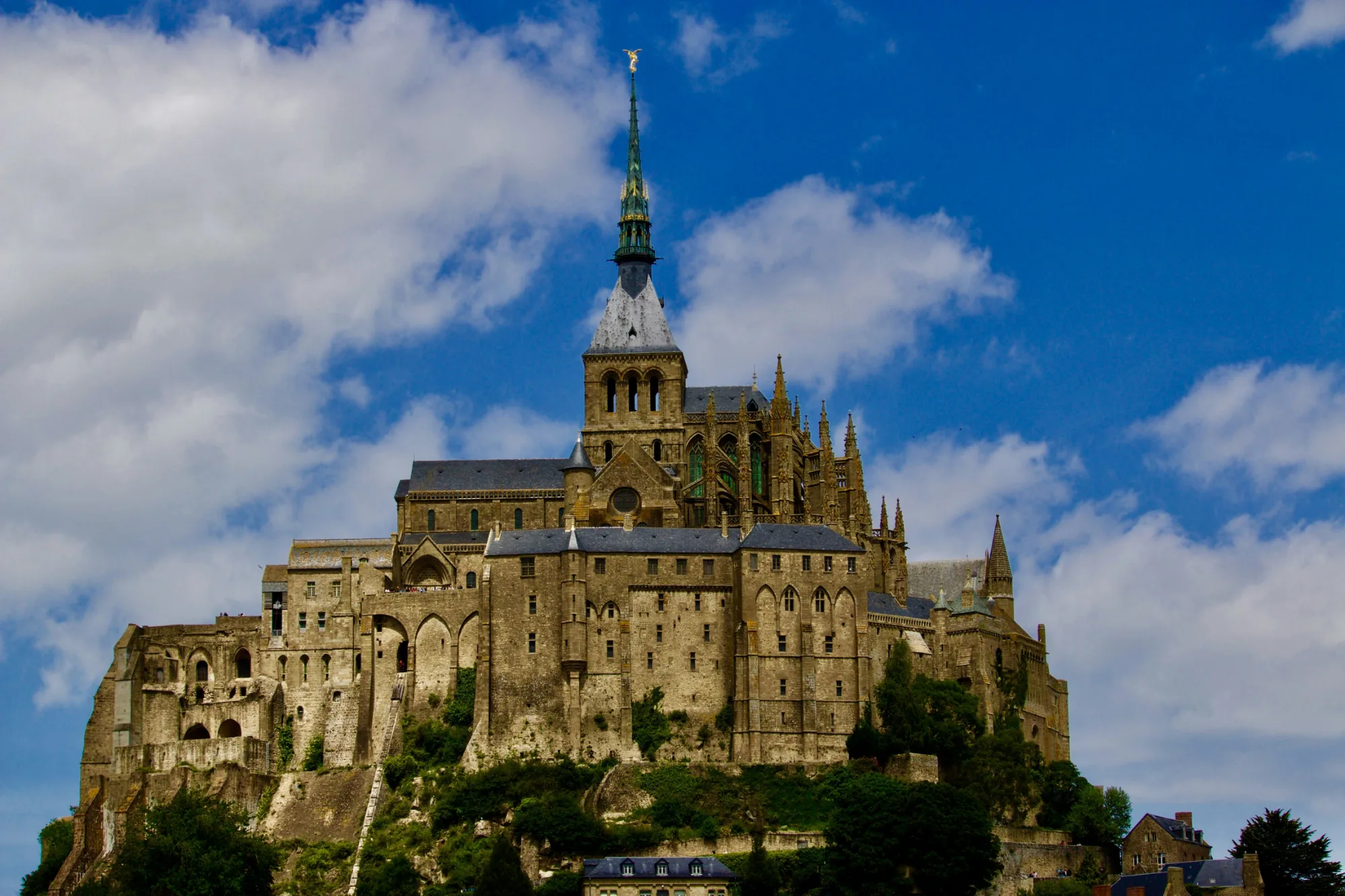
There are very few places in the world that look exactly like their photographs, and Mont-Saint-Michel is one of them. Rising from the tidal sands of the Normandy coast on a cone of granite rock, its spires reaching 170 metres above the bay, it is one of those rare sights that stops you in your tracks. The abbey at its crown has stood in various forms for over 1,300 years, drawing pilgrims, kings, prisoners, and tourists in such numbers that it now receives around three million visitors a year, making it the most visited site in France outside of Paris. A UNESCO World Heritage Site since 1979, it is simultaneously a triumph of medieval engineering, a place of active Benedictine monastic life, and a natural phenomenon governed by some of the most dramatic tides in Europe. Getting the most out of a visit here requires more planning than almost any other attraction in France, and the tides alone can transform the entire character of the experience depending on when you arrive. This guide covers everything you need to know.
At a Glance
How Early to Book:
Book timed-entry tickets at least a few days ahead of time to guarantee entry and avoid long queues.
About 1 month in advance.
Best Times to Visit:
Early mornings and late afternoons, particularly Monday and Tuesday. Check tide schedules
Ticket price:
€16 for adults during high season, €13 other times of year.
Where to Book:
The Official Abbaye du Mont-Saint-Michel website
Landmark Address:
Do You Need to Book Mont-Saint-Michel Abbey Tickets in Advance?
Yes, and the booking system here works differently from most other French monuments, so it is worth understanding before you visit. The Abbey of Mont-Saint-Michel now operates a timed entry system, and tickets are only available to purchase up to one month in advance. Your ticket is valid only for the specific time slot you select, and you must arrive within that window.
Booking online in advance is strongly recommended, particularly from April through September when demand is highest and dates shown in red on the booking calendar are fully sold out. The official booking site is run by the Centre des Monuments Nationaux.
Free entry for all visitors applies on the first Sunday of January, February, March, November, and December.
Note that the Paris Museum Pass does not cover the Abbey of Mont-Saint-Michel. If you hold one, it does not apply here. The abbey does participate in the Passion Monuments annual pass, however, which gives unlimited access to it and more than 80 other French monuments for one year and can be worthwhile if you visit several on a longer trip. You can read our blog post on museum passes here.
For the village: The village of Mont-Saint-Michel itself is a commune and is entirely free to visit at any time, with no ticket, reservation, or time restriction required. You can walk the ramparts, explore the narrow streets, visit the Church of Saint-Pierre, and take in the views without entering or paying for the abbey.
Opening Hours and Entry Information
The Abbey of Mont-Saint-Michel is open daily throughout the year, with seasonal hours:
1 May to 31 August: 9:00am to 7:00pm (last entry 6:00pm)
1 September to 30 April: 9:30am to 6:00pm (last entry 5:00pm)
The abbey is closed on 1 January, 1 May, and 25 December. Always check the official website before travelling, as additional closures for special events or maintenance can be announced.
During July and August, the abbey opens for special evening visits from 7:30pm to 11:00pm on most nights except Sundays, with illuminations and a special programme. A separate or combined ticket is required for these evening visits, and they are popular. Book in advance via the official website if attending.
The audioguide app can be downloaded free to your own smartphone before your visit, or you can rent a Revelacio multimedia tablet on site for €6 (ID required as a deposit) if you'd rather not rely on a download.
The abbey's bookshop is accessible without an entrance ticket for those who simply want to browse.
Understanding the Tides at Mont-Saint-Michel
The tides here are not simply a backdrop to your visit; they are part of the experience and they can significantly affect how you access the site and what you see. The Bay of Mont-Saint-Michel has some of the most dramatic tides in Europe, with a difference of up to 15 metres between low and high tide. At the highest spring tides, the island becomes completely surrounded by water and the causeway is briefly submerged, transforming Mont-Saint-Michel into a true island for a few hours at a time.
Understanding the basics before you visit will help you plan:
High tide brings the water rushing across the bay with remarkable speed and surrounds the island, cutting off the causeway for periods of around 1.5 hours during the very highest tides. During these times, access to and from the island is by shuttle only; the bridge itself is raised above normal high tide levels, so the shuttle continues to operate in most conditions. The effect of seeing the island encircled by water is extraordinary.
Low tide exposes vast expanses of shimmering sand and mudflats around the island. The bay takes on a completely different character, and the sight of Mont-Saint-Michel rising from the sand is equally dramatic in its own way.
Spring tides (marées de vive eau), which occur around the new and full moon roughly every two weeks, produce the highest water levels. The most exceptional tides of the year, sometimes called "tides of the century" (marées du siècle), occur a few times annually when coefficients are highest. Check the official tide schedule at the Mont-Saint-Michel tourism office website before your visit.
One very important safety warning: Never attempt to walk in the bay without an accredited guide. The tides move with extraordinary speed across the flat sands, described by locals as fast as a galloping horse, and the bay contains patches of quicksand. Local emergency services regularly rescue tourists who venture out alone. If you want to walk in the bay, book a guided mudflat crossing in advance through the tourist office.
What is the Best Time to Visit Mont-Saint-Michel?
Given the tides, the crowds, and the dramatic seasonal changes, timing a visit to Mont-Saint-Michel involves more variables than most attractions. Here is how to think about it.
For the fewest crowds: The winter months (December to February) see the smallest visitor numbers, and on a clear winter morning you can experience the island with a peace and quiet that is impossible in summer. The abbey is atmospheric and unhurried, and the views of the fog or frost over the bay are spectacular. The trade-off is cold weather and shorter opening hours.
For the best balance of weather and crowds: Late April to early June and September to October are widely considered the sweet spot. The weather is mild, the landscape is beautiful, and the crowds, while still substantial, are considerably more manageable than in high summer. These shoulder seasons are the most recommended for most visitors.
For the warmest weather and longest days: July and August offer the best Normandy weather and the longest opening hours, including the evening illumination programme. They also bring the highest visitor numbers. The Grand Rue (the main street through the village) can be almost impossible to navigate in mid-afternoon in August. If visiting in summer, arriving at or before opening time is essential.
For the most dramatic tides: Visit around the new or full moon, when spring tides are at their highest. Witnessing the island completely surrounded by water during a high spring tide is an extraordinary sight. Check the tide calendar before booking your travel dates if this is a priority.
On time of day: Arriving at opening time is the single most effective strategy for avoiding the worst of the crowds. The period from around 10:30am to 3:00pm sees the highest visitor concentrations. Those who can stay into the late afternoon or evening will find the island significantly calmer as day-trippers depart.
On days of the week: Weekdays are noticeably quieter than weekends throughout the season. Monday and Tuesday tend to be the calmest days.
For the evening illumination programme: July and August evening visits (7:30pm to 11:00pm) offer the abbey by night, lit against the darkening sky, with very few visitors present. This is one of the most atmospheric ways to experience the monument and is increasingly popular. Book in advance.
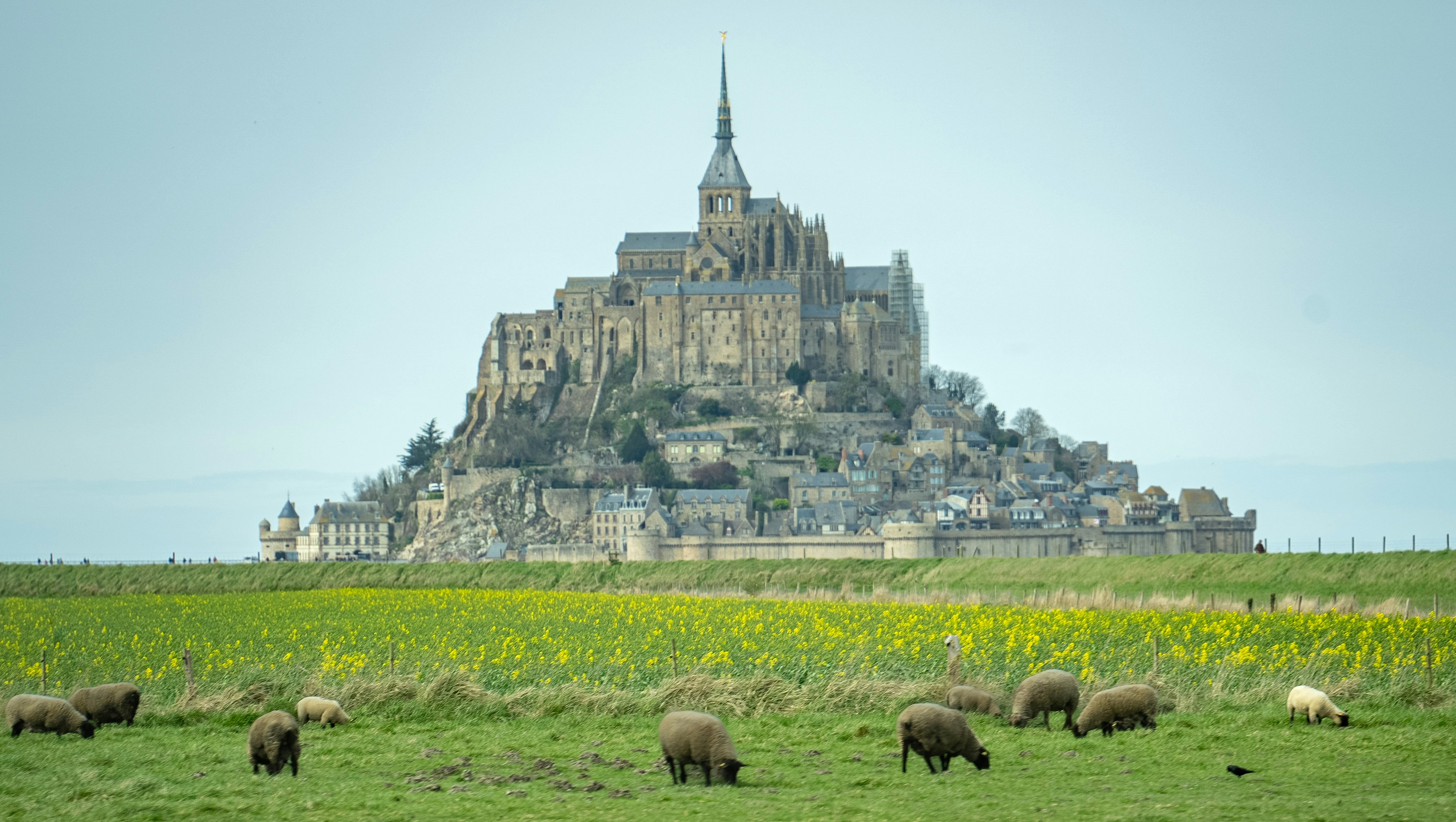
After the French Revolution, Abbaye Mont-Saint-Michel was converted into a state prison where approximately 14,000 prisoners were held until 1863; escape was nearly impossible due to the dangerous quicksand and the highest tides in Europe surrounding the island.
What is the Best Way to Get to Mont-Saint-Michel?
Mont-Saint-Michel is located in Normandy on the border with Brittany, approximately 360km from Paris. Getting there requires planning regardless of your mode of transport.
By Train plus Bus:
The most practical route from Paris is by TGV from Paris Montparnasse to Rennes, followed by a connecting bus to Mont-Saint-Michel. The train journey takes approximately 1.5 hours, and the bus connection takes around 1 hour 15 minutes. This combined route is reliable and well-served.
Alternative train routes include Paris Montparnasse to Villedieu-les-Poêles (via the NOMAD train) with a bus connection, and Paris Saint-Lazare to Caen then a TER connection to Pontorson and bus to the Mont. Pontorson is the nearest train station to Mont-Saint-Michel by the direct Normandy route and is 9km away; buses connect Pontorson station to the Mont.
By Car:
Many visitors choose to drive, particularly those combining Mont-Saint-Michel with other Normandy destinations or travelling from Brittany. Journey time from Paris is approximately 3.5 to 4 hours depending on traffic. From Caen, allow around 1.5 hours; from Rennes, around 1 hour.
All cars must park on the mainland in the designated car parks and cannot drive onto the island. Several large car parks are located just off the causeway approach road, with free parking available from 7:00pm, which is worth planning around if you are arriving for an evening visit. During the day, parking is charged per hour; consult the rates on the Mont-Saint-Michel public establishment website.
Free shuttle buses (Le Passeur) run continuously between the mainland car parks and the foot of the island, and are available to all visitors. The shuttle journey takes a few minutes. You can also walk from the car parks along the bridge, which takes around 35 to 40 minutes on foot and is one of the great approaches to any monument in France.
By Organised Tour from Paris:
A large number of day tours depart daily from Paris during the main season, typically by coach and covering approximately 14 hours in total including travel time. These are a practical option for those without a car who want a guided experience, though the day is long and tiring. Several tours include abbey admission. Major operators include Cityrama, Viator, and GetYourGuide. Bear in mind that a day trip from Paris involves approximately eight to nine hours of travel for three to five hours at the destination.
A note on ferry access from the UK: Brittany Ferries operates routes from Portsmouth to Saint-Malo (the nearest port, approximately 56km away), making Mont-Saint-Michel an excellent first or last stop on a Normandy road trip from the UK. The overnight crossing with a cabin is a comfortable and scenic way to arrive.
Is the Abbey of Mont-Saint-Michel Worth Visiting?
Yes, it's spectacular in many different ways. Mont-Saint-Michel is one of those experiences that justifies the effort of getting there in full, and the abbey itself is more extraordinary than its fame might suggest. The engineering alone is staggering: the medieval builders erected the entire complex on a rock barely 900 metres in circumference, using a system of superimposed crypts, halls, and terraces to support the weight of the church and the three levels of the building known as La Merveille (The Marvel) above them. The church at the summit dates from 1023, and the building was constructed and extended continuously for over four centuries.
The interior spaces are moving. The cloister, perched near the top of the rock with its delicate double-arched columns, is one of the most beautiful Gothic spaces in France. The refectory, the abbey church with its 15th-century flamboyant Gothic chancel, the great hall of the Knights, the crypts below, and the monks' promenoir all contribute to an experience that feels simultaneously vast in scale and intimately human. The views from the western terrace and the upper levels of the abbey are extraordinary in clear weather, with the bay stretching in all directions.
The Grand Rue, the single main street running from the entrance gate to the foot of the abbey stairs, is lined with shops and restaurants and is undeniably touristy. But the lanes and stairways that branch off it, the ramparts walkable in sections, the Church of Saint-Pierre, and the quieter northern face of the island are well worth exploring and see far fewer visitors.
How Much Time Should I Spend at Mont-Saint-Michel?
Plan for a minimum of three to five hours for a thorough visit, including the abbey and some time in the village and on the ramparts. Those who want to walk to the island from the car park, visit the abbey carefully, explore the village, have lunch, and walk the ramparts should allow a full half-day of five to six hours or more.
If you are timing your visit around the tides and want to observe both low and high tide states, staying for a full day makes sense. Spending the night on the island, while more expensive, removes the constraint of catching the last shuttle and allows you to experience the island in the early morning and evening hours when it is almost entirely free of day-trippers.
A rough guide for planning:
Walk from mainland car park to the island gate on foot: 35 to 40 minutes each way
The abbey itself: 1.5 to 2 hours self-guided, longer with the audio guide or a guided tour
The village, ramparts, and Church of Saint-Pierre: 1 to 1.5 hours
Lunch or a meal break: 45 minutes to 1 hour
Guided Tours and Audio Guides
The official audio guide app is free to download and must be installed on your own smartphone before you visit, and covers the history and architecture of the abbey in multiple languages. If you'd rather not rely on a download, a Revelacio multimedia tablet can be rented on site for €6 (in 11 languages), with your ID held as a deposit until it's returned. Offline use is fully supported once downloaded; given the poor cellular coverage on the island, downloading it in advance at your hotel is strongly recommended.
Guided tours of the abbey are offered in French and English and must be booked in advance through the official website. These provide considerably more depth than the audio guide and are particularly worthwhile for visitors with a serious interest in medieval history or architecture. Groups can also arrange dedicated private tours.
For the bay and mudflats, guided walking tours are run by licensed local guides and are the only safe way to explore beyond the island perimeter. These tours operate at low tide and depart from various points on the mainland.
Where Should I Eat at and Near Mont-Saint-Michel?
Eating on the island itself comes with the expectation that prices will be high and options limited. Restaurants and cafés line the Grand Rue and can be extremely busy at peak times, with waits for tables common. That said, there are some good options worth knowing about.
La Mère Poulard is by far the most famous restaurant on the island and is something of an institution, known since 1888 for its legendary soufflé-style omelette cooked in long-handled copper pans over an open fire. The omelette is theatrical, delicious, and expensive; whether it is worth the price is a matter of personal opinion (it probably isn't to be honest with you), but the experience is part of Mont-Saint-Michel's culinary heritage. Booking in advance is advisable. La Mère Poulard also has a biscuit shop on the Grand Rue; the butter biscuits make excellent souvenirs.
Beyond La Mère Poulard, the island's restaurants serve classic Norman cuisine with an emphasis on local specialities: pré-salé lamb (lamb raised on the salt meadows of the bay, which gives the meat a distinctive mineral flavour and is considered a delicacy), local oysters, mussels, and Normandy cheeses. The quality at most island restaurants is decent, though the prices reflect the location.
For better value, eating on the mainland near the car parks is a practical alternative. Several restaurants and cafés serve the area around the causeway approach, and these offer full Norman meals without the island premium.
The nearest town with a broader selection is Avranches, approximately 22km south-east, which has a good range of traditional Norman restaurants and a market on Saturday mornings.
Accessibility at Mont-Saint-Michel
I'm going to be real here for a minute. If you have trouble walking or are in a wheelchair, you are going to run into some issues, and this limitation is inherent to the nature of the site rather than addressable by straightforward modifications.
The island is built on and around a granite rock, and reaching the abbey from the island gate involves a steep climb via the Grand Rue and a long series of stairs. The abbey itself is spread across multiple levels connected by staircases that are narrow, steep, and sometimes uneven. The official guidance from the abbey is clear that the site is not suitable for wheelchair users or visitors with significant mobility impairments. The surrounding bay environment and the ramparts are similarly challenging.
The village and the lower ramparts at ground level are more accessible and can be enjoyed without climbing to the abbey. The shuttle bus from the mainland car park is accessible to wheelchair users.
Rules, Bags, and Security
Several important rules apply that are worth knowing before you arrive:
Large luggage is prohibited. Under France's Vigipirate national security plan, suitcases and large bags are not permitted inside the abbey. Only bags smaller than standard airline cabin size are accepted. There is no left luggage facility at the abbey, and there is no secure storage on the island. If you are travelling with large bags, they must be left at your accommodation or in your vehicle before visiting.
Knives and scooters are prohibited.
Pets are not permitted on the island with the exception of recognised assistance dogs.
In hot weather, the abbey strongly recommends bringing a hat, water, and sun cream. Parts of the visit route are exposed with little shade, and the climb to the abbey can be demanding in summer heat. In bad weather or extreme heat, the tour route may be modified and certain areas closed for safety.
Photography for personal use is welcome throughout. The view from the western terrace at the top of the abbey is one of the finest photo opportunities in France on a clear day.
Mobile phone and internet coverage is very poor throughout the island. Do not rely on being able to use your phone for navigation, translation, or downloading content while on site.
What Else is There to Do Near Mont-Saint-Michel?
The surrounding bay is a UNESCO World Heritage Site in its own right, and the landscape of salt meadows, tidal mudflats, and the distant profile of the island from the mainland is beautiful from multiple vantage points. The road approach from Avranches, from which the island first comes into view across the bay, is one of the great arrival experiences in France.
Avranches, 22km south-east, is a pleasant market town with a specific Mont-Saint-Michel connection: it is home to the Scriptorial d'Avranches, a museum dedicated to the extraordinary medieval manuscript collection originating from the abbey's scriptorium, including over 200 manuscripts dating from the 8th to 15th centuries. For anyone with a serious interest in medieval history, this museum is a significant and often overlooked companion to a Mont-Saint-Michel visit.
Cancale, around 50km south-west on the Brittany coast, is one of France's finest oyster-producing towns. A plate of Cancale oysters on the waterfront quay is a classic and very affordable Breton experience and makes a natural extension of a Mont-Saint-Michel trip.
Saint-Malo, approximately 56km to the south-west, is a beautifully preserved walled city and one of the finest historic towns in north-west France. Its rampart walk, its beaches, and its association with explorers and privateers make it a rich day's visit. It is also the port for Brittany Ferries crossings from the UK.
For those combining a visit with the wider Normandy itinerary, Bayeux (for the Tapestry), the D-Day landing beaches, and Rouen are all within driving range and together form one of France's most historically compelling road trip routes.
Final Tips for Visiting Mont-Saint-Michel
Book your timed abbey ticket as soon as your dates are confirmed. Tickets are only available up to one month in advance, and popular slots sell out quickly during peak season.
Download the audio guide app before you leave your accommodation. Mobile data coverage on the island is very poor, and you will not be able to download the app reliably on-site. The app must be installed and the content downloaded in advance.
Arrive as early as possible. The difference between arriving at 9:00am and arriving at 11:00am in summer is the difference between a peaceful visit and a crowded one. The Grand Rue at midday in August is difficult; the same street an hour after opening is manageable.
Plan your visit around the tides. Even if you are not visiting during a spring tide, knowing whether you will arrive at high or low tide shapes the experience considerably. Check the tide schedule at ot-montsaintmichel.com and decide whether you want to see the island surrounded by water (high tide) or rising from the sand (low tide). Both are extraordinary; they are simply different.
Never walk in the bay without a guide. The tides are dangerously fast and the bay contains quicksand. This is a firm safety rule, not a precautionary suggestion.
Consider staying overnight. A night on the island transforms the experience. The early morning and late evening hours, when the day-trippers have gone, reveal a quieter and more atmospheric Mont-Saint-Michel than most visitors ever see. Accommodation on the island is limited and books up well in advance, particularly in summer.
Explore beyond the Grand Rue. The main street is a bottleneck of shops and crowds. The quieter lanes, the ramparts, the Church of Saint-Pierre, and the northern side of the island see far fewer visitors and offer a more meditative encounter with one of the most remarkable places in France.
Wear comfortable, sturdy shoes. The approach from the car park, the climb through the village, and the abbey itself all involve significant walking on cobblestones and stone steps. This is not a visit for sandals or new footwear.
Back to Paris Attractions
Explore other Paris attractions

" width="24px"><path d="M 0 0 L 24 0 L 24 21.231 L 0 21.231 Z" fill="transparent" height="21.230768474975793px" id="nL2EwDcS9" width="24px"/><path d="M 0 0.541 C 0 0.242 0.245 0 0.547 0 L 2.735 0 C 3.037 0 3.282 0.242 3.282 0.541 L 3.282 4.598 C 3.282 4.897 3.037 5.139 2.735 5.139 L 0.547 5.139 C 0.245 5.139 0 4.897 0 4.598 Z" fill="rgb(196, 217, 201)" height="5.138657337892187px" id="hZ_rlBe_S" transform="translate(0 16.092)" width="3.2820512820512358px"/><path d="M 0 0.541 C 0 0.242 0.245 0 0.547 0 L 2.735 0 C 3.037 0 3.282 0.242 3.282 0.541 L 3.282 7.843 C 3.282 8.142 3.037 8.384 2.735 8.384 L 0.547 8.384 C 0.245 8.384 0 8.142 0 7.843 Z" fill="rgb(230, 211, 160)" height="8.38412513024521px" id="HgVBxIz3e" transform="translate(5.128 12.847)" width="3.282051282051235px"/><path d="M 0 0.541 C 0 0.242 0.245 0 0.547 0 L 2.735 0 C 3.037 0 3.282 0.242 3.282 0.541 L 3.282 12.982 C 3.282 13.281 3.037 13.523 2.735 13.523 L 0.547 13.523 C 0.245 13.523 0 13.281 0 12.982 Z" fill="rgb(232, 207, 164)" height="13.522782468137464px" id="utgrDnoM9" transform="translate(10.325 7.708)" width="3.282051282051377px"/><path d="M 0 0.541 C 0 0.242 0.245 0 0.547 0 L 2.735 0 C 3.037 0 3.282 0.242 3.282 0.541 L 3.282 16.498 C 3.282 16.797 3.037 17.039 2.735 17.039 L 0.547 17.039 C 0.245 17.039 0 16.797 0 16.498 Z" fill="rgb(233, 196, 166)" height="17.038705909853153px" id="OLOhW6STz" transform="translate(15.521 4.192)" width="3.2820512820512384px"/><path d="M 0 0.541 C 0 0.242 0.245 0 0.547 0 L 2.735 0 C 3.037 0 3.282 0.242 3.282 0.541 L 3.282 20.69 C 3.282 20.989 3.037 21.231 2.735 21.231 L 0.547 21.231 C 0.245 21.231 0 20.989 0 20.69 Z" fill="rgb(217, 170, 153)" height="21.230768474975793px" id="H5Z8wcwkd" transform="translate(20.718 0)" width="3.2820512820512278px"/></g></svg>)