It happens to almost everyone at some point. You've booked your flights, sorted your hotel out, and assembled a rough idea of what you want to see in Paris. And then, somewhere in the gap between planning and actually booking, the tickets you wanted quietly disappeared. The Eiffel Tower summit sold out weeks ago. The Louvre has no morning slots. The Catacombs released their swath of tickets at 10am sharp and were gone in twenty minutes.
If this is you, first: you are not alone, and yes, I've also been there before. Paris receives tens of millions of tourists each year, and the city's most famous attractions have become dramatically harder to access without advance planning, particularly during the peak summer months. Even just in the past 10 years things have changed dramatically in terms of how far in advance you need to secure bookings to the most sought-after attractions. Second: Paris is not a city that rewards panic. It is a city that rewards curiosity. And some of the best experiences it has to offer are the ones that don't show up on the first page (or first 20 pages) of every travel guide.
What follows is a list of five alternatives for when the most popular Paris attractions are sold out. None of these require advance booking to walk in.
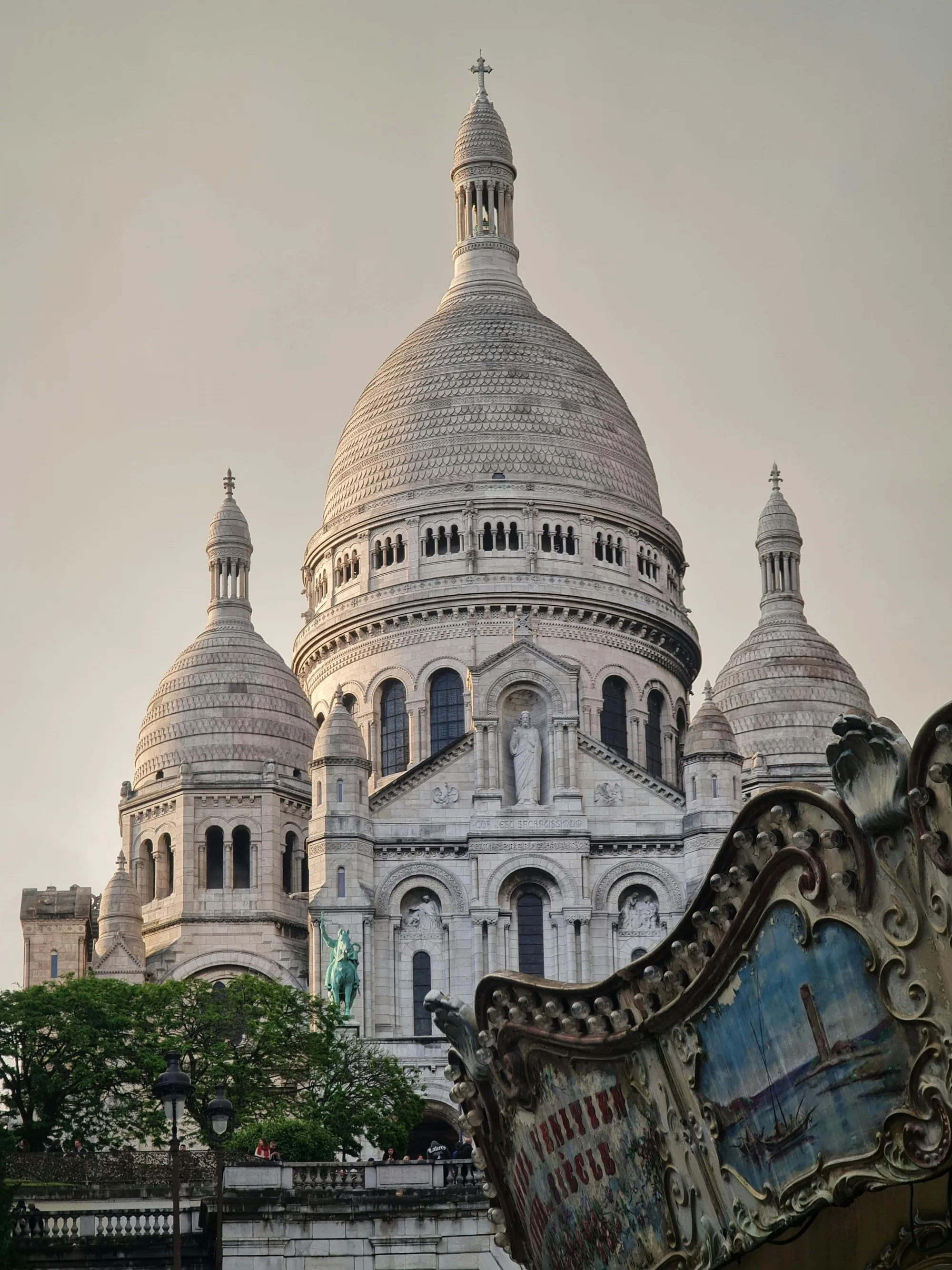
If the Eiffel Tower Summit Is Sold Out: Climb the Dome of Sacré-Cœur
The Eiffel Tower summit is one of the hardest tickets in Paris, and the elevator access tickets sell out weeks in advance during peak season. If you've missed the window, the standard consolation offered by most travel guides is to walk up the stairs to the second floor instead. That's a perfectly fine option, but there's a better one.
The dome of Sacré-Cœur is the second-highest viewpoint in Paris after the Eiffel Tower itself. It requires no advance booking. You buy your ticket on the day, directly at the small ticket office outside the basilica, and then climb approximately 300 steps up a narrow spiral staircase to a panoramic platform that looks out across the entire city. On a clear day, you can see up to 40 kilometers into the distance, taking in the Eiffel Tower, the Pompidou Centre, Notre Dame, and the Tour Montparnasse all at once. The Eiffel Tower actually appears in the view from Sacré-Cœur, which is more than you can say for the view from inside the Eiffel Tower itself.
The entrance to the dome is located outside the basilica, after the security check, and there is a ticket office approximately 20 meters to the right. The climb is physically demanding, and the staircase is genuinely narrow, but it is worth every step. Opening hours run from 10:15am to 7pm, with last admission at 6:30pm, though these vary by season.
The practical bonus of choosing this alternative is that it drops you in Montmartre, one of the most charming and walkable neighborhoods in Paris, with cobblestone streets, artists' studios, the Place du Tertre, and several good cafés to reward yourself with afterward. It's an entire half-day itinerary built around a single climb, and it costs a fraction of what the Eiffel Tower does.
If the Louvre Is Sold Out: Visit the Musée Rodin
The Louvre's timed-entry tickets disappear fast, and if you're visiting in summer without having planned several weeks ahead, a morning slot at a reasonable hour may simply not be available. The obvious move here would be the Musée d'Orsay. The smarter move is the Musée Rodin.
No advance booking is required for the Musée Rodin for individual visitors. Add one euro to your online ticket and you can skip the line at the museum entrance, but walk-in access is available without this as well. The museum occupies the Hôtel Biron, an elegant 18th-century mansion in the 7th arrondissement, surrounded by a seven-acre sculpture garden that contains some of Rodin's most famous works, including The Thinker, The Burghers of Calais, and The Gates of Hell. The indoor galleries are organized by theme and walk you through Rodin's evolution as an artist from early student pieces through to his mature work, including the original plasters, the marble Kiss, and an extensive collection of pieces by his longtime collaborator Camille Claudel.
What the Musée Rodin offers that the Louvre cannot is intimacy. The Louvre is a staggering, overwhelming experience, and for many visitors it is also an exhausting one. The Musée Rodin is a place where you can actually stop in front of something, take a breath, and think about what you're looking at. The garden alone, on a good day, is one of the most pleasant hours you can spend in Paris.
The museum is about a twenty-minute walk from the Eiffel Tower, making it a natural addition to a day in the 7th. It is closed on Mondays, and admission is free for everyone on the first Sunday of the month from October to March, though you should expect it to be busier on those days.
If the Musée d'Orsay Is Sold Out: Go to the Musée Marmottan Monet
The Musée d'Orsay is Paris's second most popular museum and the queues, when you don't have a pre-booked ticket, can be brutal. The natural alternative for anyone drawn to Impressionism is a museum that most visitors to Paris have vaguely heard of but never quite made it to.
The Musée Marmottan Monet requires no advance reservation. You can buy your tickets directly at the museum. It is located in the 16th arrondissement, in a former private hunting lodge turned mansion, and it holds what is the world's largest collection of Claude Monet's works, including Impression, Sunrise: the painting that literally gave Impressionism its name. That painting is here, not at the Orsay. It is also less traveled to, which means you can stand in front of it without a tour group blocking your view.
The reason the Marmottan stays less crowded is mostly logistical: it is not included in the popular Paris Museum Pass, and its location in the 16th arrondissement puts it a metro ride away from the central tourist circuit. Both of these things work in your favor when you show up without a ticket on a Tuesday morning in July. The museum also holds a significant collection of works by Berthe Morisot, the first major female Impressionist painter, whose work is rarely given the prominence it deserves elsewhere. On Thursday evenings, the museum stays open until 9pm, which makes for an excellent and unhurried late visit.
If Monet is a priority and the Orsay didn't work out, this is not the backup plan. It is the better plan.
If Sainte-Chapelle Is Sold Out: Spend the Morning at Notre Dame
Sainte-Chapelle's timed-entry tickets move quickly, and the early morning slots, the ones where the light through those fifteen stained glass panels is at its most luminous, go first. If you've missed them, the good news is that one of the great architectural achievements in human history is a five-minute walk away and requires no ticket at all.
Notre Dame Cathedral reopened to the public in late 2024 after nearly six years of restoration following the 2019 fire, and the interior is in a state that most visitors find astonishing. The nave, the rose windows, the choir, and the chapels have been restored with extraordinary care. A visit to Notre Dame has always been free; it remains so now, and no booking is required for basic entry, though a free time-slot reservation can be made online about 72 hours in advance if you want to reduce any wait at the forecourt.
For those who want more than the cathedral itself, the towers, which offer one of the most atmospheric and gargoyle-lined views of Paris, have also reopened. Tower tickets do require advance booking and sell out, so those are worth planning ahead for. But the cathedral interior alone, particularly in the morning when the light falls through the recently restored rose window on the western facade, is a profoundly beautiful experience that asks nothing of you except a little quiet.
The Île de la Cité, where both Notre Dame and Sainte-Chapelle sit, also contains the Crypte Archéologique directly beneath the cathedral forecourt: an underground archaeological museum displaying Roman and medieval remains excavated when the plaza was redeveloped in the 1960s. It is small, uncrowded, and quite interesting, and it requires no advance booking.
If Versailles Is Sold Out: Take the Train to Fontainebleau
Versailles is the most popular day trip from Paris and one of the most visited sites in France. During peak season, even travelers who booked weeks ahead can face long queues at security. And if you didn't book at all, the combination of travel time, crowds, and potential unavailability of timed slots can make the whole endeavor feel more stressful than it's worth.
The Château de Fontainebleau sits about 45 minutes from Paris by direct train from the Gare de Lyon, and it is one of the finest royal residences in France. It was home to French kings for nearly eight centuries, served as a retreat for Napoleon, and houses an extraordinary collection of Renaissance, Baroque, and Empire-period interiors across more than 1,500 rooms. It is a UNESCO World Heritage Site. It does not require advance booking. On most days, you can buy a ticket at the door and walk straight in.
The scale of Fontainebleau feels more manageable than Versailles, and the surrounding town is quieter and easier to spend an afternoon in. The forest of Fontainebleau, which borders the château, is one of the most beautiful woodland areas within reach of Paris and is popular with cyclists and hikers. If Versailles was always about ticking the box of the famous palace rather than genuinely engaging with a royal residence, Fontainebleau might end up being the more interesting day.
It is worth noting that Fontainebleau is busier in summer than in shoulder season, and booking a ticket online in advance is always the sensible move if you know you're going. But it is a long way from being as tightly managed as Versailles, and the door is generally open.
A Note on Planning Ahead
These alternatives are all excellent options, and in some cases they are the ones we'd recommend over the original attraction regardless. But the real takeaway from a list like this is that Paris rewards advance planning more than almost any other city in Europe. The gap between a trip where everything falls into place and one where you're improvising from a sold-out screen is almost entirely a matter of booking a few key things a few weeks before you leave.
If you're still in the planning stage and want to know exactly what to book and how far ahead, visit What2Book's Paris city page for a complete breakdown of every major attraction in the city.
And if you're already there, and you're reading this on your phone outside the Louvre at 10am, welcome to the Musée Rodin. The garden is lovely.
" width="24px"><path d="M 0 0 L 24 0 L 24 21.231 L 0 21.231 Z" fill="transparent" height="21.230768474975793px" id="nL2EwDcS9" width="24px"/><path d="M 0 0.541 C 0 0.242 0.245 0 0.547 0 L 2.735 0 C 3.037 0 3.282 0.242 3.282 0.541 L 3.282 4.598 C 3.282 4.897 3.037 5.139 2.735 5.139 L 0.547 5.139 C 0.245 5.139 0 4.897 0 4.598 Z" fill="rgb(196, 217, 201)" height="5.138657337892187px" id="hZ_rlBe_S" transform="translate(0 16.092)" width="3.2820512820512358px"/><path d="M 0 0.541 C 0 0.242 0.245 0 0.547 0 L 2.735 0 C 3.037 0 3.282 0.242 3.282 0.541 L 3.282 7.843 C 3.282 8.142 3.037 8.384 2.735 8.384 L 0.547 8.384 C 0.245 8.384 0 8.142 0 7.843 Z" fill="rgb(230, 211, 160)" height="8.38412513024521px" id="HgVBxIz3e" transform="translate(5.128 12.847)" width="3.282051282051235px"/><path d="M 0 0.541 C 0 0.242 0.245 0 0.547 0 L 2.735 0 C 3.037 0 3.282 0.242 3.282 0.541 L 3.282 12.982 C 3.282 13.281 3.037 13.523 2.735 13.523 L 0.547 13.523 C 0.245 13.523 0 13.281 0 12.982 Z" fill="rgb(232, 207, 164)" height="13.522782468137464px" id="utgrDnoM9" transform="translate(10.325 7.708)" width="3.282051282051377px"/><path d="M 0 0.541 C 0 0.242 0.245 0 0.547 0 L 2.735 0 C 3.037 0 3.282 0.242 3.282 0.541 L 3.282 16.498 C 3.282 16.797 3.037 17.039 2.735 17.039 L 0.547 17.039 C 0.245 17.039 0 16.797 0 16.498 Z" fill="rgb(233, 196, 166)" height="17.038705909853153px" id="OLOhW6STz" transform="translate(15.521 4.192)" width="3.2820512820512384px"/><path d="M 0 0.541 C 0 0.242 0.245 0 0.547 0 L 2.735 0 C 3.037 0 3.282 0.242 3.282 0.541 L 3.282 20.69 C 3.282 20.989 3.037 21.231 2.735 21.231 L 0.547 21.231 C 0.245 21.231 0 20.989 0 20.69 Z" fill="rgb(217, 170, 153)" height="21.230768474975793px" id="H5Z8wcwkd" transform="translate(20.718 0)" width="3.2820512820512278px"/></g></svg>)