France • Giverny
Book 2-4 Weeks Ahead
Book 1 Week Ahead
Back to Paris Attractions
How Far in Advance to Book Tickets to the Monet House & Gardens in Giverny, France
Updated August 2026
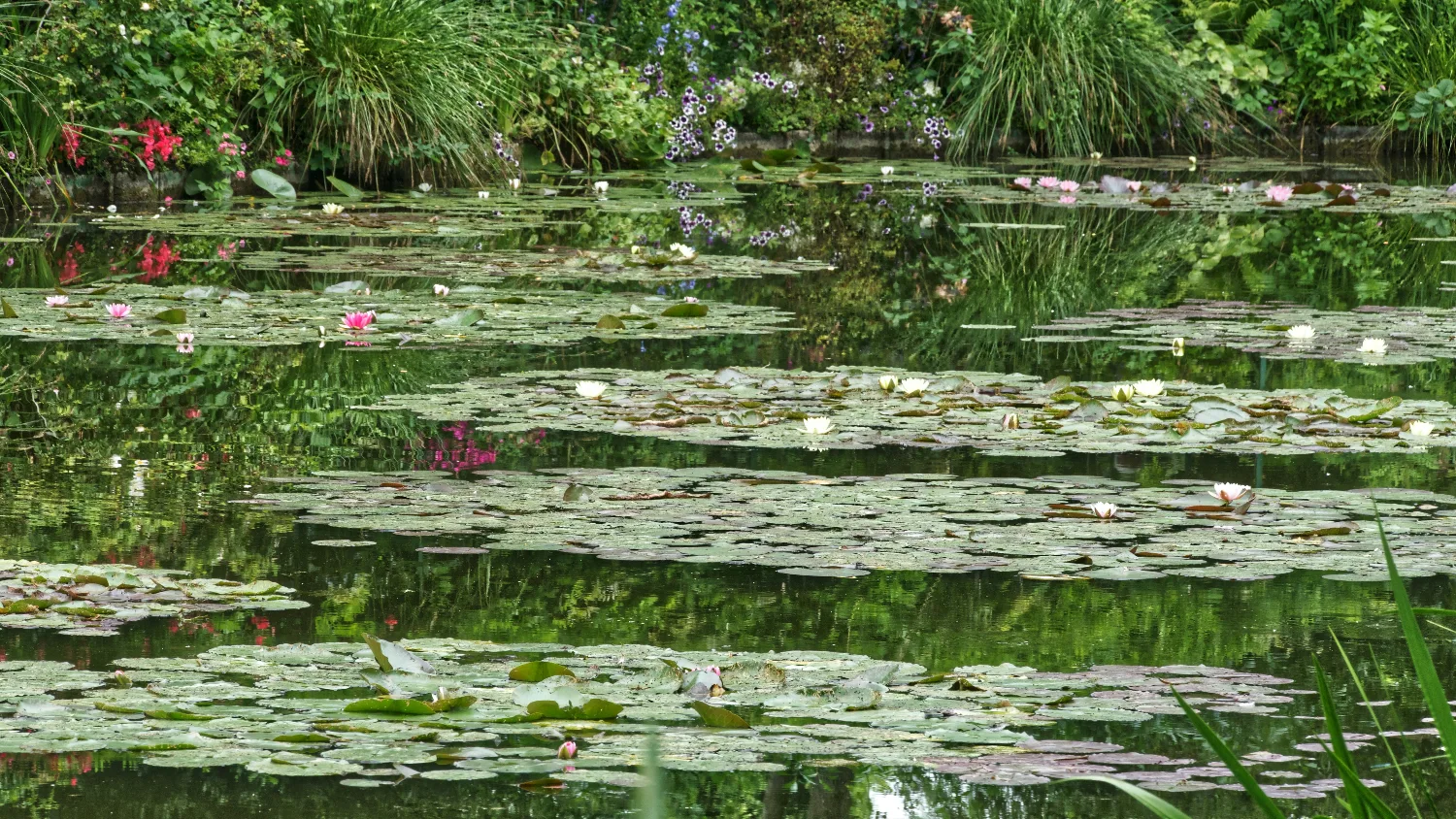
Of all the day trips from Paris, few come close to the one that takes you 80 kilometres north-west along the Seine to the village of Giverny, where Claude Monet lived and worked for 43 years until his death in 1926. The house and gardens he created here are not simply a memorial to a great painter; they are a work of art in their own right. Monet shaped this garden with the same deliberate eye for colour, light, and composition that he brought to his canvases, and the result is something extraordinary: a living, ever-changing landscape that looks, in the right season and at the right hour, astonishingly like stepping inside one of his paintings. The Clos Normand, the flower garden in front of the pink-shuttered house, and the Water Garden with its Japanese bridge and lily pond, the subject of more than 250 of his paintings, together make Giverny one of the most visited and most beautiful sites in France. It is an experience that consistently exceeds expectations, and one that rewards careful planning.
At a Glance
How Early to Book:
Book a timed-entry ticket 1 week ahead for an afternoon slot, and at least 3 weeks ahead for a coveted morning time-slot. Same-day tickets are also available at the ticket office, but lines will be long.
For the entirety of the season.
Best Times to Visit:
Either first thing in the morning at opening, or late afternoons at 4pm. The gardens become very crowded in the late mornings and early afternoons.
Ticket price:
€13 for adults.
Where to Book:
The Official Claude Monet House & Gardens website
Landmark Address:
Do You Need to Book Monet's House and Gardens Tickets in Advance?
Yes, and this is probably the single most important piece of planning advice for a Giverny visit. Advance booking is very strongly recommended, particularly during the peak season between May and August, at weekends throughout the open season, and on French public holidays.
The garden is one of France's most popular attractions, and the combination of limited capacity, a short open season (April to November only), and consistently high demand means that turning up without a pre-booked ticket during busy periods can result in a lengthy queue or, on the busiest days, a wait of an hour or more before you can enter. Booking online means you go directly to the priority entrance on Sente Leroy rather than queuing at the main ticket office, which alone makes it worthwhile. Tickets are available on the official website. E-tickets are non-refundable, and since 1 May 2026 they have also been final and non-changeable once purchased, so double-check your date and time before completing the booking.
There is no Paris Museum Pass or Paris Pass coverage for Monet's House and Gardens. The foundation is privately managed and does not participate in these schemes.
Combined tickets are available on site only, at the ticket desks of the relevant institution, pairing Monet's House and Gardens with one of three museums: the Musée des Impressionnismes Giverny (adult €25), the Musée Marmottan Monet in Paris (adult €27), or the Musée de l'Orangerie in Paris (adult €25.50). None of these are available to buy online, and the Musée des Impressionnismes Giverny option is not available on certain high-traffic dates including French bank holidays and the first Sunday of each month, when the MDIG has free entry.
Opening Hours and Entry Information
Monet's House and Gardens are open daily from 1 April to 1 November 2026. The site is closed for the entire winter season, from November 2nd until 31 March the following year. This is a firm closure with no exceptions, and it is fundamental to planning your visit.
Opening hours during the 2026 season are 10:00am to 6:00pm, with last admission at 5:30pm. Any exit from the site is final, so if you leave during your visit you will not be able to re-enter without a new ticket.
The house and both gardens are included in the standard admission price. There are no separately ticketed areas within the site, though the separately managed Musée des Impressionnismes Giverny requires its own ticket.
Pets are not permitted on site, with the exception of recognised assistance dogs. Picnicking on the grounds is not permitted, and neither is painting or drawing within the garden. Photography for personal use is welcome throughout.

What is the Best Time to Visit Monet's House and Gardens?
This is one of the most-discussed questions among Giverny visitors, and the honest answer is that it depends on what you most want to see. The garden changes dramatically through the season, and there is no single "best" month that suits everyone.
For the wisteria on the Japanese bridge: Visit in late April to mid-May. The mauve wisteria cascading over the bridge is one of the most photographed garden sights in France, and it is at its peak for only a few weeks each spring.
For the water lilies: Visit in July and August, when the nymphéas are in full bloom on the pond, recreating the scenes that Monet painted obsessively in the final decades of his life. This is also the busiest and hottest time of year.
For spring colour with fewer crowds: Late April and early May offer tulips, daffodils, irises, cherry blossoms, and the wisteria, with visitor numbers considerably lower than in high summer. This is widely considered the sweet spot between floral spectacle and manageable crowds.
For a peaceful visit: September and October bring dahlias, nasturtiums, and the warm amber tones of autumn. Crowds thin significantly after the school summer holidays end, and the soft autumn light, which meant so much to Monet, is incredibly beautiful.
On timing within the day: Arriving at or just before opening (10:00am) is the single most effective crowd-avoidance strategy. Tour buses from Paris typically begin arriving from around 10:30am onwards, and the site reaches its busiest point between 11:00am and 2:00pm. Visiting in the late afternoon from around 4:00pm is a second good option, as crowds reduce considerably in the final hour or two of the day.
On days of the week: Weekdays are significantly less crowded than weekends throughout the season. Tuesday, Wednesday, and Thursday are the quietest days. Avoiding French public holidays and long weekends is strongly recommended, as these bring very high visitor numbers.
What is the Best Way to Get to Giverny from Paris?
Giverny is not served by public transport directly from Paris, so getting there requires a train plus a connecting option. It is very manageable and takes around 1.5 hours in total, but it requires a small amount of planning.
By Train plus Shuttle or Bus:
The recommended route is a train from Paris Saint-Lazare to Vernon-Giverny station, followed by a short connecting journey to the village. Trains run roughly every hour and the journey takes approximately 45 to 55 minutes. Tickets cost around €9 to €16 each way and can be booked at the station or online via SNCF Connect.
From Vernon station to Giverny (approximately 4km) there are several options:
Shuttle bus: A seasonal shuttle (Navette Giverny) runs between Vernon station and Giverny during the open season, priced at €5 for a single trip and €10 for a return. It is the simplest and most popular option for most visitors.
Bicycle: Bike rental is available at the Vernon station exit (operated by Givernon) and is a popular choice in good weather. The cycle route to Giverny follows a largely flat, well-signed path along the Seine (the "Seine à Vélo" route) and takes around 20 to 25 minutes.
Taxi: Taxis are available from Vernon station but should ideally be pre-booked, particularly for the return journey in the afternoon when demand is high. There are also occasional rideshare options.
Tourist train: A tourist train (petit train) runs between Vernon and Giverny during the main season and is a pleasant option, particularly for families with children.
By Organised Tour from Paris:
A large number of organised half-day and full-day tours run daily from Paris during the open season. These typically depart from central Paris, include transportation, a guide, and in most cases the admission ticket. They are more expensive than travelling independently, but they simplify logistics considerably and can include skip-the-line access. For visitors with limited time or those who find independent travel stressful, they are a practical option. Reputable tour operators include those listed on the Paris tourist board website.
By Car:
Giverny is around 80km from central Paris, roughly 1.5 hours by road depending on traffic. The A13 motorway direction Rouen is the main route; exit at Bonnières-sur-Seine and follow signs to Vernon and then Giverny. Free car parks are available in the village, a short walk from the garden entrance. Driving offers the most flexibility and is a good option if you are combining Giverny with other Normandy destinations such as Rouen or the Côte Fleurie.
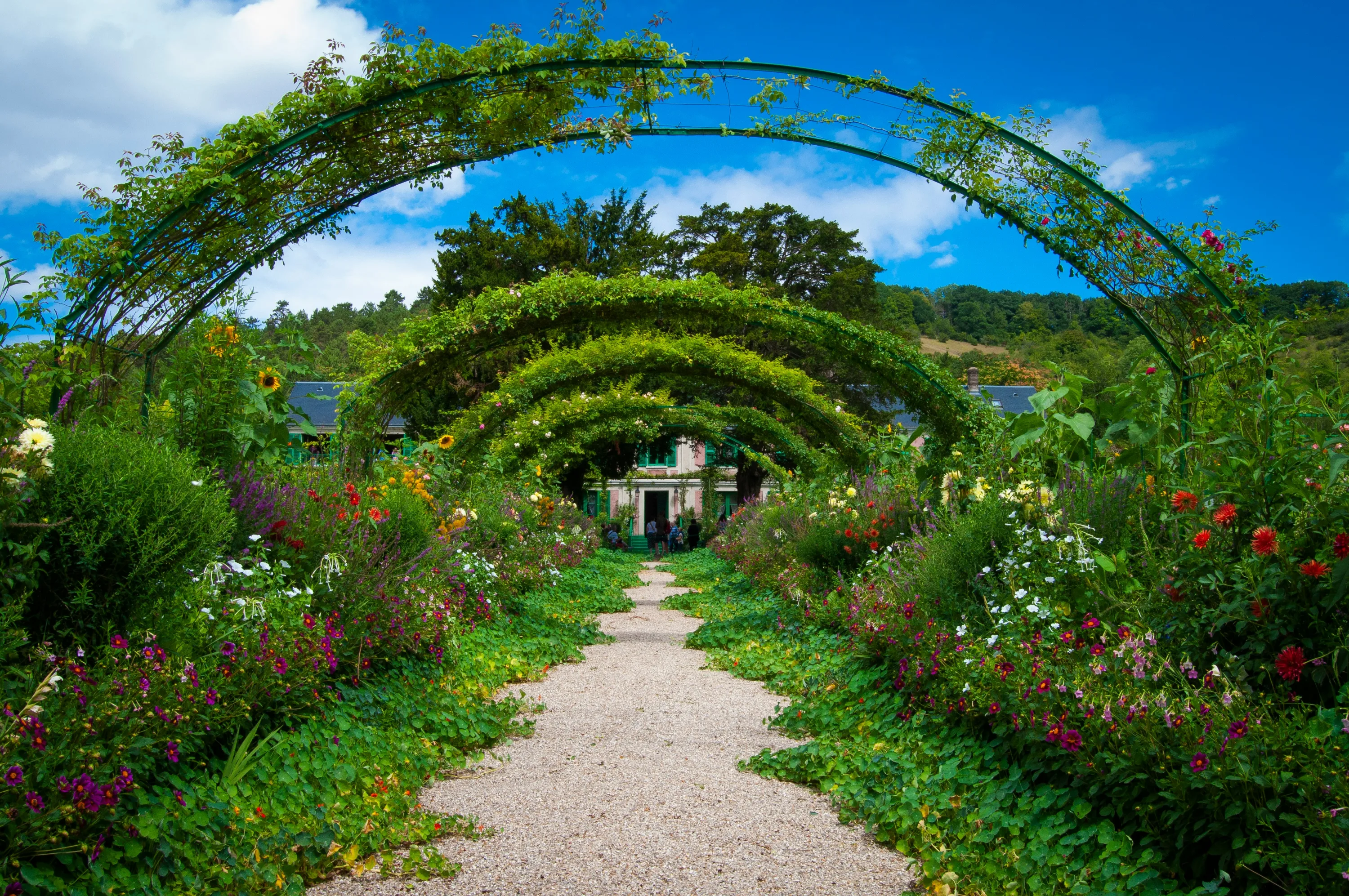
Claude Monet treated his garden as a canvas, planting with specific color palettes, and hired 15 gardeners maintain it to ensure the scene was perfect for his painting. He even had a gardener paddle a boat daily to clean the infamous water lilies.
Is Monet's House and Gardens Worth Visiting?
For anyone with an interest in Impressionism, gardens, or simply in beautiful places, the answer is an emphatic yes. Giverny has a well-earned reputation for crowds, and it is worth managing expectations on that front: during peak season, particularly on summer weekends, the site can feel super busy. But the garden is large enough that the experience never becomes unpleasant, and with an early arrival or a late-afternoon visit the crowds are entirely manageable.
What makes Giverny exceptional is the quality of what you are standing in. This is not a recreated or interpreted garden; it is the actual garden that Monet designed, planted, and tended, maintained by a team of dedicated gardeners using his original planting plans. The colours, the perspectives, the way the overflowing flower beds tumble together, the iron arches covered in climbing roses, the Japanese bridge reflected in the lily pond: all of it is exactly as Monet intended, and the effect is profoundly moving for anyone who has stood in front of his paintings.
The house itself is also a highlight that some visitors underestimate. The interiors, including the famous yellow dining room, the blue kitchen tiled in Delft-style ceramics, Monet's bedroom, and the large studio, are beautifully preserved and give an unusually intimate sense of the man who lived and worked here. The walls throughout the house are covered with his collection of Japanese woodblock prints, which influenced his garden design deeply and are fascinating to see in this context.
One important thing to know before you visit: there are no original Monet paintings at Giverny. The paintings inspired by the garden are held in Paris at the Musée de l'Orangerie, the Musée d'Orsay, and the Musée Marmottan Monet. Visitors who are not aware of this occasionally feel disappointed. What you will find at Giverny is the source material for those paintings, which, if anything, is more remarkable.
How Much Time Should I Spend at Monet's House and Gardens?
The Fondation Claude Monet recommends allowing 1.5 to 2 hours for a self-guided visit, and this is a realistic minimum. However, most visitors who arrive at opening and take their time will find that 2.5 to 3 hours passes very quickly, particularly if they linger in the Water Garden and take the time to visit the house properly.
A practical suggestion for structuring your visit: on arrival, head immediately to the Water Garden (accessed via a tunnel under the road) before the crowds build there, then return to the Clos Normand and the house. The Water Garden tends to become more crowded as the morning progresses, while the house queue can be managed more easily later in the visit.
If you are also planning to visit the Musée des Impressionnismes Giverny, which is a 5-minute walk from the garden entrance, add at least an hour. A full half-day, arriving at opening and departing in the early afternoon, comfortably covers both sites.
Guided Tours and Audio Guides
The standard visit to Monet's House and Gardens is entirely self-guided, and no audio guide is provided or available for hire on site. The garden is well-labelled, and informational panels throughout help visitors understand the history and planting design. A free map and visitor guide is provided at the entrance.
Private guided tours of the garden are available and must be booked in advance by contacting the Fondation directly. The cost for a private guided tour is €230 for the group, plus the standard admission tickets for each member of the party. These tours are available by appointment only and must be arranged ahead of your visit via the foundation's website. They are particularly worthwhile for visitors with a deep interest in Monet's life, work, and horticultural methods.
A number of tour operators based in Paris offer guided group tours from Paris to Giverny that include transportation, a guide for the journey and the visit, and in most cases the admission ticket. For visitors who want context and narration without arranging a private tour independently, these are a practical alternative.
The Musée des Impressionnismes Giverny
A 5-minute walk from the Fondation Monet entrance, the Musée des Impressionnismes Giverny (MDIG) is a dedicated museum of Impressionism and Post-Impressionism, housed in a contemporary building that sits harmoniously within the village landscape. It presents a programme of high-quality temporary exhibitions rather than a permanent collection, and it draws on international loans to explore the full breadth of the Impressionist movement and its legacy.
Entry to the MDIG is free for under-18s and on the first Sunday of the month from April to June and again in October. Adult admission applies otherwise; check the museum website for current prices. The combined ticket with Monet's House and Gardens is available on site only (not online) and on most visiting days.
Where Should I Eat in and Around Giverny?
The most convenient option directly opposite the garden entrance is Restaurant Les Nymphéas on rue Claude Monet, which is open daily from 1 April to 1 November. It serves traditional French cuisine in a setting that makes the most of the location, with a menu that covers lunches and light meals. The atmosphere is pleasant and it fills up quickly around midday, so arriving early or heading there in the late afternoon is advisable.
The village of Giverny itself is small and the range of eating options is limited, which is worth factoring into your planning, particularly on busy summer days when Les Nymphéas can have a wait. A handful of cafés and small restaurants are scattered through the village, and there are picnic areas near the car parks (note that picnicking is not permitted inside the garden itself).
For a wider range of options, the town of Vernon (4km away, where you arrive by train) has a good selection of brasseries, cafés, and restaurants in its town centre and along the riverside. Arriving in Vernon with time for lunch before or after your Giverny visit is a practical strategy on busy days.
If you are travelling by car, the surrounding Normandy countryside offers excellent farm-to-table dining at local auberges, and the nearby towns of Gasny and La Roche-Guyon both have good options worth exploring.
Accessibility at Monet's House and Gardens
The gardens are fully accessible to visitors with reduced mobility and wheelchair users. Priority access for visitors with a disabled card is available via the group entrance on Sente Leroy; presenting your card there ensures you can enter without queuing.
The house, however, is not wheelchair accessible. Its historic layout and narrow staircases mean that the interior cannot be navigated by wheelchair users. This is a significant limitation that is worth knowing before your visit, and the Fondation's website advises visitors to contact them in advance if they have specific accessibility requirements.
Disabled visitors receive a reduced admission rate of €6. One accompanying person pays the full adult rate.
There are no lifts or escalators on site. The paths through the Water Garden are smooth and generally manageable for wheelchairs and prams, though some areas are narrower and can be affected by high visitor numbers.
Rules, Bags, and Security
Several important rules apply at Monet's House and Gardens that differ from many other cultural attractions:
No luggage storage is available on site. Under the French government's Vigipirate security plan, large luggage is forbidden from entering the site. This is firmly enforced. If you are travelling with large bags or rolling luggage, you will need to leave them elsewhere before visiting. Luggage storage is not available at Vernon station, so planning accordingly before leaving Paris is important.
Picnicking is not permitted anywhere within the garden or on the site.
Painting and drawing are not permitted on site. This occasionally surprises art students and amateur painters who visit specifically for inspiration; the rule exists to protect the flow of visitors and the garden environment.
Wedding photo shoots are not accepted on the grounds.
Pets are not permitted on site, with the exception of recognised assistance dogs.
Photography for personal, non-commercial use is welcome throughout the garden and the house. There are no flash restrictions published, but common sense applies inside the house. Commercial photography requires prior authorisation from the Fondation.
Exit is final. If you leave the site for any reason during your visit, you cannot re-enter on the same ticket.
What Else is There to Do in and Around Giverny?
Giverny is a small and very beautiful village, and a short walk through its lanes after your garden visit is a pleasant way to absorb a little of the atmosphere that first drew Monet here. The church of Sainte-Radegonde, where Monet and his family are buried, is a short walk from the garden and is visited by thousands of admirers each year who come to pay their respects at the painter's grave.
The Musée des Impressionnismes Giverny, described above, is five minutes on foot from the Fondation entrance and is the other major cultural draw in the village.
Vernon, the nearest town, has its own modest attractions including the medieval collegiate church of Notre-Dame de Vernon, a small local museum (the Musée A.G. Poulain, free on the first Sunday of each month), and a pleasant riverside setting along the Seine.
For those travelling by car, the Château de La Roche-Guyon is around 10km away and is a remarkable fortified château built into the chalky cliffs above the Seine. It is open for visits and has beautiful riverside gardens. The historic city of Rouen, with its magnificent Gothic cathedral and its connections to Joan of Arc, is around 60km further along the Seine and makes for a natural extension of a Norman day trip.
In Paris itself, the best places to see what the Giverny garden inspired are the Musée de l'Orangerie (home to the eight monumental Water Lilies panels that Monet donated to the French state), the Musée d'Orsay, and the Musée Marmottan Monet, which holds the world's largest collection of Monet's works.
Final Tips for Visiting Monet's House and Gardens
Book online in advance. During the peak season, this is not optional advice but a necessity. The priority entrance for pre-booked visitors alone makes it worthwhile, and on busy days the walk-up queue can add an hour to your visit before you even get through the gate.
Arrive at opening. 10:00am is the single most effective strategy for a peaceful visit. Tour buses from Paris arrive from around 10:30am onwards, and the site reaches its busiest between 11:00am and 2:00pm. Those first 30 to 45 minutes are a different experience.
Head to the Water Garden first. On arrival, resist the pull of the colourful Clos Normand immediately in front of you and go directly to the Water Garden via the tunnel. It gets significantly more crowded as the morning progresses, and seeing the Japanese bridge and the lily pond before the crowds is worth the counterintuitive routing.
Manage expectations around original paintings. There are no Monet originals at Giverny. The paintings are in Paris. What you will find at Giverny is arguably more meaningful: the actual landscape he painted, preserved and tended for visitors. But knowing this before you arrive avoids disappointment.
Plan around what you want to see in bloom. Wisteria on the bridge peaks in late April to mid-May. Water lilies peak in July and August. Spring flowers (tulips, irises, peonies) are at their best in April and May. Autumn dahlias and the golden garden are at their finest in September and October. None of these are wrong; they are just different gardens, all worth seeing.
Remember that no large luggage is permitted on site. The Vigipirate rules are enforced and there is no storage available at Giverny or at Vernon station. Leave large bags in Paris before making the trip.
Do not forget the house. The garden is the primary draw, but the house itself, with its yellow dining room, blue kitchen, and walls of Japanese prints, is a remarkable interior that many visitors rush through or skip. Allow proper time for it.
Combine with the Musée des Impressionnismes Giverny if your schedule allows. A morning at the Fondation followed by lunch and an afternoon at the MDIG makes for an exceptionally complete Impressionism day. The combined ticket is only available on site and not on every day, so check in advance.
Back to Paris Attractions
Explore other Paris attractions


" width="24px"><path d="M 0 0 L 24 0 L 24 21.231 L 0 21.231 Z" fill="transparent" height="21.230768474975793px" id="nL2EwDcS9" width="24px"/><path d="M 0 0.541 C 0 0.242 0.245 0 0.547 0 L 2.735 0 C 3.037 0 3.282 0.242 3.282 0.541 L 3.282 4.598 C 3.282 4.897 3.037 5.139 2.735 5.139 L 0.547 5.139 C 0.245 5.139 0 4.897 0 4.598 Z" fill="rgb(196, 217, 201)" height="5.138657337892187px" id="hZ_rlBe_S" transform="translate(0 16.092)" width="3.2820512820512358px"/><path d="M 0 0.541 C 0 0.242 0.245 0 0.547 0 L 2.735 0 C 3.037 0 3.282 0.242 3.282 0.541 L 3.282 7.843 C 3.282 8.142 3.037 8.384 2.735 8.384 L 0.547 8.384 C 0.245 8.384 0 8.142 0 7.843 Z" fill="rgb(230, 211, 160)" height="8.38412513024521px" id="HgVBxIz3e" transform="translate(5.128 12.847)" width="3.282051282051235px"/><path d="M 0 0.541 C 0 0.242 0.245 0 0.547 0 L 2.735 0 C 3.037 0 3.282 0.242 3.282 0.541 L 3.282 12.982 C 3.282 13.281 3.037 13.523 2.735 13.523 L 0.547 13.523 C 0.245 13.523 0 13.281 0 12.982 Z" fill="rgb(232, 207, 164)" height="13.522782468137464px" id="utgrDnoM9" transform="translate(10.325 7.708)" width="3.282051282051377px"/><path d="M 0 0.541 C 0 0.242 0.245 0 0.547 0 L 2.735 0 C 3.037 0 3.282 0.242 3.282 0.541 L 3.282 16.498 C 3.282 16.797 3.037 17.039 2.735 17.039 L 0.547 17.039 C 0.245 17.039 0 16.797 0 16.498 Z" fill="rgb(233, 196, 166)" height="17.038705909853153px" id="OLOhW6STz" transform="translate(15.521 4.192)" width="3.2820512820512384px"/><path d="M 0 0.541 C 0 0.242 0.245 0 0.547 0 L 2.735 0 C 3.037 0 3.282 0.242 3.282 0.541 L 3.282 20.69 C 3.282 20.989 3.037 21.231 2.735 21.231 L 0.547 21.231 C 0.245 21.231 0 20.989 0 20.69 Z" fill="rgb(217, 170, 153)" height="21.230768474975793px" id="H5Z8wcwkd" transform="translate(20.718 0)" width="3.2820512820512278px"/></g></svg>)