Paris • 7th arrondissement
Timed-entry tickets are not required, and do not need to be booked ahead as tickets do not sell out. Visitors can book an online ticket to skip the queue, or purchase a ticket at the on-site ticket office.
No Booking Needed
All times of year
Back to Paris Attractions
Do You Need to Book Musée Rodin Tickets in Advance?
Updated August 2026
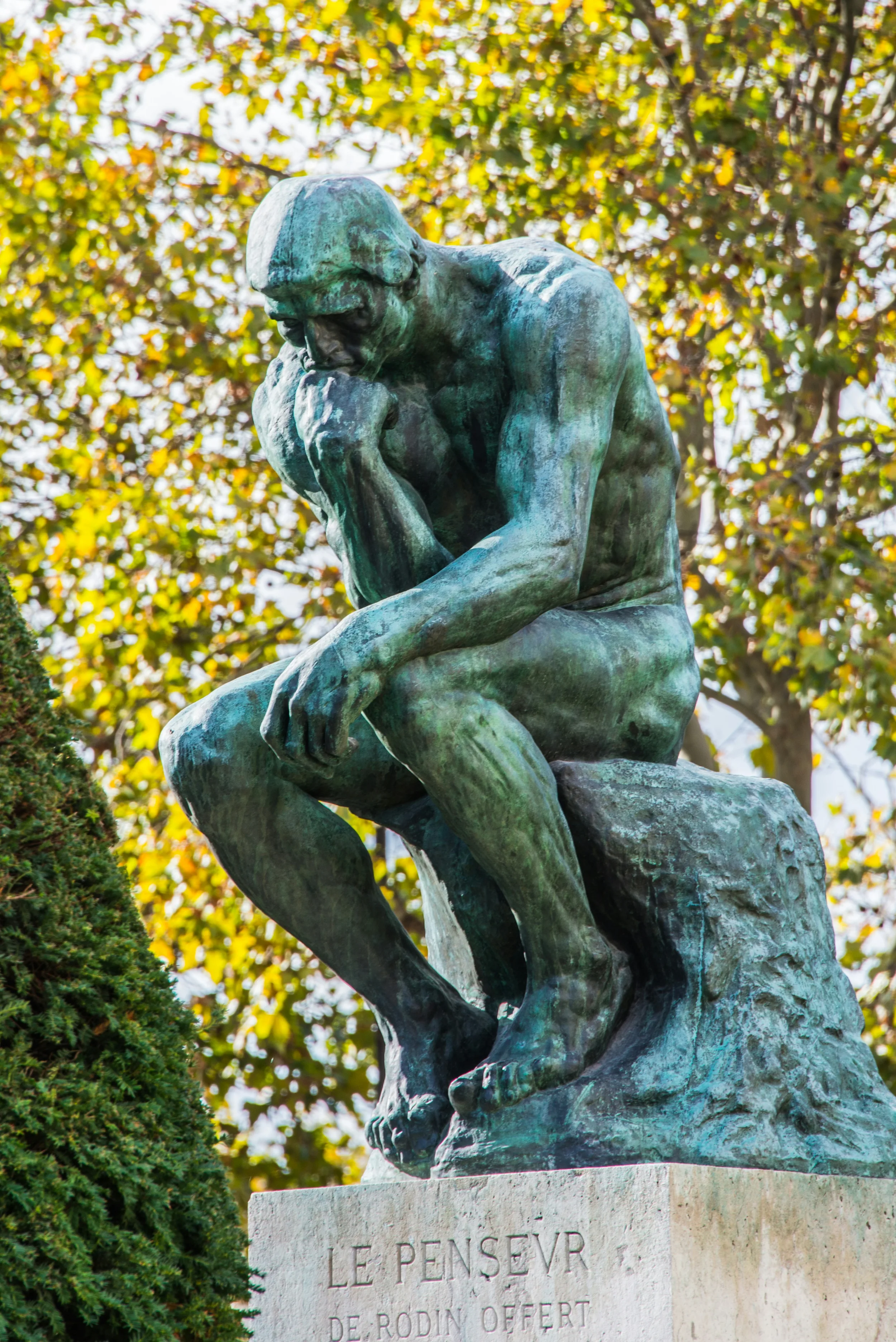
There are few museums in the world where the building, the garden, and the collection feel as perfectly matched as they do at the Musée Rodin. Set in the Hôtel Biron, an elegant 18th-century mansion on the Rue de Varenne in the 7th arrondissement, the museum is dedicated entirely to the life and work of Auguste Rodin, one of the most significant sculptors of any era, and to the remarkable women and contemporaries who shaped his world. Rodin himself lived and worked here from 1908 until his death in 1917, and he bequeathed his entire collection to the French state on the condition that the Hôtel Biron be opened as a museum to display it. The result, since 1919, has been a museum that feels inhabited: light floods through tall windows into rooms that still carry the scale and intimacy of a private house, the three-hectare garden behind is planted with roses, linden trees, and topiary, and scattered throughout it, in bronze, stand The Thinker, The Gates of Hell, The Burghers of Calais, and the monument to Balzac. It is one of the most beautiful places in Paris, and one of the most overlooked by visitors who have not yet discovered it.
At a Glance
How Early to Book:
No need to book tickets in advance. Visitors may book an online ticket to allow them to skip the queue, or purchase a ticket at the on-site ticket office.
Best Times to Visit:
Weekday mornings Tuesday through Friday will have the fewest visitors.
Ticket price:
€15 for adults when booked online, €14 at the on-site ticket office. There is a less expensive "Garden Only" ticket that can also be purchased on-site only.
Where to Book:
The Official Musée Rodin website
Museum Address:
Do You Need to Book Musée Rodin Tickets in Advance?
For the permanent collection and sculpture garden, advance booking is not strictly required. The Musée Rodin does not operate a timed entry system, and walk-up tickets can generally be purchased at the museum's ticket desks during opening hours without significant queuing on most weekdays and outside the peak summer season.
During the peak summer season (June to September) and on busy spring and autumn weekends, a short queue at the ticket desk is common but rarely excessive. The Musée Rodin is one of the more relaxed major Paris museums to visit without advance planning, which is part of its considerable charm.
A sculpture garden-only ticket is available at a lower price and is sold on-site only, not online. This is an excellent option for visitors who want to see The Thinker and the outdoor bronzes without paying for the interior galleries, or for those who simply want to spend an hour or two in one of Paris's finest gardens.
Entry is free for all visitors on the first Sunday of each month from 1 October to 31 March.
The Paris Museum Pass is accepted and provides free access to both the permanent collections and the sculpture garden. It is excellent value if you are visiting multiple Paris museums over two, four, or six days. Group rates available with the Paris Museum Pass are listed on the official website. You can read our blog post about Museum Passes here.
Musée Rodin Opening Hours and Entry Information
The Musée Rodin is open Tuesday to Sunday. It is closed every Monday, as well as on 1 January, 1 May, and 25 December.
Standard opening hours are 10:00am to 6:30pm, with last admission at 5:45pm. The ticket office closes at 5:30pm. Galleries begin closing at 6:15pm.
The sculpture garden closes earlier than the main building for safety reasons. The garden closes at 5:15pm. If the garden is an important part of your visit, plan to arrive by mid-afternoon at the latest.
In winter, the sculpture garden closes at dusk rather than at the standard garden closing time, which can mean an earlier closure during the shortest days of December and January. Check the official website for current winter garden hours.
Early closings: The museum closes at 5:30pm on 24 and 31 December (last entry at 4:45pm on these days).
The museum shop is open Tuesday to Sunday from 10:00am to 6:00pm. The L'Augustine café-restaurant is accessible to ticket-holding visitors during museum hours; see the dining section below.

What is the Best Way to Get to the Musée Rodin?
The museum is located at 77 rue de Varenne in the 7th arrondissement, near Les Invalides, and is excellently served by public transport.
By Métro: The closest station is Varenne (Line 13), which exits directly onto the rue de Varenne and is less than two minutes on foot from the museum entrance. Invalides (Lines 8 and 13) is also nearby, around a five-minute walk, and is useful if you are arriving from a direction better served by Line 8. This is the recommended way to arrive.
By RER: Invalides (RER C) is around a five-minute walk from the museum and is particularly useful for visitors arriving from the Left Bank, Versailles, or the airports on the RER C line.
By Bus: Lines 69, 82, 87, and 92 all stop close to the museum. Line 69 in particular serves a very useful cross-Paris route between the 20th arrondissement and the Champ de Mars, passing through the heart of the city.
By Vélib (bike): A Vélib' docking station is located at 9 Boulevard des Invalides, a very short walk from the museum entrance.
On foot: The museum is walkable from the Eiffel Tower (around 20 to 25 minutes), from Saint-Germain-des-Prés (around 15 minutes), from the Musée d'Orsay (around 10 to 12 minutes), and from Les Invalides (around 5 minutes). The walk along the Rue de Varenne from the Boulevard des Invalides passes several elegant private mansions and is a pleasant approach.
By car: Driving is not recommended. Parking in the 7th arrondissement is extremely limited and expensive. Public transport is significantly faster and less stressful from any part of the city.
Accessible entry: Priority access without queuing for visitors with reduced mobility is available via the entrance at 79 rue de Varenne, one door along from the main entrance.
What is the Best Time to Visit the Musée Rodin?
The Musée Rodin attracts around 700,000 visitors a year, which is significant but modest compared to the Louvre or the Musée d'Orsay, and the experience rarely feels overwhelming. That said, some periods are noticeably more comfortable than others.
Weekday mornings from Tuesday to Friday are consistently the quietest time. Arriving at opening at 10:00am gives you the interior galleries in near-solitude, and the sculpture garden in the first hour of the day has a particular peace that is difficult to find later. The rooms holding The Kiss and the Camille Claudel collection are at their most atmospheric with few other visitors.
Weekends are busier, particularly on sunny spring and autumn days when the garden is at its most beautiful and attracts the most visitors. The sculpture garden can feel crowded on a sunny Saturday in May. If visiting at a weekend, an early arrival is strongly advisable.
The sculpture garden is at its best in late spring and early summer (May and June), when the rose beds are in bloom and the garden is at its most lushly colourful. The combination of flowering roses, clipped topiary, and bronze masterpieces in this season is extraordinary. Autumn (September and October) is the second peak season for the garden, with warmer golden light and still-pleasant temperatures.
Winter visits (November to February) bring the fewest visitors and the most intimate experience of the interior galleries, though the sculpture garden is starker and closes at dusk. On a cold clear winter morning, the empty garden with its bronze figures against bare trees has its own powerful atmosphere.
The first Sunday of each month from October to March brings free entry and larger crowds than usual. If using this option, arriving at opening time at 10:00am is recommended.
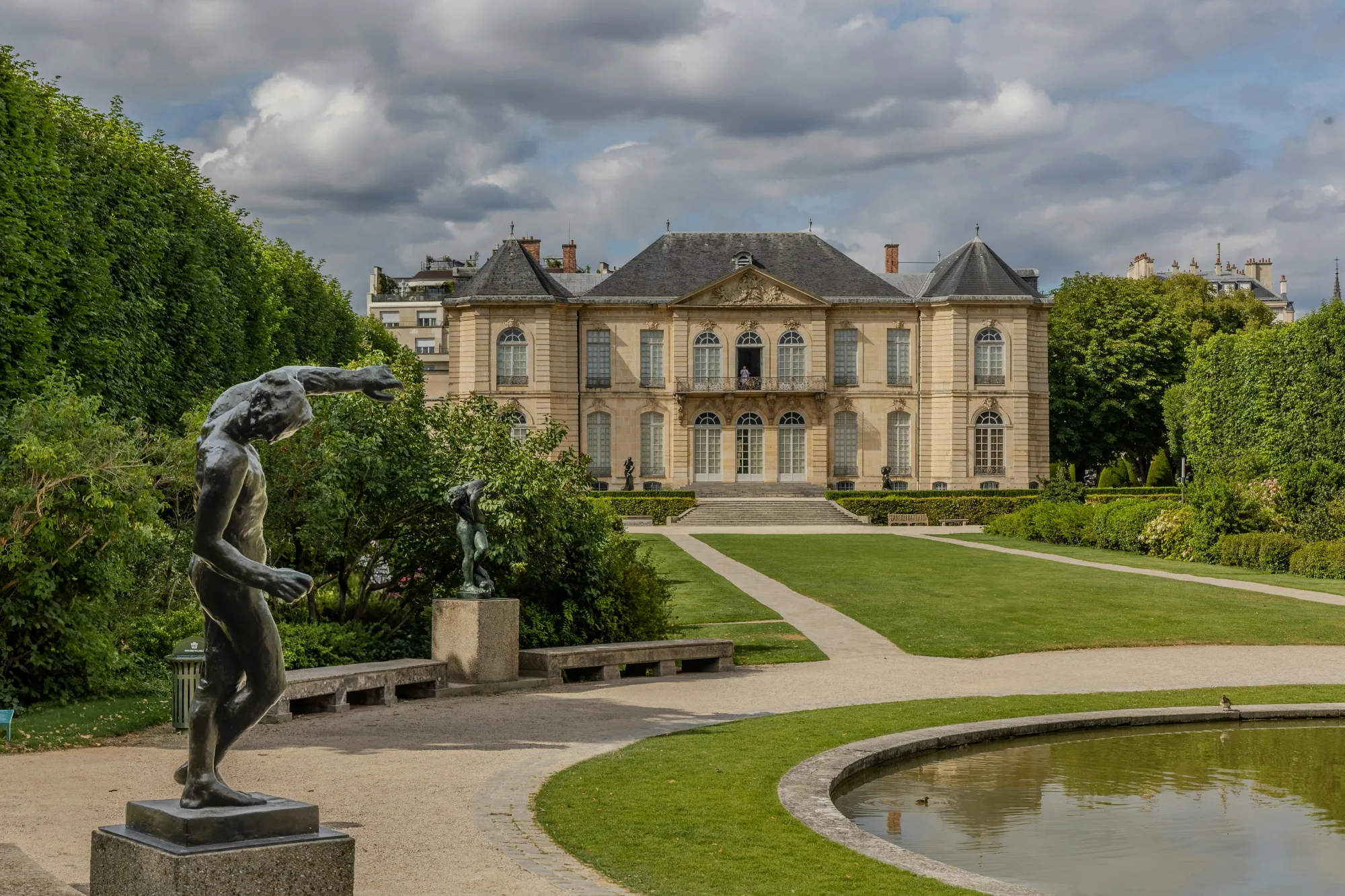
The Musée Rodin is located in the 18th-century Hôtel Biron. When Rodin moved into the hotel, artist Henri Matisse, poet Jean Cocteau, and dancer Isadora Duncan were also living there.
Is the Musée Rodin Worth Visiting?
For anyone with an interest in sculpture, in 19th-century art, or simply in beautiful places, the answer is a certain and easy yes. The Musée Rodin occupies a particular niche in the Paris museum landscape: it is intimate, focused, and unlike any other museum in the city. Where the Louvre and the Orsay offer breadth and volume, the Rodin offers depth and concentration. Every work in the building is connected to a single creative intelligence, and moving through the rooms and the garden is like reading a long, complex, and deeply rewarding life.
The interior of the Hôtel Biron is itself a beautiful space, its rooms characterised by tall arched windows, warm light, and the kind of elegant proportions that make even the most monumental sculptures feel accessible. The Kiss in marble, The Age of Bronze, The Walking Man, The Cathedral (two right hands forming an arch), and the extraordinary fragmented studies in plaster that reveal Rodin's working process: these are not secondary works tucked away in a specialist collection, but among the most significant sculptures of the modern era, displayed in rooms where you can stand in front of them at whatever distance you choose.
The dedicated Camille Claudel room is one of the most charged spaces in the museum. Claudel was Rodin's student, collaborator, and lover, and for over a decade one of the most brilliantly original sculptors in France. Her work includes The Waltz, The Wave, The Gossips, The Mature Age, and a bronze Bust of Rodin, and the room makes an unanswerable case for her genius alongside, and independent of, the man whose fame eclipsed hers. The story of their relationship and her subsequent institutionalisation, told through the sculptures and the correspondence on display, is one of the most affecting narratives in French cultural history.
The collection of works assembled by Rodin himself is also less expected and more interesting than most visitors anticipate: paintings by Van Gogh (including Father Tanguy), Renoir, Monet, and Eugène Carrière, antiques from Egypt, Greece, and the Far East, and photographs documenting his career. These are the objects that surrounded him while he worked, and they give a very human and specific sense of his curiosity and his passions.
At €14 for full admission covering the mansion, the entire permanent collection, any current temporary exhibition, and the sculpture garden, the Musée Rodin is one of the most reasonable-priced great museums in Paris.
How Much Time Should I Spend at the Musée Rodin?
Most visitors will find that 1.5 to 2.5 hours covers a thorough and unhurried visit to the interior galleries and the sculpture garden. Those who want to include a current temporary exhibition, linger over the Camille Claudel room, or take a long walk through the garden and spend time in the L'Augustine café should plan for up to three hours.
A rough guide to planning your time:
Main interior galleries (ground and first floors): 45 to 75 minutes
Camille Claudel room and Rodin's own collection: 15 to 20 minutes
Sculpture garden (The Thinker, The Gates of Hell, The Burghers of Calais, Balzac): 30 to 45 minutes
Temporary exhibition (if running): 20 to 40 minutes depending on scale
A garden-only visit (using the garden-only ticket available on site) takes around 30 to 45 minutes at a comfortable pace and is an excellent option for those with limited time who specifically want to see The Thinker and the great outdoor bronzes.
Guided Tours and Audio Guides in the Musée Rodin
An audio guide is available to hire on site for €6 and covers the highlights of the permanent collection in multiple languages including French, English, Spanish, German, Chinese, and Portuguese. It is worth taking if you want structured commentary as you move through the rooms, though the museum's informational panels are generally well-written and informative even without it.
An interactive tablet game (iPad mini) is also available for hire at €6 and is designed for visitors aged 6 and above, providing an engaging way for families with children to explore the collection.
The museum participates in the annual Nuit des Musées (European Museum Night) each spring, when it opens free of charge for an evening programme. For visitors in Paris around mid-May, this is an exceptional opportunity to experience the museum and garden at night. Dates are announced on the official website.
The Musée Rodin at Meudon
The Musée Rodin has a second site, the Villa des Brillants in Meudon, approximately 11 kilometres south-west of Paris, which was Rodin's primary home from 1895 until his death in 1917. Here, he and his long-term companion Rose Beuret are buried in the garden, with a cast of The Thinker placed on Rodin's grave.
The Meudon museum holds Rodin's extraordinary collection of plaster casts, which reveal his working process and the development of individual works in an unusually intimate way. It is a quieter and more scholarly complement to the Paris museum, and is particularly fascinating for visitors with a deeper interest in how Rodin worked.
The Musée Rodin at Meudon is currently open Saturdays and Sundays, 10:00am to 6:00pm (last entry 5:15pm), through 27 September 2026. Entry is free. To reach Meudon, take the Métro to Mairie d'Issy (Line 12) and then bus 190 direction Église, alighting at Chemin des Vignes, from where the villa is around a 10-minute walk.
Where Should I Eat at and Near the Musée Rodin?
L'Augustine, the museum's café-restaurant, is one of the most pleasant places to eat in this part of Paris and deserves more attention than a footnote. Set in the sculpture garden with a beautiful green terrace overlooking the lawns and the bronzes, it is run by chef Amandine Chaignot and serves a menu of pastries, salads, pasta, light meals, gourmet ice cream (a particular draw in summer), and hot and cold drinks throughout the day. It is only accessible to ticket-holding visitors, which keeps it calmer than a typical Paris café on a busy day. Arriving for a late morning coffee or a post-gallery lunch here, with The Thinker visible in the background, is one of the more civilised things you can do in Paris. No advance booking is required for the café.
For eating outside the museum, the 7th arrondissement offers a range of options at different price points.
Rue Cler, around 10 minutes on foot to the north-west, is one of Paris's most charming pedestrian market streets, lined with fromageries, boulangeries, wine merchants, fishmongers, and small café terraces. It is an excellent spot for a picnic lunch assembled from the market stalls, or for a relaxed sit-down meal at one of the pavement cafés.
The area around Les Invalides has a concentration of brasseries and cafés catering to the neighbourhood, and is a solid option for a quick lunch before or after the museum.
The Musée d'Orsay has an excellent café and restaurant (the Café Campana, in the former train station's clock room) if you are combining visits to the two museums, which are around 10 to 12 minutes apart on foot.
For a broader range of dining options, Saint-Germain-des-Prés is around 15 minutes on foot and offers the full range of Paris café culture from casual neighbourhood bistros to celebrated destination restaurants.
Accessibility at the Musée Rodin
The Musée Rodin is fully accessible to visitors with reduced mobility, and the museum offers priority access without queuing via the entrance at 79 rue de Varenne (one door from the main entrance), which is appreciated given that the ticket office queue can occasionally be slow at peak times.
The entire interior visitor route is accessible to wheelchair users. The sculpture garden is also accessible, with smooth paths throughout the formal areas and around the main lawns.
Disabled visitors receive free admission, and one accompanying companion also enters free. Valid documentation (disability card or equivalent) should be presented at the entrance.
The audio guide is available in standard audio format only and is not currently available in a tactile or signed language version; however, the museum's guided tour team can arrange adapted visits.
Rules, Bags, and Security
The Musée Rodin has straightforward rules that are similar to those at most French national museums.
Photography for personal, non-commercial use is permitted throughout the permanent galleries and the sculpture garden. Flash photography is not permitted. The lighting in the interior rooms is generally good, and most smartphones produce excellent results in natural light without flash.
Bags and rucksacks are permitted, though the museum may ask visitors to carry large rucksacks in front of their body or to deposit them in the cloakroom in crowded gallery conditions. There are no specific published bag size restrictions.
Food and drink are not permitted inside the gallery building. The L'Augustine café terrace and the sculpture garden benches are the designated areas for eating and drinking.
Picnicking is not permitted in the sculpture garden. The garden is a managed ornamental space and picnicking is reserved for the Champ de Mars and other nearby parks.
Sketching with pencil is welcome throughout the museum and the garden, and is actively encouraged. Art materials other than pencil are not permitted in the galleries.
Dogs and pets are not permitted inside the museum building or the sculpture garden, with the exception of recognised guide and assistance dogs.
What Else is There to Do Near the Musée Rodin?
The Musée Rodin is located in one of the most rewarding areas of Paris for a day of culture and walking, with several major attractions within a short distance.
Les Invalides and the Musée de l'Armée, immediately adjacent to the museum, form one of the most significant historic and military complexes in France. The gilded dome of the Église du Dôme, visible from the museum garden, covers the tomb of Napoleon Bonaparte, and the Musée de l'Armée is one of the largest and finest military history museums in the world. The two sites together easily fill a half-day.
The Musée d'Orsay, around 10 to 12 minutes on foot along the Left Bank quays, is the natural companion museum to the Rodin. Its collection of Impressionist and Post-Impressionist painting overlaps significantly with the world that Rodin inhabited, and the two museums together represent the artistic achievement of late 19th-century France at its peak. A morning at the Rodin followed by an afternoon at the Orsay is one of the finest cultural days Paris offers.
The Musée de l'Orangerie, across the river in the Tuileries, holds Monet's eight monumental Water Lilies panels and an outstanding collection of early 20th-century painting. It is around 25 minutes on foot and makes a natural third element of a Left Bank cultural day.
The Rodin Museum garden itself is worth treating as a destination in its own right on a fine day. The sculpture garden-only ticket allows access without paying for the interior, and an hour in the rose gardens with the bronzes is one of the most restorative things you can do in Paris.
The Bon Marché, around 10 minutes on foot to the west, is Paris's oldest and most beautiful department store, with a spectacular food hall (La Grande Épicerie) and elegant floors dedicated to fashion, homeware, and books. It is a rewarding afternoon browse in combination with a museum visit.
The Champ de Mars, around 20 minutes on foot to the west with the Eiffel Tower at its far end, is one of Paris's great green spaces and a natural destination for a walk after an afternoon at the Rodin.
Final Tips for Visiting the Musée Rodin
No advance booking is currently needed. On most weekdays outside the summer season, queues at the ticket office are short.
Remember it is closed on Mondays. Unlike the Louvre and many major Paris museums, the Musée Rodin closes on Monday rather than Tuesday. This is the most common planning mistake visitors make.
Buy the garden-only ticket if time is short. If you have only an hour and want to see The Thinker and the outdoor bronzes without committing to the full interior visit, the garden-only ticket available at the desk is an excellent and affordable option.
The sculpture garden closes before the main building. The garden evacuation begins at 5:00pm, significantly before the building closes at 6:30pm. Plan your visit so that you see the garden first and the interior second, or arrive with enough time before 5:00pm to enjoy the garden properly.
Visit in the rose season if you can. The museum's rose garden is at its most spectacular in late May and June. If these months are at all possible for your Paris visit, timing a Rodin trip to coincide with the flowering is strongly worthwhile.
Allow time in the Camille Claudel room. This is consistently among the most emotionally affecting spaces in the museum, and it is easy to rush through on the way to the more famous Rodin works. Give it the time it deserves.
Have lunch at L'Augustine. The café-restaurant in the sculpture garden, run by chef Amandine Chaignot, is one of the pleasantest places to eat in the 7th arrondissement, and it is only accessible to ticket-holders. Factor it into your visit plan rather than leaving it as an afterthought.
Combine with Les Invalides and the Musée de l'Armée. The two sites are essentially next door to each other. A morning at one and an afternoon at the other makes for a very rich full day in this part of Paris without any significant travel between them.
Consider visiting the Meudon museum if Rodin's working process interests you more than the finished masterpieces. The plaster collections at the Villa des Brillants in Meudon are unlike anything at the Paris museum, and the grave in the garden, with The Thinker standing watch above it, is deeply moving.
Back to Paris Attractions
Explore other Paris attractions
" width="24px"><path d="M 0 0 L 24 0 L 24 21.231 L 0 21.231 Z" fill="transparent" height="21.230768474975793px" id="nL2EwDcS9" width="24px"/><path d="M 0 0.541 C 0 0.242 0.245 0 0.547 0 L 2.735 0 C 3.037 0 3.282 0.242 3.282 0.541 L 3.282 4.598 C 3.282 4.897 3.037 5.139 2.735 5.139 L 0.547 5.139 C 0.245 5.139 0 4.897 0 4.598 Z" fill="rgb(196, 217, 201)" height="5.138657337892187px" id="hZ_rlBe_S" transform="translate(0 16.092)" width="3.2820512820512358px"/><path d="M 0 0.541 C 0 0.242 0.245 0 0.547 0 L 2.735 0 C 3.037 0 3.282 0.242 3.282 0.541 L 3.282 7.843 C 3.282 8.142 3.037 8.384 2.735 8.384 L 0.547 8.384 C 0.245 8.384 0 8.142 0 7.843 Z" fill="rgb(230, 211, 160)" height="8.38412513024521px" id="HgVBxIz3e" transform="translate(5.128 12.847)" width="3.282051282051235px"/><path d="M 0 0.541 C 0 0.242 0.245 0 0.547 0 L 2.735 0 C 3.037 0 3.282 0.242 3.282 0.541 L 3.282 12.982 C 3.282 13.281 3.037 13.523 2.735 13.523 L 0.547 13.523 C 0.245 13.523 0 13.281 0 12.982 Z" fill="rgb(232, 207, 164)" height="13.522782468137464px" id="utgrDnoM9" transform="translate(10.325 7.708)" width="3.282051282051377px"/><path d="M 0 0.541 C 0 0.242 0.245 0 0.547 0 L 2.735 0 C 3.037 0 3.282 0.242 3.282 0.541 L 3.282 16.498 C 3.282 16.797 3.037 17.039 2.735 17.039 L 0.547 17.039 C 0.245 17.039 0 16.797 0 16.498 Z" fill="rgb(233, 196, 166)" height="17.038705909853153px" id="OLOhW6STz" transform="translate(15.521 4.192)" width="3.2820512820512384px"/><path d="M 0 0.541 C 0 0.242 0.245 0 0.547 0 L 2.735 0 C 3.037 0 3.282 0.242 3.282 0.541 L 3.282 20.69 C 3.282 20.989 3.037 21.231 2.735 21.231 L 0.547 21.231 C 0.245 21.231 0 20.989 0 20.69 Z" fill="rgb(217, 170, 153)" height="21.230768474975793px" id="H5Z8wcwkd" transform="translate(20.718 0)" width="3.2820512820512278px"/></g></svg>)