Back to Barcelona Attractions
Do you Need to Book Tickets in Advance for the Catedral de Barcelona?
Updated July 2026
At the heart of the Gothic Quarter, on a site that has held a place of Christian worship since at least the fourth century, stands the cathedral that Barcelonins simply call La Seu. Its official name is the Catedral de la Santa Creu i Santa Eulàlia, the Cathedral of the Holy Cross and Saint Eulàlia, and it is the seat of the Archbishop of Barcelona and the formal centre of the city's religious life. Construction on the current Gothic building began on 1 May 1298 and continued for nearly two centuries, producing a cathedral that is one of the finest examples of Catalan Gothic architecture in existence: restrained in its proportions, dramatic in its verticality, with a soaring central nave, nine radiating chapels at the east end, and a cloister that is, for many visitors, the most memorable single space in the building. The neo-Gothic façade and the central octagonal lantern tower that punctuate the exterior were not completed until 1890, making them relative newcomers to a structure nearly six centuries old. Inside, the crypt holds the alabaster sarcophagus of Saint Eulàlia, Barcelona's co-patron, a 13-year-old girl martyred by the Romans for her Christian faith, whose story permeates the entire building. In the cloister, a fountain and pond are home to 13 white geese, each representing one year of her short life. This guide covers everything you need to know before you visit.
At a Glance
How Early to Book:
Book 1-2 days ahead of time to guarantee entry and to avoid queues. Same-day tickets can also usually be purchased at the ticket office, but queues may be long.
Best Times to Visit:
Early weekday mornings will feel more like a church rather than a tourist attraction. The geese are also more active during the cooler mornings.
Ticket price:
€16 for adults. Worshipping during services is free of charge, but will not grant access to the choir stalls, chapter house museum, rooftop, or crypt.
Where to Book:
Landmark Address:
Do You Need to Book Barcelona Cathedral Tickets in Advance?
The answer to this question requires a little bit of explanation, because the cathedral operates two distinct modes of access, and understanding the difference is a super important thing any visitor needs to know before going.
The cathedral is free to enter during worship hours. During the morning and early evening hours when the cathedral is open primarily for prayer and mass, any visitor may enter the nave and the cloister without charge. These free hours are not published in a fixed schedule on the official website but broadly correspond to weekday morning opening (from 9:30am until the tourist visit begins) and the evening window (from approximately 5:30pm or 6:00pm until closing). During these windows, the building functions as an active church and visitors are expected to behave with appropriate respect. The choir stalls, the chapter house museum, the rooftop, and the crypt are not accessible during free entry hours.
The tourist visit ticket (€16) is required during peak hours. A paid tourist visit operates during the central hours of the day, when access to the full range of spaces, including the choir stalls, the chapter house museum, the rooftop, and the crypt with Saint Eulàlia's sarcophagus, is unlocked with admission. Tickets for this period can be purchased at the ticket office at the entrance or booked online in advance through the official cathedral ticketing platform.
The distinction matters for planning. Visitors who want to see everything, including the rooftop and the crypt, should visit during tourist hours and pay the admission fee. Visitors whose primary interest is the cloister and the interior atmosphere can time their visit to the free windows and experience the cathedral without charge.
Rooftop only: A rooftop-only ticket (accessible by lift) is available separately at approximately €3 for visitors who want the rooftop view without committing to the full tourist visit.
Advance booking online is not strictly required but is advisable during summer weekends and the peak tourist season (June to September) when the ticket office queue during tourist visit hours can extend. Booking online also gives you a confirmed time slot and avoids any waiting. For school holidays and major festival periods, booking at least a day ahead is sensible.
Catedral de Barcelona Opening Hours and Entry Information
The cathedral's tourist visit hours differ from its worship hours, and the distinction between the two matters for planning.
Tourist visit (ticketed) hours:
Weekdays: 9:30am to 6:30pm (last access at 5:45pm)
Saturdays and religious festive vigils: 9:30am to 5:15pm (last access at 4:30pm)
Sundays and religious holidays: 2:00pm to 5:00pm (last access at 4:30pm)
Note on Sundays: The Sunday tourist visit window is significantly shorter than on weekdays. Starting at 2:00pm means you have less than three hours of tourist access on Sundays, and with last entry at 4:30pm you need to arrive promptly. The morning of Sunday is given over entirely to worship and is not available for the tourist visit.
Free visit windows (approximate): The cathedral is open for worship and free visitor access in the early morning (from 9:30am) before the ticketed tourist visit begins, and in the late afternoon and evening from approximately 5:30pm to 6:00pm until around 7:30pm on weekdays. These windows are not always precisely fixed, as they are structured around the mass and liturgical schedule rather than tourist convenience. The official website publishes the daily mass schedule, where visitors can confirm the free access times.
The cathedral may also restrict or close visitor access without advance notice for exceptional religious ceremonies, funerals, or major feast days. The official website is the most reliable source for any changes to normal access patterns.
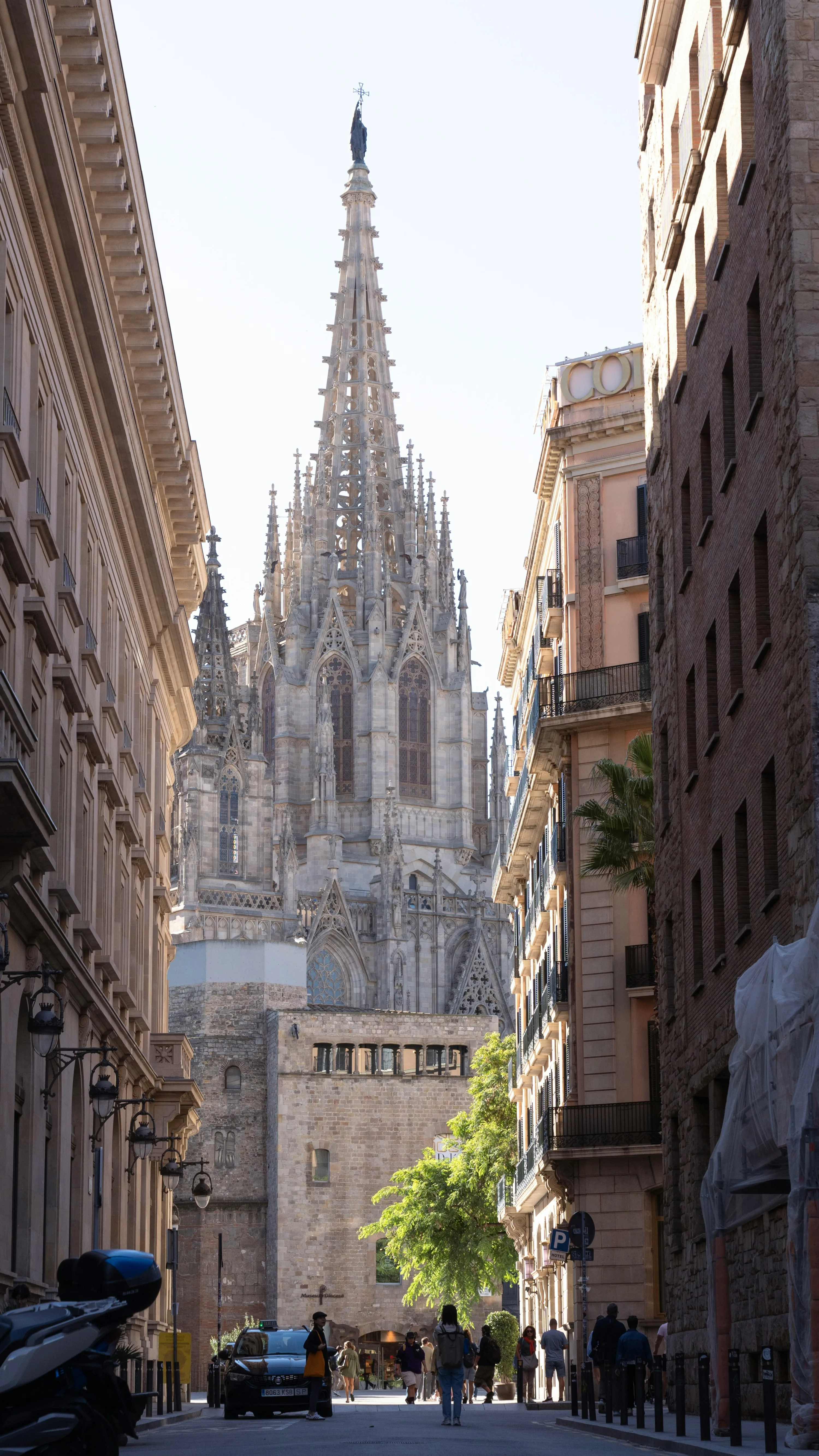
What is the Best Way to Get to the Barcelona Cathedral?
The cathedral is located in the heart of the Barri Gòtic (Gothic Quarter) at Pla de la Seu, and is exceptionally well connected.
By Metro: The closest station is Jaume I (Line 4, yellow), around a four to five-minute walk from the cathedral's main entrance via Carrer del Bisbe or through the narrow streets of the Gothic Quarter. This is the most direct Metro approach from most of the city. Liceu (Line 3, green) on Las Ramblas is around eight to ten minutes on foot through the Gothic Quarter streets and is useful for visitors approaching from the western side of the old city.
On foot from Las Ramblas: The cathedral is around a 10-minute walk from Las Ramblas through the Barri Gòtic. Following Carrer de Ferran east from Las Ramblas, then turning north onto Carrer de la Palla or through any of the narrow connecting lanes, brings you into the Pla de la Seu from the south or west. The walk through the medieval street network is itself a significant part of the experience.
On foot from the waterfront: From the Columbus Monument at the foot of Las Ramblas, the cathedral is around 15 to 20 minutes on foot through the Gothic Quarter. From the Born neighbourhood and the Basílica de Santa Maria del Mar, it is around 8 to 10 minutes.
By Bus: The Barcelona Bus Turístic (Blue Route) stops in the Barri Gòtic area close to the cathedral.
By car: Driving is not recommended. The Gothic Quarter has no public parking within it and the surrounding streets are congested. Parking garages in the Eixample or along Via Laietana are the most practical options if arriving by car, from which the cathedral is a 10 to 15-minute walk.
Note on the Gothic Quarter streets: The streets around the cathedral are pedestrian-only, narrow, and can be confusing to navigate for first-time visitors. Getting pleasantly lost is extremely common and entirely worth allowing time for. Most smartphones will navigate you to the Pla de la Seu reliably, but paper maps of the Gothic Quarter are available free from the tourist information points near Las Ramblas.
What is the Best Time to Visit the Barcelona Cathedral?
Early weekday mornings (9:30am to around 10:30am) during the free window are among the most rewarding times to visit. The nave and cloister are calm, the light is clear, and the building reads as a working church rather than a tourist attraction. The 13 geese are most active in the cooler morning hours. The choir stalls and rooftop are not accessible at this time, but the fundamental experience of the interior, the vaulted nave, the chapels, and the cloister garden, is at its most atmospheric.
The rooftop is best in the first hours of opening for morning light and in the mid-afternoon for views over the Gothic Quarter with the sun to the south. The rooftop closes earlier than the main building; ensure you factor the last access time into your visit plan.
Sundays at noon in the Pla de la Seu (the square in front of the cathedral) offer one of Barcelona's most distinctive civic traditions: the Sardana, the traditional Catalan folk dance, performed by groups in the square after the midday mass. It is not a tourist performance but a living tradition, and watching it from the cathedral steps with the neo-Gothic façade behind the dancers is one of the most characterful free experiences in the city. No ticket is required to watch from the square.
The evening free window (from around 5:30pm to 7:30pm in summer) is a calmer, more contemplative time to experience the interior. The light through the stained glass is more directional in the late afternoon, and the combination of a few remaining visitors with the flickering candles in the side chapels creates an atmosphere that the tourist visit hours, with their larger crowds, can obscure. Again, the choir and rooftop are not accessible at this time.
Seasons: The Gothic Quarter can be overwhelmingly crowded in July and August. Visiting the cathedral in the shoulder seasons of April to May and September to October gives more comfortable conditions in both the exterior square and the interior. Winter visits in December and January are the quietest of all; the cathedral's stone interior is cool but not uncomfortable with a layer, and the Pla de la Seu in December is the site of the Fira de Santa Llúcia, one of the oldest Christmas markets in Europe, running from early December to 23 December.
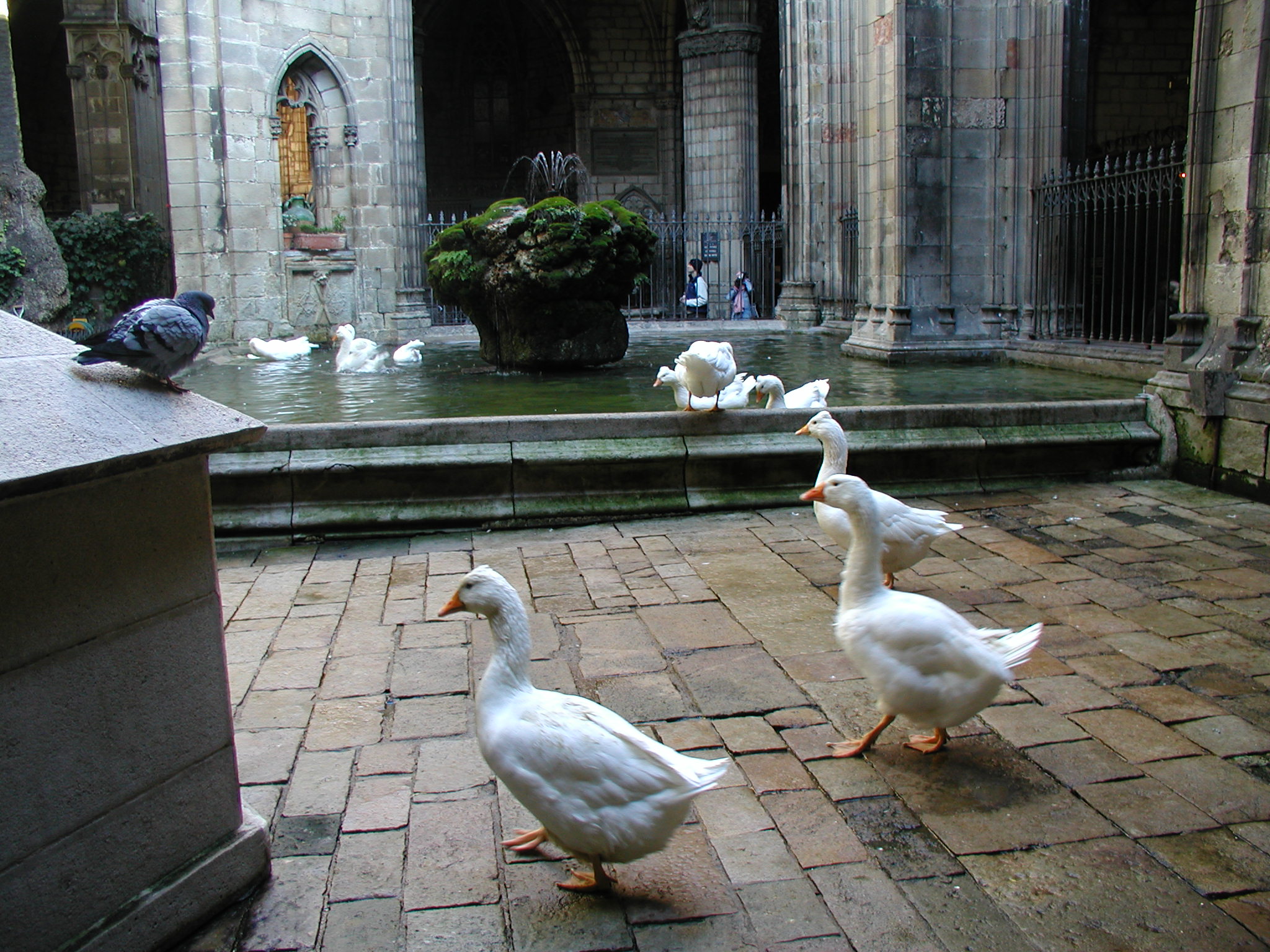
The Cathedral of Barcelona features a flock of 13 white geese that live in the cloister. The 13 geese represent the age of Saint Eulalia when she was martyred in 304 AD.
Is the Barcelona Cathedral Worth Visiting?
Yes, for a few reasons. And it's worth taking a minute to learn about what distinguishes it from the Sagrada Família and why both merit their own visit.
The Barcelona Cathedral and the Sagrada Família are entirely different kinds of experience. The Sagrada Família is Gaudí's personal architectural vision realised at an extraordinary scale over 140 years, a building that prioritises effect and transcendence. The Cathedral is a medieval city church, built over six centuries and used continuously for 700 years of Barcelonan life: for coronations, for the chapter meetings of the Order of the Golden Fleece under Charles V, for burials of counts and saints, for mass on every morning of every day since the 14th century. Its power is cumulative and contextual rather than immediately overwhelming.
The cloister is the most distinctive feature in any Gothic cathedral in Spain. Completed in 1448, it is a rectangular garden of pointed arches and delicate Gothic tracery enclosing a lush planted space of palm trees, orange trees, and magnolias, with a central fountain and pond: the Font de les Oques, the Fountain of the Geese. Here live the 13 white geese that are the cathedral's most famous and most beloved feature. Their number refers to Saint Eulàlia: 13 for the age at which she was martyred, or for the 13 tortures she is said to have endured. The sound of their cackling can be heard throughout the cathedral, and the contrast between the solemnity of the Gothic arches and the irrepressible noise of the geese is one of the most surprising and delightful things in any religious building in Europe.
The crypt of Saint Eulàlia, beneath the high altar in the raised presbytery, holds a 14th-century alabaster sarcophagus carved with scenes from her martyrdom. It is one of the finest pieces of Gothic sculpture in Catalonia and the destination of centuries of devotion. A coin placed in a slot near the tomb illuminates the crypt for a few moments of quiet light on the carved panels.
The choir stalls are an extraordinary ensemble of 15th-century woodcarving, with the additional distinction of retaining the coats of arms of the knights of the Order of the Golden Fleece placed here for the 1519 chapter meeting convened by the Emperor Charles V. The heraldic plates for Charles himself, for Henry VIII of England, and for other monarchs and nobles of the early 16th century are identifiable among the stalls.
The Holy Christ of Lepanto, a carved wooden crucifix in the Chapel of the Holy Sacrament, is one of the most venerated objects in Catalonia. The legend holds that this was the figurehead of the flagship of the Holy League at the Battle of Lepanto in 1571, and that the Christ twisted sideways to avoid a Turkish cannonball during the battle. Whether the story is literally true, the figure's distinctive inclination from the vertical and the accumulated weight of centuries of devotion make it a powerful object to stand before.
The rooftop provides one of the most intimate views of the Gothic Quarter available anywhere: the gargoyles at close quarters, the narrow medieval streets falling away below, the Eixample grid visible beyond the Barri Gòtic in the middle distance, and the octagonal lantern tower of the cathedral itself at eye level. Unlike the rooftop panoramas of the Sagrada Família or the MNAC, this view is specifically of the medieval city, and it rewards photographs that place the gargoyles and the medieval roofline in the foreground.
How Much Time Should I Spend at the Barcelona Cathedral?
For the full tourist visit covering the main nave, the cloister, the crypt, the choir stalls, the chapter house museum, and the rooftop, plan for 75 to 90 minutes at a comfortable pace.
For a free-entry visit covering the nave and the cloister only, allow 30 to 45 minutes.
A rough guide to timing:
Main nave (central aisle, side chapels, high altar): 15 to 20 minutes
Crypt of Saint Eulàlia: 5 to 10 minutes
Choir stalls: 10 to 15 minutes
Chapter house museum: 10 to 15 minutes
Cloister and Font de les Oques: 15 to 20 minutes (longer if the geese are being particularly entertaining)
Rooftop terrace: 10 to 15 minutes
The cloister specifically is a space where visitors tend to linger longer than they expect. The combination of the garden, the geese, the chapels along the cloister walkway, and the quality of the filtered light through the Gothic arches makes it one of those spaces that holds attention in a way that is difficult to anticipate.
Catedral de Barcelona Guided Tours and Audio Guides
The cathedral offers several tour formats that enhance the standard self-guided visit.
Standard tourist visit (€16) is self-guided. No audio guide is included in the standard ticket price, but printed information is available in multiple languages at the entrance.
Audio guides can be downloaded or rented and are available in Catalan, Spanish, English, French, German, Italian, Portuguese, Chinese, and Japanese. If you plan to hire a physical audio guide, enquire at the ticket office on arrival.
Official guided tours of the cathedral and cloister are available in Catalan, Spanish, and English on selected dates and must be reserved in advance through the official website. A guided tour is particularly worthwhile for visitors with an interest in the Catalan Gothic architectural programme, the history of Saint Eulàlia, and the significance of the Order of the Golden Fleece chapter held in the choir stalls in 1519.
Third-party guided tours of the Gothic Quarter almost invariably include the cathedral as a key stop, and several specialist operators offer dedicated cathedral and Barri Gòtic history tours in English. These typically last two to two and a half hours and cover not just the cathedral but the Roman and medieval layers of the neighbourhood around it. Quality varies between operators; checking recent reviews before booking is advisable.
For a self-guided approach with deep contextual engagement, the combination of the official cathedral website's history and building sections with a downloaded audio guide covers the major areas of the collection very thoroughly.
Traditions and Special Visits at the Catedral de Barcelona
The Barcelona Cathedral is unusually rich in living traditions, and several of them are worth timing a visit around.
Sardana in the Pla de la Seu (Sundays): The traditional Catalan circle dance is performed by groups of Barcelonins in the square outside the cathedral most Sunday mornings after mass. This is not a tourist performance and has no fixed schedule, but it occurs with enough regularity that visiting the Pla de la Seu on a Sunday morning between 11:00am and noon gives a reasonable chance of encountering it. Watching from the cathedral steps costs nothing and is one of the most distinctive free experiences in the city.
Corpus Christi (the ou com balla, "dancing egg"): Each year at Corpus Christi, the traditional dancing egg (ou com balla) comes to the Cloister of the Cathedral, a custom that dates back at least to 1636. A hollowed egg is balanced and set spinning on the jet of water from the Font de les Oques fountain, where it bobs and rotates in an unlikely display of folk tradition. The date varies year to year with the liturgical calendar (usually May or June). This tradition originated at Barcelona Cathedral and is now performed in various other city fountains; the cathedral version is the most celebrated.
The Day of the Holy Cross (3 May): At 9:00am on 3 May, the municipal district of Barcelona is blessed from the rooftops of the Cathedral on the occasion of the Day of the Holy Cross. This act is open to everyone who wants to participate. It is the only occasion in the year when the cathedral's rooftop is open for a public ceremony free of charge.
Feast of Saint Eulàlia (12 February): The cathedral's most important annual celebration, marking the feast day of Barcelona's co-patron saint, with masses, processions through the Barri Gòtic, and activities in the surrounding streets. The atmosphere around the cathedral on this date is particularly vivid, and the crypt and the sarcophagus receive heightened devotional attention.
Feast of Saint Llúcia (13 December): On her feast day, 13 December, devotees of the martyr and protector of sight visit the Romanesque chapel dedicated to the Saint to adore her relics. The Santa Llúcia Fair, one of the oldest Christmas markets in Europe, runs concurrently on the Avinguda de la Catedral from early December to 23 December.
Fira de Santa Llúcia (December): The Christmas market in the Avinguda de la Catedral, directly in front of the cathedral, is one of Barcelona's oldest and most atmospheric seasonal events, selling nativity figures, Christmas decorations, and traditional Catalan festive items. It runs from the beginning of December to 23 December.
Where Should I Eat Near the Barcelona Cathedral?
The Gothic Quarter surrounding the cathedral is one of Barcelona's most densely visited areas, and the restaurants and cafés closest to the Pla de la Seu and the main tourist routes tend to offer less value than those a block or two further into the neighbourhood. A few specific recommendations are worth making.
The cloister café (a small café accessible from the cloister) is the most convenient option for a coffee or light snack during the visit without leaving the cathedral precinct.
For the Gothic Quarter broadly: The streets between the cathedral and the Via Laietana to the east, particularly around Carrer dels Comtes and Carrer de la Pietat, have a mixture of traditional Catalan restaurants and tourist-facing options. Distinguishing between them requires a little navigation away from the most obvious routes.
El Call (the medieval Jewish Quarter), immediately west of the cathedral around Carrer del Call and Carrer de Sant Domènec del Call, has several good independent restaurants and bars in the narrow lanes of what was Barcelona's medieval Jewish neighbourhood. The area is less immediately touristy than the streets facing the Pla de la Seu and rewards a few minutes' exploratory walking.
The Born neighbourhood (El Born), around a 10-minute walk east of the cathedral through the Gothic Quarter towards Santa Maria del Mar, is one of Barcelona's best dining areas with an excellent concentration of independent restaurants, wine bars, and tapas bars at a range of price points.
Carrer de la Mercè, running east to west through the southern part of the Gothic Quarter towards the waterfront, has a reputation as one of the more traditional and affordable streets in the area for casual eating and wine bars serving house wines poured from barrels.
For a broader range of options at competitive prices, the Raval neighbourhood immediately west of Las Ramblas is the most varied and most local of the old city districts for dining, particularly around Carrer del Parlament and the market streets near the Mercat de Sant Antoni.
Accessibility at the Barcelona Cathedral
The cathedral has made specific provision for visitors with reduced mobility.
The Gate of Santa Eulàlia on Carrer del Bisbe is the designated accessible entrance, bypassing the main steps at the Pla de la Seu entrance and opening directly into the cloister. This is the recommended route for wheelchair users and visitors who cannot manage steps.
The interior of the cathedral is largely accessible at ground level, though some side chapels involve small steps and the crypt has a more restricted approach. Staff are available to advise on accessible routes through the interior.
The rooftop is accessible by lift, though the access route still involves some stairs at the final section; it is best suited to visitors comfortable with light stair use. The lift does not provide fully step-free access to the rooftop terrace.
Visitors with disabilities of 33% or more receive free admission with valid documentation presented at the ticket desk.
Accessible toilets with grab bars are available within the complex.
Rules, Bags, and Security
Dress code: A dress code is strictly enforced at the cathedral as an active place of worship. Shoulders must be covered, and shorts, skirts, and dresses must reach at least to the knee. Visitors wearing sleeveless tops or shorts above the knee will be asked to cover up or will be refused entry. Scarves and wraps available near the entrance can be used to cover up. No exceptions are made and no refunds are given for dress code failures.
Photography for personal, non-commercial use is permitted throughout the cathedral and the cloister. Flash photography is not permitted inside the building. The Chapel of the Holy Sacrament (Lepanto's Chapel) prohibits mobile phones entirely; no photographs can be taken there under any circumstances.
Behaviour: The cathedral is an active place of worship. During masses and religious ceremonies, visitor movement through the nave is restricted or suspended. Silence is requested in the main body of the church, and voices should be kept low throughout the building. Groups should remain with their guide and avoid disrupting individual worshippers.
Bags: No specific bag size restriction is published for the tourist visit, but large suitcases and wheeled luggage are not appropriate and may be refused. There is no left-luggage facility at the cathedral. A cloakroom for smaller bags is available inside.
Food and drink are not permitted inside the cathedral building or the cloister.
What Else is There to Do Near the Barcelona Cathedral?
The Barcelona Cathedral sits in the heart of the densest concentration of medieval and Roman history in the city, and the surrounding area rewards several hours of exploration.
Picasso Museum (Museu Picasso), around a 10-minute walk from the cathedral into the Born neighbourhood, is one of the most important Picasso collections in the world, holding over 4,000 works in a series of connected medieval palaces. The early works and the extraordinary Las Meninas series are among the highlights. Advance booking strongly recommended; queues without advance booking are frequently very long.
The Museu d'Història de Barcelona (MUHBA) at Plaça del Rei, around three to four minutes on foot from the cathedral, is one of the most remarkable urban archaeology museums in the world. Beneath a 14th-century mansion, it preserves and displays the streets, workshops, wine cellars, fish-salting facilities, and water infrastructure of Roman Barcelona, the largest underground Roman city ruins in Europe. Visitors walk on glass walkways through a four-century layer of the Roman city. The Plaça del Rei itself, the former royal square of the medieval Count-Kings, is one of the finest medieval civic spaces in Spain. Advance booking recommended.
The Pont del Bisbe (Bishop's Bridge) connecting the Palau de la Generalitat and the Casa dels Canonges on Carrer del Bisbe, immediately adjacent to the cathedral, is a neo-Gothic covered walkway built in 1928 and one of the most photographed architectural details in the Gothic Quarter. It is visible from the street at no charge and is best photographed in the late morning when the light comes directly down the street.
The Temple d'August (Roman Temple of Augustus), inside the Centre Excursionista de Catalunya at Carrer del Paradís 10, preserves four Corinthian columns from the Roman temple dedicated to Augustus that stood at the centre of Roman Barcino. The columns are free to visit during opening hours and are among the most striking Roman remains visible anywhere in the city. Entry is free or at a nominal charge.
The Basílica de Santa Maria del Mar, around a 10-minute walk east of the cathedral through the Gothic Quarter to the Born neighbourhood, is one of the most beautiful Gothic churches in Catalonia and, for many architectural historians, a more purely achieved example of Catalan Gothic than the cathedral itself. Built entirely between 1329 and 1383 with no subsequent major alterations, it has a spatial coherence and lightness that the cathedral, built across a longer and more interrupted construction history, lacks in places. The combination of both buildings in a single morning is one of the most rewarding architectural experiences Barcelona offers.
Las Ramblas and the Boqueria Market are around 10 to 12 minutes on foot from the cathedral through the Gothic Quarter. La Boqueria is open Tuesday to Sunday and is one of the most visually spectacular food markets in Europe, though the stalls closest to the main Ramblas entrance are primarily tourist-facing; the sections deeper inside the market toward the back and sides are where the neighbourhood vendors and better prices are found.
Final Tips for Visiting the Barcelona Cathedral
Know the free access windows and use them if you want the atmosphere rather than the access. The cloister, the nave, and the geese are accessible free of charge in the morning and evening windows. If seeing the choir, the museum, and the rooftop is important to you, pay the €16 and go during tourist hours. If the cloister and the interior of a great Gothic church are your priority, the free windows offer exactly that.
Go to the cloister on a weekday morning. The 13 geese are most active and most audible when the cloister is quiet, and the combination of the Gothic arches, the planted garden, the fountain, and the honking geese is one of the most surprising and memorable things Barcelona offers. It is at its best before the tourist crowds arrive.
Dress appropriately before you arrive. The dress code (shoulders covered, no shorts above the knee) is strictly enforced and non-negotiable. If you are planning a day that includes the cathedral, plan your outfit in advance. Discovering the dress code at the entrance when the rest of your party is inside is frustrating and entirely avoidable.
Time a Sunday morning visit for the Sardana. The traditional Catalan circle dance in the Pla de la Seu after Sunday mass costs nothing to watch, happens regularly, and is one of the few civic traditions in Barcelona that continues without any element of tourist performance.
Stand in the crypt and look at the sarcophagus of Saint Eulàlia. The 14th-century alabaster panels carved with scenes from her martyrdom are among the finest Gothic sculptures in Catalonia, and the story they tell, of a 13-year-old girl who defied an empire for her faith and died for it, is what the entire cathedral was built to honour. The coin slot near the tomb that briefly illuminates the crypt is worth using.
Read the choir stalls for the Order of the Golden Fleece. The coats of arms of Charles V, Henry VIII, and the other knights who attended the 1519 chapter meeting in this choir are identifiable on the carved wooden stalls. Arriving with a printed or downloaded guide to which arms belong to which monarch makes the stalls considerably more legible and rewarding.
Combine with Santa Maria del Mar on the same morning. The two great Gothic churches of medieval Barcelona are 10 minutes apart on foot, they were built within decades of each other, and comparing them in sequence gives a more complete understanding of Catalan Gothic architecture than either does alone. The Picasso Museum in the Born neighbourhood between them makes a natural third stop.
Visit the Fira de Santa Llúcia in December. The Christmas market in the Avinguda de la Catedral, one of the oldest in Europe, runs until 23 December and transforms the approach to the cathedral into one of the most atmospheric settings in the city during the Christmas season.
Back to Barcelona Attractions
Explore other Barcelona attractions
" width="24px"><path d="M 0 0 L 24 0 L 24 21.231 L 0 21.231 Z" fill="transparent" height="21.230768474975793px" id="nL2EwDcS9" width="24px"/><path d="M 0 0.541 C 0 0.242 0.245 0 0.547 0 L 2.735 0 C 3.037 0 3.282 0.242 3.282 0.541 L 3.282 4.598 C 3.282 4.897 3.037 5.139 2.735 5.139 L 0.547 5.139 C 0.245 5.139 0 4.897 0 4.598 Z" fill="rgb(196, 217, 201)" height="5.138657337892187px" id="hZ_rlBe_S" transform="translate(0 16.092)" width="3.2820512820512358px"/><path d="M 0 0.541 C 0 0.242 0.245 0 0.547 0 L 2.735 0 C 3.037 0 3.282 0.242 3.282 0.541 L 3.282 7.843 C 3.282 8.142 3.037 8.384 2.735 8.384 L 0.547 8.384 C 0.245 8.384 0 8.142 0 7.843 Z" fill="rgb(230, 211, 160)" height="8.38412513024521px" id="HgVBxIz3e" transform="translate(5.128 12.847)" width="3.282051282051235px"/><path d="M 0 0.541 C 0 0.242 0.245 0 0.547 0 L 2.735 0 C 3.037 0 3.282 0.242 3.282 0.541 L 3.282 12.982 C 3.282 13.281 3.037 13.523 2.735 13.523 L 0.547 13.523 C 0.245 13.523 0 13.281 0 12.982 Z" fill="rgb(232, 207, 164)" height="13.522782468137464px" id="utgrDnoM9" transform="translate(10.325 7.708)" width="3.282051282051377px"/><path d="M 0 0.541 C 0 0.242 0.245 0 0.547 0 L 2.735 0 C 3.037 0 3.282 0.242 3.282 0.541 L 3.282 16.498 C 3.282 16.797 3.037 17.039 2.735 17.039 L 0.547 17.039 C 0.245 17.039 0 16.797 0 16.498 Z" fill="rgb(233, 196, 166)" height="17.038705909853153px" id="OLOhW6STz" transform="translate(15.521 4.192)" width="3.2820512820512384px"/><path d="M 0 0.541 C 0 0.242 0.245 0 0.547 0 L 2.735 0 C 3.037 0 3.282 0.242 3.282 0.541 L 3.282 20.69 C 3.282 20.989 3.037 21.231 2.735 21.231 L 0.547 21.231 C 0.245 21.231 0 20.989 0 20.69 Z" fill="rgb(217, 170, 153)" height="21.230768474975793px" id="H5Z8wcwkd" transform="translate(20.718 0)" width="3.2820512820512278px"/></g></svg>)