Back to Barcelona Attractions
Do you Need to Book Tickets in Advance for Casa Milà (La Pedrera)?
Updated July 2026
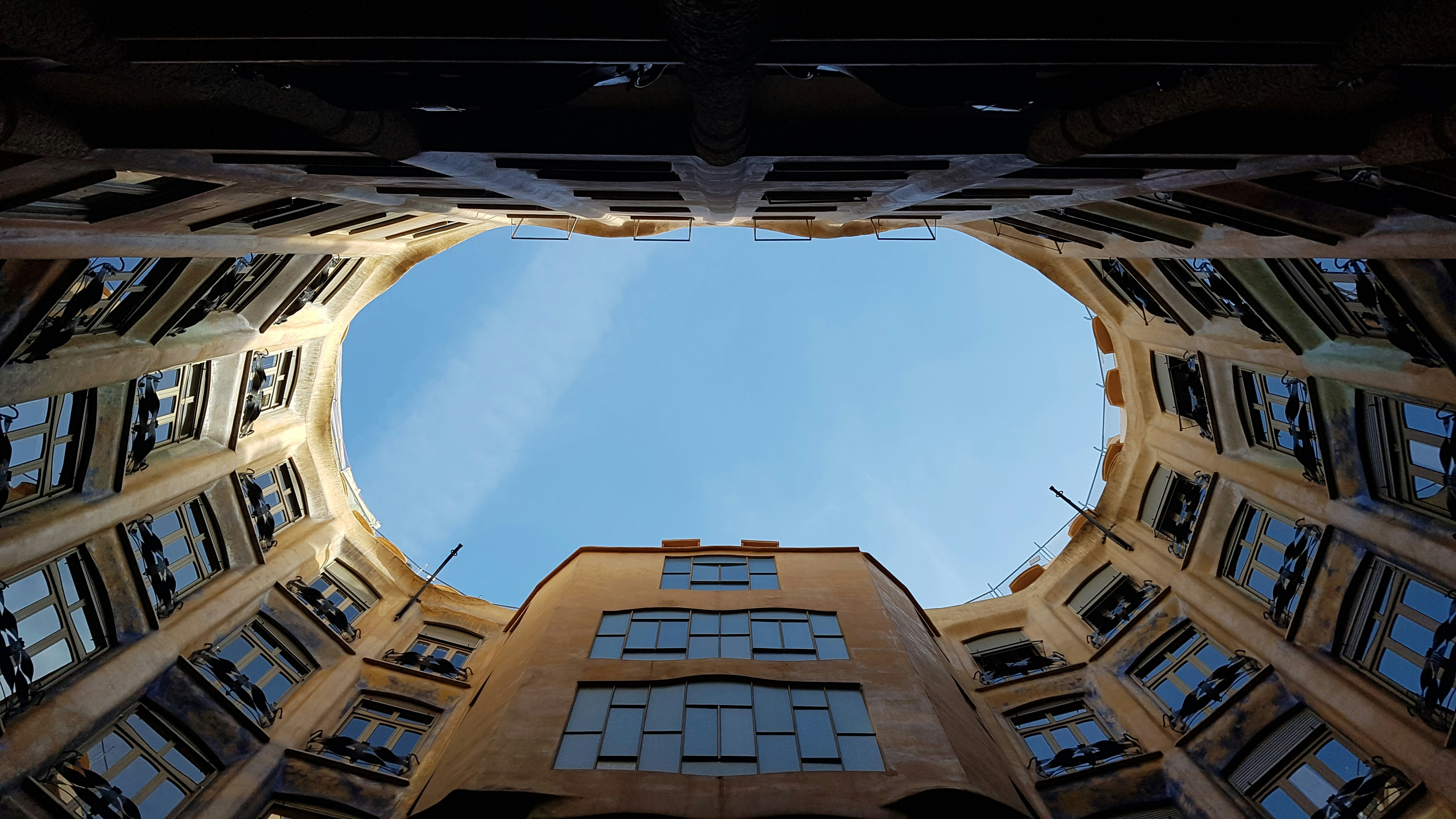
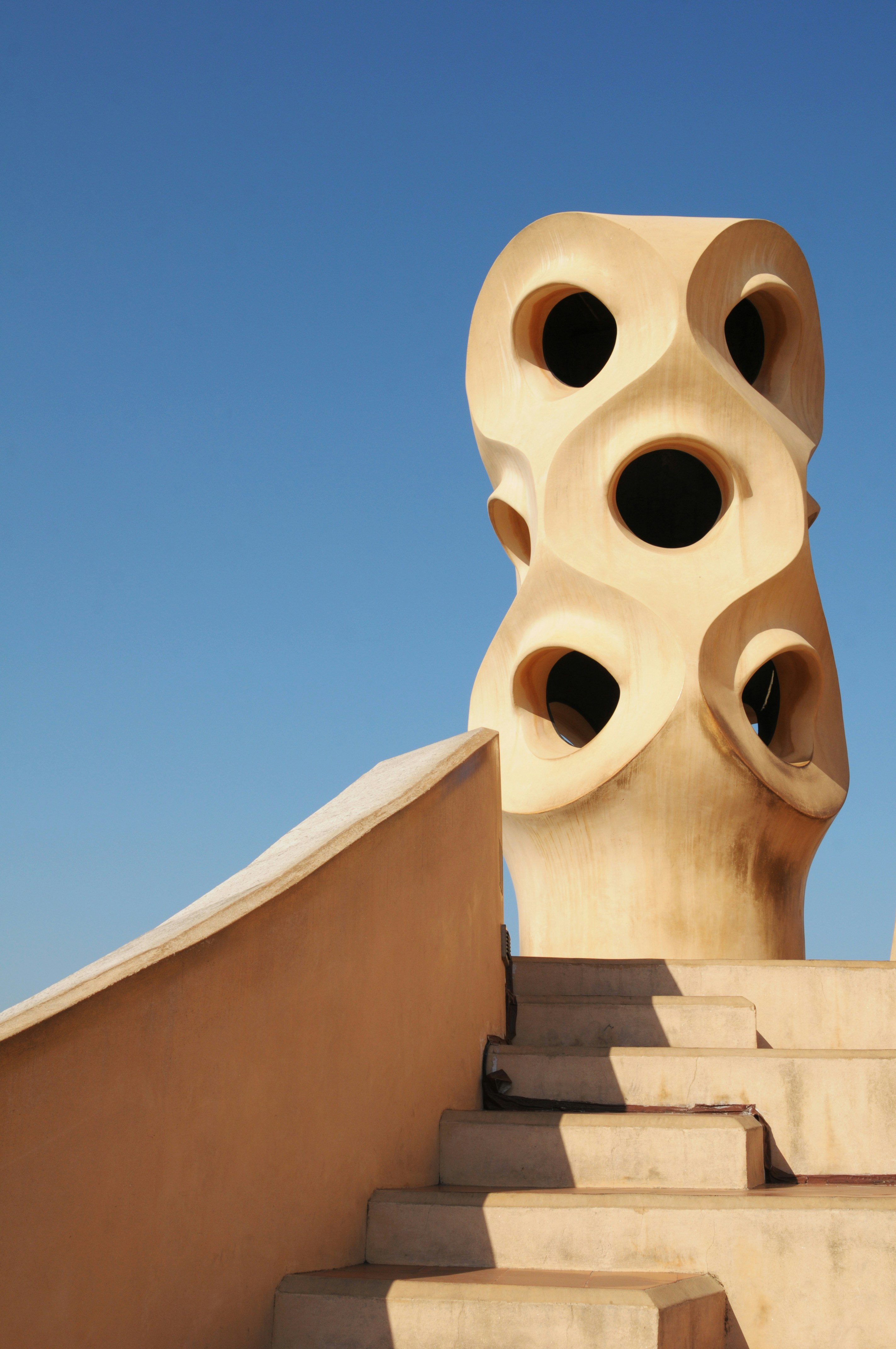
In 1906, when the textile magnate Pere Milà i Camps commissioned Antoni Gaudí to design an apartment building on the Passeig de Gràcia, the result so defied the architectural conventions of the day that the building's neighbours nicknamed it La Pedrera, the stone quarry, as a term of contempt. The name stuck, long after the contempt dissolved into admiration. Casa Milà, completed in 1912 and declared a UNESCO World Heritage Site in 1984, is Gaudí's last civil building and the most structurally radical of all his residential work. Its undulating limestone façade, 30 metres high and 84 metres long, ripples along the Passeig de Gràcia like a frozen wave, broken only by the extraordinary wrought-iron balconies that Gaudí designed as abstract sculptures evoking seaweed and kelp. Inside, the building is equally revolutionary: there are no load-bearing walls, only columns, which means every floor plan is different and every interior space was free to be arranged as its inhabitants chose. The attic holds 273 catenary arches in the form of a whale's skeleton. The rooftop, with its helical chimneys and ventilation towers capped in trencadís mosaic and arranged in hierarchical lines across the undulating terrace, is one of the most extraordinary architectural surfaces ever created. If the Sagrada Família is where Gaudí found God, La Pedrera is where he found the laws of nature and built a building from them. This guide covers everything you need to know before you visit.
At a Glance
How Early to Book:
Pre-book a timed-entry ticket about 2-3 days ahead to guarantee entry and skip queues. Special events may require earlier bookings.
Best Times to Visit:
Early mornings from 9am to 10:30am. The first time-slots of the day are the least crowded.
Ticket price:
Tickets start at €25 for adults for the "Essential" ticket, which is a standard daytime self-guided visit with audio guide included. Other experiences cost more.
Where to Book:
Landmark Address:
Do You Need to Book Casa Milà Tickets in Advance?
Yes, booking in advance is definitely worth it. Booking online through the official website is strongly recommended for three reasons: it is cheaper than buying at the box office, it guarantees your chosen time slot, and it avoids the queues that form at the ticket office during peak hours.
It is not essential, but it is highly recommended. Booking in advance means you avoid queues and waiting at the ticket office, as well as the processing fees charged at the box office. The surcharge applied to box office purchases compared to online prices is a real and avoidable cost.
Book through the official La Pedrera website. This is the only officially authorised booking platform and everyone else is ripping you off like crazy with no benefit.
Important cancellation policy: Once tickets have been purchased, no date changes or cancellations with a refund are accepted. A single change of date and/or time per reservation is only accepted if the user chose to add the flexibility insurance during purchase. The Premium ticket includes this flexibility insurance. If there is any possibility your plans might change, book the Premium tier or add flexibility insurance at checkout.
Multi-attraction bundles: The 3 Houses of Gaudí Bundle covers La Pedrera, Casa Batlló, and Casa Vicens with skip-the-line access at all three, plus a city guide app. This is the most practical option for visitors planning all three Gaudí residences in Barcelona.
The Barcelona Card provides a reduced rate on La Pedrera Essential tickets. You can read our blog post about the Barcelona Card here.
Casa Milà Opening Hours and Entry Information
La Pedrera is open daily. Hours vary by season:
Winter (4 January to 5 March and from early autumn): 9:00am to 6:30pm (last entry approximately 5:45pm)
Summer (approximately March to autumn): 9:00am to 8:30pm (last entry approximately 7:45pm)
Night Experience hours:
Winter: 7:00pm to 11:00pm
Summer: 9:00pm to 11:00pm
Annual closures: 25 December. Check the official website for any further planned closures during your visit period.
Specific times for each ticket type are confirmed at the point of booking, not on this page. Always check your chosen visit type on the official website for the precise hours that apply on your date.
You must arrive at least 10 minutes before the time stated on your ticket. Arriving late risks being refused entry, as time slots are fixed and access does not carry over.
Note on strollers: The building is not stroller-friendly due to Gaudí's uneven surfaces throughout; a baby carrier is recommended instead.
What is the Best Way to Get to Casa Milà?
Casa Milà is located at Passeig de Gràcia 92, in the heart of the Eixample district, and is one of the most centrally and conveniently positioned major attractions in Barcelona.
By Metro (recommended): The closest station is Diagonal (Lines 3 and 5), which is immediately adjacent to the building and exits directly onto the Passeig de Gràcia within a minute's walk of the entrance. This is the fastest and most convenient approach from virtually anywhere in the city.
Passeig de Gràcia station (Lines 2, 3, and 4) is also within easy walking distance, around five to seven minutes south along the boulevard, and is useful for visitors combining La Pedrera with Casa Batlló (which is three minutes' walk to the south at number 43).
By Bus: Bus lines V15, V17, H10, H8, 7, 22, 24, 6, 33, and 34 all stop close to La Pedrera on the Passeig de Gràcia.
On foot: La Pedrera is around a 15-minute walk from Plaça de Catalunya along the Passeig de Gràcia. Casa Batlló is three minutes to the south. The Fundació Antoni Tàpies is around five minutes on foot. The approach up the Passeig de Gràcia from the south, with the Block of Discord buildings appearing progressively and the limestone wave of La Pedrera's façade emerging ahead, is one of the most satisfying urban approaches in Barcelona.
By car: A parking garage at Passeig de Gràcia-La Pedrera near the building is available. La Pedrera offers a special rate of €6.50 for a 2-hour parking ticket (standard price €7.50). That said, the Eixample is well served by public transport and driving is rarely necessary or practical from elsewhere in the city.
What is the Best Time to Visit Casa Milà?
Early morning (9:00am to 10:30am) is consistently the best time for the standard visit. The building has a timed entry system, and the first slots of the day are the least crowded. The two courtyards and the main staircase are at their most atmospheric in the morning light, and the rooftop in the early morning gives you the warrior chimneys against a clear sky before the heat of the day builds.
Midday to early afternoon is the peak period. The rooftop in particular becomes very busy from around 11:00am, and the queue of visitors moving through the Espai Gaudí attic on a busy summer afternoon can feel congested. If you can only visit during this window, the timed entry slot still controls access to some degree, but earlier is reliably better.
Late afternoon slots (from around 5:00pm or 6:00pm in summer, when the extended hours allow it) offer a second quieter window. The light on the façade from the west in the late afternoon is also at its warmest and most photogenic.
For the Night Experience: The most popular slots are in summer, running from 9:00pm with the rooftop audiovisual show beginning later. Booking several weeks ahead for summer Night Experience visits is strongly advisable. The show takes place al fresco on the rooftop; bring a layer in cooler months.
Weekdays from Tuesday to Thursday are consistently quieter than weekends and far quieter than the 2026 Gaudí centenary weekends, which will bring elevated visitor numbers across all Gaudí sites throughout the year.
Seasonally: The limestone façade and the rooftop are most spectacular in clear conditions. The façade faces south-west and catches the best light from mid-afternoon onwards. Rainy conditions are worth considering specifically for the rooftop: in the event of rain, the roof terrace is closed for safety reasons, and this will not constitute grounds for a refund. If your visit is specifically motivated by the rooftop, checking the weather forecast before committing to a specific slot is sensible.
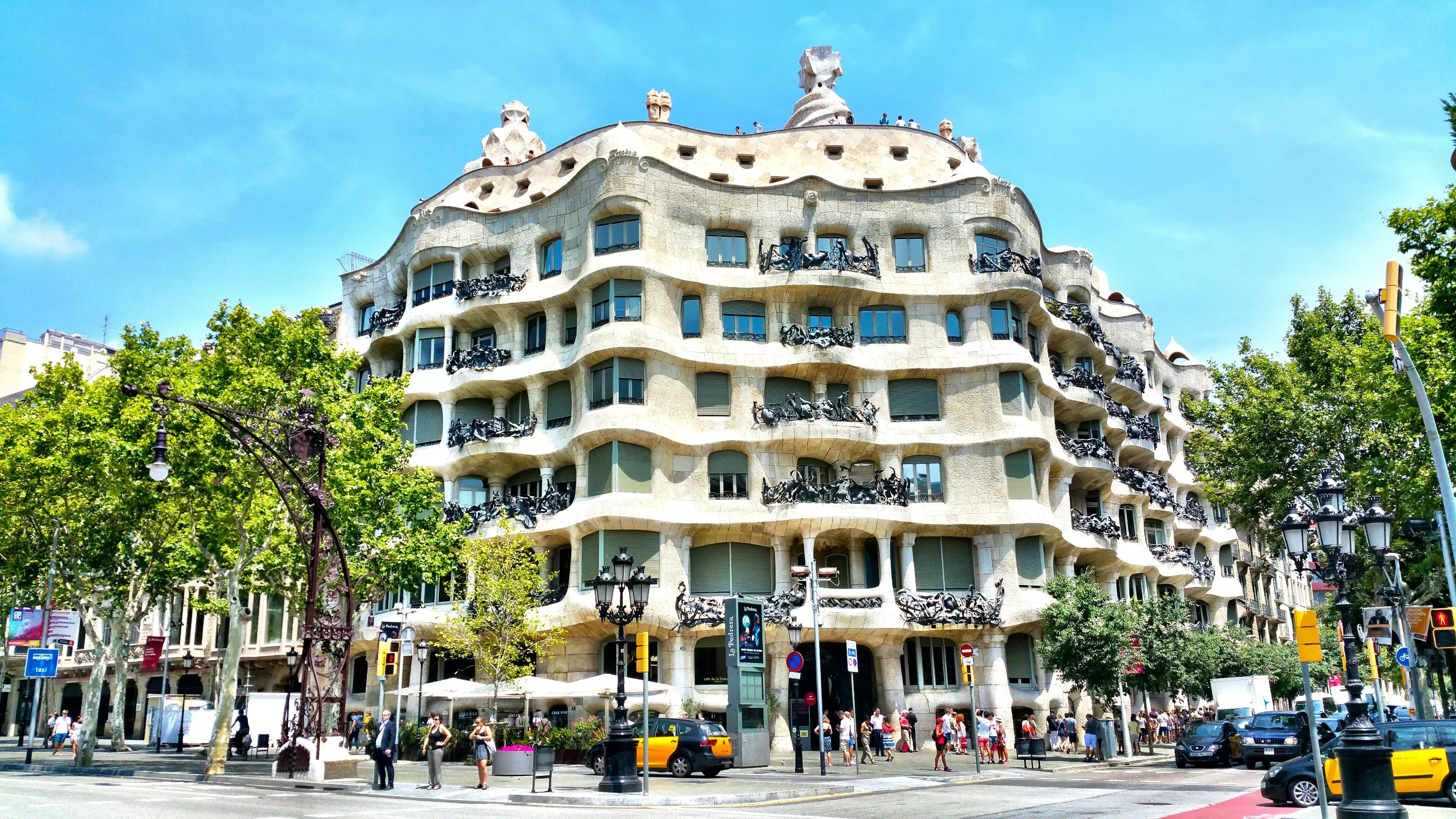
True to Gaudí’s organic style, there are no straight lines in the facade or structure of Casa Milà; it is built with steel beams, concrete, and stone. The stone exterior does not support the building's weight, but rather acts more like a curtain wall.
Is Casa Milà Worth Visiting?
Casa Milà is absolutely worth visiting, but it is also important to understand what kind of experience it is and how it differs from Casa Batlló three minutes to the south.
The two buildings are often discussed together as Gaudí's great works on the Passeig de Gràcia, and visiting both on the same day (a combined ticket is available) is one of the most concentrated Gaudí experiences available anywhere in the world. But they are different buildings expressing different ideas. Casa Batlló, with its dragon-spine rooftop, its shimmering façade of coloured ceramic and glass, and its densely ornamented interior, is Gaudí at his most symbolic and narrative. Casa Milà is Gaudí at his most structural and conceptual: a building in which the formal logic of nature, the catenary arch, the helical column, the undulating load-bearing stone skin, is applied so systematically that the result looks like nothing a human being should rationally have been able to build in 1906.
The Warrior Rooftop is the most immediately extraordinary space in the building and the highlight of any visit. The chimneys and ventilation towers are clad in trencadís mosaic of white ceramic fragments, stone, and glass, and they are arranged across the undulating rooftop surface not as functional objects but as sculptures: helical warriors standing watch over the Eixample, varying in height and form, their twisted forms casting shadows across the terrace at different times of day. The panoramic view from the rooftop takes in the Sagrada Família to the north-east, the Eixample grid spreading to every horizon, and on clear days the sea visible to the south. This is the space that has inspired comparisons to Star Wars stormtroopers, to science fiction landscapes, to medieval fortresses, and to the surface of the moon, and all of those comparisons are slightly right and slightly insufficient.
The Espai Gaudí in the Whale Attic is the single best introduction to Gaudí's architecture available anywhere in Barcelona. The 273 catenary arches that form the structural skeleton of the attic, curving from floor to ceiling like the ribcage of a great sea creature, are breathtaking as pure form before you understand their purpose. The Gaudí Exhibition housed within uses models, drawings, audiovisuals, and the architect's own instruments and designs to explain how Gaudí arrived at his structural solutions, how he tested the catenary arch through hanging chain models, how he conceived the relationship between structure and decoration, and how La Pedrera fits into the trajectory from his early work through to the Sagrada Família. This is the only exhibition in Barcelona dedicated entirely to Gaudí's complete output, and it is included in the standard admission ticket. For visitors who want to understand why Gaudí matters rather than simply experiencing his buildings as spectacle, this is the most important room in the building.
The Tenants' Apartment on the fourth floor is a recreation of a prosperous Barcelona bourgeois household in 1911, complete with period furniture, kitchen equipment, and the small but telling Gaudí-designed details that make a building by Gaudí distinctive even in its door handles: the knobs, the mouldings, the hexagonal floor tiles (later adopted across Barcelona), the curved-legged chairs designed so that their backs support the human spine naturally. The apartment gives the building a domestic scale and a human context that the rooftop and attic, for all their brilliance, do not provide on their own.
The Two Courtyards (the Flower Courtyard on the Passeig de Gràcia side and the Butterfly Courtyard on the Provença side) are the spaces that most dramatically reveal what Gaudí was attempting structurally. With no load-bearing walls, light and air can move through the building in ways that a conventional apartment building of the period could not achieve. The murals on the courtyard walls, painted by Josep Maria Jujol and including trompe l'oeil skies and baroque ceiling motifs applied to vertical surfaces, are among the most ambitious decorative elements in the building and are consistently underappreciated relative to the rooftop.
The Main Floor Exhibition Space, formerly the private apartment of the Milà-Segimon couple, now functions as the Fundació Catalunya La Pedrera's exhibition hall. It opens exceptionally twice a year for major temporary exhibitions and is the only space in the building where Gaudí's open-plan layout and original stone columns are visible in their most complete residential form.
How Much Time Should I Spend at Casa Milà?
The La Pedrera Essential self-guided visit with audio guide takes approximately one hour to one and a half hours. Visitors who want to spend more time on the rooftop, in the Espai Gaudí exhibition, or in the courtyards should allow up to two hours.
A rough guide:
Two courtyards and main staircase: 10 to 15 minutes
Tenants' Apartment: 15 to 20 minutes
Espai Gaudí attic exhibition: 20 to 30 minutes
Warrior Rooftop: 15 to 25 minutes (longer for photographers)
Main floor exhibition (when open): 20 to 30 minutes
Casa Milà Visit Types, Audio Guides, and Guided Tours
La Pedrera Essential (the standard self-guided daytime visit) includes an audio guide in 11 languages: Catalan, Spanish, English, Chinese, French, German, Portuguese, Italian, Russian, Japanese, and Korean. The audio guide is an integral part of the visit and is worn around the neck for hands-free use. It covers all five sections of the visitor route with contextual commentary on Gaudí's structural and decorative decisions.
La Pedrera Night Experience is the most popular alternative to the standard visit and a seriously worthwhile evening experience. Running throughout 2026, it is a 75 to 90-minute guided visit (in English, Spanish, and Catalan) that takes small groups through the building in the quiet of the evening, ending on the rooftop where a kaleidoscopic audiovisual show is projected onto the chimneys and ventilation towers, painting the warrior forms with light, colour, and the natural imagery that was Gaudí's fundamental inspiration. The visit concludes with a glass of cava and chocolate nibbles. On winter evenings this means entering in darkness and experiencing the building at a sensory level that the daytime visit, however rewarding, does not achieve. Tickets from approximately €35 to €39. Book through the official website; popular summer slots sell out.
La Pedrera Sunrise is a guided small-group tour before the building opens to the general public, in the soft light of the early morning. It covers the courtyards, the historic apartment, the Espai Gaudí attic, and the rooftop with a guide, in conditions close to private. For visitors who want the rooftop experience without crowds and are prepared to set an alarm for an early start, it is the most intimate way to experience La Pedrera. Tickets from approximately €39.
La Pedrera Unseen is a guided tour available exclusively in Catalan, exploring lesser-known aspects of the building's history and architecture not covered on the standard route. This is only suitable for Catalan speakers or visitors accompanied by someone who can translate.
Where Should I Eat at and Near Casa Milà?
Cafè de La Pedrera, in the basement of Casa Milà in the Sala Jujol, is one of the best on-site dining options of any attraction in Barcelona. The space features the building's Modernista architecture as its backdrop, with Jujol's decorative ceiling elements visible above the tables. It is open during museum hours and offers a menu covering coffee, pastries, sandwiches, and light meals, as well as a terrace. The restaurant also offers gourmet brunch and dinner options to enhance the La Pedrera experience, combining the building visit with a meal in the building itself. Booking the restaurant separately is advisable for evening meals, particularly on Night Experience nights.
For eating beyond the building, the Passeig de Gràcia and its surrounding streets offer the full spectrum of Barcelona dining.
The Eixample streets around the Passeig de Gràcia (particularly Carrer de Provença, Carrer de Mallorca, and Carrer de Còrsega running perpendicular to the boulevard) have an excellent concentration of neighbourhood restaurants at prices more accessible than the boulevard itself. This is where a large proportion of Eixample residents actually eat.
The Block of Discord area immediately south of La Pedrera, around Casa Batlló and the Fundació Antoni Tàpies, has several cafés and wine bars that serve the area's visitors without the premium pricing of the most tourist-facing Passeig de Gràcia terraces.
Gràcia, the neighbourhood immediately north of the Diagonal (accessible on foot in 10 to 15 minutes by crossing Avinguda Diagonal and heading north into the village-like streets of the district), is one of Barcelona's most enjoyable and affordable areas for eating and drinking, with a concentration of independent restaurants, wine bars, and market squares that offer a very different character from the Eixample.
Accessibility at Casa Milà
The public parts of the building are accessible to wheelchairs without obstacles, except for the rooftop and the mezzanine, which are not suitable for wheelchairs or prams due to the constant unevenness of Gaudí's structure. However, a platform at the exit of the lift provides a general overview of the rooftop area.
Free wheelchair loan is available to visitors with reduced mobility, subject to availability.
Visitors with a disability of 65% or higher receive free admission. Visitors with a disability of 33% to 64% receive a reduced rate. Documentary proof of disability level is required at entry.
The building is not stroller-friendly due to the unevenness of Gaudí's surfaces throughout; baby carriers are recommended for visitors with very young children.
Accessible parking is not available on the Passeig de Gràcia itself. The nearby parking garage at Passeig de Gràcia-La Pedrera may offer the most practical car access for visitors with mobility limitations arriving by car.
Rules and Practical Information
Cancellation: Once tickets are purchased, no date changes or refunds are accepted unless the buyer added flexibility insurance during purchase. A single change of date and/or time is allowed per reservation if flexibility insurance was selected. The Premium ticket includes this insurance.
Photography for personal, non-commercial use is permitted throughout the building. Flash photography is not permitted.
Luggage and bags: Large suitcases and oversized bags are not appropriate given the scale and nature of the visitor route. A cloakroom is available at the entrance for coats and smaller bags.
Food and drink: Not permitted inside the main gallery spaces. The Cafè de La Pedrera and the terrace are the designated eating areas.
Groups of 10 or more must book in advance through the group bookings contact above.
The audio guide device is returned at the exit. Standard wired headphone jack compatible with most personal earphones.
What Else is There to Do Near Casa Milà?
Casa Batlló, three minutes' walk south at Passeig de Gràcia 43, is the obvious companion visit for a Gaudí-focused day. The 3 Houses of Gaudí Bundle covers both buildings (plus Casa Vicens) with skip-the-line access. The two buildings are different enough in character and in what they demonstrate about Gaudí's architecture that seeing them in sequence on the same day is one of the most concentrated and rewarding architectural experiences in Europe.
Fundació Antoni Tàpies, at Carrer d'Aragó 255 immediately south-east of La Pedrera (about five minutes on foot), is a major institution dedicated to Barcelona's most significant 20th-century artist, housed in the former Montaner i Simon publishing house. The building's rooftop sculpture and the collection of Tàpies's paintings, sculptures, and graphic works make it a worthwhile addition to a Passeig de Gràcia morning.
The Block of Discord (Manzana de la Discordia): The stretch of Passeig de Gràcia between Carrer d'Aragó and Carrer del Consell de Cent, around five minutes south of La Pedrera, holds Casa Batlló alongside Casa Amatller (by Josep Puig i Cadafalch) and Casa Lleó Morera (by Lluís Domènech i Montaner), all Modernista masterworks within a single block. Walking this stretch and comparing the three buildings with each other and with La Pedrera is one of the most instructive free things to do in Barcelona.
Sagrada Família is around 25 minutes on foot from La Pedrera (heading north-east), or a short Metro ride. See the What2Book page for the Sagrada Família for full booking guidance.
Casa Vicens, Gaudí's first major commission (1883 to 1889) in the Gràcia neighbourhood, is around 30 minutes on foot from La Pedrera. Considerably smaller and quieter than La Pedrera or Casa Batlló, it offers a fascinating account of Gaudí's early Orientalist period before he had developed his mature organic vocabulary.
Final Tips for Visiting Casa Milà
Book online and book early. Dynamic pricing means the cheapest tickets are available furthest from the visit date. The difference between booking a week ahead and booking on the day can be several euros per person. The official website always offers the lowest price.
Buy the Premium tier or add flexibility insurance if there is any chance your plans might change. The standard Essential ticket offers no refunds and no date changes. If Barcelona's weather or your itinerary is unpredictable, the additional cost of the Premium tier is worth it.
Arrive 10 minutes before your slot. Late arrivals risk being refused entry, as the timed entry system is designed around the flow of visitors through the building. The 10-minute window stated on the ticket is a firm instruction, not a suggestion.
Do not skip the Espai Gaudí exhibition in the attic. The warrior chimneys on the rooftop are the image that appears on every postcard and on every Barcelona skyline photograph, and they deserve the time visitors give them. But the Espai Gaudí exhibition inside the whale-rib attic below is the most intellectually serious and contextually rich part of the visit, and it is consistently underused by visitors who spend all their time on the terrace above and rush through the attic on the way down.
Photograph the façade from across the Passeig de Gràcia. The undulating stone wave of the façade, 30 metres high and 84 metres long, is impossible to capture properly from the pavement immediately in front of it. Cross to the far pavement of the boulevard and walk north and south to find the angle that shows the full length of the building. Late afternoon west-facing light is the most dramatic.
Consider the Night Experience for an evening in Barcelona. The standard daytime visit is the right choice for most visitors, but the Night Experience, with its small-group guided tour, the audiovisual show projected onto the warrior chimneys after dark, and the closing glass of cava on the rooftop, is one of the finest evening experiences Barcelona offers at any price. Book several weeks ahead for summer slots and expect the show to sell out on popular dates.
Combine with Casa Batlló on the same day. The two buildings are three minutes apart, they are both essential Gaudí, and the 3 Houses of Gaudí Bundle offers skip-the-line access to both. A morning at La Pedrera and an afternoon at Casa Batlló (or vice versa, depending on your preferred time for each building's light) is one of the most rewarding single-day architectural itineraries in Europe.
Back to Barcelona Attractions
Explore other Barcelona attractions
" width="24px"><path d="M 0 0 L 24 0 L 24 21.231 L 0 21.231 Z" fill="transparent" height="21.230768474975793px" id="nL2EwDcS9" width="24px"/><path d="M 0 0.541 C 0 0.242 0.245 0 0.547 0 L 2.735 0 C 3.037 0 3.282 0.242 3.282 0.541 L 3.282 4.598 C 3.282 4.897 3.037 5.139 2.735 5.139 L 0.547 5.139 C 0.245 5.139 0 4.897 0 4.598 Z" fill="rgb(196, 217, 201)" height="5.138657337892187px" id="hZ_rlBe_S" transform="translate(0 16.092)" width="3.2820512820512358px"/><path d="M 0 0.541 C 0 0.242 0.245 0 0.547 0 L 2.735 0 C 3.037 0 3.282 0.242 3.282 0.541 L 3.282 7.843 C 3.282 8.142 3.037 8.384 2.735 8.384 L 0.547 8.384 C 0.245 8.384 0 8.142 0 7.843 Z" fill="rgb(230, 211, 160)" height="8.38412513024521px" id="HgVBxIz3e" transform="translate(5.128 12.847)" width="3.282051282051235px"/><path d="M 0 0.541 C 0 0.242 0.245 0 0.547 0 L 2.735 0 C 3.037 0 3.282 0.242 3.282 0.541 L 3.282 12.982 C 3.282 13.281 3.037 13.523 2.735 13.523 L 0.547 13.523 C 0.245 13.523 0 13.281 0 12.982 Z" fill="rgb(232, 207, 164)" height="13.522782468137464px" id="utgrDnoM9" transform="translate(10.325 7.708)" width="3.282051282051377px"/><path d="M 0 0.541 C 0 0.242 0.245 0 0.547 0 L 2.735 0 C 3.037 0 3.282 0.242 3.282 0.541 L 3.282 16.498 C 3.282 16.797 3.037 17.039 2.735 17.039 L 0.547 17.039 C 0.245 17.039 0 16.797 0 16.498 Z" fill="rgb(233, 196, 166)" height="17.038705909853153px" id="OLOhW6STz" transform="translate(15.521 4.192)" width="3.2820512820512384px"/><path d="M 0 0.541 C 0 0.242 0.245 0 0.547 0 L 2.735 0 C 3.037 0 3.282 0.242 3.282 0.541 L 3.282 20.69 C 3.282 20.989 3.037 21.231 2.735 21.231 L 0.547 21.231 C 0.245 21.231 0 20.989 0 20.69 Z" fill="rgb(217, 170, 153)" height="21.230768474975793px" id="H5Z8wcwkd" transform="translate(20.718 0)" width="3.2820512820512278px"/></g></svg>)