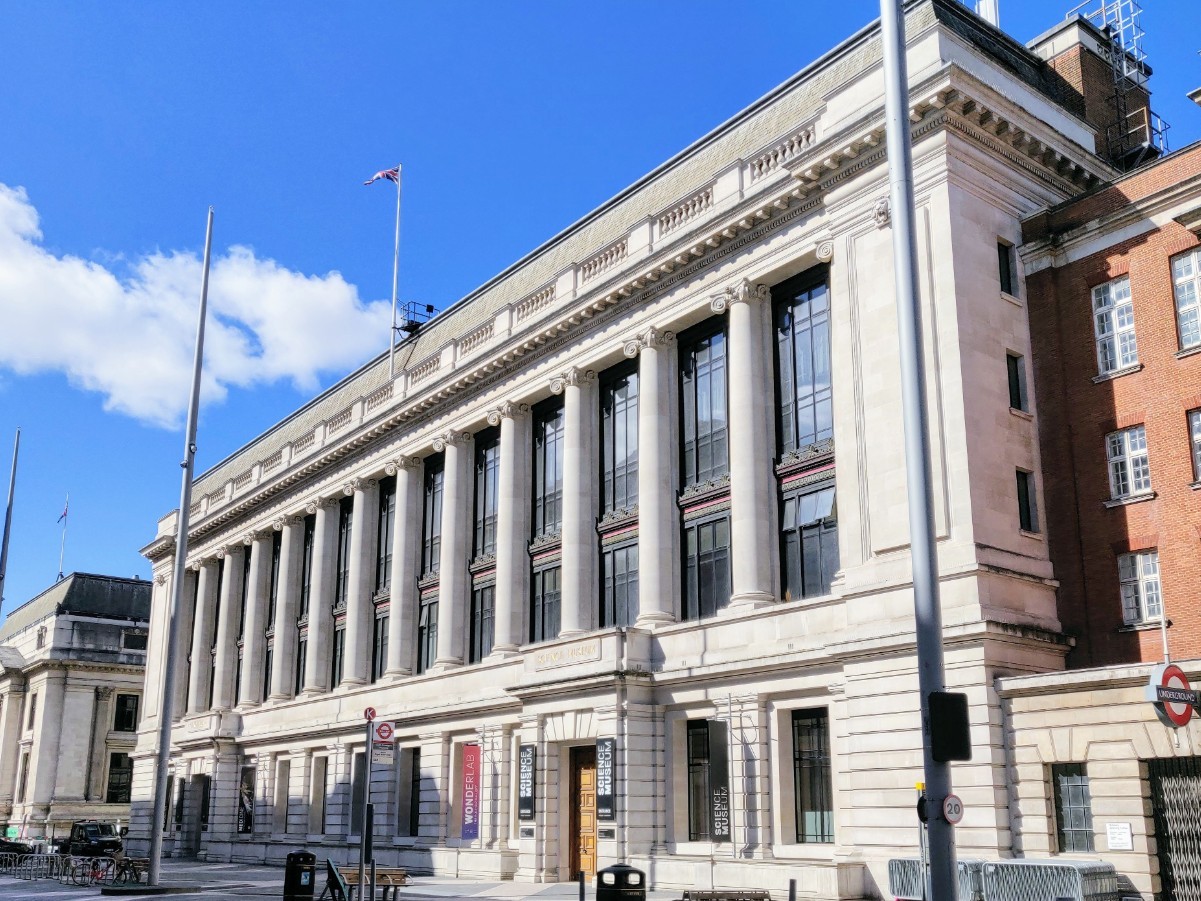
London • South Kensington
Pre-booking a free timed ticket to the Science Museum is required, and walk-up entry is not guaranteed. Most time slots still have availability close to the day of visit, but the paid experiences sell out earlier. Book a few days ahead in term time and a week ahead during school holidays.
Book 1 Week Ahead
Peak Season
Book 1-3 Days Ahead
Off Season
Back to London Attractions
NOTE: Timed-entrance tickets are currently REQUIRED to be booked in advance for the Science Museum in South Kensington.
Do You Need to Book the London Science Museum in Advance?
Updated September 2026
The Science Museum in South Kensington is one of the greatest science and technology museums in the world, housing more than 300,000 objects across five floors that trace the history of human ingenuity from the steam age to the space age. With a new Space gallery opened in September 2025, the hands-on Wonderlab interactive gallery, a gaming experience covering 50 years of console history, and one of the largest IMAX screens in the UK, the museum offers a different experience depending on who you are visiting with and what you choose to do. General admission is free, but planning which paid extras you want, and booking them ahead, will significantly affect both your experience and your budget.
At a Glance
How Early to Book:
Book a free ticket 3-4 days in advance for good timeslot availability for general entry. Book earlier for the special paid attractions such as WonderLab.
Best Times to Visit:
Mornings at opening (10am) will have the most manageable crowds. Lates evenings are adults-only and give the museum a completely different feel, though they no longer follow a fixed monthly date.
Ticket price:
Free of charge for all.
Where to Book:
Museum Address:
Do You Need to Book Science Museum London Tickets in Advance?
Yes, and this applies even though admission to the museum itself is free. Pre-booking a free timed entry ticket is required for all visitors, and walk-up entry is not guaranteed. Booking online ensures you have a confirmed arrival slot and avoids the risk of being turned away on busy days.
Free general admission: Pre-book at the official Science Museum website. This is quick, costs nothing, and simply secures your arrival time slot. Without it, entry on the day cannot be guaranteed, particularly during school holidays and weekends.
Paid experiences require separate advance booking. The museum has three main paid extras, all of which can be booked independently or in combination via the official website: Wonderlab, Power Up and IMAX: The Ronson Theatre
How far in advance to book: During school holidays and summer weekends, free general admission slots and Wonderlab time slots can sell out a few days in advance. For any visit between mid-July and the end of August, or during UK school holiday periods, book at least a few days ahead of time, preferably a week ahead. For term-time weekday visits, booking a day or two ahead is usually sufficient, though earlier is always safer for Wonderlab specifically, which has limited capacity per slot.
Is the London Pass useful here? General admission is free, so the London Pass adds no value for basic museum entry. Check the current London Pass website for whether any of the paid add-ons (Wonderlab, Power Up, IMAX) are included in the current pass, as inclusions change periodically.
Is the Science Museum London Free?
General admission to the Science Museum is free for everyone, with no booking fee. This covers access to all five floors of the permanent collection, including the new Space gallery, Making the Modern World, Medicine: The Wellcome Galleries, the Mathematics gallery, Information Age, the Energy Hall, the Flight gallery, and all other permanent exhibitions. Even the Pattern Pod and The Garden (interactive spaces for younger children) are free, though pre-booking a slot is required.
What is not free are the three paid experiences: Wonderlab (from £13.50), Power Up (from £10.00) and IMAX: The Ronson Theatre (from £11.00). Prices vary by time slot and rise closer to the day, so the figure you pay depends on when you book and when you arrive. Annual passes are £29 for Wonderlab and £26 for Power Up, which is worth doing the sums on if you expect to return. Children aged 3 and under go free to both.
A family of four visiting only the free galleries, without adding any paid experience, can have a thoroughly rewarding full day at the Science Museum at no cost beyond the booking of their free timed entry tickets. The paid experiences are worthwhile additions, particularly Wonderlab for families with children aged 7 and above, but they are in no way essential.
Ways to pay less for the paid experiences: Book as far ahead as you can and take an earliest or latest time slot, which is where the discounts sit. Families of three to five people with no more than two adults save £3 per Wonderlab day pass and £2 per Power Up day pass. Anyone receiving Universal Credit or certain other benefits can book £5 adult tickets for either, up to five people per household, at least a day in advance. If you expect to come back within the year, annual passes are £29 for Wonderlab and £26 for Power Up.
Science Museum London Opening Hours and Entry Information
Open daily: 10:00am to 6:00pm
Last entry: 5:15pm
Galleries begin to close approximately 30 minutes before the museum closes
Closed: 24, 25, and 26 December
Wonderlab hours: 10:00am to 5:40pm. Check the official website for the current Wonderlab timetable, as individual gallery and attraction hours can vary on specific days due to events or maintenance.
IMAX screenings: Weekday showtimes at 11:00am, 12:30pm, 2:00pm, and 3:30pm. Weekend showtimes at 11:00am, 12:15pm, 1:30pm, 3:00pm, and 4:15pm. Check the IMAX page on the official website for current films and showtimes.
Science Museum Lates: Adults-only evening sessions run from 6:30pm to 10:00pm on selected dates through the year. These events combine access to the galleries with guest speakers, music, bars, and themed programming. General admission is free but must be booked, and a £12 VIP ticket adds queue jump from 6:30pm and a welcome drink. Check the Science Museum website for upcoming Lates dates and themes.
Address: Exhibition Road, South Kensington, London SW7 2DD
What is the Best Way to Get to the Science Museum?
The Science Museum is located on Exhibition Road in South Kensington and is one of the most easily reached major museums in London.
By Tube: The best option for most visitors is South Kensington (Piccadilly, Circle, and District lines), which is approximately a five-minute walk from the museum entrance. An underground pedestrian tunnel connects South Kensington station directly to Exhibition Road, which is covered and useful in bad weather. Gloucester Road (Piccadilly, Circle, and District lines) is around 15 minutes on foot and is useful as an alternative if South Kensington station is busy.
By bus: Multiple routes stop at or near South Kensington station and Exhibition Road, including routes 14, 49, 70, 74, 345, 360, 414, 430, and C1. These connect the museum to Hyde Park Corner, Kensington High Street, Chelsea, and central London.
On foot: The Science Museum is around a 10-minute walk from Hyde Park and the Albert Memorial, 10 minutes from the Royal Albert Hall, and 20 minutes from Harrods and Knightsbridge. The Natural History Museum and the Victoria and Albert Museum are immediately adjacent, making the museum triangle of South Kensington one of the easiest areas in London to navigate on foot.
By bike: Santander Cycle docking stations are located on Exhibition Road and around South Kensington station, making cycling a practical option from Hyde Park, the South Bank, and Chelsea.
By car: The area sits within the Royal Borough of Kensington and Chelsea, which operates controlled parking. Blue badge holders can park on Exhibition Road for four hours between 8:30am and 6:30pm. For all other visitors, public transport is significantly more practical.
Practical tip: The pedestrian tunnel from South Kensington station to Exhibition Road exits close to both the Science Museum and the Natural History Museum. During busy periods the tunnel itself can feel crowded, but it is the fastest and most weather-proof approach.
Image Credit: Mike Peel, CC-BY-SA-4.0
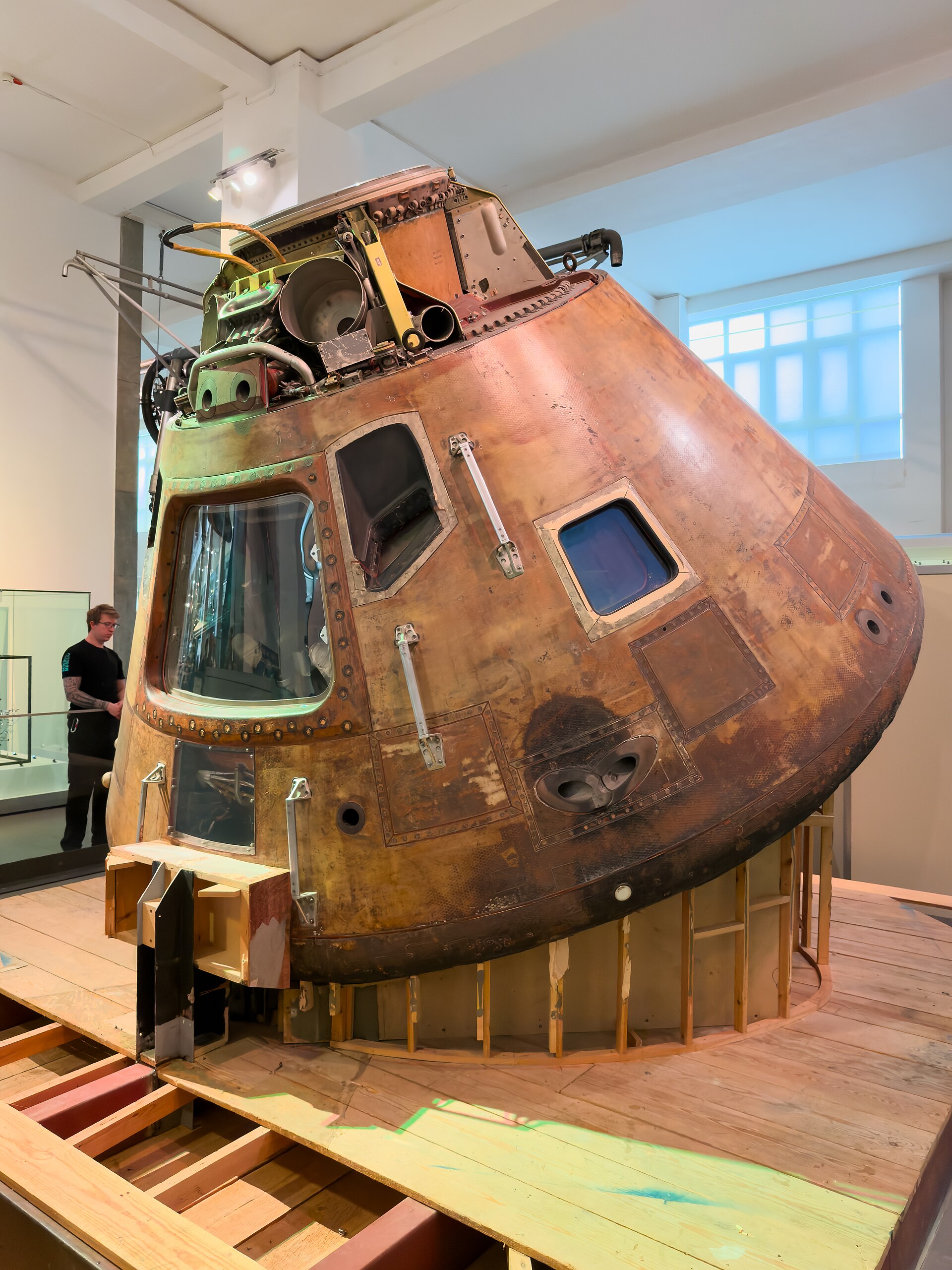
The Science Museum features over 300,000 objects. Visitors can get up close to the Apollo 10 command module (pictured here) and the Sokol spacesuit worn by British astronaut Tim Peake.
How Much Time Should I Spend at the Science Museum?
A standard visit covering the free permanent galleries at a comfortable pace typically takes two to three hours. Visitors who want to explore multiple floors methodically, or who have children who want to stop at The Garden or Pattern Pod, should allow three hours.
Adding paid experiences changes the equation significantly:
Wonderlab: Allow one to two hours in the gallery. Families with engaged children often stay longer, particularly if the Explainers are running live demonstrations.
Power Up: Allow 90 minutes to two hours if you plan to play at multiple stations.
IMAX: Standard documentary screenings run 60 minutes including adverts.
If you plan to combine the free galleries with Wonderlab and an IMAX screening, plan for a full day of five to six hours. The museum is structured across five floors with clear signage, and there is enough to fill a day comfortably without feeling rushed.
For a focused visit with older children or adults primarily interested in the Space gallery, Making the Modern World, and one paid experience, three to four hours is a realistic and satisfying allocation.
What is the Best Time to Visit the Science Museum?
Best time of day: Opening time at 10:00am on a weekday is the single most effective strategy for avoiding the busiest periods. The galleries are quietest in the first 90 minutes of the day, and Wonderlab time slots are more available. After 3:00pm, visitor numbers also drop as families with younger children begin to leave.
Best days: Tuesday, Wednesday, and Thursday during school term time are consistently the calmest days of the week. Saturdays and Sundays are the most crowded, and during school holidays even midweek visits can be busy.
School holidays: UK school holidays, particularly the summer break from late July through to early September, and the February half-term, are the busiest periods by a significant margin. Free admission ticket slots and Wonderlab time slots have been known to sell out entirely days in advance during these periods. Book as far ahead as possible if your visit falls during any school holiday window.
Science Museum Lates (adults only): If you are visiting without children, a Lates evening offers a remarkably different experience. The museum opens from 6:30pm to 10:00pm for adults only, with bars, programming, and a noticeably more relaxed atmosphere than any daytime visit. Dates are announced a few months ahead and the events sell out, so check the website and book early. Power Up also runs its own monthly adults-only evening sessions, with games not available during the day.
Astronights: The museum runs popular space-themed sleepovers for children, typically for ages 7 and above. These sell out well in advance. Check the official website for upcoming dates if this interests you.
What is Inside the Science Museum London?
The Science Museum houses more than 300,000 objects across five floors, covering virtually every field of science, technology, engineering, and medicine. The following are the key galleries and areas, all free to visit unless noted.
Space (Level 0, new gallery opened September 2025): This is the museum's most significant recent addition, replacing the long-running Exploring Space gallery. The new Space gallery is home to iconic spacecraft and objects including the Soyuz TMA-19M descent module (the capsule that returned astronaut Tim Peake to Earth from the International Space Station), the Apollo 10 command module, and a real piece of the Moon. The Soyuz and Apollo 10 are displayed alongside each other here for the first time, and seeing two human-flown spacecraft in one room is the single best reason to make this your first stop. Access is via the corridor near Lifts/Stairs C on Level 0.
Making the Modern World (Level 0): One of the museum's most celebrated permanent galleries, spanning the period from 1750 to 2000. The highlights here are extraordinary: the original Crick and Watson DNA double helix model from 1953, Arkwright's spinning machine, and a sweep of objects tracing industry, transport and computing across two and a half centuries. This gallery is the closest the Science Museum gets to a greatest-hits room, and it rewards unhurried time. There is currently no step-free access to the gallery's mezzanine level.
Medicine: The Wellcome Galleries (Levels 0 to 2): The largest medical gallery in the world, covering 500 years of medical history across five interconnected galleries and more than 3,000 objects. The range is vast: from 16th-century surgical instruments to DNA sequencing technology, from plague remedies to modern prosthetics. The gallery takes a social as well as scientific approach to medicine, and it is one of the most intellectually rewarding spaces in the building.
Mathematics: The Winton Gallery (Level 2): Designed by Zaha Hadid Architects, this gallery transforms the mathematics of fluid dynamics into its very architecture: silk ribbons flow from a central 1929 Handley Page aircraft in patterns that trace the movement of air. Beneath this, the gallery explores how mathematics has shaped everything from navigation to computer encryption to financial modelling. It is visually unlike any other gallery in the museum and worth visiting even if mathematics is not your primary interest.
Information Age (Level 2): Covering the history of communication technology from the telegraph to the internet, this gallery includes a BBC Outside Broadcast van, an early mobile phone the size of a briefcase, and a working section of the first transatlantic telegraph cable. The progression from Victorian-era communication to the digital present is traced with well-chosen objects and thoughtful context.
Energy Hall (Level 0): One of the museum's oldest and most atmospheric spaces, housing the original Boulton and Watt rotative steam engine from 1788 alongside other industrial steam engines that powered the British Industrial Revolution. The scale of these machines is striking, and the hall conveys the raw physical energy of early industrialisation in a way that photographs cannot.
Technicians: The David Sainsbury Gallery (Level 3): Designed specifically for visitors aged 11 to 16, this interactive gallery explores STEM careers through hands-on activities and stories of working scientists and engineers. It is one of the more thoughtfully conceived spaces in the building for older children and teenagers who might otherwise feel the museum is pitched too young for them.
The Garden and Pattern Pod (Level -1 and Level 0): For young children under 8, these two free interactive spaces are among the most important rooms in the building. The Garden on Level -1 is a soft-play multi-sensory zone designed for children under 5, while Pattern Pod is a more structured interactive space for ages 3 to 8 exploring mathematical patterns in the world around them. Both require free pre-booked time slots.
Power Up (Level -1, ticketed): See the dedicated section below.
IMAX: The Ronson Theatre (Level 0, West Hall, ticketed): One of the largest cinema screens in the UK and one of only two cinemas in Europe capable of projecting both digital and 70mm IMAX film. The programme mixes daily documentaries on space, nature, ocean life and scientific discovery with blockbuster releases and 70mm seasons. The screen is the height of four double-decker buses. See the booking section above for pricing and screening times.
WonderLab Science Museum London
Wonderlab is the Science Museum's flagship interactive experience and, for families visiting with children aged 7 to 14, the most talked-about part of the museum. It is located on Level 3 and operates as a separate ticketed attraction with timed entry, distinct from the free permanent galleries below.
The gallery contains more than 50 hands-on exhibits spread across seven themed zones: Space, Light, Sound, Forces, Electricity, Maths, and Matter. Visitors can see lightning strike in front of them, test friction on giant slides, explore the physics of a water vortex, and work through logic and engineering challenges. The exhibits are designed to be re-explored rather than simply walked past, and the gallery is intentionally noisy and active.
The most distinctive element of Wonderlab is the programme of live demonstrations and science shows, led throughout the day by the museum's Explainers: staff in bright red t-shirts who are selected as much for their ability to communicate enthusiasm as for scientific knowledge. The shows are timed and announced on boards inside the gallery; they are free with your Wonderlab ticket and run several times across the day. Catching at least one is strongly recommended.
Entry: Timed slots operate through the day with limited capacity per slot, and Wonderlab closes at 5:40pm, well before the rest of the museum. Aim to be through the door by mid-afternoon at the latest.
Recommended for: Children aged 7 to 14 are the target audience, though adults without children consistently rate Wonderlab well and it is not a space that exclusively appeals to younger visitors. Under-7s can still find things to enjoy, particularly in the Maths Zone, but the majority of exhibits are pitched at primary and lower secondary school age.
How long: Plan for one to two hours. Most visitors spend somewhere in that range, and families with children in the right age band often stay at the longer end, particularly if they catch a demonstration.
Booking: Book as far in advance as possible during school holidays. Weekday morning slots in term time are the most available at short notice.
Is the Science Museum London Worth Visiting?
For families with children, particularly those aged 5 and above, it is one of the most rewarding days out in London, with enough free content to fill several hours and paid extras that are among the most engaging children's experiences the city offers. For adults without children, the permanent collection, particularly Making the Modern World, the Wellcome medical galleries, and the Mathematics gallery, is substantive and consistently well-presented in a way that the museum's reputation as a family destination sometimes obscures.
The free entry removes any financial barrier to exploring. The scale of the collection means that first-time visitors and returning visitors consistently find things they had not previously noticed. The 2025 addition of the new Space gallery and the ongoing presence of Power Up give the museum a relevance to contemporary interests alongside its deep historical collections.
The paid extras (Wonderlab and Power Up in particular) are, in the context of London attraction pricing, reasonably priced for what they deliver, especially when booked in advance to access the discounted rates.
Where Should I Eat Near the Science Museum?
Inside the museum: The Science Museum has several café and dining options across the building. The Energy Café on Level 0 allows visitors to pre-order food online and collect at a designated point during their visit, which is a useful feature for busy days when queues at food counters can be long. The Space Café in the West Hall on Level 0 is the newer and calmer of the two, working as both a self-service café and a sit-down restaurant. Additional café kiosks operate on other floors, and dedicated picnic areas are available on Levels -1, 2 and 3 for visitors who bring their own food. The museum permits outside food and drink in these picnic areas. There is also a science-inspired afternoon tea, available Thursday through Sunday on a pre-bookable basis.
A short walk away on Exhibition Road and South Kensington:
Ognisko on Exhibition Road, around a five-minute walk from the museum, is housed in the Victorian premises of the historic Ognisko Polskie club and serves the food of eastern and central Europe: hunter's stew, pierogi, herring, and Polish cheesecake, alongside a bar stocked with infused vodkas and cocktails. The terrace overlooks a communal garden and is one of the more pleasant outdoor dining spots in the area. A reliable choice for a proper sit-down meal.
Daphne's on Draycott Avenue, around a 10-minute walk toward Chelsea, is a long-established and well-regarded Italian restaurant with a loyal following among South Kensington residents. The menu covers Italian classics with a British seasonal inflection. It is on the more expensive end for the area but consistently delivers on food quality and service.
Suzette on Bute Street is a French crêperie and café a short walk from South Kensington station, serving both sweet and savoury crêpes alongside good coffee and pastries. Friendly, unfussy, and well suited to a quick lunch before or after the museum.
Honest Burgers near South Kensington station is a reliable option for families who want a straightforward, quality burger in a no-fuss setting. The rosemary salted chips and the consistently good beef patties have built a loyal following across their London sites.
For a coffee: Farm Girl on Exhibition Road is a bright, well-designed café a couple of minutes from the museum entrance, with a strong all-day menu and consistently good coffee. It closes at 5pm, so it works better as a before-or-during stop than a post-visit one.
The area immediately in front of the museum on Exhibition Road has a number of food vendors and kiosks that are convenient but typically limited in scope. Walking two or three streets in any direction opens up considerably better options.
What Else is There to Do Near the Science Museum?
South Kensington is London's most concentrated museum district, and the Science Museum sits within a short walk of several of the city's most significant cultural institutions.
The Natural History Museum is directly adjacent, sharing the Exhibition Road frontage and accessible through the underpass or directly across the road. It is one of the finest natural history museums in the world, with the blue whale skeleton in Hintze Hall, the famous dinosaur galleries, the Earthquake Simulator, and the extraordinary Darwin Centre, where 22 miles of specimen shelving are visible through a glass cocoon. Entry to the permanent collection is free. Advance booking is recommended for popular weekends and holidays.
The Victoria and Albert Museum (V&A) is a five-minute walk across Exhibition Road and is the world's largest museum of decorative arts and design. Its collections span textiles, furniture, ceramics, metalwork, jewellery, photography, and fashion across 145 galleries. Entry to the permanent collection is free. The V&A's temporary exhibitions require a paid ticket and advance booking.
Kensington Palace is around a 20-minute walk through Hyde Park and Kensington Gardens. The palace is the official residence of several members of the Royal Family and includes a museum of royal dress and interiors, a permanent exhibition on Queen Victoria, and beautifully maintained formal gardens. Advance booking is recommended; tickets are required.
Hyde Park is a 10-minute walk north through the residential streets behind the Royal Albert Hall. One of London's largest royal parks, it offers a complete contrast to the museum district: open grassland, the Serpentine lake (with rowing boats available in summer), the Diana Memorial Fountain, and the Serpentine Galleries (two contemporary art spaces, free to enter).
The Royal Albert Hall is a 10-minute walk from the museum and hosts concerts, ballet, sport, and events throughout the year. Guided tours are available on most mornings; tickets are required and can be booked online.
Rules, Bags, and Security
Bags: The museum has a cloakroom on Level 0 near the main entrance where large bags, suitcases, and bulky items can be stored. Large bags are not permitted in Wonderlab, so using the cloakroom before heading upstairs is advisable.
Lockers: Coin-operated lockers are available near the cloakroom for securing valuables. They are worth knowing about if you are arriving with luggage before a hotel check-in.
Food and drink: Outside food and drink is permitted in the designated picnic areas on Levels -1, 2 and 3 only. Consumption in the galleries themselves is not permitted. Drinks should be in sealed, non-glass containers.
Photography: Personal photography is permitted throughout the free galleries. Some temporary exhibitions may restrict photography; signs at the relevant entrance will indicate where restrictions apply.
Children: The museum is designed with children in mind at every level. Pushchairs are welcome throughout, and children under 12 must be accompanied by an adult. Accessible baby changing facilities are available on every level of the museum, with the Level 0 facility near Lift F.
Noise: The museum is a deliberately lively environment, particularly in Wonderlab and Power Up. Visitors expecting a quiet, hushed experience will find it in the more specialised galleries (Medicine, Mathematics, Information Age) but not in the interactive areas.
Re-entry: Visitors can leave and re-enter the museum during the day. Check with staff at the entrance on departure to ensure re-entry is noted on your visit.
Accessibility at the Science Museum
The Science Museum is largely accessible for visitors with reduced mobility. Lifts serve all five floors, most with audio announcements and Braille button labelling. Power Up sits on Level -1 and the IMAX on Level 0 in the West Hall, both reachable step-free. There is currently no step-free access to the mezzanine levels in Making the Modern World and Flight.
Wheelchairs and folding stools can be borrowed at the museum, subject to availability. You can reserve a manual wheelchair in advance by calling 033 0058 0058, or ask at the Information Desk on the day. Museum staff are on hand to assist with lifts and navigation throughout the building.
Hearing loops are fitted at all information and ticket desks, in the Hans Rausing Lecture Theatre (Level 0) and in the Wonderlab show space. Five assistive listening headsets are available for IMAX: The Ronson Theatre, from the IMAX ticket desk on Level 0. IMAX documentaries do not currently carry subtitles, though the majority of gallery-based films are captioned and several include British Sign Language. Ear defenders can be borrowed at the Information and Tickets desk, the IMAX Box Office and the Wonderlab ticket desk.
Tactile objects with Braille and large-print labels are available in five galleries: Science City 1550-1800 (The Linbury Gallery), Information Age, Medicine: The Wellcome Galleries, Technicians: The David Sainsbury Gallery, and Who Am I?
An Audio Eyes app is available for download, providing audio descriptions of key exhibits and tactile displays for visually impaired visitors.
Guide and assistance dogs are welcome throughout the museum.
Final Tips for Visiting the Science Museum
Pre-book your free admission ticket on the website before you travel. Walk-up entry is not guaranteed and popular slots sell out, especially during school holidays and weekends.
Book Wonderlab and Power Up further in advance to reach the cheapest prices, which start from £13.50 and £10.00 respectively. Prices rise as the date approaches and vary by time slot.
Ask about Universal Credit tickets if you are eligible. Wonderlab and Power Up both offer £5 adult tickets for anyone receiving Universal Credit or certain other benefits, for up to five people per household, bookable at least a day ahead.
Book the earliest or latest slots of the day for the best prices. These also tend to have better availability during busy periods.
The underground tunnel from South Kensington station to Exhibition Road is the fastest and most weather-proof approach. Follow signs from the station platforms.
Wonderlab closes at 5:40pm, well before the rest of the museum. Arriving late in the afternoon and expecting Wonderlab access is the most common avoidable disappointment.
Lates evenings are adults-only and free to attend, though you do need to book. They are one of the most enjoyable and underused events in the London museum calendar.
Science Museum Lates (adults only, last Wednesday of each month) is one of the most enjoyable and underused events in the London museum calendar. If you are visiting without children, check the Lates programme.
The new Space gallery and Making the Modern World together make an excellent focused visit for anyone with limited time. Both are free, both are on Level 0, and together they cover an extraordinary range of scientific achievement in under 90 minutes.
Combine with the Natural History Museum or the V&A for a full day in South Kensington. All three are free to enter and adjacent to each other, making this the best value museum district in London.
Back to London Attractions
Explore other London attractions
" width="24px"><path d="M 0 0 L 24 0 L 24 21.231 L 0 21.231 Z" fill="transparent" height="21.230768474975793px" id="nL2EwDcS9" width="24px"/><path d="M 0 0.541 C 0 0.242 0.245 0 0.547 0 L 2.735 0 C 3.037 0 3.282 0.242 3.282 0.541 L 3.282 4.598 C 3.282 4.897 3.037 5.139 2.735 5.139 L 0.547 5.139 C 0.245 5.139 0 4.897 0 4.598 Z" fill="rgb(196, 217, 201)" height="5.138657337892187px" id="hZ_rlBe_S" transform="translate(0 16.092)" width="3.2820512820512358px"/><path d="M 0 0.541 C 0 0.242 0.245 0 0.547 0 L 2.735 0 C 3.037 0 3.282 0.242 3.282 0.541 L 3.282 7.843 C 3.282 8.142 3.037 8.384 2.735 8.384 L 0.547 8.384 C 0.245 8.384 0 8.142 0 7.843 Z" fill="rgb(230, 211, 160)" height="8.38412513024521px" id="HgVBxIz3e" transform="translate(5.128 12.847)" width="3.282051282051235px"/><path d="M 0 0.541 C 0 0.242 0.245 0 0.547 0 L 2.735 0 C 3.037 0 3.282 0.242 3.282 0.541 L 3.282 12.982 C 3.282 13.281 3.037 13.523 2.735 13.523 L 0.547 13.523 C 0.245 13.523 0 13.281 0 12.982 Z" fill="rgb(232, 207, 164)" height="13.522782468137464px" id="utgrDnoM9" transform="translate(10.325 7.708)" width="3.282051282051377px"/><path d="M 0 0.541 C 0 0.242 0.245 0 0.547 0 L 2.735 0 C 3.037 0 3.282 0.242 3.282 0.541 L 3.282 16.498 C 3.282 16.797 3.037 17.039 2.735 17.039 L 0.547 17.039 C 0.245 17.039 0 16.797 0 16.498 Z" fill="rgb(233, 196, 166)" height="17.038705909853153px" id="OLOhW6STz" transform="translate(15.521 4.192)" width="3.2820512820512384px"/><path d="M 0 0.541 C 0 0.242 0.245 0 0.547 0 L 2.735 0 C 3.037 0 3.282 0.242 3.282 0.541 L 3.282 20.69 C 3.282 20.989 3.037 21.231 2.735 21.231 L 0.547 21.231 C 0.245 21.231 0 20.989 0 20.69 Z" fill="rgb(217, 170, 153)" height="21.230768474975793px" id="H5Z8wcwkd" transform="translate(20.718 0)" width="3.2820512820512278px"/></g></svg>)