The first time I traveled to Europe, I came up with a wild theory that if you woke up early enough, any city could be experienced in a matter of a couple of days. “The first day is for seeing the sights,” I would quip. “The second is for getting a taste of the culture.” Clearly naive in retrospect, but my initial trip to Brussels seemed to prove to a 20-year-old me that perhaps speed-running through a city was possible. Even Amsterdam was compact enough, with its landmarks concentrated near the city center, that I could hustle from one museum to the next without spending too much time on my feet. Exhausting yes, but possible to see all the "must-sees"? Perhaps. This continued with Rotterdam, Salzburg, and Zurich.
My theory went out the window when I traveled to London. It's simply too massive of a metropolis. Forget walking between attractions, they are much too spread apart, with the city lacking a true defined center. And with most of the museums featuring free admission, queues to get a ticket could be quite long, especially during the peak summer months. Even if everything to see in London was located adjacent to each other without another tourist in sight, London (probably obvious to most) offers far beyond what almost any city on Earth can.
Alas, please do not try to see all of London in two days. But do heed this advice: here are the attractions you need to book before you arrive if your goal is to experience London to its fullest, even if it does take a week (or month).
Book These London Attractions 3+ Months Before Your Trip
Tour of Big Ben
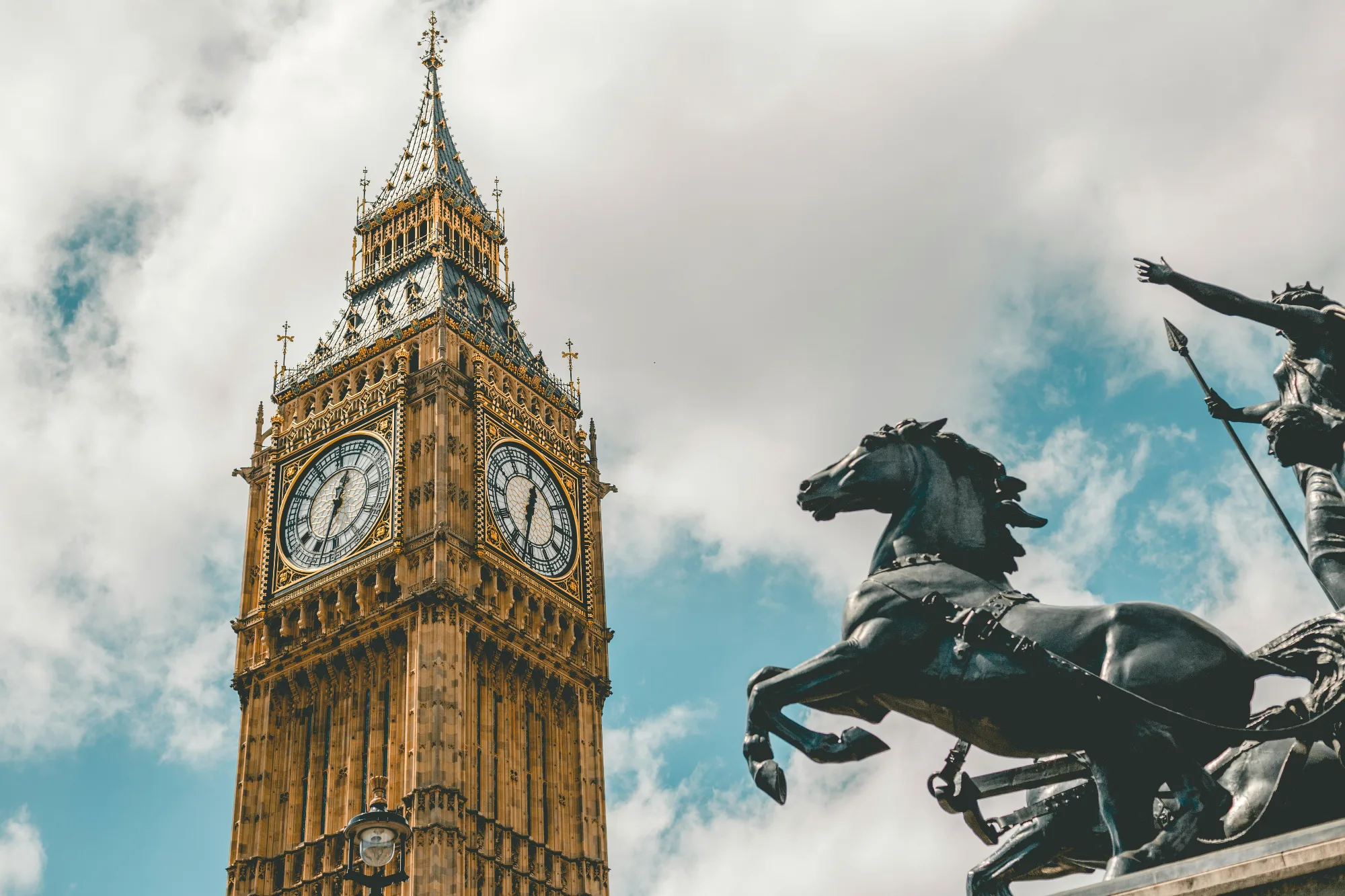
Did you know that if you plan far enough ahead, you can climb up to the top of Big Ben and explore its inner workings, including the clock machinery and the belfry housing the Great Bell, as well as taking in panoramic views through the four clock dials? But because it involves a 334-step climb up some extremely narrow spiral staircases, only a limited number of lucky tourists can make the climb each day.
To score tickets, you'll want to book three months in advance when the tickets are released. Specifically, on the second Wednesday of every month at 10am (London time) tickets are made available. Tickets will get snapped up within minutes, even during the middle of Winter, making this the first thing to book for those who wish to make the climb up.
Warner Bros. Studio (Harry Potter) Tour
If you grew up a fan of the Harry Potter movies, the Warner Bros. Studio Tour in London is a must-see. You'll be able to experience the authentic sets such as the Great Hall and Diagon Alley, along with original costumes and props, the Forbidden Forest, and close-up looks at the movie tech that brought J.K. Rowling's books to life. Despite the last movie being released about 15 years ago, the studio tour is still wildly popular, so booking ahead is critical.
Whether you opt for the self-guided tour or splurge for the deluxe guided tour, you'll want to aim to book your tickets about 4 months in advance to guarantee wide time-slot availability, although you may be able to snag a less-desirable late-afternoon slot 2-3 weeks ahead if you've procrastinated on your bookings.
Stonehenge - Stone Circle Experience
At over 4,500 years old, Stonehenge is a monument that is as mysterious as it is historic. But it's also a place that can be experienced in a few different ways, at varying price points of course. For the casual traveler to the Salisbury plains, a general entry ticket will grant you access to the perimeter path, where visitors remain behind a roped-off buffer that surrounds the monument. For those that wish for a more intimate visit, the Stone Circle Experience allows guests to enter the Stone Circle and gaze at the stones up close during either dawn or dusk.
It'll cost you a pretty penny, and you will need to book the experience well in advance. During the peak and shoulder seasons, tickets are booked up close to 4 months in advance. Those visiting the UK during the winter months may have a little more luck snagging a ticket 1-2 weeks ahead of time, however.
Churchill War Rooms Guided Tour
Located underground below Westminster, the Churchill War Rooms has transformed into one of London's most popular attractions just in the past few years. The War Rooms can be a great alternative for tourists that are history nerds, but are not necessarily infatuated with the type of medieval or Victorian era history that is the focus of a lot of European landmarks. Part of the Imperial War Museums, the War Rooms offers a glimpse into the underground nerve-center where Winston Churchill directed Britain's operations during WWII. It's easy to see why it's become such a popular destination; visiting feels like stepping into a preserved time capsule, with the Cabinet Room left intact from exactly how it was arranged during those harrowing years.
You can visit the War Rooms in either a self-guided or guided tour. Self-guided visits can be booked closer to the date of visit, but guided tours can and will sell out fast, especially in the summer. Those wishing to join a guided tour should book 3 months in advance for wide time-slot availability, and tickets are released at least 4 months in advance, depending on season.
Book These London Attractions 1-2 Months Before Your Trip
Tour of UK Parliament in the Palace of Westminster
British Royalty might get all the glamour in England, and Buckingham might be your first thought when it comes to palaces, but the UK Parliament at the Palace of Westminster is where the real action has been within the United Kingdom's government system since 1801 (and 1707 if you include its predecessor, the Parliament of Great Britain). This is where the Westminster style of government was born, today used in over 20 countries, mostly former British colonies. Inside the Palace, you can visit the historic (but of course still very active) chambers of the House of Lords and House of Commons, the ornate Westminster Hall, and the Central Lobby.
There are two different methods you can visit the Palace, in a self-guided audio tour available in 10 different languages, or as part of a guided tour offered in English. For a guided tour, you will want to start making your booking arrangements at least 1 month ahead, and closer to 2 months ahead for wide availability of times. Self-guided tours can generally be booked closer to the date. Due to the nature of Parliament being used for official government business on a regular basis, keep in mind that tour availability varies widely depending on whether Parliament is in session or on recess.
The King's Gallery: Buckingham Palace
Tucked just beside Buckingham Palace, the King’s Gallery offers a rotating showcase of treasures from the Royal Collection, one of the most significant art collections in the world. Unlike the State Rooms, which are only open to visitors for a limited period in the summer, the Gallery is open year-round and hosts curated exhibitions that bring together paintings, drawings, decorative arts, and rarely seen royal objects. Recent exhibitions have focused on everything from Renaissance masters to royal portraiture and themed displays drawn from across the collection, often featuring works by artists like Leonardo da Vinci and Rembrandt.
Because exhibitions are temporary and carefully curated, demand can be high, particularly when a major show is running. Timed-entry tickets are required, and the more popular exhibitions will sell out well in advance during peak travel months. To avoid limited availability or being stuck with less desirable time slots, it’s best to book your tickets at least 1 to 2 months ahead of your visit. While occasional same-week availability can pop up in quieter periods, it’s not something to rely on if this is a priority stop on your itinerary.
Book These London Attractions 2+ Weeks Before Your Trip
British Museum
The first time I visited the British Museum, I booked the tickets in advance, but made the mistake of not coming in with a plan for what I wanted (or even could) see within its galleries. I severely underestimated the magnitude of the museum's works. With over 8 million artifacts encompassing virtually the entirety of recorded human civilization, the British Museum's collection is the largest on Earth. If you venture in without a guide, learn from my mistake and pick up a map.
Being the most visited attraction in the entire United Kingdom (something perhaps boosted by its free admission) pre-booking a ticket is essential, particularly in the high tour season. The British Museum will technically allow you to get same-day tickets at the Montague Place entrance if capacity allows, but queues can be hours long in the sweltering heat, and an absolutely miserable way to spend part of your vacation. Fortunately, free timed-entry tickets are easily attainable on the museum's website if you plan ahead.
I recommend booking about 2 weeks ahead if you want to get a prime morning timed-entry ticket, although you can procrastinate up until a few days ahead if you're fine with a less-desirable late afternoon timed-entry slot.
London Sky Garden
I might get some heat for this take, but observation decks are a little bit overrated. They're often crowded, windy, and outrageously expensive for essentially a round-trip elevator ride. This is not so for the London Sky Garden, which provides not only 360-degree views of London from the top of the "Walkie Talkie" building at 20 Fenchurch Street, but also doubles as a lush indoor garden teeming with plants. Best of all, admission is completely free, that is, if you plan ahead appropriately.
Free admission tickets are limited and sell out extremely quickly when they are released. Tickets are released three weeks ahead, on Monday mornings London time, and that's about when you should plan on checking the website. By Tuesday most time-slots are snagged up, even during less busy times of the year. If you missed your window, prospective visitors can also book a reservation to one of the Sky Garden's restaurants or bars, which will also grant access to surrounding garden area and observation deck.
Windsor Castle
Just a few miles east of runway 09L at Heathrow, lies Windsor Castle, the oldest and largest occupied castle in the world. It's one of the best day trips you can take to escape the crowded streets of London, and it's easy to combine with a trip to either Bath or Stonehenge since it's on the way to both. The castle houses the State Apartments, St George's Chapel, Queen Mary's Dolls' House, and centuries of lore. You don't need to constrain yourself to only the castle either: stroll along the Long Walk path for a postcard-perfect view. And walking into the town of Windsor is also a lovely add-on; the town features charming shops, cafés, and streets rich in character.
You will want to snag timed-entry tickets about 1 week before you intend to visit in order to have wide availability of time-slots. However, you can generally wait a little longer, up to a day or two before, if you're fine with a less desirable afternoon slot. This can be wise if you wish to avoid potentially visiting during inclement weather.
Westminster Abbey
Every once and a while Westminster Abbey is at the cultural center of the universe. Whether it's a royal wedding, a coronation, or a funeral of a king, queen, or statesman, Westminster Abbey has been the heart of British history for nearly a millennium. The first coronations were held in the Abbey in 1066. Where most churches can be appreciated in thirty minutes or so, Westminster Abbey has tons to see inside: the Nave, the Lady Chapel with its extraordinary fan-vaulted ceiling, Poets’ Corner where Chaucer, Dickens, and Tennyson are memorialized, and the historic Coronation Chair, used by monarchs since the 1300s. The Cloisters, Chapter House, and Pyx Chamber provide quieter corners to explore but are absolutely worth checking out.
Westminster Abbey does technically allow walk-ins if capacity allows, but we don't recommend it. Instead, book a timed-entry ticket about 1-2 weeks ahead to guarantee a quick entry, erring closer to 2 weeks ahead during the summer seasons. For those that desire an informational tour, Verger Tours are a popular option (a verger is a church official who hosts informational tours of the Abbey). However, these tours can only be booked same-day once you are already inside the Abbey.
Tower of London
The Tower of London isn't necessarily the first (or second) attraction you think of when London comes to mind. I was surprised to see it attracts the mass of tourists that it does, not because it's undeserving, but because the uninitiated may envision The Shard or a modern glass skyscraper when they hear the name, not the UNESCO World Heritage site on the Thames, originally built by William the Conqueror in the 1070s. Today, the Tower of London is a major tourist attraction housing the Crown Jewels and guarded by the Yeoman Warders, commonly known as the Beefeaters (nicknamed for the large rations of beef they were historically given as part of their salary).
If visiting during the peak Summer months, you will definitely want to book a timed-entry ticket about a week in advance to guarantee entry at the time of your choosing. Off-season visitors can put off their ticket reservations a little bit further. And, if capacity allows, the on-site ticket office does sell same-day tickets.
Tower Bridge Guided Tour
Tower Bridge is the iconic bridge that most people outside of London probably refer to as "London Bridge" (London Bridge is also a bridge in London, but it is made of concrete and steel, built in 1971, and quite ugly unless you are a structural engineer and into that type of thing). While many visitors gaze upon Tower Bridge from one of the banks of the Thames, or make the walk across the span, visitors can also take tours of the inside of the structure, where they can walk the high-level glass-floored walkways and explore hidden engine rooms that once powered the bridge's lifts.
For a guided tour, you will want to book your tickets about 2 weeks in advance of your visit, especially if visiting during peak season. If you're taking a trip to London in the offseason, you can wait a little bit longer. Self-guided admission is also an option, and these timed-entry tickets usually remain available up until a day or two before.
Natural History Museum
The Natural History Museum is another place that looks deceptively easy to squeeze in, thanks to its free admission and enormous capacity, but it is very much a victim of its own popularity. Housed in one of London’s most beautiful buildings, the museum spans everything from dinosaur skeletons and meteorites to gemstones and human evolution, and it attracts families, school groups, and first-time visitors in massive numbers.
While walk-ins are sometimes allowed, queues can stretch well over an hour during busy periods, especially late morning through mid-afternoon. Booking a free timed-entry ticket about one to two weeks in advance is the smart move if you want to stroll straight in and actually enjoy the experience, rather than starting your visit already exhausted from standing outside on Exhibition Road.
To Learn More
For an up-to-date list of all the attractions in London that you should consider booking ahead, visit What2Book's London City Page.

" width="24px"><path d="M 0 0 L 24 0 L 24 21.231 L 0 21.231 Z" fill="transparent" height="21.230768474975793px" id="nL2EwDcS9" width="24px"/><path d="M 0 0.541 C 0 0.242 0.245 0 0.547 0 L 2.735 0 C 3.037 0 3.282 0.242 3.282 0.541 L 3.282 4.598 C 3.282 4.897 3.037 5.139 2.735 5.139 L 0.547 5.139 C 0.245 5.139 0 4.897 0 4.598 Z" fill="rgb(196, 217, 201)" height="5.138657337892187px" id="hZ_rlBe_S" transform="translate(0 16.092)" width="3.2820512820512358px"/><path d="M 0 0.541 C 0 0.242 0.245 0 0.547 0 L 2.735 0 C 3.037 0 3.282 0.242 3.282 0.541 L 3.282 7.843 C 3.282 8.142 3.037 8.384 2.735 8.384 L 0.547 8.384 C 0.245 8.384 0 8.142 0 7.843 Z" fill="rgb(230, 211, 160)" height="8.38412513024521px" id="HgVBxIz3e" transform="translate(5.128 12.847)" width="3.282051282051235px"/><path d="M 0 0.541 C 0 0.242 0.245 0 0.547 0 L 2.735 0 C 3.037 0 3.282 0.242 3.282 0.541 L 3.282 12.982 C 3.282 13.281 3.037 13.523 2.735 13.523 L 0.547 13.523 C 0.245 13.523 0 13.281 0 12.982 Z" fill="rgb(232, 207, 164)" height="13.522782468137464px" id="utgrDnoM9" transform="translate(10.325 7.708)" width="3.282051282051377px"/><path d="M 0 0.541 C 0 0.242 0.245 0 0.547 0 L 2.735 0 C 3.037 0 3.282 0.242 3.282 0.541 L 3.282 16.498 C 3.282 16.797 3.037 17.039 2.735 17.039 L 0.547 17.039 C 0.245 17.039 0 16.797 0 16.498 Z" fill="rgb(233, 196, 166)" height="17.038705909853153px" id="OLOhW6STz" transform="translate(15.521 4.192)" width="3.2820512820512384px"/><path d="M 0 0.541 C 0 0.242 0.245 0 0.547 0 L 2.735 0 C 3.037 0 3.282 0.242 3.282 0.541 L 3.282 20.69 C 3.282 20.989 3.037 21.231 2.735 21.231 L 0.547 21.231 C 0.245 21.231 0 20.989 0 20.69 Z" fill="rgb(217, 170, 153)" height="21.230768474975793px" id="H5Z8wcwkd" transform="translate(20.718 0)" width="3.2820512820512278px"/></g></svg>)