
Paris • 3rd arrondissement
Permanent collections are free of charge and do not require a booking. For special exhibits, pre-booking a timed entry ticket is highly recommended.
No Booking Needed
Permanent Collection
Book Ahead
Special Exhibits
Back to Paris Attractions
Do You Need to Book Tickets in Advance for Musée Carnavalet in Paris?
Updated August 2026
Tucked into the heart of Le Marais, the Musée Carnavalet is Paris's oldest museum and one of its most underrated. Spread across two adjoining Renaissance mansions on Rue de Sévigné, it tells the entire story of Paris across 85 rooms, from prehistoric dugout canoes found beneath the Seine to mementos of the French Revolution, Marcel Proust's cork-lined bedroom, and a jewellery boutique designed by Alphonse Mucha at the height of the Art Nouveau movement. After a comprehensive four-year renovation, the museum reopened in 2021 with expanded gallery space, English-language signage throughout, and around 3,800 works on display, many of which had never previously been seen by the public. Entry to the permanent collection is completely free.
At a Glance
How Early to Book:
For the permanent collection no booking is needed. For special exhibits it is recommended to book ahead.
Best Times to Visit:
Weekday mornings, particularly from 10am to noon will have the smallest crowds.
Ticket price:
Admission to the permanent exhibits is free of charge. Special exhibits may charge an admission fee.
Museum Website:
Museum Address:
Do You Need to Book Musée Carnavalet Tickets in Advance?
The answer depends on what you plan to see, and it follows the same pattern as several other Paris city museums.
Entry to the permanent collection is free for everyone and requires no advance booking. You can walk in during opening hours without a reservation or a ticket and spend as long as you like across the 85 rooms of the permanent galleries. No timed slot, no queue for general admission.
Temporary exhibitions are ticketed and advance booking is recommended. The Carnavalet runs a programme of themed exhibitions throughout the year, typically focused on specific periods of Parisian history or notable figures connected to the city. These require a separate paid ticket. Booking ahead online is advisable for popular shows, and essential if your visit falls at a weekend or during French school holidays.
How to book: Exhibition tickets can be purchased via the official Carnavalet website or through the museum's official app. Third-party booking platforms also carry tickets, though always verify you are purchasing at face value rather than paying a premium through an unauthorised reseller.
The Paris Museum Pass covers entry to the Carnavalet's temporary exhibitions and is worth considering if you plan to visit multiple paying attractions across your trip. It is accepted at a wide range of Paris museums and monuments. You can read our blog post about Museum and Attraction passes here.
A note on guided tours: The museum offers official guided tours of the permanent collection in English, running several times a month. A 90-minute highlights tour costs around €7 per adult. These are popular and worth booking in advance via the museum website. Check the schedule on the official site before your visit, as dates vary by season.
Musée Carnavalet Opening Hours and Entry Information
Open Tuesday to Sunday, 10:00am to 6:00pm
Ticket offices close at 5:15pm, which is also last admission to the permanent collection; last admission to temporary exhibitions is earlier, at 4:45pm. Exhibition rooms close at 5:45pm
Closed on Mondays
Closed on 1 January, 1 May, and 25 December. Exhibition rooms close early, at 5pm, on 24 and 31 December
Entry to the permanent collection galleries is free and untimed. Bags are checked on arrival.
The museum's tearoom and garden are accessible even when the museum itself is closed, making it a pleasant stop in its own right on a warm day in Le Marais.
Address: 23 Rue de Sévigné, 75003 Paris
What is the Best Way to Get to Musée Carnavalet?
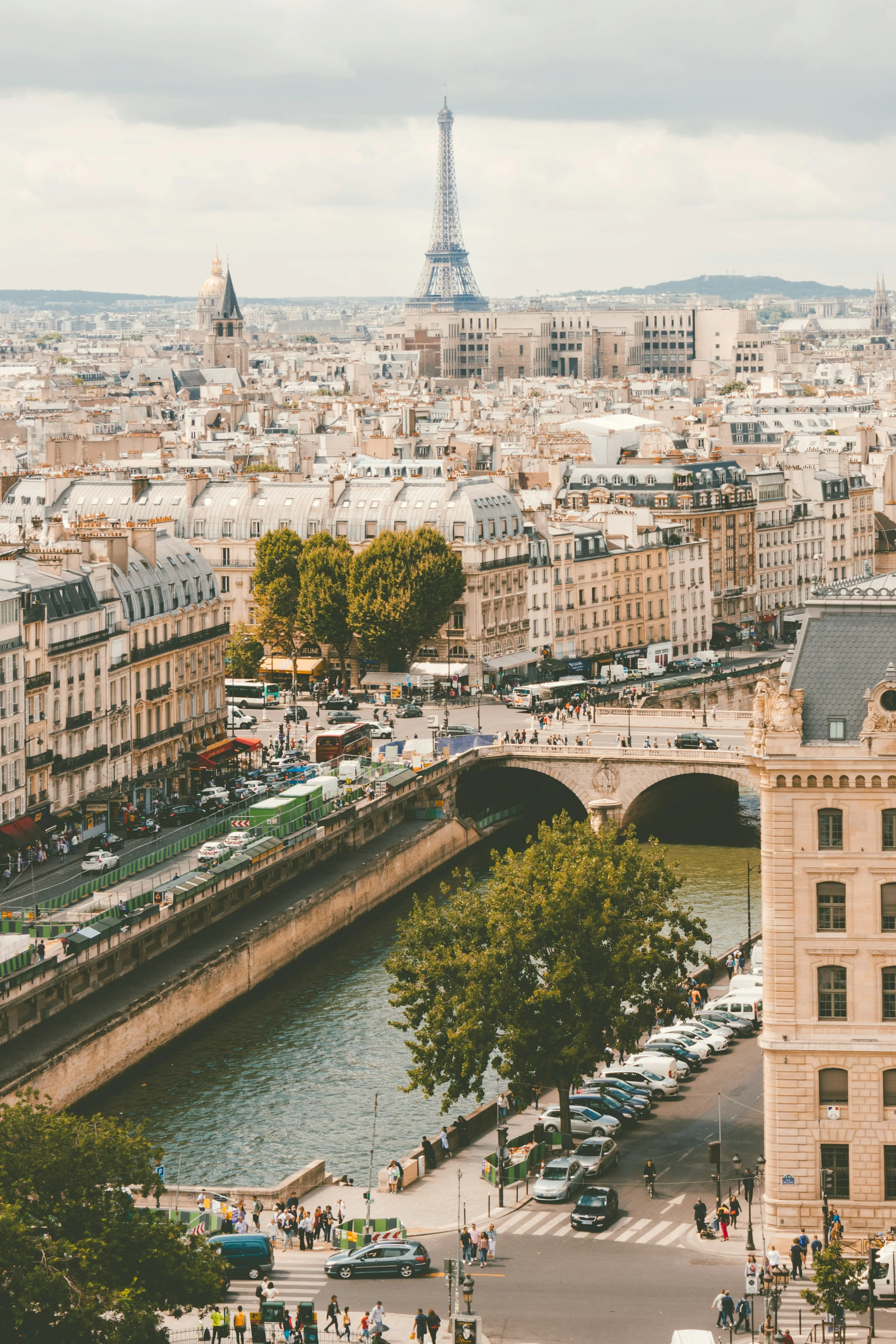
The museum sits in the 3rd arrondissement at the centre of Le Marais, and is easily reachable on foot from a wide area of central Paris.
By Metro: The most convenient stop is Saint-Paul (Line 1), around a five-minute walk from the museum. Chemin Vert (Line 8) is slightly further but also walkable. Rambuteau (Line 11) is useful if you are coming from the Centre Pompidou direction.
On foot: Le Marais is one of the most pleasant areas of Paris to navigate on foot, and the Carnavalet is within easy walking distance of Place des Vosges (five minutes), the Musée Picasso (ten minutes), and the Centre Pompidou (fifteen minutes). From the Île de la Cité and Notre Dame, the walk takes around 20 minutes.
By Vélib': Paris's bike-share scheme has several docking stations in and around Le Marais, making cycling a practical and enjoyable option.
Driving is not recommended. Parking in Le Marais is extremely limited, and the area is far better explored on foot or by public transport.
How Much Time Should I Spend at Musée Carnavalet?
The museum is larger than it first appears from the outside. A focused visit covering the permanent collection highlights takes around 90 minutes to two hours. If you plan to read exhibition panels carefully, linger in the period rooms, or explore the basement archaeological collections, three hours or more is realistic.
If you are visiting a temporary exhibition as well as the permanent collection, allow at least half a day in total, particularly if you also want time to explore the museum's courtyards and gardens.
First-time visitors who want a structured overview without committing to a full self-guided exploration are well served by the 90-minute English highlights tour, which takes you through the most significant rooms and objects across both mansions.
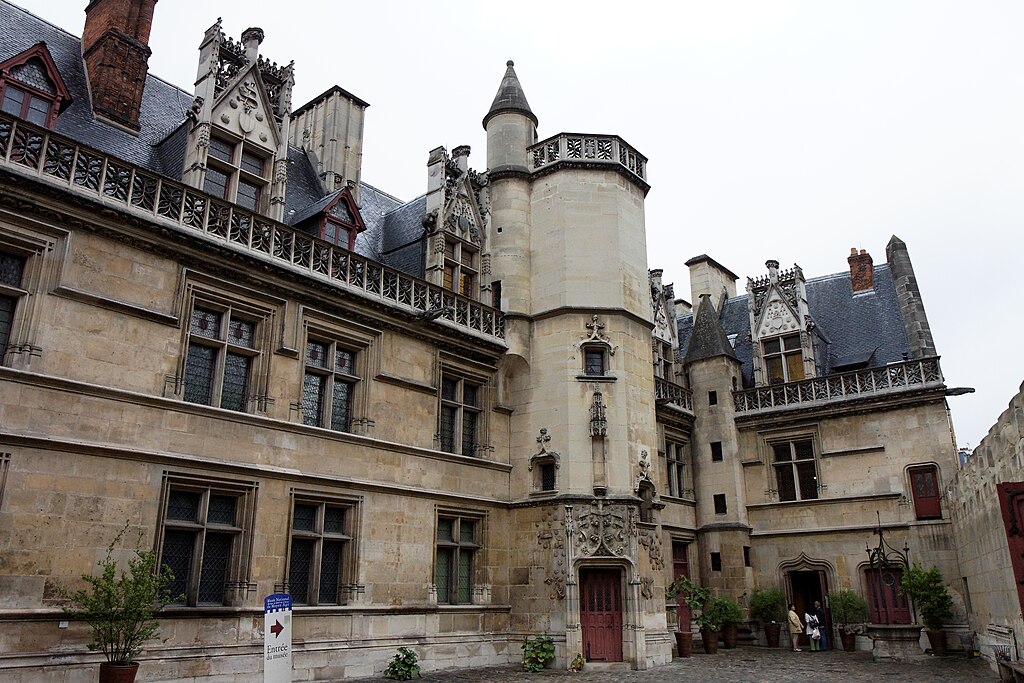
Image Credit: Lionel Allorge, CC BY-SA 3.0
The Musée Carnavalet, located in the Marais district, is the oldest municipal museum in Paris, entirely dedicated to the history of the city from its prehistoric origins to the 20th century. The museum provides an immersive, "walk through time" experience of Parisian life, showcasing everything from Gallo-Roman artifacts to personal belongings of notable residents.
What is the Best Time to Visit Musée Carnavalet?
Weekday mornings, particularly between 10:00am and noon from Tuesday to Thursday, are the quietest periods. The museum is rarely overwhelmingly crowded given its size and the fact that it is free, but weekend afternoons can feel busy, particularly in the smaller period rooms and around the most photographed highlights such as Proust's bedroom and the Mucha jewellery shop.
The museum's courtyard and gardens are particularly lovely in spring and early summer, and the seasonal terrace restaurant operates between May and September, making a late morning visit followed by lunch in the courtyard a very pleasant way to spend a day in the Marais.
Avoid visiting on French public holidays, when the museum may close or operate reduced hours. The museum is always closed on Mondays.
What is Inside Musée Carnavalet?
The permanent collection takes visitors on a chronological journey through the history of Paris, beginning in the basement with prehistoric and Gallo-Roman Paris and ending in galleries dedicated to the 20th and 21st centuries. The route passes through both mansions, connected by an indoor gallery, and covers an extraordinary range of objects, formats, and time periods.
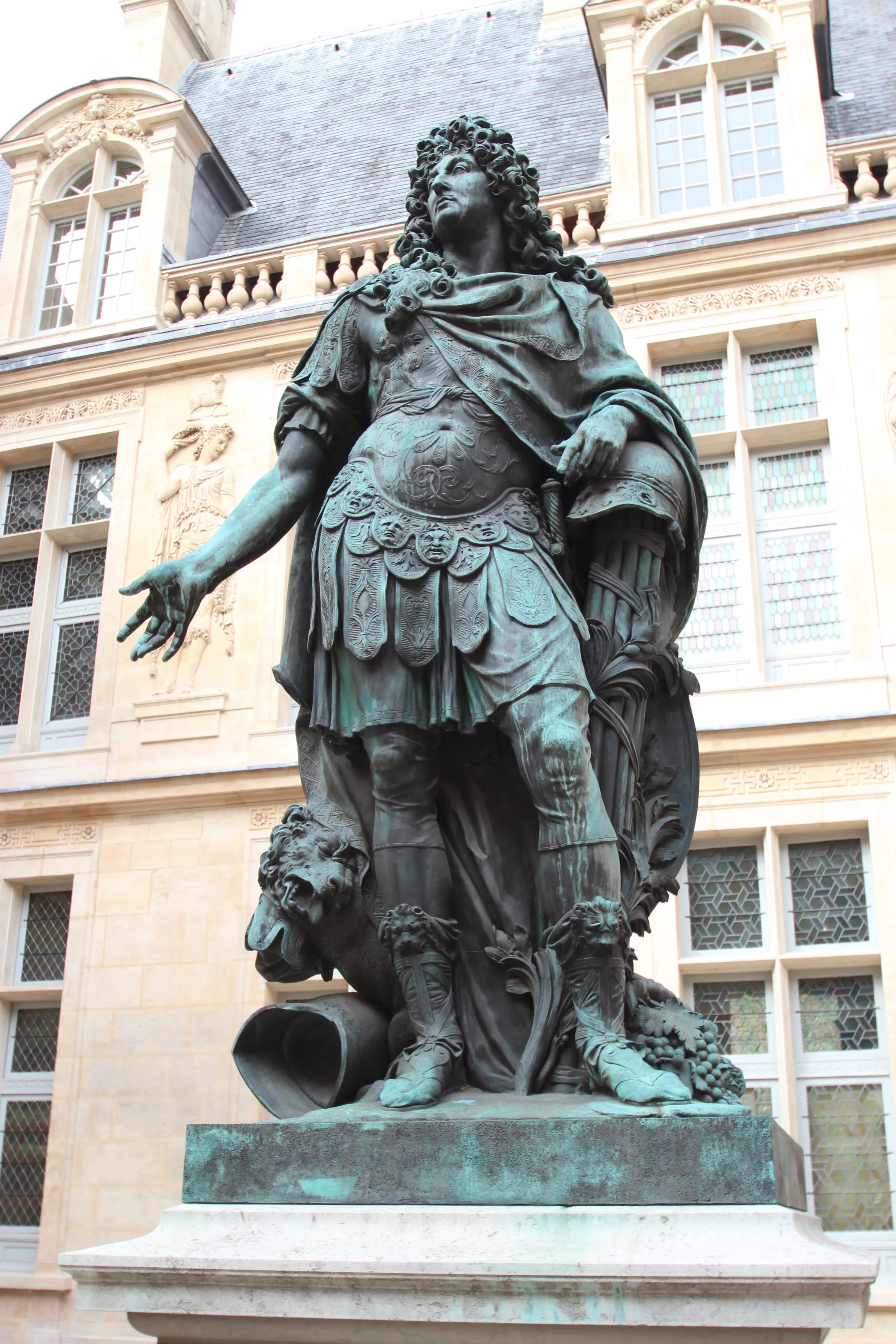
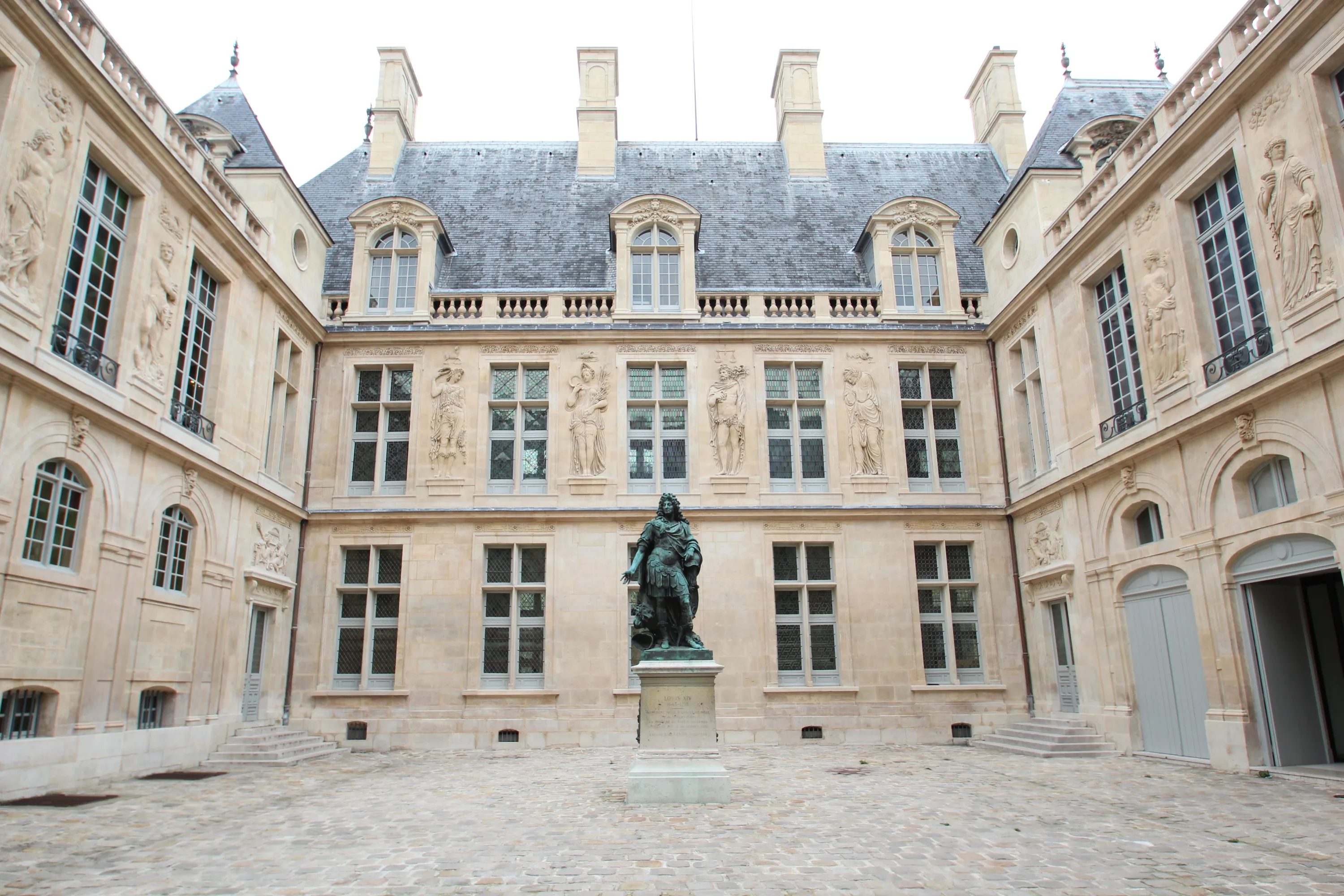
The courtyards and architecture: Before stepping inside, take time to walk through the Renaissance courtyards of the Hôtel Carnavalet. A rare surviving pre-revolutionary bronze equestrian statue of Louis XIV stands at the centre, and the honey-coloured limestone facades are decorated with bas-reliefs by Jean Goujon. The buildings themselves are among the finest surviving examples of 16th-century Parisian architecture.
Prehistoric and Gallo-Roman Paris (basement): The renovated basement galleries hold archaeological finds from the city's earliest history, including wooden dugout canoes discovered beneath the Seine, objects from Roman-era Lutetia, and medieval relics. These are among the most consistently overlooked rooms in the museum and among the most fascinating.
The French Revolution collection: Widely considered the most significant section of the museum. Objects include the original keys to the Bastille, miniature guillotine toys carved from bone, a lock of Robespierre's hair, models of the Bastille built from stones of the demolished fortress, and extensive collections of revolutionary propaganda, portraiture, and personal effects belonging to key figures of the period. No other institution presents this era of Parisian history with comparable depth or intimacy.
Parisian shop signs: An unexpected highlight near the start of the upper floor route, the collection of hand-painted shop signs dating from the 17th to early 20th centuries is one of the most charming and visually rich displays in the museum. Among them is the famous black cat on a crescent moon from the 19th-century Chat Noir cabaret.
The Fouquet jewellery boutique by Alphonse Mucha: One of the defining objects of the entire museum. In 1901, jeweller Georges Fouquet commissioned Alphonse Mucha to design his shop on Rue Royale. The complete interior, a swirling, organic masterpiece of Art Nouveau design incorporating stained glass, peacock motifs, flowing ironwork, and decorative woodwork, was dismantled and reassembled in the Carnavalet. It is breathtaking, and one of the finest examples of Art Nouveau interior design anywhere in Europe.
Marcel Proust's bedroom: A quietly affecting room containing the furniture and personal effects from Proust's final Paris apartments, including the simple brass bed in which he wrote the bulk of In Search of Lost Time, a screen, a bedside table, samples of the cork lining he used to insulate himself from noise, his cane, and his overcoat. A listening bench plays excerpts from the novel alongside music by his friend Reynaldo Hahn, and photographs by Paul Nadar of those close to him are projected nearby. For anyone who has read Proust, this room is extraordinary. For those who have not, it is still a uniquely intimate encounter with one of literature's most celebrated creative spaces.
Period rooms: Throughout both mansions, the museum has reconstructed complete interiors salvaged from demolished Parisian buildings, from 17th-century salons and Régence boiseries to Art Deco ballrooms. The Wendel Hotel ballroom, decorated by the Spanish artist José-Maria Sert, is among the most spectacular.
The Orangerie: Recently restored, this light-filled space at the heart of the Hôtel Carnavalet garden hosts temporary exhibitions and special events. Worth checking in advance to see what is showing during your visit.
Guided Tours and Audio Guides
Official English-language guided tours of the permanent collection highlights run several times a month under the title "Key Pieces for a Parisian History." These 90-minute tours cost around €7 per adult (reduced rates available) and take small groups through the most significant rooms and objects in both mansions. They are excellent for first-time visitors and those who want context beyond what the exhibition panels provide. Dates vary by season, so check the museum's What's On calendar well in advance and book your place online as they do fill up.
The official Musée Carnavalet app (available free on iOS and Android in English and six other languages) is the most practical way to navigate the permanent collection independently. It includes five chronological itineraries, a masterpieces route, and detailed information on individual works. Downloading it before your visit is strongly recommended, particularly given the size and complexity of the museum's layout.
Group tours with external guides or lecturers are permitted with advance group booking. The museum can also arrange official guided visits for groups on request.
Is Musée Carnavalet Worth Visiting?
The Musée Carnavalet is consistently cited as one of the best museums in Paris that most tourists overlook. The combination of free entry, an extraordinary building, and a collection that covers 2,000 years of Parisian life with real depth makes it remarkable value by any measure.
It is particularly rewarding for visitors who want to understand the city they are walking through. The French Revolution collection alone would justify the visit. The Mucha jewellery shop, Proust's bedroom, and the reconstructed period rooms add layers of unexpected intimacy that more famous Paris museums rarely achieve. The post-renovation presentation is excellent, with English labels throughout and a clear chronological route that makes the collection easy to follow without a guide.
It is also one of the best museums in Paris for children who are interested in history, with signage at child height in several rooms, themed itineraries available via the app, and a collection of visually engaging objects (the guillotine toys, the Chat Noir sign, the Bastille model) that tend to capture younger visitors' attention.
Where Should I Eat Near Musée Carnavalet?
Le Marais is one of the best areas in Paris to eat well across a range of budgets, and the streets immediately around the museum offer a good spread of options.
Inside the museum:
A terrace restaurant operates in the museum's courtyard garden from May through September. The setting, in the Renaissance courtyard of the Hôtel Carnavalet, is exceptional. Note that the restaurant concept has changed recently (formerly operating as Fabula), so check the museum's website for current details before planning a lunch there. The tearoom is accessible year-round even when the museum itself is closed.
A short walk away:
Café des Musées on Rue de Turenne is a well-regarded, reasonably priced bistro in the heart of the Marais, known for its beef bourguignon and classic French bistro cooking. Popular with locals and a reliable choice for a straightforward, unfussy lunch.
Chez Janou on Rue Roger Verlomme is a warm, neighbourhood restaurant serving food from the south of France: ratatouille, grilled fish, and a famous pastis selection of over 80 varieties. Perpetually popular, so arrive early or book ahead.
L'As du Fallafel on Rue des Rosiers (five minutes on foot) is arguably the most famous falafel in Paris and one of the most satisfying quick meals the city offers. Expect a queue at peak times, but it moves quickly. Closed on Saturdays.
Les Philosophes on Rue Vieille-du-Temple is an easygoing all-day bistro with a terrace, English menus available, and a menu that covers most bistro classics reliably. Good for groups and families.
Au Bourguignon du Marais on Rue François Miron offers Burgundian-focused cooking in a warm setting, with an excellent wine list and dishes like boeuf bourguignon, escargots, and coq au vin done properly. Book in advance.
Bistro des Tournelles, slightly north on Rue des Tournelles, is a refined neighbourhood bistro with a focus on seasonal French cooking and natural wines. One of the better dining rooms in the upper Marais.
For something more casual, the streets of Le Marais have excellent bakeries, cheese shops, and wine bars on almost every corner. Rue de Bretagne and the Marché des Enfants Rouges (Paris's oldest covered market, a ten-minute walk north) are particularly worth exploring for grazing and picnic supplies.
What Else is There to Do Near Musée Carnavalet?
Le Marais is one of the most densely packed areas of Paris for culture and sightseeing, and the Carnavalet sits at the centre of it.
Place des Vosges is five minutes on foot and is Paris's oldest public square, completed in 1612. The elegant arcaded facades in red brick and pale stone enclose a formal garden that is one of the most beautiful public spaces in the city. Free to enter and worth as much time as you can give it. The Maison de Victor Hugo occupies one of the pavilions on the square and is a free museum dedicated to the writer's life and work.
Musée Picasso is around ten minutes away on Rue de Thorigny, housed in the magnificent 17th-century Hôtel Salé. The collection covers Picasso's entire career and includes over 5,000 works. Advance booking is required for entry.
Musée Cognacq-Jay is just 150 metres from the Carnavalet on Rue Elzévir and is another Paris city museum with free permanent collection entry. Its collection of 18th-century decorative arts, furniture, and paintings is small but beautifully displayed in a period hôtel particulier setting.
The Marais Jewish Quarter, centred on Rue des Rosiers, is one of the most historically significant Jewish neighbourhoods in Europe. The Musée d'Art et d'Histoire du Judaïsme on Rue du Temple tells the story of Jewish life in France and Europe from the Middle Ages to the present day, with an impressive collection of ceremonial objects, fine art, and documents. Entry is paid.
Centre Pompidou is around 15 minutes on foot to the west and provides a striking contrast to the Carnavalet's historical focus with its collection of modern and contemporary art. Advance booking is recommended for major exhibitions.
The streets of Le Marais themselves are worth wandering: the area retains one of the highest concentrations of intact pre-Haussmann architecture in Paris, and many of the side streets between Rue du Temple and Rue Saint-Antoine reward slow exploration with beautiful courtyards and architectural details visible through open carriage gates.
Rules, Bags, and Security
Bags are checked on arrival, and only handbag-style bags are permitted inside the museum; suitcases and large bags are not allowed. Bring a smaller bag if you can, or plan to leave larger luggage at your accommodation.
Photography: Photography is permitted throughout the permanent collection without flash. Some temporary exhibitions may restrict photography. Signs and staff will indicate where restrictions apply.
Cloakrooms: Self-service cloakroom lockers (40 x 36 x 36 cm) are available near the entrance for coats and smaller personal items; they are not large enough for a suitcase, so oversized luggage should be left at your accommodation before visiting.
Sketching: Visitors are welcome to sketch in the galleries using pencils.
Children: The museum is family-friendly and suitable for children of all ages, with dedicated signage at child height in several rooms and family itineraries available via the official app.
Accessibility at Musée Carnavalet
The 2021 renovation placed significant emphasis on accessibility, and the museum is now largely accessible to visitors with reduced mobility, though the historic nature of the two mansions means a small number of rooms could not be fully adapted. Wheelchairs are available to borrow from the reception desk. Accessible toilets are available on site.
The official app and audio guide content are available in multiple languages, and some tactile and braille descriptions are offered within the museum. Disabled visitors and an accompanying carer both receive free entry to temporary exhibitions (the permanent collection is already free for everyone). Job seekers and those on minimum wage are also entitled to free entry to temporary exhibitions with proof of status. Assistance dogs are welcome throughout.
Final Tips for Visiting Musée Carnavalet
No booking is needed for the permanent collection. Simply arrive during opening hours and walk in. It is one of the best free museums in Paris.
Book temporary exhibition tickets in advance via the official website, particularly for weekend visits or during French school holidays.
Download the official Carnavalet app before you go. It is the most practical way to navigate the collection and includes English-language itineraries for both first-time and returning visitors.
The museum is closed on Mondays. This catches out many visitors, so double-check before building it into your itinerary.
Allow more time than you think you need. The museum is significantly larger than its exterior suggests, and the basement archaeological galleries, period rooms, and upper-floor collections each reward a slower pace.
Book the English highlights tour if dates align with your visit. It is the fastest way to get a structured overview of the collection and is excellent value at around €7.
Visit Place des Vosges and Maison de Victor Hugo in the same afternoon. They are five minutes away and both free to enter.
The tearoom garden is accessible without entering the museum. On a warm day, it is one of the most peaceful spots in the Marais.
L'As du Fallafel is closed on Saturdays. Worth knowing before you factor it into post-museum lunch plans.
Back to Paris Attractions
Explore other Paris attractions
" width="24px"><path d="M 0 0 L 24 0 L 24 21.231 L 0 21.231 Z" fill="transparent" height="21.230768474975793px" id="nL2EwDcS9" width="24px"/><path d="M 0 0.541 C 0 0.242 0.245 0 0.547 0 L 2.735 0 C 3.037 0 3.282 0.242 3.282 0.541 L 3.282 4.598 C 3.282 4.897 3.037 5.139 2.735 5.139 L 0.547 5.139 C 0.245 5.139 0 4.897 0 4.598 Z" fill="rgb(196, 217, 201)" height="5.138657337892187px" id="hZ_rlBe_S" transform="translate(0 16.092)" width="3.2820512820512358px"/><path d="M 0 0.541 C 0 0.242 0.245 0 0.547 0 L 2.735 0 C 3.037 0 3.282 0.242 3.282 0.541 L 3.282 7.843 C 3.282 8.142 3.037 8.384 2.735 8.384 L 0.547 8.384 C 0.245 8.384 0 8.142 0 7.843 Z" fill="rgb(230, 211, 160)" height="8.38412513024521px" id="HgVBxIz3e" transform="translate(5.128 12.847)" width="3.282051282051235px"/><path d="M 0 0.541 C 0 0.242 0.245 0 0.547 0 L 2.735 0 C 3.037 0 3.282 0.242 3.282 0.541 L 3.282 12.982 C 3.282 13.281 3.037 13.523 2.735 13.523 L 0.547 13.523 C 0.245 13.523 0 13.281 0 12.982 Z" fill="rgb(232, 207, 164)" height="13.522782468137464px" id="utgrDnoM9" transform="translate(10.325 7.708)" width="3.282051282051377px"/><path d="M 0 0.541 C 0 0.242 0.245 0 0.547 0 L 2.735 0 C 3.037 0 3.282 0.242 3.282 0.541 L 3.282 16.498 C 3.282 16.797 3.037 17.039 2.735 17.039 L 0.547 17.039 C 0.245 17.039 0 16.797 0 16.498 Z" fill="rgb(233, 196, 166)" height="17.038705909853153px" id="OLOhW6STz" transform="translate(15.521 4.192)" width="3.2820512820512384px"/><path d="M 0 0.541 C 0 0.242 0.245 0 0.547 0 L 2.735 0 C 3.037 0 3.282 0.242 3.282 0.541 L 3.282 20.69 C 3.282 20.989 3.037 21.231 2.735 21.231 L 0.547 21.231 C 0.245 21.231 0 20.989 0 20.69 Z" fill="rgb(217, 170, 153)" height="21.230768474975793px" id="H5Z8wcwkd" transform="translate(20.718 0)" width="3.2820512820512278px"/></g></svg>)