Back to Paris Attractions
Do You Need to Book the Arc de Triomphe in Advance?
Updated August 2026
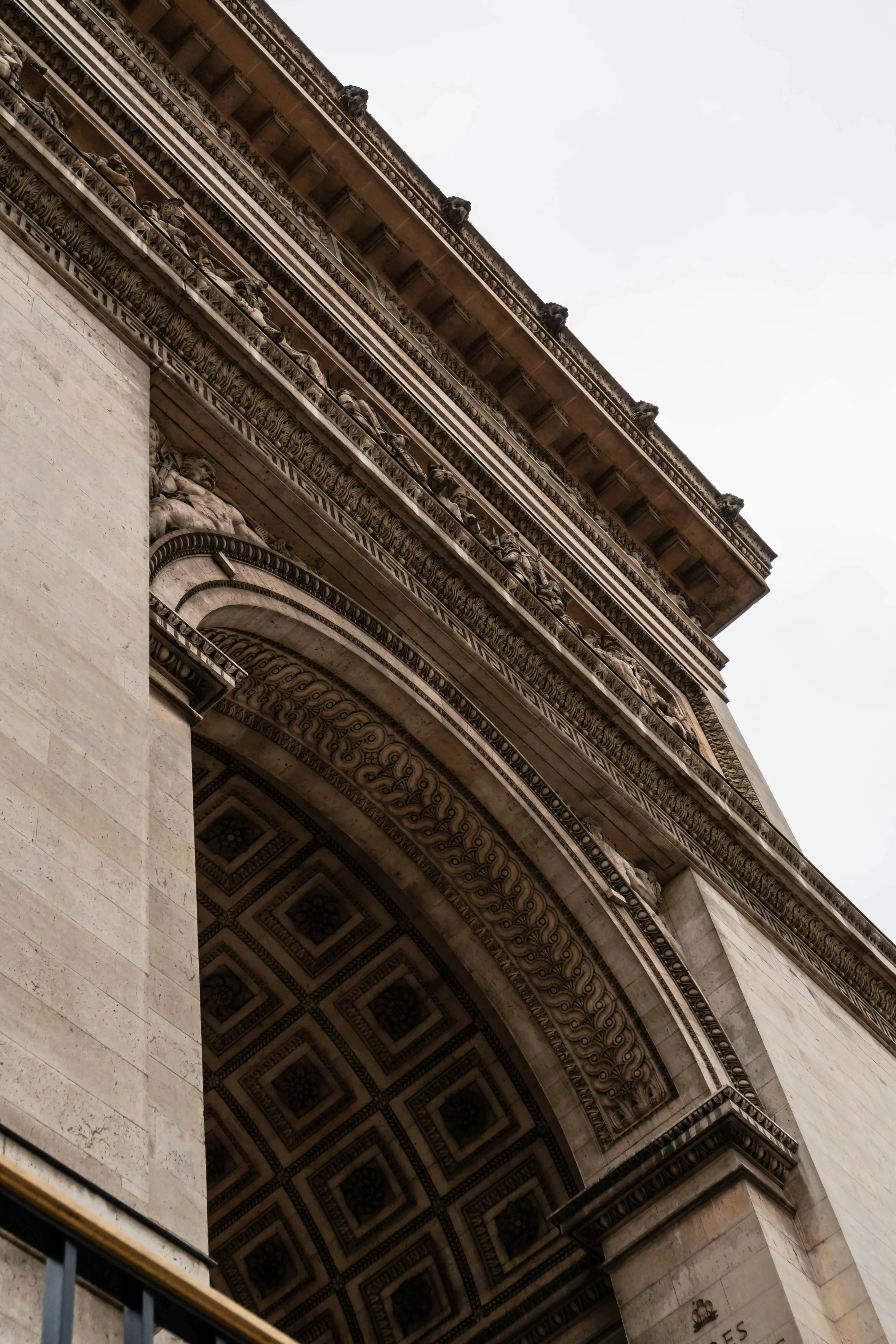
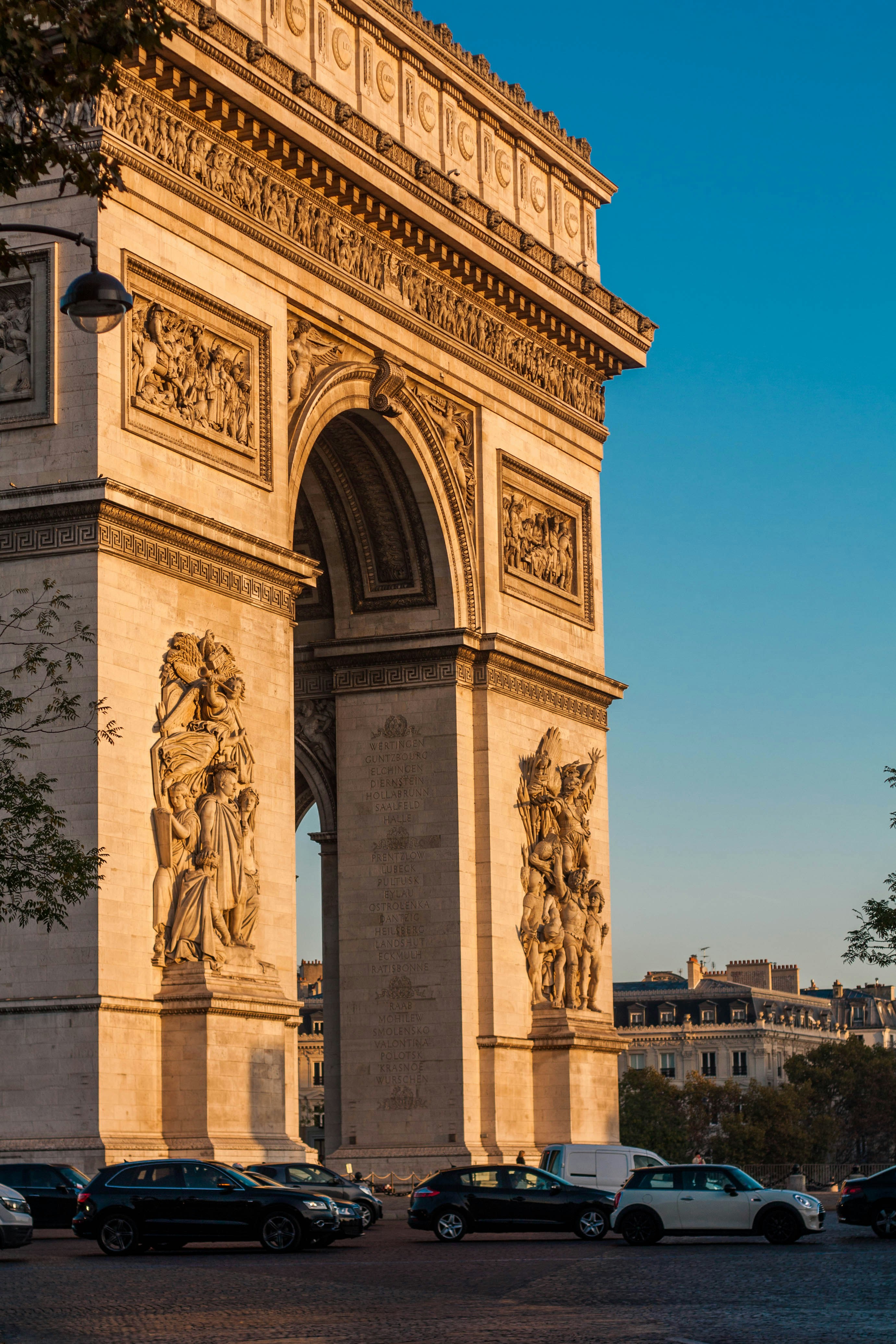
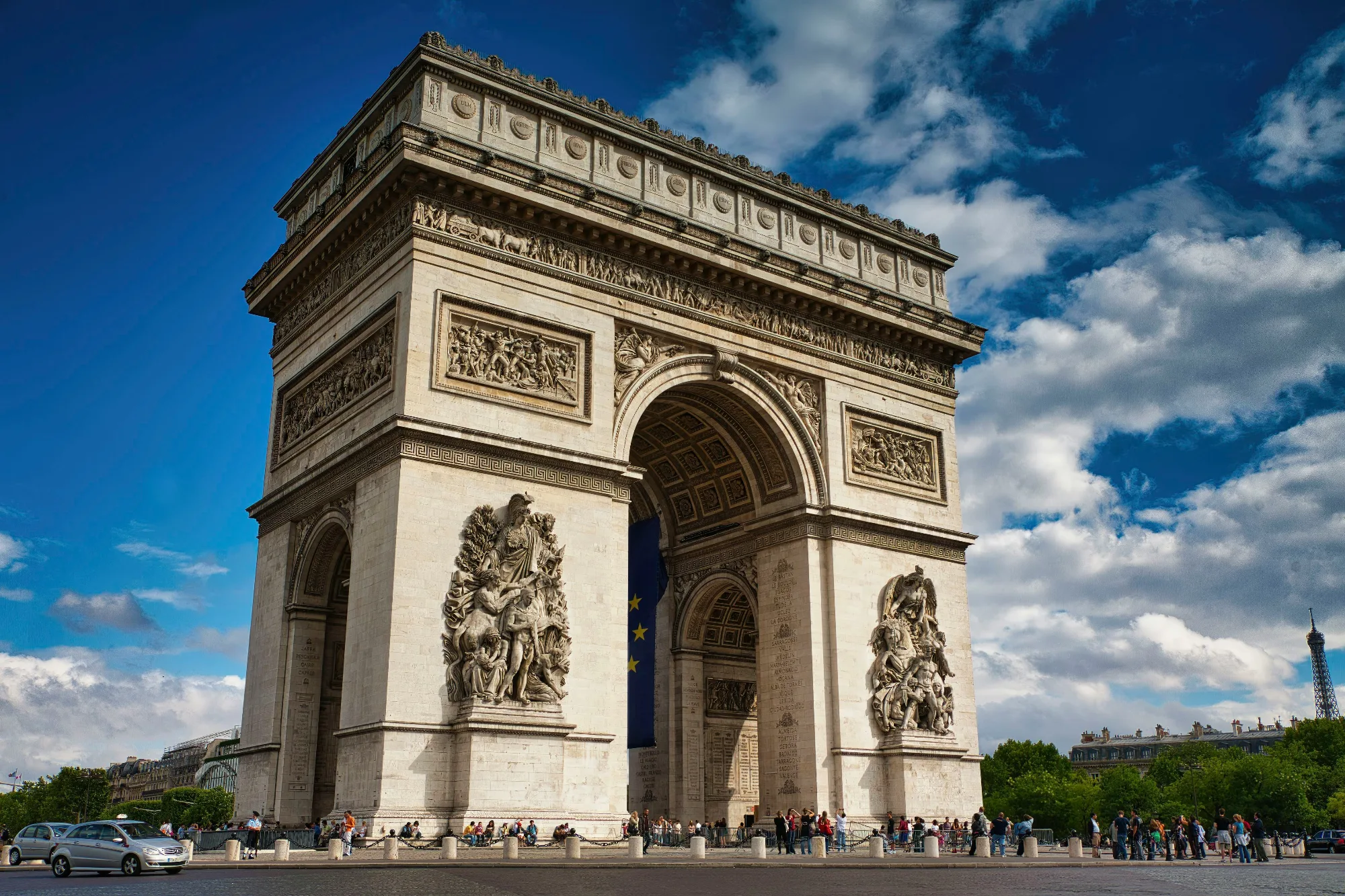
Few monuments in the world occupy quite the same position in the collective imagination as the Arc de Triomphe. Standing at the centre of the Place Charles de Gaulle, at the top of the Champs-Élysées, with twelve grand avenues radiating outward like the spokes of a giant star, it is the architectural centrepiece of Paris and one of the most powerful symbols of French national identity ever built. Commissioned by Napoleon Bonaparte in 1806 after his victory at Austerlitz, and completed thirty years later under King Louis-Philippe, it was conceived as a monument to the armies of the French Revolution and the Empire. Today it is something richer still: a site of active commemoration, home to the Tomb of the Unknown Soldier and the Eternal Flame that has burned without interruption since 1921, a place where the great ceremonies of the French nation unfold, and one of the finest elevated viewpoints in Paris, with a 360-degree panorama from its rooftop terrace that stretches from the Eiffel Tower to the Louvre and beyond to the Grande Arche de la Défense. If you are planning to visit, this guide covers everything you need to know.
At a Glance
How Early to Book:
2-3 days if booking in advance as most timeslots will be available until about 48 hours ahead. You can buy tickets day of visit at the on-site ticket office, although there will likely be a queue.
Best Times to Visit:
Weekdays between 10am and 11am will have the least crowds. Sunset will feel the most enchanted, but will have more tourists. There is a daily Eternal Flame ceremony at 6:30pm which is worth the watch as well.
Ticket price:
€22 for adults during high season, €16 remainder of year
Where to Book:
Landmark Address:
Do You Need to Book Arc de Triomphe Tickets in Advance?
Yes, and for one very good reason: Pre-booked visitors use a dedicated reserved entrance that bypasses the standard queue, which during summer and at weekends can be considerable.
That said, walk-up tickets are available at the entrance, and the Arc de Triomphe does not operate a strict capacity-capped timed entry system in the same way as, say, Sainte-Chapelle or Mont-Saint-Michel. For most of the year, outside the peak summer season, buying on the day is entirely feasible. For visits between June and September, or on any weekend, booking ahead is strongly recommended to avoid queuing.
Entry is free for all visitors on the first Sunday of each month from November to March.
The Paris Museum Pass covers entry to the Arc de Triomphe and could be a good value if you are visiting several Paris monuments over multiple days. The Passion Monuments card also gives unlimited free entry to the Arc de Triomphe along with over 80 other French monuments throughout the year. (You can read our blog post about museum passes here.)
Important: Even visitors who qualify for free entry must still pass through the access control with valid documentation. If your free entitlement is based on age or residency, have your ID ready at the entrance.
Arc de Triomphe Opening Hours and Entry Information
The Arc de Triomphe is open every day of the year with a small number of exceptions, and notably stays open very late in the evenings, making it one of the few Paris monuments that can be visited after dinner.
Seasonal opening hours:
1 April to 30 September: Daily 10:00am to 11:00pm (last admission 10:15pm)
1 October to 31 March: Daily 10:00am to 10:30pm (last admission 9:45pm)
Tuesdays: The monument opens one hour later than usual (11:00am rather than 10:00am) throughout the year.
The monument may also close partially or entirely at short notice for official ceremonies, state events, or adverse weather conditions. In the event of an exceptional closure, e-tickets purchased through the CMN online platform are automatically refunded with no action required on the visitor's part. Always check the official website before travelling, particularly if your visit coincides with a national anniversary or ceremony.
What is the Best Way to Get to the Arc de Triomphe?
The Arc de Triomphe is located at the Place Charles de Gaulle in the 8th arrondissement and is extremely well served by public transport.
By Metro and RER (strongly recommended): The dedicated station is Charles de Gaulle-Étoile, served by Metro Lines 1, 2, and 6 and RER Line A. All four lines converge here, making it accessible from virtually anywhere in Paris and from CDG Airport and Versailles on the RER A. The station exits onto the streets surrounding the Place de l'Étoile, from where the underpass entrances to the monument are clearly signposted.
By Bus: Lines 22, 30, 31, 52, 73, and 92 all serve the Place de l'Étoile. The Balabus sightseeing bus also stops here.
By Vélib (bike): Vélib' docking stations are located on rue Arsène Houssaye, avenue Hoche, rue Beaujon, rue Balzac, and rue Traktir, all within a few minutes' walk of the monument.
On foot from the Champs-Élysées: The Arc de Triomphe is a 20 to 25-minute walk from the Place de la Concorde along the Champs-Élysées. This is one of the great walks in Paris and a natural way to approach the monument if you are arriving from the Tuileries or the Louvre. The avenue is always lively, and the approach with the Arc growing larger as you walk is satisfying.
By car: Driving is not recommended. The Place de l'Étoile is notoriously one of the most chaotic and intimidating roundabouts in the world, and parking in the 8th arrondissement is extremely limited and expensive. Underground car parks exist along the Champs-Élysées and on the Avenue de la Grande-Armée if driving is unavoidable, but public transport is faster and far less stressful from every part of the city.
A Crucial Safety Note About "The Underpass" at the Arc de Triomphe
This cannot be overstated as there are tons of idiotic tourists that get hit by busses every year in this very spot. The Arc de Triomphe stands at the centre of a roundabout with twelve lanes of fast-moving traffic. There is no safe way to cross this roundabout on foot. Attempting to cross on foot is the stupidest thing you can do in Western Europe.
The only way to reach the monument is via the Passage du Souvenir, a pedestrian underpass accessible from two points: the northern pavement of the Avenue des Champs-Élysées, and the southern pavement of the Avenue de la Grande-Armée. Both entrances are clearly signed. The underpass leads directly to the monument's ticket office and entrance. Visitors arriving by Metro or RER will exit directly onto the Champs-Élysées or the surrounding avenues and simply need to follow the signage to the underpass.
The Arc de Triomphe was commissioned by Napoleon in 1806, but took over 30 years to complete, being finished far after his death. The inside walls are inscribed with 660 names of French generals and military leaders, with those who died in battle.
What is the Best Time to Visit the Arc de Triomphe?
The Arc de Triomphe is open for longer hours than almost any major monument in Paris, which gives visitors unusual flexibility in choosing when to go.
Early morning (10:00am to 11:00am on non-Tuesdays) is the quietest time for a daytime visit. The monument is at its most peaceful in the first hour, with the Champs-Élysées spread out below in the morning light and queues at the ticket office minimal.
Sunset and early evening is when the Arc de Triomphe is at its most spectacular from the rooftop. As the light fades, the twelve avenues below gradually light up, the Eiffel Tower becomes visible in the distance, and the Eternal Flame glows more brightly beneath the vault. Arriving around 90 minutes before sunset and staying until after dark gives you both the golden hour view and the illuminated night panorama from the same visit. This is consistently the most recommended time to visit and is understandably popular; booking ahead is particularly advisable for evening slots in peak season.
The Eternal Flame ceremony at 6:30pm is one of the most moving daily rituals in Paris. Veterans and representatives of French war memorial associations gather beneath the vault each evening to rekindle the flame with a short ceremony of remembrance. It lasts only a few minutes but is quietly extraordinary. Arriving in time for this and then heading up to the rooftop for the sunset view is an excellent way to structure a visit.
Evening visits (from around 8:00pm or 9:00pm) offer a markedly calmer experience than the peak early evening period, and the view of Paris at night from the rooftop, with the illuminated Champs-Élysées stretching below and the Eiffel Tower glittering on the hour, is one of the most beautiful sights the city offers. The late opening until 11:00pm (in summer) is significantly underused by visitors who do not realise the monument is open this late.
Weekdays from Wednesday to Friday are the quietest days for daytime visits. Tuesdays are slightly less convenient due to the later opening at 11:00am. Weekends in summer see the highest visitor volumes.
The first Sunday of the month (November to March) offers free entry and brings larger crowds than usual. An early arrival at 10:00am is advisable on these days.
Is the Arc de Triomphe Worth Visiting?
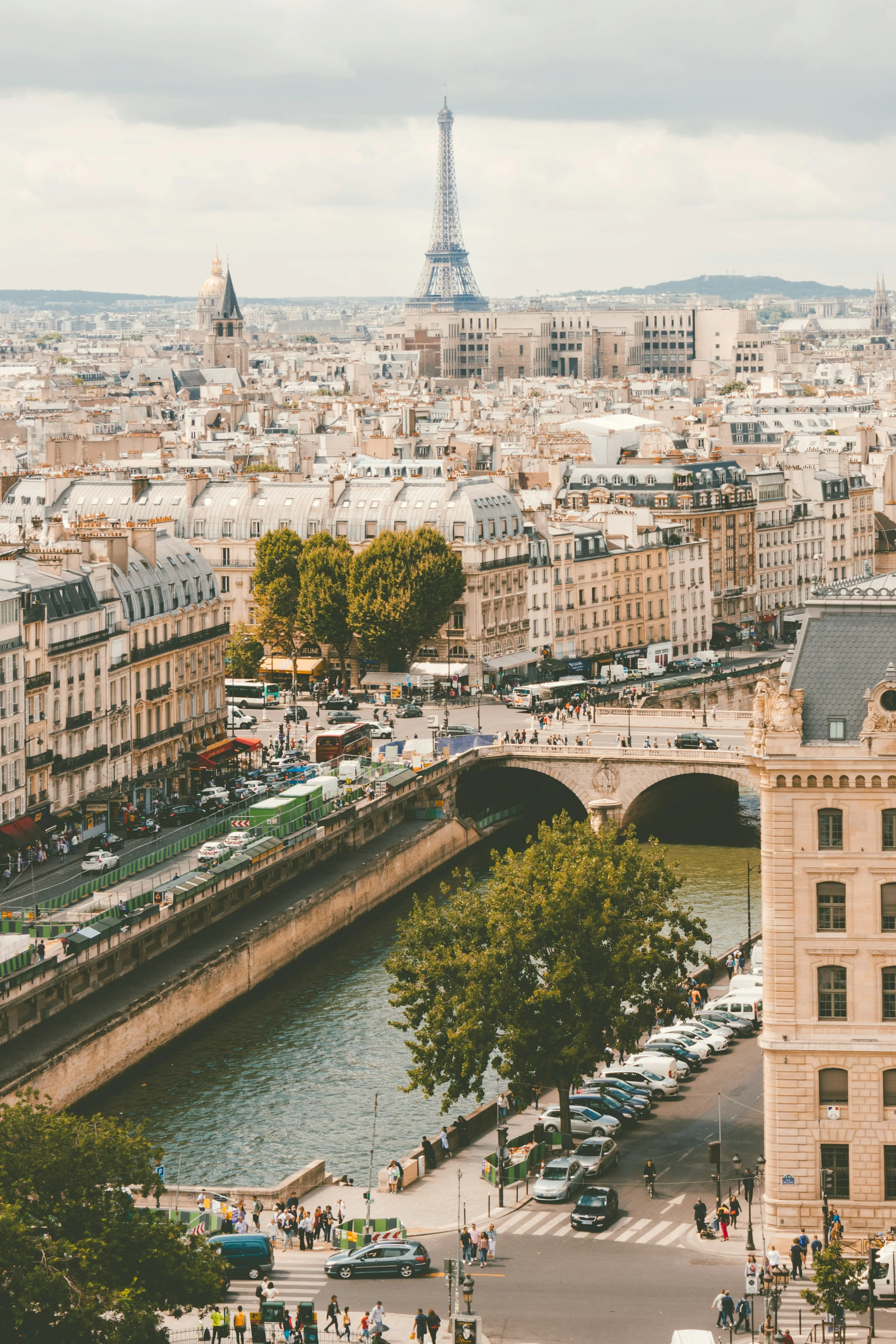
Ignore the few one-star Google reviews that say the view from the top isn't worth it. The panorama from 50 metres above the Place de l'Étoile is one of the finest urban views in the world: the twelve avenues radiating outward below you, the Champs-Élysées stretching south-east to the Tuileries and the Louvre, the Eiffel Tower visible to the south, the towers of La Défense marking the continuation of the historic axis to the west. The geometry of Haussmann's Paris is nowhere more legible than from this terrace, and the experience of standing at the visual and symbolic heart of the French capital is sort of inspiring if you're into that kind of thing.
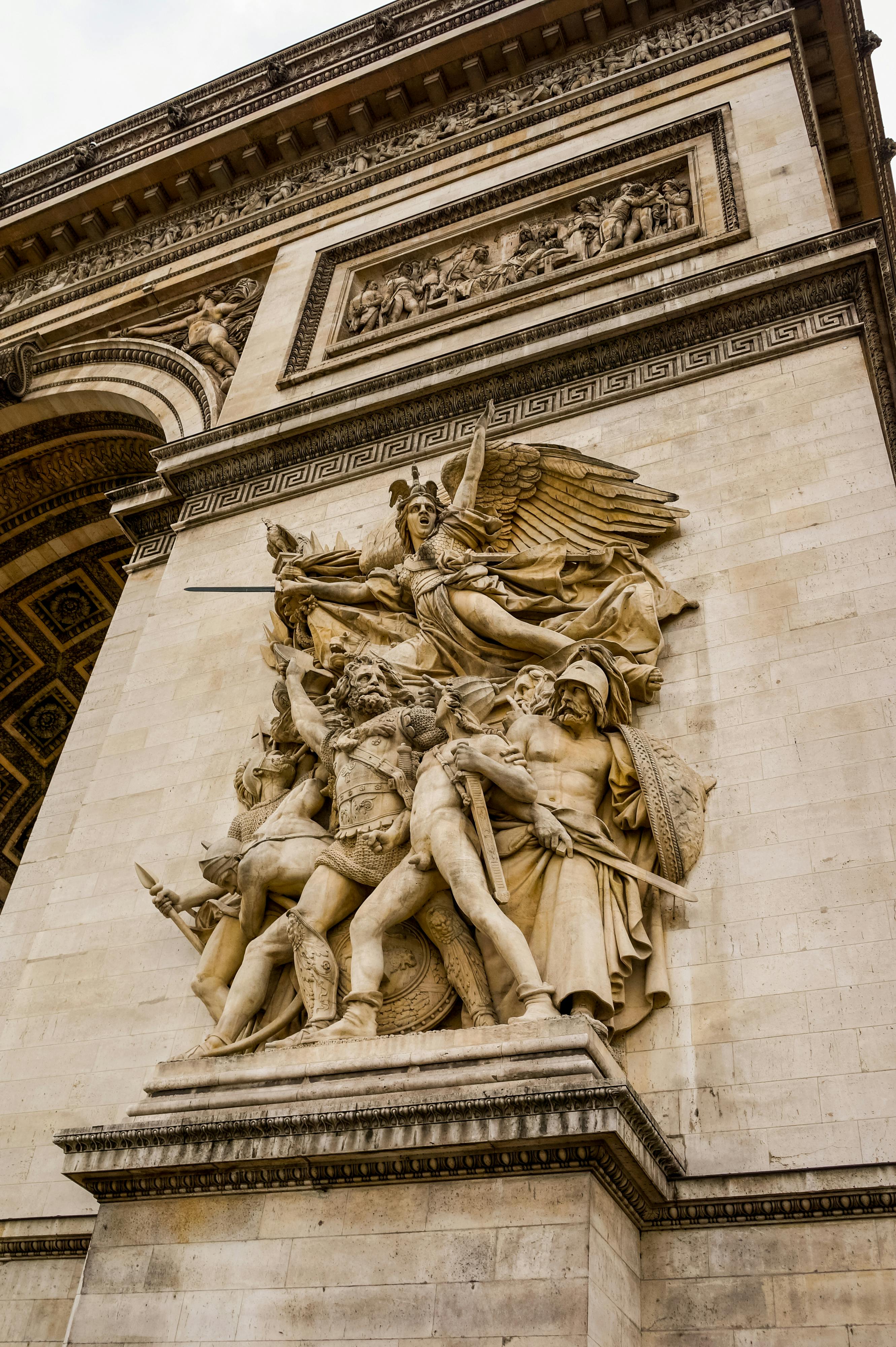
Beyond the view, the Arc de Triomphe is a monument that rewards attention. The four massive sculptural groups on its pillars are among the finest examples of Romantic sculpture in France. The most famous, François Rude's "La Marseillaise" (more formally "The Departure of the Volunteers of 1792") on the south-eastern pillar, is a thundering composition of figures surging forward under a winged personification of Liberty, its energy and drama visible even from the pavement far below. Inside the monument at attic level, the permanent exhibition opened in 2007 contains large-scale models of the Arc, interactive displays on its history and construction, and documentary material on the great ceremonies associated with it.
The Tomb of the Unknown Soldier, beneath the vault at ground level, is one of the most significant memorial sites in France. The soldier was interred on Armistice Day 1920, and the Eternal Flame burning above him has not been extinguished since 1921. The inscription on the slab is simple and definitive: Ici repose un Soldat Français mort pour la Patrie 1914-1918 ("Here rests a French soldier who died for the Fatherland 1914-1918"). The tomb is visible through the arch at all times and does not require a ticket; the flame and the surrounding wreaths laid by veterans' associations are there to be seen from the pavement. For those who go inside and up to the terrace, passing beneath the vault on the way up and down gives the monument a weight and a purpose that purely scenic viewpoints lack.
How Much Time Should I Spend at the Arc de Triomphe?
Plan for 45 minutes to 1.5 hours for a complete visit covering the museum, the rooftop, and time to take in the view. The monument is compact and the visit is well-paced, so it never feels rushed at this duration, nor does it become exhausting.
A rough guide to planning your time:
Security check and ascent (stairs or lift to museum level): 10 to 15 minutes
Museum level (permanent exhibition, models, displays): 15 to 20 minutes
Rooftop terrace (views, photography, orientation): 15 to 30 minutes depending on pace and light conditions
Descent and exit: 5 to 10 minutes
If you are timing your visit around the Eternal Flame ceremony at 6:30pm, arriving 15 to 20 minutes before that time and spending a few minutes under the vault before ascending adds meaningful context to the rooftop visit without significantly extending the total time.
Climbing to the Top of the Arc de Triomphe: The Stairs and the Lift
The rooftop terrace is reached by a total of 284 steps: a spiral staircase of 240 steps leads to the museum level in the attic, and a further 44 steps lead up to the terrace. The staircase is relatively narrow and single-file in sections; fit adults in good health will find the climb straightforward, and there is a halfway landing where you can pause if needed.
The lift is currently out of service for maintenance, with no confirmed return date, so the terrace is reachable by stairs only for all visitors. When running, it is strictly reserved for those who need it: people with reduced mobility, pregnant women, and visitors with young children. Check the official website for the latest status before your visit. It is not available for general use on request. If you use the lift on the way up, you will still need to descend by stairs, as the lift is one-directional for operational reasons. There is no workaround for this.
Visitors who cannot manage 284 steps or who need lift access for the descent should be aware that the rooftop is not accessible on a step-free basis. The museum level is reachable by lift, and the permanent exhibition there is fully worth visiting on its own terms; the rooftop view, while extraordinary, is not the only reason to go inside.
Ceremonies at the Arc de Triomphe: Bastille Day, Armistice Day, and the Eternal Flame
One of the things that distinguishes the Arc de Triomphe from most major tourist attractions is that it is not a monument preserved in amber. It is an active site of national commemoration, and if your visit coincides with one of the great French national ceremonies, you will encounter something significantly more moving than a standard sightseeing visit.
The Eternal Flame ceremony at 6:30pm (daily): Every evening without exception, representatives of French veterans' associations gather beneath the vault to rekindle the flame in a brief ceremony of remembrance. The ritual lasts only a few minutes but is conducted with solemnity, and watching it as a visitor is a privilege. The monument interior is open to ticket-holding visitors during the ceremony; if you are inside at 6:30pm, you will witness it from the upper level.
Bastille Day (14 July): The national military parade marches down the Champs-Élysées each year, and the Arc de Triomphe is the ceremonial starting point. The morning of 14 July sees the area around the monument closed to tourist visitors; the monument reopens from noon. If you are in Paris on 14 July, watching the parade from the Champs-Élysées is one of the great public spectacles of the French calendar. The monument's rooftop on the afternoon and evening of Bastille Day, with fireworks visible across the city later that night, is spectacular.
Armistice Day (11 November): The most solemn of the Arc's annual ceremonies, held on the anniversary of the World War I armistice, involves the President of the Republic, senior military officials, and veterans' associations in a ceremony of remembrance at the Tomb of the Unknown Soldier. The monument is closed to tourists during the morning ceremony and reopens from noon.
New Year's Eve (31 December): The Champs-Élysées is closed to traffic and hundreds of thousands of people gather to watch a spectacular video-mapping show projected onto the Arc de Triomphe from around 11:50pm, followed by a fireworks display at midnight. The monument itself closes at 4:00pm on 31 December and is not open during the celebrations, but the Champs-Élysées gathering is one of the most exhilarating public events in Europe and entirely free to attend.
Guided Tours and Audio Guides at the Arc de Triomphe
Visitor documentation is available on site in French, English, Italian, Spanish, Portuguese, Dutch, Polish, Japanese, Chinese, and Russian. These printed materials, provided free with admission, cover the history of the monument and the significance of the major sculptural groups.
Guided tours are offered by the monument's guide team on selected dates and must be booked in advance through the official website. The guided tour covers the history of the sculpted groups, the significance of the Tomb of the Unknown Soldier, and the panoramic view from the terrace, and typically lasts around 1.5 hours. For visitors with a serious interest in the history of Napoleon's campaigns, the French Revolution, or the commemorative traditions of the French republic, a guided tour is a worthwhile investment. Dates and times are listed on the What's On section of the official website.
Where Should I Eat Near the Arc de Triomphe?
The Arc de Triomphe has no on-site restaurant or café. Food and drink are not permitted inside the monument. Visitors should plan to eat before or after their visit in the surrounding area.
The Champs-Élysées and its immediate side streets offer a vast range of dining options, though the boulevard itself is notable for being considerably more expensive and less representative of authentic Parisian cooking than the streets behind it. A few specific recommendations are worth making:
Fouquet's at the corner of the Champs-Élysées and the Avenue George V is one of the most storied brasseries in Paris, a listed historical monument in its own right, and the traditional gathering place of French cinema after the César Awards. It is expensive, theatrical, and part of the neighbourhood's history.
Flora Danica, 100 metres from the Arc de Triomphe on the Champs-Élysées itself, is an elegant Scandinavian restaurant consistently recommended for its quality relative to the tourist-heavy competition nearby.
L'Alsace, open 24 hours a day, 7 days a week, is a reliable brasserie on the Champs-Élysées for a simple, well-executed meal at any hour.
For better value and a more neighbourhood feel, the streets immediately behind the Champs-Élysées to the north and south are worth exploring. The area around rue de Ponthieu and the streets towards the Madeleine have a good concentration of more relaxed and affordable restaurants and cafés. The 8th arrondissement broadly is one of Paris's more expensive dining districts, but the side streets reward exploration.
For a broader range of excellent restaurants at lower prices, Saint-Germain-des-Prés and the Marais are around 20 to 25 minutes by Metro and offer the full range of Paris's dining culture.
Accessibility at the Arc de Triomphe
The Arc de Triomphe has made improvements to accessibility in recent years, including as part of the broader urban transformation of the area around the Place Charles de Gaulle.
The lift, when in service, reaches the museum level at attic level and is available to visitors with reduced mobility, pregnant women, and visitors with young children who cannot manage the stairs — but it is currently out of service for maintenance, with no confirmed return date, so the museum and terrace are only reachable by stairs at present. Visitors who depend on the lift should check the official website before planning a visit It does not serve the rooftop terrace, which is accessible only by stairs. Visitors who cannot manage any stairs at all will find the Tomb of the Unknown Soldier and the exterior of the monument accessible at ground level via the underpass at no charge, but accessing the museum and the terrace requires at least some stair use.
Rules, Bags, and Security
Bag size: The maximum luggage permitted inside the monument is 40cm x 40cm x 20cm. Bags larger than this will not be admitted. There is no left-luggage facility at the monument; visitors carrying larger bags should use one of the Paris left-luggage offices listed on the Paris tourist board website before visiting. Planning not to have large bags with you on the day of your visit is the simplest approach.
Security: As part of France's Vigipirate security plan, security checks are in place at the entrance to the monument. These can cause a slowdown during peak periods, and priority access for pre-booked visitors cannot always be guaranteed during the busiest times. Building in a few extra minutes of arrival time is advisable.
Photography: Photography for personal, non-commercial use is permitted throughout the monument and on the terrace. Tripods and professional equipment require special permission. Drones are prohibited in and around the Place de l'Étoile.
Food and drink: Not permitted inside the monument.
What Else is There to Do Near the Arc de Triomphe?
The Arc de Triomphe sits at the western end of one of the most extraordinary urban axes in the world, and the surrounding area rewards several hours of exploration.
The Champs-Élysées, stretching 1.9 kilometres from the Place de l'Étoile down to the Place de la Concorde, is the most famous avenue in France and worth walking in its entirety at least once, particularly in the evening when it is illuminated. The shops, cafés, and cinemas lining its lower half are recognisably tourist-facing, but the tree-lined upper section near the Arc and the views down the avenue from the terrace are magnificent.
The Grand Palais and Petit Palais, around 15 minutes on foot down the Champs-Élysées, are two of the finest examples of Belle Époque architecture in Paris. The Grand Palais hosts major temporary exhibitions from international museums and is worth checking for current programming. The Petit Palais houses the city of Paris's fine arts collection and is free to enter for the permanent collection.
The Place de la Concorde, at the foot of the Champs-Élysées, is one of the grandest public squares in Europe, with the Egyptian obelisk at its centre, the Tuileries Garden beyond, and views along the entire historic axis. The alignment from the Grande Arche de la Défense through the Arc de Triomphe, the obelisk, the Louvre Pyramid, and beyond is one of the great achievements of urban planning.
The Jacquemart-André Museum, a few minutes' walk from the Arc towards the Boulevard Haussmann, is one of Paris's most beautiful and least crowded museums, housed in a sumptuous 19th-century private mansion with an outstanding collection of Italian Renaissance and Dutch Golden Age paintings, and an excellent café in the former dining room.
The Palais de Tokyo and Musée d'Art Moderne de Paris, around 15 minutes on foot to the south-west, are Paris's leading contemporary and modern art institutions respectively. The Musée d'Art Moderne is free for the permanent collection; the Palais de Tokyo is open until midnight and is the most unusual museum experience in the city.
Final Tips for Visiting the Arc de Triomphe
Use the underpass, always. Do not attempt to cross the Place de l'Étoile on foot. The underpass entrance from the Champs-Élysées or the Avenue de la Grande-Armée is the only way in. It is well signposted.
Visit at sunset. The combination of the fading light, the illuminated Champs-Élysées, and the Eiffel Tower in the middle distance makes the late afternoon and early evening the most extraordinary time to be on the terrace. Book in advance for this slot in high season.
Arrive for the Eternal Flame ceremony. Getting to the monument at 6:15pm or 6:20pm gives you time to pass through security, descend to the vault level, and be in position under the arch when the ceremony begins at 6:30pm. It takes only a few minutes and is one of the most quietly powerful experiences Paris offers.
Know the holiday closures. The monument is closed all day on 1 May. On 8 May, 14 July, and 11 November, it opens at noon rather than 10:00am, and the area around it will be busy with ceremonies and crowds.
Use the late evening opening. The Arc de Triomphe stays open until 11:00pm in summer and 10:30pm in winter, which is later than almost any major monument in Paris. A visit after dinner, combining the Eternal Flame and the illuminated night view from the terrace, is one of the most atmospheric ways to spend an evening in the city.
Check the bag size rule before you go. The 40x40x20cm maximum is stricter than the rules at many other Paris attractions, and there is no storage at the monument. If you are spending the day in Paris with a larger bag, plan to deposit it at a left-luggage office before heading to the Arc.
Walk the Champs-Élysées on the way back. Descending the avenue from the Arc on foot, with the perspective of the Place de la Concorde ahead and the city spreading out on both sides, is one of the great Paris walks. It takes around 25 to 30 minutes at a strolling pace and is a finer way to leave the monument than heading immediately underground.
Back to Paris Attractions
Explore other Paris attractions
" width="24px"><path d="M 0 0 L 24 0 L 24 21.231 L 0 21.231 Z" fill="transparent" height="21.230768474975793px" id="nL2EwDcS9" width="24px"/><path d="M 0 0.541 C 0 0.242 0.245 0 0.547 0 L 2.735 0 C 3.037 0 3.282 0.242 3.282 0.541 L 3.282 4.598 C 3.282 4.897 3.037 5.139 2.735 5.139 L 0.547 5.139 C 0.245 5.139 0 4.897 0 4.598 Z" fill="rgb(196, 217, 201)" height="5.138657337892187px" id="hZ_rlBe_S" transform="translate(0 16.092)" width="3.2820512820512358px"/><path d="M 0 0.541 C 0 0.242 0.245 0 0.547 0 L 2.735 0 C 3.037 0 3.282 0.242 3.282 0.541 L 3.282 7.843 C 3.282 8.142 3.037 8.384 2.735 8.384 L 0.547 8.384 C 0.245 8.384 0 8.142 0 7.843 Z" fill="rgb(230, 211, 160)" height="8.38412513024521px" id="HgVBxIz3e" transform="translate(5.128 12.847)" width="3.282051282051235px"/><path d="M 0 0.541 C 0 0.242 0.245 0 0.547 0 L 2.735 0 C 3.037 0 3.282 0.242 3.282 0.541 L 3.282 12.982 C 3.282 13.281 3.037 13.523 2.735 13.523 L 0.547 13.523 C 0.245 13.523 0 13.281 0 12.982 Z" fill="rgb(232, 207, 164)" height="13.522782468137464px" id="utgrDnoM9" transform="translate(10.325 7.708)" width="3.282051282051377px"/><path d="M 0 0.541 C 0 0.242 0.245 0 0.547 0 L 2.735 0 C 3.037 0 3.282 0.242 3.282 0.541 L 3.282 16.498 C 3.282 16.797 3.037 17.039 2.735 17.039 L 0.547 17.039 C 0.245 17.039 0 16.797 0 16.498 Z" fill="rgb(233, 196, 166)" height="17.038705909853153px" id="OLOhW6STz" transform="translate(15.521 4.192)" width="3.2820512820512384px"/><path d="M 0 0.541 C 0 0.242 0.245 0 0.547 0 L 2.735 0 C 3.037 0 3.282 0.242 3.282 0.541 L 3.282 20.69 C 3.282 20.989 3.037 21.231 2.735 21.231 L 0.547 21.231 C 0.245 21.231 0 20.989 0 20.69 Z" fill="rgb(217, 170, 153)" height="21.230768474975793px" id="H5Z8wcwkd" transform="translate(20.718 0)" width="3.2820512820512278px"/></g></svg>)