Back to Rome Attractions
How Far in Advance to Book Tickets to St. Peter's Basilica in Rome
Updated April 2026
St. Peter's Basilica is the largest church in the world and the spiritual and architectural heart of the Roman Catholic faith. Built on the site believed to be the burial place of the Apostle Peter, and constructed over more than a century from 1506 onward with contributions from Bramante, Raphael, Michelangelo, and Bernini, it holds works of art and architectural achievements that would be extraordinary in any building in the world. The dome designed by Michelangelo and completed by Giacomo della Porta rises 136 metres above the high altar and dominates the skyline of Rome from almost every direction. Remarkably, entry to the basilica remains free for all visitors. What costs money, and what requires planning, are the optional add-ons: the dome climb, the Vatican Necropolis tour, and the guided tours that transform a walk through extraordinary rooms into something more comprehensible.
At a Glance
How Early to Book:
Book 1 month ahead for a Basilica + Dome visit, and 3-4 days ahead for a visit only to the Basilica.
Tickets Released:
About 3 months in advance.
Best Times to Visit:
Early mornings at opening around 7am are the lease busy. There is also an afternoon lull around 2-3pm in the afternoon.
Ticket price:
Free without a reservation, €7 to reserve a ticket to the Basilica only, €17 to visit the Dome by stairs, and €22 to visit the Dome by elevator.
Where to Book:
The St. Peter's Basilica reservation website, for the Basilica, and for the Basilica + Dome.
Landmark Address:
Do You Need to Book St. Peter's Basilica Tickets in Advance?
The answer depends entirely on what you want to do, and it is important to separate the different components of a visit.
Entry to the basilica itself is free and requires no booking. There is no ticket desk for the main basilica. What you are joining is a security queue on St. Peter's Square, not a ticket queue. Airport-style screening is mandatory for all visitors, and during peak season this queue can take between one and two hours.
The dome climb requires a ticket. Dome tickets can be bought either online, or on the day from a booth in the portico of the basilica, after passing through security. The queue for dome tickets is usually not too bad (rarely more than 20 minutes). Some third-party platforms sell dome tickets online in advance, but these do not skip the security queue and add limited value beyond convenience unless they are part of a guided tour package. Buying the dome ticket directly at the booth on the day is the standard and most cost-effective approach for most visitors.
The Vatican Necropolis (Scavi tour) requires separate advance booking, often months ahead. This is the most exclusive visit available at St. Peter's and is covered in its own dedicated section below.
What actually helps with the security queue is not booking tickets, but timing your arrival. See the Best Time to Visit section for the most effective strategies.
Important: Do not confuse St. Peter's Basilica with the Vatican Museums and Sistine Chapel. They are separate institutions in the same city-state but with completely different ticketing systems. The Vatican Museums require advance booking and charge a significant entry fee. St. Peter's Basilica is free. Neither ticket covers the other.
St. Peter's Basilica Opening Hours and Entry Information
Summer hours:
Basilica: 7:00am to 6:30pm
Dome: 7:30am to 5:30pm (closes one hour before the basilica)
Winter hours: :
Basilica: 7:00am to 6:00pm
Dome: 7:30am to 5:00pm (closes one hour before the basilica)
Wednesday mornings: The basilica is closed to tourists during the Papal General Audience, which runs from approximately 9:00am to 12:30pm (sometimes 1:00pm). The basilica reopens for visitors around 1:00pm and is typically very busy for the rest of the day afterward.
Sunday around noon: The Pope's Angelus blessing is delivered from a window of the Apostolic Palace overlooking St. Peter's Square at 12:00pm on Sundays. The square fills significantly and security management during this period can affect access.
The security entrance for visitors is at the right-hand end of Bernini's colonnade, approaching from the square. A separate entrance for the Vatican Necropolis (Scavi tour) is on the left colonnade behind the square, at Via Paolo VI near the entrance to the General Audience Hall.
Address: Piazza San Pietro, 00120 Vatican City
What is the Best Way to Get to St. Peter's Basilica?
St. Peter's Basilica is on the west bank of the Tiber in Vatican City, separate from but adjacent to central Rome.
By Metro: The nearest stations are Ottaviano (Line A) and Cipro (Line A), each around a 10 to 15-minute walk from St. Peter's Square. Both exits are well-signposted toward the Vatican.
On foot from Castel Sant'Angelo: One of the best approaches is on foot along Via della Conciliazione from Castel Sant'Angelo, a walk of around 10 minutes that gives a memorable straight-line approach to the basilica's facade.
By bus: Several bus routes serve the Vatican area. Route 64 connects the historic centre and Termini station to the Vatican. Tram line 19 also serves the area. The stop for St. Peter's Square is Stazione San Pietro or San Pietro/Porta Cavalleggeri depending on the route.
By taxi: Taxis to the Vatican are a practical option from most parts of central Rome, particularly for early morning visits.
Driving is not recommended. The area surrounding the Vatican is congested and parking is severely limited. The ZTL (restricted traffic zone) in this part of Rome is actively enforced.
Practical tip on the queue: On the day you visit, look for the security queue along the right-hand colonnade (facing the basilica). Do not confuse this with the ticket queue for the Vatican Museums, which is in a different location entirely. The two queues look similar and are sometimes in similar positions depending on the day.
What is the Best Time to Visit St. Peter's Basilica?
The security queue is the single most significant variable in any St. Peter's visit, and managing it intelligently makes an enormous difference to your experience.
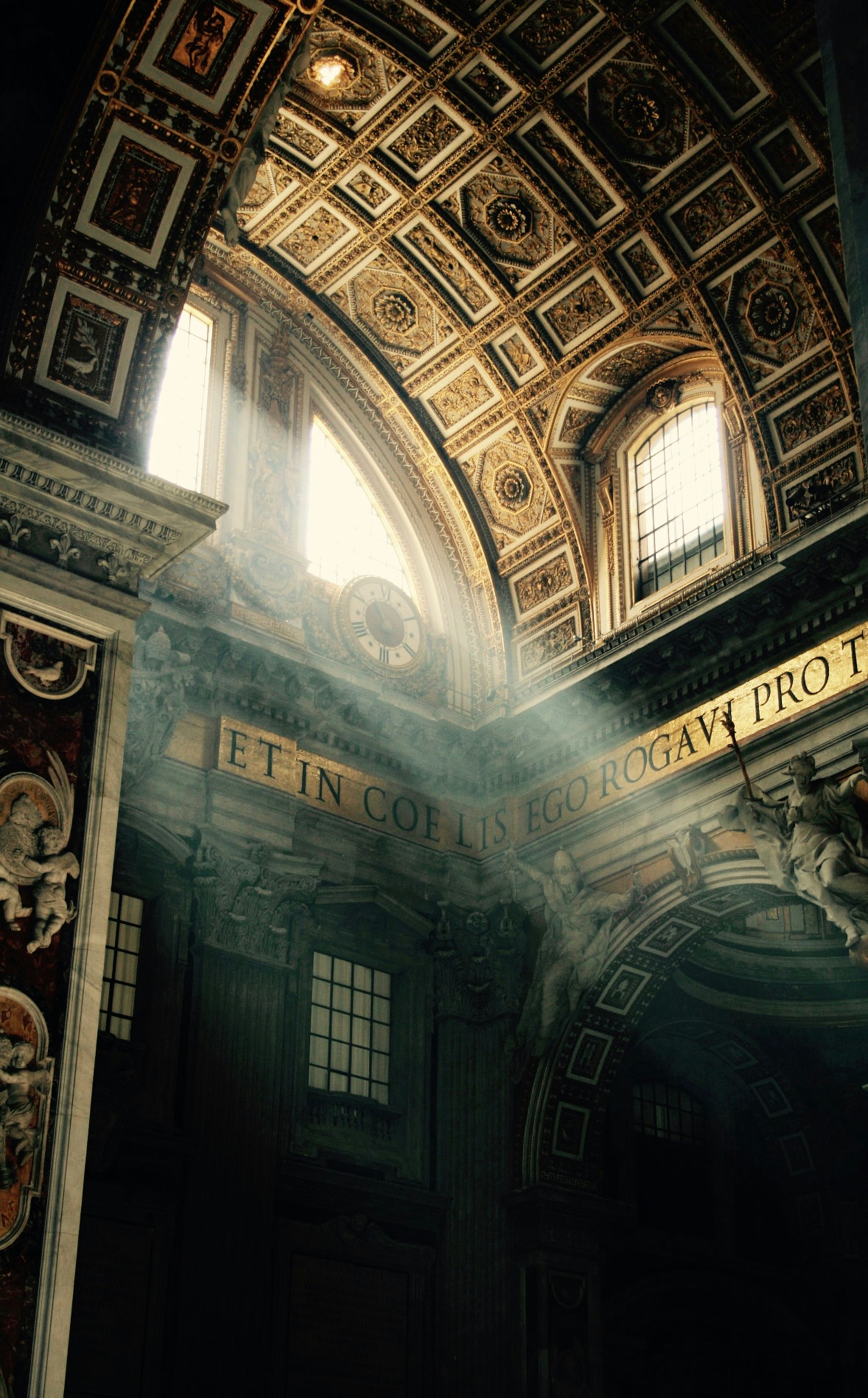
Arrive at 7:00am at opening. The queue at dawn is usually five to ten minutes, sometimes less. By 9:30am it can stretch halfway around the colonnade, particularly on Wednesdays and Sundays. The early morning light inside the basilica, filtering through the high windows, is also particularly beautiful.
The afternoon lull (2:00pm to 3:30pm) is another reliably quieter window. After the lunchtime rush, and before the late afternoon tour groups arrive, the security queue is often surprisingly short. The light inside the basilica is at its most photogenic in the mid-afternoon, particularly in spring when the late afternoon sun strikes the alabaster window above Bernini's Chair of St. Peter in the apse.
Avoid Wednesday mornings entirely. The Papal General Audience closes the basilica to tourists until around 1:00pm, and the afternoon reopening is congested.
Avoid Sunday around noon if you want free movement through the square. The Angelus blessing draws large crowds.
Weekdays in early spring or late autumn are consistently the most relaxed. The peak tourist season runs from April through September, with August being particularly intense.
A note on "skip the line" tickets: A significant portion of third-party Basilica tickets marketed as "skip the line" are somewhat misleading. They typically allow access through a priority lane for the security queue, which can be useful in peak season, but no ticket can bypass the mandatory security check itself. If the priority lane is well-managed by the tour operator, it can save meaningful time. If you are buying a guided tour that includes priority security access, verify with the operator exactly what this means before booking.
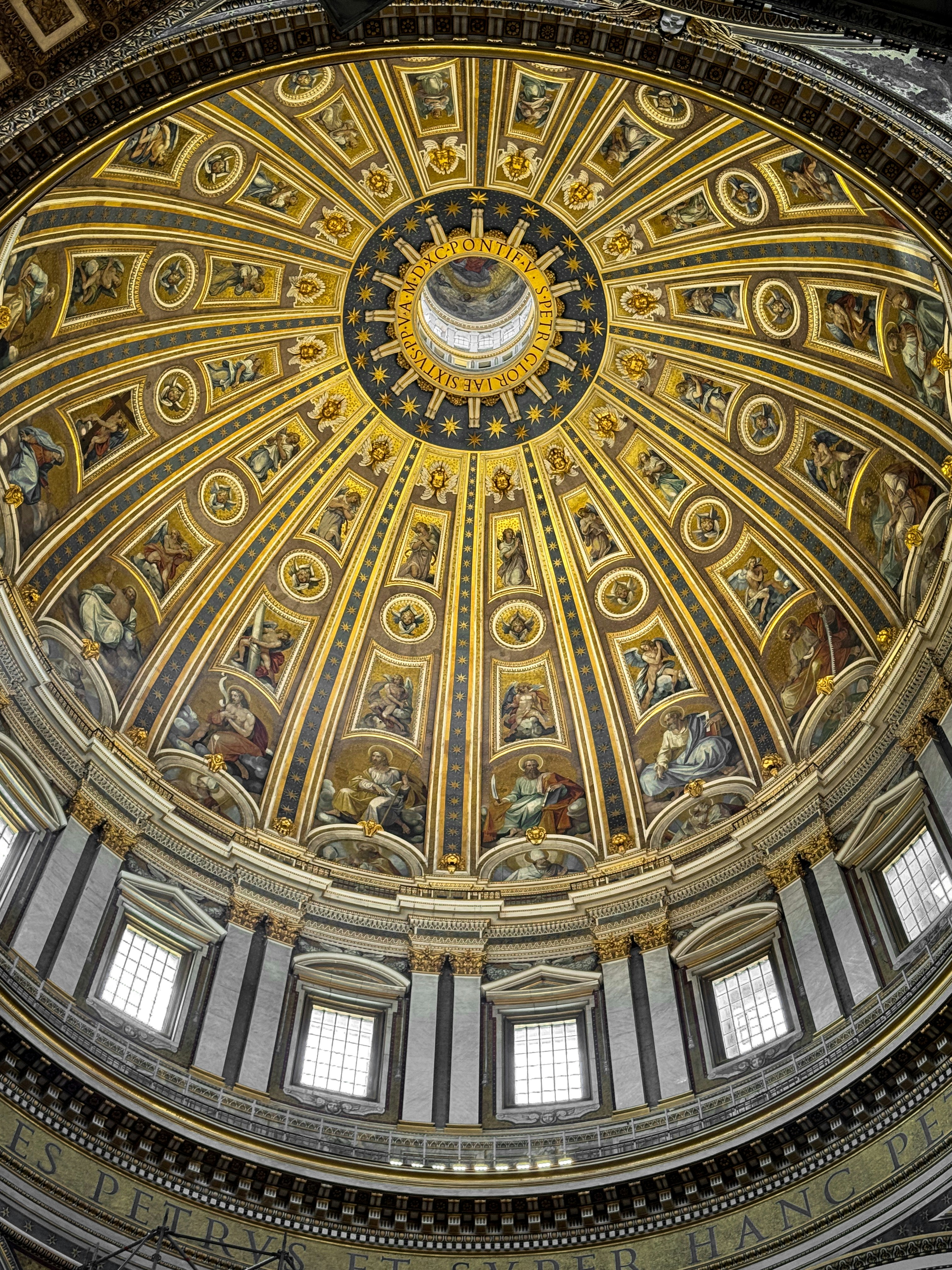
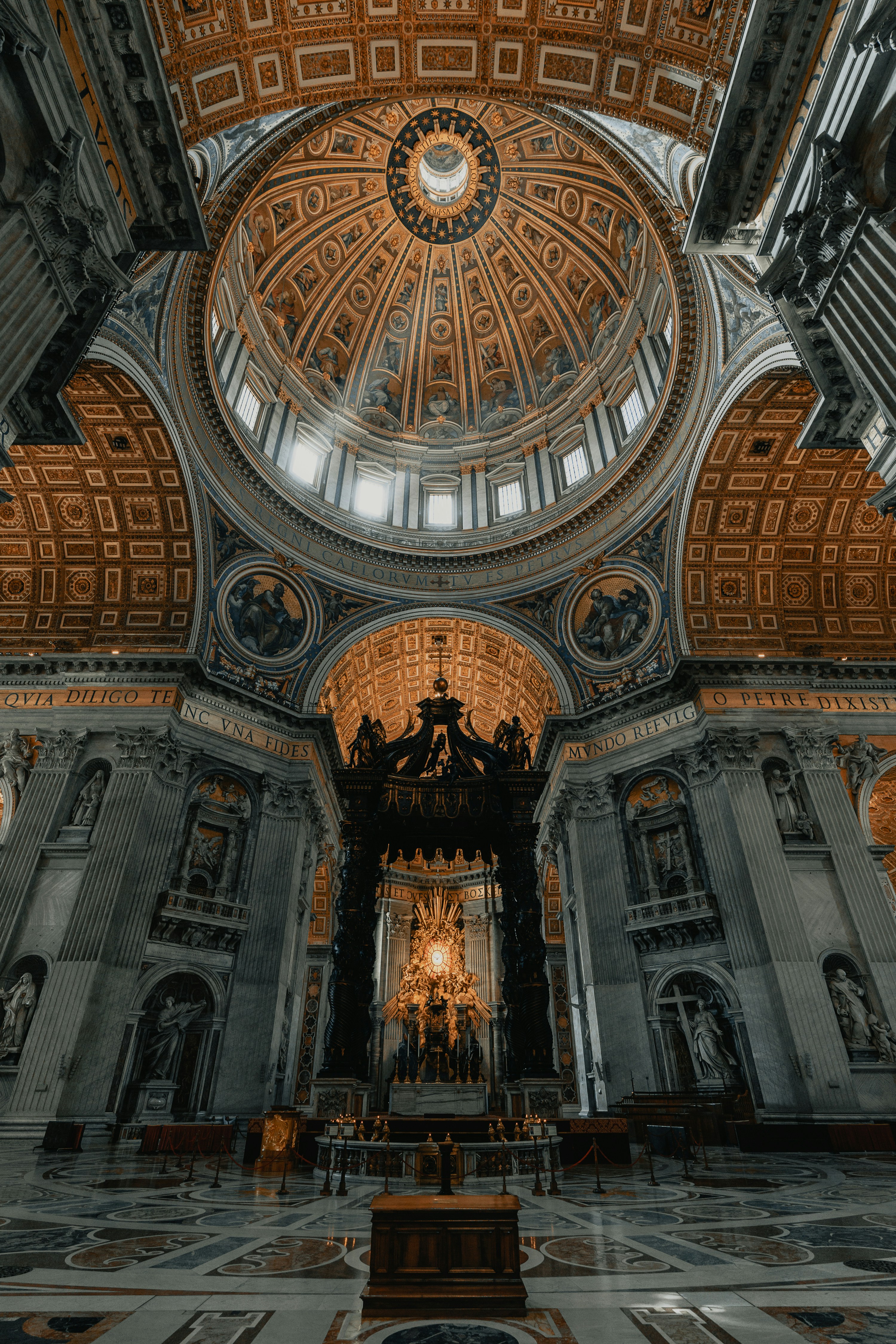
St. Peter's Basilica dome is the world's tallest and serves as a masterpiece of Renaissance architecture, designed by Michelangelo and completed by Giacomo della Porta in 1590. It is positioned directly over the main altar and the tomb of St. Peter.
What is Inside St. Peter's Basilica?
The interior of the basilica covers 22,300 square metres and can hold over 60,000 people. It takes time to adjust to the scale. The famous markers on the nave floor showing the lengths of other great cathedrals of the world (all of which are shorter) give some orientation.
Michelangelo's Pietà: The first chapel on the right after entering, the Pietà is behind bulletproof glass following a damaging attack in 1972. Carved from a single block of Carrara marble when Michelangelo was 24 years old, it shows the Virgin Mary holding the body of Christ with a tenderness and anatomical precision that has never been equalled in sculpture. It is the only work Michelangelo ever signed, his name visible on the sash across Mary's chest. A crowd forms around it by 10:00am and rarely thins significantly during the day. Arriving at opening is the best way to spend quiet time here.
Bernini's Baldachin: The bronze canopy over the papal altar rises 29 metres, approximately the same height as a nine-storey building, and was cast partly from bronze stripped from the portico of the Pantheon. The twisted Solomonic columns are simultaneously a reference to the columns of the Temple of Solomon in Jerusalem and a visual tour de force of Baroque energy. The altar beneath is reserved for papal use only, and it sits directly above the tomb of St. Peter.
The Confessio and St. Peter's Tomb: Immediately in front of the papal altar, a railing descends to the Confessio, a sunken area where ninety-nine oil lamps burn continuously around the clock above what is believed to be St. Peter's burial place. The effect is one of the most emotionally powerful moments in the basilica, particularly early in the morning before the crowds build.
The Bronze Statue of St. Peter: Near the altar, this seated bronze figure (attributed to Arnolfo di Cambio, around 1300) has the right foot worn smooth by centuries of pilgrim touches and kisses. Millions of hands have held and kissed that foot over seven centuries.
Bernini's Chair of St. Peter (Cattedra Petri): At the far end of the basilica in the apse, behind the main altar, Bernini's gilded bronze throne encases what is believed to be the ancient wooden throne of St. Peter. Four bronze Doctors of the Church support it. Above, the oval alabaster window floods the space with golden light around 4:00pm in spring, creating one of the most photogenic and spiritually dramatic moments in the entire building.
The Papal Grottoes: Beneath the main floor of the basilica, accessible via a staircase partway down the right aisle, the Vatican Grottoes contain the tombs of more than 90 popes, including John Paul II, whose tomb draws a long queue of visitors and pilgrims. Entry is free. The grottoes are quiet and sobering by contrast with the grandeur above, and most visitors find them worth the detour. Photography is restricted in certain areas.
The Treasury Museum: The Sacristy, reached via a corridor on the left aisle, contains the Treasury Museum, which holds centuries of gifts, vestments, sacred vessels, and relics presented to St. Peter's by monarchs and donors across the world. Entry is free. The collection includes an original throne of St. Peter and Michelangelo's model for the dome. It is quieter than the main basilica and rewards those who seek it out.
Climbing the Dome: A Complete Guide
The dome of St. Peter's is one of the defining views of Rome, looking out over the colonnade and St. Peter's Square below, across the rooftops of the Vatican, along the Tiber to Castel Sant'Angelo, and on clear days as far as the Alban Hills to the south. Climbing it is worth doing, but requires physical preparation and some planning.
Two routes up:
Stairs only (551 steps): The full climb from ground level takes you first through a series of ramps and stairs to the roof of the basilica, then around the drum of the dome at gallery level where you can look down into the interior and see the mosaics close up, and finally through the narrow gap between the inner and outer shells of the dome to the external lantern at the summit. The narrowing of the passage as you approach the top is significant, and the curved walls press in from both sides. Not recommended for those with claustrophobia or vertigo.
Lift to terrace, then stairs (320 steps): The lift takes you to the roof terrace level, bypassing the first 231 steps. From there you still climb the 320 steps through the narrowing passage to the top. This is the more practical option for most visitors, including those who are not fully confident of their fitness. The lift is not a shortcut to the very top: it only reaches the first terrace, from which the ascent through the dome still requires significant effort.
The internal gallery (first stop inside the dome): Before the final ascent to the external lantern, there is a gallery inside the dome at the level of the drum, from which you can look straight down into the basilica interior. The scale from this perspective is extraordinary. The people on the floor below appear miniature. The golden mosaics covering the interior of the dome can be seen at close range.
The summit: The final level is the external lantern at the top, from which the 360-degree panoramic view of Rome extends in all directions. The colonnade and St. Peter's Square directly below, Castel Sant'Angelo and the Tiber to the east, the Vatican Gardens to the north, and the rooftops of Rome stretching to the hills are all visible from a height that is difficult to appreciate at ground level.
Dome tickets: These are sold on the day from a booth in the portico, on the right side just before you enter the basilica. The queue for dome tickets is typically short (rarely more than 20 minutes). The dome has its own separate entrance from the booth; you do not re-enter the queue. Dome tickets bought online in advance through the official basilica website allow you to proceed directly to the dome entrance without buying on the day, which can save the ticket booth queue.
Physical requirements: The dome climb is not suitable for visitors with heart or respiratory conditions, significant mobility difficulties, claustrophobia, vertigo, or those in later stages of pregnancy. The passage between the inner and outer shells is genuinely narrow and low-ceilinged in places, and requires a degree of physical confidence. If you find the ascent difficult or distressing, you can turn back before the top without penalty.
Dome opening hours: The dome opens at 7:30am and closes one hour before the basilica each day. Arriving early for the dome means the best light, the shortest internal queues, and the most space at the summit.
Travel light: Large bags are not permitted inside the dome. There is no luggage storage inside the basilica, so arrive with only what you can carry in a small bag through the climb.
The Vatican Necropolis (Scavi Tour): St. Peter's Hidden Underground
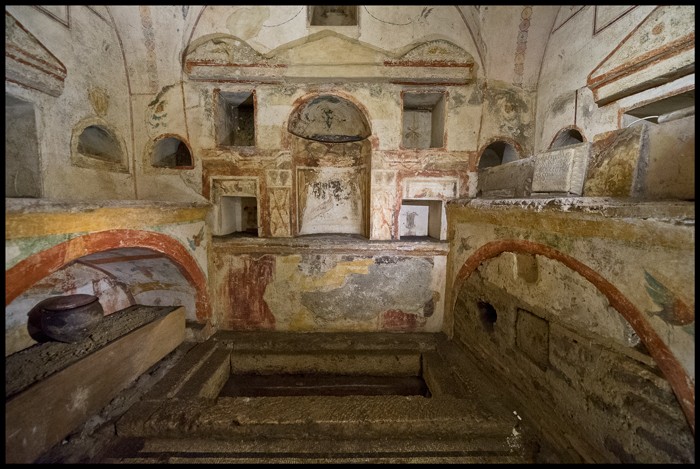
Beneath the floor of the basilica, between 5 and 12 metres down, lies the Vatican Necropolis: an ancient Roman burial ground dating from the 1st century AD, discovered during construction work in the 1940s and excavated over subsequent decades. The tour that takes visitors through this site is among the most exclusive and sought-after experiences in Rome.
The tour culminates at the Trophy of Gaius, a 2nd-century AD monument believed to mark the location of St. Peter's tomb, and at the small chamber behind it where a Greek inscription reading "Peter is here" was discovered. Whether or not this is definitively the Apostle's resting place is a question scholars continue to discuss, but the combination of archaeological evidence and centuries of tradition makes this one of the most significant locations in Christendom.
Booking: The Scavi tour requires advance booking directly through the official basilica website. Only around 250 visitors are permitted each day, in groups of approximately 12, accompanied by specialist guides. Demand is exceptionally high and slots frequently sell out months in advance. If you wish to include this in your visit to Rome, it should be the first booking you make when planning your trip, ideally three to six months ahead.

Guided Tours and Audio Guides of St. Peter's Basilica
Guided tours of the basilica are offered at various price points and durations. A one-hour highlights tour typically covers the Pietà, Baldachin, Confessio, and an overview of the architecture, with time for independent exploration afterward. Longer tours incorporating the dome climb, the Papal Grottoes, and the Necropolis can run two to three hours. Tours are available in English and most major European languages. For first-time visitors unfamiliar with Christian art and Baroque architecture, a good guide adds enormous value to what can otherwise be an overwhelming experience.
The official basilica audio guide can be booked online and includes a digital guide covering the main highlights with 27 listening points. It is included in some online booking packages. Several third-party audio guide apps covering the basilica are also available.
A note on guides entering the dome: Licensed guides are permitted to accompany groups through the basilica, but the dome climb is a physically demanding and narrow route where group dynamics can create bottlenecks. Many guided tour experiences handle the dome separately from the main basilica tour, with visitors climbing at their own pace after the guided portion. Confirm the logistics of the dome portion before booking any guided experience.
Is St. Peter's Basilica Worth Visiting?
The scale of the building is unlike anything else: arriving inside for the first time, even in a crowd, produces a physical reaction to the dimensions. The Pietà is one of the great works of marble sculpture in history and can be seen here, in its intended setting, for free. Bernini's Baldachin is one of the defining works of Baroque art. The dome is one of the finest panoramic viewpoints in Rome.
The combination of all of these things, together with the history concentrated in the building's foundations, makes St. Peter's worth a significant investment of time. Those who rush through in 30 minutes are doing themselves a disservice. Allow a full morning or afternoon.
Where Should I Eat Near St. Peter's Basilica?
The streets immediately between St. Peter's Square and Castel Sant'Angelo, including Via della Conciliazione, contain a high concentration of tourist-oriented restaurants that are generally to be avoided. The Prati neighbourhood, however, which begins just north of the Vatican walls and runs along Via Cola di Rienzo and surrounding streets, is one of Rome's better residential dining areas with relatively few tourist traps.
In Prati (10 to 15 minutes on foot north of St. Peter's Square):
Via Cola di Rienzo and its surrounding streets have several reliable trattorias, bakeries, and bars serving the neighbourhood's local population. The food is considerably better value than anything on Via della Conciliazione.
The Mercato Trionfale on Via Andrea Doria is one of Rome's largest covered food markets and is an excellent option for fresh produce, cheese, charcuterie, and prepared foods at local prices. Open Monday through Saturday mornings.
For coffee: Several good neighbourhood bars operate in Prati. Arriving at a bar standing at the counter rather than sitting at an outside table on the main streets near the Vatican saves money and usually produces better coffee.
For something simple before or after the visit: There are several bars and cafes within Vatican City itself, and the Prati neighbourhood has many quick lunch options (pizza al taglio, panini, suppli) that are considerably more sensible than a sit-down meal in the tourist zone.
What Else is There to Do Near St. Peter's Basilica?
The Vatican Museums and Sistine Chapel are directly adjacent to the basilica, entered from Viale Vaticano on the north side of Vatican City. They are a completely separate attraction requiring advance booking, typically made weeks ahead for popular time slots. Most visitors combine the Vatican Museums, Sistine Chapel, and St. Peter's Basilica into a full Vatican day, though this is a long and potentially exhausting circuit and some visitors prefer to split them across two days.
Castel Sant'Angelo is a 10 to 15-minute walk east along Via della Conciliazione, making it the most natural companion visit to St. Peter's. The castle's rooftop offers one of the finest views in Rome, directly toward the basilica dome.
Ponte Sant'Angelo, the pedestrian bridge decorated with ten marble angels designed by Bernini (and flanked by copies, with two originals now in the church of Sant'Andrea delle Fratte), crosses the Tiber just north of Castel Sant'Angelo and is one of the most beautiful pieces of public sculpture in Rome. Free to walk across.
The Vatican Gardens are visible from the dome of the basilica but require a separate guided tour booked through the official Vatican website. They are the only way to access the full grounds of Vatican City and offer a quieter, greener counterpoint to the crowds inside the basilica.
Rules, Bags, and Security
Dress code: Strictly enforced. Both men and women must have shoulders covered and knees covered. Sleeveless tops, shorts, miniskirts, and low-cut clothing are not permitted. A scarf or light wrap carried in a bag resolves most situations. Staff at the entrance to the square will turn visitors away who do not comply, with no exceptions.
Security: All visitors pass through airport-style metal detectors and bag scanning before entering St. Peter's Square and the basilica. There is no option to bypass this process. Large bags, sharp objects, and glass bottles are not permitted.
Bags in the dome: Large bags and backpacks are not allowed for the dome climb. There is no luggage storage on site, so plan your visit accordingly. Small personal bags approved by security are permitted.
Photography: Personal photography is permitted throughout the main basilica. Photography is not permitted in the Vatican Necropolis (Scavi tour). Flash photography and tripods may be restricted in certain chapels.
Children: There are no age restrictions for the main basilica or Papal Grottoes. The dome climb is not recommended for children under 7. The Necropolis requires visitors to be aged 10 and over.
Accessibility at St. Peter's Basilica
The main floor of the basilica is mostly step-free and accessible for wheelchair users, with ramps available at the main entrance. Accessible toilets are located just inside after the security check. Wheelchairs can be borrowed; contact local operators for advance delivery arrangements.
The dome lift reaches the terrace level (first stop in the dome climb) and this section is wheelchair-accessible. The upper portion of the dome, requiring 320 stairs through the narrowing passage, is not accessible to wheelchair users.
The Papal Grottoes have partial accessibility via external ramps, though some sections are limited. The Vatican Necropolis (Scavi tour) is not wheelchair-friendly due to the archaeological nature of the site.
Final Tips for Visiting St. Peter's Basilica
Arrive at 7:00am (or as early as you can). This is the single most effective action you can take for a smoother visit. The security queue at opening is a fraction of what it becomes by 9:30am.
The dome closes one hour before the basilica. If you plan to climb, factor this into your schedule. Dome tickets sell out on busy days, so go to the ticket booth early.
Avoid Wednesday mornings entirely if you want to visit the basilica interior. The Papal General Audience closes it to tourists until around 1:00pm, and the afternoon reopening is congested.
St. Peter's and the Vatican Museums are completely separate. Booking a Vatican Museums ticket does not give any access to the basilica, and vice versa.
The Vatican Necropolis requires booking months ahead. If this is important to you, book it first, before making any other travel arrangements. Slots sell out well in advance and the booking system only accepts reservations via basilicasanpietro.va.
Dress code will be enforced. Keep a scarf or light layer in your bag. Being turned away at the entrance after queuing is an entirely avoidable frustration.
Large bags are not allowed for the dome climb and there is no storage on site. Arrive light if you plan to ascend.
The Papal Grottoes are free and often overlooked. The tomb of John Paul II and the quiet of the underground chapels offer a very different experience from the grandeur above.
The light in the basilica in mid-afternoon is exceptional, particularly the golden glow from the alabaster window in the apse around 4:00pm in spring. If you have flexibility, this is one of the most photogenic and atmospheric times to be inside.
Combine with Castel Sant'Angelo for a natural half-day in this part of Rome. The 10 to 15-minute walk between the two along the Tiber is one of the most pleasant in the city.
The Pietà is behind glass and requires proximity to fully appreciate. Arrive before 10:00am for the least crowded experience at this chapel.
Back to Rome Attractions
Explore other Rome attractions