Back to Rome Attractions
Do You Need to Pre-Book Tickets to See the Trevi Fountain?
Updated August 2026
The Trevi Fountain is the most famous fountain in the world and one of the great set pieces of European Baroque art. Built between 1732 and 1762 to a design by Nicola Salvi and completed after his death by Pietro Bracci, it marks the end point of the ancient Aqua Virgo aqueduct, one of the most reliable water sources in Roman history. The central figure of Oceanus, commanding his chariot of sea horses against a triumphal arch facade built directly into the rear wall of a palazzo, is breathtaking at first sight, and visitors who come at quieter moments, particularly late in the evening, often find it is one of the most memorable things they see in Rome. Starting in February 2026, the Trevi Fountain began operating a ticketing system for close-up access to the basin. Here is what you need to know.
At a Glance
How Early to Book:
Get a ticket online a day before to guarantee entry and to bypass queues at the on-site ticket office.
Best Times to Visit:
The late evening, particularly around 10pm, when basin entry is free; it is beautifully illuminated, making it far more stunning than during the day.
Ticket price:
€2 for adults for basin access. Access before 9am and 10pm is free and not ticketed.
Where to Book:
Landmark Address:
Do You Need to Book Trevi Fountain Tickets in Advance?
The honest answer is: it's complicated, and it depends on exactly how close you want to get to the fountain.
A €2 fee is required to access the inner basin area of the Trevi Fountain. This is the zone directly at the water's edge: the steps, the stone walkway beside the pool, and the balustrade from which visitors toss coins. The maximum capacity in this area is capped at 400 people at any one time.
However, viewing the fountain from the surrounding piazza remains completely free. You can look at the Trevi Fountain, take photographs of it, and experience it in full from the elevated piazza without paying anything. The fee applies only if you want to descend to the basin level for a close-up view.
When the fee applies: The fee is charged daily from 9:00am to 10:00pm. Outside these hours, entry to the basin is free for everyone. This means that visiting after 10:00pm, or very early in the morning before 9:00am, allows close-up access without charge.
Note on Mondays and Fridays: On Mondays and Fridays, coins are collected from the basin by maintenance crews. This means the basin area opens later on these days: both Mondays and Fridays from around 11:30am.. On alternate Mondays, a full cleaning of the basin takes place, with access not resuming until around 2:00pm. Entry times on these days may vary depending on operations, so check the official website before visiting if Monday or Friday is your only option.
Tickets are open-dated: Unlike tickets at the Colosseum or Pantheon, Trevi Fountain tickets are not timed to a specific slot. They are valid for any day during ticketing hours. This makes them more flexible than most Rome site tickets, though it also means there is no guaranteed entry at a specific time; you still need to queue at the access point.
Tickets are non-refundable and non-transferable.
Where to buy:
Online: The official booking website. Buying ahead online means you can use a dedicated fast-track lane at the access point and avoid the main ticket queue.
On site: Card payment only at machines located near the basin entrance on Via della Stamperia. Cash is not accepted at the site itself.
In person: Cash or card at the Civic Museums of Rome, Tourist Infopoints around the city, and authorised sales points.
The entrance is on Via della Stamperia. A one-way route takes visitors from the entrance down to the basin level. The exit is on the opposite side, via a gate on Via dei Crociferi.
Does advance booking matter? For daytime visits during peak season (April through October), buying a ticket online in advance is recommended to skip the on-site queue. Given the low price, this is a minor logistical investment for a noticeably smoother experience. During quieter periods, on-site purchase is generally straightforward.
Trevi Fountain Opening Hours and Ticketing Hours
The Trevi Fountain itself is never closed. It is a public monument set into the facade of a palazzo, and the surrounding piazza is accessible 24 hours a day, every day of the year. The water runs continuously.
Ticketed access to the basin operates daily from 9:00am to 10:00pm (last entry at 9:00pm), with the following exceptions:
Monday: Basin opens later, from approximately 11:30am, due to coin collection
Friday: Basin opens later, from approximately 11:30am, due to coin collection
Every other Monday: Basin opens even later, from approximately 2:00pm, due to a full cleaning the happens
On some days, entry times may vary due to maintenance or public order reasons. Always check the official website before visiting if your schedule is tight.
Free basin access: Before 9:00am and after 10:00pm daily, no ticket is required to enter the basin area.
The fountain is lit at night and many visitors consider a late evening visit, after 10:00pm when the ticketing system closes, to be the single best time to experience it. The pale marble glows under floodlights, the surrounding piazza is less congested than during the day, and the sound of the water carries differently without the competing noise of large crowds.
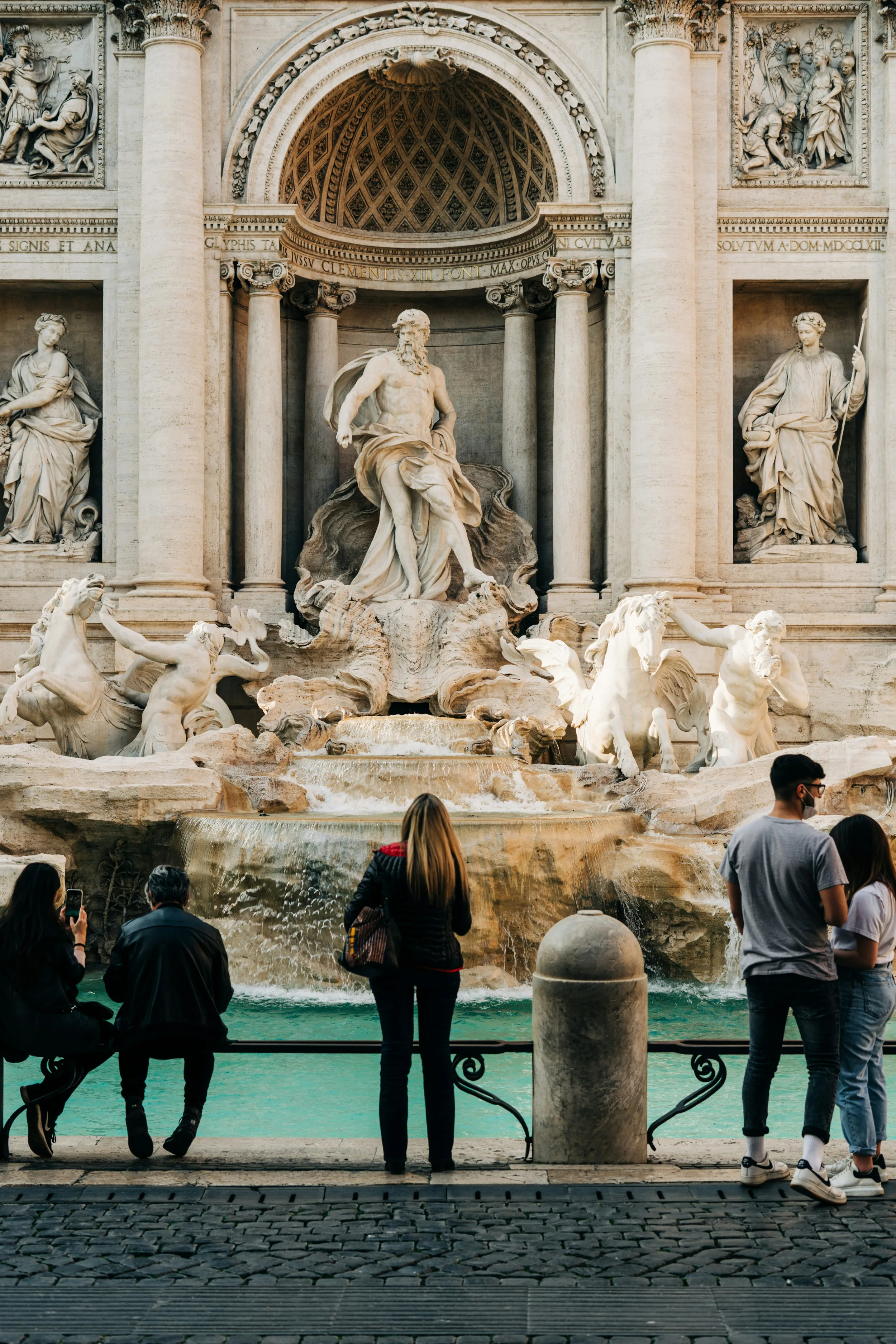
What is the Best Way to Get to the Trevi Fountain?
The Trevi Fountain sits in Piazza di Trevi in the historic centre of Rome and is within easy walking distance of most major sightseeing areas.
By Metro: The nearest Metro station is Barberini (Line A), around a 5 to 10-minute walk from the fountain. Follow the signs from the station exit.
On foot: The Trevi Fountain is approximately 15 minutes on foot from the Pantheon, 10 minutes from the Spanish Steps, 20 minutes from Piazza Navona, and around 30 minutes from the Colosseum. The walk through the streets of the historic centre from any of these points is part of the pleasure of visiting Rome.
By bus: Several bus routes stop near Via del Tritone or Piazza Barberini, within walking distance of the fountain.
Driving is not practical. The area surrounding the Trevi Fountain is entirely within Rome's ZTL (Zona a Traffico Limitato), with automatic fines for non-resident vehicles.
Practical tip: The piazza itself is very small relative to the number of visitors it receives. Arriving on foot through the narrow approach streets, rather than via the obvious main road, can add a pleasing element of discovery. From several directions, the fountain is invisible until you suddenly round a corner and the full facade opens up in front of you. Via delle Muratte or Via di San Vincenzo from the north both give this effect.
How Much Time Should I Spend at the Trevi Fountain?
Most visitors spend 15 to 30 minutes at the fountain, including time in the basin area, time for photographs, and the coin toss. There is no time limit once you are inside the basin, but the physical space does not encourage extended stays.
If you are making multiple visits, as many visitors do (once in the day and once at night to see both moods), each visit individually might take 20 minutes or so.
The Trevi Fountain is almost always combined with a broader walking circuit through the historic centre. A popular and manageable half-day route takes in the Pantheon (10 minutes west), Piazza Navona (20 minutes west), and the Spanish Steps (10 minutes north), as well as the Trevi Fountain itself.
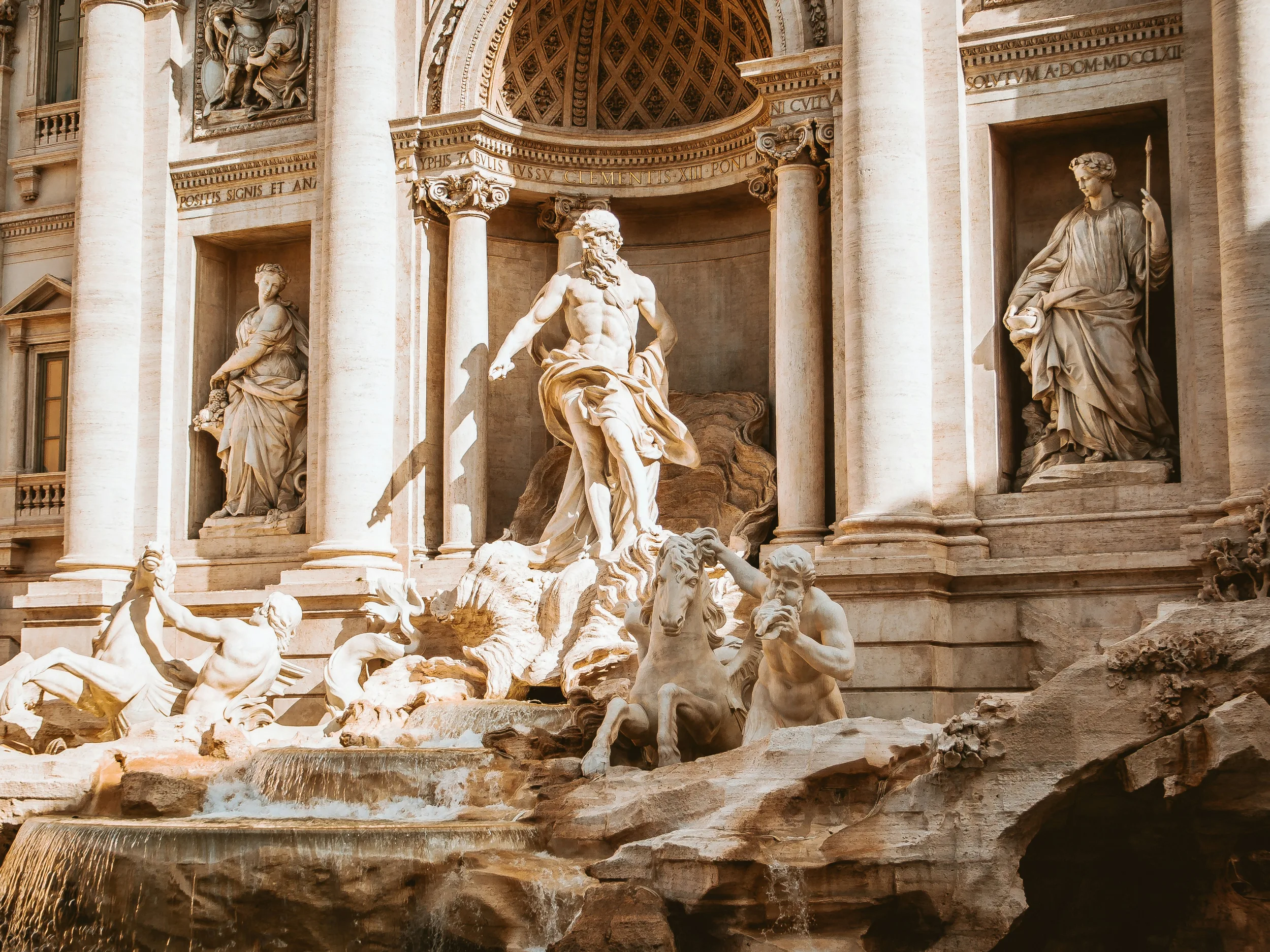
The central figure on the Trevi Fountain is not Neptune, as many tourists assume, but ratherOceanus, a Titan god of the sea. Sculpted by Pietro Bracci, he stands in a shell-shaped chariot pulled by sea horses and guided by Tritons.
What is the Best Time to Visit the Trevi Fountain?
After 10:00pm: After the ticketing system closes, access to the basin is free, the crowd levels drop substantially, and the floodlit fountain against the night sky is the setting that made it famous in Fellini's La Dolce Vita. Even in summer, when 10:00pm is still warm and busy, the experience is significantly better than midday.
Early morning: Arriving between 7:00am and 8:30am gives you the fountain in natural light with manageable crowds, though even these hours see visitors gathering. This is the best time for photography in daylight, particularly in summer when the light is already strong and beautiful by 7:00am.
Avoid midday on weekends: Saturday and Sunday from around 11:00am to 4:00pm are the most congested periods by a significant margin. The piazza can hold thousands of people and during peak season it regularly approaches that capacity.
Monday and Friday mornings: Because the basin does not open until late morning or early afternoon on these days due to coin collection, the morning period around the piazza can be quieter than usual if you are content with the free piazza-level view.
Seasonal considerations: The Trevi Fountain is one of Rome's sites least affected by season in terms of crowding, simply because it attracts visitors at all hours year-round. Spring and autumn remain the most pleasant in terms of temperatures, but the fountain is no quieter during these months than in summer.
What Even is the Trevi Fountain?
The Trevi Fountain is the largest Baroque fountain in Rome and the terminus of the ancient Aqua Virgo aqueduct, which was originally built in 19 BC and has supplied fresh water to this part of the city continuously ever since. The word "Trevi" refers to the "tre vie" (three roads) that historically converged at this point.
The current structure was commissioned by Pope Clement XII and designed by Nicola Salvi, who won a competition in 1730. Construction began in 1732 and continued until Salvi's death in 1751. The project was completed in 1762 under Pope Clement XIII by Pietro Bracci, who sculpted the central figure of Oceanus.
What you are looking at: The fountain is built directly into the rear facade of Palazzo Poli, which forms the backdrop of the composition. The palace wall serves as the triumphal arch from which Oceanus emerges. On either side of the central figure are allegorical statues representing Health and Abundance. The sea horses flanking Oceanus's chariot represent calm and turbulent seas. The entire composition is 26 metres wide and 20 metres high.
The coin tradition: The tradition of tossing a coin into the fountain to ensure a return to Rome is widely observed and worldwide in its reach. The coins are collected daily by the municipality of Rome and donated to Caritas, the Catholic charitable organisation. The collection amounts to approximately €1.5 million per year. The method: toss one coin with your right hand over your left shoulder to guarantee a return to Rome. Two coins will bring love; three coins will bring marriage.
The Coin Toss at the Trevi Fountain
Visitors in the basin area are expected to follow a one-way flow route guided by staff in blue vests. The experience is managed, not free-roaming: you enter from Via della Stamperia and exit onto Via dei Crociferi.
Rules inside the basin:
No sitting, loitering, or consuming food and drinks inside the basin area
No climbing on any part of the fountain structure
No wading into the water or drawing water from the fountain
Animals may not drink from or be washed in the fountain
Photography is permitted and widely practised

Is the Trevi Fountain Worth Visiting?
Yes, but you need to time things right. Visiting at peak midday in July and standing in a crowd of thousands is a very different proposition from arriving at 10:30pm on a Tuesday in October and finding a manageable number of people around a fountain that is one of the more extraordinary things ever built. Both are the Trevi Fountain; the second is much better.
At €2 for close-up access during the day, the visit is one of the most affordable major experiences in Rome. Even the free piazza-level view is rewarding: the scale of the facade and the sound and movement of the water are well communicated from above.
Guided Tours of the Trevi Fountain
The Trevi Fountain is not a museum with interior rooms and exhibits, so a dedicated guided tour of the fountain alone is not particularly necessary for most visitors. However, several worthwhile options exist:
Walking tours of the historic centre that include the Trevi Fountain, the Pantheon, and Piazza Navona as part of a broader circuit are among the most popular experiences in Rome. A good guide will cover the mythology of Oceanus, the engineering of the Aqua Virgo aqueduct, the papal politics behind the fountain's commission, and the cultural history attached to the coin-toss tradition in a way that makes the fountain considerably more than a beautiful backdrop for photographs. These tours typically run two to three hours and are a good investment for first-time visitors who want to understand the historic centre rather than simply see it.
Underground and archaeological tours of the Vicus Caprarius (the underground archaeological zone beneath a building on the adjacent Via del Nazareno, which contains remains of an ancient Roman building through which the Aqua Virgo aqueduct ran) offer an unusual underground perspective on the water system that feeds the fountain. These require separate ticketing and advance booking.
Where Should I Eat Near the Trevi Fountain?
The streets immediately around the fountain contain a predictable concentration of tourist-oriented restaurants, and the advice that applies at every major Rome landmark applies here: the closer to the piazza, the less value you are likely to get. Walk two or three streets in any direction and the picture changes considerably.
Piccolo Arancio on Vicolo Scanderbeg, a five-minute walk from the fountain, is one of the best-value options in the area. The menu covers Roman classics alongside good seafood, portions are generous, and prices are reasonable for the location. Booking ahead is advised for dinner.
Trattoria della Stampa on Via dei Maroniti (very close to the fountain entrance) punches above its weight for such a central location, serving traditional Roman fare including a particularly well-regarded amatriciana. The menu is simple and the atmosphere is unpretentious.
Colline Emiliane on Via degli Avignonesi, around a 10-minute walk north toward Piazza Barberini, is a long-established and well-respected restaurant serving the cooking of Emilia-Romagna: fresh pasta, tortellini in brodo, lasagne, and excellent cured meats. Prices are moderate for the quality, but booking ahead is essential. Closed on Mondays.
Agrodolce is a well-regarded Roman trattoria described as being roughly 59 steps from the Trevi Fountain, with a commitment to local seasonal ingredients and a menu of Roman pasta classics. Consistently well-reviewed.
Sant'Eustachio il Caffè on Piazza di Sant'Eustachio, around 15 minutes on foot west via the Pantheon, is still widely considered the finest espresso bar in Rome. The beans are roasted on-site and the coffee preparation method has been unchanged for decades. Worth the detour any time you are in this part of the city.
For gelato: Gelateria Valentino on Via del Lavatore, within a short walk of the fountain, is one of the more reliable and locally regarded gelaterias in the area.
As a general rule: avoid any restaurant displaying an English-only menu or photographs of the food on boards outside. Walk one street off the main tourist route in any direction and the quality improves noticeably.
What Else is There to Do Near the Trevi Fountain?
The Trevi Fountain is at the intersection of Rome's most densely packed historic centre, and virtually every direction you walk from it leads somewhere interesting.
The Pantheon is around 15 minutes on foot west, making it the most natural pairing with a Trevi visit. The route via Via della Minerva passes some of the most atmospheric streets in the historic centre. A ticket to the Pantheon must be booked in advance.
Piazza Navona is around 20 minutes west and contains Bernini's Fountain of the Four Rivers alongside some of the finest Baroque church facades in Rome. Entry to Sant'Agnese in Agone is free.
The Spanish Steps are around 10 minutes north and are one of Rome's most visited public spaces, rising from Piazza di Spagna to the Trinità dei Monti church in 135 steps. The Via Condotti at the base of the steps is Rome's most concentrated luxury shopping street.
San Luigi dei Francesi, a short walk west of the Pantheon, is a French national church that contains three canvases by Caravaggio in its Contarelli Chapel. Entry is free and the paintings, depicting scenes from the life of Saint Matthew, are among the most powerful works Caravaggio produced. No booking required.
The Vicus Caprarius on Via del Nazareno, a short walk from the fountain, is an underground archaeological site containing ancient Roman remains including sections of the Aqua Virgo aqueduct that feeds the Trevi Fountain. A small museum presents the finds. Advance booking is required.
The Salotto 42 bar on Piazza di Pietra, midway between the Trevi Fountain and the Pantheon, faces the ruins of the 2nd-century Temple of Hadrian. One of the more atmospheric spots in the area for a cocktail or aperitivo, particularly in the early evening.
Accessibility at the Trevi Fountain
The piazza surrounding the fountain and the elevated viewing area are accessible to visitors with mobility difficulties. However, the basin area itself involves steps and is not accessible to wheelchair users. Staff at the access control point can assist visitors with strollers (there is a temporary parking area for prams).
The ticketing system offers free entry to disabled visitors and their caregivers. Documentation may be requested at the ticket point.
Final Tips for Visiting the Trevi Fountain
Visit after 10:00pm for the best experience. The ticketing system closes, access is free, and the fountain under floodlights is the version that appears in every great film and photograph.
Buy your €2 ticket online in advance if you plan a daytime visit during peak season (April to October). The online ticket allows you to use a fast-track lane and avoid queuing at the on-site machines.
Check the official website before visiting on a Monday or Friday. The basin opens later on these days due to coin collection. If you arrive at 10:00am on a Friday expecting to access the basin, you will be waiting until around 2:00pm.
Viewing the fountain from the piazza is completely free at any time. If you simply want to see it and take photographs from above, you do not need a ticket.
The piazza is tiny. On busy days, particularly weekend afternoons in summer, it is dense with people. If this concerns you, an early morning or late evening visit is the answer.
Toss your coin with your right hand over your left shoulder. According to tradition, one coin ensures a return to Rome. The coins are collected daily and donated to Caritas.
The Trevi Fountain in the rain is one of Rome's quietly memorable experiences. The marble turns darker, the piazza empties significantly, and the sound of the fountain becomes more present. If it rains during your visit, it is worth spending a moment there.
Combine with the Pantheon for a memorable morning. The walk between the two through the back streets of the historic centre is as enjoyable as either destination.
The approach streets matter. Come via Via delle Muratte or Via di San Vincenzo rather than the obvious main route for the best reveal moment when the fountain suddenly appears.
Back to Rome Attractions
Explore other Rome attractions
" width="24px"><path d="M 0 0 L 24 0 L 24 21.231 L 0 21.231 Z" fill="transparent" height="21.230768474975793px" id="nL2EwDcS9" width="24px"/><path d="M 0 0.541 C 0 0.242 0.245 0 0.547 0 L 2.735 0 C 3.037 0 3.282 0.242 3.282 0.541 L 3.282 4.598 C 3.282 4.897 3.037 5.139 2.735 5.139 L 0.547 5.139 C 0.245 5.139 0 4.897 0 4.598 Z" fill="rgb(196, 217, 201)" height="5.138657337892187px" id="hZ_rlBe_S" transform="translate(0 16.092)" width="3.2820512820512358px"/><path d="M 0 0.541 C 0 0.242 0.245 0 0.547 0 L 2.735 0 C 3.037 0 3.282 0.242 3.282 0.541 L 3.282 7.843 C 3.282 8.142 3.037 8.384 2.735 8.384 L 0.547 8.384 C 0.245 8.384 0 8.142 0 7.843 Z" fill="rgb(230, 211, 160)" height="8.38412513024521px" id="HgVBxIz3e" transform="translate(5.128 12.847)" width="3.282051282051235px"/><path d="M 0 0.541 C 0 0.242 0.245 0 0.547 0 L 2.735 0 C 3.037 0 3.282 0.242 3.282 0.541 L 3.282 12.982 C 3.282 13.281 3.037 13.523 2.735 13.523 L 0.547 13.523 C 0.245 13.523 0 13.281 0 12.982 Z" fill="rgb(232, 207, 164)" height="13.522782468137464px" id="utgrDnoM9" transform="translate(10.325 7.708)" width="3.282051282051377px"/><path d="M 0 0.541 C 0 0.242 0.245 0 0.547 0 L 2.735 0 C 3.037 0 3.282 0.242 3.282 0.541 L 3.282 16.498 C 3.282 16.797 3.037 17.039 2.735 17.039 L 0.547 17.039 C 0.245 17.039 0 16.797 0 16.498 Z" fill="rgb(233, 196, 166)" height="17.038705909853153px" id="OLOhW6STz" transform="translate(15.521 4.192)" width="3.2820512820512384px"/><path d="M 0 0.541 C 0 0.242 0.245 0 0.547 0 L 2.735 0 C 3.037 0 3.282 0.242 3.282 0.541 L 3.282 20.69 C 3.282 20.989 3.037 21.231 2.735 21.231 L 0.547 21.231 C 0.245 21.231 0 20.989 0 20.69 Z" fill="rgb(217, 170, 153)" height="21.230768474975793px" id="H5Z8wcwkd" transform="translate(20.718 0)" width="3.2820512820512278px"/></g></svg>)