Back to Paris Attractions
How Far in Advance to Book Tickets to the Musée de Cluny in Paris
Updated August 2026
Tucked into the heart of the Latin Quarter on the Left Bank, the Musée de Cluny is one of the most remarkable and distinctive museums in Paris. Formally known as the Musée national du Moyen Âge (the National Museum of the Middle Ages), it occupies a site that spans two thousand years of history: the vaulted ruins of second-century Gallo-Roman thermal baths, the extraordinary late-Gothic mansion of the abbots of Cluny, built in the 15th century on top of those same ruins, and a thoughtfully designed contemporary reception pavilion added in 2018. Through the museum's collection of nearly 1,600 medieval objects, covering more than a thousand years of art and craft from late antiquity to the early 16th century, it offers a window into a world that feels somehow different from anything else Paris has to show. And at the centre of it all, in a purpose-built room designed specifically to house them, hang the six extraordinary tapestries known as the Lady and the Unicorn, among the most celebrated works of art in France, and reason enough to visit on their own.
At a Glance
How Early to Book:
Book 1-2 days ahead to bypass queues during busier parts of the year. Tickets are valid for entry at any time during a selected day.
Usually through the end of the same calendar year.
Best Times to Visit:
The museum does not get overcrowded, so any time is pleasant, but weekday mornings will have the least number of people.
Ticket price:
€14 for adults.
Where to Book:
The Official Musée de Cluny website
Museum Address:
Do You Need to Book Musée de Cluny Tickets in Advance?
Unlike many of Paris's major museums, the Musée de Cluny does not operate a timed entry system for the permanent collection, and advance booking is not required. Tickets can be purchased at the door on the day of your visit, and the museum is rarely so crowded that you will face a significant queue at the ticket office. This makes it one of the more relaxed major museums in Paris to visit spontaneously, and a particularly good option on days when other attractions are fully booked.
That said, you can purchase tickets online in advance if you prefer, via the museum's official website. This is particularly recommended during periods when a major temporary exhibition is running, as these can drive higher visitor numbers and occasionally require a separately ticketed slot.
Admission is free for all visitors on the first Sunday of each month.
The Paris Museum Pass covers entry to the Musée de Cluny and does not require advance reservation. The Paris Pass also covers entry. Both represent good value if you are visiting several Paris museums over a two, four, or six-day period.
Opening Hours and Entry Information
The Musée de Cluny is open Tuesday to Sunday. It is closed on Mondays, as well as on 1 January, 1 May, and 25 December.
Standard opening hours are 9:30am to 6:15pm, with the ticket office closing at 5:30pm.
On the first and third Thursday of each month, the museum stays open until 9:00pm, offering a relaxed evening visit that is particularly pleasant during the warmer months. These late-night Thursdays are worth planning around if your schedule allows.
The museum's medieval-inspired garden has been temporarily closed for security reasons; check the museum's official website for its current status before your visit, as it is normally accessible during museum hours and included in the admission price.
What is the Best Way to Get to the Musée de Cluny?
The museum is located in the 5th arrondissement at 28 rue du Sommerard, in the heart of the Latin Quarter, and is easily reached by public transport.
By Métro: The closest station is Cluny-La Sorbonne (Line 10), which is directly adjacent to the museum and just a minute or two on foot. Saint-Michel (Line 4) is also very close and is one of Paris's most central interchange stations. Odéon (Lines 4 and 10) is a short walk away and provides a useful option if you are coming from Saint-Germain-des-Prés.
By RER: Saint-Michel Notre-Dame (RER B and C) is within easy walking distance and is particularly useful if you are arriving from Charles de Gaulle Airport or from the south of Paris.
By Bus: A large number of bus routes serve the area, including lines 21, 27, 38, 47, 63, 85, 86, and 87, stopping on Boulevard Saint-Michel and the surrounding streets.
On foot: The museum is very walkable from Notre-Dame Cathedral (around 10 minutes), Sainte-Chapelle (around 12 minutes across the Pont Saint-Michel), the Luxembourg Gardens, and the wider Saint-Germain neighbourhood.
By Vélib (bike): Vélib docking stations are located on rue du Sommerard and at the nearby Sorbonne, making cycling a practical option for those comfortable riding in Paris.
By car: Driving is not recommended. The Latin Quarter is heavily congested, parking is extremely limited, and public transport is faster and far less stressful from virtually any part of the city.
What is the Best Time to Visit the Musée de Cluny?
The Musée de Cluny is one of the least overwhelming major museums in Paris in terms of crowd levels, which is a significant part of its appeal. You will not find the shoulder-to-shoulder crowds of the Louvre or the Musée d'Orsay here, which means timing is somewhat less critical than at those institutions. That said, a few guidelines are worth bearing in mind.
Weekday mornings are consistently the quietest time, and a Tuesday, Wednesday, or Friday morning visit will give you the Lady and the Unicorn tapestry room in the kind of meditative quiet the works truly deserve. Weekends are busier, particularly when a major temporary exhibition is running.
The evening openings on the first and third Thursdays of each month (until 9:00pm) are an excellent option for visitors who want to see the collection in a calmer atmosphere. Visitor numbers tend to thin significantly in the final hour or two before closing.
The first Sunday of each month offers free entry and is popular with Parisian families, which means it tends to be one of the busier days. If you are using the free Sunday option, arriving close to opening time at 9:30am is recommended.
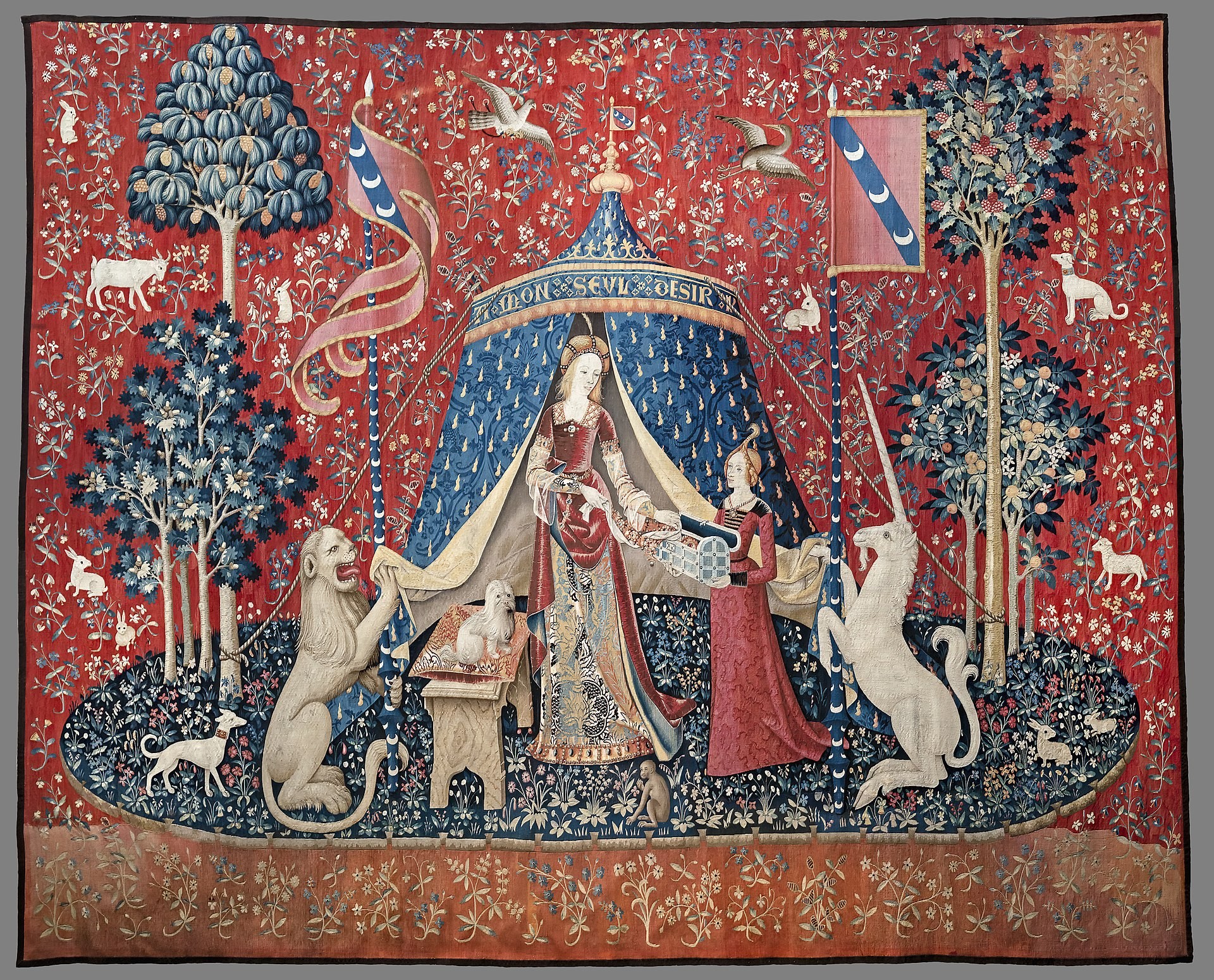
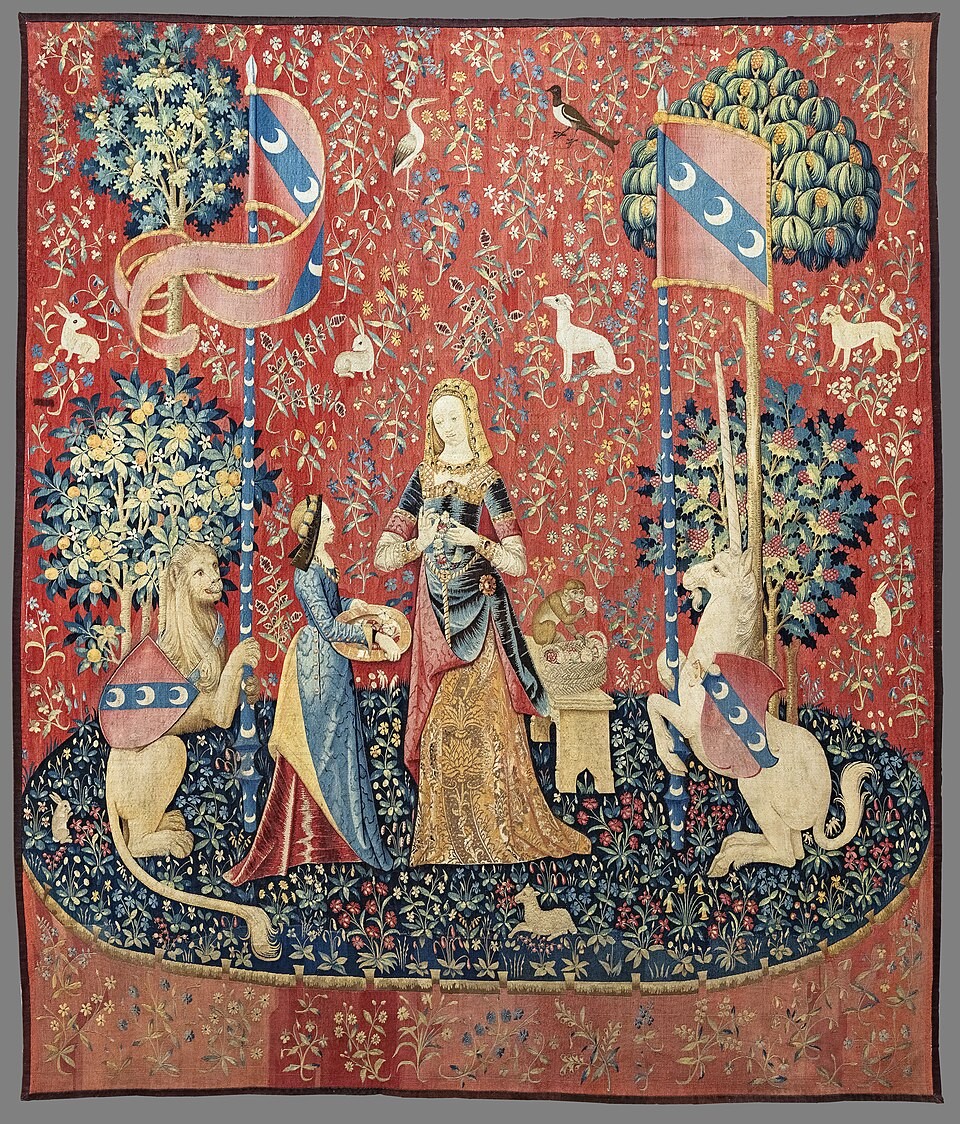
The Lady and the Unicorn is the most famous piece of art housed at the Musée de Cluny. You might recognize them from the Harry Potter films: Copies of all six tapestries are used to cover the bare stone walls in the Gryffindor common room.
Is the Musée de Cluny Worth Visiting?
I would say it's worth visiting for anyone with an interest in the medieval period. The Cluny occupies a particular niche in the Paris museum landscape: it is intimate, deeply focused, and unlike anywhere else in the city. Where the Louvre overwhelms with breadth, the Cluny rewards with depth, and the experience of moving through it feels closer to wandering through a medieval world than to processing an institution.
The collection ranges from Gallo-Roman antiquities to the art of the early 16th century, and the quality throughout is remarkable. The Frigidarium, the great vaulted cold room of the Roman baths, is one of the finest surviving Roman interiors in northern Europe, with 14-metre vaults still largely intact after two thousand years. The medieval sculpture galleries include the original carved heads of the Kings of Judah from the west facade of Notre-Dame Cathedral, removed and hidden during the Revolution. The stained glass collection, the largest held by any museum in France, includes original windows from Sainte-Chapelle. The goldsmithing and enamel collections are among the finest in existence.
And then there are the tapestries. The six panels of the Lady and the Unicorn, woven in the Southern Netherlands around 1500, are displayed in a dim, oval room specifically designed to house them. They are among the most beautiful objects in France, and they have a presence that photographs and descriptions cannot fully convey. Whatever else brings you to the Cluny, plan to spend time here.
How Much Time Should I Spend at the Musée de Cluny?
Most visitors will find that one and a half to two and a half hours is sufficient for a thorough and enjoyable visit to the permanent collection. The museum is compact enough that it never becomes exhausting, and the chronological layout makes it easy to move through at your own pace.
The Lady and the Unicorn room deserves more time than most visitors initially allocate to it. Plan to sit and look, rather than simply moving through. The detail in each panel, and the quiet drama of the sixth tapestry's inscription ("A mon seul désir"), reward patience.
Guided Tours and Audio Guides at the Musée de Cluny
A video guide is available for hire from the museum for €4 and covers the highlights of the permanent collection in multiple languages. It is a worthwhile addition for visitors who want richer context on specific objects and rooms, particularly the tapestries and the Frigidarium.
The museum also offers a programme of guided tours, themed visits, dramatised tours, singing tours, and tours adapted for young children, which vary by season and current exhibition. These are ticketed separately and must be booked in advance via the museum's website. For visitors with a deeper interest in the medieval period, the themed and dramatised tours in particular are warmly recommended.
Where Should I Eat Near the Musée de Cluny?
The museum has an on-site café, the Café des Amis, and the surrounding Latin Quarter is also one of the most rewarding areas of Paris for eating and drinking, with no shortage of good options within a short walk.
Boulevard Saint-Michel and its immediate side streets have a wide range of cafés and brasseries, though as with all heavily tourist-facing streets in Paris, it is worth walking a block or two inward to find better value and quality. The streets immediately around the museum, including rue du Sommerard and rue des Écoles, have good neighbourhood cafés.
Rue Mouffetard, around a 10-minute walk south, is one of Paris's most atmospheric market streets and is lined with fromageries, boulangeries, wine shops, and small restaurants. It is a wonderful place for an informal lunch, and the street market held on Tuesday, Thursday, and weekend mornings is excellent for picnic supplies.
Shakespeare and Company Café, beside the famous bookshop on rue de la Bûcherie (around 10 minutes on foot), is a charming option for coffee and a pastry, and the setting beside the Seine with Notre-Dame across the river is hard to beat.
The Île Saint-Louis, around 15 minutes on foot, is a quieter and more refined dining alternative, with a handful of excellent restaurants and the celebrated Berthillon ice cream and sorbet makers on rue Saint-Louis en l'Île.
For a longer lunch or dinner, Saint-Germain-des-Prés, a 10 to 15-minute walk west, has some of Paris's finest and most storied cafés and restaurants, including the legendary Café de Flore, Les Deux Magots, and Brasserie Lipp.
Accessibility at the Musée de Cluny
The 2018 reception pavilion was designed with accessibility as a central priority, and the museum is well set up for visitors with mobility difficulties. The entire visitor route from the entrance is accessible via ramps and lifts, with no steps required. The medieval garden is also fully accessible. The museum is welcoming to visitors using wheelchairs, those with prams and strollers, and elderly visitors.
Disabled visitors and their accompanying person receive free admission to both the permanent collection and temporary exhibitions, with valid documentation.
The museum provides resources for visitors with visual impairments, including touch tours of selected objects and audio descriptions. Hearing loops are available in key spaces. Guided tours adapted for visitors with specific needs can be arranged in advance through the museum's visitor services team.
Rules, Bags, and Security
Large bags, backpacks, and bulky items are not permitted inside the museum. This is a security measure applied across many major Paris cultural institutions and is strictly enforced. There is a cloakroom at the entrance where bags can be deposited. Visitors arriving with rolling luggage will not be admitted, so plan accordingly.
Photography for personal, non-commercial use is permitted throughout the permanent galleries. Rules regarding photography in temporary exhibitions vary by show and will be displayed at the exhibition entrance. Flash photography is not permitted.
The museum asks that mobile phones be kept on silent in the galleries, and that visitors take calls outside.
What Else is There to Do Near the Musée de Cluny?
The Musée de Cluny sits at the centre of one of Paris's richest areas for sightseeing, and the surrounding Latin Quarter and Île de la Cité reward several hours of exploration alongside a museum visit.
Notre-Dame Cathedral is around a 10-minute walk north across the Île de la Cité and has fully reopened following the meticulous restoration completed after the 2019 fire. Visiting both the Cluny and Notre-Dame in the same day makes for an exceptionally rich encounter with medieval Paris.
Sainte-Chapelle, with its extraordinary 13th-century stained glass, is around 12 minutes on foot via the Pont Saint-Michel and is a natural companion to the Cluny. The museum's own stained glass collection includes original panels from Sainte-Chapelle, which gives a particular resonance to visiting both on the same day.
The Panthéon, the great neoclassical mausoleum of France's most distinguished citizens, is around a 10-minute walk south-east on the rue Soufflot. The Luxembourg Gardens are a similar distance to the west and make a wonderful afternoon complement to a morning museum visit.
La Sorbonne, one of the oldest universities in the world, is directly adjacent to the museum. Its historic courtyard and chapel are occasionally open to visitors, and the surrounding bookshops and university cafés are an enjoyable part of the neighbourhood atmosphere.
Shakespeare and Company, the celebrated English-language bookshop, is a 10-minute walk along the riverside quays and is a Paris institution in its own right.
Final Tips for Visiting the Musée de Cluny
Come on a first Sunday for free entry. The first Sunday of every month offers free admission to all visitors. It is one of the busiest days of the month as a result, so arriving early is advisable if you plan to take advantage of this.
Budget more time for the tapestry room than you think you will need. The Lady and the Unicorn tapestries are the undisputed centrepiece of the museum and they reward slow, attentive looking. Rushing through is a wasted opportunity.
Do not miss the Frigidarium. The Roman baths are one of the most spectacular and least-talked-about things in Paris. Descending into the 14-metre vaulted chamber and standing in a space that was in active use almost two thousand years ago is a remarkable experience.
Check whether the medieval garden is open during your visit — it has been temporarily closed for security reasons. When open, it's a beautifully designed and peaceful space, with areas planted with medicinal herbs, vegetables, and flowering plants all documented from medieval sources, included in your admission, and a lovely way to close a visit.
Combine with Sainte-Chapelle and Notre-Dame for a medieval Paris day. All three are within easy walking distance of each other and together form one of the finest possible introductions to the medieval city. Book your Sainte-Chapelle ticket in advance (timed entry is required there), and consider which order works best depending on your arrival time.
Back to Paris Attractions
Explore other Paris attractions


" width="24px"><path d="M 0 0 L 24 0 L 24 21.231 L 0 21.231 Z" fill="transparent" height="21.230768474975793px" id="nL2EwDcS9" width="24px"/><path d="M 0 0.541 C 0 0.242 0.245 0 0.547 0 L 2.735 0 C 3.037 0 3.282 0.242 3.282 0.541 L 3.282 4.598 C 3.282 4.897 3.037 5.139 2.735 5.139 L 0.547 5.139 C 0.245 5.139 0 4.897 0 4.598 Z" fill="rgb(196, 217, 201)" height="5.138657337892187px" id="hZ_rlBe_S" transform="translate(0 16.092)" width="3.2820512820512358px"/><path d="M 0 0.541 C 0 0.242 0.245 0 0.547 0 L 2.735 0 C 3.037 0 3.282 0.242 3.282 0.541 L 3.282 7.843 C 3.282 8.142 3.037 8.384 2.735 8.384 L 0.547 8.384 C 0.245 8.384 0 8.142 0 7.843 Z" fill="rgb(230, 211, 160)" height="8.38412513024521px" id="HgVBxIz3e" transform="translate(5.128 12.847)" width="3.282051282051235px"/><path d="M 0 0.541 C 0 0.242 0.245 0 0.547 0 L 2.735 0 C 3.037 0 3.282 0.242 3.282 0.541 L 3.282 12.982 C 3.282 13.281 3.037 13.523 2.735 13.523 L 0.547 13.523 C 0.245 13.523 0 13.281 0 12.982 Z" fill="rgb(232, 207, 164)" height="13.522782468137464px" id="utgrDnoM9" transform="translate(10.325 7.708)" width="3.282051282051377px"/><path d="M 0 0.541 C 0 0.242 0.245 0 0.547 0 L 2.735 0 C 3.037 0 3.282 0.242 3.282 0.541 L 3.282 16.498 C 3.282 16.797 3.037 17.039 2.735 17.039 L 0.547 17.039 C 0.245 17.039 0 16.797 0 16.498 Z" fill="rgb(233, 196, 166)" height="17.038705909853153px" id="OLOhW6STz" transform="translate(15.521 4.192)" width="3.2820512820512384px"/><path d="M 0 0.541 C 0 0.242 0.245 0 0.547 0 L 2.735 0 C 3.037 0 3.282 0.242 3.282 0.541 L 3.282 20.69 C 3.282 20.989 3.037 21.231 2.735 21.231 L 0.547 21.231 C 0.245 21.231 0 20.989 0 20.69 Z" fill="rgb(217, 170, 153)" height="21.230768474975793px" id="H5Z8wcwkd" transform="translate(20.718 0)" width="3.2820512820512278px"/></g></svg>)