Back to Rome Attractions
Do You Need to Book Musei Capitolini Tickets in Advance?
Updated April 2026
The Capitoline Museums are the oldest public museums in the world. Their founding moment is precisely recorded: in 1471, Pope Sixtus IV donated a collection of ancient bronze sculptures to the people of Rome, establishing the principle that great works of art should be accessible to everyone, not kept for the private pleasure of their owners. That founding gift included several objects that are still among the most celebrated in the collection today. More than 550 years later, the museums occupy three interconnected buildings on the Capitoline Hill, Palazzo dei Conservatori, Palazzo Nuovo, and the ancient Tabularium, and hold one of the greatest concentrations of ancient Roman sculpture anywhere in the world, alongside a painting gallery with major works by Caravaggio, Rubens, Titian, and Guercino. They sit at the heart of a piazza designed by Michelangelo, with views down into the Roman Forum and across the rooftops of Rome, and they remain, alongside the Roman Forum immediately below them, one of the most historically charged places in the city.
At a Glance
How Early to Book:
Book 1-2 days in advance for quick entry, however, walk-up tickets are almost always available at the on-site ticket office.
Best Times to Visit:
Mornings at opening (9:30am) will have the smallest crowds. The museum rarely gets too crowded outside of afternoons during the high season, however.
Ticket price:
€20.50 for adults during the high season, €15 otherwise.
Where to Book:
The Official Musei Capitolini Ticket Website
Museum Address:
Do You Need to Book Capitoline Museums Tickets in Advance?
Online booking can be recommended, though the Capitoline Museums are notably more accessible than the Colosseum or Vatican Museums in terms of walk-up availability. The museums have significant daily capacity and rarely reach the kind of crisis-level queuing seen at those other major sites, but booking ahead online secures your preferred date and time slot and lets you go straight to the security check rather than the ticket counter on arrival.
Where to book: Official tickets are sold through the Capitoline Museums website and the 060608 cultural services portal. A €1 pre-sale fee applies per transaction when booking online or by phone.
The Capitolini Card (€15.50, valid for seven days) covers both the Capitoline Museums on the Capitoline Hill and the Centrale Montemartini museum in Testaccio, where a large selection of the Capitoline collection is displayed in a former power station. If you want to visit both sites at your own pace across your trip, this card offers good value.
Note on temporary exhibitions: When a major temporary exhibition is running alongside the permanent collection, the ticket price increases. Check the current exhibition calendar on the official website before booking so you know which price tier applies to your visit.
Tickets are non-refundable once purchased online.
Capitoline Museums Opening Hours and Entry Information
Open every day, 9:30am to 7:30pm
Ticket office closes at 6:30pm (one hour before the museum closes)
24 and 31 December: 9:30am to 2:00pm only
Closed: 1 January (New Year's Day), 1 May (Labour Day), 25 December (Christmas Day)
The Capitoline Museums are one of the few major attractions in Rome that open every day of the week, including Mondays, which is important when planning a week in the city since most other major museums close on Mondays.
Address: Piazza del Campidoglio 1, 00186 Roma
The entrance to the museums is at the top of Michelangelo's broad ramped staircase (the Cordonata) leading up from Piazza d'Aracoeli on the left side of the Vittoriano. Note that there is also a dramatic flight of 124 steps (the Aracoeli staircase) alongside it: this leads up to the church of Santa Maria in Aracoeli, not to the museums. Make sure you take the wider, shallower ramp rather than the steep steps.
What is the Best Way to Get to the Capitoline Museums?
The Capitoline Hill sits directly above the Roman Forum, just west of the Colosseum, and can be reached on foot from much of central Rome.
By bus: Piazza Venezia, at the foot of the Capitoline Hill, is one of Rome's main bus hubs. Buses 40, 53, 63, 64, 80, 81, 83, 85 and many others stop here. From Piazza Venezia, the museum entrance is a short walk up the Cordonata ramp.
By Metro: The nearest station is Colosseo (Line B), around a 10-minute walk via Via dei Fori Imperiali. This also takes you past the Roman Forum and the Arch of Constantine, making it an enjoyable approach.
On foot: The museums are around 15 minutes on foot from Campo de' Fiori, 20 minutes from the Pantheon, and 20 to 25 minutes from Piazza Navona. The walk from the Colosseum along Via dei Fori Imperiali is highly recommended for the view of the Imperial Fora on either side of the road.
The approach matters here. Arriving at the Capitoline Hill from the Piazza Venezia side gives you Michelangelo's famous piazza at full effect: the Cordonata ramp rising toward the buildings flanking the central Palazzo Senatorio, with the replica equestrian statue of Marcus Aurelius at the centre. Before entering the museums, take a few minutes to appreciate the square itself. Michelangelo designed it in the 1530s as a unified composition, integrating the buildings, the paving pattern, and the central sculpture into a single coherent whole.
How Much Time Should I Spend at the Capitoline Museums?
The museums are extensive but navigable. A focused visit covering the main highlights of the permanent collection across both Palazzo dei Conservatori and Palazzo Nuovo, plus the Tabularium passage, takes two to three hours at a comfortable pace. Visitors who like to read every label and spend time with individual works should allow three to four hours.
If a temporary exhibition is also running, add another 45 minutes to an hour depending on its scale.
The Capitoline Museums are one of the more disorienting floor plans in Rome: the two palaces are connected by an underground passageway at a different level from their main floors, and the signage is straight up confusing in a couple places. Having a floor plan in hand (pick one up at the entrance or download the museum app) makes navigation considerably easier.
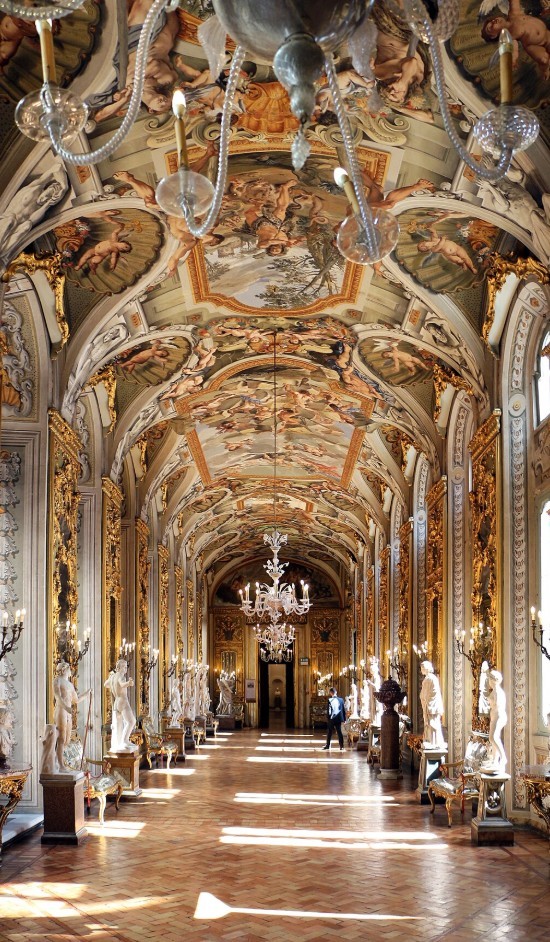
Image Credit: Tournasol7, CC BY-SA 4.0
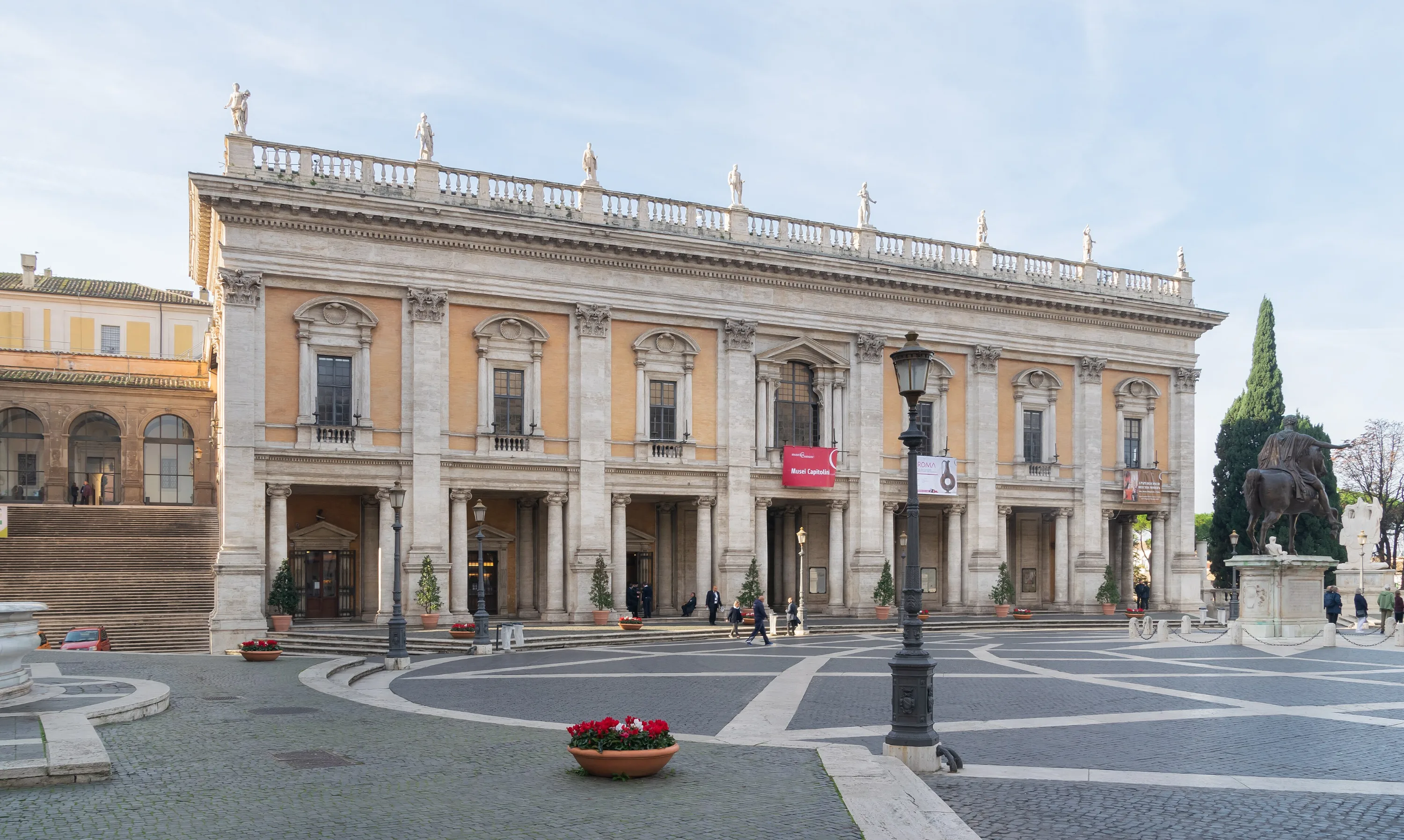
While officially opened to the public in 1734 by Pope Clement XII, the Musei Capitolini's collection began in 1471 when Pope Sixtus IV donated bronze statues to the people of Rome, making it the oldest public museum in the world. The museum sits on the Capitoline Hill, which was the "head" (caput) and heart of ancient Rome.
What is the Best Time to Visit the Capitoline Museums?
Best time of day: Weekday mornings from opening at 9:30am are the quietest. The museums are substantially less crowded than the Colosseum or Vatican at any time of day, but they do fill up on weekend afternoons and during peak tourist season.
Wednesday evenings are worth considering specifically: from 5:30pm to 7:30pm every Wednesday, non-resident visitors receive a 50% reduction on the ticket price. The museums are typically calmer at this hour than during the main tourist rush of the day, and the light through the gallery windows in late afternoon is beautiful.
Best season: The Capitoline Museums are less subject to the intense seasonal crowding of Rome's blockbuster attractions. Spring and autumn are pleasant, but unlike the Colosseum or Vatican, even a summer visit during regular opening hours is unlikely to feel overwhelmingly crowded.
The free first Sunday of the month is free but busy. The queues at the ticket office can be lengthy, and the galleries fill up during the morning. If you visit on a free Sunday, arrive at or before 9:30am.
Piazza del Campidoglio: What to See Before You Enter
The square itself deserves attention before you go inside. Michelangelo's design, commissioned by Pope Paul III in the 1530s following the visit of Emperor Charles V and Rome's embarrassment at the state of its historic civic centre, is one of the most studied examples of Renaissance urban design in existence.
The oval paving pattern in the centre of the piazza was derived from ancient precedent and still marks the spot of the star-shaped pattern Michelangelo designed. At its centre stands the equestrian statue of Marcus Aurelius, or rather a gilded bronze replica: the original is housed inside the museum in a specially constructed glass hall. The real statue was moved inside in 1981 to protect it from pollution and the elements, but the copy maintains the visual effect Michelangelo intended.
The three buildings flanking the piazza are the Palazzo dei Conservatori (right), the Palazzo Nuovo (left), and the Palazzo Senatorio at the rear (the current seat of the mayor of Rome, not generally open to the public). The Palazzo Senatorio is built directly on top of the ancient Tabularium, which forms its base and is accessible through the underground museum passage.
The Cordonata, the wide ramped staircase rather than steps, was designed by Michelangelo specifically so that riders could ascend on horseback to present themselves at the level of the piazza. The two large statues of Castor and Pollux at the top of the ramp were added later, in the 16th century, but fit the composition well.
In the garden of Villa Caffarelli, accessible through the Palazzo dei Conservatori (included in your museum ticket), stands a spectacular reconstruction of the Colossus of Constantine: a 13-metre-high statue created using 3D printing techniques from the surviving fragments of the original 4th-century sculpture. Several of those original fragments, including the enormous head, hands, and feet, are displayed dramatically in the courtyard inside Palazzo dei Conservatori. The reconstructed colossus in the garden can be viewed freely from the outside without a museum ticket.
What is Inside the Capitoline Museums?
The collection is divided between the two main palaces, connected by an underground passageway that runs through the ancient Tabularium. You enter through the Palazzo dei Conservatori (on the right as you face the piazza) and can cross to the Palazzo Nuovo via the underground gallery at any point.
Palazzo dei Conservatori: Ground Floor
The courtyard holds the colossal fragments of a statue of Emperor Constantine, assembled in a row along one wall: the enormous marble head, hands, and feet from a statue that was originally around 12 metres tall. The scale is extraordinary, and they set the tone for what follows. The original inscription and bronze ornamentation from the base of Marcus Aurelius's equestrian statue are also displayed nearby.
The first series of rooms covers the early history of the collection and the Capitoline Hill, with Etruscan bronzes and ancient inscriptions among the highlights.
The Room of the She-Wolf (Sala della Lupa): The Capitoline She-Wolf is one of the most important objects in the entire museum and one of the most recognisable symbols of Rome. The bronze she-wolf is a work of exceptional quality from the 5th century BC, almost certainly made in an Etruscan workshop. Interestingly, the figures of Romulus and Remus suckling beneath her were added later, in the 15th century, transforming an earlier Etruscan religious object into a symbol of the founding legend of Rome. This is one of the five original pieces donated by Pope Sixtus IV in 1471 that launched the collection.
The Room of the Geese (Sala delle Oche) and adjacent rooms: The Spinario, a small bronze sculpture of a seated boy carefully extracting a thorn from his foot, is one of the most beloved objects in Roman art. Delicate, unheroic, and perfectly observed, it is a rare example of an ancient bronze that has survived intact and in exceptional condition. It was another of the five original 1471 donations.
The Capitoline Brutus, a striking bronze portrait bust of extraordinary power, is believed to date from the 4th or 3rd century BC and is one of the earliest surviving examples of Roman portraiture. Whether or not it actually depicts Brutus, the man who expelled the Tarquin kings and established the Roman Republic, is disputed, but the force of the face is undeniable.
The Exedra of Marcus Aurelius: The centrepiece of the first floor is a specifically designed glass hall housing the original gilded bronze equestrian statue of Marcus Aurelius, which stood for centuries in the piazza outside before being moved inside for protection. It is one of very few large-scale bronze statues to survive from antiquity, and it did so because medieval Christians mistook it for a statue of the Emperor Constantine, the first Christian emperor, and therefore refrained from melting it down for metal as happened to most ancient bronzes.
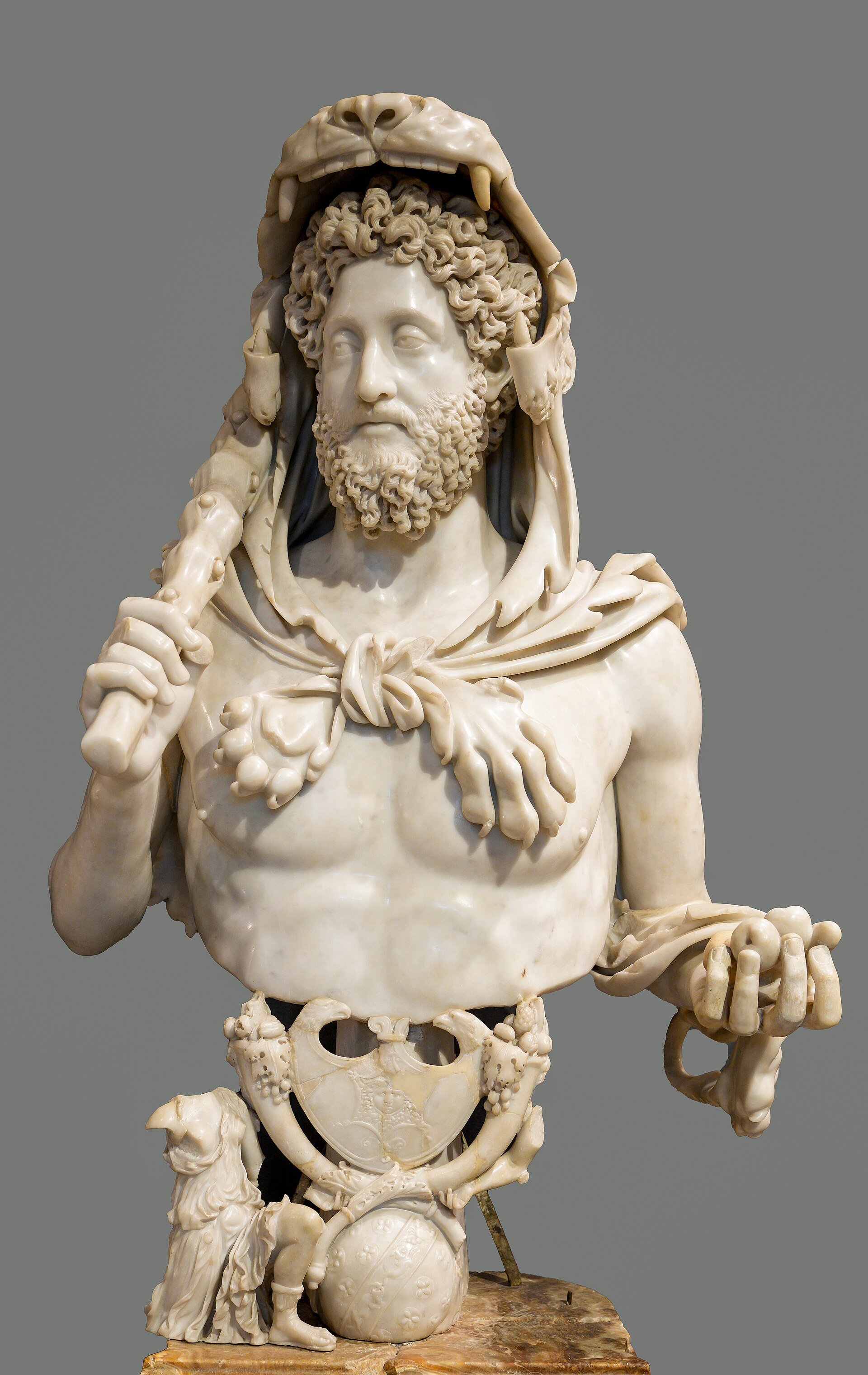
Marcus Aurelius rides without stirrups (which had not yet been invented in Rome) and extends his right arm in a gesture of either clemency or address. Opposite, on a plinth, is a magnificent gilded bronze statue of Hercules, a further piece of exceptional rarity. Behind these bronze masterworks, fragments of the Colossus of Constantine including the colossal head are dramatically displayed: it was carved from the original and reused stone, with certain sections cut fresh to save labour.
The Halls of the Horatii and Curiatii: Large ceremonial halls decorated with frescoes and containing major bronze sculptures, including a powerful figure of Pope Innocent X by Alessandro Algardi and a marble Pope Urban VIII by Gian Lorenzo Bernini.
Pinacoteca Capitolina (second floor): The painting gallery is often described as underrated, and the description is accurate. Visitors who have exhausted themselves on the sculptures sometimes skip it, and those who make it upstairs frequently find it the most memorable part of the whole visit.
The most famous room is the Sala Santa Petronilla, named after an enormous canvas by Guercino depicting The Burial of Saint Petronilla, a work of remarkable scale and dramatic handling of light. In the same room hang two paintings by Caravaggio: The Fortune Teller (c. 1595), in which a young man has his palm read by a Roma woman while she simultaneously slides his ring from his finger with extraordinary sleight of hand, and Saint John the Baptist (c. 1602), an unconventional nude depiction of the young saint with a ram.
Other standout works include Pietro da Cortona's large canvas Rape of the Sabine Women in its own dedicated room, Velázquez's self-portrait, Van Dyck's portrait of two painters, and works by Titian, Rubens (Romulus and Remus nursed by the She-Wolf), Tintoretto, and Guido Reni.
The Underground Passageway and Tabularium: The passage connecting the two palaces runs through the Galleria Lapidaria, lined with ancient Roman inscriptions, epitaphs, and architectural fragments that constitute a kind of text archive of the ancient city. Midway along, steps lead up into the ancient Tabularium, the Republican-era records building set into the rock of the Capitoline Hill, where Rome's bronze law tablets were kept. The soaring vaulted interior is impressive in its own right, but what most visitors come for are the views of the Roman Forum from the Tabularium's arched windows: one of the best and most intimate perspectives of the Forum available anywhere, looking directly across at the Temple of Saturn and along the Via Sacra toward the Arch of Titus and the Colosseum in the distance.
Palazzo Nuovo: The left-hand palace, broadly unchanged since the 18th century, holds the more classical sculptural core of the collection.
The Hall of the Emperors contains over 70 marble portrait busts of Roman emperors, empresses, and members of the imperial family, arranged in rows. The detail and variety of the portraits are extraordinary: these are not idealised images but attempts at individual likeness, and walking the hall is like meeting the rulers of the ancient world face to face.
The Hall of the Philosophers contains portrait busts of the great thinkers of the ancient world: Socrates, Plato, Aristotle, Epicurus, and others. Set alongside the hall of emperors, the juxtaposition of political and intellectual power feels deliberate.
The Capitoline Venus is one of the best-preserved ancient sculptures of the female form anywhere in the world, a Roman copy of a 4th-century BC original attributed to the Greek sculptor Praxiteles. She is displayed in a dedicated alcove room and shown in the classic Praxitelean pose of the woman surprised while bathing.
The Dying Gaul (also known as the Dying Galata) is a profoundly moving sculpture depicting a wounded Gallic warrior in his final moments. He sits on his fallen shield, naked, his torso twisted and his head bowed, in a composition that manages to convey both physical agony and a kind of quiet dignity. The original was likely a bronze commissioned after a Greek victory over Gaul in the 3rd century BC; this Roman marble copy is one of the most celebrated works of ancient sculpture in any medium.
Marforio, a colossal reclining river god of the Hellenistic period, stands in the courtyard of Palazzo Nuovo. He is one of Rome's six "talking statues," the pasquinate: over the centuries, Romans attached anonymous satirical messages to these public figures as a form of protest and political commentary. Marforio played a particular role in the tradition as the fictional correspondent of the more famous Pasquino.

Guided Tours and Audio Guides of the Musei Capitolini
Audio guides are available for hire at the museum for €4 per person, covering the permanent collection in Italian, English, French, German, and Spanish. A video guide app (€6) is available through the iOS and Android stores, offering a richer multimedia experience with additional contextual material.
An audio or video guide makes a significant practical difference at the Capitoline Museums. The signage within the collection is widely noted as sparse and sometimes confusing, and without some form of commentary, the sheer density of outstanding objects across two palaces can feel overwhelming. The audio guide helps you prioritise and understand what you are looking at.
Official guided tours are available in multiple languages and can be booked through the museum's ticketing portal or through third-party operators. The museums' own guided tours cover a structured route through both palaces with an official guide and are available on selected days. Check the current schedule on the museum's website.
Is the Capitoline Museums Worth Visiting?
The Capitoline Museums are one of the most underrated museums in Rome. Many visitors focus their limited time on the Vatican Museums, the Colosseum, and the Borghese Gallery, and the Capitoline falls from their itinerary. This is a significant oversight.
The collection is, in terms of quality and historical significance, on a level with any of those better-known institutions. The Dying Gaul, the Marcus Aurelius equestrian statue, the Capitoline She-Wolf, the Spinario, and the two Caravaggio paintings would each be the headline work of most European museums. Here they share space with hundreds of other outstanding objects.
The Capitoline also offers something the larger institutions cannot: a feeling of calmness. The crowds that make the Vatican Museums an endurance test and the Colosseum a logistical exercise are largely absent here. You can stand in front of the Dying Gaul or the Capitoline Venus without anyone jostling for position. The galleries are spacious. The Tabularium view over the Roman Forum is one of the great free panoramas in Rome, available here to ticket holders. And the price is modest by European museum standards.
Where Should I Eat Near the Capitoline Museums?
The immediate area around Piazza Venezia and the base of the Capitoline Hill has limited quality dining. The tourist restaurants on the Via dei Fori Imperiali approach are not recommended. The best strategy is to walk into the neighbouring areas.
Inside the museum: There is a cafeteria on the second floor of Palazzo dei Conservatori, suitable for a coffee break. The Terrazza Caffarelli, the rooftop restaurant and bar in the Villa Caffarelli section, offers views over Rome and is a pleasant spot for a coffee, aperitivo, or light lunch with the roofline of the city spread out below. It is popular and can fill up in summer: worth arriving a little early or booking ahead.
Campo de' Fiori (10 to 15 minutes on foot west): The market square of Campo de' Fiori runs a daily morning market with fresh produce, flowers, and street food. The restaurants around the square range from excellent to overpriced tourist traps: some of the very best eating in the area is in the small streets connecting Campo de' Fiori toward Piazza Navona and the Via Giulia area.
Grappolo d'Oro on Piazza della Cancelleria is one of the most highly regarded traditional Roman restaurants in this part of the historic centre, with outstanding pasta and a well-chosen wine list. Book ahead.
Cul de Sac on Piazza di Pasquino, between Campo de' Fiori and Piazza Navona, is a long-running enoteca with a vast wine selection and a menu of cheeses, charcuterie, and hot dishes. Excellent for a relaxed lunch.
The Jewish Ghetto and Via del Portico d'Ottavia (5 to 10 minutes on foot south): The Jewish Quarter, immediately south of the Capitoline Hill, is one of the oldest continuously inhabited areas of Rome and has some of the city's best restaurants. Roman-Jewish cooking, which has its own distinct tradition with fried artichokes (carciofi alla giudia), salt cod dishes, and fried pastries, is at its finest here.
Nonna Betta on Via del Portico d'Ottavia is a warm, family-run restaurant serving traditional Roman-Jewish dishes. The carciofi alla giudia and baccalà dishes are reliably excellent.
The surrounding streets have a cluster of similar restaurants and bakeries including the famous Jewish pastry shops selling simple ricotta cakes and honeyed sweets.
Testaccio (20 to 25 minutes on foot south, or a short bus ride): For the most serious Roman cooking and the most local atmosphere, Testaccio is the neighbourhood to aim for. It is Rome's traditional working-class food quarter and has the best market, the best offal dishes, and some of the city's most rewarding traditional trattorias, all at prices well below the tourist zones around the Forum and Colosseum.
What Else is There to Do Near the Capitoline Museums?
The Capitoline Hill and its immediate surroundings are among the most historically dense areas in the world. The following are all within easy walking distance.
The Roman Forum and Palatine Hill: Directly below the Capitoline Hill, accessible via the steps at the rear of the hill near the Palazzo Senatorio or from the entrance on Via dei Fori Imperiali. Your Roman Forum ticket is separate from your Capitoline Museums ticket, but the two sites complement each other more directly than almost any other combination in Rome. The view down into the Forum from the Tabularium inside the museums should motivate anyone to go straight down to it afterwards. Covered in detail on our separate Roman Forum page.
Santa Maria in Aracoeli: The 6th-century church at the top of the steep Aracoeli staircase is one of Rome's most atmospheric ecclesiastical buildings, with a magnificent interior including a beautiful Pinturicchio fresco cycle in the first chapel on the right. Entry is free and the climb, while steep, is worth the effort.
Piazza Venezia and the Vittoriano (Altare della Patria): The enormous white marble monument to Victor Emmanuel II that dominates the northern face of the Capitoline Hill is often dismissed as excessive by Romans (they call it the "Wedding Cake" or the "Typewriter"), but the views from its upper terraces are among the best free panoramas in Rome, accessible by lift. Inside the monument is the Vittoriano Museum Complex, with an interesting collection focused on the Risorgimento period.
Largo di Torre Argentina: A five-minute walk west, this archaeological site contains the ruins of four Republican-era temples, some of the oldest surviving in Rome. Julius Caesar was assassinated in a building adjacent to this site on the Ides of March 44 BC. The archaeological area is free to view from the surrounding walkways and a small museum has recently opened on the site. It is also home to a famous cat sanctuary.
The Mamertine Prison (Carcer Tullianus): At the base of the Capitoline Hill, on the Via Sacra side, this ancient structure is one of Rome's most visited underground monuments. According to tradition, Saints Peter and Paul were imprisoned here. Ticketed entry; can be combined with the Colosseum and Roman Forum ticket.
Rules, Bags, and Security
All visitors pass through a security check including bag X-ray and metal detectors on arrival. A free cloakroom is available at the entrance; bags, pushchairs, and umbrellas must be deposited. Large pieces of luggage are not permitted in the galleries.
Photography: Permitted without flash throughout the permanent collection.
Food and drink: Not permitted inside the galleries. A cafeteria and the Terrazza Caffarelli are available for refreshments within the museum complex.
Pets: Not permitted inside the galleries, except in carriers.
Children: The museums are suitable for all ages, with 10% of works positioned at children's height throughout the collection, and family-oriented itineraries available through the museum app.
Accessibility at the Capitoline Museums
The Capitoline Museums have made substantial efforts to improve accessibility across both palaces, though the historic nature of the buildings means some limitations remain.
Disabled visitors have access to a reserved entrance and can use lifts and stairlifts within the building. If you require the special disabled entrance, contact the museum in advance so that arrangements can be made. Wheelchairs are available to borrow at the entrance; call ahead to reserve one.
Braille floor plans and signs are available throughout the museums, and several of the most important sculptures have tactile displays for blind or visually impaired visitors.
All routes through the permanent collection are accessible by wheelchair, though some sections involve ramps and lifts that take slightly longer routes than the standard stairways.
Disabled visitors with a certified disability receive free entry to the permanent collection along with one accompanying companion.
Final Tips for Visiting the Capitoline Museums
Book online in advance to secure a preferred time slot and avoid the on-site ticket queue, especially on weekends and in peak season. The €1 pre-sale fee is worth it.
Pick up a floor plan at the entrance or download the museum app before you go. The galleries are excellent but the signage is poor. Without a map, it is easy to backtrack or miss entire sections.
Get the audio or video guide. At €4 or €6, either is worth having given the limited on-site interpretation.
Do not skip the Pinacoteca on the second floor of Palazzo dei Conservatori. The two Caravaggio paintings, the Guercino, and the Pietro da Cortona are exceptional and the room is rarely crowded.
Make time for the Tabularium view. The view of the Roman Forum from the arched windows of the ancient Tabularium passage is one of the most memorable perspectives in Rome and is available only to museum ticket holders.
Visit on a Wednesday evening from 5:30pm for the 50% discount. The museums are calmer at this hour and the light is beautiful.
The Marcus Aurelius outside is a copy; the original is inside. The glass-enclosed Exedra that houses the original equestrian statue is one of the most compelling rooms in the museum.
The Capitoline Museums open every day of the week, including Mondays, when most other major Rome museums are closed. This makes them particularly valuable for planning.
Allow time for the piazza itself. Michelangelo's Campidoglio is one of the great urban spaces of the Renaissance and repays careful attention. Standing at the top of the Cordonata and looking back down toward Piazza Venezia, then turning to face the Palazzo Senatorio, gives you a clear sense of why this design was so influential.
The Terrazza Caffarelli is one of the better-placed café stops in Rome, with views over the rooftops. Time your visit so you can sit there at the end with a coffee before heading down the hill.
The Capitolini Card is good value if you also plan to visit the Centrale Montemartini in Testaccio, where a further selection of Capitoline sculptures is displayed in a former industrial power station. The contrast between ancient marble and Victorian machinery is one of the more unusual exhibition experiences in Italy.
Back to Rome Attractions
Explore other Rome attractions
" width="24px"><path d="M 0 0 L 24 0 L 24 21.231 L 0 21.231 Z" fill="transparent" height="21.230768474975793px" id="nL2EwDcS9" width="24px"/><path d="M 0 0.541 C 0 0.242 0.245 0 0.547 0 L 2.735 0 C 3.037 0 3.282 0.242 3.282 0.541 L 3.282 4.598 C 3.282 4.897 3.037 5.139 2.735 5.139 L 0.547 5.139 C 0.245 5.139 0 4.897 0 4.598 Z" fill="rgb(196, 217, 201)" height="5.138657337892187px" id="hZ_rlBe_S" transform="translate(0 16.092)" width="3.2820512820512358px"/><path d="M 0 0.541 C 0 0.242 0.245 0 0.547 0 L 2.735 0 C 3.037 0 3.282 0.242 3.282 0.541 L 3.282 7.843 C 3.282 8.142 3.037 8.384 2.735 8.384 L 0.547 8.384 C 0.245 8.384 0 8.142 0 7.843 Z" fill="rgb(230, 211, 160)" height="8.38412513024521px" id="HgVBxIz3e" transform="translate(5.128 12.847)" width="3.282051282051235px"/><path d="M 0 0.541 C 0 0.242 0.245 0 0.547 0 L 2.735 0 C 3.037 0 3.282 0.242 3.282 0.541 L 3.282 12.982 C 3.282 13.281 3.037 13.523 2.735 13.523 L 0.547 13.523 C 0.245 13.523 0 13.281 0 12.982 Z" fill="rgb(232, 207, 164)" height="13.522782468137464px" id="utgrDnoM9" transform="translate(10.325 7.708)" width="3.282051282051377px"/><path d="M 0 0.541 C 0 0.242 0.245 0 0.547 0 L 2.735 0 C 3.037 0 3.282 0.242 3.282 0.541 L 3.282 16.498 C 3.282 16.797 3.037 17.039 2.735 17.039 L 0.547 17.039 C 0.245 17.039 0 16.797 0 16.498 Z" fill="rgb(233, 196, 166)" height="17.038705909853153px" id="OLOhW6STz" transform="translate(15.521 4.192)" width="3.2820512820512384px"/><path d="M 0 0.541 C 0 0.242 0.245 0 0.547 0 L 2.735 0 C 3.037 0 3.282 0.242 3.282 0.541 L 3.282 20.69 C 3.282 20.989 3.037 21.231 2.735 21.231 L 0.547 21.231 C 0.245 21.231 0 20.989 0 20.69 Z" fill="rgb(217, 170, 153)" height="21.230768474975793px" id="H5Z8wcwkd" transform="translate(20.718 0)" width="3.2820512820512278px"/></g></svg>)