what-to-book-in-advance-for-rome
City Guides
Jeremy Eldridge
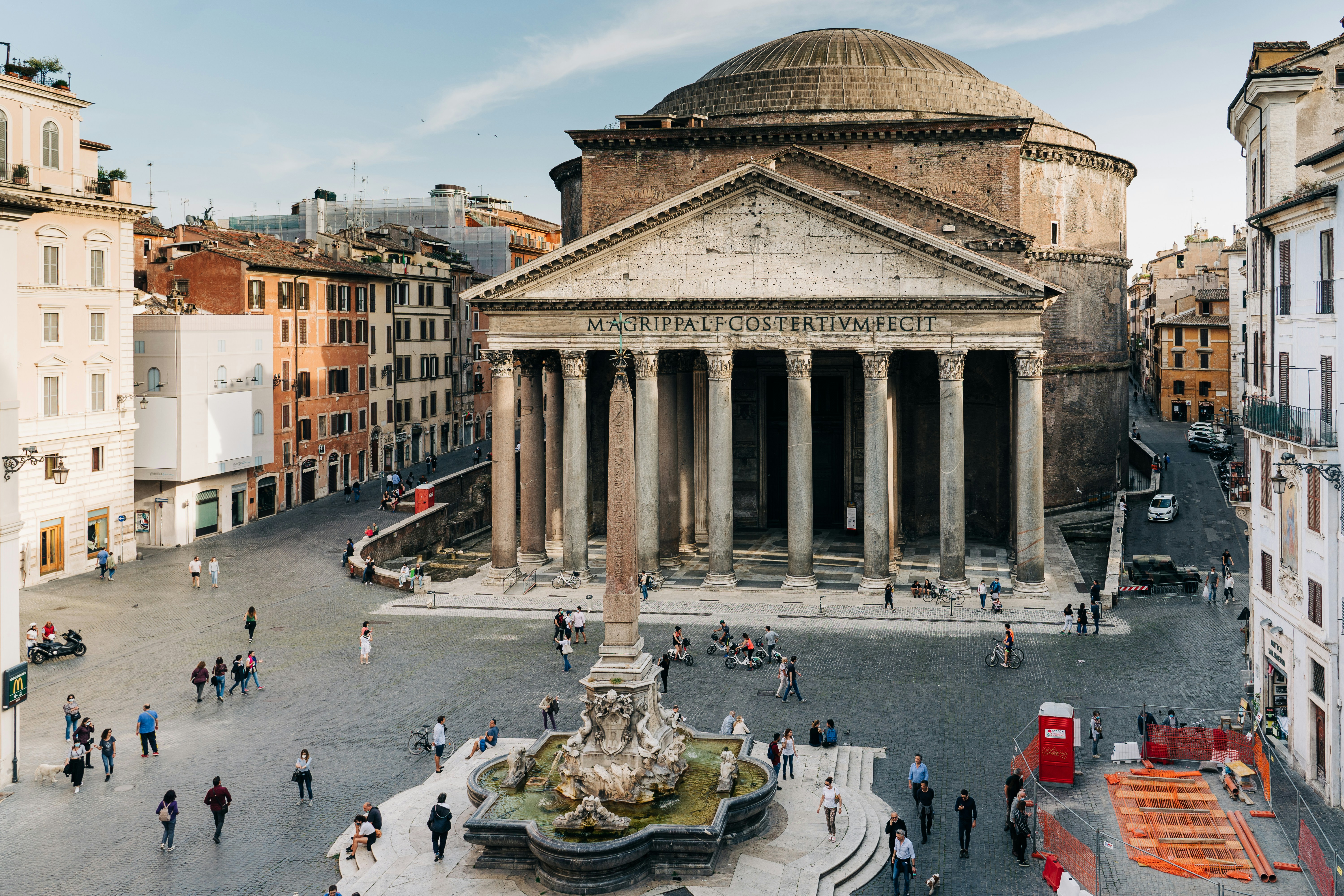
Every time I leave Rome, I sort of feel a little bit cheated. The first time I went I got all the must-dos out of the way: I saw the Colosseum, the Forum, the Pantheon, I tossed acoin into the Trevi Fountain, and ate what quite possibly was the best carbonara of my life, and yet I left with a nagging suspicion that I barely touched the surface of what the city had to offer. Since returning, that feeling was validated. Rome rewards return visits more than almost any other city in Europe, and there is almost always something I missed the first (or second, or third) time around.
What Rome does not reward is showing up without a plan. Of all the cities covered on What2Book, Rome might be the one where the gap between a well-planned trip and a poorly planned one is the most dramatic. The city's most important sites are subject to serious overcrowding, strict timed-entry systems, and in some cases, a total ticket allocation that is genuinely small relative to the number of people who want to visit on any given day. A handful of Rome's attractions are the kind of places where, if you don't book early enough, you simply will not get in, full stop.
This is also, it's worth saying, a city where the planning itself can get confusing. Multiple ticket tiers, third-party sellers, attractions that look bookable but aren't through official channels, and the ever-present scourge of counterfeit or inflated-price listings online all add friction to the process. The rule for Rome is simple: always book directly through official websites, and always book earlier than you think you need to.
Here is what to prioritize, in order of what needs your attention first.
Book These Rome Attractions As Early As Possible
The Vatican Necropolis (Scavi Tour)
There is no other attraction in this guide that requires quite the same urgency as the Vatican Necropolis, and that urgency comes not just from high demand but from the unusual way the booking system works. The Scavi tour takes visitors beneath St. Peter's Basilica to the ancient necropolis that was excavated starting in the 1940s, ending at what is believed to be the tomb of Saint Peter himself. Only about 250 people are permitted entry per day, in small groups of no more than twelve. It is one of the most extraordinary things you can do in Rome, and most tourists have never heard of it.
The booking process runs through the Vatican Excavations Office (Ufficio Scavi) and involves submitting a request rather than purchasing a ticket through a standard booking interface. You submit your preferred dates, and the office assigns you a slot, which may or may not align exactly with when you asked for. Because the office processes requests on their own timeline and the daily cap is so low relative to demand, the conventional wisdom shared by experienced travelers is to submit your request as soon as you know your travel dates, and ideally at least three months ahead. People sending requests for peak summer dates in December and January are not being overly cautious; they are being appropriately cautious.
A few important practical notes: children under fifteen are not permitted on the tour, the Vatican Necropolis is closed on Sundays, and photography is not allowed once the tour begins. If you find that the tour is fully booked for your dates after submitting a request, it is worth contacting the office anyway and asking to be placed on a cancellation list, as group bookings in particular sometimes free up spots. Do not book this through any third-party platform; the only legitimate way to reserve a spot is directly through the official Vatican Scavi website.
Book These Rome Attractions 1-2 Months Before Your Trip
Vatican Museums and Sistine Chapel
The Vatican Museums are, depending on how you count, among the most visited cultural institutions in the world. On a busy summer day, the queues for people without pre-booked tickets can stretch well over an hour simply to enter, and that's before you've taken a single step toward the Raphael Rooms or the Sistine Chapel. This is not the place to be spontaneous.
Pre-booking a timed-entry ticket is essentially mandatory during peak season, and even during slower months it is a straightforward way to avoid wasting a significant portion of your morning in a queue. Booking about two months ahead will give you good availability across a range of time slots, and you should prioritize a morning entry, which keeps you roughly ahead of the afternoon crowds as you work your way through the galleries. Tickets are released by the Vatican through its official ticketing website, and this is the only place you should be buying them. Third-party resellers do exist and do charge inflated prices; the official site requires no such premium.
If you want a guided tour of the museums and Sistine Chapel rather than a self-guided visit, the same two-month window applies, with the added note that guided tour slots have a smaller capacity than general admission and therefore fill up somewhat faster.
Galleria Borghese
If there is one attraction in Rome that consistently catches visitors off guard with how hard it is to get into, it is the Galleria Borghese. The gallery sits inside the Villa Borghese gardens and houses what many art historians consider the finest private art collection ever assembled, including sculptures by Bernini that are almost universally agreed to be among the greatest things ever made in marble. The problem is that the building is a villa, not a purpose-built museum, and the number of visitors allowed inside at any one time is capped at 360, in two-hour timed slots.
This is a small number. Rome receives millions of tourists. The math is not in your favor if you procrastinate.
Aiming to book one to two months in advance is the right approach for the Galleria Borghese, and booking closer to two months rather than one during summer is strongly advisable. Tickets are released through the official Borghese reservation system and sell out well in advance during peak season, sometimes completely. If you arrive in Rome having failed to secure a ticket, there is unfortunately very little you can do. The gallery does not accommodate walk-ins. This is one that genuinely requires advance planning, and it is worth treating the booking calendar as a hard constraint when finalizing your travel dates.
Colosseum Guided Tours and Underground Visits
The Colosseum can be visited at a range of different levels of access, and the one you choose has a significant impact on both how far ahead you need to book and what kind of experience you'll actually have.
The guided tour of the Colosseum is the most popular upgrade over general admission. A good guide transforms the experience, providing the historical and architectural context that turns a very large old ruin into something fully comprehensible and moving. Guided tour slots are more limited than general admission slots and book out faster; planning to secure your guided tour about one month before your visit is the right benchmark during peak season.
The Colosseum Underground is a separate, more specialized experience that takes visitors beneath the arena floor into the hypogeum: the network of tunnels and chambers where gladiators, animals, and stage machinery were held before events. It is one of the most atmospheric things you can do in Rome, and access is strictly limited. One month ahead is also the right window for the Underground, and as with the Galleria Borghese, trying your luck much later than that during summer is a gamble that frequently doesn't pay off.
All Colosseum tickets, regardless of tier, should be purchased through the official Colosseo ticketing website. The area around the Colosseum is notorious for unofficial ticket sellers offering "skip the line" access; these are scams, and you should walk past them.
Saint Peter's Basilica and Dome Visit
St. Peter's Basilica is one of the most visited buildings in the world, and entry to the basilica itself is free, which creates something of a logistical challenge: vast numbers of people arrive at the same time with no ticket to filter or stagger demand. Queues on busy summer mornings can be substantial, which is why pre-booking a free timed-entry reservation through the official Vatican website, available roughly 60 days in advance, is worth doing.
The dome is a different matter. Climbing to the top of Michelangelo's dome is one of the best views in Rome, looking out across St. Peter's Square, across the rooftops of the Borgo neighborhood, and on clear days far beyond. Dome access requires a separate timed ticket, and these need to be booked in advance. Planning about one month ahead for a morning dome visit will generally give you good availability, although during peak summer months, booking closer to the two-month mark for your preferred time is a sensible move. There is both a fully walked climb of 551 steps and an elevator option that covers the first portion of the ascent; both options require advance booking.
Domus Aurea
The Domus Aurea is one of Rome's most extraordinary and least-known major attractions. It was the vast palace complex built by Emperor Nero following the great fire of 64 AD, sprawling across what is now the Oppian Hill beside the Colosseum. After Nero's death, subsequent emperors buried and built over much of the complex, which is why it survived in the state it did: sealed underground for centuries until rediscovery in the Renaissance.
What is open to visitors today is a section of the underground palace that can only be experienced through a guided tour combined with a virtual reality component, which overlays a reconstruction of the original painted and gilded spaces onto the excavated ruins. It is a genuinely unusual and impressive way to experience an ancient site, and it is the kind of attraction that rewards people who seek out the less obvious corners of the city. Visit numbers are managed carefully to protect the fragile site, which means availability is limited. Booking about one month in advance is the right window, and the guided tour slots in particular should be secured before your other Colosseum-area plans, since the two sites pair naturally together in a single day's itinerary.
Book These Rome Attractions 2-3 Weeks Before Your Trip
Colosseum General Admission
General admission to the Colosseum sits at a different point in the booking timeline than the guided tour and underground experiences, simply because the daily capacity for standard entry is considerably higher. That said, this is still one of the most visited monuments in the world, and walking up without a pre-booked ticket during peak season is a reliable way to spend a significant chunk of your morning in a queue.
Booking general admission about two to three weeks before your visit will give you solid availability across most time slots during shoulder season. For visits during the peak summer months of June through August, moving that window to three weeks or slightly beyond is a sensible buffer. The general admission ticket also covers the Roman Forum and Palatine Hill, which together with the Colosseum form a natural full-day itinerary and represent some of the most significant archaeological sites in the world.
Book These Rome Attractions 1 Week Before Your Trip
The Pantheon
The Pantheon is one of the most remarkable buildings that survives from antiquity: a temple built around 125 AD under Emperor Hadrian, with a dome that remained the largest in the world for over thirteen centuries and whose unreinforced concrete construction is still not fully understood by modern engineers. The oculus at the center of the dome, open to the sky, is one of the most quietly astonishing things you will ever stand underneath.
For much of its recent history, the Pantheon was free to enter, which is one reason it attracted enormous and largely unmanaged crowds. A timed-entry ticketing system has since been introduced, which brings a small admission fee but also the ability to book a specific entry slot in advance. One week ahead is generally sufficient for the Pantheon outside of the absolute peak of summer. During July and August, building in a little more lead time is wise, particularly for morning slots, which are the most sought after since the light through the oculus tends to be most dramatic earlier in the day.
Catacombs of San Callisto
The Catacombs of San Callisto are located along the Appian Way, the ancient Roman road that stretches southeast from the city, and are among the largest and most historically significant of Rome's many underground burial sites. Spanning several levels and extending for miles of tunnels, the catacombs hold the remains of hundreds of thousands of early Christians, including multiple popes from the early centuries of the Church.
Entry is by guided tour only, which departs at regular intervals and is conducted by members of the Salesian religious community that manages the site. The tours are informative and genuinely atmospheric, moving through narrow lit passages past the carved niches where the dead were once laid. Booking about one week ahead should be sufficient for most of the year, although during peak season building in a little more lead time for your preferred tour language is advisable.
Palazzo Colonna
The Palazzo Colonna is one of Rome's best-kept secrets, and the planning caveat that applies here is one you need to know before you finalize your Rome itinerary: the palace is open to the general public on Saturday mornings only, from 9:30 am to 1:15 pm. A Friday morning guided tour option also exists but requires a booking through the palace's official website in advance. If your Rome trip does not include a Saturday, the standard public visit is simply not available to you.
Assuming a Saturday is on your itinerary, booking about one week in advance is generally sufficient outside of peak season. The palace is becoming better known, particularly among travelers who have already ticked off the major Roman landmarks and are looking for something that feels less like a tourist site and more like a genuine discovery, so earlier is better during summer. Inside, the Galleria Colonna spans a series of Baroque halls of extraordinary grandeur, lined with paintings by Tintoretto, Veronese, and Guercino, and decorated with ceiling frescoes, gilded mirrors, and marble floors. It is not a large museum, and two hours is enough to see it thoroughly, but it is the kind of place that stays with you well after you've left.
To Learn More
For an up-to-date list of all the attractions in Rome that you should consider booking ahead, visit What2Book's Rome City Page.