NOTE: St. Paul's Cathedral is closed to tourists on Sundays, when worshipping services are held.
Back to London Attractions
How Far in Advance to Book Tickets for St. Paul's Cathedral in London
Updated August 2026
St. Paul's Cathedral has dominated the skyline of the City of London since its completion in 1710, and remains one of the most magnificent buildings in Britain. Designed by Sir Christopher Wren following the destruction of the medieval cathedral in the Great Fire of London in 1666, it is a masterpiece of English Baroque architecture, with a dome that ranks among the largest in the world and an interior that has borne witness to some of the most significant moments in British history: the funerals of Nelson and Churchill, the wedding of Prince Charles and Lady Diana Spencer, and services of national thanksgiving stretching across three centuries. It is also a living, working cathedral, which means that a visit here combines the grandeur of a great monument with something rarer: a sense of sacred purpose. It is one of London's unmissable attractions, and one where a little advance planning makes the difference between a rushed experience and a deeply rewarding one.
At a Glance
How Early to Book:
Pre-booking a ticket 1-2 days ahead is recommended to bypass long queues.
At least 3 months in advance.
Best Times to Visit:
Tuesday, Thursday, and Friday mornings will have the least crowds.
Ticket price:
£27 per adult. Attending services is free of charge.
Where to Book:
Landmark Address:
Do You Need to Book St. Paul's Cathedral Tickets in Advance?
Yes, and this is one of the most important planning considerations for a visit to St. Paul's. The cathedral operates a timed entry system, and advance booking is strongly recommended, particularly during the busy summer months and at weekends. While walk-up tickets are sometimes available on the day, there is no guarantee of entry without a pre-booked slot, and queues at the door can be substantial during peak season.
Booking online in advance also offers a small financial benefit: tickets purchased at the door cost slightly more than those booked online. All tickets can be reserved at the official website.
All tickets include entry to the Cathedral Floor, the Crypt, and all three Dome Galleries (the Whispering Gallery, the Stone Gallery, and the Golden Gallery), as well as a multimedia guide. There is an optional 10% donation that can be added at the point of booking, which goes directly towards the cathedral's charitable and conservation work.
An important note: attending services at St. Paul's is free and requires no ticket. All are welcome to join morning prayer, Holy Communion, Eucharist, Evensong, and other services. This is one of the most atmospheric and moving ways to experience the cathedral, and costs nothing.
The London Pass covers sightseeing entry to St. Paul's, though you will still need to book a timed slot in advance. (You can read our blog post on city passes here.)
Opening Hours and Entry Information
St. Paul's Cathedral is open Monday to Saturday for sightseeing. It is not open for sightseeing on Sundays, when the cathedral operates for worship only. This catches many visitors off guard, so it is worth checking before you plan your trip.
The cathedral closes for sightseeing on Christmas Eve, Christmas Day, and Boxing Day, as well as on Good Friday, and occasionally at short notice for special services or national events. These closures can significantly reduce sightseeing hours on affected days. Always check the official calendar before your visit, particularly around bank holidays and significant national occasions.
The Crypt Café by Benugo can be accessed directly through the north-west Crypt door without a sightseeing ticket, making it a useful option for a break even if you are not visiting the cathedral itself.
What is the Best Way to Get to St. Paul's Cathedral?
The cathedral is located in the City of London and is extremely well served by public transport.
By Tube: The most direct station is St. Paul's (Central line), which is directly opposite the cathedral's main entrance on Ludgate Hill and is just a two-minute walk away. Blackfriars (Circle and District lines) is around 500 metres to the south-west. Mansion House (Circle and District lines) and Bank (Central, Northern, and Waterloo & City lines) are both within comfortable walking distance.
By Train: City Thameslink is approximately 350 metres away, with trains from Farringdon, Blackfriars, and London Bridge.
By Bus: Numerous bus routes serve Ludgate Hill and St. Paul's Churchyard, including the 4, 11, 15, 17, 23, 26, and 76.
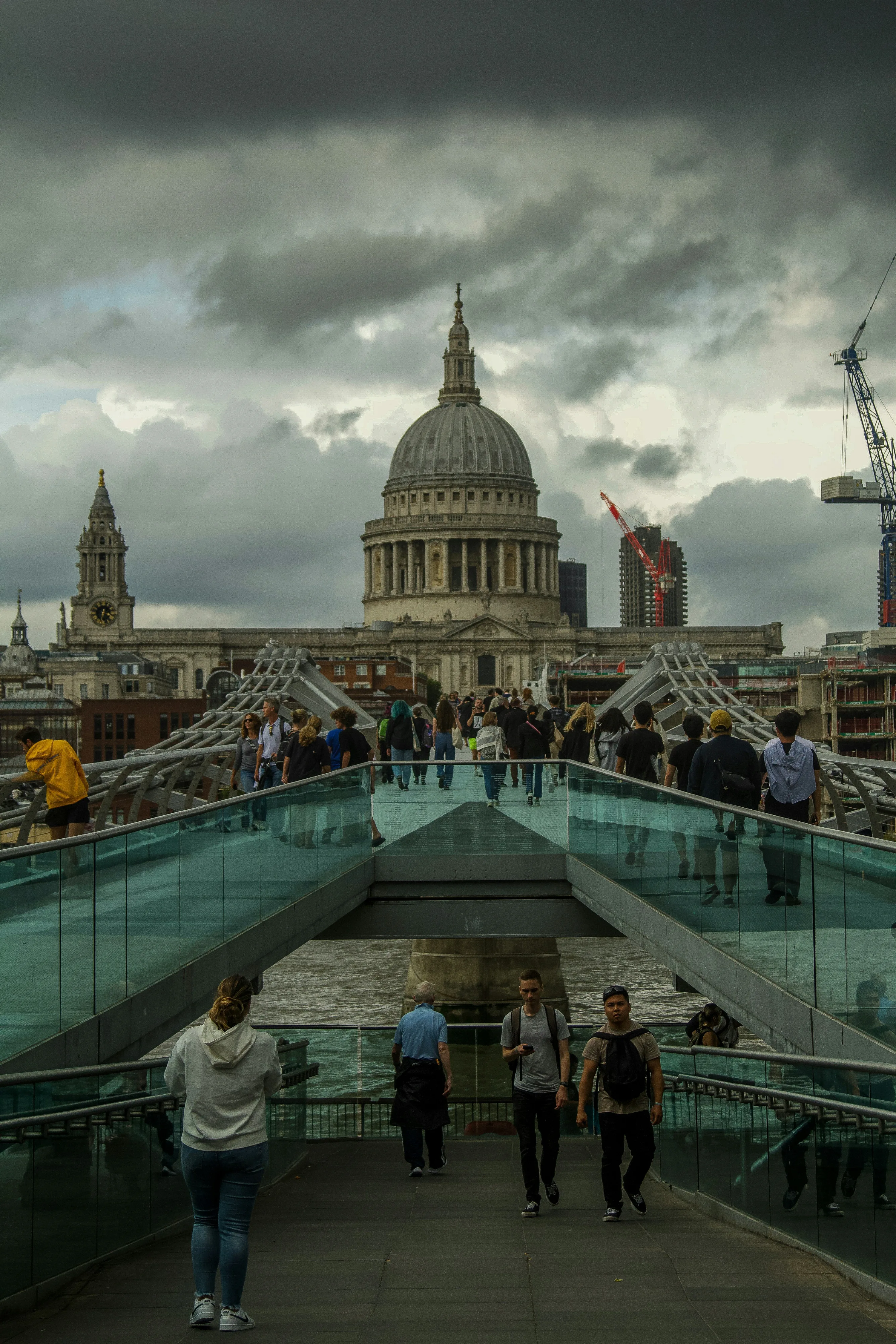
On foot: St. Paul's is walkable from Tate Modern across the Millennium Bridge (around 10 minutes), from Bank and the wider City, and from the Southbank. The approach across the Millennium Bridge from the south, with the dome framed at the end of the bridge, is one of London's great urban views and a memorable way to arrive.
By car: Driving is not recommended. The cathedral is located in the heart of the City of London, within the Congestion Charge zone and the Ultra Low Emission Zone. Parking is extremely limited. Taxis and rideshares can drop on Ludgate Hill or St. Paul's Churchyard.
What is the Best Time to Visit St. Paul's Cathedral?
For the most comfortable experience, weekday mornings from Monday to Friday are the best time to visit, with Tuesday, Thursday, and Friday offering the most consistent availability throughout the day. Arriving close to opening time at 8:30am gives you the first hour in relative quiet before tour groups and school parties arrive.
Note that Wednesday mornings are busier than they might appear on paper, because the 10:00am opening creates a surge of visitors arriving at the same time. If you are visiting mid-week, a Monday or Thursday morning is preferable.
Weekends see the highest visitor numbers, and the timed entry system means the most popular slots (late morning to mid-afternoon) tend to book up fastest. If you are visiting on a Saturday, an early slot is strongly recommended.
School holidays bring larger family crowds, which makes early morning visits even more worthwhile. Summer (June to September) is the peak season overall, and this is when advance booking is most essential.
A practical note about the Dome Galleries: if climbing to the top of the dome is a priority (and it should be), try to plan your visit for a clear day. The views from the Stone and Golden Galleries across the London skyline are spectacular on a fine day and significantly less rewarding in heavy cloud or rain. If the forecast looks poor and you have flexibility, consider moving your visit.
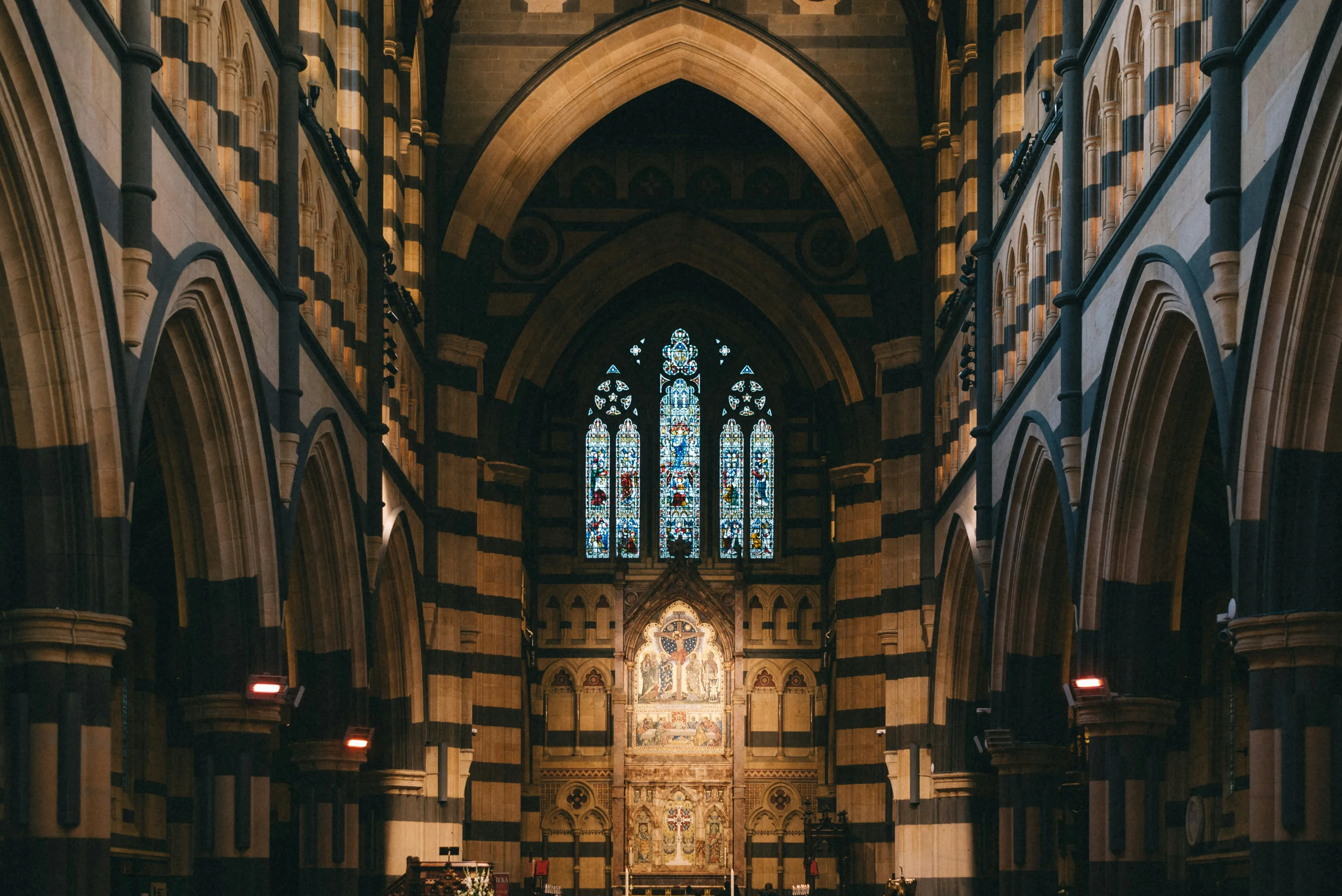
St. Paul's Cathedral has the second-largest dome in the world, reaching 366 feet high (the largest is St. Peter's Basilica in the Vatican).
Is St. Paul's Cathedral Worth Visiting?
I would say it's worth a visit if staying in London for a while. St. Paul's is one of the great buildings of the world, and the interior rewards attention at every level, from the sweeping geometry of the nave to the gilded mosaic decoration high above the crossing, to the extraordinary painted scenes by Sir James Thornhill in the dome. The Crypt, extending the full length of the building, contains the tombs of some of the most significant figures in British history: Admiral Lord Nelson, the Duke of Wellington, scientist Alexander Fleming, painter J.M.W. Turner, and Wren himself, whose epitaph reads simply: Si monumentum requiris, circumspice ("If you seek his monument, look around you").
The climb to the Dome Galleries is one of the great London experiences for those who can manage the steps. The Whispering Gallery, 257 steps up, offers a vertiginous view down to the cathedral floor and the famous acoustic effect, where a word whispered against the curved wall travels all the way around to a listener on the opposite side. Higher still, the Stone Gallery (376 steps) and the Golden Gallery (528 steps) offer some of the most spectacular panoramic views in London, looking out over the City, the Thames, the Shard, and on a clear day much further. The climb is demanding but deeply worthwhile.
Even setting the dome climb aside, the cathedral is a place of emotional power. It survived the Blitz largely intact while the streets around it burned, and the famous photograph of its dome rising through the smoke of the 1940s raids remains one of the defining images of wartime Britain. Standing inside it, that history feels close.
How Much Time Should I Spend at St. Paul's Cathedral?
Plan for a minimum of two hours, and ideally two and a half to three if you intend to climb the dome. The standard route covers the Cathedral Floor, the Crypt, and the three Dome Galleries, and each rewards unhurried attention.
A rough time breakdown for planning purposes:
Cathedral Floor (nave, crossing, quire, and artworks): 30 to 45 minutes
The Crypt: 20 to 30 minutes
Climbing to the Whispering Gallery, Stone Gallery, and Golden Gallery and descending: 45 to 75 minutes depending on pace and crowds
If you are joining a free guided tour (see below), add a further 45 minutes to an hour. If you plan to have lunch or a coffee in the Crypt Café, factor in additional time. Three hours in total is a comfortable allowance for a thorough, unhurried visit.
Guided Tours and Audio Guides
A multimedia guide is included free with every sightseeing ticket and is available in English, French, German, Italian, Spanish, Portuguese, Mandarin, Japanese, Korean, British Sign Language, and English Audio Description. It can be picked up from the entrance and is an enhancement to the visit, with a video fly-through of the dome galleries that is worth watching before you climb.
Free guided tours run multiple times each day and are led by the cathedral's expert guide team. They are included in the admission price and depart from the guide's desk near the entrance. Places cannot be reserved in advance; simply ask at the desk when you arrive and join the next available tour. These tours are excellent and provide context and storytelling that the multimedia guide cannot fully replicate.
For those who want a more exclusive behind-the-scenes experience, the Triforium Tour is available as a paid add-on. The Triforium is the gallery level above the cathedral's main arcades, normally off limits to visitors, and offers a remarkable bird's-eye view of the interior as well as access to the model gallery, where Wren's surviving models for the building are displayed. Triforium tours must be booked in advance and have very limited capacity.
Concerts and Events at St. Paul's Cathedral
St. Paul's has one of the great choral foundations in the world, and attending a choral service is one of the most powerful ways to experience the building. Evensong, held most weekdays and on Sundays, is free to attend and places the visitor in the Quire, surrounded by the sound of the choir performing in one of the finest acoustic spaces in Britain. No ticket is required, though arriving at least 15 minutes early is recommended.
The cathedral also hosts a programme of ticketed concerts and special musical events throughout the year, including orchestral performances and seasonal programmes at Christmas and Easter. These can sell out, and booking well in advance is recommended. Check the What's On section pf the website for the current programme.
Special services for national occasions, state funerals, and commemorations occasionally require tickets or restrict sightseeing access. If your visit falls around a significant national event, it is worth checking the cathedral's calendar carefully.
Where Should I Eat at and Near St. Paul's Cathedral?
The Crypt Café by Benugo is the main on-site eating option and is open daily: Monday to Saturday 10:00am to 5:00pm, and Sunday 11:00am to 4:30pm. Crucially, it can be accessed directly through the north-west Crypt door without a sightseeing ticket, making it available to anyone in the area looking for a coffee or a light lunch. It serves coffee, sandwiches, salads, soups, and cakes in an atmospheric vaulted setting.
For eating beyond the cathedral grounds, the surrounding area has strong options in several directions. Paternoster Square, immediately to the north of the cathedral, has a cluster of restaurants and cafés in a pleasant open setting. One New Change, the shopping centre directly opposite the east end of the cathedral, has a rooftop terrace with excellent views of the dome and a selection of restaurants and bars.
Borough Market, one of London's finest food markets, is around a 15-minute walk across the Millennium Bridge and along the Southbank. It is open Thursday to Saturday and is outstanding for both grazing and sitting down to eat. The surrounding streets of Bankside and Borough have some of London's most interesting independent restaurants.
For a more formal meal, the City of London has numerous good restaurants within easy walking distance, with particular concentrations around Bank, Cannon Street, and Cheapside.
Accessibility at St. Paul's Cathedral
The Cathedral Floor and the Crypt are both accessible to wheelchair users, with step-free access between the two at ground level. However, visitors should be aware of a current operational issue: the lift to the Crypt is currently out of action awaiting repair, meaning that the Crypt and the accessible toilet are currently reachable only via steps. The cathedral's website will carry updated information when the lift is restored. An accessible toilet is available in nearby Paternoster Square in the meantime.
Access to all three Dome Galleries is via stairs only, and the stairs are narrow and steep in sections. The climbs are 257 steps to the Whispering Gallery, 376 steps to the Stone Gallery, and 528 steps in total to the Golden Gallery. The cathedral does not recommend these climbs for visitors with pre-existing medical conditions, mobility difficulties, or concerns about heights or confined spaces. A video fly-through of the gallery views is available on the multimedia guide for those who prefer not to climb.
Disabled visitors receive free admission, and one accompanying carer or companion also receives free entry. Free disabled places can be pre-booked online or requested on arrival, though pre-booking is recommended to avoid any uncertainty.
Rules, Bags, and Security
Bag size restrictions apply. Bags larger than 45cm x 30cm x 25cm (including handles, wheels, and pockets) are not permitted inside the cathedral. This corresponds roughly to airline hand luggage dimensions. There is no cloakroom or left luggage facility at the cathedral, so if you are travelling with large bags or rolling luggage, plan accordingly. Luggage storage is available at St. Paul's Tube station and at other nearby locations.
Photography for personal, non-commercial use is welcomed throughout the cathedral except during services. The Whispering Gallery does not permit photography, as a falling phone from that height poses a serious danger to visitors below. Video recording, tripods, monopods, and selfie sticks are not permitted anywhere in the building.
Children aged 6 to 17 holding child tickets must be accompanied and supervised by an adult aged 18 or over at all times in the Dome Galleries.
As an active place of worship, visitors are asked to be respectful during services and to dress modestly, though there is no formal dress code.
What Else is There to Do Near St. Paul's Cathedral?
St. Paul's sits at the heart of one of London's richest areas for sightseeing, and the immediate neighbourhood rewards several hours of exploration.
The Millennium Bridge, a short walk to the south, is one of London's most iconic modern structures and connects the City directly to the Southbank. Crossing it on foot, with St. Paul's behind you and Tate Modern ahead, is one of the great London walks. Tate Modern, in the former Bankside Power Station, houses one of the world's leading collections of modern and contemporary art and is free to enter.
Shakespeare's Globe is a short walk further along the Southbank and offers tours as well as a full programme of theatre performances. Borough Market is close by and is one of the finest food markets in Britain.
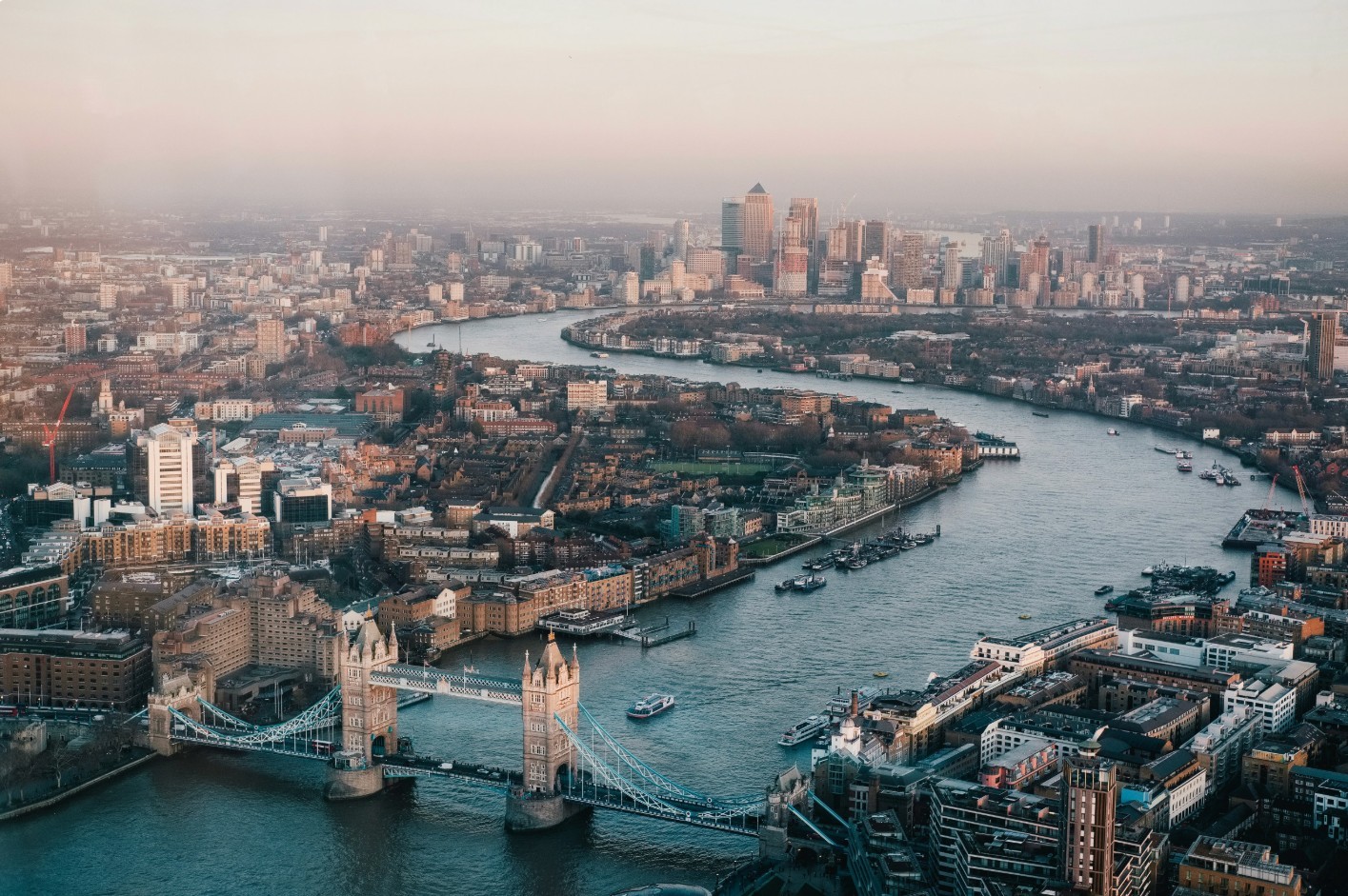
Heading east from the cathedral, the Tower of London and Tower Bridge are around 20 to 25 minutes on foot or a short Tube ride, and make a natural pairing for a full day. The Museum of London Docklands at Canary Wharf is further afield but excellent.
Within the immediate City neighbourhood, the medieval lanes around Cheapside and Cornhill are fascinating to explore on foot, with layers of history visible at every turn. The Bank of England Museum on Threadneedle Street is free and highly worthwhile.
Final Tips for Visiting St. Paul's Cathedral
Book your timed entry slot in advance. This is especially important in summer and at weekends. Online tickets are also slightly cheaper than walk-up prices, so there is a practical as well as a logistical reason to book ahead.
Remember the cathedral is closed for sightseeing on Sundays. Services are free and open to all on Sundays, but the galleries and Crypt are not accessible for general sightseeing. This is the single most common planning mistake visitors make.
Check the calendar before you visit. St. Paul's closes partially or entirely for special services and national occasions with relatively little notice. The online calendar at stpauls.co.uk is kept up to date and is worth checking within a day or two of your visit.
Attend Evensong if your schedule allows. It is free, it requires no ticket, and it is one of the most extraordinary musical and spiritual experiences London has to offer. Arrive 15 minutes early to secure a seat in the Quire.
Time your dome climb for a clear day. The views from the Stone and Golden Galleries are among the finest in London, but they depend entirely on visibility. If the weather is poor and you have any flexibility, hold the dome climb for a clearer day.
The climb is more demanding than it looks. Five hundred and twenty-eight steps to the Golden Gallery is a serious undertaking, with sections that are narrow, steep, and low-ceilinged. It is absolutely worth it, but pace yourself, wear comfortable shoes, and go at your own speed.
Pick up the multimedia guide. It is included in your ticket at no extra cost and significantly enhances the visit. The video of the dome interior available on the guide is particularly valuable for understanding what you are looking at before you climb.
Back to London Attractions
Explore other London attractions

" width="24px"><path d="M 0 0 L 24 0 L 24 21.231 L 0 21.231 Z" fill="transparent" height="21.230768474975793px" id="nL2EwDcS9" width="24px"/><path d="M 0 0.541 C 0 0.242 0.245 0 0.547 0 L 2.735 0 C 3.037 0 3.282 0.242 3.282 0.541 L 3.282 4.598 C 3.282 4.897 3.037 5.139 2.735 5.139 L 0.547 5.139 C 0.245 5.139 0 4.897 0 4.598 Z" fill="rgb(196, 217, 201)" height="5.138657337892187px" id="hZ_rlBe_S" transform="translate(0 16.092)" width="3.2820512820512358px"/><path d="M 0 0.541 C 0 0.242 0.245 0 0.547 0 L 2.735 0 C 3.037 0 3.282 0.242 3.282 0.541 L 3.282 7.843 C 3.282 8.142 3.037 8.384 2.735 8.384 L 0.547 8.384 C 0.245 8.384 0 8.142 0 7.843 Z" fill="rgb(230, 211, 160)" height="8.38412513024521px" id="HgVBxIz3e" transform="translate(5.128 12.847)" width="3.282051282051235px"/><path d="M 0 0.541 C 0 0.242 0.245 0 0.547 0 L 2.735 0 C 3.037 0 3.282 0.242 3.282 0.541 L 3.282 12.982 C 3.282 13.281 3.037 13.523 2.735 13.523 L 0.547 13.523 C 0.245 13.523 0 13.281 0 12.982 Z" fill="rgb(232, 207, 164)" height="13.522782468137464px" id="utgrDnoM9" transform="translate(10.325 7.708)" width="3.282051282051377px"/><path d="M 0 0.541 C 0 0.242 0.245 0 0.547 0 L 2.735 0 C 3.037 0 3.282 0.242 3.282 0.541 L 3.282 16.498 C 3.282 16.797 3.037 17.039 2.735 17.039 L 0.547 17.039 C 0.245 17.039 0 16.797 0 16.498 Z" fill="rgb(233, 196, 166)" height="17.038705909853153px" id="OLOhW6STz" transform="translate(15.521 4.192)" width="3.2820512820512384px"/><path d="M 0 0.541 C 0 0.242 0.245 0 0.547 0 L 2.735 0 C 3.037 0 3.282 0.242 3.282 0.541 L 3.282 20.69 C 3.282 20.989 3.037 21.231 2.735 21.231 L 0.547 21.231 C 0.245 21.231 0 20.989 0 20.69 Z" fill="rgb(217, 170, 153)" height="21.230768474975793px" id="H5Z8wcwkd" transform="translate(20.718 0)" width="3.2820512820512278px"/></g></svg>)