Back to Paris Attractions
Musée National Picasso-Paris: Everything You Need to Know Before You Visit
Updated August 2026
The Musée national Picasso-Paris holds the largest Picasso collection in the world, more than 5,000 works and around 200,000 archival items, assembled not by purchase but through the French state's acceptance-in-lieu process when the artist's heirs settled inheritance tax after his death in 1973. It occupies the Hôtel Salé, a 17th-century Marais mansion built on the proceeds of the salt tax, and it is one of the few major Paris museums where the building competes seriously with the collection for your attention. It is also, by Paris standards, very manageable: two hours, no vast queues, and a rooftop café at the end.
At a Glance
How Early to Book:
Book a ticket 1-2 days ahead to avoid spending time in line at the ticket office.
Best Times to Visit:
Weekday mornings, particularly Wednesday through Friday, will have the smallest crowds. Tuesdays are unusually busy.
Ticket price:
€16 for adults.
Where to Book:
The Official Musée Picasso ticketing website.
Museum Address:
Do You Need to Book Musée Picasso Tickets in Advance?
Booking is not strictly required, but getting a ticket early online is recommended because it will give you priority access, which means bypassing the entrance queue. This actually matters more than it sounds, because security checks at the door are thorough and the queue on rue de Thorigny has no shelter.
The catch on priority access: it is only guaranteed in the half hour following the entry time printed on your ticket. Get to the museum an hour late and you will need to join the general queue like everyone else. Aim to arrive within about ten minutes of your slot.
Where to book: book directly through the museum's own ticket website, billetterie.museepicassoparis.fr. There is no advantage to third-party resellers here, and the museum's platform is also where you manage your booking and buy the audio guide in advance.
How far ahead: a few days is ample outside peak season, and same-day slots are usually available. April to September, I would definitely book 2-3 days ahead, and don't expect to get same-day tickets without waiting for a while in the line.
Cancellations: the general terms do not allow refunds or exchanges. Tickets are one-entry only and re-entry is not possible, so plan to see everything in one go rather than stepping out for lunch and returning.
If you qualify for free entry, do not book anything. Free-entry visitors cannot reserve a ticket, and do not need to. Go straight to the entrance with valid identification and present it. This trips people up constantly, because they hunt for a €0 ticket on the booking platform but it is not there.
Groups: reservation is mandatory for groups of 7 or more, arranged by email or phone through the group bookings team rather than the standard ticket shop.
How Much Does the Musée Picasso Cost?
Admission is €16, and one ticket covers the permanent collection and every temporary exhibition running at the time. There is no separate exhibition supplement, which is not always the case in Paris.
Regular admission: €16
Family rate: €12 per adult, for one or two adults accompanying a child
Under 18: free
EU residents under 26: free, with identification
Visitors with disabilities and their carer: free
Audio guide: €5, or €4 reduced
First Sunday of every month: free for everyone
Free entry categories are super generous, and include jobseekers and recipients of social assistance. The museum publishes a full list of eligible categories, and it is worth checking before you pay.
There is no senior discount. Visitors over 60 pay the full €16 unless they qualify under another category. This is unusual enough among Paris museums that it is worth stating plainly.
Reduced rates on extras: jobseekers, EU residents under 26, recipients of social aid and visitors with disabilities pay the reduced rate on the audio guide and on guided tours. These reductions are only applied at the museum desk on presentation of proof, not online.
The Paris Museum Pass is accepted, and can also be bought at the museum's own ticket desk, which makes this a sensible first stop if you are picking one up. Given the €16 admission, the pass pays off quickly if you are doing several Paris museums in a few days.
The Picasso Pass is the membership option, giving free entry for a year or two plus a free audio guide and partner benefits. If you live in Paris or expect to return, the maths works after roughly two visits.
Payment at the desk covers bank cheque, MasterCard, Visa, American Express, JCB, Diners Club, Apple Pay, Google Wallet, Chèque Culture and holiday vouchers.

Musée Picasso Opening Hours and Entry Information
The museum runs Tuesday to Sunday, 9:30am to 6:00pm, and is closed every Monday.
Last admission: 5:15pm
Rooms are cleared: from 5:40pm, 20 minutes before closing
Closed: Mondays, 1 January, 1 May and 25 December
Early closing: 5:00pm on 24 and 31 December
The shop and the rooftop café keep the same hours as the museum.
The garden opens to visitors from 1 April to October, reached through the lower-level galleries. Outside that window it is closed, so a winter visit loses one of the nicer parts of the building.
Late openings have historically run until 10:00pm on the first Wednesday of the month, with last admission at 9:15pm. This does not currently appear on the museum's practical information page, so check the agenda before building an evening around it.
Address: 5 rue de Thorigny, 75003 Paris, in the northern Marais.
The gap between last admission at 5:15pm and rooms clearing at 5:40pm is only 25 minutes, so a late-afternoon arrival is a compressed visit rather than a relaxed one. Arrive by 4:00pm at the latest if you want the full building.
What is the Best Way to Get to the Musée Picasso?
The museum sits in the quieter northern half of the Marais, a few streets above the busier shopping and falafel end.
By metro: Line 1 to Saint-Paul, Line 8 to Saint-Sébastien Froissart, or Line 8 to Chemin Vert. All are five to eight minutes on foot. Saint-Sébastien Froissart is marginally the closest and the calmest exit.
By bus: the 96 stops at Saint-Claude, effectively on the doorstep. The 75 stops at Archives Rambuteau. The 69, 76 and 96, and the 67 and 72, all stop at Rue Vieille du Temple by the Mairie du 4e.
On foot: about 10 minutes from Place des Vosges, 12 from the Centre Pompidou, 15 from Hôtel de Ville and 20 from Notre-Dame.
By car: there is no museum car park, and the Marais is a poor place to drive. The nearest public garages are Parking Public Temple at 132 rue du Temple, Parking Marais at 7 rue Barbette, and Parking Beaubourg Horloge at 31 rue Beaubourg. Parc Saint Antoine, Rivoli-Sébastopol, Lobau-Rivoli and Baudoyer are all within walking distance too.
One thing worth planning around: on Sundays much of the Marais goes pedestrian-only, which makes walking a pleasure and taxis and ride-hailing close to useless. If you are visiting on a Sunday, arrive and leave on the metro.
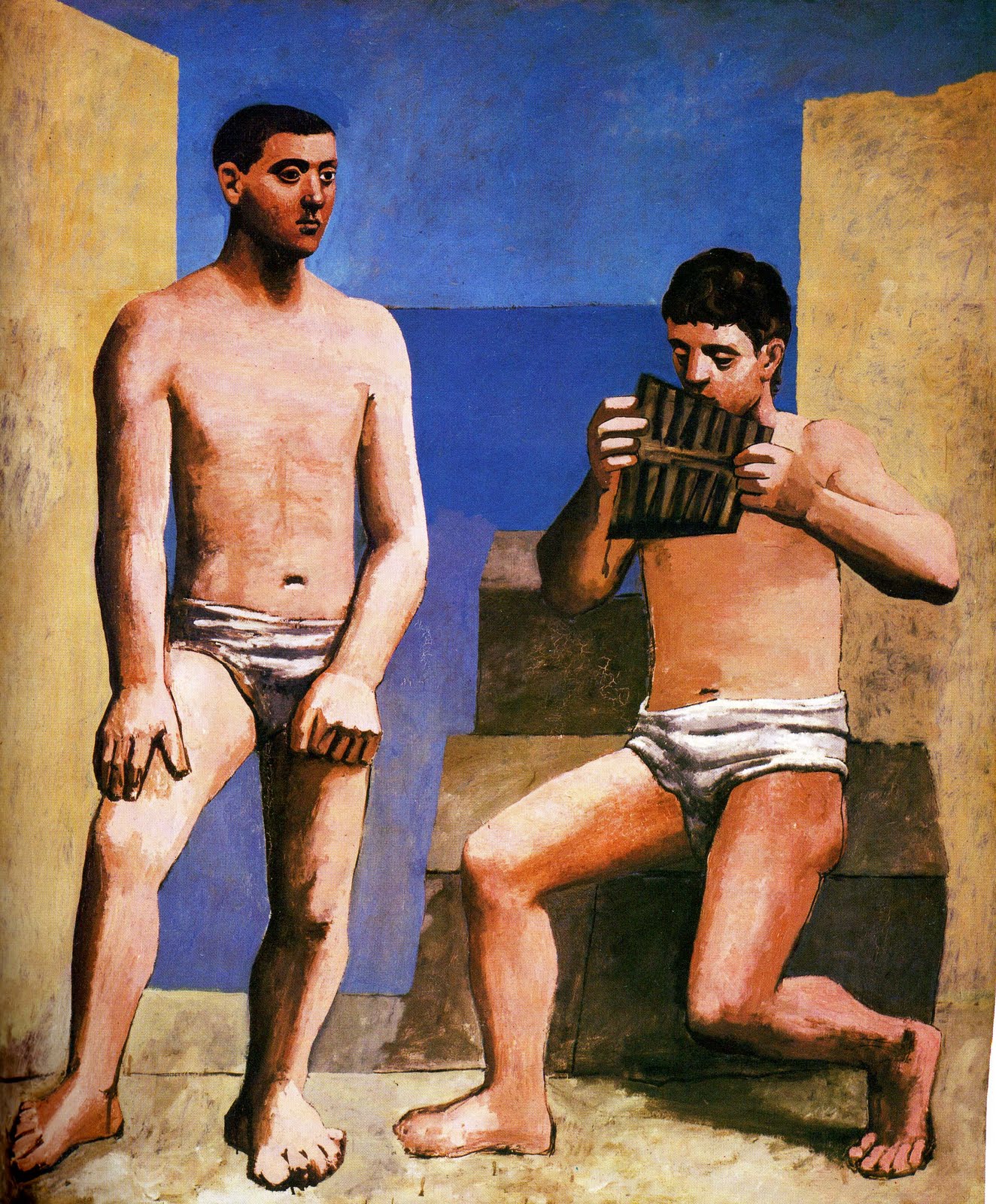
The Musée National Picasso in Paris contains more than just Picasso's famous cubist paintings. Much of the artwork, such as The Pipes of Pan pictured here, feature his return to classical, monumental forms.
How Much Time Should I Spend at the Musée Picasso?
I'd recommend budgeting 90 minutes to two hours, which is also the museum's own recommendation for the collections and exhibitions together.
An hour works if you move steadily and skip the temporary exhibitions on the lower levels. Honestly, even 45 minutes is almost enough for the Picasso floors alone if you keep moving, which tells you something about the scale.
Two and a half to three hours if you take the audio guide, read the wall texts, walk the garden in season and finish on the rooftop terrace.
This is not a Louvre-scale endurance test, and that is a large part of its appeal. The building is arranged over several floors around a grand central staircase, the route is chronological and thematic rather than sprawling, and there are seats throughout. Plenty of visitors who describe themselves as not especially interested in Picasso come out having enjoyed it, largely because the scale never becomes punishing.
Remember there is no re-entry. If you want lunch, do it before or after, not in the middle.
What is the Best Time to Visit the Musée Picasso?
The museum actually publishes its own foot traffic data, which is unusually helpful, and it helps lead folks to a data-backed answer.
Best time of day: 9:30am to 10:30am. Traffic is low at opening every day except Tuesday. The second-best window is 4:30pm to 5:30pm on Wednesday, Thursday or Friday, which is also low, though you are then racing the 5:15pm last admission and the 5:40pm room clearance.
Worst times: 10:30am to 11:30am on Tuesdays and Sundays, and 2:30pm to 4:30pm on Tuesdays, Saturdays and Sundays. All are marked high.
Best days: Wednesday, Thursday and Friday. These three are the only days with no high-traffic period at all. Tuesday is the day to avoid, which surprises people: it is the first day open after the Monday closure, and it absorbs the backlog.
Best season: November to early March, excluding the Christmas and New Year weeks, is the quietest stretch. Spring and autumn are comfortable. Summer is peak, though the Picasso is consistently less crowded than the Louvre, Orsay or Orangerie even in August.
The first Sunday of the month is free and correspondingly busy. If your priority is saving €16, take it. If your priority is looking at paintings, pay and come on a Thursday morning instead.
The garden caveat: if you want the garden, you need April to October. If you want quiet, you want winter. Those two do not overlap, so pick which matters more.
What is Inside the Musée National Picasso-Paris?
The collection covers Picasso's entire working life, from 1895 to 1972, in every medium he touched: painting, sculpture, drawing, engraving, ceramics, collage, illustrated books, photographs and notebooks. Because it came from the artist's own holdings rather than the market, it is unusually strong on the working process, with studies, drafts and successive states of prints sitting alongside finished works.
The masterpieces most people come for include The Barefoot Girl (1895), Self-Portrait (1901), Seated Woman (1902), La Célestine, Portrait of Olga in an Armchair (1918), Two Women Running on the Beach (1922), The Pipes of Pan (1923), Paul as Harlequin (1924), Head of a Woman (1931), Portrait of Dora Maar (1937), the sculpture She-Goat (1950) and The Kiss (1969).
Picasso's personal collection occupies the upper level and is the part visitors least expect and often like most. Picasso owned and kept works by Cézanne, Matisse, Rousseau, Degas, Renoir, Braque and Modigliani, and seeing what he chose to live with reframes everything downstairs.
The temporary exhibitions occupy the lower two levels and change through the year, included in the ticket price. The museum's recent programming has leaned towards contemporary artists in dialogue with Picasso, and at time of writing that includes a Henry Taylor exhibition and The Metamorphoses of Guernica, a virtual reality experience in the auditorium about the making of the painting, both running to early September 2026.
That being all said, with more than 5,000 works and finite wall space, not everything is on display at once. The hang rotates, works travel to other institutions on loan, and international touring exhibitions of the museum's masterpieces mean that specific paintings you have come for may be elsewhere. If one particular work is the reason for your visit, check the collection pages before you book. This is the most common source of disappointment here.
The vaulted cellars on the lower level are worth slowing down for even when they hold nothing that interests you. The 17th-century stone vaulting is one of the best-preserved spaces in the building.
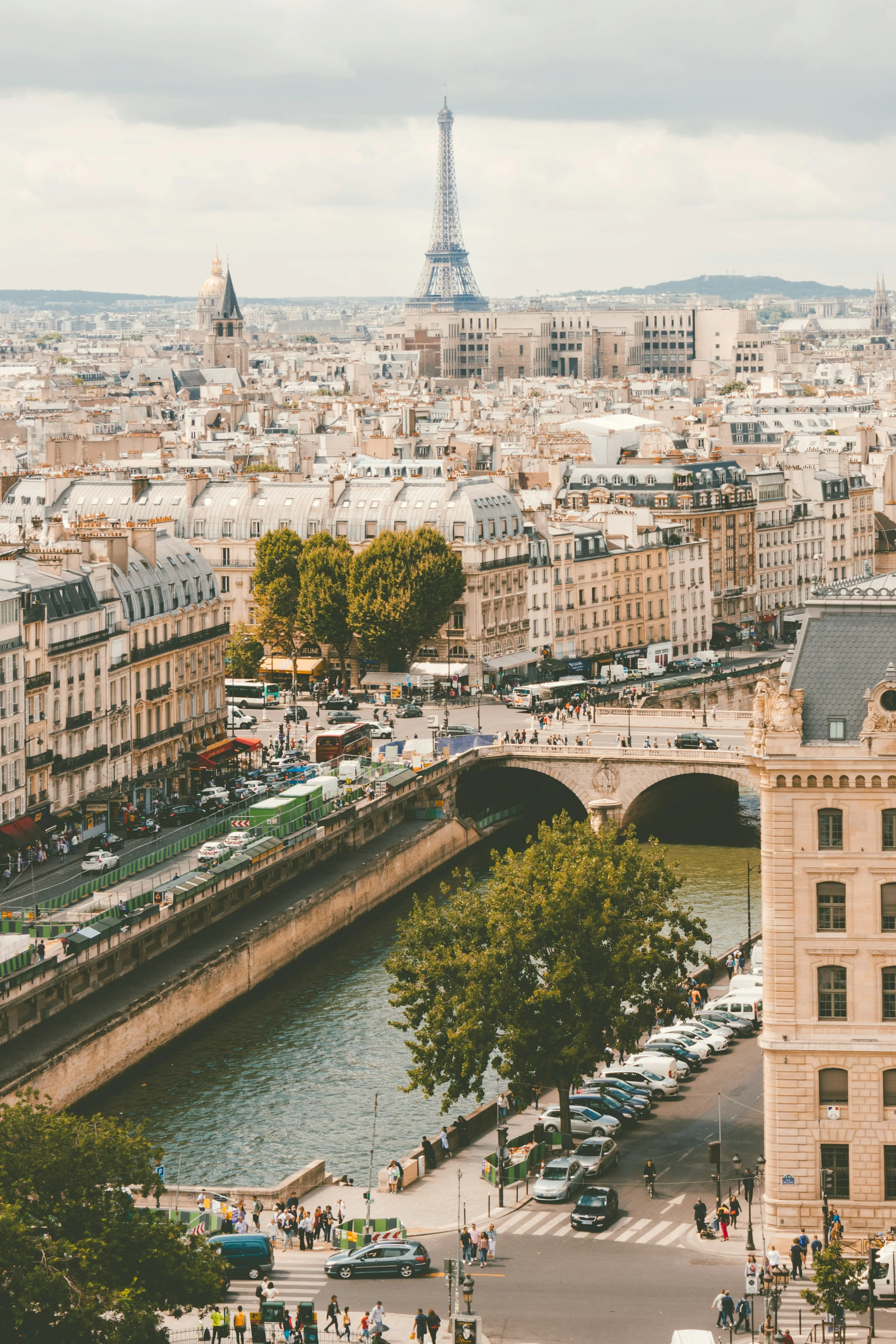
The Hôtel Salé: The Building Itself
Half of what makes this museum so good is the house it sits in, so here's a little background for you before you arrive.
The Hôtel Salé was built between 1656 and 1659 for Pierre Aubert de Fontenay, a financier who had made his money collecting the gabelle, the French salt tax. The nickname stuck: the salted mansion. It has been described as the grandest and most extravagant of the great 17th-century Parisian townhouses, and the boast is not far off. The City of Paris acquired it in 1964, and it was chosen as the Picasso museum in the mid-1970s, opening in 1985 after a lengthy restoration.
The grand staircase is the centrepiece of the building and the spine of the visit, a sweeping stone sculpture of a stair with carved decoration and a domed ceiling. The route through the collection is organised around it.
Diego Giacometti's furniture and lighting, commissioned for the museum in the 1980s, remains in place through several rooms, and it is a quiet pleasure that most visitors walk past without registering. Alberto's younger brother made bronze chairs, tables and light fittings specifically for these spaces.
The rooftop café, Le Café sur le toit, opens from the main hall and runs the same hours as the museum. It looks out over the Hôtel Salé's facade and the Marais rooftops, and it is one of the better museum café settings in Paris.
The garden, accessible April to October through the lower galleries, is a formal courtyard space and a good place to sit between the temporary exhibitions and the collection upstairs.
One thing to mention: after the long renovation that closed the museum from 2009 to 2014, a lot of visitors feel that interiors are now too spacious for what is hung in them, making them feel a little bit empty. Whether that reads as elegance or as emptiness is a matter of taste, but it's a complain that's mentioned frequently.
Guided Tours and the Audio Guide
The audio guide costs €5, or €4 at the reduced rate, and is free for Picasso Pass members. It covers the permanent collection and is available in French, English, Spanish, German, Italian and Chinese. It can be reserved in advance through the online ticket shop or rented on arrival, and it is charged on top of admission or on top of proof of free entry.
There is a dedicated children's audio guide available at the ticket desk in French and English, alongside a printed activity booklet on request at reception, and young-audience captions in some exhibitions. For a museum that could easily be adults-only in tone, the family provision is better than average.
Guided tours and workshops run for young audiences and families, and reduced rates on guided tours apply to jobseekers, EU residents under 26, recipients of social aid and visitors with disabilities.
Private hire and group tours are handled separately. Groups of seven or more must reserve, and privatisation enquiries go through the museum's dedicated team.
My own view: the audio guide is worth the €5 here more than at most museums, because the collection is process-heavy. A room of studies and states means little without someone explaining what changed between them, and the wall texts alone will not carry a visitor who is not already fluent in Picasso.
Is the Musée Picasso Worth Visiting?
If you are coming for the whole thing, the building included, rather than for a checklist of famous paintings, it is absolutely worth an hour or two of your time.
That being said, the case against it is also real. Guernica is not here and never has been; it is in Madrid, and a lot of people come expecting to see it. The lower two floors are frequently given over to temporary exhibitions by other, often contemporary, artists, which some people find enriching and others resent having paid €16 for. The rotation means a specific work may be in storage or on loan. And after the renovation, the galleries can feel larger than the hang requires.
What it does better than any other Picasso museum is show the working. Because the collection came from the artist's estate rather than the auction room, it holds the notebooks, the studies, the failed states and the sculptures he never sold, alongside the paintings he kept for himself. You leave with a sense of how the work was made rather than a sequence of greatest hits. The Hôtel Salé gives that a setting no purpose-built museum could match.
For first-time visitors to Paris, this is a strong second-tier choice rather than a must. Do the Orsay and the Orangerie first. Do this instead of the Louvre if you absolutely hate crowds.
For anyone who thinks they dislike Picasso, this is the museum most likely to change your mind, because it covers the full range rather than just the Cubist decade. Visitors who arrive sceptical consistently come out having enjoyed it.
For families, it works better than expected. It is small enough to finish, there are seats, and the children's audio guide and activity booklet are decent. Children under 18 are free, which makes it one of the cheapest family museum visits in central Paris.
For architecture, the Hôtel Salé alone justifies the ticket. The staircase, the vaulted cellars and the Giacometti furniture are worth the visit even on a weak exhibition cycle.
For anyone on a tight schedule, two hours here plus a walk through the Marais is one of the better half-days in Paris, and the museum's compactness is precisely why.
Where Should I Eat Near the Musée Picasso?
The Marais is one of the best eating neighbourhoods in Paris and the museum sits in the quieter northern half of it, so everything below is a short walk.
Le Café sur le toit, the museum's own rooftop café, is the obvious first option and better than most museum cafés, with a terrace looking across the Hôtel Salé facade. Note that it is inside the paid area, so it works as a break during your visit rather than a destination in itself.
Rue des Rosiers, five minutes south, is the falafel street and the most famous food stop in the Marais. L'As du Fallafel at 32-34 has the queue and the reputation (and the Wikipedia article!), and the special is around €8.50, ordered from a man with a ticket book before you reach the counter. Chez Hanna and Mi-Va-Mi are a few doors away, with shorter lines and, plenty of locals argue, better falafel. Miznon on rue des Écouffes does pita filled with everything from roasted cauliflower to beef bourguignon and is the pick if the queues elsewhere have defeated you.
Marché des Enfants Rouges on rue de Bretagne, about eight minutes north, is the oldest covered market in Paris and the best answer for a group that cannot agree. Moroccan, Japanese, Italian and Lebanese stalls under one roof, with communal seating.
Robert et Louise on rue Vieille du Temple is the old-Paris option: a tiny room with a wood fire, cooking steak over the coals. Book ahead.
Au Bourguignon du Marais is the reliable bistro sit-down nearby, and Café Breizh does the best crêpes in the neighbourhood.
Maison Aleph, six minutes away, blends French pastry technique with Levantine flavours and is the pastry stop worth the detour.
Fragments is the coffee pick if you want an espresso rather than a meal.
One practical warning: the northern Marais empties out somewhat at lunchtime and several of the smaller places close between services, roughly 3:00pm to 7:00pm. If you are finishing the museum mid-afternoon and want a proper sit-down meal, head south towards rue des Rosiers or the market rather than wandering the streets immediately around rue de Thorigny.
What Else is There to Do Near the Musée Picasso?
Musée Carnavalet, seven minutes south on rue de Sévigné, tells the history of Paris across two connected Renaissance mansions and is free to enter for the permanent collection. It pairs beautifully with the Picasso and is the single best nearby addition.
Place des Vosges, ten minutes southeast, is the oldest planned square in Paris and one of the loveliest, with arcades on all four sides. Maison de Victor Hugo sits in the corner of it and is free.
Musée Cognacq-Jay, five minutes away, is a small 18th-century collection in another Marais mansion, quiet and free.
Rue des Francs-Bourgeois and rue Vieille du Temple are the shopping spine of the Marais, and the streets themselves are the attraction.
The Centre Pompidou is 12 minutes west, though it is currently closed for a major multi-year renovation, so check its status before walking over.
Musée Rodin is across the river in the 7th and makes an obvious pairing for anyone doing a modern sculpture day. Combined Rodin and Picasso tickets have been offered in the past, so it is worth checking both ticket shops if you plan to do the two together.
Marché des Enfants Rouges and the northern Marais galleries around rue de Thorigny itself repay an aimless half hour more than most Paris neighbourhoods do.
Rules, Bags, and Photography
Bags are the thing to get right before you leave your hotel. The museum's cloakroom is free, on level -1 by the stairs to the right of the lobby, and umbrellas and bottles must be left there. But the museum's security notice also states that suitcases, travel bags and backpacks are not permitted in the museum and cannot be left in the cloakroom at all. The museum's own pages are not fully consistent on backpacks specifically. The safe course is to arrive without one. There is nowhere to store luggage, so this is not a stop to make between hotel checkout and a train.
Photography without flash is allowed, except where signage indicates otherwise on individual works. Professional equipment including tripods is not permitted.
Sketching and drawing are welcome in the galleries, which is a nice touch, but ink, pastel, charcoal and watercolour are all prohibited. Bring a pencil.
Animals: not permitted, with the exception of assistance animals including guide dogs.
Security checks at the entrance are thorough and the museum warns of delays, which is another argument for the priority-access ticket.
Re-entry is not possible on any ticket.
Accessibility at the Musée Picasso
This is one of the better-adapted historic buildings in Paris, and the museum states plainly that the entire museum is accessible via ramps and lifts.
Admission is free for visitors with disabilities and for their carer.
Wheelchairs and cane seats are available on request at the reception desk.
Reduced rates on the audio guide and on guided tours apply to visitors with disabilities, applied at the desk on presentation of proof.
Strollers: small-frame strollers are permitted throughout, and small-frame strollers are also available to borrow on request at the information desk, which is a useful provision for anyone who has arrived with a larger buggy.
The museum publishes a dedicated accessibility page with the full detail, and given that this is a 17th-century mansion with a monumental staircase at its heart, contacting them ahead is worth doing if you have specific requirements.
Final Tips for Visiting the Musée Picasso
Book a ticket online for priority access, then arrive on time. The queue-skipping only holds for the half hour after your slot, and the security check at the door is slow.
Go on a Wednesday, Thursday or Friday morning. These are the only three days with no high-traffic window all day, and Tuesday, the day after the Monday closure, is the worst.
Do not hunt for a free ticket if you qualify for free entry. Under-18s, EU residents under 26 and visitors with disabilities cannot book one. Go straight to the door with ID.
Leave the backpack behind. Suitcases, travel bags and backpacks are refused at the door and cannot be left in the cloakroom, and there is no luggage storage anywhere on site.
Check the collection pages if one specific painting is your reason for going. With 5,000 works and constant loans, the hang rotates and famous pieces travel.
Pay the €5 for the audio guide. This collection is unusually rich in studies and working material, and it means much more with the commentary.
Eat before or after, but not in the middle. Tickets are single-entry with no re-entry at all.
Take the first Sunday free entry only if the €16 matters more than the crowds, and pair the visit with Musée Carnavalet seven minutes away, which is free every day.
Back to Paris Attractions
Explore other Paris attractions

" width="24px"><path d="M 0 0 L 24 0 L 24 21.231 L 0 21.231 Z" fill="transparent" height="21.230768474975793px" id="nL2EwDcS9" width="24px"/><path d="M 0 0.541 C 0 0.242 0.245 0 0.547 0 L 2.735 0 C 3.037 0 3.282 0.242 3.282 0.541 L 3.282 4.598 C 3.282 4.897 3.037 5.139 2.735 5.139 L 0.547 5.139 C 0.245 5.139 0 4.897 0 4.598 Z" fill="rgb(196, 217, 201)" height="5.138657337892187px" id="hZ_rlBe_S" transform="translate(0 16.092)" width="3.2820512820512358px"/><path d="M 0 0.541 C 0 0.242 0.245 0 0.547 0 L 2.735 0 C 3.037 0 3.282 0.242 3.282 0.541 L 3.282 7.843 C 3.282 8.142 3.037 8.384 2.735 8.384 L 0.547 8.384 C 0.245 8.384 0 8.142 0 7.843 Z" fill="rgb(230, 211, 160)" height="8.38412513024521px" id="HgVBxIz3e" transform="translate(5.128 12.847)" width="3.282051282051235px"/><path d="M 0 0.541 C 0 0.242 0.245 0 0.547 0 L 2.735 0 C 3.037 0 3.282 0.242 3.282 0.541 L 3.282 12.982 C 3.282 13.281 3.037 13.523 2.735 13.523 L 0.547 13.523 C 0.245 13.523 0 13.281 0 12.982 Z" fill="rgb(232, 207, 164)" height="13.522782468137464px" id="utgrDnoM9" transform="translate(10.325 7.708)" width="3.282051282051377px"/><path d="M 0 0.541 C 0 0.242 0.245 0 0.547 0 L 2.735 0 C 3.037 0 3.282 0.242 3.282 0.541 L 3.282 16.498 C 3.282 16.797 3.037 17.039 2.735 17.039 L 0.547 17.039 C 0.245 17.039 0 16.797 0 16.498 Z" fill="rgb(233, 196, 166)" height="17.038705909853153px" id="OLOhW6STz" transform="translate(15.521 4.192)" width="3.2820512820512384px"/><path d="M 0 0.541 C 0 0.242 0.245 0 0.547 0 L 2.735 0 C 3.037 0 3.282 0.242 3.282 0.541 L 3.282 20.69 C 3.282 20.989 3.037 21.231 2.735 21.231 L 0.547 21.231 C 0.245 21.231 0 20.989 0 20.69 Z" fill="rgb(217, 170, 153)" height="21.230768474975793px" id="H5Z8wcwkd" transform="translate(20.718 0)" width="3.2820512820512278px"/></g></svg>)